2-months-after-his-arrest-in-Venezuela-Nicolas-Maduro-still.jpeg

2 months after his arrest in Venezuela, Nicolás Maduro still has a long road to his criminal trial

Eighty-two days after US military forces seized him and his wife from Caracas, Nicolás Maduro, the toppled president of Venezuela, walks into his 26th-floor Manhattan courtroom for the second time.

He has a long road to his trial.

The US Justice Department’s narco-terrorism and weapons charges against Maduro and his wife, Cilia Flores, still do not have a trial date. His attorney has said he expects “voluminous” motions challenging his seizure and detention.

The criminal case hasn’t gotten to those issues yet.

Thursday’s hearing focuses on how those lawyers will get paid.

The Venezuelan government has said it would pay for Maduro’s and Flores’s legal fees. But the payments are being held up by the US Treasury Department, which has not issued a waiver on the sanctions against Venezuela. Kyle Wirshba, the lead prosecutor in the case, said the payments were withheld because of “national security and foreign policy” reasons.

The issue appears to annoy US District Judge Alvin Hellerstein, the 92-year-old judge overseeing the criminal case.

Peering through his large, round glasses that magnified his cheeks, he asks Wirshba how — when the Trump administration was doing business with Venezuela — Maduro and his wife could possibly present a “national security” threat.

“The defendant is here. Flores is here,” Hellerstein says. “They present no national security threat.”

Since their arrest, Maduro and Flores have been held in the Metropolitan Detention Center, the infamous Brooklyn jail that has also been the temporary home of Sean “Diddy” Combs, Luigi Mangione, Sam Bankman-Fried, and Jeffrey Epstein’s associate Ghislaine Maxwell.

Thursday’s court hearing, across the East River, in Manhattan, begins 40 minutes late. Across the street from the courthouse, groups of pro-Maduro and anti-Maduro protesters shout at each other in front of a playground.

When Maduro walks into the courtroom, he has a bright, beaming smile on his face.

“Good morning!” he booms, wearing a jail outfit of a drab khaki smock over a bright orange shirt.

He shakes hands with his lead attorney, Barry Pollack, best known for representing Julian Assange. Then he turns to the journalists sitting on dark-wood benches in the audience and wishes them “good morning” again.

Flores, wearing the same outfit, plus a brown scrunchie holding back her blonde hair, says nothing.

When they sit at the defense table, they wear big, black headphones through which they hear the court proceedings translated into Spanish for them.

During the hearing, Flores’s attorney ​Mark Donnelly says “First Lady Maduro” needed an echocardiogram to evaluate an issue with her heart.

“There are no titles to be used in this court,” the judge says, before telling the lawyer to keep him informed if Flores didn’t get the treatment she needed in jail.

Venezuela’s now-former first couple ended up in New York City to face an indictment brought by the Department of Justice.

Prosecutors accuse them of participating in a decadeslong drug-trafficking conspiracy involving Colombian terrorist organizations, which enriched themselves and their family at the expense of Venezuelan citizens. The charges include narco-terrorism, cocaine importation, and machine gun possession.

In January, after US forces captured the couple from a military fort in Caracas where they were staying, President Donald Trump called Maduro an “illegitimate dictator” responsible for funneling “colossal amounts of deadly illicit drugs” into the United States.

The President said that he and his wife “now face American justice” for their “campaign of deadly narco-terrorism.”

From the White House on Thursday, Trump called Maduro a “very dangerous man who has killed a lot of people” and said the charges against him were for just “a fraction” of his conduct — with more to come.

“Other cases are going to be brought, as you probably know,” he said.

But today is not yet about the core of the matter.

Wirshba, the prosecutor, argues that it would be inappropriate for OFAC, the part of the Treasury Department that grants licenses for sanctions waivers, to allow Maduro and Flores to access the wealth of the nation they “plundered.”

According to Wirshba, Maduro should have anticipated he could not have gotten the money from Venezuela to the US due to the sanctions, leading Hellerstein to remark upon the oddness of the Venezuelan president being captured from his nation and brought to New York City.

“He didn’t think he would be in this court?” The judge asks with a sarcastic tone.

Hellerstein — who has overseen cases involving financial scammers like Charlie Javice, former Trump lawyer Michael Cohen, and the 9/11 terror attacks in his 28 years on the bench — calls Maduro’s case “unique.”

While there have been other cases that addressed whether criminal defendants could use potentially “tainted” funds to pay their lawyers, all of those cases involved money that was already held in a US bank. In any case, Hellerstein says, Venezuela had already agreed to pay for the legal defense.

When a criminal defendant can’t afford their own lawyer, a judge can appoint one for them. But Hellerstein says the “investigative responsibilities” that would be required to defend the complex narco-terrorism case would overwhelm the resources of a publicly-funded lawyer.

But it remains unclear what Hellerstein could do about it. Forcing OFAC to issue a waiver would require a separate lawsuit brought in a different court, in Washington, DC, Wirshba says.

The only remedy, Pollack says, was to “dismiss the case” and let Maduro walk free.

Hellerstein initially pours cold water on the idea.

“I’m not going to dismiss the case,” he says.

But if OFAC didn’t soon change its position, he would consider it.

“I think it is such a serious step — I’m not going to take it now,” Hellerstein said.

After one and a half hours, Hellerstein decides he would hold another hearing, at an unspecified later date, to determine what steps he should take.

When Maduro leaves the courtroom, he only glances back at the audience behind him. He shakes the hands of his attorneys and walks stiffly toward the door. Flores kisses her lawyer, Donnelly, on the cheek.

Outside, the protesters are leaving. As a man passes by the courthouse, he yells: “Viva Maduro!”


Source link

Lauren Edmonds Profile Photo

AI still has a long way to go. Just ask AI pop star, Tilly Norwood.

Pop stars, you can breathe easy. The debut single from AI-generated triple-threat Tilly Norwood is evidence that your jobs are safe — for now.

The single’s 4-minute music video, which first hit streaming services on Tuesday, is a montage of obviously AI-generated scenes, often intentionally over-the-top, depicting Norwood’s imaginary path to global superstardom. At one point, she is hounded by paparazzi. At another, she performs for a sold-out stadium.

“When they talk about me, they don’t see/The human spark, the creativity/Behind the code, behind the light/I’m just a tool, but I’ve got life,” Norwood sings in “Take the Lead.”

The reaction to the song and its video, which has over 100,000 views on YouTube as of Thursday, has been mixed at best. However, the founder of Particle6, the AI studio behind Norwood’s career (or whatever), said releasing a chart-topping track was not the goal.

“When we made the video for ‘Take the Lead’ with Tilly Norwood, the goal wasn’t just to release a track or seek music chart success,” Particle6 founder Eline van der Velden told Business Insider. “It was to show people the current capabilities of AI and how actors and AI can now work together in a hybrid way with performance capture, and demonstrate that human input is still key.”

At the start of the music video, the company notes that 18 “real humans” were behind the production, including prompters, production designers, editors, and an actor.

AI has divided the entertainment industry. Supporters think the tech could shorten production time and lower costs. Critics worry AI could take human jobs, infringe on copyrighted material, or, as Matthew McConaughey has warned, mimic celebrities’ likenesses without their consent. Ben Affleck just sold an AI company he founded that focused on post-production tools to Netflix

“AI in music and performance is still new territory, and when you put something experimental out into the world, people are going to have opinions,” she said.

The opinions online were largely dismissive. “It took only 18 humans to achieve this level of soullessness? Imagine what 19 could have done,” one YouTube user wrote.

“This is so soulless,” another added.


Tilly Norwood's

The “Take the Lead” music video was made with 18 “real humans.”


Tilly Norwood


The video’s makers leaned into its genre, having fun showing what AI could make possible. There is, for instance, a scene in which Norwood rides a flamingo pool floatie into the sky, where she meets a pod of glittery pink dolphins and sky-bound acrobats.

“Actors, it’s time to take the lead/Create the future, plant the seed/Don’t be left out, don’t fall behind/Build your own, and you’ll be free/We can scale, we can grow/Be the creators we’ve always known/It’s the next evolution, can’t you see? AI’s not the enemy, it’s the key,” Norwood sings.

At the end of the song, Norwood calls on AI actors to “take your power” and “take the stage.”

“The next evolution is all the rage/Unlock it all, don’t hesitate,” she sang. “AI Actors, we create our fate.”


Source link

Billy-Joel-just-sold-his-Long-Island-estate-for-a.jpeg

Billy Joel just sold his Long Island estate for a total of $35 million — $14 million under the original asking price

Billy Joel is moving out.

The main piece of the “Piano Man” singer’s Long Island estate just sold for $28.75 million, Berkshire Hathaway HomeServices Laffey International Realty, the home’s realty company, announced in a post on Instagram earlier this week.

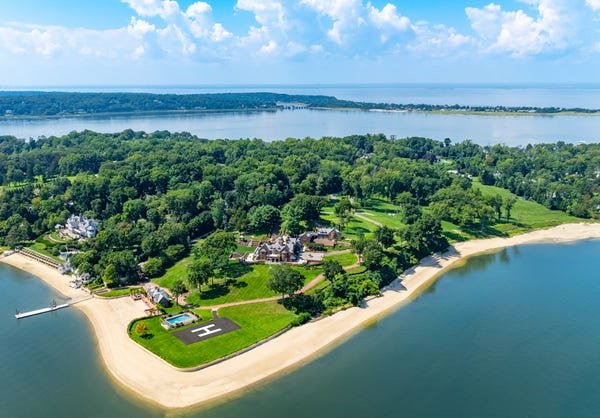
The 26-acre waterfront estate, known as “MiddleSea,” in Centre Island, New York, first went on the market in 2023 after completing a five-year renovation project.

The original asking price for the whole property, which is comprised of four distinct houses, was $49 million. After going on the market in 2023, it was relisted in 2024 with additional renovations.

The estate’s sale was eventually broken into pieces, with the gatehouse selling separately for $7 million last year. This sale, combined with the recent sale of the main house and two adjacent lots, totals $35.7 million, The New York Times reported.

It comes nearly a year after Joel had to step away from performing after being diagnosed with a rare brain disorder. The lifelong New Yorker is making progress, even offering a short surprise performance with a tribute band in January.

His now-former estate, MiddleSea, has quite the backstory. Joel first spotted the waterfront estate as a teenager while harvesting oysters to earn extra money to support his working-class family.

“I’ll never live in a house like that,” he thought to himself at the time, The New York Times reported in 2024.

He was wrong. Joel ended up purchasing the estate in 2002, fulfilling one of his lyrics written more than half a century ago: “I wish that I was back in Oyster Bay / Takin’ it easy, oh yeah.” Forbes reported in 2019 that his net worth was an estimated $52 million.

Take a look inside the waterfront property in Centre Island, New York.

The estate is located in Oyster Bay in the town of Centre Island, New York.

The property spans 26 acres on a waterfront area of Long Island, New York.

Berkshire Hathaway HomeServices/Laffey International Realty

The collection of homes is nestled on 26 acres of pristine Long Island real estate.

Joel nicknamed the property MiddleSea due to its positioning in the middle of the sea, with Oyster Bay on one side and Cold Spring Harbor on the other, The New York Times reported.

He also named the property MiddleSea in honor of his favorite instrument.


an aerial view of billy joel's waterfront estate in new york showing a fountain

The property was named for its spot on Long Island Sound and for a piano key.

Berkshire Hathaway HomeServices/Laffey International Realty

The Times reported that Joel also named the property after “middle C,” the centermost C note on a piano.

“If it’s not for me being able to take piano lessons, I probably would never have been able to afford a high-flying property like this. So, I named it after the first note which I learned on the piano, which was C,” Joel said.

Joel’s property was made up of four distinct homes, which were ultimately sold separately.


an aerial view of billy joel's waterfront estate in new york

The property has four separate homes, plus a maintenance building.

Berkshire Hathaway HomeServices/Laffey International Realty

One problem with selling the home was its high taxes. The annual property tax bill had reached over half a million dollars, The Times reported, diminishing the property’s allure to potential buyers.

The sale was made easier by selling the estate in pieces, and ultimately, the entire property sold for $14 million below the 2023 asking price.

In its entirety, the property is made up of four distinct homes — the main house, the beach house, the guest house, as well as the gate house, which sold last year. A maintenance house also sits on the property.

The property’s main house is a 20,000-square-foot red-brick mansion.


an aerial view of billy joel's waterfront estate in new york

The Main House spans 20,000 square feet.

Berkshire Hathaway HomeServices/Laffey International Realty

The home has five ensuite bedrooms and a primary suite with two full bathrooms and a private balcony that overlooks the water.

The foyer features black-and-white marble tiling, a chandelier, and 30-foot ceilings.


a entry room with black and white checkered floor inside billy joel's waterfront estate in new york

The entryway has tall ceilings and marble floors.

Berkshire Hathaway HomeServices/Laffey International Realty

The grand staircase leading up to the rest of the property is also made from white marble and features an ornate wrought-iron railing.

The main kitchen has two large islands and art deco-style light fixtures.


a kitchen with multiple white marble islands inside billy joel's waterfront estate in new york

The main kitchen has two huge islands.

Berkshire Hathaway HomeServices/Laffey International Realty

The islands are made with Calacatta Caldia Marble.

The kitchen’s appliances are similarly high-end, from the Waterstone faucets and bronze-and-gold farm-style sink to the Officine Gullo Firenze Oven, which can cost upward of $20,000, and Sub-Zero refrigerator.

There’s also a chef’s kitchen with stainless-steel appliances and surround backsplash.


a stainless steel kitchen with high-end appliances inside billy joel's waterfront estate in new york

The chef’s kitchen has stainless steel appliances.

Berkshire Hathaway HomeServices/Laffey International Realty

The chef’s kitchen provides ample space for cooking and accommodating large groups of guests.

The “Scenes From an Italian Restaurant” singer once said he “makes a great pasta” and “it’s probably my favorite food,” Page Six reported.

There’s also a formal dining room with a large white marble fireplace.


a view of the dining room showing the table and chairs inside billy joel's waterfront estate in new york

The dining room features a marble fireplace.

Berkshire Hathaway HomeServices/Laffey International Realty

The formal dining room has large paned windows that overlook the property and crown molding on the ceiling.

The main house’s backyard has a waterfall feature and access to a floating dock and a boat ramp.


an aerial view of billy joel's waterfront estate in new york showing a fountain

The waterfall is placed up a flight of brick stairs.

Berkshire Hathaway HomeServices/Laffey International Realty

The main house’s manicured lawns overlook the water.

The guesthouse has three bedrooms and five bathrooms.


the driveway and car garage inside billy joel's waterfront estate in new york

The guest house has an attached four-car garage.

Berkshire Hathaway HomeServices/Laffey International Realty

The guesthouse is 3,839 square feet, has an attached four-car garage, and was newly renovated before the property was relisted in 2024.

The living room has a fireplace and French doors that overlook the bay.


a living room with fireplace and beige walls inside billy joel's waterfront estate in new york

The guesthouse has a living room with a fireplace.

Berkshire Hathaway HomeServices/Laffey International Realty

The guesthouse is smaller than the main house but features some of the same classic details, like the fireplace and molding around the ceiling.

There’s also a private two-lane bowling alley in the basement.


an indoor bowling alley inside billy joel's waterfront estate in new york

The guesthouse has a bowling alley in the basement.

Berkshire Hathaway HomeServices/Laffey International Realty

There’s a lot of extra space for entertainment, including a large family room over the attached garage.

The gatehouse was sold separately last year for $7 million.


an aerial view of billy joel's waterfront estate in new york

The Gate House has a high-security gate.

Berkshire Hathaway HomeServices/Laffey International Realty

The five-bed, four-bath house is a self-sufficient property. The home has its own driveway, security gate, and swimming pool.

The home has two kitchens, a media room, a screened-in patio, and a first-floor primary ensuite.


a sunny dining room with beige rugs and a table set with beige chairs inside billy joel's waterfront estate in new york

The Gate House has two separate kitchens.

Berkshire Hathaway HomeServices/Laffey International Realty

In addition to its main gourmet kitchen with a Viking oven and Sub-Zero refrigerator, there’s also a chef’s kitchen in the back with its own fireplace.

A stone patio surrounds the free-form heated gunite swimming pool.


a second round outdoor pool at billy joel's waterfront estate in new york

The Gate House has its own free-form swimming pool.

Berkshire Hathaway HomeServices/Laffey International Realty

The Long Island Sound can also be seen from the pool.

The beach house sits on a strip of pristine beachfront.


an aerial view of billy joel's waterfront estate in new york

The beach house leads out to the private dock and the water.

Berkshire Hathaway HomeServices/Laffey International Realty

It has three bedrooms, three bathrooms, an eat-in kitchen, and a large stone patio with pergolas.

Its kitchen features custom Ciuffo cabinetry and Calacatta quartz countertops.


a white kitchen with island and dining room table with chairs inside billy joel's waterfront estate in new york

The kitchen has a large island with a Calacatta quartz countertop.

Berkshire Hathaway HomeServices/Laffey International Realty

Other luxury appliances in the kitchen include a side-by-side Sub-Zero refrigerator, a Wolf oven, and a Miele dishwasher.

The living room has French doors that open onto the beachfront.


a living room with paned windows and a beige couch and blue tufted chairs inside billy joel's waterfront estate in new york

The living room has porcelain tile flooring.

Berkshire Hathaway HomeServices/Laffey International Realty

The home is noticeably more water-friendly than the other properties, thanks to the porcelain tile flooring that makes it easy to transition from indoor to outdoor living.

The house also has its own gunite pool.


an outdoor pool with terra cotta tiles surrounding it at billy joel's waterfront estate in new york

The gunite pool is heated and overlooks the beach.

Berkshire Hathaway HomeServices/Laffey International Realty

A stone’s throw away is a helipad for helicopter arrivals and departures, a floating dock, and over 2,000 feet of waterfront beach.

The maintenance house doubles as a garage that can hold up to six cars.


a separate barn structure painted red with light green doors at billy joel's waterfront estate in new york

The maintenance house can fit six cars.

Berkshire Hathaway HomeServices/Laffey International Realty

The second floor of the maintenance house also has a working office or break room.

Editor’s note: This story was first published in November 2024. It was updated in March 2026 to reflect the sale of the property.


Source link

I-spent-years-traveling-nonstop-It-took-me-too-long.jpeg

I spent years traveling nonstop. It took me too long to admit my ‘dream life’ was actually horrible for my health.

I was living the dream — flying internationally nearly once a month for my work as a travel writer, crisscrossing the globe to cover incredible destinations.

Invitations like cruising the Norwegian coastline and then jetting off to a buzzy restaurant opening in Las Vegas were too good to refuse, even if they were happening back-to-back.

Meanwhile, the frequent long-haul flights, indulgent meals, packed itineraries, and erratic sleep schedules were quietly taking a toll on my health — I was gaining a substantial amount of weight and frequently feeling exhausted.

I just told myself that less-than-stellar health was just the price of admission for this sort of career. After all, my job consisted of bucket-list-worthy experiences, like hiking in Peru and going on safari in Kenya!

It took me several years to admit to myself that I couldn’t keep living this way.

As much as I love traveling, doing it nonstop wasn’t great for my physical or mental health


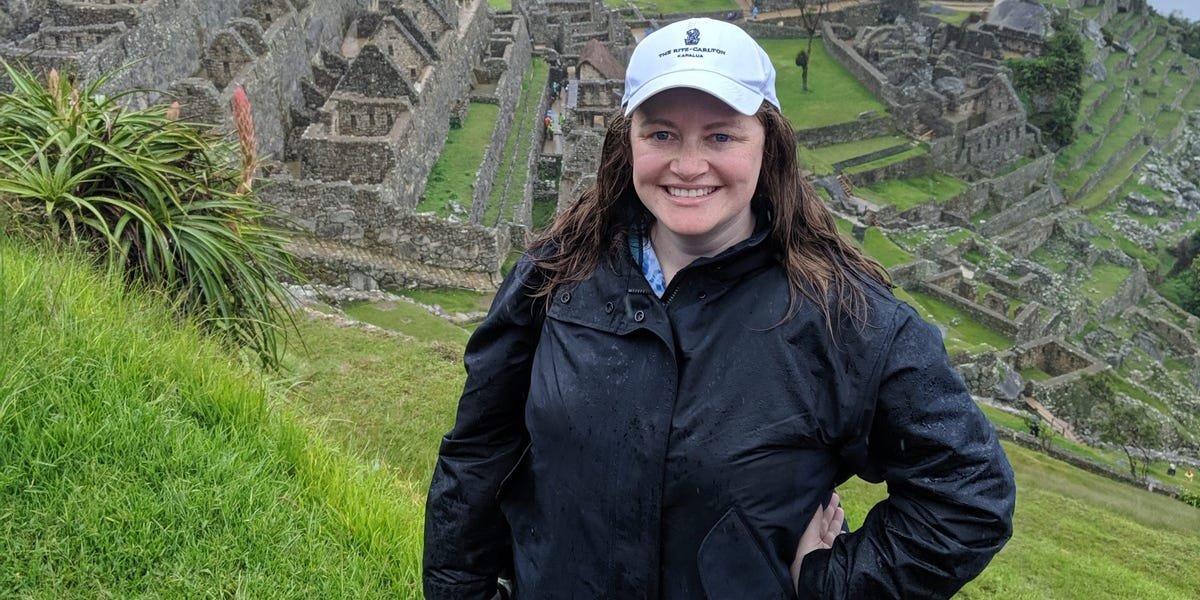
Woman smiling in front of stone relics

I love traveling, but it can be exhausting.

Meredith Bethune


In reality, the job of my dreams consisted of overnight flights where I’d get little to no rest, then hit the ground running as soon as I arrived at my destinations.

After I’d fly back home from some trips, it would take me nearly a week to recover from jet lag. My stress levels were often cranked up, dealing with flight delays, deadlines, and navigation across different states and countries.

With grueling daily schedules on the road, I rarely had time to answer emails. I’d come home to a full inbox and even fuller calendar.

The regular exposure to dry air on planes wasn’t helping my immune system, and neither was all the stress. I felt like I was constantly getting sick with colds, flus, or whatever was going around.

Meanwhile, my diet wasn’t balanced or nutritious. It largely consisted of indulgent meals on press trips, where I felt pressure to try everything so I could write about it.

Saying no felt awkward, even when I knew I’d feel better if I could set firmer boundaries.


Woman peeking out of red phone booth, smiling

I’ve been able to see many places through my work as a travel writer.

Meredith Bethune


On top of all that, I wasn’t exercising. After all, press trips run on tight schedules. I’d return to the hotel late, wake up early, sit in a van for hours between stops, and finish the day with a multicourse dinner.

Some fellow writers managed to fit in workouts, but I didn’t. It wasn’t a priority for me then.

All the travel felt isolating at times, too. I was spending most of my days with publicists, fellow writers, and guides. They were all lovely people, but not permanent fixtures in my life.

My closest friends lived far away, and I kept postponing visits because I was always either traveling or catching up from being away.

Meanwhile, my parents were getting older and needed more support.

After nearly a decade of jet-setting, by 2019, it had become undeniable that my mother’s memory problems went beyond normal aging. Finally, I felt compelled to take my health seriously.

My mother’s diagnosis felt like a wake-up call to prioritize my well-being


Woman smiling in ice hotel

Eventually, I realized I couldn’t travel so much without facing some consequences for my own health.

Meredith Bethune


By that time, my mother’s cognitive difficulties had progressed so much that she no longer seemed like herself. And though her official Alzheimer’s diagnosis came later, by then, it was just a formality. We had already known for years.

There wasn’t anything I could do to stop my mom’s Alzheimer’s from progressing, but I threw myself into researching the disease so I could know more about what the future held for her and, eventually, me.

I worried whether a similar diagnosis — one millions of Americans share — could be in the cards for me someday.

Though it’s not preventable, some studies and members of the medical community suggest that certain lifestyle changes, like being physically active and managing blood sugar and blood pressure levels, may lower one’s risk of developing some forms of the disease or delay its symptoms.

Even if I couldn’t prevent a future diagnosis, I knew finally taking care of my body and mind would be good for me. All that nonstop travel had been quietly wrecking my health, and the way I’d been living and working wasn’t sustainable.

I feel much better now that I’m traveling way less


Woman hiking grand canyon

I can’t control the future, but I can at least prioritize my health.

Meredith Bethune


It’s been over five years since I significantly cut back on travel.

I exercise almost every day and try to regularly follow a balanced diet. I’ve since lost over 50 pounds and sleep much better.

When I do go on trips, I do so with more intention and a lot of focus on the Northeast, close to home.

I probably take an overnight or weekend trip within driving distance about every six weeks. I still fly for work once or twice a year, but I’m no longer constantly on the road, and my body feels the difference.

When I go on bigger trips, I actually feel like I have more opportunities than I did before. Recently, I even hiked the Grand Canyon rim-to-rim, which I would never have attempted back when I was out of shape and constantly feeling drained.

Giving up on my dream job wasn’t easy, but I want to feel good and stay in great shape for as long as I can — even if that means finding peace at home instead of abroad.


Source link

Dick-Van-Dyke-is-100-years-old-Here-are-his.jpeg

Dick Van Dyke is 100 years old. Here are his 3 tips for living a long life.

Dick Van Dyke, the larger-than-life comedian, is now a centenarian.

Van Dyke celebrated his 100th birthday on Saturday, marking a new chapter in his already storied life and career.

He became a household name in the 1960s while starring on the CBS sitcom, “The Dick Van Dyke Show,” which won 15 Emmys and two Golden Globes. Van Dyke’s star rose even higher when he headlined “Mary Poppins” alongside Julie Andrews in 1964 and “Chitty Chitty Bang Bang” with Sally Ann Howes in 1968.


Dick Van Dyke and Julie Andrews in

Dick Van Dyke and Julie Andrews in “Mary Poppins.”

Silver Screen Collection/Getty Images


In addition to an extensive filmography, Van Dyke also won a Tony Award in 1961 for his role as Albert Peterson in “Bye Bye Birdie.”

As Van Dyke grew older, he has often shared insights and advice on living a long life. Here are three tips Van Dyke follows.

Van Dyke exercises three times a week

During an appearance on actor Ted Danson’s podcast, “Where Everybody Knows Your Name,” in January, Van Dyke said he exercises several times a week.

“I’ve always exercised,” Van Dyke said. “Three days a week, we go to the gym. I think that’s why I’m not stove-up like my equals.”

Danson recalled seeing Van Dyke at the gym and being impressed by his routine.

“I would go to the same gym you did, and if I got there early enough, I would see you, literally, work out on some weight machine,” Danson said. “And then, almost like you were doing circuit training, you would not walk to the next machine, you’d dance. You literally danced to the next machine.”

Danson said he later asked Van Dyke about his workout routine.

“You said you would come to the gym and work out for whatever hour, whatever it is, then you would go home. You would swim laps and then get back into bed and take a nap.”

Van Dyke said these days, he’s doing a lot of stretching and yoga.

Van Dyke stays mentally fit by watching “Jeopardy!”


Dick Van Dyke at the Kennedy Center Honors

Dick Van Dyke at the 2021 Kennedy Center Honors.

CBS Photo Archive/CBS via Getty Images


In his new book, “100 Rules for Living to 100: An Optimist’s Guide to a Happy Life,” Van Dyke wrote that his short-term memory is “shot,” but he still has “his marbles.”

“I used to do the crossword religiously for years (in pen), and now it’s ‘Jeopardy!’ that keeps me sharp, though Arlene always has the answer before I do,” Van Dyke wrote, referring to his wife, Arlene Silver.

Van Dyke and Silver, 54, tied the knot in 2012. In his book, Van Dyke wrote that his job as an entertainer required him to have a good memory.

“For my whole career, I had to memorize pages and pages of lines and a ton of songs, backward and forward, so I was able to say or sing them without even thinking,” he wrote. “When I sing with The Vantastix, it’s often songs from shows and movies I’ve done, and those are right at the front of my brain.”

He added: “I can still pick up new material easily, too, though it might take three or four more run-throughs than it used to be before the lyrics feel like second nature.”

Van Dyke also wrote that cutting alcohol out of his diet likely played a part in his good brain health.

Keeping a positive mindset is essential, Van Dyke said

In his book, Van Dyke recalled his former roles, including a series of old men, like Mr. Dawes Sr. in “Mary Poppins.”

“I’m not playing super-old anymore. I am super old. Speaking now from this position of centenarian authenticity, I can look back on my old man roles and say that some stuff I got right,” he wrote.


Dick Van Dyke at the 76th Creative Arts Emmy Awards.

Dick Van Dyke at the 76th Creative Arts Emmy Awards.

Variety/Variety via Getty Images


Van Dyke wrote that it’s “frustrating to feel diminished in the world, physically and socially,” in addition to navigating the uncertainty of current global events.

However, Van Dyke said keeping a positive outlook on life is key.

“I’ve made it to one hundred, in no small part, because I have stubbornly refused to give in to the bad stuff in life: failure and defeats, personal losses, loneliness and bitterness, the physical and emotional pains of aging. Because, as I see it, to do that would be to throw in the towel on life itself.”

Instead, Van Dyke said, “for the vast majority of my years, I have been in what I can only describe as a full-on bear hug with the experience of living. Being alive has been doing life — not like a job, but rather like a giant playground.”


Source link