

I-was-on-the-Air-Canada-flight-that-crashed-at.jpeg

I was on the Air Canada flight that crashed at LaGuardia. I felt the plane lose control, and I ducked and prayed.

This as-told-to essay is based on a conversation with Jack Cabot, a 22-year-old student at Ithaca College. The following has been edited for length and clarity.

On March 22, I was coming back to New York from a short spring break trip to Calgary. My connecting flight back was through Montreal.

There were a few moments of pretty bad turbulence in the air, but nothing crazy happened until the landing. That’s when everything went pretty haywire. The plane landed quite hard, and then two or three seconds later, I heard a really loud bang.

Everybody was terrified as the plane lost control

Everyone already seemed pretty annoyed when we boarded the flight to New York because it had already been delayed a few times. We left about two hours after our original departure time.

As we were landing, the plane started veering right really quickly. It felt like it had completely lost control. I put my head down, ducked between my arms, and prayed. There was a lot of screaming; everybody was terrified, and I was completely panicked.

When we finally came to a stop, I thought, “Okay, we’re somehow alive.” As I looked around, so many people were bleeding. One guy’s whole face was gashed up. It was clear that a lot of people were very hurt.

I was sitting in the middle area of the plane, a row in front of the emergency exit. When I looked toward the front of the plane, it seemed to have completely crumpled inward, like a wall of broken parts.

A woman behind me suggested we go out the emergency exit. I didn’t think the plane was a good place to be, so we all got in a line and headed out one by one. It wasn’t too big a plane, so we jumped onto the wing and then took another 4- or 5-foot drop onto the ground.

I feel grateful and lucky

It took two or three minutes for medical attention to arrive. I was only a little bruised up, but others were more seriously hurt. I feel really grateful and lucky.

After we got off the plane, we sat on a bus for three to four hours, then waited in a lounge. They were performing headcounts of the people there. I chose to talk with the police about what I saw, and I got out of the airport at around 4:30 a.m., even though we landed at around 11:30 p.m. My brother, whom I texted after we landed, picked me up from the airport. I got home around an hour later and went straight to bed.

I’m still planning to fly

I’ll be a little reluctant next time I have to get on a plane, but I’ll have to get over it. It would be really shocking if something like this happened twice.

To recover from what happened, I think I’ll need a few days of relaxation and some exposure therapy. I actually think flying more will help me get past this.


Source link

How-to-make-or-lose-money-on-snowfall-predictions.jpeg

How to make (or lose) money on snowfall predictions

Snowfalls can now beget windfalls.

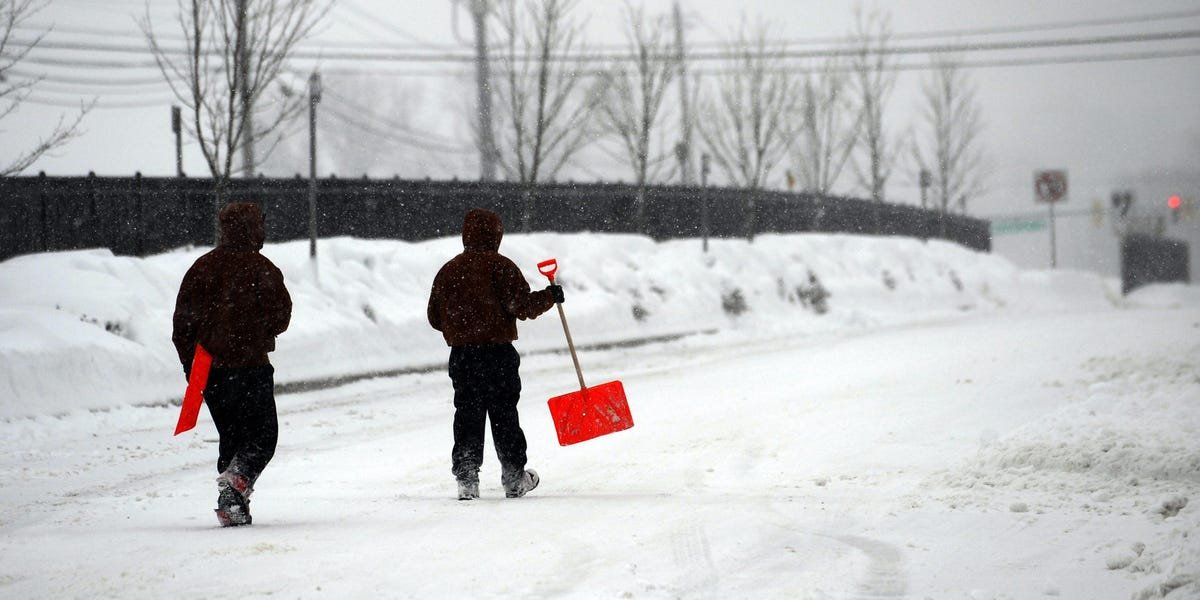
As Americans rush to buy essentials ahead of Winter Storm Fern, some are also buying shares on prediction markets, like Kalshi and Polymarket, betting on how much snow will fall in New York City.

Traders on Kalshi have bet almost $900,000 as of Saturday afternoon on whether more than 12 inches of snow will fall in New York City on Saturday and Sunday. Meanwhile, on Polymarket, traders have bet about $210,000 on how much snow New York City will see this weekend. The winning category is now 8 to 10 inches.

The storm is expected to bring heavy snow, sleet, and freezing rain to multiple states in the South, Mid-Atlantic, Midwest, and Northeast this weekend. The National Weather Service says the storm could impact some 180 million Americans. Thousands of flights have already been canceled.

Prediction markets allow users to buy and sell shares in the outcomes of future events, such as sports or elections. Polymarket also provides real-time updates, allowing bets to provide insights into how consumers and investors think.

Polymarket bettors correctly predicted nearly the entire slate of Golden Globe winners last week, prompting a celebration from Polymarket CEO Shayne Coplan.

“We have a long way to go to educate the public on the value of market-based forecasts, but you can’t deny its accuracy,” Coplan wrote. “People have more clarity about the world because Polymarket exists.”

The new markets are not strictly regulated, and some bets have looked a lot like insider trading. A last-minute bet on Polymarket earlier this month that Venezuelan leader Nicolás Maduro would be ousted netted strong returns after the US captured Maduro in a surprise raid hours later.

Snowfall totals, on the other hand, are perhaps less susceptible to market manipulation.


Source link

Elon-Musk-says-Europes-biggest-airline-will-lose-customers-without.jpeg

Elon Musk says Europe’s biggest airline will lose customers without Starlink

The CEO of Europe’s biggest airline is in an escalating war of words with Elon Musk over Starlink.

Ryanair CEO Michael O’Leary isn’t convinced by Starlink, Musk’s satellite internet provider, which is becoming more popular among airlines.

For example, Lufthansa — the German flag carrier which runs the continent’s second-largest airline group — announced on Tuesday that it would introduce the service. The following day, Scandinavian Airlines operated its first flight with Starlink.

However, as a budget airline, Ryanair is known for its no-frills offering.

“We don’t think ‍our ⁠passengers are willing to pay for WiFi for an average ⁠one-hour flight,” O’Leary told Reuters on Wednesday.

His comments sparked a debate on X. Musk said in a post: “They [Ryanair] will lose customers to airlines that do have internet.”

In a subsequent interview on Irish radio on Thursday, the outspoken Ryanair boss said adding Starlink would cost the airline between $200 million and $250 million a year.

“In other words, about an extra dollar for every passenger we fly, and the reality for us is we can’t afford those costs,” he told Newstalk.

“Passengers won’t pay for internet usage; if it’s free, they’ll use it — but they won’t pay one euro each to use the internet.”

He then hit back at Musk, saying people should “pay no attention whatsoever to Elon Musk.”

“He’s an idiot. Very wealthy, but he’s still an idiot,” O’Leary added.

Ryanair and its subsidiaries operate a fleet of 643 airplanes, which handled 206 million passengers last year. 2024’s statistics showed that it was the world’s third-largest airline group, behind American Airlines and Delta Air Lines.

The Irish airline’s low-cost business model allows it to offer tickets as low as 15 euros, or about $17.40. It focuses on quick turnarounds between flights, charging for add-ons like sitting next to your friends, and on-board sales, including scratchcards and duty-free cigarettes.

Every airline that’s announced Starlink deals so far has included free in-flight internet for everyone on board. So, even if O’Leary changed his mind, it seems unlikely that Musk’s company would let him charge Ryanair passengers to use Starlink.

SpaceX executives also took umbrage at what they said was incorrect information about the fuel costs incurred by installing Starlink.

“You need to put [an] antenna on [the] fuselage — it comes with a 2% fuel ⁠penalty because of ​the weight and ​drag,” O’Leary told Reuters.

Michael Nicolls, the VP of Starlink engineering, said in an X post that Starlink terminals have a more fuel-efficient profile than other airplane internet providers. He added that SpaceX’s analysis showed a Starlink terminal instead increased fuel costs by 0.3% on a Boeing 737-800, the model that makes up the bulk of Ryanair’s fleet.

“Hmm, must be a way to get that down under 0.1%,” Musk replied to him.

Ryanair declined to comment on Musk’s and Nicolls’ remarks when contacted by Business Insider. SpaceX did not immediately respond to a request for comment.

While US budget airlines have recently pivoted to offer more premium options under intense financial pressures, Ryanair has little reason to do so. Adding an amenity like Starlink would be at odds with its business model, especially if it were free for passengers.

Post-pandemic, more American travellers have been paying extra for more luxurious flights. Budget airlines have also struggled to compete on price with legacy carriers.

But on the other side of the Atlantic, Ryanair has managed to balance a spartan approach with financial success.

In its latest quarterly earnings, Ryanair posted after-tax profits of 1.72 billion euros, about $2 billion — a 20% increase from a year earlier. Southwest Airlines’ latest quarterly earnings were down nearly 20% year-over-year to $54 million.


Source link