

Thibault

A top researcher says a new divide is emerging in AI use — and most people are on the losing side

Are you using AI to think — or letting it think for you?

Vivienne Ming, chief scientist at the Possibility Institute, a metascience research group, and founder of Socos Labs, an AI and education firm, says the tech is splitting people into two groups: a small minority who use it to think better, and a much larger majority who use it to think less.

“The overwhelming trend is substitution,” Ming said in a recent interview with Business Insider in London. Instead of using AI to deepen their reasoning, most people are outsourcing it, she said.

That distinction is what Ming describes as a growing cognitive divide between people who use AI to enhance their thinking and those who rely on it to think for them.

As AI tools become embedded across workplaces, from coding to writing and analysis, a growing number of AI researchers have warned that overreliance on the technology could dull cognitive and independent thinking skills.

The risks are already emerging: when Anthropic’s Claude went down earlier this month, some developers said they struggled to keep working, as tasks that had become routine suddenly felt harder without AI.

‘Productive friction’

To test AI’s impact on cognitive skills, Ming said she ran an experiment from late summer through fall of 2025. She created teams of three, including 39 students from UC Berkeley and 33 others from the San Francisco Bay Area, to use Polymarket data to predict real-world events, either working alone or with AI systems.

The results, she said, showed roughly 90% to 95% of participants fell into two groups: those who relied on AI to generate answers for them, and those who used it to validate their own assumptions.

The remaining minority — around 5% to 10% — took a different approach, which Ming calls the “cyborgs.”

Rather than relying on AI for answers, they used it as a collaborator, exploring ideas, challenging assumptions, and pushing the problem forward, while the AI brought in data and counterarguments.

The process created what Ming described as “productive friction.”

“They would challenge the AI,” she said, and ask, “Don’t tell me why I’m right — tell me why I’m wrong.”

‘Hybrid intelligence’

This dynamic is what Ming calls “hybrid intelligence” — not simply humans plus machines, but a distinct form of intelligence that emerges from how the two interact.

In her research, she found that the best human-AI collaboration wasn’t driven by more advanced large language models but by human traits such as curiosity, intellectual humility, perspective-taking, and the ability to reason under uncertainty.

Her concern is that most current uses of AI push people in the opposite direction.

Ming compares it to GPS: a tool that makes your life easier in the short term but can degrade cognitive abilities over time if overused.

“If you’re using it to think for you,” Ming said of AI models, “this is your long-term cognitive health. So yes, 100% skill erasure.”

The implications extend beyond individuals. Workplaces increasingly reward speed and efficiency — conditions that encourage employees to accept AI-generated outputs rather than interrogate them.

That, Ming warned, could lead to a world of competent but indistinguishable work, or what she called “AI slop.”

“The answer you’re getting out of your phone is the exact same answer everyone else is getting,” she said. “Even if it’s right, it brings you no value.”




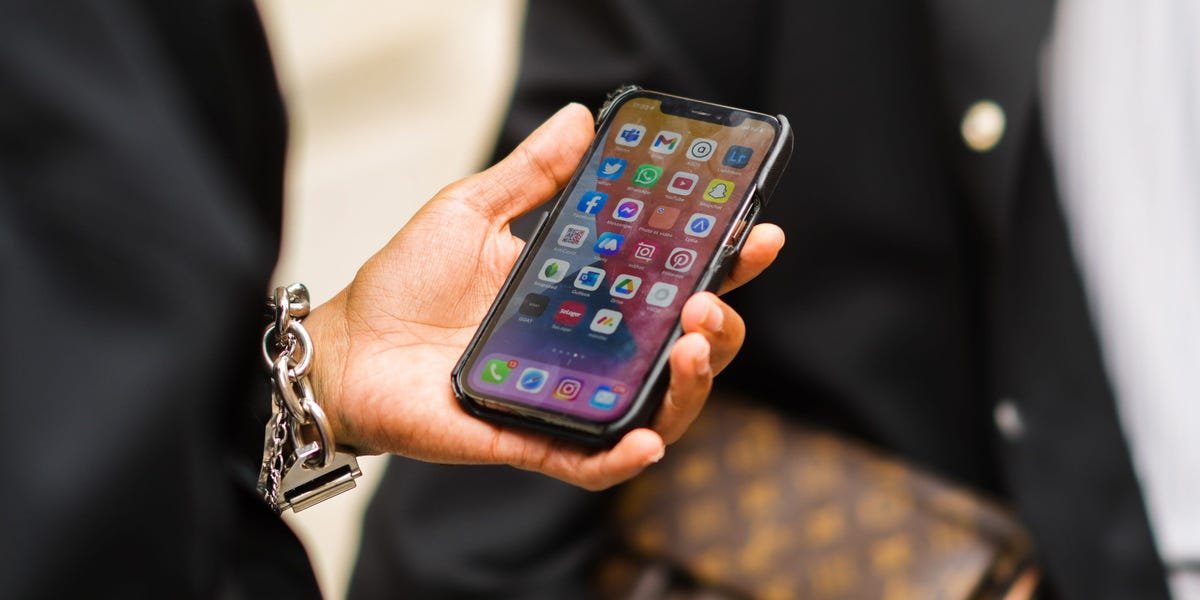
Source link

Katherine Li, West Coast breaking news reporter at the Business Insider.

AI researchers rally in support for Anthropic as company says it risks losing $5 billion in Pentagon feud

Employees at rival companies — including OpenAI — are rallying behind Anthropic as the startup warns its escalating dispute with the Pentagon could cost $5 billion in lost business.

More than 30 researchers from OpenAI and Google, including Jeff Dean, the chief scientist of Google DeepMind, filed a joint amicus brief on Monday supporting Anthropic in its legal battle with the government. The employees signed in a personal capacity and do not represent their companies’ official views.

Their filing argues that the Pentagon’s decision to label Anthropic a “supply-chain risk” could harm the broader US AI industry.

“If allowed to proceed, this effort to punish one of the leading US AI companies will undoubtedly have consequences for the United States’ industrial and scientific competitiveness in the field of artificial intelligence and beyond,” the employees wrote.

The dispute stems from a breakdown in negotiations between Anthropic and the Pentagon over guardrails around how its AI models could be used, particularly around mass domestic surveillance and autonomous lethal weapons.

Last month, Defense Secretary Pete Hegseth said that “no contractor, supplier, or partner that does business with the United States military may conduct any commercial activity with Anthropic,” marking a dramatic expansion of the “supply chain risk” designation.

Anthropic has since sued the government in two courts, arguing the decision violates its First Amendment rights and unfairly retaliates against the company.

In court filings, Anthropic executives warned that the fallout is already hitting the company’s finances. Chief financial officer Krishna Rao wrote in a court statement that hundreds of millions of dollars in expected revenue tied to Pentagon-related work are at risk this year. If the government succeeds in discouraging companies from working with Anthropic more broadly, Rao added, the company could ultimately lose up to $5 billion in sales, which is roughly equivalent to its total revenue since commercializing its AI technology in 2023.

Anthropic’s chief commercial officer, Paul Smith, wrote in a separate court statement that the pressure from the government is causing business partners to take steps that “reflect deep distrust and a growing fear of associating with Anthropic.” Smith added that some customers have paused negotiations or demanded escape clauses, while others have canceled meetings entirely after the supply-chain designation.

The situation has also drawn criticism from industry leaders. OpenAI CEO Sam Altman, despite singing its own contract with the Pentagon after Anthropic’s fell apart, wrote on social media that enforcing the supply chain risk designation “would be very bad for our industry and our country.”

Major cloud providers like Amazon and Microsoft have said they will continue offering Anthropic’s Claude AI models to customers without ties to the Pentagon.

Anthropic is now seeking a temporary court order that would allow it to continue working with military contractors while the legal fight continues. The first hearing could take place in San Francisco as soon as Friday.

The Pentagon did not immediately respond to a request for comment outside normal business hours.


Source link

Theron Mohamed — Profile Picture

Bill Gurley: people who don’t love their jobs are most at risk of losing them to AI

Passion could be the best defense against AI taking your job, Bill Gurley says.

“The people that are most at risk are the ones that are sitting idly in the job and don’t really have a why or a purpose for it,” the legendary venture capitalist said during the latest episode of the “On with Kara Swisher” podcast.

“I think a lot of the people that go through that college conveyor belt, that are chasing a safe job, that end up working as a widget or a cog in an industry they may not love — I think they are ripe for disruption,” he added.

Advances in AI have spurred numerous high-profile companies to slow hiring or make layoffs in anticipation of cheaper, more productive digital workers replacing human ones.

Technology giants such as Meta, Microsoft, Amazon, and Alphabet are also spending hundreds of billions of dollars to build AI infrastructure, fueling widespread concerns of future job losses.

Gurley is a general partner at Benchmark who’s known for placing early bets on businesses such as Uber, Nextdoor, OpenTable, and Zillow.

He recently published a book titled “Runnin’ Down a Dream: How to Thrive in a Career You Actually Love.”

The veteran investor said on the podcast that young people should choose careers they enjoy and care about. Warren Buffett, who famously “tap dances to work” at Berkshire Hathaway, has long offered similar advice.

“For people that are in a job they love, the honing’s free,” Gurley said. He explained that when someone is passionate about what they do, they don’t need to set aside time or convince themselves to polish their skills and knowledge; they naturally prioritize improvemen and feel energized by the process.

“It really becomes an unfair advantage in almost any industry if you’re that person because you’re learning constantly,” Gurley said.

One key thing they should learn is how to harness AI to bolster their efforts, he said.

“Be the most AI aware person in your job,” Gurley said. “And you’re going to then be the last person that they want to get rid of.”

Gurley compared AI to “jet fuel” that can expand a worker’s capabilities. Employees can now learn more quickly and thoroughly than ever before, he said, so if they’re focusing their learning on AI, they’re “going to have even better chance of winning,” he added.


Source link

I-used-to-think-living-at-home-as-an-adult.jpeg

I used to think living at home as an adult meant going backward. Losing my dad made me realize I was wrong.

Growing up, when I imagined my 20s, I pictured living in a huge city apartment on my own, with a partner or a quirky group of roommates. I’d decorate my home with chic art pieces, paint the walls a dusty rose, and host dinner parties for my friends.

I was desperate to begin my life. I thought adulthood started when you moved out; anything else felt like going backward.

Then, my dad died, and my entire reality shifted.

Living with family as an adult is often framed as a “failure to launch,” but navigating grief at home with my mom and younger sister helped me rethink growth.

Living at home in my 20s wasn’t easy at first


The writer posing while skiing with her dad and sister.

Initially, I was eager to move out of my parents’ house and live with my boyfriend.

Maya Kokerov


After I finished college at 22, I moved in with my parents while I figured out what my long-term plan would be.

I hoped this would be a very brief stint. Impatient to be more “independent” and worried I was falling behind my peers, I vowed to rent an apartment with my boyfriend as soon as we could afford one.

Before I had a chance to move out, though, the COVID-19 pandemic pushed us into a lockdown. I settled back into living with my family until further notice. There were practical benefits, such as saving money, but I still felt restless.

In ways, I reverted back to a teenager: whispering on FaceTime, sending messages on Snapchat, even sneaking out of my window to meet up with my partner after everyone had gone to sleep. At 22, I felt emotionally crowded and missed the freedom I’d experienced at college.

More than a loss of privacy, though, I was ashamed that I was still “waiting” to reach what I saw as the first big marker of adulthood.

After my dad died, living together became a lifeline


The writer posing on vacation with her parents and sister.

Losing my dad shifted my priorities.

Maya Kokerov


Four years after I moved back home, my dad suddenly passed away.

We couldn’t properly say goodbye. Instead, we sat in fear for months. His chair was empty, leaving a hole in our home.

As guilty as I felt for not always appreciating the years I’d spent with him, I realized how lucky I was to have gotten to spend his last few years at home with him.

Many fathers who get to grow old may never spend as much time with their children as I did with mine, precisely because I stayed home.

My dad had moved out of his house at a young age and lived in four countries. In one of our last one-on-one conversations, shortly before he was admitted into the hospital, he told me how everyone keeps moving to find their place, but everywhere is virtually the same. The main difference is the people that you’re leaving behind.

Looking back, those extra years at home were convenient, yes, but they were also the happiest I’ve ever been. Now, having my mom and sister by my side gives us space to grieve together and mutually support each other.

Memories and rituals reshaped how I define adulthood

As a very tight-knit family, we built our life around traditions, from holidays and vacations to sports and movie nights.

My dad’s favorite activity was spending time with us. He taught us skills like skiing, languages, and playing tennis.

Healing came from returning to the traditions he loved. Although it was challenging at first, we forced ourselves to engage with his hobbies and rituals, reliving our memories together. We cooked his favorite food, sang songs he loved, and played lots of tennis.

With time, the sadness became more tolerable as we created new rituals while preserving treasured old ones.

This wasn’t the “20-something” life I had envisioned, but this version of home became a symbol of my growth precisely because of how much I loved my past. I realized that living at home at 27 isn’t a lack of maturity or a so-called “failure to launch.”

If anything, grief sharpened my sense of responsibility. Adulthood can be communal, and I feel lucky to have familial support. Grief has made living with my family more meaningful, grounding, and empowering than ever.


Source link

I-moved-from-the-US-to-Brazil-after-losing-my.jpeg

I moved from the US to Brazil after losing my job. Despite the intense culture shock, I couldn’t be happier with my decision.

After an incredible three weeks traveling around Brazil, I was on the first leg of my flight home to Chicago when I received a message from my director at work — a 15-minute “check-in” with an HR representative.

Worried I might receive news of a layoff, I frantically deboarded the plane after landing in Rio de Janeiro and joined the call in a quiet corner of the duty-free section of the airport. There, I was informed that my role had been eliminated.

Faced with the reality of returning home to the frigid Chicago temperatures with no job, I quickly changed my connecting flight and decided to hostel-hop around Brazil for another month.

However, even that extra month didn’t feel like long enough in the country I’d fallen in love with. Exploring beautiful destinations while practicing a new language every day was incredibly fulfilling for me.

Once I went back to the US, I realized I was looking for ways to push myself out of my comfort zone. I had always wanted to live abroad, and my unemployment seemed like the perfect alignment to make that move to another part of the world.

So, a few months after my original trip, I relocated from Chicago to São Paulo and was greeted by lots of surprises along the way.

Coming from Chicago, I didn’t expect to feel chilly in São Paulo


The cityscape of São Paulo.

The temperatures in São Paulo caught me by surprise.

Cristian Lourenço/Getty Images


Growing up in the Midwest, I’ve endured my fair share of snowstorms and wind chills so cold that I felt as though my eyelids would freeze together. So, I felt well-equipped for any kind of cold weather Mother Nature could ever throw my way.

Even so, I wasn’t prepared for just how chilly Brazil could feel — especially during a springtime cold front while living in an area without access to central heating.

Although Brazil’s springtime temperatures (which last from September through November) are similar to what I experienced during the Chicago fall, it was difficult to adjust to the lack of central heating. So, I found myself wearing multiple layers of T-shirts and the only hoodie I brought with me.

Before I moved, I’d only visited Brazil during its smoldering summer months, so I had naively assumed the subtropical temperatures in São Paulo would be pleasant year-round.

The food is different — and that’s not a bad thing


A plate of acarajé with shrimp.

I’ve grown to love acarajé: stuffed black-eyed-pea fritters

Isaiah Reynolds


Between seeing unrefrigerated milk in grocery stores to trying vegetables I’ve never heard of, the day-to-day food in Brazil is a lot different than what I was used to in the States.

For example, contrary to the common American adage, breakfast doesn’t seem to be the most important meal of the day here; many Brazilians opt for bread or fruit instead of the hefty pancakes or sausage links I was accustomed to.

For lunch and dinner, many locals seem to rely on a tried-and-true formula: arroz (rice), feijão (beans), some meat, and salad.

Classic dishes like stroganoff (a creamy chicken or beef dish topped with crispy shoestring potatoes) or feijoada (pork and black bean stew) may enter the rotation. Still, the aforementioned combo is a popular default dish that I’ve grown to love.

Although tavern-style Chicago pizza still holds a special place in my heart, my new Brazilian favorites include acarajé (stuffed black-eyed pea fritters fried in dendé oil), acerola (a sweet cherry fruit), and doce de leite (sweet caramelized milk used as a topping or filling).

Plus, there’s a pretty great international food scene here, too. While wandering around the city, I’ve come across a wide range of cuisines, from Lebanese and West African restaurants to Colombian and Venezuelan spots.

Although I was initially worried about feeling welcomed, I can see myself putting down roots here

One thing I’ve noticed since my first visit to the country is that Brazilians are very proud to be Brazilian.

From football matches to the celebrations that occur when Brazilian films are nominated for Academy Awards, the people here seem to be the loudest and proudest fans in the room.

Because of this, I was worried I might not feel as welcome as an outsider. Instead, I’ve found an endearing level of curiosity among many Brazilians I’ve met, who either want to practice English or ask how I’m enjoying their beloved country.

This openness to connect has softened a lot of the original culture shock during my move. Although very different from my life in Chicago, I’m excited to continue building a life for myself in São Paulo.


Source link

Hate-your-old-Gmail-address-Google-is-quietly-letting-some.jpeg

Hate your old Gmail address? Google is quietly letting some people change it without losing data

It looks like you may soon be able to change that old email address you made in high school.

Google account users have long been unable to change their email addresses without creating a whole new account, but Google seems to be quietly rolling out an option to update them. That’s according to a support page published by the company, which outlines a new process to change the email or username used to identify your account.

The update on Google’s account help page says certain account holders can now change their @gmail.com address without losing access to their data or services. The feature was first reported in the Google Pixel Hub Telegram group in a message that said the update is being gradually rolled out to users. As of Friday morning, the modified instructions were available on the Hindi version of Google’s support page.

The support page suggests this option is currently only available in some regions, including Hindi-speaking areas.

According to a translated version of the Hindi support page, the new email must end in @gmail.com, and it can only be changed up to three times. Once the address has been changed, it’s irreversible.

To make the change, you would visit your Google Account page, click “Personal Info,” and go to the “Email” section, according to the Telegram message.

It’s unclear when it will roll out more widely, and Google didn’t immediately respond to a request for comment from Business Insider. As of Friday morning, the English support page said usernames ending in @gmail.com usually can’t be changed.

Once the change is made, the Hindi page said, your old Gmail address will be used as an alias to receive emails. You can reuse your old Google account email address at any time, but you can’t create a new Gmail address for the next 12 months.

You can sign in to Google services like Gmail, YouTube, Google Play, or Drive with your old or new email address.


Source link