The-US-lost-a-fighter-jet-over-Iran-reports-say.jpeg

The US lost a fighter jet over Iran, reports say, adding to a growing list of aircraft losses in the war

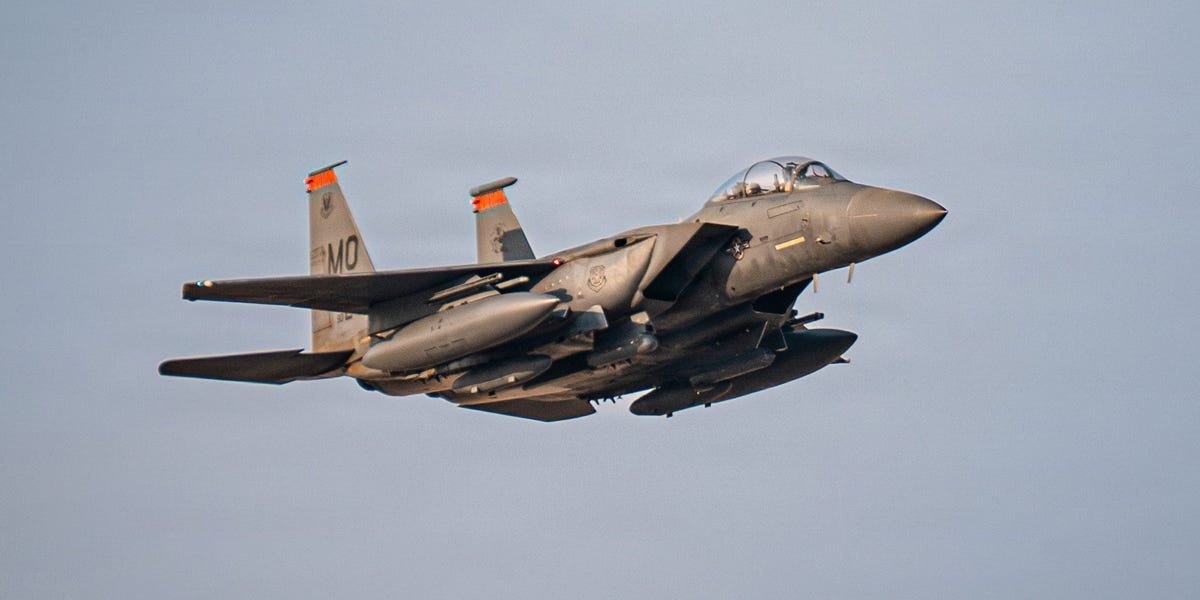
The US military lost a fighter aircraft over Iran, according to multiple American media reports citing US officials, as well as Iranian reports.

Iran’s Tasnim, a semi-official news agency associated with the country’s Islamic Revolutionary Guard Corps, said that Tehran shot down an American fighter jet. Both Iranian and American media reports say that a search for the pilots is ongoing.

The Iranian media report came as photos of debris said to be from an F-15 fighter jet and video footage said to show search and rescue operations with Black Hawk helicopters and a C-130 Hercules aircraft circulated online.

Iranian media outlets have repeatedly claimed successes against US combat aircraft, assertions that US Central Command — which oversees American forces in the Middle East — has quickly disputed in the past.

CENTCOM has not publicly addressed the latest claims and declined to confirm or deny them in response to Business Insider’s questions. The Pentagon and the Air Force also did not comment.

Other aircraft losses in the Iran war

The Pentagon has said that the destruction of Iranian air defenses has given the US air superiority over Iran, creating a more permissive environment for air operations. Even with air superiority, the battlefield is not without risks, though.

US media reports from the New York Times, CNN, and others said that the jet lost in Iran was shot down.

The US Air Force has lost several aircraft during Operation Epic Fury, which began in late February. This, however, marks the first loss over Iran.

At the start of the Iran war, three US F-15s were mistakenly shot down by Kuwaiti air defenses in what CENTCOM described as “an apparent friendly fire incident.” All six crew members survived.

Then on March 12, a US KC-135 refueling aircraft crashed in western Iraq, killing all six crew members. A second American aircraft involved in the incident landed safely.

Iran has also shot down a number of MQ-9 Reaper drones and destroyed or damaged support aircraft on the ground at US bases in the Gulf region, including an E-3 Sentry.

There have also been some close calls. On March 19, for instance, a US F-35 stealth fighter jet made an emergency landing at a base in the Middle East after flying a combat mission over Iran. Reports indicated it was damaged by Iranian fire.

Last week, video footage circulating online appeared to show a US Navy F/A-18 Super Hornet narrowly avoiding being shot down by an Iranian surface-to-air missile.

Meanwhile, roughly 350 US service members have been wounded in the war, though 315 of them have already returned to duty, a military official told Business Insider this week. Six troops remain seriously hurt, while 13 have been killed.

Kelsey Baker contributed to this reporting.


Source link

Theron Mohamed — Profile Picture

Vinod Khosla suggests scrapping taxes for most Americans in response to AI job losses

If artificial intelligence eliminates millions of jobs, it might make sense to scrap income taxes for the vast majority of Americans and target capital instead, Vinod Khosla says.

“AI will transform economies and need a rethink of capitalism & equity,” the billionaire venture capitalist wrote in an X post on Monday. “Labor portion of economy (vs capital) will decline sharply. Should we eliminate preferential treatment of capital gains tax and equalize to ordinary income?”

Khosla — who cofounded Sun Microsystems and made the first VC investment in OpenAI — was making the point that AI replacing labor on a grand scale might warrant greater taxes on assets such as stocks and real estate.

The veteran financier, who founded Khosla Ventures after leaving Kleiner Perkins, attached a video highlighting some of the jobs that could be taken by AI, from accountants and therapists to truck drivers and chip designers.

Khosla said in a follow-up post that ramping up taxes on capital would generate so much revenue that the government could scrap taxes for most of the roughly 150 million US taxpayers.

“Could easily eliminate bottom 125 million taxpayers from the tax rolls and be revenue neutral at the same time with a capital gains tax equal to ordinary income and a few other tweaks,” he wrote.

He added that tax breaks such as carrying over tax losses and tax-free borrowing against unrealized gains — which he called a “true abuse!” — are “special interest goodies inserted by lobbyists and campaign contributions, not true capitalism.”

Khosla didn’t address common critiques of higher taxes, including that they can discourage entrepreneurship and investment, that collecting them can be tricky, and that wealthy people may leave the country to avoid them.

Khosla has previously underscored that the advent of AI may require sweeping policy changes. He estimated in late 2024 that in 25 years’ time, AI could be doing 80% of the work in 80% of all jobs, and universal basic income might be needed to compensate for job destruction.

“As AI reduces the need for human labor, UBI could become crucial, with governments playing a key role in regulating AI’s impact and ensuring equitable wealth distribution,” he wrote on his firm’s website.

Khosla isn’t alone in predicting AI will change the fabric of society. Elon Musk suggested late last year that work could become “optional” and money might become “irrelevant” if advances in AI and robotics generate abundant resources for all.

Moreover, the Tesla and SpaceX CEO recently said that retirement savings may not be needed in 10 or 20 years, as everyone might have “whatever stuff they want.”

However, skeptics such as Michael Burry of “The Big Short” fame have cautioned the AI boom is a speculative bubble, tech companies are overinvesting in microchips and data centers that will quickly become obsolete, and true AI is further away than many think.


Source link

Russias-latest-naval-mission-is-a-flex-to-cover-for.jpeg

Russia’s latest naval mission is a flex to cover for its embarrassing losses in the Black Sea, US official says

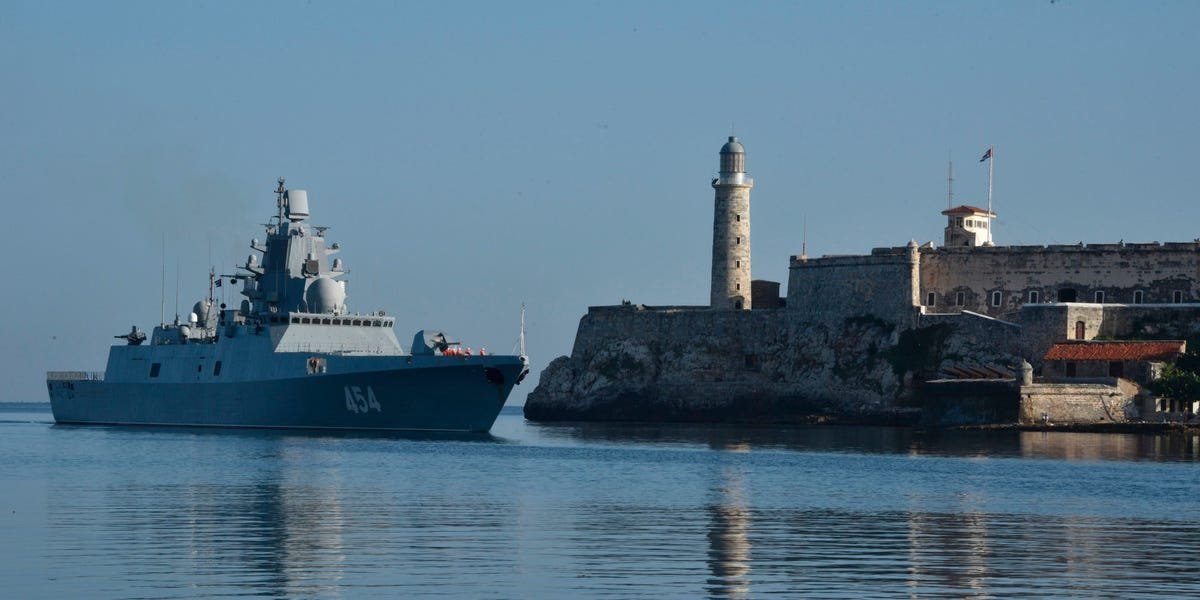
Russia sending warships to Cuba next week is an attempt to show its navy is still a global power after losses in the Black Sea, an unnamed US official told reporters, according to the Associated Press.

On Thursday, Cuba’s Ministry of Foreign Affairs said Russia was deploying four warships to Cuba, including a nuclear-powered submarine, with the vessels expected to be in Havana between June 12 and 17.

“Russia has sailed the Black Sea since 1783 but is now forced to constrain its fleet to port,” UK Defence Minister Grant Shapps wrote. “And even there Putin’s ships are sinking!”

This week, it was reported that Ukraine was using its exploding naval drones to go after smaller Russian vessels after Moscow pulled back its larger warships to reduce their vulnerability to attacks.

Not everyone agreed on Russia’s motive.

The visit of the ships, none of which will carry nuclear missiles, does not represent a threat to the region, the Cuban statement read, but was instead part of the historically cordial relations between the two countries.

But according to the US official, the deployment is an effort by Russia’s navy to flex its muscles on the world stage, after suffering losses in the Black Sea.

“This is about Russia showing that it’s still capable of some level of global power projection,” they said, per Reuters.

Russia’s navy has suffered a series of embarrassing setbacks in the Black Sea, where Ukraine claims to have destroyed a third of its fleet.

Ukraine has used drones, missiles, and other weaponry to take out many Russian warships, and has forced its fleet to seek safer ports further away from Crimea.

In March, the UK’s defense ministry declared Russia’s Black Sea Fleet “functionally inactive” after Ukraine claimed to have struck another two of its vessels.

Russia also shuffled its naval leadership earlier this year.

According to the unnamed US official, while the US expects “heightened” Russian naval and air activity this summer, and more going forward, deployments like those to Cuba incur costs for the Russian navy, which is “struggling to maintain readiness and conduct deployments with an aged fleet.”

In a military assessment on Thursday, the Washington DC-based think tank the Institute for the Study of War said it was likely part of an effort to bring back memories of the Cuban Missile Crisis, and dissuade the US from offering further support to Ukraine.

The deployment also comes after Putin threatened to send long-range weapons to “regions around the world” that want to strike Western targets.

Meanwhile, Russia’s Ministry of Defence said its goal was to keep a Russian naval presence in operationally important areas of the “far ocean zone,” RBC-Russia reported.


Source link