
I-moved-my-family-from-Florida-to-Colombia-The-lifestyle.jpeg

I moved my family from Florida to Colombia. The lifestyle is affordable and we love the vibrant culture, but it’s hard to adjust to the lack of urgency.

This as-told-to essay is based on a conversation with Alyssa Bolaños, a 35-year-old creative freelancer living in Medellín, Colombia. It’s been edited for length and clarity.

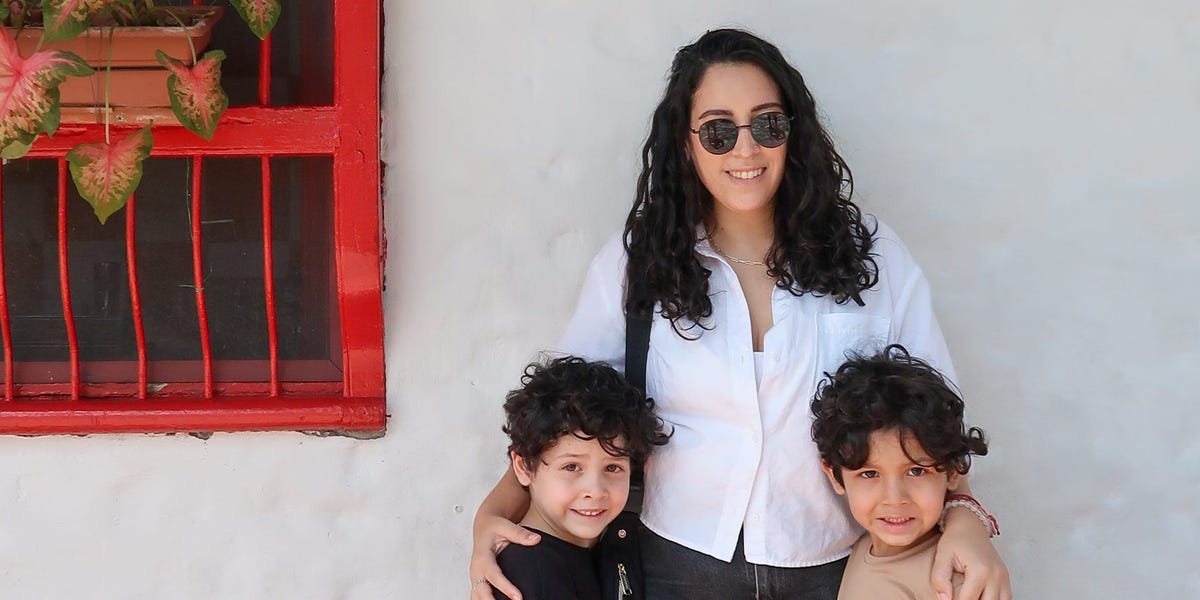
My husband, two sons —who were four and five at the time — and I moved from Orlando to Medellín, Colombia, in August 2025.

My husband is from Colombia, and he always said he never wanted to move back, but when the Trump administration took office a second time, we started having serious conversations about it.

We also had safety concerns about our children’s school and decided we absolutely did not want to raise our kids in a place with a threat of school shootings. That’s what really clicked with my husband and made him think, “We can’t stay here.”

Since moving, we’re spending more time as a family, enjoying the affordable lifestyle, and integrating into Colombia’s vibrant culture. I’m still adjusting to some of the differences in work culture, and I miss my family, but I have no plans of moving back.

Our families were concerned about us leaving

Once we made the decision to move, I really didn’t have any fears. The only problem was that our immigrant families questioned why we would move back after they sacrificed so much to move to the States — my parents are from Cuba.

We weren’t going to let anyone’s perspective hold us back because, at the end of the day, we have to focus on the lives of our children and ourselves. It was really only six months from that point that we actually moved.

The emotional aspect of moving, saying goodbye to friends and family, was the hardest. Family is a big part of Latino culture, so it was hard being the first of our family to leave.

The whole process of selling and donating our belongings was also exhausting. We shipped two big boxes of our belongings, but we had to be really discerning about only taking the most sentimental things with us.

I’m able to be present in my kids’ lives here

Colombian culture is so family-oriented. When people finish work, they spend time with their families and enjoy life. Every day is a reason to celebrate, and I love that about Colombia.

My husband is a stay-at-home dad, and I do a little bit of everything as a freelancer, like social media strategy and marketing for brands and small businesses. We’re currently homeschooling our kids while we wait for them to be accepted into a school in the area.

Actually being present with your kids is a blessing that you don’t always get as a parent in the States. In Colombia, we spend lunchtime from 11 a.m. to 2 p.m. playing with them or exploring. It’s tiring to be with your kids all the time, but it’s a luxury.

The food and the walkability are also amazing. We don’t have a car, so we walk most places or take public transit. Our kids also scooter around. Worst case, we take an Uber.

The lack of urgency here is good and bad

People work to live here, not live to work. It’s an amazing change of pace, but it’s still taking some getting used to. I used to sit at my desk job all day and work the entire time. Here, there are lots of holidays and a strong emphasis on getting outside and spending time with loved ones.

One thing I didn’t expect was the overall lack of urgency. In the States, we’re so used to the “go go go” hustle culture. I got so accustomed to constantly moving and feeling like I was doing something wrong if I wasn’t being productive.

In Colombia, there aren’t as many strict timelines, and people are more focused on enjoying little moments in their day. If I’m being honest, the lack of urgency stresses me out sometimes, but I’m really trying to be chill with it and remember that not everything is an emergency.

This change of pace is good for me, but it’s hard.

I miss my family, but I prefer the Colombian version of things

There’s not much I really miss about the United States other than family and friends. We’re lucky to have some family and friends here who have introduced us to others, and we’ve attended some events for other immigrants, but building new connections is taking time.

Other than that, we have all of the same comforts like public transportation, air conditioning, and stores. People have this misconception that Colombia is a backward place, and it’s absolutely not like that.

Medellín is innovative and full of life, culture, and community. There are even some Colombian versions of things I prefer, like the Colombian Frisby instead of KFC. I miss IHOP a little bit, though.

Our lifestyle is affordable, but there’s a caveat

Our groceries are less than they used to be for our family of four, and my personal cellphone bill is $30 a month. Everything here has been much more affordable and accessible for us.

That being said, I always want to be careful saying that our lifestyle is affordable because Colombia is experiencing a big problem with gentrification. If you move here, my advice is to support local Colombian stores and really integrate with the culture. Colombia is a beautiful place, and we have no plans to leave.

Do you have a story to share about leaving the United States? If so, please reach out to the reporter at tmartinelli@businessinsider.com.



Source link

Ive-lived-in-the-UK-for-over-20-years-—theres.jpeg

I’ve lived in the UK for over 20 years —there’s just one town I always dream about moving to and love to visit

Our family’s first trip to Windermere changed everything.

​Sitting on the bank of a stream with my feet dipped in its cold, clear water, surrounded by trees budding for spring — even with the baby kicking away inside me at eight months pregnant, I felt a kind of bliss that’s hard to put into words.

​The only sounds were the distant mooing of cows and the occasional squeals of our toddler’s laughter at the nearby bed and breakfast.

​I had no doubt in my mind that our four-hour drive from Northampton was worth it.

Since that trip nearly two decades ago, we’ve been to this small English town in the Lake District many times. Each visit only confirms there’s no place like Windermere — and I still dream of moving here someday.

​The town feels like its own secret world, but it’s still well-connected and home to top-notch food and attractions


TRain driving through fall foliage in lake district

A train driving through the Lake District in the fall.

by Andrea Pucci/Getty Images


Tucked between rolling fells (grassy hills) and England’s largest lake of the same name, the town of Windermere feels like its own world.

​Home to fewer than 10,000 residents, it’s small enough to cross on foot yet expansive in feel.

The surrounding hills and lake feel quietly confident. They soften the skyline and set a slower pace, making it clear this isn’t a place built for rushing.

All of this gives Windermere a wonderfully quiet, oasis-like rhythm.

Despite feeling removed from the hustle and bustle, it’s surprisingly well-connected and close enough to reach without much fuss.

It’s a short drive from cities like Lancaster and Carlisle. By train, it’s three hours from London, an hour and a half from Manchester, and two or three hours from Edinburgh.

It’s also in the county of Cumbria, which has something for everyone, whether you want to partake in watersports and hiking, visit Scafell Pike (England’s highest mountain and a war memorial), try local specialties like sticky toffee pudding and Cumberland sausage, or just seek out some serenity.


Tall green mountains, peaceful lakes in lake district

Fleetwith Pike and Buttermere in the English Lake District.

WhitcombeRD/Getty Images


Over the years, some of our most cherished Lake District moments have come from serene walks and hikes around the lakes and fells of Windermere and nearby towns, as well as leisurely cruises and visits to the world-famous Beatrix Potter attractions.

And though many of its local cafés have small-town charm, this area has serious food cred, too. The Lake District is home to several Michelin-starred restaurants.

Even so, unlike busier hot spots, Windermere has retained its identity and sense of self. It is protective of its pace, its peace, its essence.

People here seem to look out for each other. They don’t just nod as they pass; they stop to chat and remember people’s names.

By 5:30 p.m., many shops and cafés close, while a handful of restaurants, pubs, and the local Sainsbury’s stay open late. Even at night, the town feels safe and calm, especially compared to larger cities.

I dream of living here someday

Many places are lovely to visit, but Windermere feels like somewhere that meets you exactly where you are, offering something for every stage of life.

After all these years, I still sometimes feel that same stillness I felt on our very first trip when I was sitting by the water and realizing we’d found somewhere special.

Each visit has marked a different chapter in our family’s lives, from being pregnant with a toddler in tow to returning with teenagers who now set their own pace.

Somehow, though, Windermere has grown with us, and I often wonder what it might feel like if we stayed a little longer. After all, there’s something comforting and restorative about living where nature is such a big part of daily life.

When I imagine where I’d call home in the UK, it’s not London, Birmingham, Manchester, or even Northampton, where we live now.

It’s Windermere … maybe once the children have grown up.


Source link

I-didnt-love-Mexico-City-as-much-as-I-thought.jpeg

I didn’t love Mexico City as much as I thought I would. Luckily, I found a smaller, more charming spot nearby.

When planning my two-week trip to Mexico, I looked beyond destinations like Cancún, Puerto Vallarta, and Cozumel. I wanted to visit central Mexico instead, which is further away from the busy cruise ports and all-inclusive resorts.

For years, I’d heard nothing but great things about Mexico City, so I put it at the top of my list. Travelers seem to always rave about the city’s atmosphere, culinary scene, and world-class museums. I couldn’t wait to check it out for myself.

However, once I arrived in the city, which is home to about 22 million people, I was totally overwhelmed. The influx of tourists for Mexico’s Día de Muertos celebrations at the time probably didn’t help, either.

There was a lot to do there, but I missed the quieter atmosphere of Santiago de Querétaro, where I’d been just a few days prior.

The smaller city, often shortened to just Querétaro, is home to around 1.5 million people and is located just three hours by bus from Mexico City. I knew little about the area beforehand, but was soon blown away by its colorful historic center and nearby attractions.

Mexico City gets a lot of hype, but in the end, it was the city I’d previously barely heard of that exceeded my expectations.

Querétaro’s city center is exceptionally charming


View of people walking in Querétaro

Querétaro is much smaller than Mexico City, but it has a lot to offer.

Jenna DeLaurentis


On my first morning in Querétaro, I was immediately struck by the atmosphere of the historic city center.

It’s a designated UNESCO World Heritage Site, and it’s full of tree-lined public squares. Each square acts as a meeting point for commerce, culture, and dining experiences.


Figure with sugar skull head and colorful dress

Querétaro’s pedestrian-only streets are ideal for a relaxing walk.

Jenna DeLaurentis


I loved dining outdoors in these public squares. Often, musicians played soft piano music during mealtimes, and the atmosphere was alluring.

Beyond the squares, every street offered something new. On a visit to Querétaro’s Museum of Arts, I was blown away by the building’s Baroque-style architecture. The intricate design of the space was just as impressive as the artwork inside.


Querétaro's Museum of Arts

Querétaro’s Museum of Arts has stunning architecture.

Jenna DeLaurentis


Likewise, a brief visit to the Calendar Museum left me impressed. The small museum, which houses exhibitions on time and space, contains intricately manicured gardens in a restored mansion. The space was serene, adding another special touch to Querétaro’s endearing city center.

In contrast, I found Mexico City to be more overwhelming than charming. With millions of people, cars, and buses zooming around every corner, it was impossible to feel relaxed.

While walking around Mexico City’s maze of streets, I found myself missing the small-town feel of Querétaro.

The city is a convenient home base for day trips to other destinations, too


San Miguel de Allende

San Miguel de Allende is a short drive from Querétaro.

Jenna DeLaurentis


Something I loved during my time in Querétaro was the city’s proximity to several exciting destinations. I found it easy to take a day (or overnight) trip from the city.

On my visit, I took a one-night trip to San Miguel de Allende, a small city with well-preserved colonial architecture.

It was the perfect destination for a quick visit. I spent my time wandering around cobblestone streets, dining at rooftop cafes, and marveling at San Miguel de Allende’s prominent pink cathedral.

Querétaro is also within an hour’s drive to two of Mexico’s Pueblo Mágicos, or Magic Towns. There are 177 Pueblos Mágicos within Mexico, and each town has been designated to have significant cultural, historical, or architectural significance within the country.

One of these Pueblos Mágicos, Bernal, is famous for its giant monolith that towers over the town. The other, Tequisquiapan, offers a peaceful getaway where visitors can explore traditional cheese markets, vineyards, and natural hot springs.

Taking day trips from Querétaro doesn’t require a car, either. Uber is convenient throughout the area, and comfortable coach buses can take you from town to town at a low cost.

Mexico City has more to offer overall, but Querétaro is definitely worth a visit


Author Jenna DeLaurentis in Mexico City

I was excited to check out Mexico City for the first time, but it wasn’t my favorite place to visit in Mexico.

Jenna DeLaurentis


Even though I preferred Querétaro to Mexico City, there’s no denying that there’s far more to see and do in the latter.

You could spend months in Mexico City and barely scratch the surface. The city has over 150 museums and galleries along with the palatial Chapultepec Castle, massive Zócalo Square, vast green parks, and more restaurants than you could try in a lifetime.

Its National Museum of Anthropology could take an entire day to see in and of itself!

I expected to fall in love with Mexico City, but I didn’t jive with the city as much as I thought I would. For the most part, though, I’d still agree that Mexico City is worth the hype it receives. The metropolis has an addictive, bustling atmosphere, and the street-food scene is definitely out of this world.

Yet my trip was a good reminder to look beyond the most popular destinations in a particular place. I had never even heard of Querétaro before I planned my trip, but I’m so glad I took the chance to discover somewhere new.


Source link

Theron Mohamed — Profile Picture

Bill Gurley: people who don’t love their jobs are most at risk of losing them to AI

Passion could be the best defense against AI taking your job, Bill Gurley says.

“The people that are most at risk are the ones that are sitting idly in the job and don’t really have a why or a purpose for it,” the legendary venture capitalist said during the latest episode of the “On with Kara Swisher” podcast.

“I think a lot of the people that go through that college conveyor belt, that are chasing a safe job, that end up working as a widget or a cog in an industry they may not love — I think they are ripe for disruption,” he added.

Advances in AI have spurred numerous high-profile companies to slow hiring or make layoffs in anticipation of cheaper, more productive digital workers replacing human ones.

Technology giants such as Meta, Microsoft, Amazon, and Alphabet are also spending hundreds of billions of dollars to build AI infrastructure, fueling widespread concerns of future job losses.

Gurley is a general partner at Benchmark who’s known for placing early bets on businesses such as Uber, Nextdoor, OpenTable, and Zillow.

He recently published a book titled “Runnin’ Down a Dream: How to Thrive in a Career You Actually Love.”

The veteran investor said on the podcast that young people should choose careers they enjoy and care about. Warren Buffett, who famously “tap dances to work” at Berkshire Hathaway, has long offered similar advice.

“For people that are in a job they love, the honing’s free,” Gurley said. He explained that when someone is passionate about what they do, they don’t need to set aside time or convince themselves to polish their skills and knowledge; they naturally prioritize improvemen and feel energized by the process.

“It really becomes an unfair advantage in almost any industry if you’re that person because you’re learning constantly,” Gurley said.

One key thing they should learn is how to harness AI to bolster their efforts, he said.

“Be the most AI aware person in your job,” Gurley said. “And you’re going to then be the last person that they want to get rid of.”

Gurley compared AI to “jet fuel” that can expand a worker’s capabilities. Employees can now learn more quickly and thoroughly than ever before, he said, so if they’re focusing their learning on AI, they’re “going to have even better chance of winning,” he added.


Source link

Naydeline Mejia

My move from the US to Paris has come with a lot of benefits, but finding love has felt impossible

When I visited Paris for the first time in 2022 during my inaugural solo trip, I fell in love with the city instantly.

Sipping my chocolat chaud while reading Hemingway’s “A Moveable Feast” at the legendary Café de Flore, enveloped in the charming Haussmannian architecture the city is renowned for, I whispered to myself: “I could live here.”

It wasn’t until two years later that I would finally make the move abroad after being accepted into a graduate school program and subsequently quitting my dream job at a big-time magazine to fulfill my newest dream of living in Paris.

Although moving to France from the US has come with plenty of benefits, such as a slower pace of living and a healthier work-life balance, one part of my journey has significantly suffered: my love life.

For a city that markets itself as the City of Love, I have found building a meaningful connection with someone in Paris nearly impossible.

The language barrier has made it difficult to connect with potential partners deeply


Woman reading book outside at cafe in PAris

I can speak French, but I still feel a language barrier on dates.

Naydeline Mejia


As someone with an intermediate level of French, I knew when entering the Parisian dating scene that language would be a hurdle, especially when going on dates with non-native English speakers.

During dates with people who didn’t feel comfortable speaking English or didn’t speak the language very well, we’d mostly converse in French — I found banter to be difficult and less fluid.

My personality also took a hit. Instead of my usual, flirty self, I felt more reserved because I couldn’t express myself fully in my third language.

Even during dates where the other person did have a good command of English, I felt as though we lacked a certain access to one another as we weren’t able to express ourselves in our mother tongues.

As a result, I convinced myself our connection would never reach deeper than center ground.

I’ve had some great dates, but intimacy doesn’t always translate into romance


Woman smiling in PAris under umbrella

For me, romance has been hard to find in Paris.

Naydeline Mejia


Another barrier to finding love while dating in Paris has been the differing dating customs.

In my experience, it’s not uncommon for French partners to want to go on regular romantic dates and engage in public displays of affection, like holding hands, even if we’re only seeing each other casually.

As someone who is used to clearly defined relationship boundaries and labels, like “friends with benefits” and “exclusive,” while dating in the US, I find it a bit disorienting to receive forms of intimacy usually reserved for a serious relationship from a non-romantic partner.

I have also observed that the “what are we?” conversation is not really common in France. After a few successful dates, it’s often assumed that you and your dating partner are exclusive. In comparison, in the US, a conversation around exclusivity usually precedes becoming “official” with someone.

The lack of a clear conversation around labels has often left me feeling confused about where I stand with potential partners or the relationship feeling unbalanced.

I have considered moving back to the US for a better chance at love


Woman walking next to building in Paris

I’m not sure if I’ll find love in Paris.

Naydeline Mejia


While I can’t say my dating experience was that much better when I was living in the US, I do consider moving back home to New York to increase my chances of finding a meaningful partnership.

In my experience, there are many benefits to dating in your native country — from speaking the same language to upholding similar dating rules and customs, and, oftentimes, having shared experiences that can only be witnessed by someone from your hometown.

At the same time, some of the most beautiful love stories defy cultural and language barriers. I would be remiss not to try to work past the difficult parts of dating abroad in my search for a partner who makes my heart flutter long past the honeymoon stage.

Nevertheless, while concurrently navigating a seemingly never-ending dating pool, I have also been enjoying my alone time in this fairy-tale city.

In her essay, “Why Are All the Lonely Girls Going to Paris?,” writer Jenna Ryu argues that perhaps inhabiting this so-called City of Love is not about finding a storybook romance, but celebrating the beauty of solitude, especially as a young, single woman.

I have never felt more sure of myself and in love with life than during these past two years living in Paris. The love I would often reserve for a romantic partner, I have been pouring onto myself — and that has made all the difference.


Source link