
I-eat-the-same-dietitian-approved-lunch-almost-every-day-Its.jpeg

I eat the same dietitian-approved lunch almost every day. It’s got protein and fiber — and it’s a breeze to prep in advance

When I lived in a big city, I used to love treating myself to lunches at trendy salad spots. Tasty as these take-out meals were, they were terrible for my wallet, and I didn’t have full visibility into or control over the ingredients that went into them.

I’ve since turned into an avid meal-prepper and make my own lunch — almost always a fiber- and protein-packed grain bowl — for a fraction of the price.

It’s a recipe that aligns with the 80/20 nutrition principle I follow, meaning I eat nutrient-dense foods 80% of the time and don’t worry about nutrition for the other 20%.

The grain bowls are so nourishing that I feel relaxed about occasionally going out for a slightly less nutrient-dense lunch, since I know I’m hitting my nutrition goals most of the time.

Here’s how to make the everyday lunch that helps me stay on track.

The grain bowl is easy to prep and customize


rachel hosie grain bowl recipe

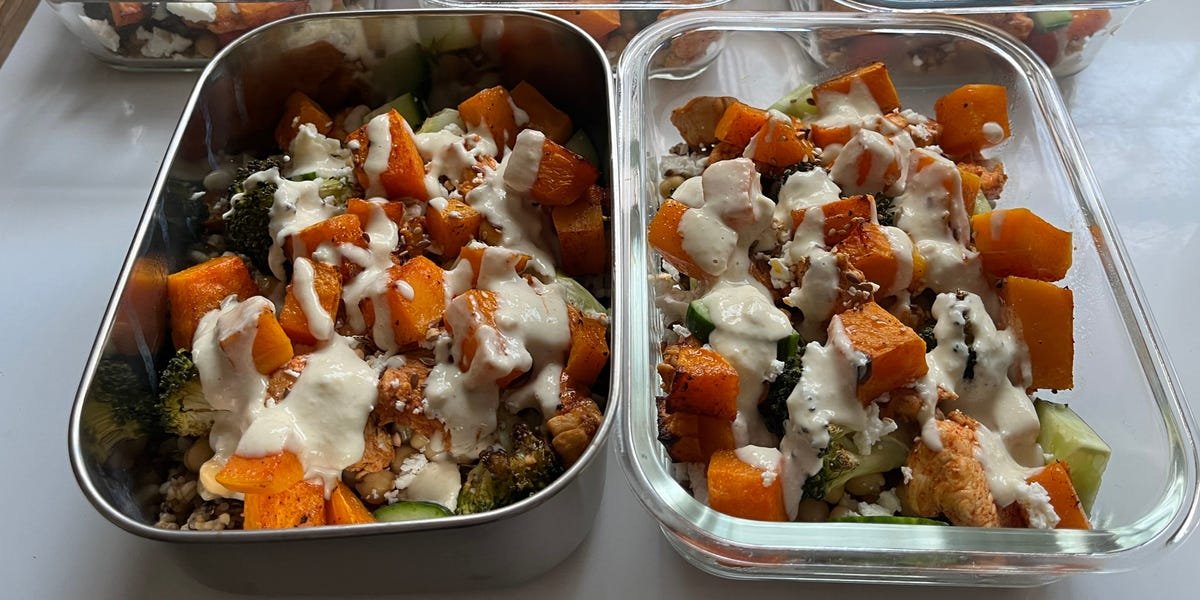
The grain bowls are nearly impossible to mess up and highly customizable.

Rachel Hosie


I play around with the ingredients I put in my grain bowls every week, but they always follow the same formula:

  • Grains, such as quinoa, buckwheat, or wholegrain rice
  • Beans or pulses, such as edamame, chickpeas, or lentils
  • A protein source, such as tofu or chicken
  • Roasted vegetables, such as butternut squash, bell peppers, cauliflower, broccoli, or zucchini
  • Raw vegetables, such as chopped cucumber, tomatoes, beetroot, or scallions
  • A flavorful add-in, such as crumbled feta, avocado, or hummus
  • Greens, such as lettuce or spinach
  • Seeds and nuts of choice
  • Spices and herbs of choice
  • A dressing of choice

The recipe is flexible, so there’s no need to add ingredients in a specific order. It’s truly hard to mess up.

You can also adjust the quantity based on your needs. I typically make six portions — three for me, and three for my husband — because there’s usually a day or two during the week when we eat with colleagues or friends.

Plus, after three days of eating the same meal, I’m typically ready to mix it up.


rachel hosie grain bowl recipe

I drizzle a tahini mixture on top of my bowl for added flavor.

Rachel Hosie


To add variety to my days, I prep these with dressings and protein sources.

When it comes to dressings, my favorite is a creamy tahini mixture. Combine tahini, Greek yogurt, lemon juice, garlic granules, salt, pepper, olive oil, and water until you get a dressing-like consistency.

I also make a satay-style sauce with crunchy peanut butter, soy sauce, garlic, ginger, lime, and sesame oil.


rachel hosie grain bowl recipe

Chickpeas and avocado are delicious, filling protein sources.

Rachel Hosie


There’s also flexibility when it comes to protein source. Nichola Ludlam-Raine, a dietitian and the author of “How Not to Eat Ultra-Processed,” recommends adding oily fish, such as salmon or tinned mackerel, for omega-3s, which support heart and brain health.

When I include meat in the grain bowls, I typically use a modest portion since I always throw in plenty of plant-based protein. This approach provides a fiber boost from plant-based proteins and keeps the ingredient list affordable.

If you’re predominantly eating plant-based, make sure you’re getting enough iodine by using dairy yogurt in your dressing or swapping in the occasional white fish.

Having a balanced lunch prepped and ready to go helps me stay consistent


rachel hosie grain bowl recipe

Incorporating a mix of roasted and raw vegetables gives the bowls texture.

Rachel Hosie


My grain-bowl formula has lean proteins, produce, legumes, and whole grains — all the workings of the Mediterranean diet.

According to Ludlam-Raine, “It’s essentially a Mediterranean-style pattern of eating in bowl form, which is linked with better cardiometabolic and long-term health outcomes.”

She added that it delivers “an abundance of plant diversity,” which is beneficial for gut health.

The well-rounded meal also has fiber-filled whole grains, slow-release carbohydrates, pulses for plant protein and additional fiber, protein for satiety and muscle maintenance, vegetables for polyphenols and micronutrients, and healthy fats from seeds, nuts, and olive oil.


rachel hosie grain bowl recipe

We store the bowls in our refrigerator throughout the week.

Rachel Hosie


Strategizing my meals in advance helps me maintain a healthy, balanced diet throughout the week, and this grain bowl is the backbone of my meal plan.

“Overall, what you’ve got is a brilliant example of a practical and sustainable approach to meal prep. It’s balanced, fiber-rich, protein-sufficient, and easy to adapt week to week, which is key for long-term adherence,” Ludlam-Raine said. “You’re making the healthy choice into the easy choice.”

The best part? I don’t get bored with eating the same thing on repeat.


Source link

I-was-skeptical-but-Martha-Stewarts-crispy-tofu-recipe-is.jpeg

I was skeptical, but Martha Stewart’s crispy tofu recipe is my new favorite for a meatless, protein-packed lunch

  • I’ve been looking for a high-protein, meatless recipe that I could use for quick, easy lunches.
  • I decided to try Martha Stewart’s crispy fried tofu recipe, and it’s become my new go-to.
  • The tofu is flavorful enough on its own, but I love adding it to grain-and-veggie bowls.

Traumatizing: that’s the word I’d use to describe my first experience with tofu.

The first time I tried cooking tofu at home, it was completely flavorless, and worse yet, the texture reminded me of a soggy marshmallow.

It was almost enough to make me swear off tofu completely, but I’ve been on the hunt for high-protein, plant-based recipes, so I thought I’d bravely give it another go with Martha Stewart’s crispy fried tofu.

Stewart says that her recipe is not only a cinch to make, but also yields super-crunchy tofu. After trying it myself, I agree.

Not only was this tofu delicious, but it filled me up for several hours.

Extra-firm tofu in particular, which this recipe calls for, contains about 14 grams of protein per 3-ounce serving, although this can depend on the brand and product you buy.

Here’s how I make it.

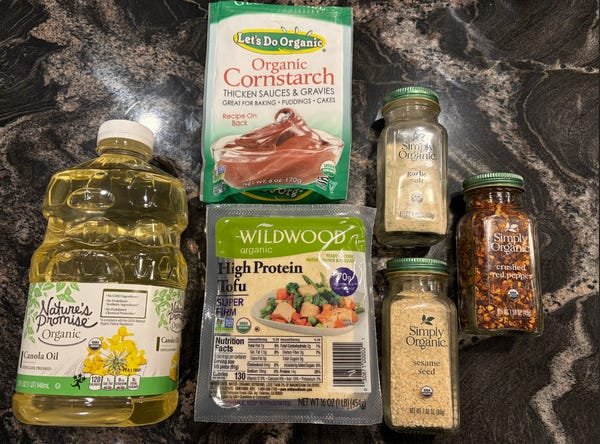
You only need a few ingredients.

The ingredient list was short and sweet, and I already had several in my pantry.

Rebecca Strong

Conveniently, I already had most of the required ingredients for this recipe in my pantry and fridge.

Aside from extra-firm tofu, the recipe calls for a neutral cooking oil (like safflower), salt, and cornstarch.

Stewart also recommends grabbing mayonnaise and Sriracha for a dipping sauce, as well as chopped scallions and lime wedges for serving.

First, drain the tofu to ensure crispy results.


The writer draining tofu on a baking sheet.

In my experience, taking some time to drain the tofu is worth it.

Rebecca Strong

Although draining liquid out of tofu may take a little extra time, trust me when I say it’s worth it — because excess moisture will prevent your tofu from crisping up.

Stewart recommends lining a baking sheet with multiple layers of paper towels, arranging the sliced tofu on top, and then layering more paper towels on top of the tofu before weighing it down with another baking sheet topped with some heavy cans.

Then, wait 30 minutes for the liquid to drain onto the paper towels.

Stewart suggests slicing the tofu lengthwise into long strips, but I prefer to cut mine into cubes — I find that smaller pieces yield crispier edges.

Don’t forget to dredge the tofu.


The writer dredging the tofu in a bowl.

Next, I coated the tofu in cornstarch.

Rebecca Strong

After draining the tofu, coating it in cornstarch is key: When I first tried a fried-tofu recipe, I didn’t follow this step, and it didn’t crisp up nearly as well.

Stewart suggests mixing any of your preferred spices into the cornstarch prior to dredging, so I added garlic powder, sea salt, and sesame seeds. Other options mentioned in the recipe include Cajun seasoning, onion powder, and ground cumin.

To coat it, pour the cornstarch and spices into a large bowl or container, then add the tofu. Once everything’s in the bowl, either toss it with your hands or pop on a lid and shake it all up until all the sides are coated.

Next, it’s time to fry.


The writer frying the crispy tofu on a stovetop.

I used organic canola oil to fry my tofu.

Rebecca Strong

Heat up your oil in a large, heavy-bottomed pan over medium.

Stewart’s favorite oil for this recipe is safflower, since it has a high smoke point and neutral flavor — but canola oil, sunflower oil, vegetable oil, and peanut oil also work. I used organic canola oil because it’s what I had on hand.

If the tofu is too crowded in the pan, it won’t get evenly crunchy on the outside — so, Stewart says it’s best to split the tofu into two batches.

Fry each batch until the exterior of the tofu has just turned golden brown, turning every minute or two to ensure all sides make contact with the oil.

This should take five minutes, according to Stewart, but it took me closer to seven — perhaps because I like mine extra crunchy.

Finally, transfer your tofu to a paper-towel-lined plate and season it.


The finished crispy tofu on a paper towel.

The tofu came out looking crunchy and delicious.

Rebecca Strong

Once the tofu is done cooking, transfer it to a plate lined with paper towels to soak up any excess oil.

This is when Stewart recommends seasoning the tofu with salt, but because I already added salt to the cornstarch coating, I skipped that step.

Stewart’s favorite dipping sauce for this tofu is a mixture of mayo and Sriracha. I’m not a huge mayo fan, so I used a spicy tahini for a similar but nuttier vibe.

I did, however, follow her tips to garnish with scallions for a pleasantly peppery bite.

Now, I love adding this tofu to grain-and-veggie bowls for easy, high-protein lunches.


The tofu in a bowl with scallions, Brussels sprouts, cauliflower, and rice.

This tofu is great on its own, or as the starring ingredient in a veggie bowl.

Rebecca Strong

Miraculously, this recipe completely transformed my feelings about tofu.

I was amazed by the satisfying, crunchy texture and the sheer amount of flavor it held when seasoned well and served with the right sauce.

Best of all, this tofu is super versatile. Since falling in love with this recipe, I’ve started adding it to grain bowls with veggies for a super-satiating lunch or dinner.

My favorite combo is quinoa or white rice with roasted or sauteed Brussels sprouts, cauliflower, and broccoli. Sometimes I’ll toss in some avocado for creamy texture and healthy fats, or take a cue from Stewart and add a squeeze of lime.

I also believe this tofu would be a tasty addition to a Caesar salad, lettuce wrap, or taco with black beans and avocado.


Source link