
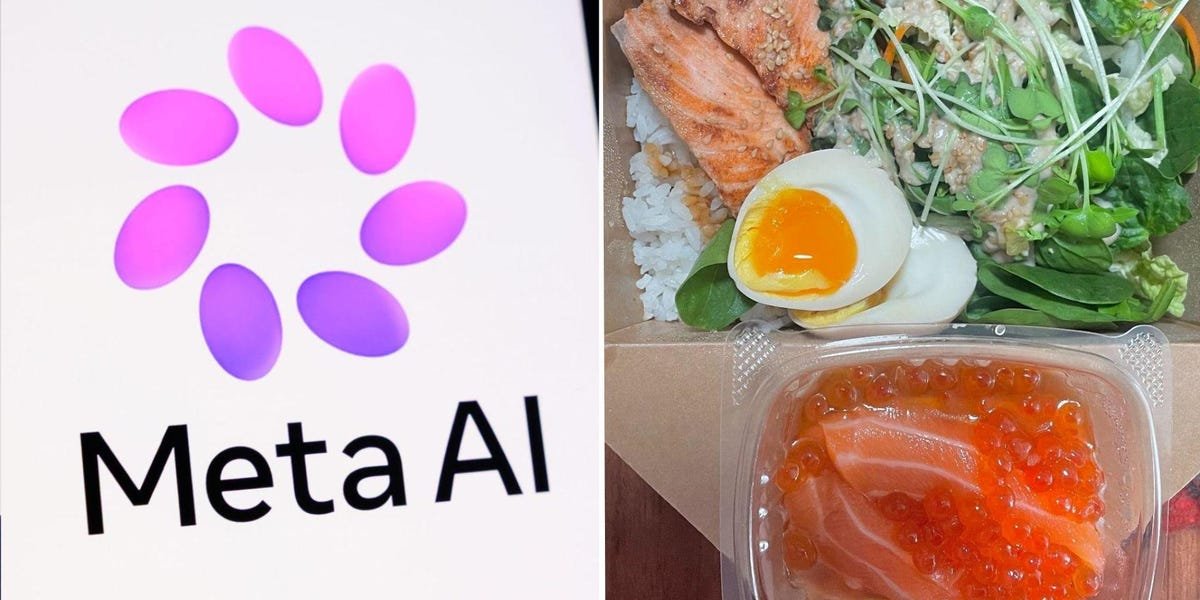
I-asked-Metas-new-Muse-Spark-AI-to-judge-my.jpeg

I asked Meta’s new Muse Spark AI to judge my lunch and give me recipes for dinner, and it mostly delivered

For some of us, cooking is hard, and coming up with nutritious meals with what’s already in the fridge is harder.

I have always struggled with meal prep, often forgoing a meal altogether when I just don’t have the mental energy to decide what to make. So, despite having a healthy dose of skepticism toward AI, I decided to let Meta’s new Muse Spark AI judge the nutritional value of my lunch and help me decide what to make for dinner based on the few items I have in my fridge.

Muse Spark was freshly launched on April 8 after Meta waged a talent war to fuel its AI ambitions. In Meta’s press release, Muse Spark was partly promoted as a personal AI tool that could help you track your health or plan a trip.

“Health is one of the top reasons people turn to AI, so we worked with a team of physicians to develop the model’s ability to provide helpful information on common health questions and concerns,” according to the press release.

With those marketed functions in mind, instead of asking the AI tool to write me a paragraph, I skipped straight to lunch.

Rating my salmon lunch


Bento box with salmon

The author’s bento box lunch with salmon. 

Katherine Li/Business Insider


I got my go-to take-out from my favorite Japanese bento place for lunch near my home. It consists of seared salmon on rice, with an egg, mixed greens, and a side of raw salmon and fish roe.

I uploaded a photo of the meal to Muse Spark and tasked it with creating a detailed breakdown of every type of food and sauce, along with the number of calories for each item. I also asked it to make a labeled image of my meal, give it a score out of 10, and explain how it factors into my nutritional needs of the day based on my biometrics.


Chart

Muse Spark made a clear chart that gave a detailed caloric breakdown of the author’s meal. 

Screenshot/Business Insider


Muse Spark was mostly accurate about what ingredients were in my meal.

It made it clear it didn’t know the weight of the ingredients or the exact type of oil it was cooked in, but it estimated that my salmon bento was around a total of 760 calories. Muse Spark also estimated, based on the photo, that the dressing and sauce I love are extremely high in calories and sodium, leaving me little room for additional sodium intake in my day.

Muse Spark also said that the meal appeared dense in micronutrients like Omega-3, based on the photo. However, the AI thought it was lacking in fiber, vitamin C, and calcium. Overall, it rated my meal a 7.5 out of 10 and reminded me that it is not a licensed nutritionist.

Where Muse Spark struggled was generating a labeled image.


Muse Spark

Muse Spark failed to clearly label the author’s meal. 

Screenshot/Business Insider


The labeled words made no sense. After one more failed attempt to ask it for a labeled image with readable text, I gave up and moved on to the next task.

The dinner challenge


Food in fridge

The author collected leftover and eclectic ingredients in my fridge for a visible photo and asked Muse Spark to suggest some dinner recipes. 

Katherine Li/Business Insider


Now that Muse Spark knew what I had for lunch, I collected leftover and eclectic ingredients in my fridge for a visible photo and asked it if it could suggest some dinner recipes for me.

I explained that I have a wide array of condiments available that aren’t shown in the photo, and I would prefer recipes that are easy to cook and clean. Here are Muse Spark’s suggestions that came with a brief step-by-step recipe:

  • Tomato-braised chicken + roasted potatoes + papaya side
  • Light spaghetti alle vongole + blueberry-oat smoothie
  • Japanese-style oyakodon + papaya-blueberry salad

According to Muse Spark, the meals are designed to make up for its analysis of my lunch, which it said lacked fiber and vitamin C, with the option to moderately increase carb intake. It also suggested that I rinse my canned tomatoes to lower their sodium level and skip any salt and soy sauce.

“Sodium is the main thing to watch — if the rest of your day is also soy-sauce heavy, you’ll likely overshoot 2300mg,” said Muse Spark.

Muse Spark was not able to tell that the package that says freeze-dried strawberries is actually covered in sweet yogurt and far too sugary for a smoothie, but its options gave me sufficient inspiration to cook and taught me clever ways to finish my leftover items, such as the papaya half.

At the end of the day, I decided on the Japanese-style oyakodon meal, and saved the other two recipes for another day.

Will I stop putting soy sauce in everything and skip my favorite condiment options in my bento? Probably not, even if I can hear Muse Spark telling me to stop in my head.


Source link

I-was-skeptical-but-Martha-Stewarts-crispy-tofu-recipe-is.jpeg

I was skeptical, but Martha Stewart’s crispy tofu recipe is my new favorite for a meatless, protein-packed lunch

  • I’ve been looking for a high-protein, meatless recipe that I could use for quick, easy lunches.
  • I decided to try Martha Stewart’s crispy fried tofu recipe, and it’s become my new go-to.
  • The tofu is flavorful enough on its own, but I love adding it to grain-and-veggie bowls.

Traumatizing: that’s the word I’d use to describe my first experience with tofu.

The first time I tried cooking tofu at home, it was completely flavorless, and worse yet, the texture reminded me of a soggy marshmallow.

It was almost enough to make me swear off tofu completely, but I’ve been on the hunt for high-protein, plant-based recipes, so I thought I’d bravely give it another go with Martha Stewart’s crispy fried tofu.

Stewart says that her recipe is not only a cinch to make, but also yields super-crunchy tofu. After trying it myself, I agree.

Not only was this tofu delicious, but it filled me up for several hours.

Extra-firm tofu in particular, which this recipe calls for, contains about 14 grams of protein per 3-ounce serving, although this can depend on the brand and product you buy.

Here’s how I make it.

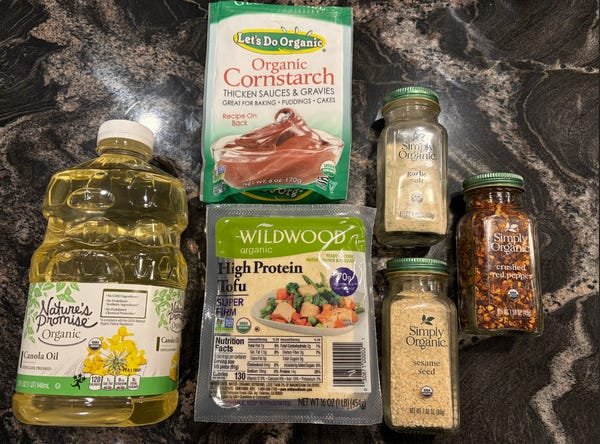
You only need a few ingredients.

The ingredient list was short and sweet, and I already had several in my pantry.

Rebecca Strong

Conveniently, I already had most of the required ingredients for this recipe in my pantry and fridge.

Aside from extra-firm tofu, the recipe calls for a neutral cooking oil (like safflower), salt, and cornstarch.

Stewart also recommends grabbing mayonnaise and Sriracha for a dipping sauce, as well as chopped scallions and lime wedges for serving.

First, drain the tofu to ensure crispy results.


The writer draining tofu on a baking sheet.

In my experience, taking some time to drain the tofu is worth it.

Rebecca Strong

Although draining liquid out of tofu may take a little extra time, trust me when I say it’s worth it — because excess moisture will prevent your tofu from crisping up.

Stewart recommends lining a baking sheet with multiple layers of paper towels, arranging the sliced tofu on top, and then layering more paper towels on top of the tofu before weighing it down with another baking sheet topped with some heavy cans.

Then, wait 30 minutes for the liquid to drain onto the paper towels.

Stewart suggests slicing the tofu lengthwise into long strips, but I prefer to cut mine into cubes — I find that smaller pieces yield crispier edges.

Don’t forget to dredge the tofu.


The writer dredging the tofu in a bowl.

Next, I coated the tofu in cornstarch.

Rebecca Strong

After draining the tofu, coating it in cornstarch is key: When I first tried a fried-tofu recipe, I didn’t follow this step, and it didn’t crisp up nearly as well.

Stewart suggests mixing any of your preferred spices into the cornstarch prior to dredging, so I added garlic powder, sea salt, and sesame seeds. Other options mentioned in the recipe include Cajun seasoning, onion powder, and ground cumin.

To coat it, pour the cornstarch and spices into a large bowl or container, then add the tofu. Once everything’s in the bowl, either toss it with your hands or pop on a lid and shake it all up until all the sides are coated.

Next, it’s time to fry.


The writer frying the crispy tofu on a stovetop.

I used organic canola oil to fry my tofu.

Rebecca Strong

Heat up your oil in a large, heavy-bottomed pan over medium.

Stewart’s favorite oil for this recipe is safflower, since it has a high smoke point and neutral flavor — but canola oil, sunflower oil, vegetable oil, and peanut oil also work. I used organic canola oil because it’s what I had on hand.

If the tofu is too crowded in the pan, it won’t get evenly crunchy on the outside — so, Stewart says it’s best to split the tofu into two batches.

Fry each batch until the exterior of the tofu has just turned golden brown, turning every minute or two to ensure all sides make contact with the oil.

This should take five minutes, according to Stewart, but it took me closer to seven — perhaps because I like mine extra crunchy.

Finally, transfer your tofu to a paper-towel-lined plate and season it.


The finished crispy tofu on a paper towel.

The tofu came out looking crunchy and delicious.

Rebecca Strong

Once the tofu is done cooking, transfer it to a plate lined with paper towels to soak up any excess oil.

This is when Stewart recommends seasoning the tofu with salt, but because I already added salt to the cornstarch coating, I skipped that step.

Stewart’s favorite dipping sauce for this tofu is a mixture of mayo and Sriracha. I’m not a huge mayo fan, so I used a spicy tahini for a similar but nuttier vibe.

I did, however, follow her tips to garnish with scallions for a pleasantly peppery bite.

Now, I love adding this tofu to grain-and-veggie bowls for easy, high-protein lunches.


The tofu in a bowl with scallions, Brussels sprouts, cauliflower, and rice.

This tofu is great on its own, or as the starring ingredient in a veggie bowl.

Rebecca Strong

Miraculously, this recipe completely transformed my feelings about tofu.

I was amazed by the satisfying, crunchy texture and the sheer amount of flavor it held when seasoned well and served with the right sauce.

Best of all, this tofu is super versatile. Since falling in love with this recipe, I’ve started adding it to grain bowls with veggies for a super-satiating lunch or dinner.

My favorite combo is quinoa or white rice with roasted or sauteed Brussels sprouts, cauliflower, and broccoli. Sometimes I’ll toss in some avocado for creamy texture and healthy fats, or take a cue from Stewart and add a squeeze of lime.

I also believe this tofu would be a tasty addition to a Caesar salad, lettuce wrap, or taco with black beans and avocado.


Source link