2-months-after-his-arrest-in-Venezuela-Nicolas-Maduro-still.jpeg

2 months after his arrest in Venezuela, Nicolás Maduro still has a long road to his criminal trial

Eighty-two days after US military forces seized him and his wife from Caracas, Nicolás Maduro, the toppled president of Venezuela, walks into his 26th-floor Manhattan courtroom for the second time.

He has a long road to his trial.

The US Justice Department’s narco-terrorism and weapons charges against Maduro and his wife, Cilia Flores, still do not have a trial date. His attorney has said he expects “voluminous” motions challenging his seizure and detention.

The criminal case hasn’t gotten to those issues yet.

Thursday’s hearing focuses on how those lawyers will get paid.

The Venezuelan government has said it would pay for Maduro’s and Flores’s legal fees. But the payments are being held up by the US Treasury Department, which has not issued a waiver on the sanctions against Venezuela. Kyle Wirshba, the lead prosecutor in the case, said the payments were withheld because of “national security and foreign policy” reasons.

The issue appears to annoy US District Judge Alvin Hellerstein, the 92-year-old judge overseeing the criminal case.

Peering through his large, round glasses that magnified his cheeks, he asks Wirshba how — when the Trump administration was doing business with Venezuela — Maduro and his wife could possibly present a “national security” threat.

“The defendant is here. Flores is here,” Hellerstein says. “They present no national security threat.”

Since their arrest, Maduro and Flores have been held in the Metropolitan Detention Center, the infamous Brooklyn jail that has also been the temporary home of Sean “Diddy” Combs, Luigi Mangione, Sam Bankman-Fried, and Jeffrey Epstein’s associate Ghislaine Maxwell.

Thursday’s court hearing, across the East River, in Manhattan, begins 40 minutes late. Across the street from the courthouse, groups of pro-Maduro and anti-Maduro protesters shout at each other in front of a playground.

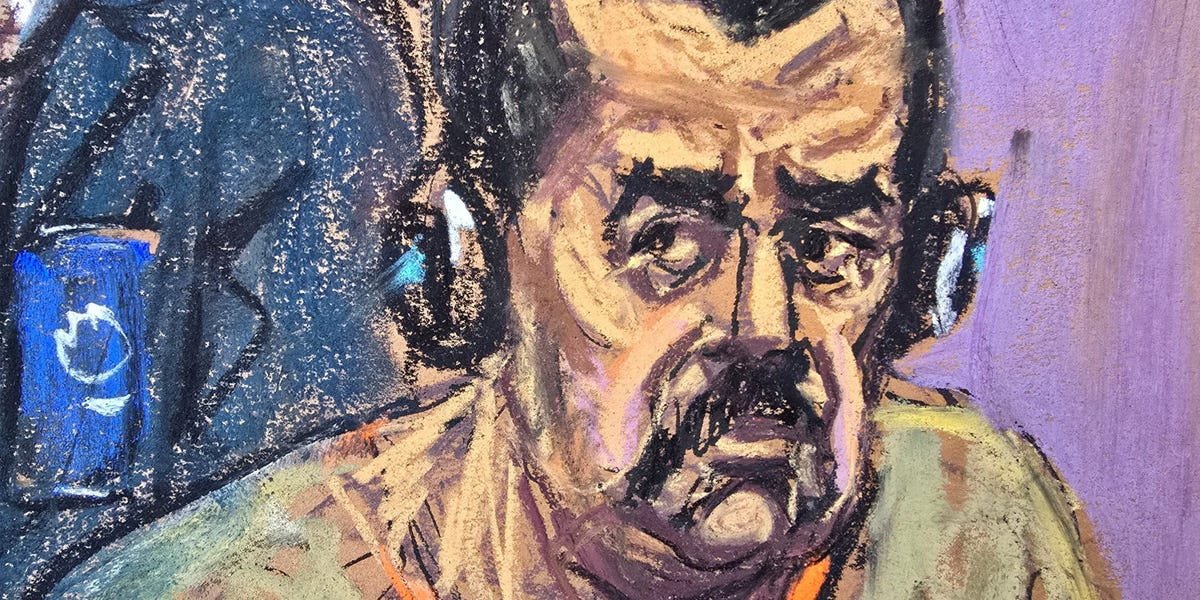
When Maduro walks into the courtroom, he has a bright, beaming smile on his face.

“Good morning!” he booms, wearing a jail outfit of a drab khaki smock over a bright orange shirt.

He shakes hands with his lead attorney, Barry Pollack, best known for representing Julian Assange. Then he turns to the journalists sitting on dark-wood benches in the audience and wishes them “good morning” again.

Flores, wearing the same outfit, plus a brown scrunchie holding back her blonde hair, says nothing.

When they sit at the defense table, they wear big, black headphones through which they hear the court proceedings translated into Spanish for them.

During the hearing, Flores’s attorney ​Mark Donnelly says “First Lady Maduro” needed an echocardiogram to evaluate an issue with her heart.

“There are no titles to be used in this court,” the judge says, before telling the lawyer to keep him informed if Flores didn’t get the treatment she needed in jail.

Venezuela’s now-former first couple ended up in New York City to face an indictment brought by the Department of Justice.

Prosecutors accuse them of participating in a decadeslong drug-trafficking conspiracy involving Colombian terrorist organizations, which enriched themselves and their family at the expense of Venezuelan citizens. The charges include narco-terrorism, cocaine importation, and machine gun possession.

In January, after US forces captured the couple from a military fort in Caracas where they were staying, President Donald Trump called Maduro an “illegitimate dictator” responsible for funneling “colossal amounts of deadly illicit drugs” into the United States.

The President said that he and his wife “now face American justice” for their “campaign of deadly narco-terrorism.”

From the White House on Thursday, Trump called Maduro a “very dangerous man who has killed a lot of people” and said the charges against him were for just “a fraction” of his conduct — with more to come.

“Other cases are going to be brought, as you probably know,” he said.

But today is not yet about the core of the matter.

Wirshba, the prosecutor, argues that it would be inappropriate for OFAC, the part of the Treasury Department that grants licenses for sanctions waivers, to allow Maduro and Flores to access the wealth of the nation they “plundered.”

According to Wirshba, Maduro should have anticipated he could not have gotten the money from Venezuela to the US due to the sanctions, leading Hellerstein to remark upon the oddness of the Venezuelan president being captured from his nation and brought to New York City.

“He didn’t think he would be in this court?” The judge asks with a sarcastic tone.

Hellerstein — who has overseen cases involving financial scammers like Charlie Javice, former Trump lawyer Michael Cohen, and the 9/11 terror attacks in his 28 years on the bench — calls Maduro’s case “unique.”

While there have been other cases that addressed whether criminal defendants could use potentially “tainted” funds to pay their lawyers, all of those cases involved money that was already held in a US bank. In any case, Hellerstein says, Venezuela had already agreed to pay for the legal defense.

When a criminal defendant can’t afford their own lawyer, a judge can appoint one for them. But Hellerstein says the “investigative responsibilities” that would be required to defend the complex narco-terrorism case would overwhelm the resources of a publicly-funded lawyer.

But it remains unclear what Hellerstein could do about it. Forcing OFAC to issue a waiver would require a separate lawsuit brought in a different court, in Washington, DC, Wirshba says.

The only remedy, Pollack says, was to “dismiss the case” and let Maduro walk free.

Hellerstein initially pours cold water on the idea.

“I’m not going to dismiss the case,” he says.

But if OFAC didn’t soon change its position, he would consider it.

“I think it is such a serious step — I’m not going to take it now,” Hellerstein said.

After one and a half hours, Hellerstein decides he would hold another hearing, at an unspecified later date, to determine what steps he should take.

When Maduro leaves the courtroom, he only glances back at the audience behind him. He shakes the hands of his attorneys and walks stiffly toward the door. Flores kisses her lawyer, Donnelly, on the cheek.

Outside, the protesters are leaving. As a man passes by the courthouse, he yells: “Viva Maduro!”


Source link

US-planning-for-the-Maduro-raid-eyed-a-time-when.jpeg

US planning for the Maduro raid eyed a time when much of the Venezuelan military was expected to be on holiday, memo reveals

US planning for the high-risk raid to apprehend Venezuela’s former president, Nicolás Maduro, centered on a time when much of the country’s military would be on holiday leave, a newly released memo reveals.

The December 23 memorandum from the Department of Justice’s Office of Legal Counsel offers fresh details about how the US planned to pull off the daring nighttime raid to capture Maduro in his fortified compound and transport him to New York to stand trial. The former leader has pleaded not guilty to the drug and weapons charges he faces.

The raid began late on January 2 and ran into the next day. President Donald Trump said on January 3 that the initial plan was for the operation to occur four days earlier, on December 30, but he decided to wait for better weather.

“The expected duration of the operation within Venezuelan territory is [redacted] hours,” wrote T. Elliot Gaiser, a US assistant attorney general, wrote in the late December DOJ memo, which looks into the legality of the raid and was made public this week. Much of the planning section is blacked out.

“In order to minimize casualties, the strike will take place at 0100 am (local time) on a date where a maximum number of Venezuelan military would be on leave for the holidays,” Gaiser wrote.


A squad of Venezuelan Air Force K8W aircraft overflies during the 2025 Venezuela industrial aviation expo at the Libertador Air Base in Maracay, Aragua State, Venezuela, on November 29, 2025.

The US attacked Venezuelan military targets as part of its raid earlier this month.

Federico PARRA/AFP via Getty Images


It’s unclear how many soldiers were away when the US actually executed the operation in January. Dozens of Venezuelan and Cuban security personnel were killed, the two countries said after Operation Absolute Resolve concluded.

The DOJ memo, which cited Pentagon planning information and details how the US could effectively present the action as a law enforcement operation rather than an act of war, said that the US expected to encounter “significant resistance” from Venezuela’s air defenses.

That anticipated resistance includes several dozen anti-aircraft systems on the approach to Fuerte Tiuna, a major military installation in Caracas where Maduro and his wife were believed to be and, indeed, were at the time of the operation.

The memo outlined how US aircraft would strike air defense systems to clear a path for assault forces to reach Tiuna. It said that the Pentagon aimed to target a local power switching station to keep the power off, which could explain Trump’s post-raid remarks that a “certain expertise” was used to turn off the lights in Caracas.

The US could have also carried out a cyberattack or employed electronic warfare capabilities. “Kinetic operations will be preceded by non-kinetic action,” the memo said.


A fuel tanker truck drives past US Air Force F-35 Lightning II and F-22 Raptor fighter jets on the tarmac at the former Roosevelt Roads naval base, after US President Donald Trump said the US has struck Venezuela and captured its President Nicolás Maduro, in Ceiba, Puerto Rico, January 3, 2026.

More than 150 US aircraft participated in the operation.

Eva Marie Uzcategui/REUTERS


The memo was published several days before the raid, so it’s unclear how US planning may have changed between the time it was written and the actual operation.

Dan Caine, the chairman of the Joint Chiefs of Staff, said on January 3 after the raid that more than 150 US aircraft participated in the operation, including stealth jets, electronic attack aircraft, surveillance and reconnaissance planes, airborne early warning aircraft, bombers, and drones.

Many of these aircraft targeted and engaged Venezuela’s air defenses to clear a path for low-flying helicopters carrying the forces that stormed Maduro’s compound and apprehended the former president and his wife, consistent with the planning memo.

The US didn’t lose any aircraft during the raid. A helicopter took a hit but still remained operational, and a defense official said seven American service members were wounded during the night.

“Risks to the mission are significant,” the memo said, adding that its “success will depend on surprise.” In the aftermath, Caine said the US achieved “totally the element of surprise.”


Source link

What-is-Delta-Force-The-elite-US-special-ops-unit.jpeg

What is Delta Force? The elite US special ops unit reported to be at the center of the raid to capture Venezuela’s Maduro

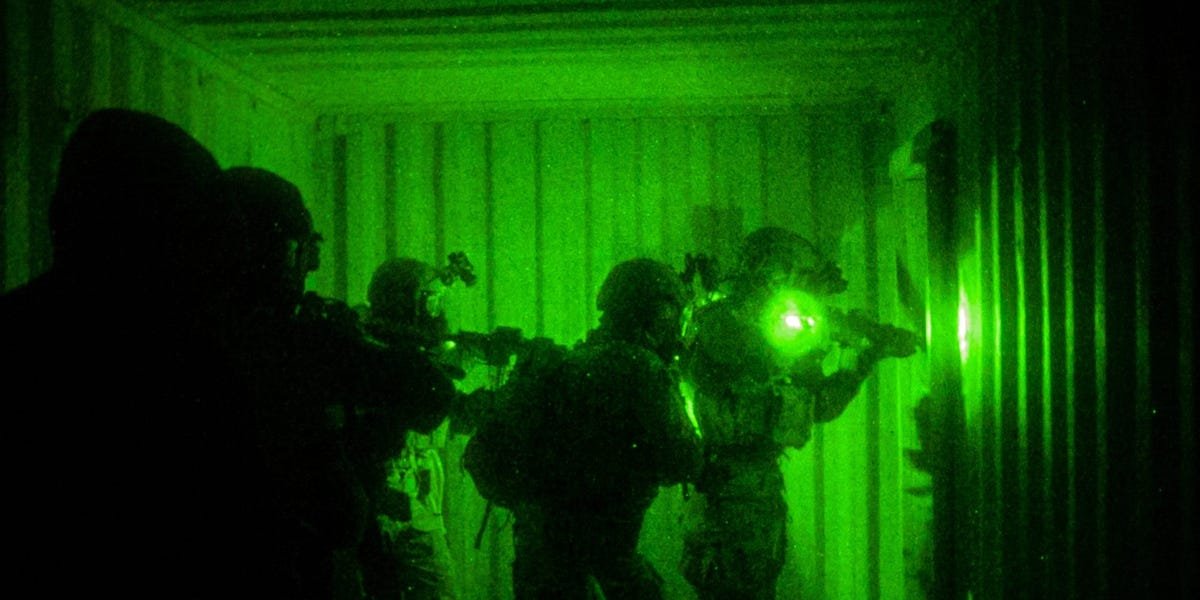
At the center of the US operation that captured Venezuelan President Nicolás Maduro and his wife was an elite and secretive special operations group, per multiple reports.

Citing officials, outlets like The New York Times and The Wall Street Journal reported that Delta Force, alongside law enforcement personnel, carried out the extraction of Maduro as part of Operation Absolute Resolve, a surprise nighttime raid of the Venezuelan leader’s compound in Caracas.

Business Insider wasn’t able to independently confirm the participation of the elite unit in the operation. The Pentagon directed BI’s queries to the White House.

In discussions of the complex operation, President Donald Trump said only that it was executed by “the most highly trained soldiers in the world,” adding that “there’s nobody that has their talent.”


Caracas at sunset

Caracas, the capital of Venezuela

Juan BARRETO / AFP via Getty Images


The president may have been speaking about all of the personnel involved. US officials said that the operation to grab Maduro included land, air, sea, space, cyber, and intelligence forces. But Trump’s language could easily apply to Delta Force, a top-tier special operations unit.

Here is what we know about this elite force.

An essential but highly secretive group

Delta Force, officially known as the 1st Special Forces Operational Detachment-Delta (SFOD-D), is tasked with capturing and eliminating high-value targets. Like other tier-one special mission units, such as SEAL Team 6, Delta Force tackles some of the US Army’s most covert and complex tasks.

The special operations unit, founded by Col. Charlie Beckwith in the 1970s for direct combat action, unconventional warfare, and counterterrorism, is headquartered at Fort Bragg in North Carolina, also home to other Army special operations forces.

Operators train for rapid infiltration and exfiltration, intense close-quarters combat, precision marksmanship, demolition, hostage rescue, and more. Unlike some other units, Delta pulls the best warfighters it can from across the US armed forces, though it mainly draws from Army special operations forces. Known as “quiet professionals,” Delta Force operators generally do not speak openly about their activities.

Much of the elite force’s work is highly classified, but some Delta missions are public knowledge.

Delta Force was involved in the US operation, Just Cause, that ultimately led to the capture of Panamanian dictator Manuel Noriega during the 1989 invasion of Panama. And the group distinguished itself during the 1993 Battle of Mogadishu, made famous by the book and film “Black Hawk Down.” Two snipers were posthumously awarded the Medal of Honor for their actions.

This century, this unit was among the US special operations forces that surged into Afghanistan immediately after the 9/11 attacks, played a role in the 2003 capture of former Iraqi President Saddam Hussein, and was involved in the death of the infamous Islamic State leader Abu Bakr al-Baghdadi in 2019.


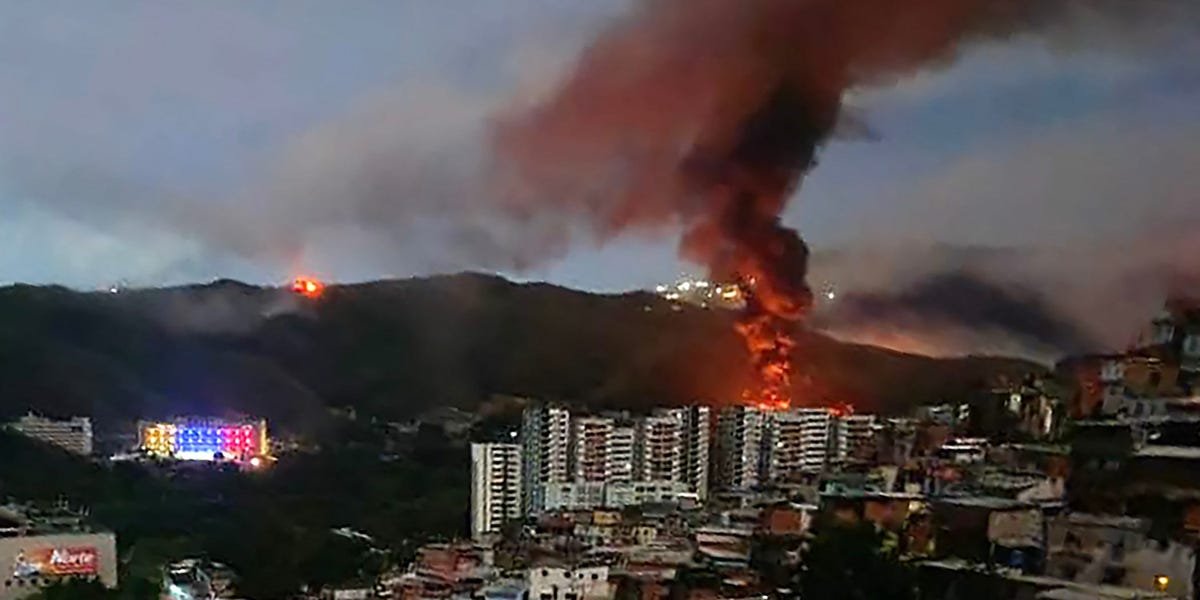
Aircraft, explosions, and smoke were seen across Caracas, the capital of Venezuela, from about 2 a.m. The US carried out strikes and captured the nation's president, Nicolás Maduro.

Aircraft, explosions, and smoke were seen across Caracas, the capital of Venezuela, during the US operation.

Reuters


And now reporting indicates Delta Force, along with the 160th Special Operations Aviation Regiment, was instrumental in capturing Maduro.

The assault on Venezuela and raid on Maduro’s compound

The US president and other US officials shared details of the raid that captured Maduro on Saturday.

Dan Caine, chairman of the Joint Chiefs of Staff, said the apprehension team broke into a fortified compound to capture Maduro after months of planning. US intelligence agencies watched and studied his patterns of life, while other teams trained for the operation on a replica of Maduro’s home. The US used a similar tactic to ready for the 2011 raid on Osama bin Laden’s compound.

Reports indicate Delta Force was inserted into the target area by the 160th SOAR, the Night Stalkers famous for their ability to get special operators in and out of tough spots.

With fighters, bombers, electronic warfare planes, and more delivering strikes and providing air cover, Caine said the helicopters carrying the extraction team were able to reach their target with “totally the element of surprise.”

During the complex apprehension operation, American operators moved fast through the building to find Maduro and his wife, seizing them before they could get the door closed on a steel safe room.


Venezuelan President Nicolás Maduro arrives in New York.

Venezuelan President Nicolás Maduro arrives in New York.

Reuters


Trump said that Venezuela’s military was overwhelmed by US forces. Several American personnel were injured, the president said, and one of the helicopters was hit but remained flyable. No troops or equipment were lost in the operation.

The Trump administration is holding Maduro responsible for supporting narco-terrorism (drug trafficking) and other criminal activity. The recent operation is also about oil, with the administration accusing Venezuela of using oil revenue to fund malign activities. Maduro has denied the allegations.

Trump said on Saturday that the US would run Venezuela until a “safe, proper” election could occur. He also said that US oil companies would be entering the country, which has the world’s largest proven crude oil reserves.

To secure these operations, he said that he’s not ruling out putting US troops on the ground. He said the US military is ready to conduct more attacks if needed.

US Attorney General Pamela Bondi said Maduro and his wife were charged in New York with drug and weapons offenses. He is due to appear in court.


Source link

Inside-the-hell-on-earth-Brooklyn-jail-reportedly-housing-Nicolas.jpeg

Inside the ‘hell on earth’ Brooklyn jail reportedly housing Nicolás Maduro

Venezuelan President Nicolás Maduro and his wife Cilia Flores are reportedly awaiting their first court appearance at a Brooklyn jail famous for its poor conditions.

Numerous publications, including The Wall Street Journal, have reported that the pair were escorted to the Metropolitan Detention Center late Saturday after arriving by plane in New York.

MDC, which has yet to confirm the transfer to Business Insider, has been home to numerous high-profile defendants facing trial in New York City, including music mogul Sean “Diddy” Combs, Sam Bankman-Fried, the founder of fallen bitcoin exchange FTX, and Ghislaine Maxwell, who was convicted of aiding the sex trafficking operation of the deceased sex offender Jeffrey Epstein.

Luigi Mangioni has been housed at MDC while awaiting trial for the murder of UnitedHealthcare CEO Brian Thompson. He has pleaded not guilty.

The jail has been widely criticized over the years for its poor conditions, having been described as “inhumane” and “hell on earth.”

Last year, the Legal Aid Society issued a press release lamenting the jail’s “documented history of violence, medical neglect, and human and civil rights violations.” It cited reports of no heat during the winter and “maggot-infested food.”

In 2024, a federal judge in Brooklyn made headlines when he carved out a special exemption during sentencing to help a defendant avoid the MDC. The judge ruled that if the 74-year-old, convicted of tax fraud, were assigned to the MDC, he could serve his time under house arrest, The New York Times reported.

In March, Brooklyn federal prosecutors announced charges against 25 defendants in 12 separate cases tied to violence and contraband smuggling at the jail, which is located in the Sunset Park neighborhood of Brooklyn.

“Over the years, MDC has become synonymous with egregious neglect and abuse with the people incarcerated,” the Legal Aid Society said in a June press release opposing ICE detentions at the jail.

President Donald Trump shocked the world on Saturday when he announced that the US had captured the Venezuelan president and his wife after a “large-scale strike” on Venezuela.

Trump has said the US is “going to run the country” until it can facilitate a safe transition of power, and that US oil companies will now be free to “spend billions” on development in the South American nation.

Maduro has been in the US Department of Justice’s crosshairs for years, and in 2020, Manhattan federal prosecutors indicted him as a leader of the Cartel de Las Soles, its name for the alleged drug-trafficking organization run by Venezuela’s military and political elite.

An expanded indictment unsealed on Saturday added as defendants Maduro’s wife and son, Nicolás Ernesto Maduro Guerra, identified in the indictment as “The Prince.” It accused them of participating in a wide-ranging effort to traffic drugs to the US to enrich themselves.


Source link

Latest-updates-Trump-says-the-US-has-captured-and-indicted.jpeg

Latest updates: Trump says the US has captured and indicted Venezuelan President Nicolás Maduro

President Donald Trump said on Saturday that the United States had captured Venezuelan President Nicolás Maduro and his wife, Cilia Flores, following a “large-scale strike” on Venezuela.

Attorney General Pamela Bondi has said that Maduro and Flores have now been indicted in the Southern District of New York.

Maduro was charged with drugs and weapons offenses, Bondi said, adding that they would “soon face the full wrath of American justice on American soil in American courts.”

Venezuela said the US had carried out strikes on Caracas and the coastal states of Miranda, Aragua, and La Guaira early Saturday.

Trump had repeatedly threatened Venezuela with military action in recent months as tensions with Maduro soured over what the Trump administration says are drug trafficking networks in the country. Caracas has maintained that Washington’s aim is to overthrow the Venezuelan government.

Follow this liveblog for updates.


Source link