From-a-corpse-to-coconuts-this-man-smuggled-drugs-in.jpeg

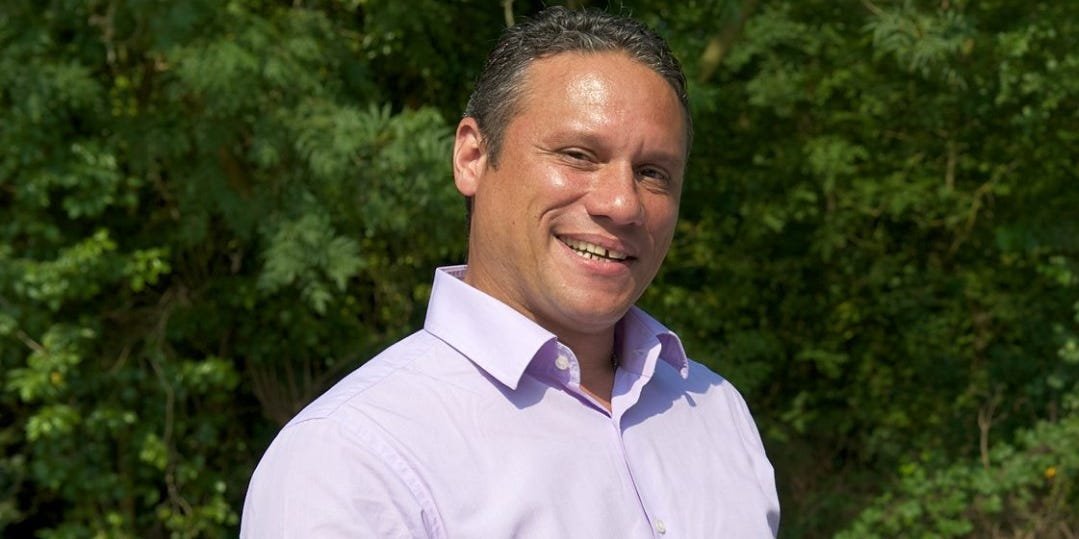
From a corpse to coconuts, this man smuggled drugs in anything. Now, he helps kids stay out of crime.

Andrew Pritchard said his first exposure to smuggling was when he was 7 and returning home to the UK from a family trip to Jamaica.

He remembers that his and his sister’s suitcases were incredibly heavy. When they got home, his parents opened them, revealing “loads of bottles of white rum,” he said.

“At the time, overproof white rum was something which you couldn’t get in this country,” Pritchard told Business Insider in an interview for its video series “How Crime Works.”

Pritchard’s spiral into large-scale criminal drug smuggling didn’t happen until later in his early 20s. He wasn’t looking for crime.

He was interested in music and started producing sound systems, which eventually exposed him to the UK’s warehouse culture in the late ’80s. He started organizing rave dance parties, and that’s when the drugs showed up in his life and sent him on a criminal path for decades.


A young man holding a record next to a record player soundsystem.

A young Andrew Pritchard. 

Courtesy of Andrew Pritchard


Over the next 20 years, there were multiple turning points where he could have walked away, but each time he got out, he eventually found himself pulled back in.

“The road to hell is paved with good intentions,” he said.

From ecstasy to weed to cocaine, and ultimately, police custody

The raves Pritchard was organizing were drawing thousands of people each weekend, he said. They also introduced him to drug suppliers and distribution networks.

As the rave scene grew, so did demand. He began selling ecstasy, first at parties, then at scale. In the early 1990s, Pritchard moved from dealing drugs to importing them.


Two people standing in a warehouse with giant sign

Warehouse where Pritchard would host his “Genesis” raves. 

Courtesy of Andrew Pritchard


One of his most effective methods involved fruit shipments. Using existing import routes into markets like London’s Spitalfields, he concealed drugs inside produce crates, like apples and yams, that would pass quickly through customs.

After police stormed one of his drug houses in 1992, Pritchard fled to Jamaica. It was the first of several turning points where he could have started a different, crime-free life. Instead, what began as a period of hiding quickly became another opportunity to pull him back in.

For Pritchard, the money and lifestyle that drug smuggling bought him were impossible to ignore. “It’s an addiction, not that I want to take drugs. It’s an addiction that I want to be involved in that lifestyle,” he said.


Weed farm

One of Pritchard’s weed farms in Jamaica. 

Courtesy of Andrew Pritchard


In Jamaica, he built connections with local networks and learned about large-scale cannabis smuggling. By the late ’90s and early ’00s, Prichard had moved further up the supply chain and into cocaine, where he got into some creative tactics.

Traffickers were hollowing out pineapples, plantains, and coconuts and stuffing them with cocaine that was then shipped from South America, through the Caribbean, and into Europe. Pritchard also tried other smuggling methods, like on planes, and at one point tried to hide drugs inside a dead body.

He was arrested in 2004 in connection with more than £100 million ($134 million) worth of half a metric ton (about 1,100 pounds) of cocaine packed inside coconuts. Adjusted for inflation, that would be approximately $230 million today.

After a lengthy trial, he was acquitted and released from custody several years later. He recalled thinking at the time, “May 2007, I’m out, I’m going straight, just had a son born. It’s a new beginning.”

His attempt at going straight didn’t last


A man standing next to a red race car.

Pritchard was addicted to the lifestyle that the drug smuggling brought him. 

Courtesy of Andrew Pritchard


Pritchard returned to legitimate work, but he struggled to adjust to the financial difference.

“The music industry wasn’t really getting in the same kind of financial gains that drug smuggling was getting,” he said.

Ultimately, what pulled him back in was a favor for an old associate, he said.

“My own generosity came back to bite me,” he said. “I lent some money to help him out of a situation.”

That associate was still active in drug trafficking and under police surveillance. Pritchard said he initially tried to stay at arm’s length but became increasingly involved, eventually helping arrange a drug shipment and being present when it was collected.

The associate, he said, had become a “police magnet,” and Pritchard was arrested alongside him in 2013, which ended his final attempt to stay out of crime. In 2014, he was sentenced to 15 years in prison.

When his crime cycle broke


Andrew Pritchard shaking hands with another man.

Courtesy of Andrew Pritchard


While in Belmarsh prison, Pritchard recognized younger people, from families and communities he knew, facing long sentences.

That shifted how he viewed his own role, he said. Instead of focusing on his situation, he began to consider the broader impact of what he had been part of.

“I had blood on my hands,” he said.

After his early release in 2019, he founded the AP Foundation, which offers support to young people, explaining how quickly involvement in crime can escalate, and how difficult it is to leave once inside.

“I’m asked all the time, would I change anything? And the answer is I can’t change anything,” he said. “If I could look at myself as an 18-year-old, would I say don’t do it? Everyone’s expecting me to say don’t do it.’ But had I not done it, I wouldn’t be able to now change lives.”

Pritchard recounts his life so far in his autobiography “Empire of Dirt: From Raves to Riches.


Source link

Meet-the-ICE-contractor-pivoting-from-detention-facilities-to-man.jpeg

Meet the ICE contractor pivoting from detention facilities to ‘man camps’ for data center construction workers

A low-profile Texas company that provides temporary housing for immigrant detainees and oil riggers could get a boost from the data center boom.

Target Hospitality’s stock is up about 60% since March 31. The company announced on April 1 that it had signed a $550 million deal with a top hyperscaler to house thousands of construction workers building a data center campus in Texas.

The deal is a “landmark” for Target Hospitality, Stifel analyst Stephen Gengaro said Monday in a note to investors.

Target Hospitality has become one of the many non-technology companies hoping to cash in on the AI boom, which has fueled the company’s “largest commercial pipeline ever,” CEO James Brad Archer said last month in an earnings call with investors.

For its new data center client, which the company has not named but has said is a “top 5 hyperscaler,” Target Hospitality is building facilities for 4,000 workers adjacent to a data center construction site in North Texas. The site will feature “elevated hospitality service offerings,” according to a press release.

Target Hospitality specializes in setting up and running large-scale temporary living facilities, also known as “man camps.” Man camps are longtime fixtures of the oil and gas industry, which sends workers to remote locations for extended periods.

The camps are essentially tiny villages of prefab housing units built to be deployed and dismantled quickly. Man camps often feature on-site food, laundry facilities, and gyms for hundreds to thousands of workers at a time.

Amenities Target Hospitality has provided at other sites include swimming pools, on-site housekeeping, volleyball courts, and golf simulators.

Target refers to these camps as “communities.” The company has historically balanced this business with government contracts.

Most recently, Target Hospitality operated two Texas detention centers for US Immigration and Customs Enforcement, according to a company filing.

Target is not the first hospitality company to jump on the bandwagon. Last year, Wyndham said it was planning to open more of its budget hotel chains in areas with heavy data center construction, such as Mississippi and Ohio.

Now, Target is at an “inflection point,” Archer said.

“To be blunt, we’re focused on growing the WHS segment,” Archer said, referring to the company’s Workforce Hospitality Solutions division, or the man camp side of the business.

“We believe it offers the most value creation,” Archer said.

Target Hospitality did not respond to a request for comment from Business Insider.


Source link

Police-arrested-a-man-at-a-meeting-to-discuss-a.jpeg

Police arrested a man at a meeting to discuss a proposed Oklahoma data center after exceeding his time limit by 30 seconds

Applause broke out during an Oklahoma man’s speech at a city council meeting on Tuesday to discuss a proposed data center. A minute later, shouts of disbelief rang out across the room.

“Disgusting!” one woman shouted as Claremore Police Department officers handcuffed and escorted Daniel Blanchard out of the room.

Authorities said they arrested Blanchard, whose speech exceeded the three-minute time limit, for trespassing.

Over 100 people, including Blanchard, had gathered in a ballroom at Rogers State University in Claremore to voice their opinions about the large data center project. The developer, Beale Infrastructure, is proposing a campus in the Claremore Industrial Park that includes data centers, supporting infrastructure, and office space.

Blanchard was among the residents who opted to speak during the public comment portion, which limits each person to three minutes. In his speech, Blanchard spoke about what he considered compliance issues related to the potential data centers.

“The Claremore Industrial Economic Development Authority has a fiduciary responsibility to the public, not to build infrastructure. And this act of overreach is putting the health and safety of members of this community at risk,” he said.

AI is driving a data center construction boom across the United States. While companies like OpenAI argue that building new data centers will reindustrialize the US economy and create jobs, residents of towns where developers are proposing new data centers worry about their impact on power grids, water resources, pollution, and overall quality of life.

In an investigation published in September, Business Insider reported that over 1,200 data centers had already been built or were approved for construction across the country.

The proposed data center in Claremore, a suburban hub of Tulsa home to about 20,000 people, has divided the town. During the three-hour meeting on Tuesday evening, dozens of residents spoke both in favor and against the project.

Blanchard exceeded his three minutes by about 30 seconds before police officers approached him. He gathered his notes and calmly followed the officers to the front of the hall, where town officials were sitting.

In a video of the meeting posted by the town on its YouTube channel, Blanchard appears to hand his notes to a council member. At that point, police arrested Blanchard, placing him in handcuffs. The crowd hollered in shock.

In a statement, the Claremore Police Department said officers aren’t responsible for enforcing city council rules and only become involved in city council meetings when an official orders them to remove an individual.

“The man’s position on the issues, what he said, or his unwillingness to follow rules of the meeting played no part in the officer’s decision to arrest him,” the statement said. “He was arrested for trespassing in compliance with the law and with the hope of restoring order to an important meeting.”

A local politician fighting the data center project posted to X on Wednesday that Blanchard has been released from jail. The next council meeting is scheduled for March 2.


Source link

Feds-charge-a-California-man-with-trying-to-profit-from.jpeg

Feds charge a California man with trying to profit from Nancy Guthrie’s disappearance with a bogus ransom

Derrick Callella of California was arrested and charged Thursday over a fake ransom demand for Nancy Guthrie, the mother of “Today” show host Savannah Guthrie.

“Did you get the bitcoin were [sic] waiting on our end for the transaction,” Callella allegedly texted two family members of Nancy Guthrie on Wednesday, following reports of a ransom demand tied to the woman’s disappearance that listed a Bitcoin wallet address.

The criminal complaint, filed in Arizona federal court, says that Callella admitted to sending the messages. It was not immediately clear whether Callella had retained an attorney.

Authorities believe the 84-year-old Nancy Guthrie was taken from her ranch-style home just outside Tucson, Arizona, in the Catalina Foothills five days ago.

An FBI official announced the arrest of the “total imposter” on Thursday at a press conference over Nancy Guthrie’s disappearance.

“To those imposters who are trying to take advantage and profit from this situation, we will investigate and ensure you are held accountable for your actions,” FBI Phoenix’s special agent in charge, Heith Janke, said at the press conference.

Janke also issued a message to anyone involved in Nancy Guthrie’s disappearance, urging them to “do the right thing.”

“This is an 84-year-old grandma that needs vital medication for her well-being,” Janke said.

The FBI is offering a reward of up to $50,000 for information leading to the recovery of Nancy Guthrie or the arrest and conviction of anyone involved in her disappearance, Janke announced.

Authorities said that an additional ransom letter regarding Nancy Guthrie, sent to local and national media outlets, is being taken “seriously.”

That note made a monetary “demand” for 5 p.m. local time Thursday, said Janke.

“If a transfer wasn’t made, then I think a second demand was for next Monday,” Janke said, declining to provide other specifics.

An Apple Watch and a floodlight were also mentioned in ransom letters, Janke said.

“We’re not going to go into specifics. It’s very important that we keep this investigation moving forward, and we don’t want to put more facts out there that others then can use to try to profit from this,” he said.


A timeline of Nancy Guthrie's disappearance.

Police have outlined a timeline surrounding Nancy Guthrie’s disappearance.

Pima County Sheriff’s Department


Authorities revealed new details around the timeline of Nancy Guthrie’s disappearance on Thursday and confirmed that the blood discovered on the elderly woman’s porch belonged to her.

Nancy Guthrie was dropped off at her home by her family just before 10 p.m. on January 31. At 1:47 a.m. MST the next day, the woman’s doorbell camera disconnected, police said.

At 2:12 a.m., the doorbell software detected a person on the camera, but there was no available video footage, Pima County Sheriff Chris Nanos said during the Thursday press conference. Minutes later, Nancy Guthrie’s pacemaker app showed a disconnect from her phone.

Her family checked in on her at 11:56 a.m. and called 911 shortly after, police said.

Nanos said that Nancy Guthrie’s doorbell camera had also been removed. No suspects or persons of interest have yet been identified in the case, the sheriff said.

On Wednesday, in an emotional video post alongside her siblings, Savannah Guthrie pleaded to her mother’s possible abductors to “please reach out to us.”

“We, too, have heard the reports about a ransom letter in the media. As a family, we are doing everything that we can. We are ready to talk,” the famed NBC anchor said, adding, “We want to hear from you, and we are ready to listen.”

Nancy Guthrie suffers from physical ailments and requires daily medications that, if not taken every 24 hours, could have life-threatening consequences.

“Right now, we believe Nancy is still out there. We want her home,” Nanos said.


Source link

Man-uses-4999-autonomous-snow-blower-to-clear-his-driveway.jpeg

Man uses $4,999 autonomous snow blower to clear his driveway during winter storm: ‘I’m inside sipping a coffee’

Forget robotaxis — a man and his robo-snow blower were the envy of X during the weekend’s winter storm.

More than 250 million Americans are thawing out after a massive winter storm swept the country with freezing temperatures and heavy snowfall.

Tom Moloughney, however, stayed inside. He watched a nearly 230-pound robot clear his long New Jersey driveway, documenting the process in a video posted to his X account.

Moloughney is a certified techie, host of the State of Charge YouTube channel and a senior editor at InsideEVs. He’s been reviewing a $4,999 autonomous snow blower from robotics company Yarbo.

The storm dumped about six inches of snow in Moloughney’s town over 24 hours, according to the National Weather Service. It was the perfect opportunity to give the bot a whirl.

“This is going to be a great test to see if this robot can handle a 6,000 sq.ft. driveway during a major winter storm,” Moloughney wrote on X. “I’m inside sipping a coffee while it’s doing its job and so far so good!”

Videos Moloughney posted during the storm showed the Wi-Fi-connected machine clearing snow from his long driveway, a walkway, and the curved area in front of his two-car garage. When its battery ran low, the robot returned on its own to a charging pad, recharging for about an hour and a half before heading back out into the freezing temperatures.

According to Yarbo’s website, the autonomous snowblower can clear snow up to 12 feet of snow, throw it as far as 40 feet, and operate in temperatures as low as minus 13 degrees Fahrenheit.

“It will continue to do that until the driveway is completely done twice,” Moloughney updated viewers on X during the storm. “I’ll then send it out again and continue to do so until the snow stops.”

Still, the robotic helper hasn’t been flawless, according to Moloughney. The reviewer said the machine required extensive digital setup before the storm and struggled to establish GPS connectivity in parts of his driveway. During a previous storm, he said hail fell before the snow, leaving a sheet of ice the robot couldn’t remove. And, during a previous storm, hail fell before the snow, leaving a sheet of ice covering his driveway before the bot cleared the snow.

Moloughney and Yarbo did not respond to Business Insider’s requests for comment.

Despite the hiccups, Moloughney said the robot worked through the night as the final flakes fell, calling its performance “kicking ass.”

You can watch the reviewer’s unboxing of the robo-snow blower in the video below.


Source link

Brooklyn-man-23-is-charged-in-15-million-Coinbase-customer-care.jpeg

Brooklyn man, 23, is charged in $15 million Coinbase ‘customer-care’ scheme

A young Brooklyn man has been charged with stealing $15 million by impersonating a Coinbase customer care representative.

In a criminal complaint, Ronald Spektor, 23, is accused of tricking some 100 victims from across the United States into turning over the passwords for their cryptocurrency accounts, under the guise that their assets were at risk.

The “long term larceny scheme” began in April 2023 and continued until his arrest on December 4, the complaint alleges. Since then, Spektor has been held in Rikers Island, in lieu of bail set at $500,000 cash or $1 million bond.

Spektor faces top charges of grand larceny and money laundering, each carrying a maximum sentence of 25 years in prison. He is also charged with possessing stolen property and the personal information of his alleged victims.

“Mr. Spektor has pleaded not guilty,” his attorney, Todd Spodek, told Business Insider. “We’re working to secure his release early next week and will challenge the charges in court.”

Some 70 victims have been interviewed by investigators with the NYPD and the Kings County District Attorney’s Office, the complaint alleges.

“Each Coinbase user confirmed that prior to the loss of their cryptocurrency, said Coinbase users were contacted over the phone by someone who purported to be a legitimate Coinbase employee,” prosecutors allege in the complaint.

“The purported employee informed them their assets were at risk and needed to be moved to a new wallet,” the complaint alleges, using the term for the applications that store cryptocurrency.

Believing they were communicating “with a legitimate employee,” the victims then gave Spektor their seed phrases — a sequence of 12 to 24 words that act like a password — and moved their cryptocurrency to wallets that Spektor controlled, the complaint alleges.

“Their cryptocurrency was immediately withdrawn without their permission,” the complaint continues. The stolen crypto then “passed through cryptocurrency wallets belonging to the defendant,” it says.

Last year, a Coinbase user in California lost more than $6 million, and another user from California lost $1 million, the complaint alleges.

Investigators traced more than $5 million in stolen funds to Spektor’s accounts with two online gambling services, the complaint alleges. Millions more were converted into cash or laundered through online coin swapping services, according to the complaint.

Spektor’s iPhone contained a wealth of incriminating evidence, investigators said.

The complaint alleges that this includes conversations on the online platform Discord in which he bragged “that he had made millions of dollars’ worth of cryptocurrency through scamming, used social engineering to obtain Coinbase seed phrases, and had lost six million dollars worth of cryptocurrency through gambling.”

The phone also contained communications with his father from November 2024 in which “they discussed, in sum and substance, concealing the financial proceeds of the Coinbase scheme.”

The complaint continues, “Other messages show that the defendant asked his father to dispose of his hardware wallets” and asked his mother “to purchase a new hardware wallet.” Hardware wallets are devices resembling USB drives that store private cryptocurrency data offline.

Spektor’s Telegram handle was “@LOLIMFEELINGEVIL” and his account included discussions “of successful Coinbase phishing attacks, and efforts to recruit others to join the scheme,” the complaint also alleges.

According to the complaint, a Google account associated with Spektor contained “approximately 29 text messages containing personal identifying information in the form of tens of thousands of individuals’ email addresses and associated passwords.”

Spektor’s attorney, Spodek, told Business Insider that his client has been aware of the investigation by Brooklyn prosecutors’ Virtual Currency Unit “for over a year.”

“The allegations are speculative and based on incomplete information,” said Spodek, whose other cryptocurrency cases include Instagram influencer and crypto-scammer Jay Manzini (sentenced to seven years in prison last year) and Amir Bruno Elmaani (sentenced to four years prison in 2023).

“Once the full picture comes out, this case will look very different,” Spodek added.


Source link