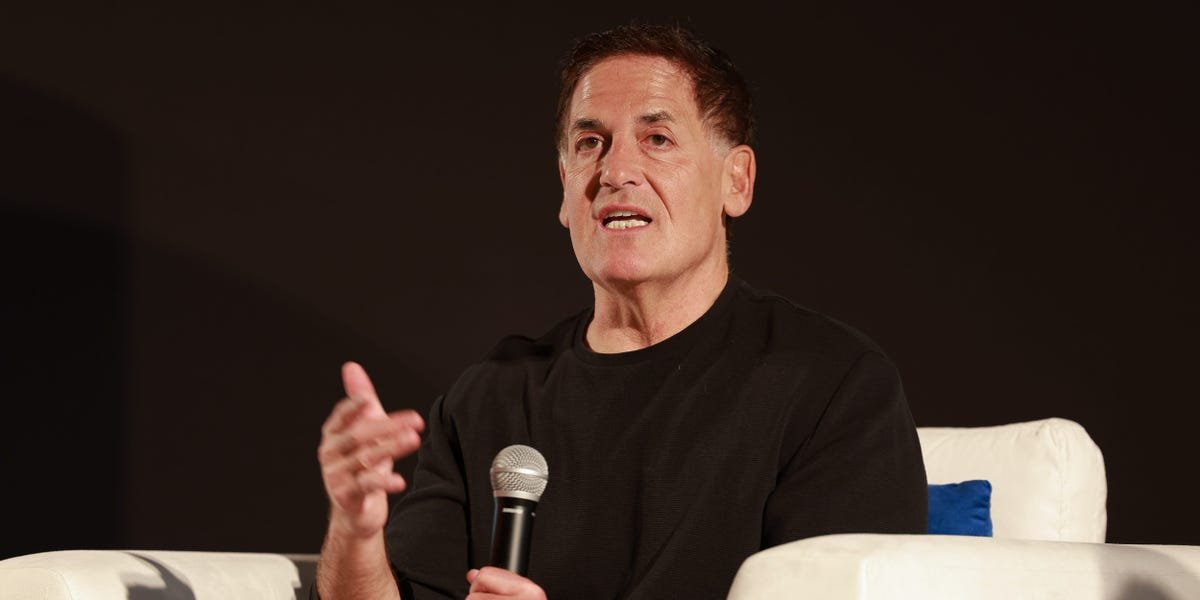
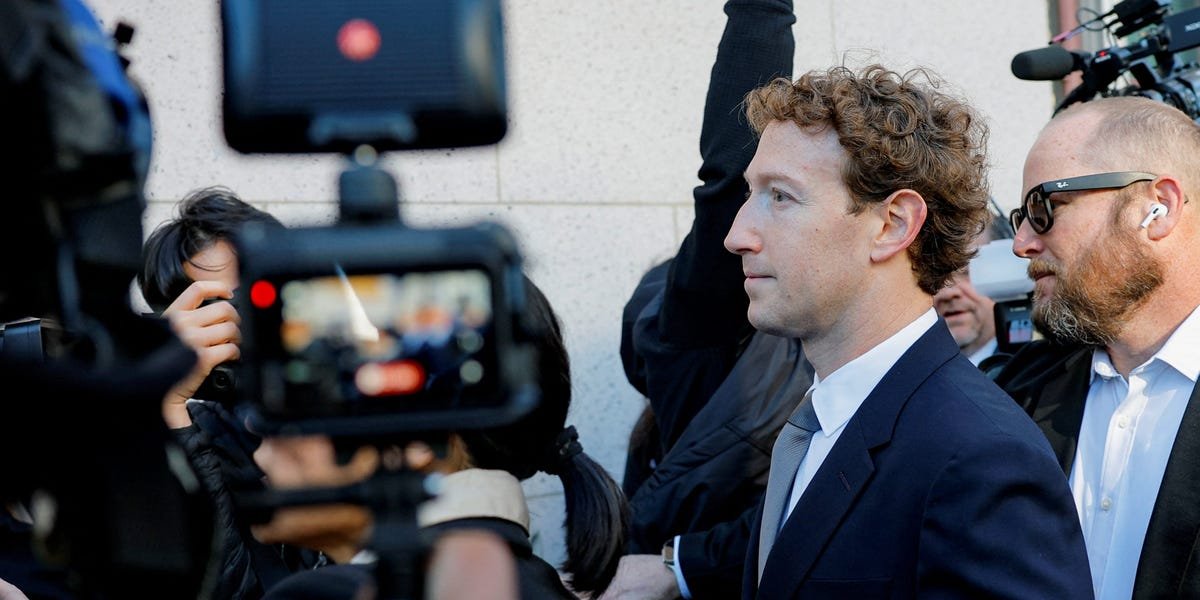
Mark Cuban said CEOs of large public companies face a tough dilemma with AI, and it’s looking like a lose-lose situation for them.
The former “Shark Tank” billionaire investor said in a Sunday X post that entrepreneurs are building AI-native companies that displace incumbents.
On the other hand, incumbents face what he called the “Innovator’s AI Dilemma”: either tear down their companies and reinvent them as native AI, or do nothing.
In either case, Cuban said investors won’t be happy. He said we’ll know when AI is affecting public companies from two kinds of shareholder lawsuits: one against companies that opt for teardowns, and the other against companies that don’t reinvent themselves. In both cases, he said stocks would fall, leading to lawsuits.
Cuban advised CEOs to ask AI models for the best paths from where their companies are to becoming AI-native versions of themselves.
“If asking your models questions doesn’t make sense to you, you are in deep shit,” he said.
The investor previously said on X that there will be two types of companies: “Those who are great at AI, and everybody else.”
“And the ‘everybody else’ is going to fail because AI is such a transformative tool,” he added.
Cuban’s comments come as some public companies have been opening up about how they are reinventing themselves as “AI native.”
The CEO of Amplitude, a publicly traded analytics company based in San Francisco, told Business Insider in January that the company is undergoing an AI transformation in several stages.
CEO Spenser Skates said Amplitude had acquired five AI startups since October 2024, appointed one of their founders to a new AI leadership position, and purchased GitHub Copilot and Cursor licenses for its staff.
This story is available exclusively to Business Insider
subscribers. Become an Insider
and start reading now. Have an account? .
Stars gathered at the Dolby Theatre in Los Angeles on Sunday for the 2026 Academy Awards.
Many stars arrived at the 98th Oscars in style, but some didn’t look their best.
Anne Hathaway and Timothée Chalamet missed the mark with their red-carpet outfits.
The 98th Academy Awards swept into Hollywood in a flurry of red-carpet camera flashes and tear-filled award speeches.
The 2026 Oscars were held in Los Angeles on Sunday. Celebrities flocked to the Dolby Theatre to celebrate the best films of the year — and to show off their red-carpet style one more time in awards season.
Plenty of stars nailed their looks, but some showed up in outfits that needed some tweaks or just weren’t the right fit for the high-end event.
Read on to find out which celebrities were among the worst-dressed at the 2026 Oscars.
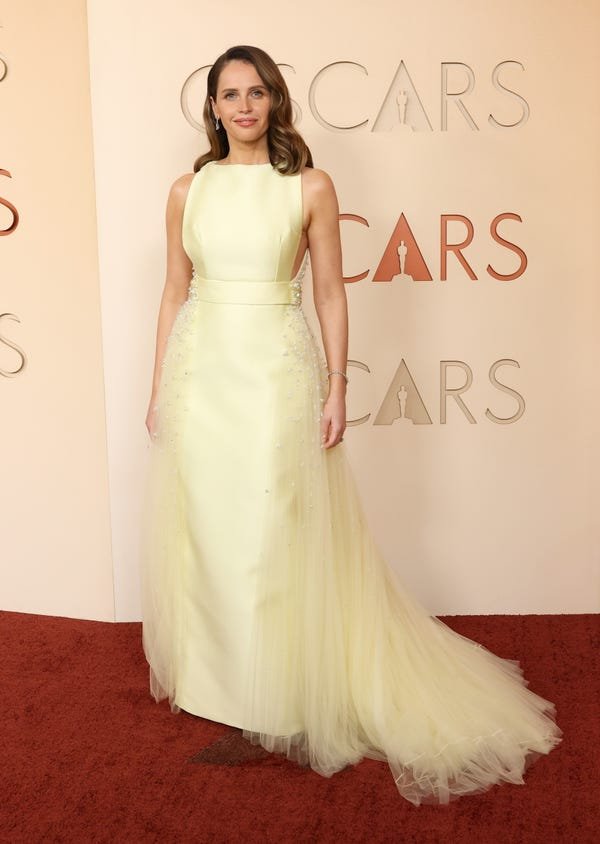
Felicity Jones’ yellow gown had potential, but the details didn’t pay off.
Felicity Jones attends the 2026 Oscars. Mike Coppola/Getty Images
She arrived in a yellow Prada design, which was sleeveless and shapeless. Its yellow color worked in some lighting but washed her out in others.
Its delicate sequins also got lost in the pleats of the gown’s tulle skirt.
Timothée Chalamet’s all-white look would have worked better with different accessories.
Timothée Chalamet attends the 2026 Oscars. ANGELA WEISS / AFP via Getty Images
Chalamet, nominated for best actor for his performance in “Marty Supreme,” chose an all-white Givenchy look for the Oscars.
The suit had a retro feel, with its double-breasted jacket and wide-legged trousers, and he paired it with rings and a brooch.
However, Chalamet wore boots rather than dress shoes, which made the ensemble feel bottom-heavy. His black sunglasses also made the look too casual for the Oscars red carpet.
Anne Hathaway’s accessory choices distracted from her floral gown.
Anne Hathaway attends the 2026 Oscars. Gilbert Flores/Penske Media via Getty Images
Hathaway’s strapless Valentino gown hugged her figure and spilled into a mermaid skirt, complete with a train. Pale-pink flowers adorned the black gown, bringing in pops of color, as did her diamond Bulgari jewelry.
The dress was beautiful, but her accessories didn’t let the gown shine. Hathaway, who was a presenter at the 2026 Oscars, paired it with a black belt and elbow-length gloves, which felt darker in tone than the floral dress.
Pearl detailing overwhelmed Heidi Klum’s dress.
Heidi Klum attends the 2026 Oscars. Lexie Moreland/WWD via Getty Images
She wore a strapless Chrome Hearts design that matched her skin tone in color and was intended to create a nude illusion. The spaced-out placements of its many pearls, though, lessened the effect.
An edgier Chrome Hearts design might have worked better on the supermodel.
The styles of Josh Dallas’ and Ginnifer Goodwin’s black-and-white outfits clashed.
Josh Dallas and Ginnifer Goodwin attend the 2026 Oscars. Mike Coppola/Getty Images
Goodwin chose a glamorous mesh gown from Monse for the Oscars, while Dallas paired a simple blazer with white trousers. The latter look was especially casual, contrasting the red-carpet style of Goodwin’s dress.
Both of their ensembles could have also benefited from more tailoring to have sharper fits.
The silhouette of Renate Reinsve’s gown was distracting.
Renate Reinsve attends the 2026 Oscars. ANGELA WEISS / AFP via Getty Images
The “Sentimental Value” star, who was nominated for best actress at the Oscars, wore a strapless Louis Vuitton gown. While the top portion was classic, its skirt took a unique turn.
It had a slit that began at one hip, revealing one leg entirely, and a long train that covered the other. A more symmetrical design would have looked sharper, and some jewelry could have embellished the overall look.
There was too much going on with Kevin O’Leary’s look.
Kevin O’Leary attends the 2026 Oscars. Julian Hamilton/Getty Images
He wore a dramatic Dolce & Gabbana jacket resembling a robe, black trousers, and a matching shirt. The outerwear was eye-catching on its own, so he didn’t need to add so many accessories.
The latter included a diamond-encrusted Tiffany & Co. necklace, custom-made for him and weighing 101.32 carats, two watches, and a graded NBA trading card.
There were too many contrasting fabrics on Kristen Wiig’s black gown.
Kristen Wiig attends the 2026 Oscars. Mike Coppola/Getty Images
The shape of her Christian Cowan ensemble worked for Wiig, with its loose-fitting tank top and full skirt.
Unfortunately, its crystal-covered skirt, beaded top, and thick jewelry pieces all fought for attention. Less jewelry and an updo hairstyle could have improved the look.
Kirsten Dunst’s dress looked too long for her frame.
Kirsten Dunst attends the 2026 Oscars. Kevin Mazur/Getty Images
Dunst accompanied her husband Jesse Plemons to the Oscars in a black Celine gown. It had a square, strapless neckline that sat high on her chest, while the rest of the dress fell in tiers of fabric stacked on each other all the way to the floor.
Though Dunst accessorized well, her gown’s shape left something to be desired. A lower neckline or slightly fewer tiers of fabric may have helped.
Damson Idris looked like he was dressed for a costume party, not a red carpet.
Damson Idris attends the 2026 Oscars. Savion Washington/Penske Media via Getty Images
His Prada look featured black trousers, shiny boots, and a blue satin jacket with fur lapels. The long, double-breasted piece was unique, but it looked more like a historical piece than a modern design.
It was also too flashy to let his custom Didris brooch shine.
Regina Hall’s gown didn’t look balanced.
Regina Hall attends the 2026 Oscars. Frazer Harrison/WireImage/Getty Images
Designed by Yara Shoemaker, Hall’s dress featured an asymmetric, strapless neckline made of a voluminous swath of black fabric.
The rest of the bodice was a metallic gold, while the black skirt cut across her waist in a peplum, mirroring the neckline, before flowing to the floor. A slit cut up the skirt to Hall’s thigh, showing off her strappy black heels.
Although pieces of the dress were pretty, the neckline overwhelmed Hall, and the skirt looked too long on her small frame. A shorter skirt and less dramatic neckline could have helped the dress shine.
The black detailing on Priyanka Chopra Jonas’ white dress didn’t quite work.
Priyanka Chopra Jonas attends the 2026 Oscars. Gilbert Flores/Penske Media via Getty Images
Jonas attended the Oscars in a white Dior gown. The fitted bodice had a strapless, V-neckline, and a dropped waist.
A thigh-high slit cut up the floor-length skirt on one side, which was trimmed with a black-and-white feathered fabric.
The feathers were a distraction from the rest of the dress, particularly the black pieces, as were her black pumps. Chopra Jonas may have popped more on the red carpet if she leaned into the all-white look rather than adding pops of color.
The world of fashion has witnessed a consistent pattern for some time now: Big Tech billionaires gradually entering its orbit from the edges until they’ve found themselves at its center.
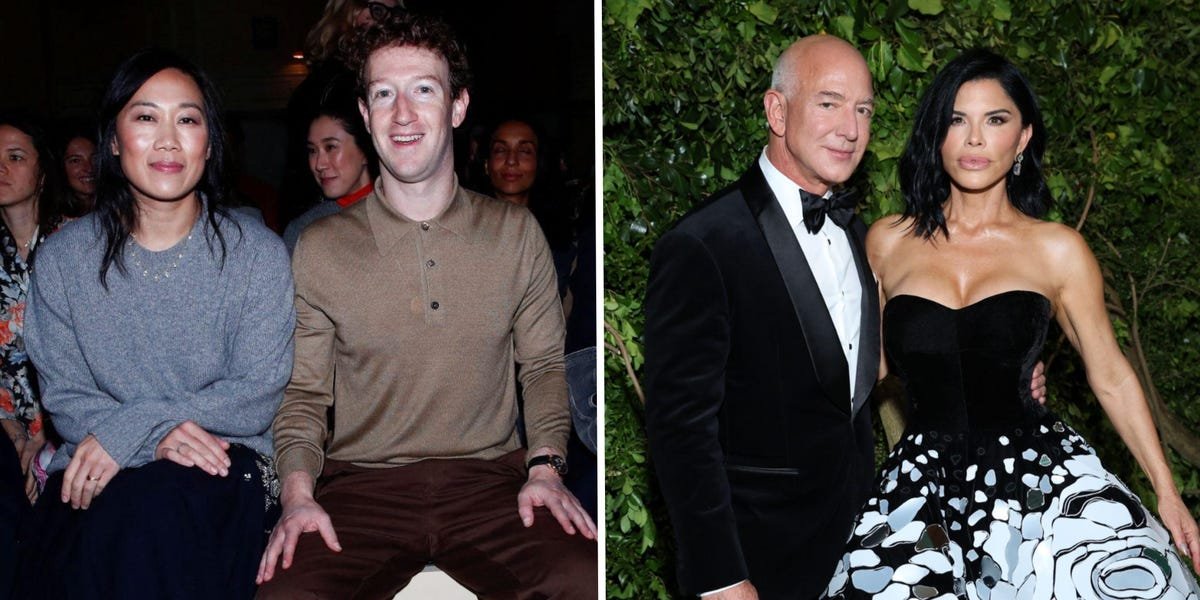
Just last month, Mark Zuckerberg and Priscilla Chan’s presence in the front row at the Prada Fall/Winter 2026 collection stirred the fashion world, amid Meta’s ambition to up the luxury factor in its AI glasses.
A few glances over prove that this was not an isolated case.Amazon magnate Jeff Bezos and Laura Sánchez-Bezos have long been fashion enthusiasts, with the fashion world courting them and vice versa.
There was the Vogue cover. Their roles as lead donors to the 2026 Met Gala — a decision Anna Wintour defended amid backlash. Persistent, if unfounded, rumors that Bezos could acquire Condé Nast. Add strategic appearances with Wintour, front-row seats at Schiaparelli and Dior couture, and Law Roach-styled vintage Versace moments, and the idea becomes clear.
With tech billionaires attending the right places and hanging with the right people, their place in fashion feels less like a cameo and more set in stone. It’s no longer up for debate. What is, though, is why. Why fashion? One expert told Business Insider it’s about power.
From indifference to front row
Since its early days, fashion has gone hand in hand with the elite class. It’s what they consumed, financed, and promoted. The situation hasn’t changed much. Look around, and conglomerates like LVMH and Kering, as well as celebrities, still largely influence the industry.
What has evolved, however, is technology.
Priscilla Chan and Mark Zuckerberg at a 2026 Prada runway show in Milan.
Alessandro Garofalo/Reuters
“Social media has changed everything,” fashion journalist Louis Pisano told Business Insider. “People have become really image-conscious in a way that we previously only saw in celebrities. Now, everyone needs to brand themselves because everyone knows that every moment is an opportunity to make an impression.”
If before, tech bros were famously indifferent toward fashion — think of Steve Jobs, who proudly wore a black turtleneck and jeans — today, even they seem susceptible to the constant presence of social media.
Pisano points to an Instagram reel posted by Chan that felt distinctly TikToky, as if she and her husband were lifestyle influencers casually strolling through Milan and Prada.
Being mindful about social media is one thing. Venturing into fashion’s gatekept inner circle is another. In an appearance-driven culture, coolness — and the validation that comes with it — still matters above all else.
“You can be a tech bro, and if you’re badly dressed, everybody’s still gonna be like, ‘You look like shit,'” Pisano said. “You have all of this money, so why not look great as well?”
But looking great here isn’t about self-expression. It’s about access — and the kind of cultural legitimacy money alone can’t automatically buy.
Lauren Sánchez and Jeff Bezos attend the Christian Dior Haute Couture Week Spring/Summer 2026 show as part of Paris Fashion Week on January 26, 2026, in Paris.
Anthony Ghnassia/Getty Images for Christian Dior
Joshua Graham, fashion editor at Rolling Stone UK, compared the entrance of tech bros into the high fashion world with Mark Mylod’s film “The Menu,” in which a group of rich people go to an exclusive restaurant but “don’t really care about the food, just that they’re able to be seen within the context of what the best looks like.”
Pisano voiced a similar point: Over the years, fashion has become one of the easiest pathways to cultural relevance simply because it’s an exclusive framework. You have to be let in.
It is, after all, a business where brands and money tend to speak louder than individual style, and wearing the right label and knowing the right names becomes fashion shorthand, a sort of entry pass to culture’s apex.
Billionaires want staying power
For billionaires used to building platforms, cultural legacy is the next frontier. “Wearing an independent label isn’t going to bring you as much cultural cachet as wearing Prada or a custom Louis Vuitton piece,” Pisano noted. Indeed, symbolic power is still the goal.
”It’ll immortalize them,” Pisano said of tech billionaires’ aligning with luxury houses. Prada has been around since 1913. Schiaparelli since 1927. Dior since 1946. You get the picture. ”They want to attach themselves onto something that they’re betting is going to live forever because social media platforms die out. New ones will come, but you’re always going to need clothes to wear.”
These moguls have already had a hand in shaping society’s tastes and lifestyles thanks to the technology they’ve created. “They control the algorithms and build the infrastructure,” Pisano continued.
Still, he makes the point that it’s not a one-sided relationship. Perhaps, billionaires are already fashion people after all. “Designers need these people in order to push their content out to shopping recommendations,” Pisano noted.
Graham echoes this view, adding that fashion houses need to court relationships with tech titans because, ultimately, labels are always seeking exponential growth. ”I understand why anyone would want to work with Zuckerberg,” the editor said. ”The economy everywhere is in the toilet.”
Priscilla Chan and Mark Zuckerberg.
ANGELA WEISS / AFP via Getty Images
So while many were scrunching their faces, wondering why Zuckerberg was pushing himself to the front row at Prada, the reality is that the relationship between tech and fashion is more symbiotic. Brands are increasingly turning to AI instead of creatives, for example.
The danger, Graham warned, is that when billionaires invest in fashion, they should at least pay attention to emerging designers who do it for the love of the art form. He added that so many creatives, such as the late Lee Alexander McQueen, did not enter the fashion world to ”make a quick buck,” but because it was their passion.
”I don’t know if it would be smarter for billionaires to go to a Central Saint Martin show and pick out a few students that they loved,” Graham argued, referencing the graduate show held by the prestigious London art and design school. ”But there needs to be a way for us to find ourselves back in a place where the patronage of fashion isn’t so commercial.”
Graham, like many who questioned why Zuckerberg was sitting front row, said he can understand the critique. “They are very hypercritical of something like this,” but it’s because they care “about what a designer, a garment, a shoe says about you as a person and then says about society as a whole.”
For now, though, the relationship between tech and fashion will continue to evolve. Tech may control the feed, but fashion still controls the culture.
This story is available exclusively to Business Insider
subscribers. Become an Insider
and start reading now. Have an account? .
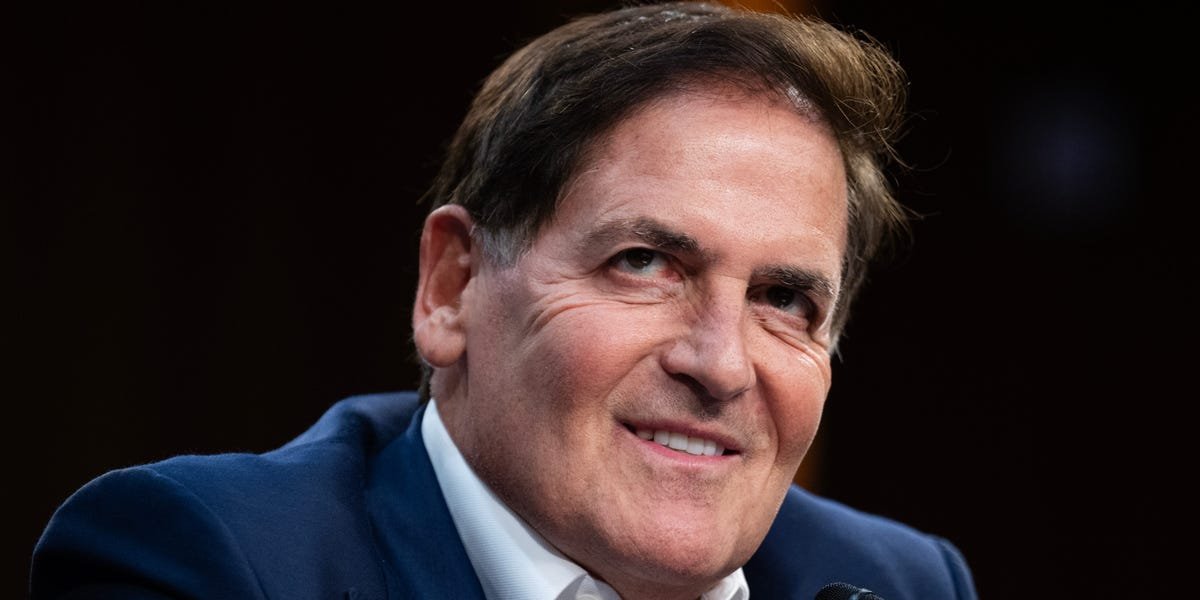
Mark Cuban says there are two types of LLM users: learners and non-learners.
Cuban has previously said companies need to embrace AI, but that it’s not perfect.
Some proponents of AI have said that one risk of the technology is that it could make people lazy.
Mark Cuban says there are two types of people who use AI. Which one are you?
“There are generally 2 types of LLM users, those that use it to learn everything , and those that use it so they don’t have to learn anything,” Cuban said of large language models in an X post on Tuesday.
The “Shark Tank” billionaire has been bullish about AI and said that companies need to embrace it.
Cuban has said there will be “two types of companies: those who are great at AI, and everybody else,” Business Insider’s James Faris previously reported. He’s also said that AI models can’t provide all the answers and are “stupid” but like “a savant that remembers everything.”
Bill Gurley, a partner at the Silicon Valley venture capitalist firm Benchmark, agrees “100%” with Cuban that there are two types of AI users.
“If you are on a custom career path where you aim to differentiate yourself, AI is ‘jet fuel’ – you can learn and soar faster than ever before,” Gurley said on X in response to Cuban.
Or, it could have the opposite effect.
Even some of AI’s biggest proponents have warned that the technology could make people lazy.
Arthur Mensch, CEO of Mistral AI, said last year that the biggest risk to humans posed by AI was “deskilling” and employees becoming lazier as they rely too heavily on the AI tools.
“You want people to continue learning,” he said in an interview with The Times of London. “Being able to synthesize information and criticize information is a core component to learning.”
Business Insider reached out to Cuban for additional comment.
Lori Schott, a mother from rural Colorado, said she stared down Meta CEO Mark Zuckerberg as he walked into court in Los Angeles on Wednesday to testify in a landmark trial regarding social media addiction.
Schott lost her 18-year-old daughter, Annalee, to suicide in 2020. She believes the content Annalee saw on social media platforms “destroyed” her mental health.
“I made eye contact with him for quite a long time,” Schott said of Zuckerberg. “I was not backing down.”
Schott is not a plaintiff in the case where Zuckerberg testified on Wednesday, but is among more than 2,000 individuals who have similar personal injury lawsuits pending regarding social media addiction and harm.
The case underway in Los Angeles centers on a 20-year-old woman, identified by the initials KGM, who says her use of social media throughout her childhood negatively affected her mental health, contributing to depression and suicidal thoughts. It is considered a bellwether trial that could indicate how other similar lawsuits related to social media harm, like Schott’s, could play out.
Lori Schott, a mother from rural Colorado, lost her 18-year-old daughter, Annalee, to suicide in 2020.
Jill Connelly/Getty Images
Meta, which owns Instagram and Facebook, was named as a defendant alongside Google-owned YouTube, TikTok, and Snapchat. TikTok and Snapchat both settled the lawsuit out of court.
Last month, Meta warned investors that its mounting legal battles over youth safety could “significantly impact” its 2026 financial results. Attorneys for more than 100,000 individual arbitration claimants have “sent mass arbitration demands relating to ‘social media addiction'” since late 2024, the company said in a 2026 10-K, which warned that potential damages in certain cases could reach into the “high tens of billions of dollars.”
In a statement, Stephanie Otway, a Meta spokesperson, said: “We strongly disagree with these allegations and are confident the evidence will show our longstanding commitment to supporting young people.” Otway highlighted changes the company has made over the past decade, including Teen Accounts, which give parents tools to manage their teens’ accounts.
Google declined to comment. TikTok did not respond to a request for comment. A Snapchat spokesperson said in a statement: “The Parties are pleased to have been able to resolve this matter in an amicable manner.”
On Wednesday, parents showed up hours before the courthouse opened in hopes of getting a seat inside. Many of them had personal stories about how they believed social media use harmed their children.
Parents gathered outside the Los Angeles Superior Court on Wednesday.
Frederic J. Brown / AFP via Getty Images
“We face a lot of stigma from people telling us we’re bad parents,” said Amy Neville, another parent who attended to show her support. She said that once the evidence comes out in the trial, she believes “the tide will turn, and the general public will be on board with us.”
“It is by design that social media is tearing their family apart,” Neville said.
On the stand, Zuckerberg said that teens represent less than 1% of Meta’s ad revenue and that most teens don’t have disposable income, so it’s not especially valuable to advertisers to reach them.
Zuckerberg said it’s in Meta’s best interest to create a platform that inspires people and makes them want to stick around for the long term.
“If people aren’t happy with a service, eventually over time they’ll stop using it and use something better,” he said.
Sarah Gardner said that regardless of the outcome of the trial, she hopes it raises awareness about how the social media companies, and specifically Zuckerberg, have been operating. Gardner is the CEO of the Heat Initiative, an advocacy group that pressures Big Tech companies to make their platforms safer for kids. She was at the courthouse with the parents who believe they have been affected.
Gardner said she’s hopeful the trial will empower more people to say, “I don’t want to be on Instagram anymore.”