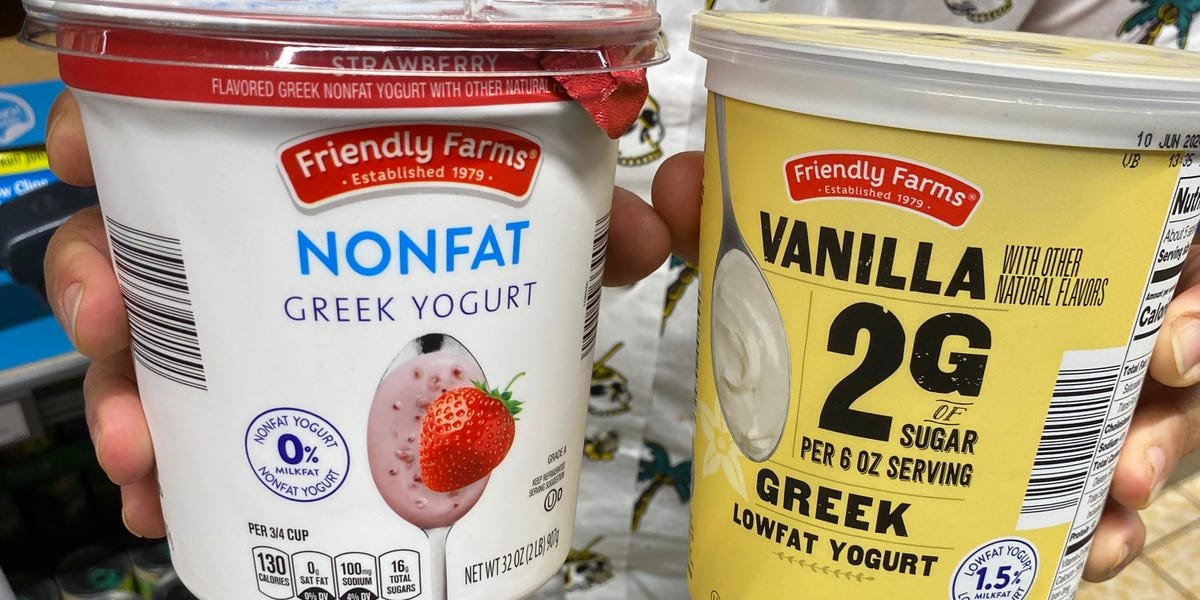
We believe all foods (in moderation) can fit within a healthy eating pattern. We usually eat 80% high-nutrient foods and 20% fun foods.
On Friday nights, when we don’t want to go out for dinner, we pop a frozen pizza in the oven. Luckily, Aldi’s Mama Cozzi’s pizzas are quite affordable and tasty.
We add mushrooms, bell peppers, and diced tomatoes to increase the meal’s fiber and nutrient content. It’s our way of creating a pizza that still provides us with health benefits.
Keep reading Aldi diaries like this one.
This story was originally published on May 19, 2024, and most recently updated on April 13, 2026.
One man in the US owns enough land to cover the entire state of Delaware nearly twice over — or New York City 14 times over.
Billionaire Stanley Kroenke is the largest landowner in America, owning 2.7 million acres, according to the 2026 Land Report 100, which tracks individual landowners across the US.
Kroenke’s holdings beat the record previously held by California’s Emmerson family, which owns 2.44 million acres of timberland across California, Oregon, and Washington.
Kroenke, 78, has an estimated net worth of $22.2 billion as of March 2, Forbes reported.
His fortune is largely tied to his investments in sports franchises and commercial and ranching real estate.
A growing portfolio
In 2016, Kroenke acquired the historic Waggoner Ranch in Texas, a 535,000-acre landmark founded in 1849 by Dan Waggoner.
At the time, it was Kroenke’s largest holding, and the Waggoner was widely described as one of the largest ranches in the United States under a single fence, as reported by American Cowboy magazine.
Then, in December 2025, the land magnate bought over 937,000 deeded acres in New Mexico, the single-largest land purchase in the US in over a decade.
This ranchland purchase put Kroenke at the top of the landowner list after years in the top five.
He also owns extensive land outside the US. In 2003, he bought Douglas Lake Ranch, Canada’s largest working cattle ranch, which spans more than 500,000 acres in British Columbia.
Kroenke also owns Douglas Lake Ranch, Canada’s largest working cattle ranch.
Jon Spalding/Shutterstock
Aside from owning millions of acres in Western ranchlands, Kroenke also owns about 60 million square feet of commercial real estate, The New York Times reported.
Much of that portfolio consists of shopping centers anchored by Walmart stores, a strategy Kroenke began building decades ago that helped fund his expansion into sports and large-scale land acquisitions.
A valuable sports empire
Some of the billionaire’s real estate holdings include sports venues in Denver and outside Los Angeles, both cities where Kroenke-owned sports teams play.
Kroenke’s sports holdings, which are responsible for a large portion of his fortune, include the Los Angeles Rams, the Colorado Avalanche, the Denver Nuggets, the Colorado Mammoth, the Colorado Rapids, and Britain’s Arsenal soccer club.
Kroenke, right, receives the NFC Championship trophy in 2019 after the Los Angeles Rams beat the New Orleans Saints in the NFC Championship game.
Chris Graythen/Getty Images
The soaring valuations of his NFL and global soccer franchises have significantly boosted the value of Kroenke’s portfolio, as media rights deals and international fan bases push teams’ worth into the billions.
Last year, Forbes ranked Kroenke as the ninth richest NFL team owner.
Half of a power couple
Kroenke’s connection to Walmart isn’t just a business one — he’s married to Walmart heiress Ann Walton, the daughter of its cofounder James “Bud” Walton.
Ann Walton herself is worth an estimated $14.6 billion, per Forbes.
They married in 1974 and have two children together, Josh and Whitney Ann.
Ann Walton Kroenke with her son, Josh Kroenke.
John Leyba/The Denver Post via Getty Images
Despite marrying a Walmart heiress, Kroenke’s fortune has been largely self-made in the real-estate sector.
From nearly a million acres of Western ranchland to NFL stadiums packed with fans, Kroenke’s empire now spans more territory than some US states and more than any other person in the country.
My grandparents, whom I call Papa and GG, have been together since they were teenagers and married for 54 years.
As I’ve grown up, I’ve realized the secret to their lasting love hasn’t been perfection or grand gestures. Instead, it’s in finding joy and meaning in life’s small, everyday moments.
Their marriage has taught me how powerful a gentle, consistent love can be, and how beautifully it can shape everything around it.
Here are three of the biggest lessons I’ve learned from them that I hope to bring into my own relationships.
To maintain the “spark,” nurture curiosity
My grandparents still discover new things about each other, more than 50 years into their marriage.
Sierra Newell
Whether it’s by going on a spontaneous camping trip or navigating retirement together, my grandparents delight in discovering new things about each other.
Both avid readers, they often will sit beneath their orange tree and share quotes from their books. After long Sunday walks through the park, they also like to continue their running card game of gin rummy, laughter, and nostalgic stories tumbling between them.
Even after decades together, they also eat dinner with each other nearly every night, eager to unravel each other’s thoughts, feelings, and experiences.
Find creative, consistent ways to express your love
My Papa has clipped many “Love Is…” comics over the years.
Sierra Newell
My grandparents have found a variety of ways to show each other they care.
Every morning, for example, my Papa clips the “Love Is…” comic strip from the newspaper and places it on the kitchen counter for GG. He also writes poems, scribbled on notepads, painted on rocks, or sent as random texts throughout the day.
Meanwhile, GG often sends photos of heart-shaped stones or leaves she finds on her walks, and they both leave handwritten notes in each other’s suitcases when they travel.
Physical affection anchors it all, though. There’s rarely ever a moment when they aren’t holding hands or resting a head on a shoulder. They often seem to do it without even realizing, as though one another is as constant and grounding as gravity.
Remember to prioritize your own happiness, too
I appreciate how each of my grandparents still pursues their own interests.
Sierra Newell
In my opinion, one of the reasons their relationship still feels so alive is because they never stopped making room for their individual interests.
GG started playing mahjong in retirement and now competes in tournaments, and Papa likes to play golf around the world.
Instead of resenting or fearing change, they celebrate each other’s passions, and watching each other reinvent themselves sustains their mutual excitement.
The common thread is joy
These days, it can be hard to sift through the barrage of conflicting advice on how to find and cultivate long-lasting love.
Still, witnessing my grandparents build a life out of tiny kindnesses — notes slipped into suitcases, breakfast cartoons, and shared laughter — has shown me the recipe is simpler than we think.
I see how extraordinary it is to share life’s simplest joys, to choose a partner who is real, steady, and kind. That level of devotion is an everyday miracle, and I try to weave those threads into my own relationships.
I send handwritten letters back and forth with my friends and family, and my boyfriend and I collect concert tickets, printed menus, and postcards from trips and dates we’ve experienced.
These items are arranged in a collage in my apartment, ink-stained and wrinkled, but tangible proof of the love my grandparents have taught me to sow.
When I was born in March 1999, my parents were both 25 years old. They were married and owned a house with a mortgage, and throughout my life, they’ve always seemed like “real” adults.
I’m now older than they were when they had me. I’m turning 27 and, though I don’t want children, it’s sometimes difficult not to measure my life against theirs.
They got married at 21. When I was 21, I was finishing my bachelor’s degree in the middle of a pandemic. At 25, rather than having a child, I was moving in with my girlfriend, and we became cat parents.
In some ways, and especially when I see my rent money leave my account at the start of each month, I feel like I’m falling behind.
I remind myself that life is different now
I know I’m not alone in feeling this way. Milestones that have long defined adulthood — like getting on the property ladder — don’t seem as realistic to everyone my age as they did for our parents’ generation.
While I do know people around my age who’ve been able to buy a house, for example, it’s definitely not the majority of my friends. Even if I did want kids, I wouldn’t have even considered it in my 20s, saving that conversation for my 30s.
Also, income hasn’t risen to keep pace with rising housing prices. Becoming a homeowner in your 20s is simply not realistic anymore.
Still, I sometimes don’t feel like an adult
I don’t think any of my generation, especially my friends, truly feels like we’re adults. It feels like I’m winging it most days.
I haven’t followed any traditional path. I moved to another city for university at 18, completed my master’s in another city, then shared an apartment with a friend somewhere else, and moved cities again when I moved in with my partner.
The author has cats instead of children.
Courtesy of Adam England
Sometimes it feels like I’m a teenager cosplaying as an adult. But then I remember that I do have my life together. I live with my long-term partner and our cats. I have a master’s degree. I freelance full-time for a living, my finances are stable, and I try to be reasonably healthy.
Now and again, I’ll say or do something that makes me realize I am a “real adult.” I’ll mention something about personal finance in a conversation with a friend, or get really excited about my air fryer being delivered.
In some ways, I’m further along than my parents were at this age
My dad often reminds me that I’ve had more life experience than my parents did at my age. I continued my education, I’ve lived in multiple cities across the UK, and I’m more well-traveled.
My life is richer in ways that aren’t necessarily measured by the traditional life plan. Sometimes comparing my life to that of my parents has made me feel stressed, but I’m now more comfortable embracing my own path; after all, adulthood isn’t a race.
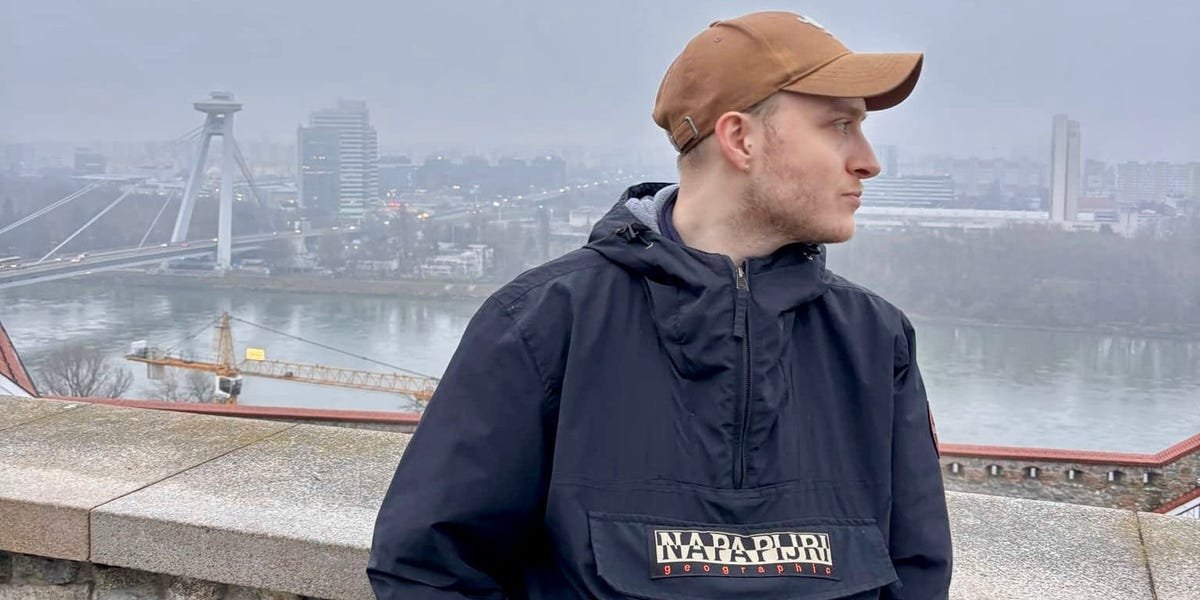
In December, I was on a boat on the Danube River with my girlfriend, drinking mulled wine and looking at Bratislava by evening as we enjoyed a well-deserved long weekend away from work before Christmas.
When my parents were the same age as us, they would have been at home with a one-year-old, and traversing adult life in a way I don’t think I’d be able to. Yet, looking back at when I was growing up, they made it seem so easy.
Neither version of your 20s is the objectively correct way to do it, but the contrast made me realize that I’m not falling behind or failing at adulthood. I’m simply doing it differently.