
Tech-leaders-are-raising-tough-questions-over-Matt-Shumers-viral.jpeg

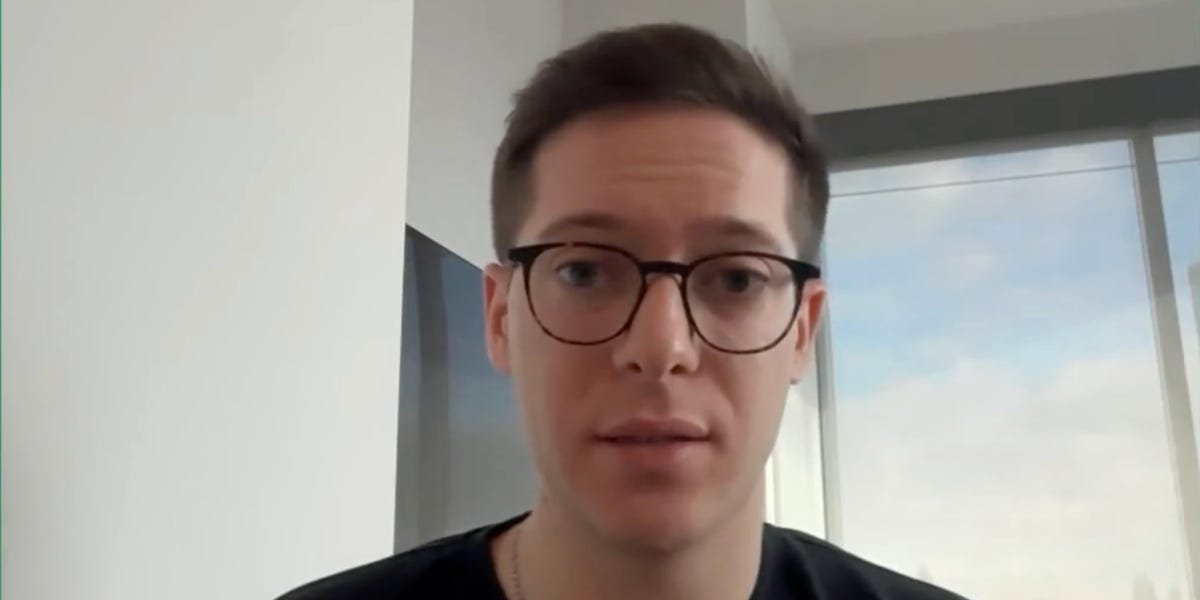
Tech leaders are raising tough questions over Matt Shumer’s viral essay on how AI will impact jobs.

Scientists and business leaders are responding to a viral essay warning of AI’s impact on jobs with a mix of agreement and skepticism.

The essay, titled “Something Big is Coming,” written by cofounder and CEO of OthersideAI, Matt Shumer, has racked up more than 60 million views on X as of Thursday.

In the 5,000-word post, Shumer said that AI could upend daily life on a scale “much bigger” than COVID, a comparison which drew pushback online. He wrote that the changes already unfolding in the tech sector are likely a preview of disruptions that could soon reach other industries as well.

“Even if there is a 20% chance of this happening, people deserve to know and have time to prepare,” Shumer told Business Insider’s Brent Griffiths in an interview.

Here’s what some of the sharpest minds in AI are saying about Shumer’s essay.

David Haber

Haber, a general partner at venture capital firm Andreessen Horowitz specializing in technology investments, posted on X that Shumer’s essay contains “great advice for how to get ahead in your job at any large company right now.”

“‘I used AI to do this analysis in an hour instead of three days is going to be the most valuable person in the room.’ Not eventually. Right now,” Haber quotes from the essay. “Learn these tools. Get proficient. Demonstrate what’s possible.”

Alexis Ohanian

The Reddit founder responded to Shumer’s initial post on X with a simple comment: “Great writeup. Strongly agree.”

Since 2023, Reddit has introduced a range of AI-driven tools, from search features that summarize user discussions to AI that sharpens its content recommendations and targets ads, but Ohanian recently emphasized that the platform must retain its humanity to stay competitive.

Eric Markowitz

Markowitz, the author and managing partner and director of research at Nightview Capital, a long-term-oriented investment firm, responded to Schumer with an essay almost as long, which criticized the practice of chasing speed and replacing the value of humanity simply because it could be done.

“These two worlds — Wall Street and Silicon Valley — have formed a feedback loop of short-termism so tight, so self-reinforcing, that they’ve confused efficiency with purpose, growth with meaning, and the elimination of people with progress,” wrote Markowitz.

“I have two research assistants. Could I replace them with AI? Of course. But their value extends their weekly output,” Markowitz added. “They give meaning to my work and I love seeing the excitement in their faces when they make a new discovery that I, alone, could not have found.”

“Let me say it again: we are not our tools. We never have been,” Markowitz wrote in conclusion.

Todd McLees

McLees, the founder of HumanSkills.AI, wrote on X that Shumer is not wrong, but he said that the advice Shumer provided is akin to “telling someone the floodwaters are rising and handing them a better bucket.”

“As AI grows in ability, our role in defining direction, values, and purpose only becomes more essential,” McLees said.

“What do you bring when the machine can do the work? That’s the only question that matters when intelligence is abundant,” McLees added. “Shumer wrote the alarm. It’s a good one. But alarms don’t tell you where to go. You have to find that within yourself.”

Gary Marcus

Marcus, Emeritus Professor of Psychology and Neural Science at NYU and founder of AI companies Robust.AI, has some harsh words for Schumer in his newsletter.

Marcuz called Shumer’s blog post “weaponized hype, filled with vivid narrative and marketing speech,” and said he did not provide real data to support the claim that the latest AI can write complicated apps without mistakes.

“Shumer’s presentation is completely one-sided, omitting lots of concerns that have been widely expressed here and elsewhere,” Marcus added, after discussing various studies that question the accuracy and productivity gain AI tools actually provide.

Vishal Misra

Misra, Vice Dean of Computing and Artificial Intelligence at Columbia University, responded in a lengthy Substack article that detailed why he doesn’t think AI is as scary as it sounds, at least not right now.

Misra wrote that many strange AI behaviors that make them seem sentient, such as perceived resistance and self-preservation, are simply a result of training data.

As for the possible elimination of jobs, Misra said he understands the anxiety, but history says we may not need to panic.

“When the camera was invented, portrait painters had every reason to panic. Their livelihood depended on a skill that a machine could now approximate,” Misra wrote.

“What happened? Painters didn’t disappear. They were freed from the obligation to faithfully reproduce reality and ventured into impressionism, cubism, abstract expressionism,” Misra added. “The camera didn’t kill painting. It liberated it.”



Source link

Amanda Goh

Matt Damon says cutting one thing out of his diet got him down to his ‘high school’ weight

Matt Damon, 55, says one diet change left him lighter than he has been in years.

During an appearance on Wednesday’s episode of the “New Heights” podcast, Damon spoke about how he prepared for his latest role in “The Odyssey.”

“I was in really good shape. I lost a lot of weight. He said he wanted me like lean but strong. It’s a weird thing,” Damon told hosts Jason and Travis Kelce, referring to the film’s director, Christopher Nolan.

To achieve that physique, Damon said he cut one thing out of his diet.

“I literally, just because of this other thing I did with my doctor, stopped eating gluten,” Damon said. “I used to walk around between 185 and 200. I did that whole movie at 167. And I haven’t been that light since high school. So it was a lot of training and a really strict diet.”

The actor said he works with a trainer, and compared the physical preparation to how the Kelce siblings would gear up for a football season, with training becoming part of his daily routine.

“You know, it’s like just part of your day. It’s part of your job, right? And it’s like yeah, you get really routinized about it and really kind of build your day around all that stuff,” Damon said.

The actor added that he hasn’t had gluten since. “I’m done. I’m done. I’m gluten-free everything,” Damon said.

A gluten-free diet eliminates gluten, a protein found in grains such as wheat, barley, and rye. It is often adopted for medical or digestive reasons, including to manage symptoms of celiac disease.

For most people, gluten isn’t necessarily harmful.

“Evidence suggests that, for general health, the emphasis should be on a whole, minimally processed, plant-based diet, which can include gluten-containing grains,” Grace Fjeldberg, a registered dietician with the Mayo Clinic Health System, told Business Insider in 2021.

Despite its popularity, a gluten-free diet doesn’t necessarily result in weight loss and isn’t a universal approach to better health.

Damon is no stranger to getting into peak shape for a role.

In a 2016 BBC interview, Damon said that getting back into shape for his return to the Bourne franchise was “brutal,” after his last appearance in 2007’s “The Bourne Ultimatum.”

“For the first Bourne movie I was 29 and I thought that was hard work getting into shape,” Damon said.

“Now I’m 45 and it’s just brutal. We shot this bare-knuckle fighting scene on my 45th birthday and it was a lot of work to get there,” he added.


Source link

cherylt_headshot

Critical Role’s chief creative officer, Matt Mercer, explains how he avoids burnout

Critical Role’s chief creative officer, Matthew Mercer, had been spearheading his eight-member crew’s relentless push into the big leagues of nerdworld for 10 years.

That was until this July, when he announced that he’d be giving up control of one of the crew’s biggest priorities, their long-running “Dungeons & Dragons” Twitch livestream.

In an August appearance on the podcast “Crispy’s Tavern: Tales and Tea,” Mercer said he’d felt the threat of burnout and thought he needed a break. He said he’d started to feel a “continuous need to produce creatively,” which was “a very draining and very scary thing.”

To be sure, Mercer and his seven cofounders still have a full slate of projects to work on. That includes an ongoing sold-out arena tour, as well as two Amazon-backed animated series on Prime Video. Mercer also has a key role in the team’s game publishing arm, Darrington Press, home to “Daggerheart,” their flagship game and their answer to “D&D.”

Still, Mercer says, it’s important to be able to admit when you’re done, and to give yourself permission to step away from the work for as long as you need to.

“My biggest advice for burnout is to acknowledge when you’re at the edge and take every opportunity you can to step away and replenish your cup,” Mercer told Business Insider.

Brennan Lee Mulligan of “Dimension 20” fame, Mercer’s longtime friend and collaborator, is the game master for Campaign Four, the team’s ongoing “D&D” stream. Mulligan taking over the main stream means Mercer is no longer solely in charge of captaining the team’s regular episodes, which often run to the four-hour mark.

“There’s this concept, the idea that just pushing through and sometimes necessity requires you to do that to a certain point,” Mercer said.

“But I find walking away and taking some time to enrich your creative input means that whatever time you lost beating your head against the wall will be more than made up for when you can return from a place of genuine inspiration and renewal,” Mercer added.

Campaign Four airs on Beacon, Critical Role’s in-house streaming platform, as well as on Twitch and YouTube.


Source link