Meet-Superpower-the-Silicon-Valley-startup-that-wants-to-make.jpeg

Meet Superpower, the Silicon Valley startup that wants to make you hotter, smarter, and healthier

For the techno-optimized, nearly everything in life can be improved with the help of engineering. Bots can auto-swipe on Tinder and flirt with matches on your behalf. AI avatars can attend Zoom meetings so that you don’t have to. Almost nothing is off limits, including the flesh. For that, there are peptides.

Scientifically, peptides are short-chain amino acids, or little chemical messengers that tell cells what to do. Culturally, they are vials of injectable drugs that have taken Silicon Valley and Hollywood hostage. Over the last year, scores of people in both ends of California have begun dosing themselves with compounds ordered from overseas labs, comparing their “stacks” like sneakerheads comparing limited drops. There are peptides for better sleep, better memory, increased muscle growth, tanner skin, or higher libido. As a category, peptides are almost incomparably viral. “I’ve never seen any product grow this fast by word of mouth, or that people swear by to the same extent,” says Max Marchione, the cofounder and CEO of Superpower, a consumer health startup in San Francisco.

Marchione — a muscular, tan, and energetic 25-year-old — has emerged as a peptide poster child. On X, he evangelizes about them, and regularly receives DMs from people asking how to get them. Some peptides, like GLP-1s for weight loss, are legal and commercially available. Most other peptides exist in a regulatory gray zone, neither banned nor approved by the FDA. To get them, one has to order a vial from a compounding pharmacy, often in China; ignore the warnings that the substance is “for research use only” and “not for human consumption”; mix the powdered substance with sterile water; then self-dose and self-inject with an insulin needle. Among many people in tech, the subversiveness carries a certain status.

Last fall, as Marchione began to notice “many, many people” in San Francisco getting peptide-pilled, he saw a business opportunity. Superpower sells members access to comprehensive annual lab testing, which tracks hundreds of biomarkers. It is built on the premise that the quantified body is an improvable body. If Marchione’s customers were already measuring their health, why not offer them the tools to improve it?

By now, one in eight Americans has tried a GLP-1 like Ozempic or Mounjaro. The total GLP-1 market is expected to be a $100 billion category by 2030, contributing as much as 1% of the American economy. “And that’s just a single peptide,” says Marchione. Someday, peptides could be one of the biggest consumer categories of all time. “We want to be the company that owns that.”


A hand holding peptides labeled

In February, RFK Jr. announced that the FDA would remove restrictions on 14 different peptides, as part of a broader agenda to make every American “the CEO of his own health.” 

Christie Hemm Klok for BI


In January, Superpower began offering members access to peptides that are legal in the United States. This includes GLP-1 medications, SS-31 (for more energy), sermorelin (for anti-aging), and tesamorelin (for body recomposition). Marchione expects this list to grow as federal oversight loosens: In late February, Health and Human Services Secretary Robert F. Kennedy Jr. announced on the “Joe Rogan Experience” podcast that the FDA would remove restrictions on 14 different peptides, as part of a broader agenda to make every American “the CEO of his own health.”

“When a peptide is legal,” Marchione says, “we are going to sell it.”

Marchione’s frustration hardened into a thesis: Modern medicine exists to treat disease, but has little interest in optimizing well-being.

Superpower isn’t the only company springing into the market. Numerous telehealth startups offer prescriptions for legal peptides, sold for hundreds of dollars a month. In 2024, Hims & Hers Health, Inc. acquired a peptide manufacturing facility in California — an early signal that what began as a fringe experiment might soon professionalize. Concierge physicians now offer bespoke peptide “stacks,” supervising protocols the way personal trainers once supervised macros. On an episode of “The a16z Show” in March, the Stanford neuroscientist and wellness influencer Andrew Huberman suggested that soon, personalized peptide protocols will be as normal as taking vitamins. “All of that stuff is going to be commonplace,” he said, “the same way that people are not afraid of vitamin D.” Superpower plans to stand out in the market by developing proprietary peptide products, as as well as funding research studies that can be used to lobby the FDA for more approvals.

Like all wellness trends, peptides began with the early adopters. But the future of peptides involves making money from the mainstream. If enough people start using them — to sleep better, work longer, and look younger — the question may shift from whether people need these drugs to why those who can afford them wouldn’t take them. And when that happens, Superpower hopes that upgrading will be as simple as adding on another subscription service, ordered directly through its platform.


On a Friday morning in late January, I met Marchione in the Superpower office, which sits in a 26-floor Art Deco building in downtown San Francisco. I’d heard the company lured its employees into the office on Fridays by offering injections of NAD+, a longevity-booster popular with the Hollywood set, during all-hands meetings. Those meetings had been moved to Thursdays, and so the floor was mostly empty.


The Superpower office.

Superpower’s office includes an employee pull-up and dead-hang leaderboard — Marchione sits atop both. 

Christie Hemm Klok for BI


Marchione started Superpower in 2023 after what he describes as chronic health problems (including allergies and prediabetes) that doctors failed to resolve. His frustration with the healthcare system hardened into a thesis: Modern medicine exists to treat disease, but has little interest in optimizing well-being. Superpower was created, in part, to move beyond this model of “sick care” and toward a model of enhancement. For $199 a year, members receive extensive blood testing tracking dozens of biomarkers, which can show early warnings of diseases, nutritional deficiencies, or areas where the body is functioning sub-optimally. To date, the company has raised $42 million.

Beyond its subscription service, Superpower also makes money by connecting members to a marketplace of supplements (and now peptides), personalized to each customer’s health data. In this sense, bloodwork is also a customer acquisition tool: Superpower can reveal deficiencies, then recommend a purchasable protocol to improve them. Peptides cost more than multivitamins — a monthly supply of GHK-Cu, the beauty-related peptide that is not approved by the FDA, can run between $200 and $500, depending on the vendor. The lifetime value of a peptide customer could be many thousands of dollars.

He returned with a syringe and drew up a microdose of retatrutide. I rolled up my sleeve while the CEO pinched the skin of my arm and inserted the needle.

Other telehealth startups will also offer these drugs. To give customers a reason to choose Superpower as their supplier, Marchione is also planning to launch a new division that will sell proprietary products available exclusively through its marketplace. These products include a novel form of semaglutide and a long-lasting version of BPC-157, a compound used to reduce inflammation and improve tissue healing, which Superpower is developing with an Australian biotech company.

The company naturally attracts employees who are interested in optimization, and who may be willing to look beyond the traditional health system to find it. Among them is Shaun Miller, Superpower’s vice president of medical operations, who is in charge of the company’s new line of prescription peptides. Miller, who’s 32, discovered the drugs as a teenager after his father was diagnosed with late-stage brain cancer. A relative suggested a trial in Israel, where doctors were researching an experimental peptide treatment. His father did not enroll, but Miller says the experience sent him down a rabbit hole of researching peptides, which never stopped.

When I met Miller, he was monitoring trials of the products that Superpower plans to sell later this year, in anticipation of new FDA regulations. “This administration is a little bit crazy, but we’re all here for it,” Miller said.

On LinkedIn, Miller describes himself as “your peptide guy’s peptide guy.” His own “stack” includes CJC-1295, ipamorelin, tesomerellin, and MOTS-c in the morning, for fat burning and energy; and GHK-Cu, TB-500, and BPC-157 at night, for injury repair and recovery. “And then, of course, like everyone else, I’m experimenting once a week with microdosing retatrutide,” a next-generation weight loss drug developed by Eli Lilly that is not yet FDA approved.

He and other Superpower employees have adopted a culture of casual injections and a willingness to self-experiment. In the office kitchen, Marchione showed me a refrigerator drawer repurposed as peptide storage. Beneath bottles of Muscle Milk and someone’s leftover Indian food, there were dozens of vials labeled “not for human consumption.” One vial contained BPC-157, the tissue-healing drug. Another, containing the copper-derived peptide GHK-Cu, was a frightening shade of bright blue.


Superpower office fridge.

The office kitchen includes an employee peptide drawer. “Someone on our team got sick, and I was really upset,” says Marchione. “‘You could have just told me, and we could’ve given you an injection.'” 

Christie Hemm Klok for BI


Marchione held up an immune-boosting peptide, called thymosin alpha-1. When someone in the office feels sick, he said, they’re welcome to an injection. “That’s just normal now,” he continued. “Someone on our team got sick, and I was really upset. I’m like, ‘Dude, you shouldn’t be sick, you could have just told me, and we could’ve given you an injection.'”

Marchione gestured toward the treasure trove of vials and turned to me. “Do you want any?”

Earlier that morning, I had admitted to him that I felt a certain FOMO about whatever was happening with peptides. I am not a risk-taker by nature, but I worried that while everyone else was upgrading, I would be left behind, taking sick days and waiting for my muscles to repair themselves. My Instagram feed was full of peptide influencers who flaunted six-packs and boasted they had never felt more energetic. In the kitchen, I told him yes, why not?

He returned with a syringe and drew up a microdose of retatrutide. I rolled up my sleeve while the CEO pinched the skin of my arm and inserted the needle.

As this was happening, one of Superpower’s employees wandered into the kitchen.

“What are you injecting over there?” he asked casually.

“Reta,” said Marchione. “Have you done it before?”

“Reta? Yeah,” the employee replied. He had been microdosing since October. “I have a whole, like, 50-peptide protocol these days. I even take actual HGH.”


Supplements

Superpower employees have adopted a culture of casual injections and a willingness to self-experiment. 

Christie Hemm Klok for BI


They discussed the regimen as offhandedly as recounting last night’s basketball game, using terms that went largely over my head. I sat back in my chair and let the peptides begin to course through my bloodstream.


Of all the peptides available on the gray market, retatrutide was the one I kept hearing about. Huberman and other techies had begun posting about it nonstop. Meanwhile, I was getting targeted ads on Instagram from hot female influencers who claimed retatrutide was a fountain of youth, or at least the secret to a bikini body. A few days after I got my own microdose in the Superpower office, I joined a Zoom call with a group of early-stage investors when one of them brought up peptides. He wondered which companies would manage to “capture value” in the category, and asked if anyone on the call was taking them. The chat window lit up:

“#retatrutide”
“Peptide lover”
“👋”
“Retaaaa”
“Got my reti yesterday lol”
“Everyone is skinny and hot in tech future”
“2026 Peptides for everyone”

I began asking retaheads about their motivations. None of these people had taken other weight-loss drugs like Ozempic. None were even particularly overweight. Instead, using retatrutide was a way to lose a little fat while also gaining mental clarity. It made them feel focused and productive, like Adderall. It blocked out thoughts of food, but also video games, alcohol, and pornography. One person called it “discipline in a syringe.”

Julius Ritter, a former Superpower employee who’s now the president of the San Francisco AGI House, says that retatrutide helped him get trim while also allowing him to focus without the distraction of food. “It’s actually wild what the cognitive clarity is that you get from that,” he says. I was reminded of Soylent, another viral product in Silicon Valley that had liberated tech workers from the inconvenience of eating. Ritter had pieced together his protocol from a combination of internet forums and “peptide parties,” where people gathered to share what they know. He hoped to start hosting a peptide club at AGI House to indoctrinate others.


Peptides

One devoted retahead described retatrutide as “discipline in a syringe.” 

Christie Hemm Klok for BI


Simone Vincenzi, a machine learning engineer, tells me that he’d heard about retatrutide from bodybuilders, who posted about it constantly on Reddit. “It’s the biggest population of experimenters,” he says, “because they’re not afraid of dying.”

Vincenzi decided to try it to manage his physique. (He clarified that while he works in tech, he is “one of them professionally, but not one of them culturally.”) Suppliers of retatrutide were “very easy to find” online; you could order a 5mg dose for around $60 from a compounding pharmacy in China. You could get the rest of the supplies, like sterile water to reconstitute the powder and insulin needles, on Amazon. Why did Vincenzi think reta had become so viral in Silicon Valley? Simple. “Nobody wants to be fat.”

Taking illicit reta involves some trial-and-error. Ritter found that taking too much made him feel weak and nauseous; he once had a vomiting spell after upping his dosage and eating a big meal. Vincenzi also took a break from reta after he noticed that his resting heart rate had noticeably increased. Both remained advocates of the drug, and willing to continue self-experimenting.

When people live inside volatile systems the body becomes the most intimate place to regain leverage.Mansi Hukmani, a peptide Substacker

Eli Lilly, the drugmaker, has warned that taking retatrutide outside of its clinical trials poses a risk to patient safety. (Retatrutide is expected to be approved by the FDA later this year; for now, it is only legally available through clinical trials.) Compounded or counterfeit versions of retatrutide can “contain the wrong ingredients, contain too much, too little or no active ingredient at all or contain other harmful ingredients.” Lilly has also sued a number of compounding pharmacies and telehealth companies for producing knockoffs of its FDA-approved medications, like the weight loss drug tirzepatide, also known as Mounjaro. It has lost several of those cases, as courts ruled that startups like Willow Health — which sell compounded tirzepatide — did not cause direct financial or reputational harm to the pharma giant. More recently, Lilly has tried to sway public opinion by warning of bacterial contamination and other impurities found in compounded tirzepatide.

These warnings haven’t stopped anyone. “The peptide world is the wild, wild west right now,” says Mansi Hukmani, who writes about peptides and wellness on Substack. While pharma companies warn about unlicensed use of peptides, influencers post about the benefits of using them, along with affiliate links. There are already more than 50 million TikToks tagged with peptides. “The consumer demand is outpacing regulations at an egregious rate.”

Hukmani believes that decreasing trust in health institutions, combined with an uncertain social, political, and economic moment, has driven people to be more experimental. “When people live inside volatile systems the body becomes the most intimate place to regain leverage.”


Last year, RFK Jr. declared that the FDA’s “war on public health” was going to end. That included the suppression of products like raw milk, ivermectin, hyperbaric therapies, psychedelics, and peptides.


Nasal spray

The company plans to launch a new division that will sell proprietary products available exclusively through its marketplace. 

Christie Hemm Klok for BI


“I’m a big fan of peptides,” he told Joe Rogan on his podcast in February. By changing the FDA’s classification of more than a dozen peptides from Category 2 (meaning pharmacies cannot compound them) to Category 1 (meaning pharmacies can compound them in certain cases, for patients with prescriptions), he said consumers who were already taking these drugs would be able to source them more safely. “My hope is that they’re going to get moved to a place where people have access from ethical suppliers.”

“There are risks with buying these gray market products unless you are engaging with a third-party tester,” says Luke Turnock, a researcher at the UK’s University of Lincoln, who studies peptides. “You don’t 100% know that you’ve bought the correct thing.” If you search online, you’ll find plenty of anecdotal reports of people injecting vials that are more or less potent than described. Marlon Peralta, who regularly advocates for peptide use on Substack and X, once bought and injected what he believed was BPC-157, but was actually melanotan II, the tanning peptide that darkens one’s skin.

The FDA classified some Category 1 peptides as Category 2 because of adverse side effects: TB-500, for example, has been linked to tumor growth in rodent studies. CJC-1295, ipamorelin, and tesamorelin have also been associated with growth hormone-related risks. Other peptides just don’t have “sufficient data in humans to inform safety-related considerations,” according to the FDA. There just isn’t enough data about what happens when people take these drugs — or stop taking them.

Marchione believes Superpower can have a role to play in expanding that knowledge. Later this year, he says Superpower will begin conducting clinical trials on peptides like epitalon, pinealon, and BPC-157, through the company’s clinical arm, Superpower Medical Group of California, in an effort to submit evidence to the FDA to approve them. This could have the added benefit of making Superpower the only place consumers could legally access certain drugs. “Right now, there are a lot of people who might need or want access to a compound that’s not legal, and they can’t get in any legal way, except for if they genuinely qualify for it and want to be part of research,” he says. Superpower is in a unique position to identify these people: “We have someone’s blood data, we have their symptoms, their goals, what’s happening with their health. We know who’s eligible for research.”

I ask Marchione if most of Superpower’s customers fit into this category of people, who are as interested in experimentation as he is.

“We have a subset that’s very experimental, but a lot of them are more like your average American,” he says. “That said, your average American is taking reta. Your average American is taking BPC-157. What has become normal has completely changed.”


In the tech industry, people talk a lot about the bifurcations that will occur as a result of artificial intelligence. Some will become incredibly wealthy. Others will be trapped in a “permanent underclass.” I began to worry that something similar would happen with peptides. There would be those who are willing to experiment with their body, and those who are not. Some would become hot, lean, and refreshed, while the rest of us succumb to the usual effects of stress and aging.


Max Marchione

“Imagine everyone in your company is smarter, and sleeping better, and better looking, and more energetic, and fitter,” says Marchione. “Do you think you’re going to be the one dumb, ugly, tired person? No.” 

Christie Hemm Klok for BI


Marchione, for his part, is betting this is exactly what will happen. “Imagine everyone in your company is smarter, and sleeping better, and better looking, and more energetic, and fitter. Do you think you’re going to be the one dumb, ugly, tired person? No,” he says. In his view, the rise of peptides is Darwinian, an evolution of our basic human instincts around competition. Once improvement is visible, it becomes imitable. Once it becomes imitable, it becomes competitive. And once it becomes competitive, it becomes compulsory.

“What this means is that all of these technologies will reach an inflection point,” Marchione says. Pretty soon, you might not have a choice.


Arielle Pardes is a reporter in San Francisco covering the business and culture of technology.

Business Insider’s Discourse stories provide perspectives on the day’s most pressing issues, informed by analysis, reporting, and expertise.


Source link

Tinder-wants-you-to-meet-people-offline-Its-CEO-tells.jpeg

Tinder wants you to meet people offline. Its CEO tells us it’s responding to ‘changing consumer tastes.’

Tinder wants you to get offline. No, really.

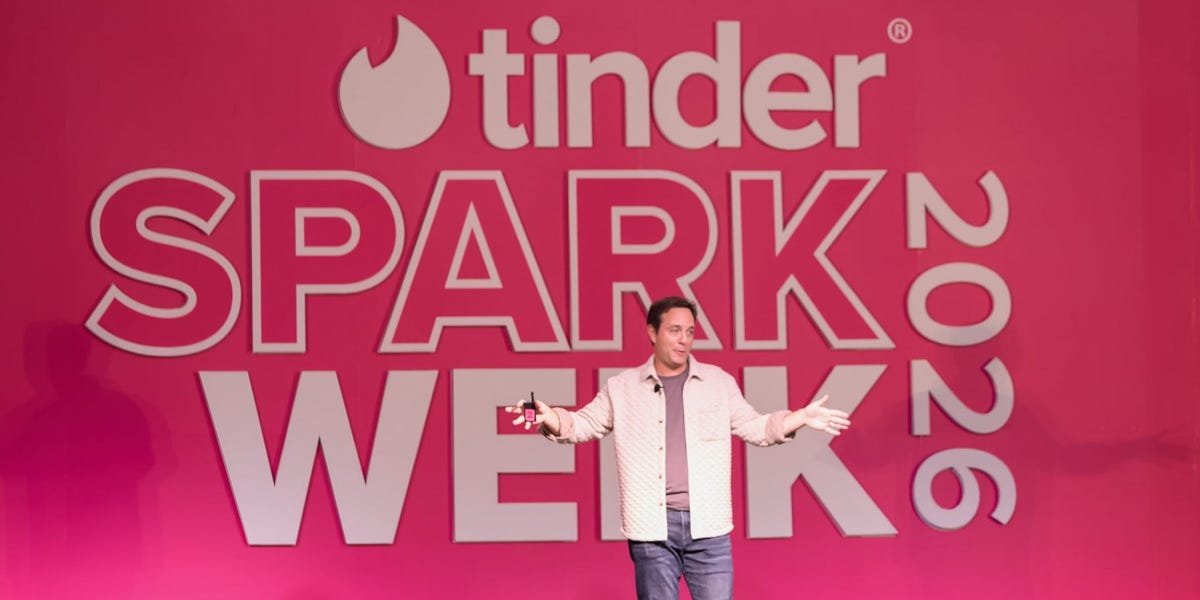
The world’s biggest dating app announced a variety of new features for 2026 at its product conference, Tinder Sparks. There will be ways to match based on music taste and astrology, to enhance photos with AI — and to skip out on the back-and-forth of online dating entirely.

The new “Events” tab, which is testing in Los Angeles this month, will connect users to in-person dating events. In an exclusive interview, CEO Spencer Rascoff said that IRL dating is the “perfect solution” for Gen Z daters.

“Events are fun, they’re low-pressure, they’re social, they’re safe,” Rascoff told Business Insider. “They’re bringing Tinder into the physical world in a way that is consistent with our users’ lifestyles.”

The Events tab is placed squarely next to the swiping tab — a sign, Rascoff said, of how important it is to the company. Users can browse listings with attendee counts and blurred photos. Once the user registers, the photos will unblur, and they can see some of the faces that will be in attendance.

It’s a fairly notable about-face for a company that once centered around the endless possibilities of “Swipe Right.” Indeed, many users have been tiring of the apps entirely; you may have heard of “swipe fatigue.”

“If you run a consumer internet company, you have to stay attentive to changing consumer tastes,” Rascoff said. “We can’t put our heads in the sand and stay wedded to past practice.”


Tinder's Events tab is pictured.

Tinder is testing an in-person dating feature in Los Angeles.

Tinder


Rascoff hopes that events will help bring in those worried by or frustrated with online dating. He compared it to Airbnb’s experiences market. That company uses luxury houses and villas to get people to reconsider “alternative accommodations” and, hopefully, return to their core product.

Since Rascoff’s takeover in 2025, he’s attempted to steer the app clear of its hookup reputation.

“I think IRL events have the potential to drive reconsideration of Tinder from people who have formed an opinion,” Rascoff said. He described an anti-Tinder user who downloads for the events, and eventually uses it as an “alibi” to start swiping.

Other upcoming features include specialty swiping modes for music and astrology.

Rascoff shared stories of two recent job interviews he held with Gen Z candidates. One responded to a question about why they were leaving their current company with, “I’m a Gemini.” Another responded to why they went into this field with, “because I’m a Taurus.”


Tinder's Astrology Mode is pictured.

Tinder lets users match by their astrological sign.

Tinder


Early testing shows that these modes are driving more engagement. One in 10 users under 22 have adopted Music Mode, and there was a 20% increase in Likes sent by women on astrology profiles.

While Rascoff is married, he still has a Tinder profile for product testing. He’s personally a Scorpio, and planned to list the Rolling Stones.

Then there’s AI, the looming question over all the dating app companies. Everyone is embracing it in some form, but the question of how much has proved controversial.

Tinder announced at the conference an expansion of its AI matchmaking program, Chemistry, as well as a camera roll scan for profile creation and photo enhancements, both powered by the tech.


Tinder's Chemistry feature is pictured.

Tinder’s matchmaking feature, Chemistry, is powered by AI.

Tinder


But Rascoff is quick to cut through the flashier features — there’s also video speed-dating and profile stickers — and point out safety. One of the biggest threats to online dating is bots, scammers, and crypto shills.

Tinder is now making its Face Check technology mandatory worldwide (excluding some markets, such as the EU and UK) and further rolling out its safety nudges for potentially inappropriate messages.

“We don’t talk about it enough,” Rascoff said. “We’ve raised the bar on trust and safety.”


Source link

Meet-Jay-Graber-who-is-stepping-down-as-Blueskys-CEO.jpeg

Meet Jay Graber, who is stepping down as Bluesky’s CEO to transition to a role made just for her

Updated

  • Jay Graber is stepping down as the CEO of Bluesky to transition into a position made just for her.
  • Bluesky’s open protocol offers a decentralized alternative to X and Meta platforms.
  • Here is a look at Graber’s career and her unconventional path to Silicon Valley.

Jay Graber is the engineer behind one of the most ambitious experiments in reimagining social media.

The Tulsa-born technologist is best known for steering Bluesky between 2021 and 2026, the decentralized platform she describes as a “billionaire-proof” alternative to X and Meta-owned platforms.

On March 9, Graber announced in a statement that she will be leaving her role as CEO of Bluesky and that someone “focused on scaling and execution” will take over. Meanwhile, she will return to her passion for “building new things” as the chief innovation officer, which is a role made just for her.

She will also remain on Bluesky’s board and have a say in picking her successor.

Graber’s emergence as a Silicon Valley power player was unconventional. In 2021, former Twitter CEO Jack Dorsey tapped her to lead the Bluesky project, which was spun off as an independent public benefit company, just before Elon Musk’s takeover of Twitter.

Since then, Bluesky’s user base has grown to over 40 million as of November 2025, powered by its open protocol, customizable moderation system, and promise of a more democratic digital ecosystem.

Here’s a look at Graber’s career timeline, from her early work in cryptocurrency to her rise as the architect of a new, user-owned social media platform:

Early life

Jay Graber was born Lantian Graber in Tulsa, Oklahoma.

Kimberly White/Getty Images for WIRED

Jay Graber was born Lantian Graber in Tulsa, Oklahoma, to a mother who is an immigrant from China during the Cultural Revolution and a father of Swiss descent. Her mother, who is an acupuncturist, named Graber “Lantian”, which means “blue sky” in Chinese, as a wish that she would have “boundless freedom.” She was aptly named for the job she would eventually be given.

Her father is a mathematics teacher, and in a 2024 profile of Graber in Cosmico, he is cited as a source of intellectual and academic influence for Graber.

Education


JULY 17: A general view of the Penn Shield University of Pennsylvania logo on July 17, 2025, at the University of Pennsylvania, in Philadelphia, PA. (Photo by Erica Denhoff/Icon Sportswire via Getty Images)

Jay Graber studied Science, Technology & Society at the University of Pennsylvania.

Erica Denhoff/Icon Sportswire via Getty Images

At the University of Pennsylvania, Graber studied Science, Technology & Society, which is an interdisciplinary program that examines how technological innovation intersects with culture, politics, and ethics.

Rather than focusing solely on coding or engineering, the program allowed Graber to explore the broader systems that shape how technology is developed and utilized, an approach that later influenced her views on social networks and digital governance.

Some of her key guiding views include a decentralized internet and open source social media protocols. “We believe that the protocol is the fundamental guarantee on freedom of speech,” Graber said once during an interview with Fast Company.

Before Bluesky


A bitcoin illustration

Jay Graber is well known in crypto circles for her work on Zcash.

Peter Dazeley/Getty Images

Graber’s early career unfolded during the first wave of blockchain innovation in the mid-2010s. After graduating from the University of Pennsylvania, she began her career as a software engineer at SkuChain, a startup focused on utilizing blockchain for supply-chain management. Around the same time, she also built and soldered bitcoin-mining rigs, deepening her technical grasp of decentralized systems beyond software.

Between 2016 and 2018, Graber joined the privacy-focused cryptocurrency project Zcash as a junior developer, contributing to one of the most advanced implementations of zero-knowledge proofs. Later, in 2019, she founded Happening, Inc., an events app that aimed to help communities organize and connect through shared experiences.

Happening, Inc. never really took off, but these early roles grounded Graber in both the engineering and ideological foundations of decentralized technology, which later shaped the vision for Bluesky as an open, user-controlled social network.

Joining Bluesky


Bluesky logo

Jay Graber negotiated a formal spin-out of Bluesky from Twitter as a Public Benefit Company.

Illustration by Omar Marques/SOPA Images/LightRocket via Getty Images

When Jack Dorsey, then CEO of Twitter, first announced Bluesky in late 2019, it was a small, Twitter-funded initiative tasked with researching an open and decentralized standard for social media.

By August 2021, Dorsey decided to onboard Graber, who was then known in crypto circles for her work on Zcash and decentralized community tools, to lead and accelerate the effort. However, according to an April 2025 profile of Graber in the New Yorker, she quickly realized that for Bluesky to fulfill its mission, it needs to create a social protocol separate from any single corporation and maintain independence from Twitter.

With Dorsey’s backing, Graber negotiated a formal spin-out by October 2021 and incorporated Bluesky as a public benefit corporation, a legal structure that allowed it to prioritize user benefits and open standards over shareholder profit.

Twitter provided an initial $13 million in funding to give the new entity “freedom and independence to get started,” as Dorsey publicly described at the time.

Bluesky’s rise


Bluesky app

Jay Graber separated Bluesky from Twitter just before Elon Musk’s takeover.

Illustration by Thomas Fuller/SOPA Images/LightRocket via Getty Images

Graber’s early move to separate Bluesky from Twitter may have saved it.

When Elon Musk acquired Twitter in 2022 and renamed the platform X, Bluesky’s independence allowed it to thrive and emerge as a competitor to X as droves of users left the platform.

In September 2023, Bluesky only had around 1 million registered users, but this figure climbed to more than 20 million by the end of November 2024. The meteoric rise came after a user surge in Brazil after X was temporarily restricted there, as well as 1.25 million user gains the week after Donald Trump won the 2024 presidential election.

As of November 2025, Bluesky has around 40 million registered users. That is no match for X’s roughly 560 million users, but it provided an alternative for those dissatisfied with X’s ownership and content moderation.

Calling out Big Tech


Jay Graber at the Keynote

Jay Graber wore a black T-shirt that reads “Mundus sine caesaribus,” meaning “a world without Caesars.”

Samantha Burkardt/SXSW Conference & Festivals via Getty Images

Graber has taken a subtle dig at Mark Zuckerberg, the CEO of Meta, which owns Facebook, Instagram, and Threads.

During SXSW in Austin in March 2025, Graber wore a black T-shirt that reads “Mundus sine caesaribus,” meaning “a world without Caesars.” The design and font are widely interpreted as a response to Zuckerberg’s own Latin slogan shirt, which reads “Aut Zuck aut nihil,” meaning “either Zuck or nothing.”

The shirt drew public curiosity, and Bluesky began selling the same shirt. A spokesperson for the company told Business Insider at the time that the shirts sold out in 30 minutes, representing the company’s “democratic approach, where no single CEO or company controls your experience online.”

A modest net worth


Jay Graber

Compared to most tech CEOs, Jay Graber has a modest net worth.

DON MACKINNON/AFP via Getty Images

Compared to other Silicon Valley CEOs who run major social media platforms, all of whom are billionaires, Graber has a very modest net worth.

Estimates of Graber’s net worth fall between $2.95 million and $5 million, mostly depending on her equity in Bluesky. Since Bluesky is not a publicly traded company, Graber’s stake in the company and her annual compensation are not publicly disclosed.

As of early 2025, Bluesky’s valuation is estimated to be around $700 million.

A ‘billionaire-proof’ platform


Jay graber

Jay Graber positions Bluesky as a “billionaire-proof” platform.

Sam Barnes/Web Summit via Sportsfile via Getty Images

Graber positions Bluesky as a new kind of social network.

Bluesky is built on an open-source Authenticated Transfer Protocol, which decentralizes social networking and hands more control to users rather than a single company or executive.

“The billionaire proof is in the way everything is designed, and so if someone bought or if the Bluesky company went down, everything is open source,” Graber told CNBC in an interview in November 2024.

“What happened to Twitter couldn’t happen to us in the same ways, because you would always have the option to immediately move without having to start over,” Graber added, referring to Musk’s purchase of the platform that is now named X.

Unlike traditional social platforms like X or Facebook, Bluesky is built on an open-source ecosystem called the ATmosphere, powered by the Authenticated Transfer Protocol. The system gives users the ability to design and customize their own ranking algorithms, carry their posts and followers with them across different apps, and avoid being subject to any platform’s arbitrary or politically driven moderation decisions.

Activism on Bluesky


Protesters from the Tesla Takedown movement gather outside a Tesla pop-up store

Protesters from the Tesla Takedown movement gather outside a Tesla pop-up store

Thomas Krych/Anadolu via Getty Images

Bluesky became a platform widely used by progressive activists and community organizers.

The Tesla Takedown movement, a pushback against Tesla CEO Elon Musk’s involvement with Donald Trump and the White House’s DOGE office, famously spread via Bluesky when actor Alex Winter contacted a sociologist in Boston to build a website where people could organize local protests.

But the progressiveness of Bluesky also seems to have spooked some politicians. Semafor’s media reporter Max Tani wrote in May 2025 that some congressional staffers told him that they gave up on using Bluesky as an alternative to X, because “their bosses kept getting yelled at by Democratic users angry at their impotence.”

Changing the ecosystem


Jay graber in conversation with Fast Company

Jay Graber is not worried about Bluesky’s slower growth in terms of registered and active users

Eugene Gologursky/Getty Images for Fast Company

Graber is unfazed by Bluesky’s slower growth in terms of registered and active users.

In an interview in May with Fast Company, Graber said that reports of Bluesky’s death are “greatly exaggerated” and that growth “comes in waves,” with new communities being established at each stage.

“We’re still seeing a lot of community formation, and one of the most exciting things is how structurally different this is,” said Graber. “It’s not just another social site that has to be a singular winner-take-all in an ecosystem with existing incumbents.”

In 2025, Bluesky still added around 10 million newly registered users.

A warning against AI over-reliance


Jay Graber

Jay Graber warns you shouldn’t “fully outsource your thinking” to AI.

Eugene Gologursky/Getty Images for Fast Company

Graber has tips on how to thrive in an era of AI, and reliance is not the answer.

“AI can handle many reasoning tasks, but if we fully outsource our thinking, it’s not good enough,” Graber told Business Insider.

She added that for students, that might mean writing essays by hand to “build the muscle for critical thinking.”

At Bluesky, Graber said AI is used for moderation and curation but never runs on its own, because while AI delivers packaged expertise, human value lies in judgment and adaptability.

For job seekers, Graber encourages workers to adopt a generalist mindset and master core skills such as writing and coding.

“If you don’t know what good code looks like,” she said, “you won’t be able to evaluate AI’s output.”

Stepping down as CEO of Bluesky


Jay Graber

Jay Graber is starting a new era in 2026 as Bluesky’s chief of innovation.

Samantha Burkardt/SXSW Conference & Festivals via Getty Images

Graber is starting a new era in 2026.

On March 9, Graber said in a public statement that she will be stepping down as Bluesky’s CEO and transitioning into a position made just for her: chief innovation officer.

“As Bluesky matures, the company needs a seasoned operator focused on scaling and execution, while I return to what I do best: building new things,” Graber wrote in a blog on Bluesky.

“As we’ve grown, I’ve found that people thrive when they’re in a role where their passions overlap with their strengths. This is as true for me as it is for our team,” Graber added. “Transitioning to a more focused role where I can do what brings me energy is my way of putting that belief into practice.”

Graber’s new role focuses on Bluesky’s technology stack rather than on growth and business operations. She will also play a role in choosing her successor. For now, venture capitalist Toni Schneider will be Bluesky’s interim CEO.


Source link

He-owns-27-million-acres-and-is-married-to-a.jpeg

He owns 2.7 million acres and is married to a Walmart heiress. Meet America’s top private landowner.

One man in the US owns enough land to cover the entire state of Delaware nearly twice over — or New York City 14 times over.

Billionaire Stanley Kroenke is the largest landowner in America, owning 2.7 million acres, according to the 2026 Land Report 100, which tracks individual landowners across the US.

Kroenke’s holdings beat the record previously held by California’s Emmerson family, which owns 2.44 million acres of timberland across California, Oregon, and Washington.

Kroenke, 78, has an estimated net worth of $22.2 billion as of March 2, Forbes reported.

His fortune is largely tied to his investments in sports franchises and commercial and ranching real estate.

A growing portfolio

In 2016, Kroenke acquired the historic Waggoner Ranch in Texas, a 535,000-acre landmark founded in 1849 by Dan Waggoner.

At the time, it was Kroenke’s largest holding, and the Waggoner was widely described as one of the largest ranches in the United States under a single fence, as reported by American Cowboy magazine.

Then, in December 2025, the land magnate bought over 937,000 deeded acres in New Mexico, the single-largest land purchase in the US in over a decade.

This ranchland purchase put Kroenke at the top of the landowner list after years in the top five.

He also owns extensive land outside the US. In 2003, he bought Douglas Lake Ranch, Canada’s largest working cattle ranch, which spans more than 500,000 acres in British Columbia.


Horses grazing on Douglas Lake Ranch, British Columbia, Canada

Kroenke also owns Douglas Lake Ranch, Canada’s largest working cattle ranch.

Jon Spalding/Shutterstock


Aside from owning millions of acres in Western ranchlands, Kroenke also owns about 60 million square feet of commercial real estate, The New York Times reported.

Much of that portfolio consists of shopping centers anchored by Walmart stores, a strategy Kroenke began building decades ago that helped fund his expansion into sports and large-scale land acquisitions.

A valuable sports empire

Some of the billionaire’s real estate holdings include sports venues in Denver and outside Los Angeles, both cities where Kroenke-owned sports teams play.

Kroenke’s sports holdings, which are responsible for a large portion of his fortune, include the Los Angeles Rams, the Colorado Avalanche, the Denver Nuggets, the Colorado Mammoth, the Colorado Rapids, and Britain’s Arsenal soccer club.


Terry Bradshaw presents Stanley Kroenke, owner of the Los Angeles Rams and General Manager Les Snead the NFC Championship trophy after defeating the New Orleans Saints in the NFC Championship game at the Mercedes-Benz Superdome on January 20, 2019 in New Orleans, Louisiana.

Kroenke, right, receives the NFC Championship trophy in 2019 after the Los Angeles Rams beat the New Orleans Saints in the NFC Championship game.

Chris Graythen/Getty Images


The soaring valuations of his NFL and global soccer franchises have significantly boosted the value of Kroenke’s portfolio, as media rights deals and international fan bases push teams’ worth into the billions.

Last year, Forbes ranked Kroenke as the ninth richest NFL team owner.

Half of a power couple

Kroenke’s connection to Walmart isn’t just a business one — he’s married to Walmart heiress Ann Walton, the daughter of its cofounder James “Bud” Walton.

Ann Walton herself is worth an estimated $14.6 billion, per Forbes.

They married in 1974 and have two children together, Josh and Whitney Ann.


Ann Walton Kroenke pictured with her son, Josh Kroenke.

Ann Walton Kroenke with her son, Josh Kroenke.

John Leyba/The Denver Post via Getty Images


Despite marrying a Walmart heiress, Kroenke’s fortune has been largely self-made in the real-estate sector.

From nearly a million acres of Western ranchland to NFL stadiums packed with fans, Kroenke’s empire now spans more territory than some US states and more than any other person in the country.


Source link

Meet-Molly-OShea-the-VC-turned-podcaster-who-gets-execs-like-Alex.jpeg

Meet Molly O’Shea, the VC-turned-podcaster who gets execs like Alex Karp and Palmer Luckey talking

Molly O’Shea is a name-dropper. There’s good reason for that.

I count 29 big names in tech mentioned over our hourlong call. She told me about recently moderating a panel with Kalshi cofounders Tarek Mansour and Luana Lopes Lara. Ken Griffin took the stage after her. O’Shea breezily referenced talking about the state of new media with the TBPN bros in Peter Thiel’s house.

But it’s O’Shea’s access to executives like these that keeps her audience coming back. The podcaster is deeply immersed in Silicon Valley culture, having several years of venture capital experience under her belt.

“I am institutionally trained not to get canceled,” she said. “A lot of these people really trust me. I think it’s a wonderful component that I come in from the industry.”

Her podcast’s name, Sourcery, references “sourcing deals,” but it better represents O’Shea’s talent herself. She’s clearly sourced up, sporting an ever-growing rolodex of tech’s biggest names.

After buzzy interviews with Palantir CEO Alex Karp and Anduril cofounder Palmer Luckey, O’Shea’s platform has quickly grown. So have her critics, some of whom say she should ask tougher questions.

But her core audience — investors in the world of tech and finance — seem to love that she’s in the know.

From in-house VC newsletter to ‘monk mode’

O’Shea considers herself the first of her family to chase a “capitalistic pursuit.”

“It’s funny, there’s not many business-oriented people in my family,” she said. “My dad had a marketing agency for most of my life, but again, it was a marketing agency. My mom is a home designer and she used to be a creative director.”

She went to New York University for studio art but pivoted to entrepreneurship after learning how low the average artist’s salary was. Eventually, she narrowed in on venture capital.

O’Shea got her start working for the father of a college friend, a secondaries investor for a family office. She moved to Miami to work for him before coming back to New York as an analyst at the Global Public Offering Fund.

She then went to the seed and Series A investment firm TMV — then called Trail Mix Ventures — as an associate. She started Sourcery there as an in-house newsletter, but only made it public when she started at New York Life Ventures as a senior associate. She shared it with friends, and it eventually grew a readership.

Then Upfront Ventures’ Greg Bettinelli reached out with a job offer.

“I was a reader of her email newsletter,” Bettinelli later wrote when asked about the offer. “We were looking to hire a new investor for Upfront Ventures and I reached out as I appreciated what she built as what I think was a side project at the time.”

O’Shea said she was on a boat in the Mediterranean when she got Bettinelli’s offer. She met him in the Hamptons. “It’s like the bougiest story ever,” she said.

O’Shea moved to Los Angeles for Upfront Ventures. She’s stayed in the city and prefers it to New York. “You get so much more for your money,” she said. “I have a hot tub!”


Sourcery host Molly O'Shea is pictured.

Before O’Shea was a full-time podcaster, she worked for TMV, New York Life Ventures, and Upfront Ventures.

Molly O’Shea


Then Elon Musk took over X, partially open-sourced the algorithm, and launched ad-revenue share programs. O’Shea said, “Game on.”

She started posting more, and her follower count grew. Erik Torenberg of the podcast network Turpentine asked if she wanted to start a podcast about deals, linked to her newsletter.

While O’Shea declined to disclose exactly how much she earns, she said the Sourcery newsletter began generating revenue when it added subscriptions. That includes a $600 “I can expense it” annual tier she said “plenty of people” were willing to pay for.

Sourcery is now her full-time job and a top-200 podcast in Apple Podcasts’ investing category. She employs a “lean team” to help her film, edit, and promote.

The Palantir and Anduril interviews helped generate more interview interest. (Her next guest: Jake Paul.)

After an “insane” end to 2025, O’Shea said she spent January locked-in and focused on laying the foundation for the rest of the new year.

“I’m going into monk mode.”

Getting Karp and Luckey to say yes

O’Shea’s network is big, and her show keeps making it bigger.

Andreessen Horowitz’s Alex Immerman told her he watched her Kalshi video before investing in the company, she said. “I know plenty of people — I won’t name them — that have put millions of dollars into these companies that I’ve profiled,” she said.

That seems to be how O’Shea lands many of her guests: knowing the right people. I spoke to two early interviewees. Oden Technologies cofounder Willem Sundblad was introduced to O’Shea through an investor. Contrary general partner Kyle Harrison met her in 2018 and once considered hiring her while at Coatue Management.

“A lot of these relationships start first as friendships,” Harrison said. “We’ve enjoyed talking to each other off the record, so talking on the record is just as much fun.”

The Karp interview was a right-place, right-time situation. She was at the Hill and Valley Forum in 2025, where Karp was speaking. O’Shea said Palantir’s Eliano Younes recognized her from Pirate Wires and introduced her to Shyam Sankar, the company’s CTO.

Then she published a list of her 100 dream guests. Listed No. 1 was Ivanka Trump. Palantir staff noticed Karp wasn’t on the list, O’Shea said, and she amended it, making him 1B. That set the interview in motion.


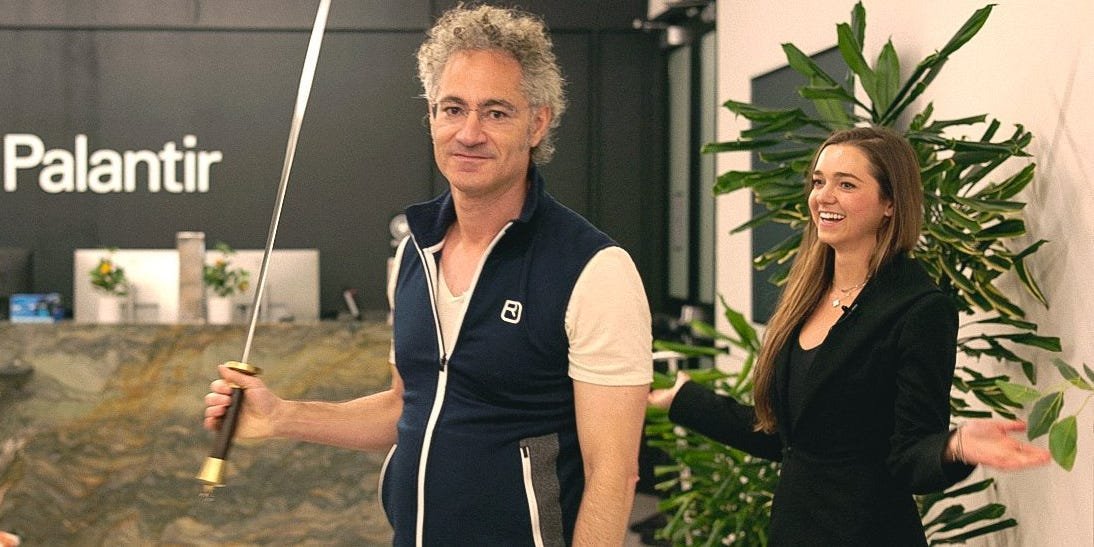
Molly O'Shea is pictured with Palantir CEO Alex Karp

A clip of Karp brandishing a sword thrust O’Shea’s podcast into the limelight — and got the trolls commenting.

Molly O’Shea


Her Anduril series also sprang from the Sourcery 100 list. She put Anduril cofounders Palmer Luckey and Trae Stephens on the list. Matt Grimm commented and helped her set up an interview.

The Karp interview was her biggest by far. The full-length podcast has 4.3 million views on X — and that’s not including the various clips she publishes separately.

It also made her confront the challenges of being on camera.

She published the video on a Tuesday in the back of a taxi in London. She went offline on Wednesday and woke up to hundreds of texts on Thursday asking if she was OK.

In the interview, O’Shea wore an Alaïa dress her friend had lent her. She said she liked being able to “show some femininity and personal style.” Some X users mocked her attire. (Others pointed out that Karp was wearing a t-shirt.)

O’Shea said she was glad to be offline at the time and not glued to her phone watching the comments, and grateful for the women who reached out.

“There were a lot of really horrible tweets, and a lot of really disgusting things that I wish I did not see,” she said. “The internet is a scary place.”

The ‘tough questions’ question

In November, The Guardian published a feature about the “friendly media bubble” that turns CEO interview subjects into stars. O’Shea was the lead anecdote. The piece closed with her asking Karp what type of cupcake he would want to be.

O’Shea knows that some people want her to ask “harder questions.” Her response: “If you want to have criticism of a company, how about do some research on it.”


Molly O'Shea

What does O’Shea say to those who think she went too easy on Karp? “How about read the biography,” she said. “That’s a good starting point.”

Sourcery/Molly O’Shea


That doesn’t mean she won’t ask the kind of in-the-weeds technical question about deal structure or strategy that you’d expect from someone with VC roots. The conversations can also veer off of investment talk.

Take a recent interview with the lightning rod venture capitalist Shaun Maguire of Sequoia — who generated widespread backlash after saying Zohran Mamdani was a secret “Islamist” who “comes from a culture of lying.” At one point, she’s asking him about the economics of telecommunications. At another, Maguire is calling Mamdani a communist and a terrorist-supporter.

O’Shea maintains that hard questions aren’t the purpose of her podcast. She’ll sprinkle one in every so often, she said, but the goal is mostly to be a resource. Sourcery is a place for investors to get information about a subject’s views — don’t expect O’Shea to dig in on a guest’s recent scandal or push back on a controversial position.

“If you want to know about lawsuits, I don’t know, go read lawsuits,” she said.

O’Shea is clearly proud of her work. She described a recent nap, dozing off to the “All-In” podcast. She woke up to a new podcast on, and thought: “Holy crap, what is this amazing interview?” It was her own.

Ending our call, I asked if she had a media analogy for herself. TBPN is often called the “SportsCenter of Silicon Valley.” What is Sourcery?

She waffled back and forth; maybe she’s “30 for 30,” maybe she’s Martha Stewart.

Later that day, she emailed me her answer: Barbara Walters, who, incidentally, was famous for her hard-hitting questions.

“Absolute legend,” O’Shea wrote.


Source link

Meet-the-billionaire-owners-behind-every-NFL-team.jpeg

Meet the billionaire owners behind every NFL team

The New York Giants were founded in 1925 by Tim Mara and have been part of the Mara family ever since.

Team ownership was passed to Tim’s sons, Jack and Wellington Mara, in 1959, and now the team is run by principal owner, CEO, and president John Mara, who took over in 2005 after his father, Wellington’s, death. John Mara had been with the organization since 1991.

However, while John Mara is listed as the team’s principal owner, he’s actually shared ownership with Steve Tisch since 2005.

Steve Tisch’s father, Preston Robert Tisch, purchased a 50% stake in the Giants in 1991, and after his death, Steve became chairman and executive vice president.

Together, Mara and Tisch helped plan and build MetLife Stadium, and the team has won two Super Bowls (2008 and 2012) under their leadership. However, the team has struggled in recent years, winning just four games last season.

Still, the Giants are the fourth most valuable team in sports, worth $10.1 billion. Tisch has an estimated net worth of $1.6 billion, Forbes reported, while Mara reportedly has an estimated net worth of $500 million.

Tisch was not named in the 2025 report card; Mara was given a C+ ownership ranking by the NFLPA.


Source link

They-quit-traveled-and-rethought-their-lives-—-meet-the.jpeg

They quit, traveled, and rethought their lives — meet the adults taking gap years

In my early 30s, I was working long hours as the editor in chief of a magazine, juggling deadlines and the looming “should we have kids?” question — all while feeling completely wrung out. I drafted a resignation email.

When my boss called me in, she surprised me: “Take some time off,” she said. “Come back to manage a new launch later this year.”

My plan for a year off collapsed into two months.

It began quietly in India at a yoga retreat near Kerala and ended with an adventure in Indonesia, climbing Mount Bromo and motorbiking through Yogyakarta.

It wasn’t a true gap year, but it was long enough to reset. The next year, I stepped into my boss’s role, leading the creative team I’d almost left behind.

That experience made me realize that time off doesn’t have to derail a career — it can redefine it.

I wasn’t a student with few obligations or a 20-something who hadn’t settled on a career path. I was an established professional stepping away when the stakes were high.

Extended time off can carry long-term costs — lower earnings, disrupted savings, slower compounding — but for some, the benefits outweigh the risks.

David Burkus, an organizational psychologist and author, began researching sabbaticals in 2015.

“People report better mental and physical health, increased confidence, and a greater sense of purpose after an extended break,” Burkus told Business Insider.

He also notes the benefits for employers: Teams cross-train, share knowledge, and become less dependent on a few “indispensable” people.

Paid sabbaticals are still a rarity in the US. Society for Human Resource Management data showed that 5% of companies offered them in 2019, rising to 7% by 2023.

And despite employers not rolling them out broadly, employees are increasingly seeking time off. In SHRM’s 2025 benefits survey, leave was the second-highest priority for workers — trailing only health benefits — for the fourth year in a row.

A peer-reviewed study published in the Academy of Management in 2022 interviewed 50 professionals who had taken extended time off. All interviewees said they came back as better leaders.

DJ DiDonna, a senior lecturer at Harvard Business School and coauthor of the study, says everyone he interviewed wished they had taken one earlier.

DiDonna told Business Insider that the best times for a sabbatical often coincide with natural life transitions, like a honeymoon, a newly empty nest, or the “twilight career” stage before retirement.

This collection brings together people who took that pause at different ages, for different reasons, and for vastly different lengths of time.

If you’ve taken an adult gap year yourself, I’d love to hear from you at akarplus@businessinsider.com.


Source link

Jacob Shamsian hollis unsmiling headshot cassidy edit 2

Meet Barry Pollack, Nicolás Maduro’s lawyer who also represented Julian Assange

When Nicolás Maduro needed someone to represent him in an American courtroom, he turned to a lawyer with experience facing off against the federal government.

The Venezuelan political leader hired Barry Pollack, a criminal defense attorney who’s represented WikiLeaks publisher Julian Assange, as well as other high-profile defendants.

The Justice Department has accused Maduro, who was serving as Venezuela’s president when he was captured by US forces, of participating in a narco-terrorism conspiracy, alleging he worked with illegal drug gangs. They also accused him and his wife, Cilia Flores, of conspiring to illegally import cocaine into the United States and of gun-related charges.

On Monday afternoon, US Marshals escorted the couple into a 26th-floor courtroom in lower Manhattan, where they entered not-guilty pleas and proclaimed their innocence. US military forces apprehended Maduro and Flores in a pre-dawn operation on Saturday in the Venezuelan capital of Caracas and brought them to the United States.

At the hearing, Pollack told US District Judge Alvin Hellerstein that he would file “voluminous and complicated” motions on Maduro’s behalf, suggesting he would challenge the charges and the basis for his arrest.

“Mr. Maduro is the head of a sovereign state,” Pollack said in court. “He is entitled to the privileges and immunities that go with that office. In addition, there are issues about the legality of this military abduction.”

Delcy Rodriguez was sworn in as Venezuela’s interim president on Monday afternoon.

Pollack, an attorney at the boutique law firm Harris St. Laurent & Wechsler LLP, is best known as one of the many lawyers who represented Assange, the publisher of WikiLeaks.

Prosecutors had accused Assange of working with hackers to obtain government secrets from federal agencies and American companies, as well as conspiring with former US Army officer Chelsea Manning to leak documents about the Iraq and Afghanistan wars.

Assange pleaded guilty to espionage charges in the summer of 2024, capping a six-year legal battle that involved complex negotiations with multiple governments.

Pollack’s experience with sensitive national security matters could be an asset for his representation of Maduro, which will likely involve classified information. The attorney has also represented Jeffrey Sterling, a former CIA officer who was convicted of espionage charges after leaking information to a journalist.


barry pollack nicolas maduro

Barry Pollack, on the left, represented Maduro in Manhattan federal court on Monday afternoon.

Jane Rosenberg/Reuters


To be paid, Pollack will likely need a waiver from the US Treasury Department, which has sanctioned Maduro and the Venezuelan government.

It’s not clear when Pollack began representing Maduro. He formally entered an appearance on the court docket late Monday morning. Maduro was first indicted in 2020, and Hellerstein has overseen court proceedings against other Venezuelan nationals accused of conspiring with him. Pollack didn’t respond to Business Insider’s request for comment.

A court-appointed lawyer for Maduro, David Wikstrom, told Business Insider he was informed at 8:40 a.m. on Monday that he would be representing the Venezuelan president in court. Shortly before the noon court hearing, he said he still hadn’t spoken to Pollack, who ultimately represented Maduro in the proceeding.

Flores is represented by Mark Donnelly, a Texas-based attorney who served as a federal prosecutor for 12 years, and one of his law partners, Andres Sanchez.

Pollack, a former public defender and president of the National Association of Criminal Defense Lawyers, has a long track record of successful defense outcomes in criminal trials.

He represented former Enron accountant Michael W. Krautz, who a jury acquitted of fraud charges. And he successfully overturned the conviction of Martin Tankleff, a Long Island man who spent 17 years in prison after he was falsely accused of killing his parents as a teenager.

More recently, Pollack represented the executive of a poultry company accused of conspiring to fix the price of chickens. Jurors declined to find the executive guilty in two separate trials.

In a 2025 interview with Lawdragon, Pollack decried the Justice Department’s “extraordinary view” of its jurisdiction for criminal cases, using the Assange case as an example.

“You’ve got somebody who’s not a United States citizen who is publishing information not in the United States, had not set foot in the United States, with respect to any of the alleged offensive conduct,” Pollack said. “The information was leaked to him by somebody in Iraq. Yet the United States obviously felt that it could pursue that as a criminal offense in the United States.”


Source link

Meet-the-newest-generation-of-the-Kennedy-family-Americas-most.jpeg

Meet the newest generation of the Kennedy family, America’s most famous political dynasty

Schlossberg, 32, is the youngest son of Caroline Kennedy, the former US ambassador to Japan and the only surviving child of John F. Kennedy, and Edwin Schlossberg, a designer and author.

In November, he announced would be campaigning for a congressional seat in New York City’s 12th district.

“I’m not running because I have all the answers to our problems,” he said in a video announcing his candidacy. “I’m running because the people of New York 12 do. I want to listen to your struggles, hear your stories, amplify your voice, go to Washington, and execute on your behalf.”

He was born in New York City and graduated from The Collegiate School, an all-boys private school in Manhattan, the New York Post reported. He later attended Yale University as an undergrad, and he graduated from Harvard in 2022. In 2023, Schlossberg told People he had passed the New York State Bar exam.

Schlossberg makes frequent media appearances and has written for publications, with op-eds in The New York Times and The Washington Post.

“I’m inspired by my family’s legacy of public service,” Schlossberg said in his first live television interview on “Today” in 2017. “It’s something that I’m very proud of.”

However, Schlossberg has been criticized in recent years for his out-there videos on social media, with even some family members criticizing his “trolling,” particularly of his cousin Robert F. Kennedy, online, The New York Post reported.

“I hope he gets the help he needs,” Kennedy’s daughter, Kathleen “Kick” Kennedy, told The Post in February.


Source link