Read-the-memo-ESPN-Chairman-Jimmy-Pitaro-sent-staff-about.jpeg

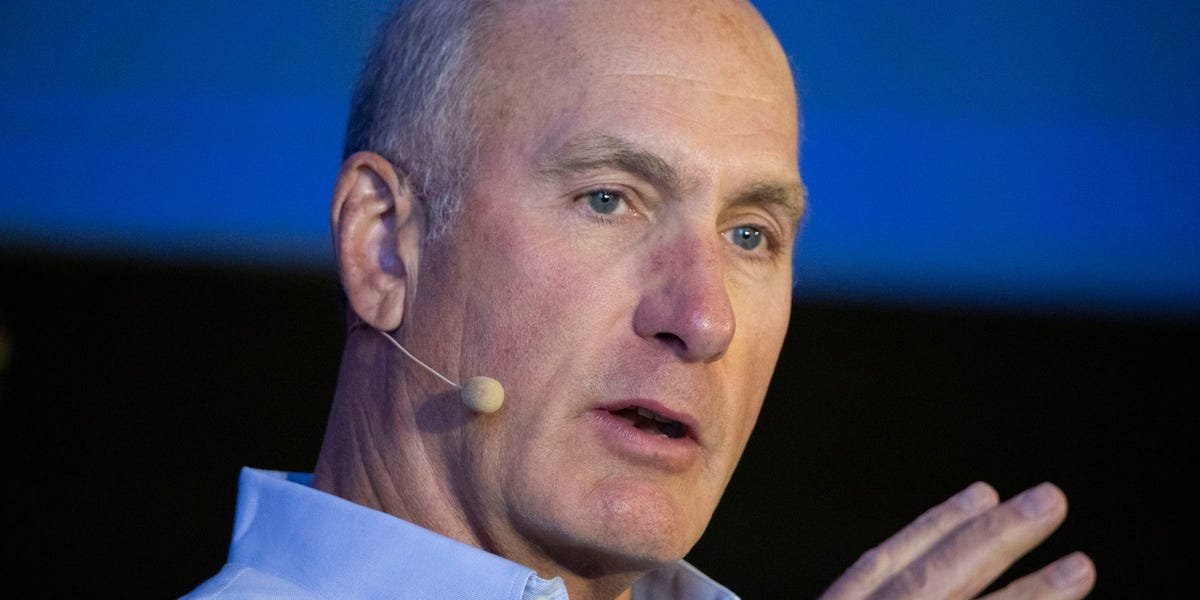
Read the memo ESPN Chairman Jimmy Pitaro sent staff about the Disney layoffs

The top executive at ESPN addressed his staff after the latest round of layoffs at its parent company, Disney.

Jimmy Pitaro, chairman of ESPN, sent a memo about the cuts to his employees on Wednesday. The memo, obtained by Business Insider, said that all ESPN employees affected by the cuts have already been notified.

“We must continue fostering a more agile and technologically enabled workforce,” Pitaro wrote. “While these realities require difficult decisions, that does not lessen how hard it is to say goodbye to colleagues who have dedicated themselves to ESPN.”

The layoffs, which began Tuesday, were the first at Disney under new CEO Josh D’Amaro, who took over in March. D’Amaro said in a memo to Disney staff that the layoffs came after the company combined its enterprise marketing and brand teams earlier this year.

Employees being laid off will receive severance pay based on their level and tenure at the company, according to an employee handbook seen by Business Insider.

An ESPN spokesperson declined to comment when reached by Business Insider.

Read Pitaro’s memo below:

Team:
As Josh D’Amaro shared, our industry and our businesses are undergoing profound change, and we must continue fostering a more agile and technologically enabled workforce. While these realities require difficult decisions, that does not lessen how hard it is to say goodbye to colleagues who have dedicated themselves to ESPN.
I want you to know that conversations are completed with those whose roles are impacted this week.
To team members who will be leaving, thank you for your contributions — these decisions do not reflect the strength of your work or of the company, but rather our focus on how to best manage our resources to support continued growth. We are here to help you through this transition, and we encourage you to reach out to your leadership or People & Culture (HR) business partner with any questions.
I remain optimistic about our future, even during these tough days. ESPN’s foundation is built on strong relationships, perseverance and a commitment to serving sports fans — values that matter particularly in difficult moments. Let’s continue to support one another.
Jimmy


Source link

Jack-Dorseys-layoff-memo-is-an-ominous-sign-of-what.jpeg

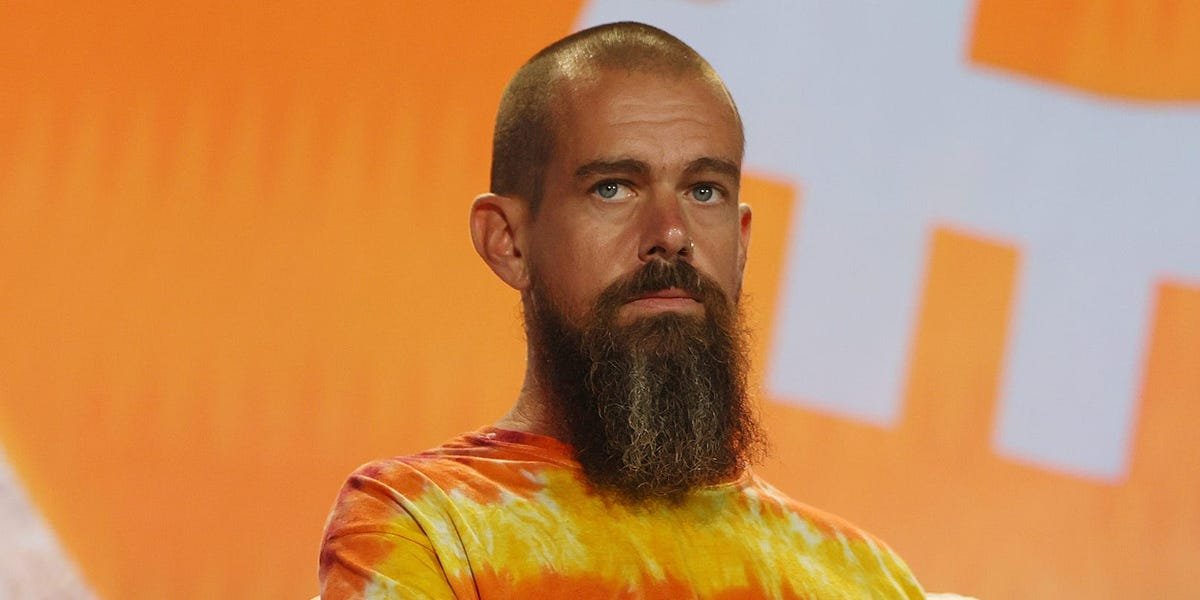
Jack Dorsey’s layoff memo is an ominous sign of what could come next

White-collar workers, beware.

CEO Jack Dorsey is departing from the classic tech layoff playbook — and it could be a sign of what’s to come.

In a post on X on Thursday, the billionaire said he’s slashing nearly half Block’s workforce, cutting its over 10,000-person staff to just under 6,000. He said that he is doing this despite the business being strong and profits growing.

In tech’s hardcore era, many companies have paired down teams through repeated rounds of layoffs. Dorsey’s massive chop stands alone, however.

In his memo, the cofounder and CEO said repeated rounds of layoffs are “destructive to morale,” focus, and to the trust of customers and shareholders. He said he’d rather do the cuts in one fell swoop.

“I’d rather take a hard, clear action now and build from a position we believe in than manage a slow reduction of people toward the same outcome,” Dorsey wrote in the post.

The company appears to have conducted repeated rounds of cuts in recent months, Wired reported.

Because repeated cuts create “layoff fatigue and chronic anxiety,” as well as drops in morale and productivity, it’s better to make a single reduction rather than piecemeal ones, Brooks Holtom, a professor of management at Georgetown University, told Business Insider.

Nevertheless, the size of the cut is notable, he said.

“This is a pretty extreme example in terms of the amount of people that are being let go all at once, but the packages are relatively generous,” Holtom said.

‘A new way of working’

The move to lay off over 40% of the company’s workforce signals a departure from the typical pattern followed by other Big Tech companies. It also raises the question of whether other firms will follow a similar trend, and some industry leaders have already commented on the move.

“Feels inevitable this is about to ripple through every public company. We’ve gotta find a way to make everyone an owner w/ some exposure to the upside as the # of employees falls off a cliff,” Jessica Verrilli, managing director and cofounder at Adverb Ventures said in a post on X.

Dorsey said that he’s adapting to an era in which technology is dramatically changing the workplace.

“We’re already seeing that the intelligence tools we’re creating and using, paired with smaller and flatter teams, are enabling a new way of working which fundamentally changes what it means to build and run a company,” Dorsey said in his memo on X.

In the company’s earnings call on Thursday, he said that more companies will follow suit in using AI to drive efficiency gains. Block is already ahead of the trend that “all companies will eventually” adopt, Dorsey said.

Michael Blank, an assistant professor of finance at Stanford Business School, told Business Insider that there could be a race among CEOs to convince investors that their companies are better positioned than their rivals to adopt abruptly changing AI technologies. Mass layoffs would be a potentially inexpensive way to signal that, he said.

Shares of Block were up over 20% in after-hours trading.

An uncertain future for white-collar workers

Block’s layoffs come in the wake of a viral report from research firm Citrini on February 22, that raised fears about the impact of AI and sent stocks tumbling. Citrini, a firm focused on thematic equity investing, laid out a predictive scenario in which AI continues to grow but proves detrimental to the broader economy.

A number of tech leaders have also been warning of a fundamental erosion of white-collar work.

Anthropic CEO Dario Amodei has sounded the alarm about a looming white-collar “bloodbath,” while Meta CEO Mark Zuckerberg has said AI is reshaping what individual employees can achieve.

Meanwhile, companies like Klarna have been more explicit about replacing human workers. CEO Sebastian Siemiatkowski said its workforce has halved over the last four years and will shrink further in the coming years. The company had 7,000 employees in 2022 and he said he expects the company’s workforce to drop below 2,000 by 2030.

Not everyone is convinced the end times are here for desk workers. While the World Economic Forum’s 2026 Global Risk report predicts that 92 million workers will be displaced by 2030, it also said 170 million roles will be created in that time frame, resulting in a net increase.


Source link

Lauren Edmonds Profile Photo

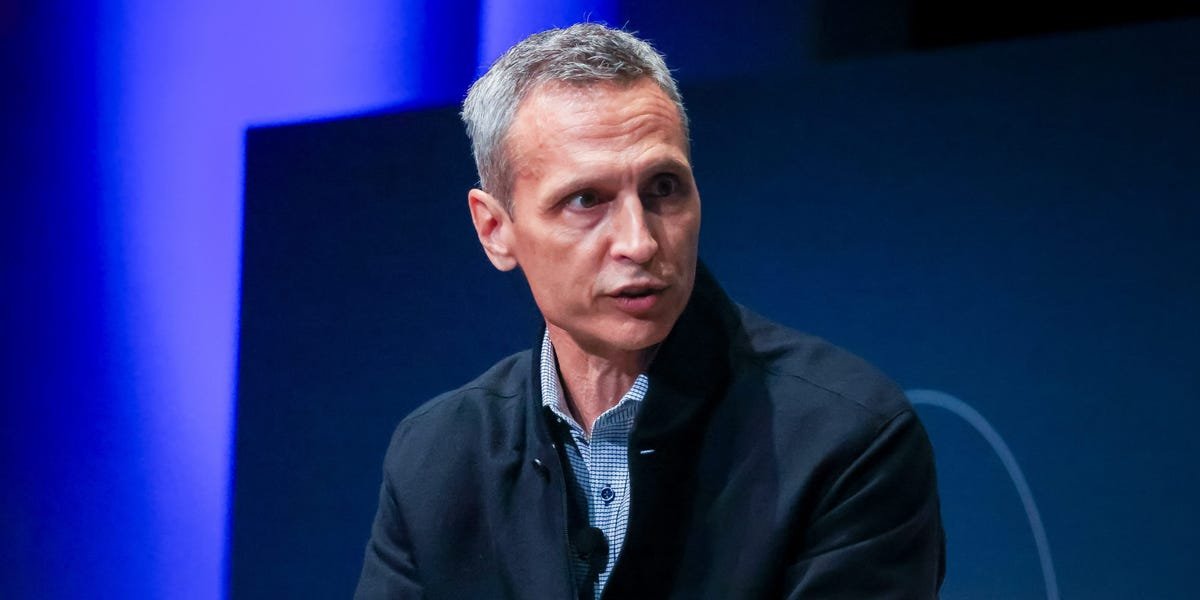
Read the memo: Talent agent Casey Wasserman tells staff he’s selling his company after Epstein files fallout

Casey Wasserman is selling his high-profile sports marketing and talent agency after his correspondence with Ghislaine Maxwell surfaced in the Epstein files.

The entertainment executive informed the Wasserman Group’s 4,000 staffers about the sale in a memo on Friday.

“At this moment, I believe that I have become a distraction to those efforts,” he wrote. “That is why I have begun the process of selling the company, an effort that is already underway.”

In January, the Justice Department began to release more than 3 million pages of documents related to convicted sex offender Jeffrey Epstein, who died in jail in 2019 while awaiting trial on sex-trafficking charges.

The names of numerous prominent people, such as Bill Gates and US Commerce Secretary Howard Lutnick, have shown up in the documents. While appearing in the files does not mean a person is associated with Epstein’s crimes, some have nonetheless faced a public fallout by association.

In Wasserman’s case, the documents revealed that the entertainment mogul flew on Epstein’s jet with several people, including former US President Bill Clinton. He also exchanged emails with Maxwell, who is serving a 20-year prison sentence for sex trafficking girls for Epstein. Wasserman’s emails with Maxwell were dated 2003, long before police began to investigate Epstein and over a decade before police arrested Maxwell.

Wasserman issued an apology following the revelations, but a backlash from his roster of top talent had already begun. Singer Chappell Roan, Olympian Abby Wambach, and others said they intended to leave his agency over his association with Epstein.

“It was years before their criminal conduct came to light, and, in its entirety, consisted of one humanitarian trip to Africa and a handful of emails that I deeply regret sending,” Wasserman wrote in the memo to staff on Friday. “And I’m heartbroken that my brief contact with them 23 years ago has caused you, this company, and its clients so much hardship over the past days and weeks.”

Read the full memo Wasserman sent to his employees:

Team:
I wanted to write to you all directly to share a few important updates. Over the past couple of weeks, I have spoken to many of you directly — and I wish I could have spoken with every one of you because you all have put your hearts and souls into this incredible organization.
First and foremost, I want to apologize to you. I’m deeply sorry that my past personal mistakes have caused you so much discomfort. It’s not fair to you, and it’s not fair to the clients and partners we represent so vigorously and care so deeply about.
The pain experienced by the victims of Jeffrey Epstein and Ghislaine Maxwell is unimaginable – and I’m glad, as I’m sure you all are, that those who helped them commit their crimes are rightly being held accountable.
Hopefully by now you know the facts about my limited interactions with those two individuals. It was years before their criminal conduct came to light, and, in its entirety, consisted of one humanitarian trip to Africa and a handful of emails that I deeply regret sending. And I’m heartbroken that my brief contact with them 23 years ago has caused you, this company, and its clients so much hardship over the past days and weeks.
Other than my children and my fiancée, there are two things that matter most to me in this world: this company that I founded 24 years ago, and the dream I’ve pursued for more than a decade of bringing the Olympic Games back to the city I love.
This organization, its leadership and the entire team mean the world to me. Our 4,000 employees are the absolute best in the business. I see you put it all on the line for your clients every day. Our clients expect — and deserve — world-class representation. And that’s exactly what they get because of all of you.
At this moment, I believe that I have become a distraction to those efforts. That is why I have begun the process of selling the company, an effort that is already underway. During this time, Mike Watts will assume day-to-day control of the business while I devote my full attention to delivering Los Angeles an Olympic Games in 2028 that is worthy of this outstanding city.
I so appreciate the passion and fight you bring to your jobs. It’s why you succeed.
I am beyond proud of what this company has accomplished to date and excited to watch its next chapter.
All my best,
Casey


Source link

James Faris headshot

Read the memo Disney sent employees as it said Josh D’Amaro would be its next CEO

Disney just made it official: Josh D’Amaro is its next CEO.

D’Amaro, the experiences chairman who’s been at the Mouse House since 1998, will take over for longtime CEO Bob Iger on March 18, Disney announced on Tuesday morning.

“Josh possesses that rare combination of inspiring leadership and innovation with a keen eye for strategic growth opportunities and a deep passion for the Disney brand and its people — all of which make him the right person to take the reins as Disney’s next CEO,” wrote James Gorman, Disney’s board chairman, in a memo to employees, which was viewed by Business Insider.

Read the full memo from Gorman below:

Dear Disney Employees and Cast Members,

On behalf of the Board of Directors, I am pleased to announce that Josh D’Amaro, Chairman of Disney Experiences, will be the next Chief Executive Officer of The Walt Disney Company, effective at the Annual Meeting on March 18. Josh possesses that rare combination of inspiring leadership and innovation with a keen eye for strategic growth opportunities and a deep passion for the Disney brand and its people — all of which make him the right person to take the reins as Disney’s next CEO.

This is wonderful news for all of us at Disney and I know you will join me in congratulating Josh on this well-deserved appointment.

Over the past three years, the Disney Board has undertaken an exhaustive and disciplined process to identify and prepare the right leader for Disney’s next chapter. Josh demonstrated a strong vision for the company’s future and a deep understanding of what makes Disney unique in an ever-changing marketplace. He has collaborated with some of the biggest names in entertainment to bring their stories to life in our parks, advancing the power of immersive, human storytelling with cutting-edge technology. The Board believes he is exceptionally well prepared to guide this global company forward.

Bob Iger, who has led Disney to unprecedented success during his nearly two decades as CEO, has provided extensive mentorship to Josh throughout the succession process, and will continue to serve as Senior Advisor until his retirement from the company at the end of the year. Bob returned from retirement in 2022 at the Board’s request to stabilize the company and make it fit for purpose, and to prepare Disney for this moment with a strong leadership bench, including potential successors. He has achieved all of this and more, and the Board and I are deeply grateful to Bob for his longstanding dedication to Disney.

We also announced today that Dana Walden will assume the role of President and Chief Creative Officer of The Walt Disney Company, also effective at the Annual Meeting. Dana is one of the most accomplished creative leaders in entertainment, and has done an outstanding job as Co-Chairman of Disney Entertainment since its formation in 2023. In this new role, she will report to Josh and work with him in ensuring that storytelling and creative expression across every audience touchpoint consistently reflect the brand, engage audiences at scale, and advance core business objectives — while driving enterprise-wide initiatives and translating vision into action.

Over the past century since Walt and Roy founded this company, Disney has had a remarkable and storied history, built on creativity, imagination, and a unique ability to touch people’s lives around the world. As we look to the future, we are lucky to have someone like Josh ready to guide this global company forward as CEO. We are also fortunate to have a deeply experienced management team in place, including Disney Entertainment Co-Chairman Alan Bergman, ESPN Chairman Jimmy Pitaro, and Disney executive officers. Their experience, judgment, and continuity will be an important asset to Josh as he begins this next chapter in Disney’s history.

And finally, allow me to thank you, our Disney Board, I am also confident that this company’s greatest strength is its people — the employees and Cast Members whose creativity, talent, and dedication bring the magic of Disney to life every day. On behalf of the Board and myself, I want to thank you for all you do as we prepare for this company’s exciting next chapter. We are deeply honored to serve as your Directors.

Warmly,

James Gorman

Chairman of the Board

The Walt Disney Company


Source link

US-planning-for-the-Maduro-raid-eyed-a-time-when.jpeg

US planning for the Maduro raid eyed a time when much of the Venezuelan military was expected to be on holiday, memo reveals

US planning for the high-risk raid to apprehend Venezuela’s former president, Nicolás Maduro, centered on a time when much of the country’s military would be on holiday leave, a newly released memo reveals.

The December 23 memorandum from the Department of Justice’s Office of Legal Counsel offers fresh details about how the US planned to pull off the daring nighttime raid to capture Maduro in his fortified compound and transport him to New York to stand trial. The former leader has pleaded not guilty to the drug and weapons charges he faces.

The raid began late on January 2 and ran into the next day. President Donald Trump said on January 3 that the initial plan was for the operation to occur four days earlier, on December 30, but he decided to wait for better weather.

“The expected duration of the operation within Venezuelan territory is [redacted] hours,” wrote T. Elliot Gaiser, a US assistant attorney general, wrote in the late December DOJ memo, which looks into the legality of the raid and was made public this week. Much of the planning section is blacked out.

“In order to minimize casualties, the strike will take place at 0100 am (local time) on a date where a maximum number of Venezuelan military would be on leave for the holidays,” Gaiser wrote.


A squad of Venezuelan Air Force K8W aircraft overflies during the 2025 Venezuela industrial aviation expo at the Libertador Air Base in Maracay, Aragua State, Venezuela, on November 29, 2025.

The US attacked Venezuelan military targets as part of its raid earlier this month.

Federico PARRA/AFP via Getty Images


It’s unclear how many soldiers were away when the US actually executed the operation in January. Dozens of Venezuelan and Cuban security personnel were killed, the two countries said after Operation Absolute Resolve concluded.

The DOJ memo, which cited Pentagon planning information and details how the US could effectively present the action as a law enforcement operation rather than an act of war, said that the US expected to encounter “significant resistance” from Venezuela’s air defenses.

That anticipated resistance includes several dozen anti-aircraft systems on the approach to Fuerte Tiuna, a major military installation in Caracas where Maduro and his wife were believed to be and, indeed, were at the time of the operation.

The memo outlined how US aircraft would strike air defense systems to clear a path for assault forces to reach Tiuna. It said that the Pentagon aimed to target a local power switching station to keep the power off, which could explain Trump’s post-raid remarks that a “certain expertise” was used to turn off the lights in Caracas.

The US could have also carried out a cyberattack or employed electronic warfare capabilities. “Kinetic operations will be preceded by non-kinetic action,” the memo said.


A fuel tanker truck drives past US Air Force F-35 Lightning II and F-22 Raptor fighter jets on the tarmac at the former Roosevelt Roads naval base, after US President Donald Trump said the US has struck Venezuela and captured its President Nicolás Maduro, in Ceiba, Puerto Rico, January 3, 2026.

More than 150 US aircraft participated in the operation.

Eva Marie Uzcategui/REUTERS


The memo was published several days before the raid, so it’s unclear how US planning may have changed between the time it was written and the actual operation.

Dan Caine, the chairman of the Joint Chiefs of Staff, said on January 3 after the raid that more than 150 US aircraft participated in the operation, including stealth jets, electronic attack aircraft, surveillance and reconnaissance planes, airborne early warning aircraft, bombers, and drones.

Many of these aircraft targeted and engaged Venezuela’s air defenses to clear a path for low-flying helicopters carrying the forces that stormed Maduro’s compound and apprehended the former president and his wife, consistent with the planning memo.

The US didn’t lose any aircraft during the raid. A helicopter took a hit but still remained operational, and a defense official said seven American service members were wounded during the night.

“Risks to the mission are significant,” the memo said, adding that its “success will depend on surprise.” In the aftermath, Caine said the US achieved “totally the element of surprise.”


Source link

Read-Bari-Weiss-new-memo-that-defends-pulling-a-60.jpeg

Read Bari Weiss’ new memo that defends pulling a ’60 Minutes’ segment and says Americans lack trust in the press

  • CBS News chief Bari Weiss sent a memo to staff defending her decision to hold a “60 Minutes” piece.
  • Weiss made the decision to pull a segment on the CECOT prison shortly before it was due to air.
  • She said winning back public trust in the news sometimes means holding stories.

CBS News head Bari Weiss sent a Christmas memo to staff on Wednesday defending her decision to pull a “60 Minutes” segment on the Trump administration’s use of El Salvador’s notorious CECOT prison.

In the memo, signed by Weiss and other CBS News leadership, she wrote that the press needed to win back the public’s trust, and that “sometimes it means holding a piece about an important subject to make sure it is comprehensive and fair.”

“Right now, the majority of Americans say they do not trust the press,” she wrote. “It isn’t because they’re crazy.”

Weiss’ decision to hold the “60 Minutes” shortly before it aired led to blowback both inside and outside CBS News, which is owned by Paramount Skydance. Sharyn Alfonsi, who reported the segment, wrote in note to colleagues that the decision was a “political one,” multiple outlets reported.

Weiss said in her memo that she and other CBS News leaders are “not out to score points with one side of the political spectrum or to win followers on social media.”

The media world has heavily scrutinized Weiss’ management since she was installed atop CBS News by Paramount CEO David Ellison in October. Paramount also acquired The Free Press, the conservative-friendly news site Weiss founded after leaving The New York Times’ opinion section, for about $150 million.

Paramount is dueling with Netflix to buy Warner Bros. Discovery. President Donald Trump has said he would be involved in the regulatory review process.

Weiss added in the memo that CBS News would hold itself to a high standard of fairness and be independent.

Here’s the full text of the memo:

Hi all,
Right now, the majority of Americans say they do not trust the press. It isn’t because they’re crazy.
To win back their trust, we have to work hard. Sometimes that means doing more legwork. Sometimes it means telling unexpected stories. Sometimes it means training our attention on topics that have been overlooked or misconstrued. And sometimes it means holding a piece about an important subject to make sure it is comprehensive and fair.
In our upside-down moment, this may seem radical. Such editorial decisions can cause a firestorm, particularly on a slow news week. And the standards for fairness we are holding ourselves to, particularly on contentious subjects, will surely feel controversial to those used to doing things one way. But to fulfill our mission, it’s necessary.
No amount of outrage—whether from activist organizations or the White House—will derail us. We are not out to score points with one side of the political spectrum or to win followers on social media. We are out to inform the American public and to get the story right.
Restoring the integrity of the news is a difficult task. We can’t think of a more important one.
Merry Christmas—and thank you, especially, to everyone who is working over this holiday.
Yours,
Bari
Tom
Charles
Adam


Source link

ATT-CEO-says-he-made-a-mistake-in-how-he.jpeg

AT&T CEO says he made a mistake in how he went about fixing company culture — but the viral memo wasn’t it

CEO John Stankey said he made some missteps in addressing company culture at AT&T — and shed some new light on his internal memo that went viral.

The lengthy memo, which was first reported by Business Insider in August, described how the company was moving to a “more market-based culture,” setting off discourse about the state of workplace loyalty.

Stankey gave some insight into the goal behind the memo during a conversation at the Wall Street Journal CEO Council Summit on Tuesday.

When asked to name a mistake he’s made, Stankey said he was too slow to tackle the “culture evolution” that was needed. He said he put it among several areas of focus for the company and that instead he should’ve put it at the forefront and forced specific actions to make it happen.

Alan Murray, president of the WSJ Leadership Institute, suggested that was why Stanley sent that memo this year, rather than sooner.

“The memo shouldn’t be over-rotated on. It’s one of a series of steps in trying to put a framework out there and remove excuses for leaders to lead,” Stankey said, adding the memo gave context on the framework he was building for the business.

“That memo outlined my point of view on it, and it gives leaders that want to lead all the air cover in the world they need to go and execute around that framework,” he said.

AT&T has undergone a number of changes as a company in the past year, including a return-to-office mandate of five days a week.

In the memo to employees, Stankey effectively said they should get on board with changes to the company culture, or get out.

“We run a dynamic, customer-facing business, tackling large-scale, challenging initiatives,” Stankey said in the memo. “If the requirements dictated by this dynamic do not align to your personal desires, you have every right to find a career opportunity that is suitable to your aspirations and needs.”

At the event on Tuesday, Stankey also outlined how AT&T is pushing employees to adopt AI. He said the company has tutorials and other educational tools for employees to upskill with AI, and that he’s paying attention to who is using them.

“I want to see who’s building their skill set, where they’re building, and this is just the next set of skills that people are going to have to have,” he said.


Source link