
My-mom-rarely-spoke-about-the-grandmother-I-never-met.jpeg

My mom rarely spoke about the grandmother I never met. Family heirlooms finally opened a door to our family’s past.

I never met my grandma Marie, who died when she was only 50 years old. I’ve been told we look similar, and I’ve often felt compelled to learn more about her.

I wasn’t sure how to bring her up in conversation with my mom, who became motherless at 21. My mother rarely, if ever, spoke about my grandmother and other relatives while I was growing up, so I assumed that it was painful for her to do so.

I eventually inherited some of my grandma’s vintage jewelry from the 1940s, including a bracelet and her engagement ring. I also had an old family photo album. I decided to use my grandma’s bracelet as a talking point and sent my mom a text asking, “When did you see her wear it?” along with a photo of my grandmother wearing a bracelet from the album.

This broke the ice and helped launch many conversations about the keepsakes I had and the album’s photos. These items became a gateway to the past I was desperate to know more about and a special way for my mom to share details of our family history through phone calls and text messages.


A woman models an heirloo bracelet she inherrited.

The author texted a picture of a bracelet she inherited (shown) to her mother to help start a conversation about her family’s past. 

Courtesy of Isobella Jade.


I learned about loved ones I never knew

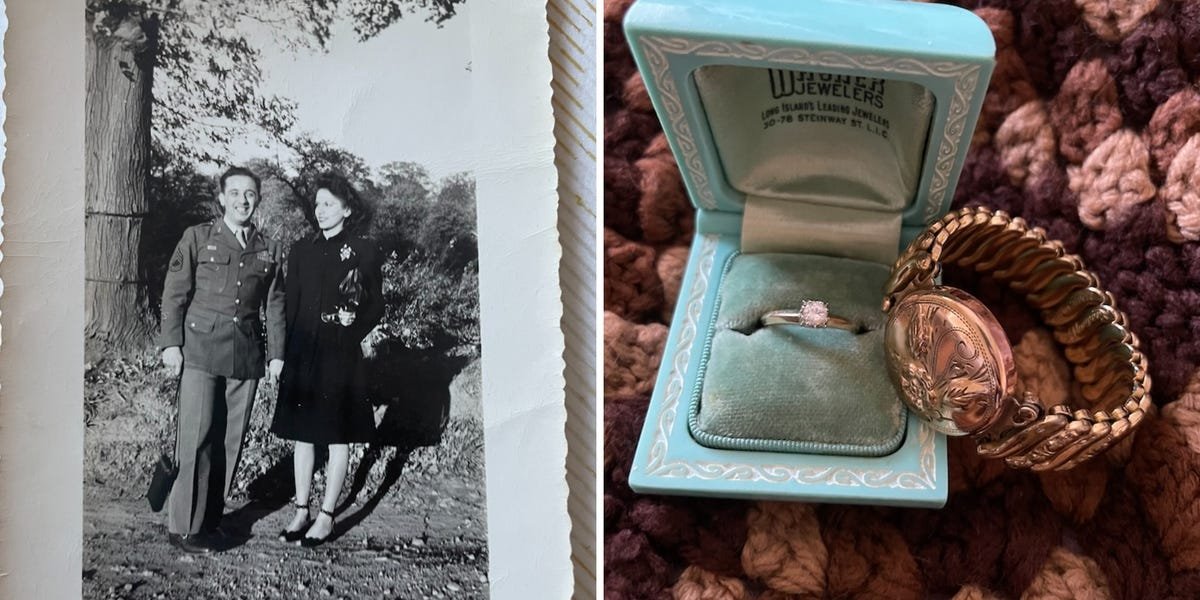
In one photo, I can see my grandparents standing together — they look so young. Through talking to my mom, I learned that the photo was taken in Astoria, Queens, shortly after my grandfather, who was in the Air Force, returned after WWII. I can see all of his medals on his jacket. My mom explained that my grandparents were married soon after this photo was taken. To me, this photo represents my first-generation Italian American grandparents falling in love and my southern and northern Italian roots coming together, a key moment in our family’s history.

Another day, I opened a dainty, turquoise box and stared at my grandma’s engagement ring. I felt inspired. The name of a jewelry store was on the box, so I researched what I could about it online. I saw the building where it was likely purchased was still standing on Steinway Street, not too far from where census records showed my grandmother lived in Queens at the time. Seeing the building still standing made me wonder about the day my grandfather purchased the ring and how happy he must have felt about their future.


The author holds an engagement ring in a turquoise box that she inherited from her grandmother.

The author said she did research online to learn more about the jeweler where her grandmother’s engagement ring was likely purchased. 

Courtesy of Isobella Jade.


Photos gave clues to their personalities

My grandparents relocated to New Hampshire with their three children in the 1950s. Photos show my grandma never changed her city style despite living in a much smaller town. I admire that she wanted to always be herself.

I sent my mom text messages with more photos from the album, and I learned more about the family’s resilience during this period. It wasn’t easy in New Hampshire at first, my mom explained, not having the same foods and ingredients in the grocery store, not having a familiar pediatrician nearby, zero relatives nearby, and none of the things the family had been accustomed to in a bigger city; it was a big adjustment.

For me, it was nice to learn that my grandparents had worked to overcome these struggles and know that my family has that determination built into our core.

I feel closer to my roots

The photos I’ve looked at with my mother have sparked discussions that help me feel connected to my ancestors. I learned that my grandma always wore dresses and lipstick (like me), she loved cooking Italian meals and at the same time she let the dishes soak so she could put family first, and that she was cheerful and could strike up a conversation with anyone. Talking about these facets of her personality made me feel closer to her, even though we never met.


The author's grandmother appears in an old photo.

The author said that hearing the stories behind old photos helped her feel connected to family members she never knew. 

Courtesy of Isobella Jade.


More discussions led me to learn that my grandfather always wore buttoned-up shirts and slacks or a full suit every day. And I also discovered he had a respected woodworking career after he retired from the service.

This has brought my mom and me closer, too

Over the years, my mom has enjoyed the conversations we’ve had while reflecting and going back in time through photos and keepsakes. I think it has been healing for both of us to reminisce about these things, and it has given us a new way to connect.

Now, when I look at the photo of my grandparents, I don’t just see them holding hands before they got married, I think about the moment, the place, the where and when, and how that photo leads to my mom and me — and now my kids. I’ve learned that the details in a photo or memories around a keepsake are special stories that can be cherished and carried on, and I can’t wait to pass these stories on to the next generation one day.



Source link

I-met-my-husband-at-work-and-then-we-quit.jpeg

I met my husband at work, and then we quit our jobs to travel the world together. On that 18-month-long trip, we eloped.

My coworker and I were both single, and I was in the trenches of online dating. Stew and I took lunch at the same time, and over sandwiches eaten from Tupperware, we bonded over our shared love of cycling.

One lunch, he told me he was going to cycle the highest pass in Wales. My eyes widened, “I’d love to do that.” That’s when he told me to join him.

He picked me up that weekend, and we cycled Gospel Pass.

The next lunch break, Stew asked me out for dinner. I said yes. He stayed over and never went home. The rest, as they say, is history, and what a ride it’s been so far.

I joined his 24,000-mile cycling adventure

We were dating for about a month when Stewart said, “I’ve got something to tell you.” He continued: “I’m going to quit my job and cycle around the world. Do you want to come with me?”

“Yes!” I said without hesitation.

Stew had already planned a 24,000-mile turn-by-turn route across 32 countries.

He saved enough money that he could ride around the world for 18 months unemployed. His plan was to carry a tent and stay in cheap accommodations, like hostels and Airbnb rooms.

All I needed to do was save enough money to cover my flights. For a few months, we cut costs, but left ourselves with enough money to enjoy being a young couple; a meal out each month was a non-negotiable.

As we left our jobs, Stewart also organized the bikes: bright yellow steel-frame touring bikes that could manage long-distance cycling, as well as the additional weight of our luggage.

We explored countries together

When we left the UK, we waved goodbye to our families at Stewart’s mom’s house, and we wobbled down the driveway on the heaviest bikes we’d ever ridden.

I will never forget the feeling of freedom. We were unemployed, and everything we needed for the next 18 months was packed into six bright yellow panniers, which fit proudly on our bikes.

I was nervous, excited, and weightless.

There are many prominent moments as you cycle from one country to another. But the first one was leaving Georgia and arriving in Azerbaijan. The gorgeous greenery of Azerbaijan turned into flat desert landscapes.


Zoe Ashbridge and her husband marrying in New Zealand

The author and her husband eloped in New Zealand.

Courtesy of Zoe Ashbridge


Australia was similar. Across Nullarbor Plain, we rode desert flatlands with kangaroos and Wedge-Tailed Eagles. Service stations were over 100 miles apart. Then we reached New South Wales, home to green mountains and Bulli Pass.

At the top, there was a wedding venue overlooking the sea. We talked about weddings and all the things we didn’t want: first dances, speeches, and the pressure of invitations.

Planning an elopement in New Zealand

After Australia, our next stop was New Zealand. We flew to Queenstown and researched what it takes to get married there. You need a marriage license and a celebrant who will officiate the ceremony in front of two witnesses.

Our celebrant was someone we found online, named Sean. He was a lovely Irish gentleman with a steady voice, a calming presence, and an art for perfectly timed humor. He knew exactly when to drop a joke and when to let a moment breathe. He promised us two witnesses (his wife, Vee, and friend, Chris) for the price of two quality bottles of wine.

After one call with Sean, we stepped out into Queenstown, engaged-ish. We booked a date, bought New Zealand-gold wedding rings, and hired wedding attire.

Stew surprised me with a proposal and a placeholder ring, and of course, I said yes.

Our next bike ride was 500 miles from Queenstown to Christchurch, so we could marry. I’d love to tell you that it was straightforward, but on a cycling adventure, unforeseen challenges arise. At Haast Pass, there was a landslide. Delays meant we would miss our own wedding.

The beauty of an elopement? We only had ourselves to please. I called Sean, the hair salon, and the florist to change the date. The landslide was cleared, and we made our way to Christchurch.

The wedding was perfect

We married at The Sign of the Bellbird in the Port Hills. It was beautiful. Rolling hills with the yellowest of flowers looked stunning against the deep green mountains and gorgeous blue skies.

On that quiet hill, with only us to please, and nothing but birdsong and sunshine, we spoke our vows and became husband and wife.

There were no crowds, no pressure, and no expectations. It was just us, which was all we’d known in the year leading up to it as we cycled from the UK to New Zealand. What followed was an eight-month honeymoon cycling home via South America.


Source link

I-moved-from-Spain-to-Florida-21-years-ago-My.jpeg

I moved from Spain to Florida 21 years ago. My first marriage fell apart, but I met the love of my life.

Twenty-one years ago, I faced the difficult decision to move from Spain to the United States with my 3-year-old daughter and 4-month-old baby to follow my then-husband, who had lost his job, in pursuit of a new position in Florida.

I was being asked to leave behind my family, friends, and an established writing career. I was to start over at 41, with no connections, no guarantees, and an already shaky marriage.

My family thought it was a terrible idea, yet my husband’s family felt it was a great opportunity. So, after some soul-searching and many promises of a better life in Florida, I decided to uproot my kids and take the chance.

As I boarded the plane to meet my children’s father (he had come to the US ahead of us), I had mixed feelings: I could feel the excitement of my eldest to see her dad again, but I also feared the unknown. I kept asking myself whether it was really possible that we could fix our marriage and thrive in a different country.

My worst fear came true

Going from living in a penthouse in the old part of Sevilla, where I could walk to just about everywhere, to being cooped up in a tiny apartment in a gated community in suburban Florida, where I needed a car to go anywhere, was brutal to my nervous system.

I felt trapped in suburbia without my own car. And with a history of major depressive disorder, I started having panic attacks and depressive episodes. One day, while driving my children to find a preschool for my eldest, I had to pull over to sob.

A few months later, my husband lost the job we had moved to Florida for. And so began one of the most difficult periods of our lives.

In four years, we moved several times within Florida, always because of his new jobs. I found work freelancing for newspapers and magazines and wrote more books for publishers in Spain. But our relationship was always floundering.

As our marriage crumbled, we took a time-out under the same roof. We went to marriage counseling, enrolled in self-improvement seminars, and so on. Trust, respect, and admiration had been completely lost, and in 2008, when the Great Recession hit, we had no money, no savings, and no jobs.

I walked away from my husband with my laptop, my books, joint custody of our children, and the huge regret of having moved so far away from my family and friends. But I stayed in Florida, because I didn’t want my children to be far from their father. From one day to the next, I found myself a single mother on food stamps.

I met the love of my life

Nearly a year after separating, 16 years ago, I met the love of my life. We had many similarities: we were both newly single, bilingual and bicultural, and had children of a similar age. We were writers focused on creating a better life for our kids and ourselves. The best part was that neither of us had given up on love despite the tough times we’d lived through.


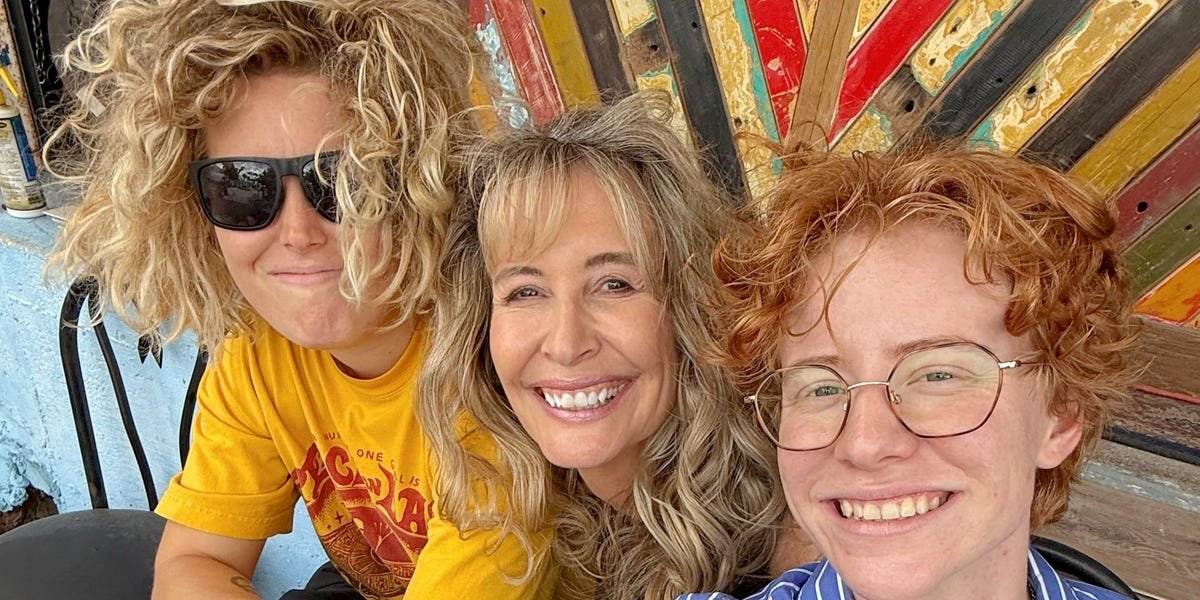
Family posing with kids

The author fell in love again in Florida.

Courtesy of the author


For nearly two years, we dated long-distance, spending only weekends and holidays together. One of us would drive two hours to meet the other, sometimes with the children, and when the kids were with our respective former spouses, we met alone.

We were both trying to rebuild ourselves personally and professionally, and together we made a great team. I once again moved for love, but this time with no regrets. Four years later, we married at sunset on the beach, surrounded by our children and close family.

Our kids are all in their 20s now, and we’ve been through the highest highs as well as some pretty rough times. But our relationship was never in question. We’ve cheered each other on and thrived together.

Whenever I think of past regrets and how I shouldn’t have moved to the US 21 years ago with my ex, I realize I would have missed out on finding true love. And I would never have built the stable and dependable family I always wanted.


Source link