
When-I-moved-abroad-I-left-my-parents-behind-in.jpeg

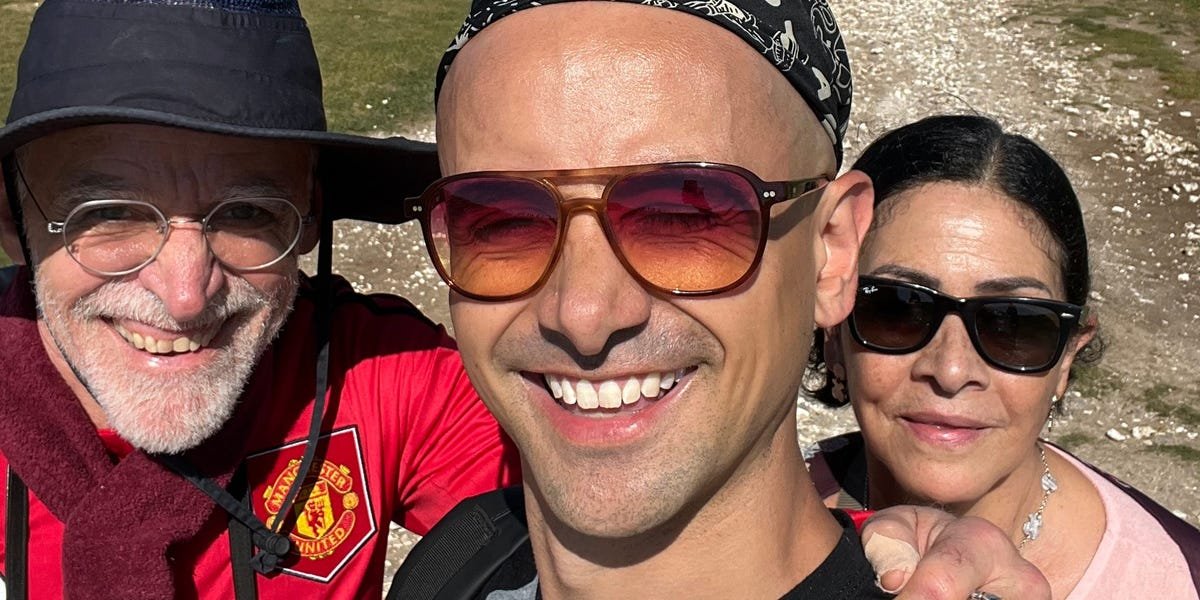
When I moved abroad, I left my parents behind in Mexico. I didn’t expect our relationship to change so dramatically.

Growing up in Mexico, I never questioned my relationship with my parents. In many Latino families, closeness is the default setting. Parents are involved in everything: daily routines, big decisions, and emotional milestones.

Living at home well into adulthood wasn’t unusual, and neither was the constant presence of family. Because of that, I assumed my relationship with my parents was simply “good.” It wasn’t something I analyzed. It just existed.

But when I decided to leave Mexico to pursue my career abroad, first in New York and later in London, distance quietly began to change the dynamic between us. Being thousands of miles away forced me to examine a relationship I had previously taken for granted.

Distance turned routine into intention

Before moving abroad, I lived with my parents. Our relationship was woven into daily life: quick conversations in the kitchen, passing comments about work, the kind of small interactions that fill a household. None of it felt particularly meaningful at the time because it was simply constant.

Distance stripped that away. Once I moved abroad, our relationship became something that had to be scheduled. Calls were no longer casual interruptions in the day. They were deliberate moments. We chose to talk, and when we did, we actually paid attention.

Visits changed, too. Seeing them once a year, sometimes twice if I was lucky, meant our time together carried weight. There was no room to waste a day arguing about something trivial. Those visits became about being present. And during the long months in between, the distance gave me space to reflect on our parent-child relationship in ways I never had before, both the good parts and the complicated ones.

What surprised me most was how much I started to notice what I had never said. There were things I had always meant to tell them, gratitude I had assumed was obvious, pride I thought didn’t need spelling out. Distance made me realize that the obvious things are often the ones that go unspoken the longest. I started saying them.

Living on my own helped me better understand them

Ironically, I left Mexico as an adult but didn’t truly feel like one until I lived abroad. Suddenly, I was responsible for everything: rent, immigration paperwork, building a life in a place where nothing was familiar. Independence stopped being an idea and became a daily reality.

That shift changed how I saw my parents. Many of the decisions I had once questioned began to make more sense. I started to see them not just as my parents, but as people navigating their own pressures, limitations, and fears while trying to raise a family.

With that perspective came empathy. Some of the things I once held onto as frustrations started to feel smaller. Living far away didn’t erase the past, but it made forgiveness easier and understanding more natural for both parties.

There’s also something humbling about realizing your parents sacrificed everything so you could one day have the audacity to leave. They built a life, raised a family, and poured everything into their kids so they could grow up and move to the other side of the world.

Now that I know what it actually takes to be an adult, I have no idea how they did all of that while raising three kids who had no idea any of it was happening.

Distance didn’t weaken our relationship; it clarified it

What I didn’t expect was to notice how much they had changed, too. My parents are not the same people I left behind. They’ve gotten older in the small, slow ways you only notice when you haven’t seen someone in months. Living abroad forced me to stop holding them in a fixed image and start seeing them as people still in motion, still figuring things out, just like I am.

Somewhere in that shift, something opened up. The conversations got warmer. The visits got fuller. We became more honest about how much we mean to each other, in ways that felt almost impossible when we were all just moving through the same house every day.

Moving abroad gave me something I never expected: the ability to see my parents more clearly. And what I found, when I finally looked, was that the love had always been there, deeper and more unconditional than I ever gave it credit for. I am grateful for every mile between us, because it taught me to never take for granted the people who have loved me the longest.


Source link

Meagan Drillinger, freelance writer

I travel for a living and can’t wait to get back to Mexico

After cartel violence erupted across the Mexican state of Jalisco this week, images and videos of burning cars and buildings, shuttered storefronts, and cities grinding to a halt hit the news. Flights into and out of Puerto Vallarta and Guadalajara were canceled. Residents were told to shelter in place and to ensure they had enough food and water. Tourists were on lockdown and frightened.

I watched it all from far away in Seattle, where I’m currently traveling, as my phone lit up every 15 seconds with messages of panic, forwarded video footage, and WhatsApp voice notes from friends and loved ones on the ground in Puerto Vallarta.

For most people, Puerto Vallarta was just one of several cities mentioned in the news cycle, but for me it was different — it’s been my chosen home base for the last five years.

I travel for a living, but Puerto Vallarta has always been special

My relationship with this city on Mexico’s Pacific coast began more than a decade ago, on my first visit in 2013. At the time, Puerto Vallarta was just another reporting assignment at a beach destination, but something hit differently, and I kept returning. It became the place I ran to whenever I needed a break from real life. Each visit stretched longer. By much of 2024 and 2025, I was there full-time.

When you spend that much time in a place, it stops feeling like an escape and becomes the backdrop of real life. You learn the traffic patterns, see familiar faces at the coffee shops and bars, pick up your mail. Routine sneaks up on you; it becomes home.

You also build relationships. As I watched footage of a still-smoldering flame-licked car skeleton at an intersection just a few blocks from my last address, I listened to voice notes from friends. Fear sounds different when it comes from people you love.

For decades, Puerto Vallarta has been framed as one of Mexico’s easiest international trips

You don’t need to be a seasoned traveler or an adrenaline seeker to feel comfortable there. There are direct flights, large resorts, familiar comforts, and an infrastructure built around welcoming visitors.

Read more stories about Mexico travel

Plus, it’s jaw-droppingly gorgeous with that broad, blue curve of the Bay of Banderas and the jungle-covered crown of peaks that rise behind it.

For many Americans, Vallarta has been shorthand for “safe Mexico.” Could incidents like this change that perception? Inevitably, for some.

Travel decisions are rarely driven by data alone. They are fueled by emotion, personal tolerance for uncertainty, and individual experience. As happens after virtually every high-profile incident in Mexico, reactions tend to fall into familiar categories. There will be people who write Mexico off forever as a country to visit or live. Others will decide to wait and see.

And there will be people, like me, who are already itching to return because they understand something fundamental about moments like this: They’re traumatic precisely because they are disruptions, not constants.


Woman near ocean in Mexico

The author says reports of violence in Mexico this week only increased her desire to return.

Courtesy of Meagan Drillinger


Like any place anywhere, Puerto Vallarta and Mexico are much more than their worst moments

Violence in Mexico is real. It’s serious. It’s also limited to very specific parts of a massive country. Mexico is vast and regionally complex. Episodes of cartel-related violence, while alarming, do not function as a constant across daily life in most destinations Americans visit.

Moments like Sunday’s violence highlight a perception gap that often shapes how Americans think about risk abroad versus risk at home. Americans tend to discuss violence in Mexico as though it exists in a fundamentally different category of danger. Yet in recent years, the US has developed its own unsettling familiarity with public acts of violence, mass shootings, random attacks, and sudden disruptions.

There is no longer a clean psychological divide between “safe at home” and “dangerous abroad.” We are, increasingly, navigating variations of the same reality.

I have no hesitation about returning to Puerto Vallarta

Living in Puerto Vallarta has not made me dismissive of safety concerns. What happened across Jalisco is devastating and serious. But living there has grounded my understanding of the city in lived experience rather than episodic headlines. It has made moments like Sunday’s violence feel personal without altering my relationship to Puerto Vallarta.

Watching the videos didn’t make me want to run further from Vallarta. If anything, it made me wish I were there with the community I love.

So, when do I plan to return? Soon. I’ll be heading back to Mexico in early March, this time to Puerto Escondido, Oaxaca, nearly 1,000 miles away from Puerto Vallarta. (Yes, Mexico is really big.) I have no hesitation about going. And, truthfully, if logistics allowed, I would go back to Puerto Vallarta this week. It’s not just a vacation destination to me, and it’s not just a clip on the news. It is nearly 13 years of memories, friendships, routines, and a sense of home that I have built over time.

Like any place anywhere, Puerto Vallarta and Mexico are larger than their worst moments. Like any place you love, those moments do not erase the steadier, more enduring reality of everyday life that surrounds them.


Source link

Puerto-Vallarta-became-a-favorite-escape-for-Americans-Now-some.jpeg

Puerto Vallarta became a favorite escape for Americans. Now some are rethinking Mexico travel.

Hannah Donovan is four months pregnant. And with two little ones already at home, she and her husband had been banking on one family trip before life got even more hectic.

Puerto Vallarta was meant to be a babymoon — a chance to meet up with family nearby, soak up the sun, and actually relax for a few days.

However, less than 24 hours before they were set to head to their airport in Idaho, videos and pictures of burning cars and billowing smoke began circulating on social media.

Donovan said the images she saw online followed reports that Mexican forces carried out an operation on Sunday in Tapalpa, Jalisco, that killed Nemesio “El Mencho” Oseguera Cervantes, the leader of the Jalisco New Generation Cartel. The incident sparked retaliatory violence across multiple cities in Mexico, including in Puerto Vallarta.

The Donovans have since canceled their trip to Mexico and will play it by ear on whether they’ll try to visit Puerto Vallarta later.

“We’re incredibly grateful we’re not there, but we’re worried about the people who are, including travelers and our family who live there,” Donovan, 28, told Business Insider. “We’re definitely a little traumatized by the situation.”

Americans are rethinking their travel plans to Puerto Vallarta

The Donovans are among many Americans rethinking trips, moves, and stays in the region after chaos flared across parts of Mexico following the killing of Oseguera Cervantes on Sunday. Four people at the scene were killed, according to authorities. Three others — including Oseguera Cervantes — were wounded and later died, and two people were arrested. Three members of the armed forces were also wounded.

It comes after President Donald Trump designated the cartel a foreign terrorist organization. White House press secretary Karoline Leavitt said the US provided intelligence support for the operation, but stopped short of offering details on how. The administration has prioritized cracking down on Latin American cartels, urging leaders to take a harder line and deploying military force against suspected drug-smuggling vessels in the eastern Pacific and Caribbean.

In the hours since, the US and Canadian governments have urged citizens in some areas to shelter in place, and said most domestic and international flights in Guadalajara and Puerto Vallarta were grounded. On Monday, Mexican President Claudia Sheinbaum called for calm in the country, but many of those flights remained canceled.


Smoke over the city of Puerto Vallarta.

Smoke over the city of Puerto Vallarta.

@morelifediares via Instagram/Youtube/@morelifediares via REUTERS


Mexico has become increasingly popular with American tourists, drawn by its vibrant nightlife, strong culinary scene, and affordability compared to other trendy international destinations such as France and Japan.

“Americans, especially on the West Coast, have long used it as an inexpensive place to go on vacation,” Robin Ingle, a specialist in travel security, told Business Insider.

Mexico has also seen a surge in tourism from people who previously would have traveled to the US but are avoiding the country for various political or financial reasons, he said.

“A lot of the people I’ve spoken to over the weekend would have gone to places like Florida, California, Arizona — now they’re going to Mexico instead,” he said of the tourists he’s spoken to since cartel violence broke out.

But as unrest spreads, some Americans who had planned to vacation or relocate there, or who are already in Mexico, are watching those plans unravel.

Business Insider spoke with three of them about what comes next.

Doug Howell will return to the US if things get worse

Doug Howell, a retired sales and distribution executive from the Spokane, Washington area, bought a rental place in Puerto Vallarta and now spends roughly six months a year there — a routine he’s kept up for the past 20 years.

“It’s very vibrant,” Howell, 63, told Business Insider. “I like to walk around the neighborhoods, everything is pretty close, or a short bus ride away if you want to check out the beaches or the waterfalls. There’s always something to do, and the food is incredible.”


Doug Howell and his two daughters at a restaurant in Mexico.

Doug Howell and his daughters.

Courtesy of Doug Howell


On Sunday, Howell said he was standing on his balcony when he started hearing explosions, then saw plumes of smoke rising nearby. Before long, he said, he noticed highways and roads in and out of the area had been blocked off.

He was scared at first, he said, and hunkered down with neighbors.”We just stayed inside all day yesterday, and I didn’t go anywhere,” he recalled. “They actually bombed a store on a corner and a car on the bridge that’s not even a quarter of a mile away.”

By Monday, Howell, a member of MedJetHorizon — a global air medical transport and security response membership that provides evacuations — said things had calmed down in his neighborhood.

“They’re already on it today, and people are supporting each other in the community — that’s what I like about it,” he said. “One question everybody asks me: Is it safe? And it’s like, yeah, it is, unless you go to the wrong place at the wrong time. And that’s anywhere in the world.”

For now, Howell plans to stay in Mexico, but if things worsen, he said he plans to return to the States.

Linda Armijo worries about the future of the city

Linda Armijo and her husband have been visiting Puerto Vallarta for the past 25 years.

In January, they returned for a three-month stay in the city’s Marina Vallarta district, an upscale, waterfront area in northern Puerto Vallarta.

Armijo said that on Sunday, after her husband’s massage therapist warned that roads downtown were blocked, she went up to the rooftop terrace of their condo, which overlooks the city. From there, she said she could see five or six plumes of smoke.


A husband and wife take a selfie, smiling at the camera.

Linda Armijo and her husband have been spending time in Puerto Vallarta for 25 years.

Courtesy of Linda Armijo


Smoke isn’t entirely unusual in Puerto Vallarta — controlled burns are common — but Armijo said this was more than she typically sees. “I came down to our condo and told Anthony, ‘There’s something going on, there are fires everywhere,'” she recalled.

Armijo said the city was hit by a series of disruptions, including the blast of an engine as a car was set on fire, interruptions to water service, and highways and roads blocked off. Although the uncertainty has left tourists and locals scrambling, they’re relying on each other to get by.

“I met two girls from LA who are renting a condo upstairs. They were meant to fly out yesterday, and threw away all their food and supplies before learning their flight was canceled. I shared some water with them,” Armijo said. She added that a building worker told her they were also accommodating those who needed to extend their stay.


People on the street, surrounded by trees, and observing smoke.

Tourists watching fires in Puerto Vallarta.

Stringer/REUTERS


Armijo plans to stay put for now and said she isn’t especially worried about her safety. Instead, she’s thinking about what this could mean for the city.

“I feel safe in my building, and we have plenty of food and water,” the Spanish-speaker said. “It’s a minor inconvenience not being able to leave, but my biggest emotions are sadness and concern for the people of Puerto Vallarta.”

Long-term impact

In the near term, Ingle, the travel security specialist, said he expects to see an impact on the tourism scene.

“I know there’s going to be a blowback in the next month, people deciding not to go, because there’s a percentage of the population that doesn’t want to take risks,” he said. “Governments are putting out warnings, and that affects travel insurance.”

When it comes to the long-term impact, however, Ingle doesn’t see this weekend’s violence creating a lasting stain on Puerto Vallarta’s ability to attract tourists.

“If all the violence dies down quickly and gets cleaned up, I think this will go away,” Ingle said. “Normally, this will take a couple days, and then it will fix itself.”

“That doesn’t mean it’s without risk,” he added.


Source link