
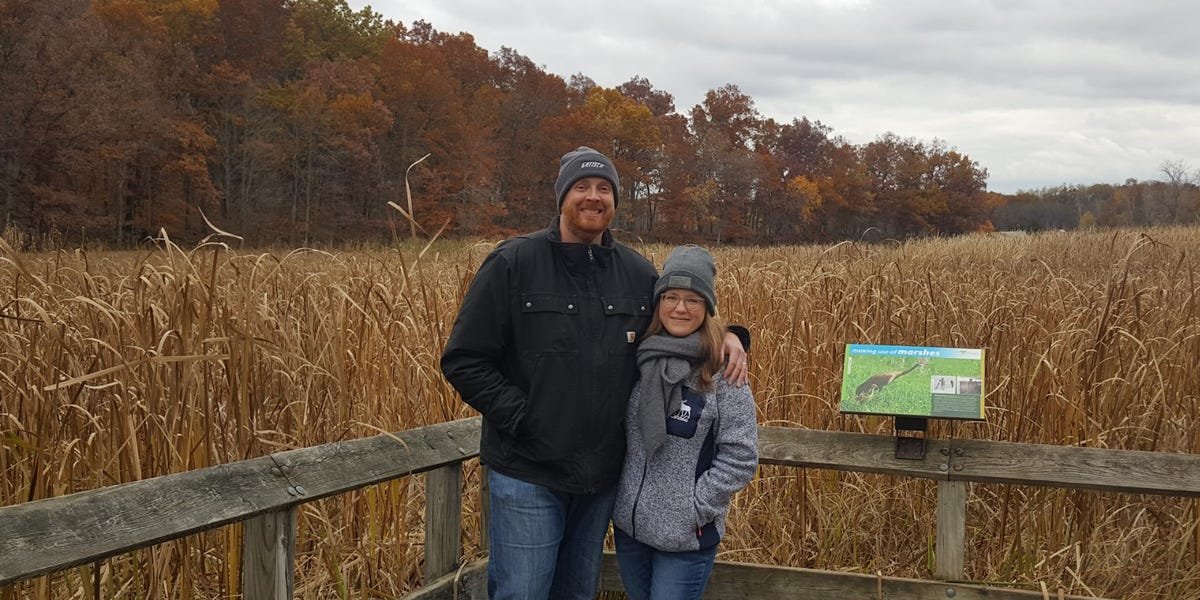
I-moved-from-Southern-California-to-Michigan-so-I-could.jpeg

I moved from Southern California to Michigan so I could afford to buy a home. Living here changed me in surprising ways.

Born and raised in Orange County, I never considered leaving California until I got married.

We wanted to buy a house and start a family, but generally, the ones we could afford were fixer-uppers in neighborhoods we didn’t love.

So, we began looking at other states where we had family. My husband, who moved from Michigan to Los Angeles in middle school, swore he would never go back — and I couldn’t identify Michigan on a map or tell you one fact about it.

We didn’t want to be beholden to a big mortgage, though, and in Michigan, we could purchase an affordable home in a town known for having some of the state’s top public schools. Even better, we’d be welcomed by my husband’s big Italian family, who lived nearby.

When we told our friends we were moving to Michigan, they were shocked. All any Californian knew about Michigan was that it was cold and snowy — why would anyone choose that?

Now, 20 years later, I can confidently say it was a great decision.

When I first moved to Michigan, I experienced some culture shock


Fresh produce at a farmers market in Michigan.

At first, I had to adjust to the feeling of making small talk at markets and shops.

Kristi Valentini


In Orange County, I was the kind of person who would bury my nose in a magazine to avoid chatting with a hairdresser. I rushed through the checkout line and never said, “How are you doing?” to someone I didn’t know.

If small talk was ever forced upon me, I gave away as little about myself as possible. I never understood the point in discussing my life — or even something as simple as the weather — with someone I didn’t know.

In Michigan, though, small talk is unavoidable. I quickly learned that there’s no getting around friendly cashiers and shop owners. I was begrudgingly polite, but it initially took some effort to hide my impatience.

Chatting with neighbors feels much more commonplace here, too, especially because my subdivision doesn’t allow fences.

I was shocked to go from Orange County’s 6-foot cinder-block backyard walls to wide-open lawns and zero privacy, practically forcing me to interact with my new neighbors any time I gardened or enjoyed a glass of wine on the patio.

Over time, I noticed that having friendly neighbors and being a part of a community made me feel safer and more relaxed


A green backyard in Michigan with several trees.

My new neighborhood has less privacy than my old home did, but I’m glad I’ve gotten to know my neighbors.

Kristi Valentini


The kindness of Michiganders started to change me.

In my first year of living in Michigan, our mailbox got hit by a car while my husband and I were at the gym. Our neighbors had cleaned up the mess and gotten the driver’s info for us by the time we got home.

I was so surprised they would do that for us; it struck me as something that probably wouldn’t have happened back in California.

Then, when we had a baby three years into living here, another neighbor further down the street — one I hadn’t even met yet — brought us dinner just because she saw a baby announcement sign in our yard. I was touched that a stranger would go out of their way to do that for us.

When we started taking our kids trick-or-treating for Halloween, I discovered that Midwesterners do that differently, too. They didn’t just spoil the kids. They set up tables of spiked hot chocolate and Jell-O shots for the adults and invited people to warm up by their driveway bonfires. It became a community event.

Eventually, I found myself initiating connections with neighbors, too — and even starting up some small talk. It began with other dog-walkers in my neighborhood as our pups sniffed each other, and at the grocery store as a pleasant way to pass the time while being rung up.

Living in Michigan has changed what I value in a hometown


The writer posing with her two children in costumes on Halloween.

Living in Michigan has made me appreciate community in a new way.

Kristi Valentini


When I visited California to see friends and family a few years after living in Michigan, I could tell how much I’d changed already. It seemed rude to me when people didn’t say hi when passing me on a sidewalk, or when cashiers didn’t make chit-chat.

Because now, I’m the kind of person who makes caramel apples for my neighbors. I chat with fellow shoppers about candle scents in Crate and Barrel and know about my hairdresser’s children and chickens.

I even decorate my front porch — something I’ve noticed that nearly everyone in my neighborhood does. Seasonal wreaths and flowerpots, chairs with pillows and throw blankets, encourage people passing by to come on up and say hi.

I do sometimes miss California’s backyard privacy, and I’ll never stop using SoCal slang like “cool” and “dude.” Still, I’m glad I moved to a place that helped me become a friendlier person and taught me the value of community. I couldn’t imagine raising my children anywhere else.


Source link

We-wanted-to-get-away-from-the-cold-so-we.jpeg

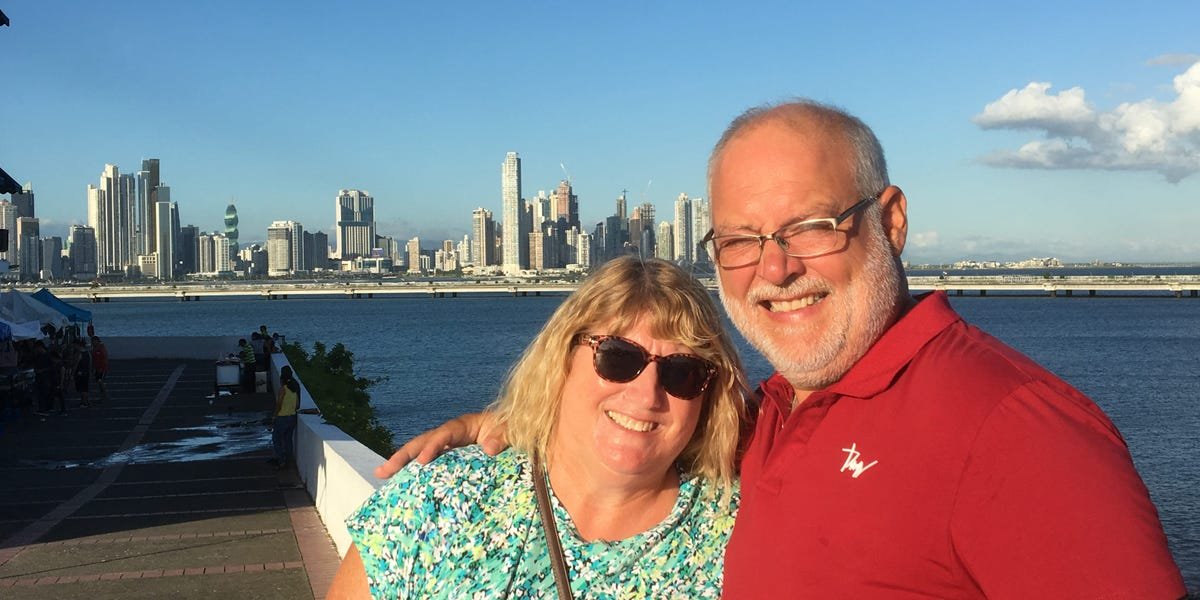
We wanted to get away from the cold, so we left Michigan and retired in Panama. We’re not planning to move back.

This as-told-to essay is based on a conversation with Greg Kitzmiller, a 64-year-old American retiree living in Panama. It has been edited for length and clarity.

I was born and raised in Michigan, where I met my wife, Jen, and where we built our life together.

In 2016, I retired from my job as a manufacturing supervisor. My wife retired from her law career over a year later.

The year before she retired, my main goal was to find a place where we could live the best life during our retirement. I did a lot of research on various countries, and Panama kept coming to the top of the list.


A man and woman standing on the beach in Panama.

For their retirement, the couple wanted to live in a warm place where their money could go further.


Greg Kitzmiller.


We were eager to escape the snow, so my first priority was eternal summer. We also wanted to stay close to the US to make traveling back easy. The fact that Panama uses the US dollar only added to its appeal.

We hadn’t spent our whole lives planning to retire abroad, but after watching HGTV shows, we both thought that this was something we could do.

Panama also offers a special Pensionado visa for retirees, which comes with incentives such as discounts on utility bills, medication, and even transportation.

Before making the move, we took a few exploratory trips to Panama. Our first trip was a weeklong in October 2017. After my wife retired, we came back in February 2018 for a nine-week trip, touring different areas to see if it felt like the right fit.


Snow-covered driveway of a house in Michigan.

Coming from Michigan, they were eager to get away from the snow.


Greg Kitzmiller.


During that trip, the weather was beautiful. When we went home to Michigan and saw the snow on our driveway, my wife turned and said to me, “We’re moving, right?” And I said, “Yeah, we are.”

We sold our house quickly. We held a few garage sales, donated what we didn’t need, and fit our lives into five suitcases. In June 2018, we officially moved to Panama.

Our kids were OK with the decision.

We have two daughters in Texas and one in Alabama. We’re no further from them now than we were in Michigan. Moreover, the world has gotten so small. We can get on a video call with the kids and the grandkids anytime.

With the help of a real-estate agent, we bought our two-bedroom condo for $210,000 in Coronado, which is about an hour and a half from Panama City by car.

Our condo is in a country club community, where the golf course wraps around our building, and we have 180-degree views of the ocean and the mountains.


View from a condo bedroom in Panama.

The couple bought a two-bedroom condo in Coronado.


Greg Kitzmiller.


Even though I’ve joined several Facebook groups, it’s the people we met at church that make up the core of our social circle.

Moving to Panama sparked an unexpected passion for writing.

When we started talking about moving here, one of Jen’s friends at work said, “Well, you should write a blog.”

It wasn’t that easy, since I’m not very tech-savvy, but I did it. I still maintain the blog and publish a newsletter. And, right after we got here, I connected with a writer’s group.

Being a part of that group led me to do a lot of things in my retirement that I never thought I would do.


Bookshelves in a bookstore in Panama.

Kitzmiller published his first book about his experience retiring in Panama in 2020.


Greg Kitzmiller.


I published my first book in 2020 about our experience of retiring in Panama. Since then, I’ve started writing in different ways, including a detective fiction series — I’m working on the fourth installment.

Writing wasn’t something I expected to do in my retirement, but there’s a strong community of artists, authors, and musicians here. When you surround yourself with other people who are talented in those ways, it fosters your own talent.

My retirement has been very fulfilling.

Our health is better, too. It helps that there is always an abundance of fresh fruit and vegetables around.


A couple smiling over a meal at a restaurant.

Kitzmiller says being surrounded by a thriving community of artists has encouraged his own passion for writing.


Greg Kitzmiller.


If I had it to do over, I would’ve learned Spanish when I was young. When you’re in your 60s, it’s hard to learn a new language. I almost always understand what’s being said, but don’t verbalize very well, unlike my wife, who is fluent.

Every day’s a little different. We have a few social groups, including one where we play dominoes every week. We rotate between houses, someone makes lunch, and we spend the afternoon playing.

Initially, we figured we’d come for 10 years and then evaluate if we wanted to stay. It’s only been eight years, but we’ve already decided that this is where we want to be.

We’re not planning to move back to the US. There’s honestly not much we miss.

Do you have a story to share about relocating to a new city? Contact this reporter at agoh@businessinsider.com.


Source link

Trump-threatens-to-block-the-opening-of-a-bridge-between.jpeg

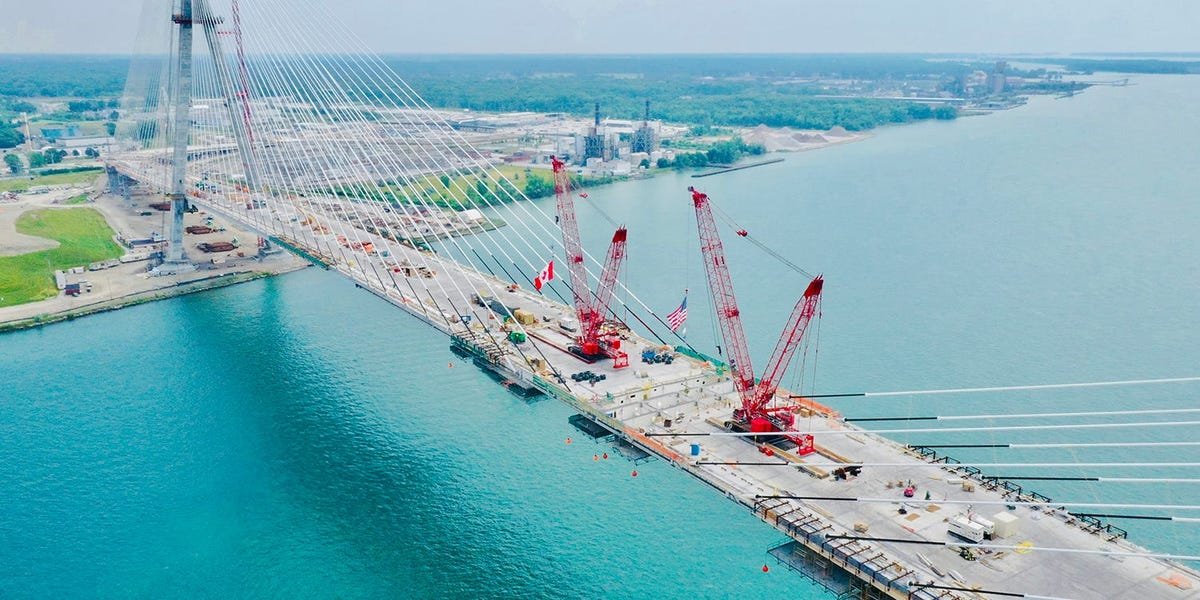
Trump threatens to block the opening of a bridge between Ontario and Michigan in ongoing spat with Canada

President Donald Trump is threatening to block the opening of the Gordie Howe International Bridge, a long-awaited new border crossing between Windsor, Ontario, and Detroit, Michigan.

In a Truth Social post on Monday, Trump said he would not allow the bridge to open until the US is “fully compensated for everything we have given them,” adding that Canada must treat the United States with what he described as “fairness and respect.”

“We will start negotiations, IMMEDIATELY. With all that we have given them, we should own, perhaps, at least one half of this asset,” Trump added.

The Gordie Howe International Bridge is expected to be completed in early 2026 and has been under construction since 2018. The $6.4 billion project is entirely funded by Canada’s Federal government, and will feature six lanes and a pedestrian and cycling path.

The University of Windsor’s Cross-Border Institute estimated in a 2021 study that the new route will save about 850,000 hours a year for trucks, which would mean billions of dollars in savings over the bridge’s lifetime. The study also found that the Windsor-Detroit corridor is the largest pathway for trade between the US and Canada.

Trump’s remarks mark the latest escalation in tensions with Canada, a key US trading partner, as the president steps up his criticism of the country.

In recent weeks, Trump has threatened to slap a 100% tariff on Canadian goods if Ottawa moves forward with a trade deal with China.

He also bristled at comments made by Canadian Prime Minister Mark Carney at the World Economic Forum in Davos, which were widely seen as an implicit rebuke of Trump’s foreign and economic policies. In January, Trump also warned that he could impose a 50% tariff on aircraft manufactured in Canada and revoke certification for newly produced planes.

The White House and the Ontario Premier’s office did not immediately respond to a request for comment.


Source link