For-20-years-I-lived-hundreds-of-miles-away-from.jpeg

For 20 years, I lived hundreds of miles away from my mom and sister. Then, I bought the house next door.

Growing up, I wanted to live in every city my family visited on vacation. As an adult, I started to work through that list.

After college in Virginia, I moved to DC, went to grad school in Wisconsin, and then followed jobs to Denver and New York. I loved city life, and leaving never crossed my mind.

That changed when my father died. Worried about my 75-year-old mom living alone in Louisville and struggling with grief, I felt guilty about not living closer. For the first time, I questioned whether living so far away was what I really wanted.

When my sister announced she was moving back to Louisville in 2019, I got a bad case of FOMO. After a phone call from her and mom about the best pea pesto they’d ever had at a new local Italian spot, I knew it was time.

Later that year, I left my job, sold everything that wouldn’t fit into a rented minivan, and returned to the Bluegrass State. Once in Louisville, we went from separate lives to an interdependent existence.

When my sister bought a bungalow 20 minutes away from my mom, I moved in with her so we could both save money. Then the pandemic hit. After quarantining for a year, her house felt cramped, so I bought the place next door.

This time, it was my mom’s turn to have FOMO. Tired of missing out on impromptu karaoke nights and needing some help around the house, she moved three blocks away.

Old family dynamics reemerged amid proximity and health scares

The last time we were this geographically close, my sister and I were in high school. Our teenage bickering over who was hogging the phone leveled up, and now we were going rounds over how to load the dishwasher.

When we found ourselves in an absurd screaming match about the “right way” to make dinner, we realized we needed professional help.

In therapy, we looked at our past roles in the family system and evaluated them against how we each had grown since then. We also learned to communicate our needs more clearly and recognize when we were listening versus making assumptions.

Spending an hour a week talking about our feelings was out of our comfort zone, but it helped us better understand each other so that we could stop arguing and start enjoying each other’s company.

Now we spend that energy dominating trivia night together, instead of getting the last word.


Three women sitting in front of wood panels outside wearing winter jackets

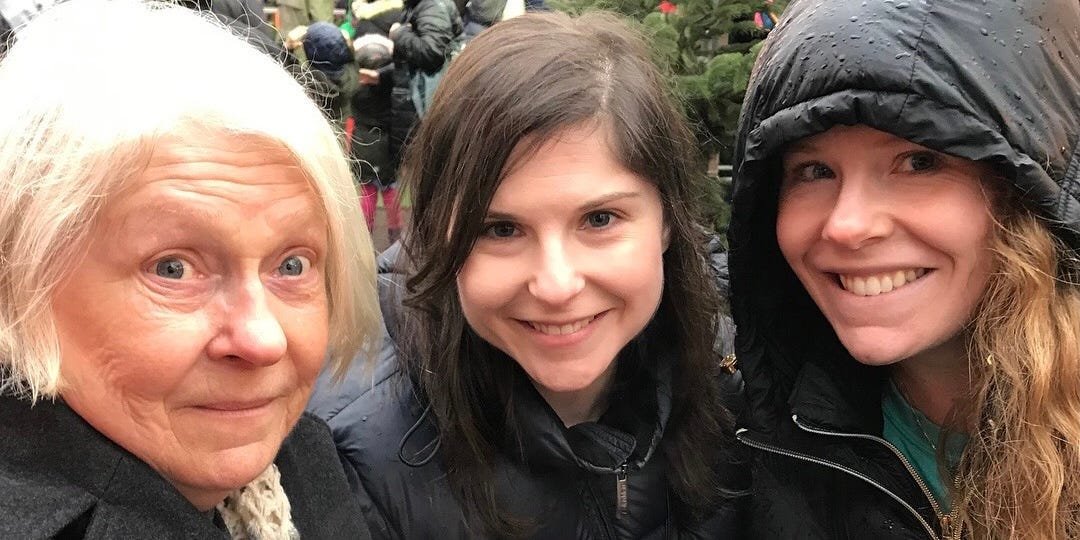
My sister, mom, and I share resources and split some bills since we live in the same neighborhood. 

Sydney McClure


A few years ago, a small health scare also shifted our dynamic.

My mom was experiencing some concerning health symptoms, but was dismissing them because her recent physical had been normal.

However, as the weeks dragged on without improvement, we urged my mother to see the doctor and to let my sister, who’s a nurse, join her.

At first, Mom felt we were being patronizing, but a few months in, she got worried too and let my sister accompany her to an appointment.

With my sister in the room to help fill in gaps and use her medical background to ask the right questions, doctors were able to diagnose and manage my mom’s condition.

I worry it would’ve gone untreated for much longer if we hadn’t lived close enough to see what was happening firsthand. I’m also glad she didn’t have to go through that health scare alone and that we were able to support her.

Despite the challenges, living in the same neighborhood has been worth it


Three women smiling in a photo

Moving closer made us financially interdependent in both good and bad ways 

Sydney McClure


Being a short walk away has allowed us to pool resources in ways that would be impossible if we lived in different states.

The three of us share a Peloton bike and tread. We also exchange household items like a lawnmower or kitchen gadgets.

And then there’s Costco — after living alone most of my adult life, I finally can enjoy all the glory of bulk shopping. Being able to take advantage of economies of scale has been financially beneficial for us all.

At the same time, there are drawbacks. For instance, I helped my mom set up and manage online bill pay. Although she wanted my help, once we started to set up online accounts, my mom found it invasive that I had visibility into her finances.

When I suggested that she use autopay, she felt I was overstepping and telling her how to manage her money. After a long conversation, we identified boundaries that would make the process better.

Once we were on the same page, paying bills wasn’t fraught; it was the impetus for us to have dinner and movie nights.

All in all, evolving roles, difficult conversations, and the minutiae of daily life ultimately strengthened our relationships. Living so close also improved our daily lives in a myriad of tiny ways.

I wouldn’t trade it for anything.


Source link

Matthew Loh Headshot

Ukraine says its own Flamingo missiles flew nearly 900 miles to strike Russian Iskander factory

Ukrainian President Volodymyr Zelenskyy said on Wednesday that his country had struck a Russian military industrial plant with locally made cruise missiles that flew nearly 900 miles to reach their target.

Ukrainian officials earlier reported that the missile strike on Saturday had hit a plant in Votkinsk, an industrial town in Russia’s Udmurt Republic, some 860 miles from the Ukrainian border.

“We carried out precise strikes with Flamingo missiles at a range of 1,400 kilometers,” Zelenskyy said at a press conference in Kyiv. “I believe this is truly a success for our industry.”

Such an attack would be one of the longest-range strikes carried out so far by the Flamingo, which is touted as one of the star products in Ukraine’s local defense manufacturing scene. Kyiv has been aggressively trying to expand its weapons industry as a complement to Western supplies and as a future export sector.

The Flamingos’ target, the Votkinsk plant, manufactures some of Russia’s key munitions, such as ballistic missiles for the Iskander system and the submarine-launched Bulava missile.

Russia has not officially confirmed that the factory was hit, but Alexander Brechalov, the governor of the Udmurt Republic, said on Saturday that an unspecified facility in the region had been attacked and three people were sent to hospital.

Brechalov did not say if the Flamingo was used, but warned against drone threats over the region.

Ukrainian open-source groups later published satellite images that appeared to show damage to one of the workshops at the Votkinsk factory, with a gaping hole in its roof and signs of fire damage.

That evening, Kyiv had unleashed a large wave of drones and missiles into Russia in one of its biggest ever long-range attacks.

Russia’s defense ministry said that it shot down 77 Ukrainian drones on Saturday, but did not mention any Ukrainian missile threats.

Zelenskyy declined to say how many missiles or drones Ukraine launched in total on Saturday.

“There were interceptions by Russian air defense, there were also missiles that were not intercepted, and there were direct hits,” Zelenskyy said. “But the most important thing is that all the missiles that were launched all reached the target.”

Kyiv has often compared the Flamingo to the US-manufactured Tomahawk, saying that the Ukrainian turbofan-powered missile is much cheaper to make per unit and has a longer range of 1,900 miles.

The ground-launched Flamingo, however, takes up to 40 minutes to prepare for launch.

Ukraine is also still trying to build up its arsenal of the missile, with reports from last October saying that its manufacturer, FirePoint, hoped to produce up to seven a day by the end of 2025.

Kyiv said earlier this month that manufacturing had been affected by a recent Russian strike, with Zelenskyy warning that Ukraine had to “work on increasing quantity” of the Flamingo.

“We had certain technical problems because one large production line was destroyed as a result of a missile strike. They have already relocated and resumed production,” Zelenskyy had said at the time.


Source link

My-2017-Volvo-has-more-than-100000-miles-Its-old.jpeg

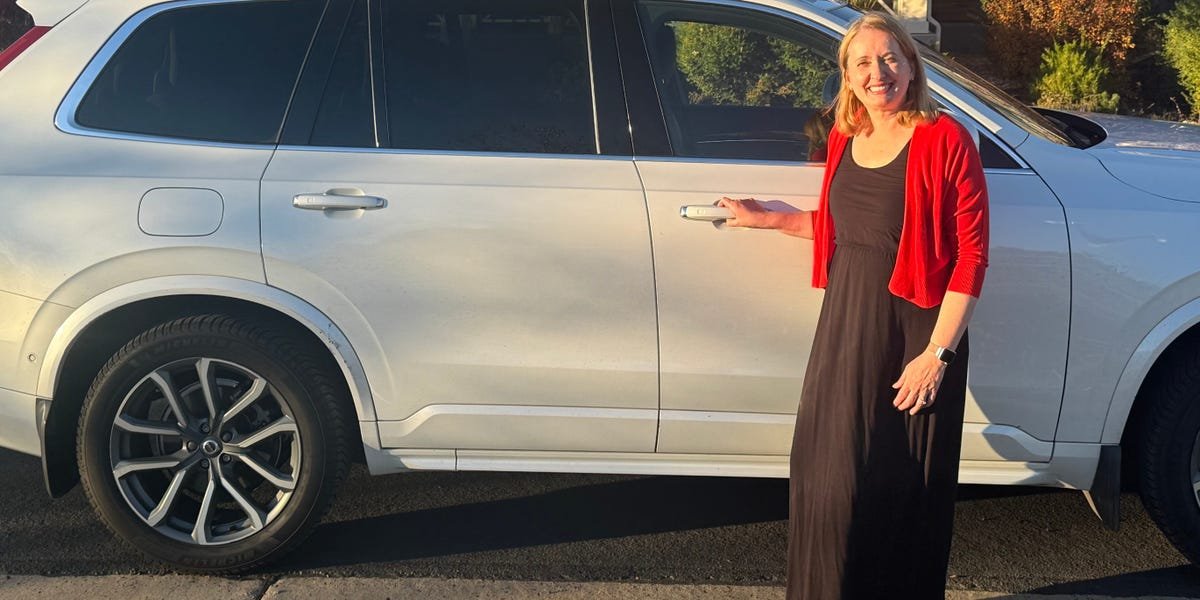
My 2017 Volvo has more than 100,000 miles. It’s old, paid off, and perfect for my family.

When I bought my Volvo XC90 in 2017, I was thrilled to get a safe, third-row vehicle. With three kids between the ages of 3 and 8, the extra space meant fewer fights and more room, and reassured me that the car’s safety features would help me drive through snowy roads and city traffic.

Almost a decade later, that same Volvo has over 112,000 miles on it. I still remember when my family and I sat on the front porch, excited, as we watched the car get delivered from the truck.


New car being dropped off.

The author’s family was excited to see their car be delivered.

Courtesy of the author


These days, my kids have been asking me when I’m going to get a new car, and my answer remains the same — I love my car and I’m going to keep driving it.

The car is still reliable — and I trust it

Aside from regular maintenance and tire changes, the car has been reliable. Before the warranty expired, we purchased an extended warranty on the vehicle. Now that the extended warranty has expired due to mileage, I am still in awe at how reliable the car has remained.

Years ago, we appreciated that the trunk could hold the double stroller, and that the built-in booster seat allowed us to drive car pools with small children. These days, we appreciate the third-row flexibility that allows us to fit our skis, snowboards, soccer gear, backpacks, and all the other essentials my kids need.

I spend a lot of time in the car driving people around, and I am thankful for a car I can rely on.


Woman driving car

The author spends a lot of time in her car and finds it reliable.

Courtesy of the author


My mom used to say that the best car is one that reliably gets you from point A to point B. I still agree with this statement.

I appreciate the small safety features that I now take for granted. From the computer technology to the warning lights on the mirrors and back-up cameras, the car has helped keep my family safe on numerous occasions and helped me avoid some near accidents.

The car is part of our family. We have taken it on adventures to national parks, ski resorts in the Rockies, and even to an alligator farm. The vehicle has had its share of muddy shoes, candy wrappers, and dog hair. It also has dings from when I backed the car into the garage.

The economics don’t make sense for a new car right now

When my car is in the garage, the dealer provides me with a loaner car — a brand-new version of my current vehicle. I get tempted and think about how nice it would be to get a new car. The latest vehicles have more power, fewer scratches, are cleaner, and have that new-car smell.

I’ve crunched the numbers. After years of car payments, my car is now paid off. Every month that goes by without a car payment means more money toward saving for the future. More money for food, utilities, saving for college, and the occasional splurge. Saving money now means more financial freedom for tomorrow.

Buying a new car is expensive. Borrowing money for car payments these days costs more than it did in the past. Even yearly vehicle registration costs less for an older car.

Part of me feels proud to keep driving my older car

We live in a world that tells us that newer is better, that we should want more. Although external validation of a new car is nice, I am focusing on the internal satisfaction that comes from knowing I am saving money by driving an older car.

My car may not turn heads in the school pick-up line, but I view the scratches and door dings much like wrinkles- a sign of a good life.

I will continue to drive my older car, and I am thankful for a safe and reliable vehicle that has served my family well.


Source link