Guilty-on-all-counts-Jury-convicts-Netflix-director-Carl-Rinsch.jpeg

Guilty on all counts: Jury convicts Netflix director Carl Rinsch in $11 million fraud case

A Manhattan federal jury on Thursday found Carl Rinsch guilty on charges that he scammed Netflix out of $11 million in a lavish spending spree.

After less than five hours of deliberation, the jury said it found Rinsh guilty on all seven counts, including fraud, money laundering, and illegal money transmission. He faces up to 90 years in prison, but is expected to be sentenced to far less.

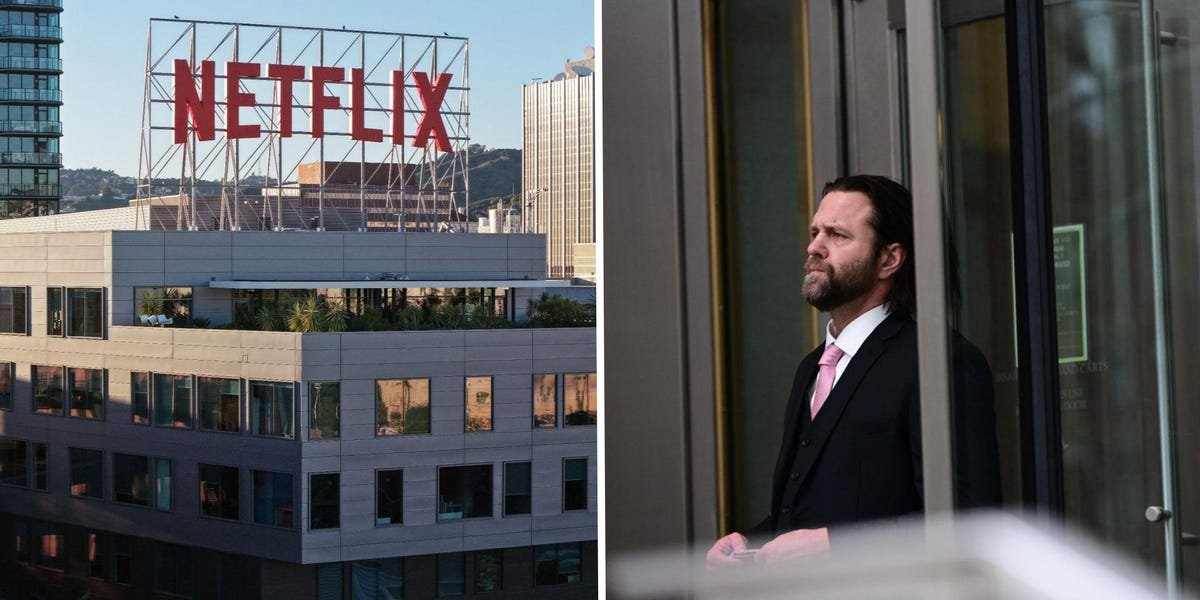
Rinsch, wearing a purple-plaid tie and matching pocket square, looked straight at the judge as the jury foreman read the verdict.

The case centered on the millions of dollars Netflix paid Rinsch to film “White Horse,” a sci-fi epic about a world where clone-like beings, after a schism with humankind, create their own society walled off from the rest of the world. Rinsch testified in his own defense earlier this week.

Rinsch — a Ridley Scott protege who previously directed the Keanu Reeves-starring “47 Ronin” — shot footage for “White Horse” on two continents. But by the fall of 2019, he exceeded the $44 million Netflix budgeted for the project and asked for more money.

Through the end of 2019 and early 2020, Rinsch negotiated with Netflix to figure out how to move “White Horse” forward and realize his ambitions. He envisioned a franchise like “Star Wars” and “Game of Thrones,” complete with an elaborate fantasy world, that could become part of Netflix’s catalogue.

In March of 2020, the streaming service agreed to give Rinsch’s production company another $11 million.

Then, everything went wrong.

On the witness stand in Manhattan federal court, he said he believed the bulk of the $11 million was meant to reimburse him for keeping the production of “White Horse” afloat the previous fall, when it had gone over-budget. According to him, Netflix expected him to conduct only “soft pre-production” on a potential second season.

Netflix balked. Former executives testified in the trial that the $11 million was meant to go toward finishing a first season that Rinsch never delivered. According to prosecutors, the entire negotiation for the $11 million was a sham, and Rinsch meant to defraud the company all along.

At closing arguments on Wednesday, Assistant US Attorney David Markewitz presented the jury with a Buzzfeed-style list of “10 Ways You Know Carl Rinsch is Guilty.” In a slideshow, he walked them through what he said were Rinsch’s contradictory claims — on the witness stand, in emails and text messages, and in prior statements in a civil legal dispute with Netflix — that he said demonstrated Rinsch wasn’t telling the truth.

He argued it was absurd to think Rinsch’s lavish purchases — like a $439,000 handmade Hastens mattress — could not have possibly been meant for the production of “White Horse.” And Rinch’s 2021 purchases of Rolls-Royces were insured in his own name, rather than insured by Netflix.

“In a TV show, a mattress is going to be covered by sheets and a blanket,” Markewitz told the jury. “No one watching ‘White Horse’ from home is going to have any idea what is under those linens.”

Daniel McGuinness, an attorney representing Rinsch, told the jury that Rinsch never had the “intent” required to find him guilty.

He showed them emails and texts leading up to the March 2020 agreement that he said demonstrated Rinsch’s negotiating posture had always been that Netflix owed him about $11 million for reimbursement. Rinsch never said he would spend all the money on additional production for “White Horse,” McGuinness said.

In reality, according to McGuinness, the situation was a “contract dispute” based on misunderstandings between Rinsch and Netflix.

“They were talking past each other, and the government has turned it into a nefarious fraud conspiracy,” McGuinness said.

This is a breaking story. Please check back for updates.



Source link

I-invented-a-new-type-of-landline-for-kids-and.jpeg

I invented a new type of landline for kids, and my daughter’s friends tested it out. This year, we’ve raised $3.5 million in funding.

This as-told-to essay is based on a conversation with Chet Kittleson, founder of Tin Can. It has been edited for length and clarity.

About three years ago, I was picking my daughter up from school and started chatting with parents about how arduous it is to run the kids’ social lives. One mom said that she felt like an executive assistant for her daughter. There was a lot of frustration and angst toward the kids, and as a dad of three, I understood it.

But that day, I played devil’s advocate. What else are the kids supposed to do, I asked. My first social network was the landline, but my kids didn’t have that. Most of the parents I knew were delaying cellphones, but that left the kids reliant on us for coordinating meet-ups.

I got to thinking: wouldn’t it be cool if there was a landline my kids — who are now 10, 8, and 5 — could use to organize their own social dates?

The phone led to my daughter walking to school with friends

I had been working at the tech and real estate company Redfin, which I loved because the company environment allowed me to be a rising executive and an active dad. Still, I had this itch to build a company of my own. I left to start another real estate-related company, but ultimately, we didn’t have a product-market fit, and had to call it quits after about two years.


Kids on the phone

The cofounder’s daughter started walking to school with friends thanks to her landline.

Courtesy of Tin Can


The same week I wrapped up that venture, I brought my co-founders over to talk about making my landline idea a reality. We spent a week at my kitchen table, making prototypes. By the end of the week, we had five phones.

Two of the prototypes went to my daughter’s friends. Right away, we started noticing the kids organizing more playdates and sleepovers. My favorite moment came when the phone rang at about 8:15 in the morning. My daughter’s friend was inviting her to walk to school for the first time.

I want to use tech to build better in-person connections

Right away, I started getting texts from other local parents, asking if they could get a phone. I made about 50 prototypes and installed them myself. I asked customers what they liked about the phone and what they were worried about when it comes to kids and tech, which helped me refine the product.

We officially started selling Tin Cans in April of this year. For parents, the phone is a symbol of a simpler time. For kids who have often never experienced independent communication, it delivers a new superpower they didn’t know they wanted.


Tin Cans

The company has raised $3.5 million in funding.

Courtesy of Tin Can


Today, we have Tin Cans in every state and Canada. We’ve raised $3.5 million. I’m excited to build a different type of technology company: one that uses tech to build connections and healthy relationships.

We’re trying to foster independent kids

Personally, that’s extremely meaningful to me because I’ve always struggled with anxiety and had my own challenges with screen addiction. I stopped using social media a few years ago after noticing that it was distracting me from moments with my kids.

Today, my family has two Tin Cans: one in a shared area of the home and another in my oldest’s room. These days, my kids frequently get calls from friends asking them to walk to school. They have more sleepovers or just chat with their grandparents.

There are also more subtle changes. When we pick up takeout, my kids are often the ones to go in and claim the order. That confidence is a symbol of the strong, autonomous children my wife and I are trying to raise.

One mother told us that Tin Can helped her daughter find her voice — literally. The girl started off talking quietly and timidly, but within weeks, was louder. That confidence translates to the real world, and the Tin Can lifestyle we’re hoping to foster.


Source link

An-88-year-old-worked-5-days-a-week-at-a-supermarket.jpeg

An 88-year-old worked 5 days a week at a supermarket. Then strangers raised almost $2 million so he could finally retire.

Before December, Ed Bambas was among the sizable swath of older Americans still working with retirement nowhere in sight. Then, he met content creator Samuel Weidenhofer.

Weidenhofer, who has 12 million followers across social media, set up a GoFundMe fundraiser for Bambas on Monday to help him leave his job at a Detroit supermarket and retire.

“I’m opening a fundraiser to help Ed live the life he deserves to finally give him some relief, comfort and the peace of mind that comes from knowing he can enjoy his later years without constant struggle,” Weidenhofer wrote on GoFundMe.

The fundraiser had a $1 million goal. As of Sunday, over 65,000 people have donated, reaching a total of almost $2 million.

In a video shared to Weidenhofer’s social media accounts, Bambas said he’s an 88-year-old veteran who works at the supermarket five days a week, eight hours a day. Bambas said he retired from General Motors in 1999, but lost his pension after the company went bankrupt in 2009.

Bambas told Weidenhofer that his wife, who died seven years ago, had been sick around the time his pension stopped. Without his pension, Bambas had to re-enter the workforce.

Nearly 550,000 Americans 80 and older are still working, according to 2023 US Census data.

As part of Business Insider’s “80 over 80” series, reporters interviewed nearly 200 workers over 80 — in addition to conducting surveys and receiving emails — in an effort to understand why.

While some older Americans are driven by a personal desire to work, others take on jobs to combat financial insecurity. Some workers over 80 told Business Insider that they use their income to supplement their Social Security and other retirement payments. They fear that without the income, they can’t afford the cost of living.

Weidenhofer shared a video of Bambas receiving his GoFundMe check on Friday.

“It’s something dreams are made of,” Bambas said in the video.

Bambas also thanked everyone who donated to the fundraiser.

“I cannot express in any words how thankful I am to all the people,” he said.


Source link

SHRM-the-worlds-largest-HR-group-has-been-hit-with.jpeg

SHRM, the world’s largest HR group, has been hit with an $11.5 million verdict in a racial discrimination lawsuit

A jury on Friday issued an $11.5 million verdict against the world’s largest HR organization over allegations it had racially discriminated and retaliated against a former employee.

The Society for Human Resource Management, known as SHRM, was found liable for racial discrimination and retaliation and hit with a ruling of $1.5 million in compensatory damages and $10 million for punitive damages, according to Ariel DeFazio, a lawyer for the plaintiff.

SHRM said it plans to appeal the decision. “Today’s decision does not reflect the facts, the law, or the truth of how SHRM operates,” the trade group said in a statement. “We have acted with integrity, transparency, and in full alignment with our values and obligations.”

SHRM was sued in 2022 by Rehab Mohamed, who worked at the trade group as an instructional designer from 2016 to 2020. The case was tried over the course of five days in a Colorado federal court.

“The optics are bad because they’ve held themselves out as an authority on best practices,” said Alice K. Jump, an employment attorney and partner at law firm Reavis Page Jump.

Mohamed said in her suit that she was racially discriminated against by a white supervisor and faced retaliation for complaining to management. She said she raised concerns about racial discrimination and retaliation with leadership, including SHRM’s CEO, Johnny C. Taylor Jr., and its head of human resources, throughout the summer of 2020.

While testifying on December 4, Taylor said he wasn’t involved in Mohamed’s termination. A former SHRM employee, Mike Jackson, who said he was responsible for investigating the matter, told the court that Mohamed’s was the only discrimination claim he had ever investigated.

In response to questions from Hunter Swain, another of Mohamed’s lawyers, Jackson said that he left SHRM in 2021 and his title was manager of employee experience. He said he became a certified HR professional while employed there and that he had undergone one training session on HR investigations just a few months before the discriminatory events that Mohamed cited in her lawsuit took place.

When asked by Swain what he learned from the training, Jackson said he couldn’t remember any specifics.

SHRM has consistently denied Mohamed’s claims. In September, SHRM asked the court to bar Mohamed from introducing evidence or argument that the organization is a specialist in HR best practices.

The following month, US District Judge Gordon P. Gallagher denied SHRM’s request, saying its “asserted expertise in human resources is integral to the circumstances of this case and cannot reasonably be excluded.”

In his testimony, Taylor said SHRM’s work includes advising HR professionals about best practices, including those pertaining to investigating internal complaints of discrimination and retaliation. He said SHRM has a set of curricula around best practices for investigating employment complaints.

The verdict was not surprising given that SHRM promotes itself as an expert in HR, Boston employment lawyer Evan Fray-Witzer told Business Insider. “You’re going to be held to a higher standard,” he said.

In recent years, SHRM has been embroiled in various controversies, as Business Insider recently reported. These include a new attendance policy that penalizes workers who arrive even a minute after 9 a.m.; a memo about a “conservative” dress code that bans sequins; and a companywide meeting in which Taylor said some staffers were “entitled,” “complacent,” and “sloppy.”

During pre-trial discovery for Mohamed’s case, SHRM revealed the existence of two other discrimination complaints from employees. One case, filed with the Equal Employment Opportunity Commission in 2018, was settled. The other, filed with a California regulator in 2021, is pending. SHRM also denied wrongdoing in those cases.

“We are very happy that the jury spent a week listening very closely to the evidence and that they decided, as a result, to hold SHRM accountable,” Mohamed’s lawyer, DeFazio, told Business Insider. She said the verdict would “send a message to workplaces in the entire country.”


Source link

A-Ferrari-and-over-480-takeout-orders-FBI-details-spending.jpeg

A Ferrari and over 480 takeout orders: FBI details spending spree of Netflix director in $11 million fraud case

In March of 2020, Netflix infused $11 million into a production company to complete the first season of “White Horse,” a futuristic sci-fi series it hoped to bring to its platform.

Carl Rinsch — the director, writer, and showrunner of “White Horse” — never finished the 12 episodes he was supposed to deliver.

But a short time after he got the cash, Rinsch spent millions of dollars on furniture, cars, credit card bills —  and a whole lot of takeout.

According to testimony at his criminal trial on Thursday, Rinsch spent a total of $9.14 million through a personal bank account with funds originally earmarked to finish “White Horse,” which had the production codename “Conquest.”

The spending included more than 480 food deliveries from Postmates and Uber Eats during a six-month span in 2022, according to a spreadsheet entered into evidence. The spreadsheet showed Rinsch sometimes making a dozen separate food purchases each day.

The most expensive category, FBI agent Michael Naccarelli testified, was for furniture, for which Rinsch spent $3.36 million.

Rinsch also spent $2.4 million on cars — including a Ferrari and Rolls-Royces — and $1.8 million on American Express bills, according to Naccarelli. He also spent money on hotels, jewelry, and art, Naccarelli said.

“Rinsch described the Ferrari as “a birthday gift to myself” in a 2021 text message to his personal assistant, which was shown to jurors later Thursday.

Attorneys for Rinsch told jurors at his trial in Manhattan federal court that the “White Horse” debacle is a civil business dispute — not criminal financial fraud.

They say Rinsch, who previously directed “47 Ronin,” starring Keanu Reeves, is a “creative genius” who was overwhelmed by the demands of directing, writing, and producing “White Horse” and left to flounder by the streaming company.

Days after Netflix sent $11 million to a bank account for Rinsch’s production company, he moved $10.5 million to a personal Wells Fargo bank account, according to Naccarelli and records entered into trial evidence.

The director then moved portions of the funds to a Kraken cryptocurrency exchange account, as well as other bank accounts, before ultimately transferring $13.7 million to a personal Bank of America account.

With his Kraken account, Rinsch purchased about a dozen different cryptocurrencies, including Dogecoin, Etherium, Bitcoin Cash, and the stablecoin Tether, trial records show.

In April 2022, Rinsch’s Dogecoin holdings were worth about $755,000, and his Etherium tokens about $939,000, according to Naccarelli.

While a financial advisor previously testified in the trial that Rinsch’s stock investments went badly, Naccarelli said the director’s cryptocurrency investments were profitable.

“The trades performed very well,” Naccarelli said as Rinsch — wearing a three-piece black suit and a patterned pink tie and matching pocket square — nodded slightly.

Allen Grove, an FBI agent who testified after Naccarelli, said Rinsch considered himself a major Dogecoin trader when they met in April 2023 regarding a dispute over one of Rinsch’s furniture purchases in Paris.

“Mr. Rinsch described to me that he became wealthy during the pandemic by investing in Dogecoin,” Grove testified. “He described himself to me as ‘The Dogecoin Whale.'”

Rinsch said in an earlier deposition, which was shown to jurors on Thursday, that his purchases of four Rolls-Royces were meant for the production of “White Horse,” and not for personal use. Netflix wrote off the production as a loss in 2020.

“That would be fraud otherwise,” Rinsch said in the deposition.


Source link

Sports-Illustrated-ex-publisher-wants-200-million-from-Authentic-Brands-Group.jpeg

Sports Illustrated ex-publisher wants $200 million from Authentic Brands Group, saying it stole website and employees

The former publisher of Sports Illustrated has filed a $200 million legal counterpunch against the magazine’s new publisher and the owner of its intellectual property.

In late 2023, the Arena Group lost the rights to publish SI, its best-known brand, after the 5-Hour Energy creator Manoj Bhargava took over Arena and missed a licensing payment to Authentic Brands Group. ABG awarded the publishing license to Minute Media and sued Bhargava for $49 million, accusing him of acting like a “gangster” in their negotiations.

On Friday, Bhargava and his company hit back — and they’re seeking $200 million for what they claim was a plot by ABG and Minute Media to string the Arena Group along while making copies of its websites and laying the groundwork to poach its employees and biggest spenders.

“ABG deceived Arena by promising to work with Arena in good faith to renegotiate Arena’s license so as to allow Arena to continue to operate Sports Illustrated,” the complaint says, adding, “Privately, ABG and Minute had been partnered for weeks, conspiring to steal Arena’s code and publisher relationships.”

The countersuit also took aim at CVC Capital Partners and BlackRock, investors in ABG, though they weren’t named as parties to the lawsuit. In the complaint and in a statement, Steve Janisse, a spokesman for Arena and Bhargava, said it was unethical for them to have assisted in what Arena and Bhargava characterized as ABG’s sham negotiations.

“It’s amazing that CVC Capital and BlackRock would condone this type of corporate behavior,” Janisse said. “To be honest, we’re surprised they aren’t calling for a change of leadership at ABG.” An executive at CVC didn’t immediately respond to emails, and a representative for BlackRock declined to comment.

Bhargava has a history of aggressive legal action. A 2012 Forbes profile noted that he had already filed more than 90 lawsuits. Bhargava, who made his billions selling 5-Hour Energy drinks, showed the Forbes reporter a “cemetery” bookcase in his office, lined with energy-shot bottles from competitors his company had sued or legally bullied out of the market, calling them the gravestones of his vanquished rivals.

Bhargava’s lawsuit adds to the morass of legal actions that have formed around the Arena Group. In early April, ABG sued Arena and Bhargava over the missed licensing payment and a $45 million termination fee.

Arena, whose stock trades for less than half of what it did at the start of 2024, included that $45 million fee in a loss of nearly $91 million that it recorded in connection with the loss of the SI brand last quarter.

Ross Levinsohn, the Arena CEO who was fired in 2023 when Bhargava took over, has also sued Arena, claiming he was retaliated against. Shortly thereafter, Levinsohn, who became the CEO of Arena in 2020, became the target of a lawsuit filed by Arena’s founders, who claim he mounted a “fraudulent coup” to enrich himself at the expense of Arena and other shareholders, according to Front Office Sports.

ABG and Minute Media didn’t immediately reply to requests for comment.


Source link

The-woman-who-says-shes-the-real-life-version-of-Martha.jpeg

The woman who says she’s the real-life version of Martha on ‘Baby Reindeer’ just sued Netflix for $170 million

Fiona Harvey, the woman who says she’s the real version of the semi-fictionalized stalker on Netflix hit “Baby Reindeer,” is suing the streaming giant.

Harvey, a 58-year-old Scot, filed a lawsuit on Thursday in California, seeking more than $170 million and a jury trial. She’s suing over defamation and intentional affliction of emotional distress, among other points.

She did not sue creator and star Richard Gadd, who plays a fictional version of himself called Donny Dunn. “Baby Reindeer” is based on his experiences with being stalked by a woman earlier in his career, when he was trying to make it as a comedian.

In the complaint, Harvey’s lawyers said the show was a “brutal lie” that brought her unwanted attention, including death threats.

“Netflix and Gadd destroyed her reputation, her character and her life,” the attorneys wrote.

On- and off-screen, Netflix has repeatedly said “Baby Reindeer” is a true story.

“We intend to defend this matter vigorously and to stand by Richard Gadd’s right to tell his story,” a Netflix spokesperson told Business Insider.

The company has not yet filed a response to the lawsuit.

The real Martha Scott

As the show picked up viewers, armchair sleuths raced to find the “real” stalker, named Martha Scott in the show, and the man who Gadd said abused him.

In late April, Gadd asked fans not to speculate about who the real people were behind the show’s characters. He told GQ he disguised the stalker’s identity in the show.

“What’s been borrowed is an emotional truth, not a fact-by-fact profile of someone,” Gadd said.

In the lawsuit, Harvey said she was identified days after the show’s April debut. Her attorneys said people found a public 2014 tweet she sent to Gadd that used a phrase repeated in the show.

Harvey’s court filing outlined similarities between the stalker character and herself: a Scottish woman about 20 years older than Gadd living in London, with similar appearance and speaking patterns. Both the character and Harvey were accused of stalking a lawyer. It’s unclear if that reference is to an old colleague of Harvey’s, who told BI on Thursday that Harvey harassed her from 1997 to 2002.

But unlike the fictional Martha Scott, Harvey said she is not a convicted stalker, nor has she pled guilty to any crime. Her complaint said Netflix did not check any facts central to the show, including that the stalker sexually assaulted Gadd. She said she did not have any sexual encounters with the comedian.

In an interview with Piers Morgan in early May, Harvey said that while she may have emailed Gadd, it was nowhere near the 40,000 messages he said the stalker sent him. She denied harassing Gadd and said she knew him from when she was bartending in London.


Source link