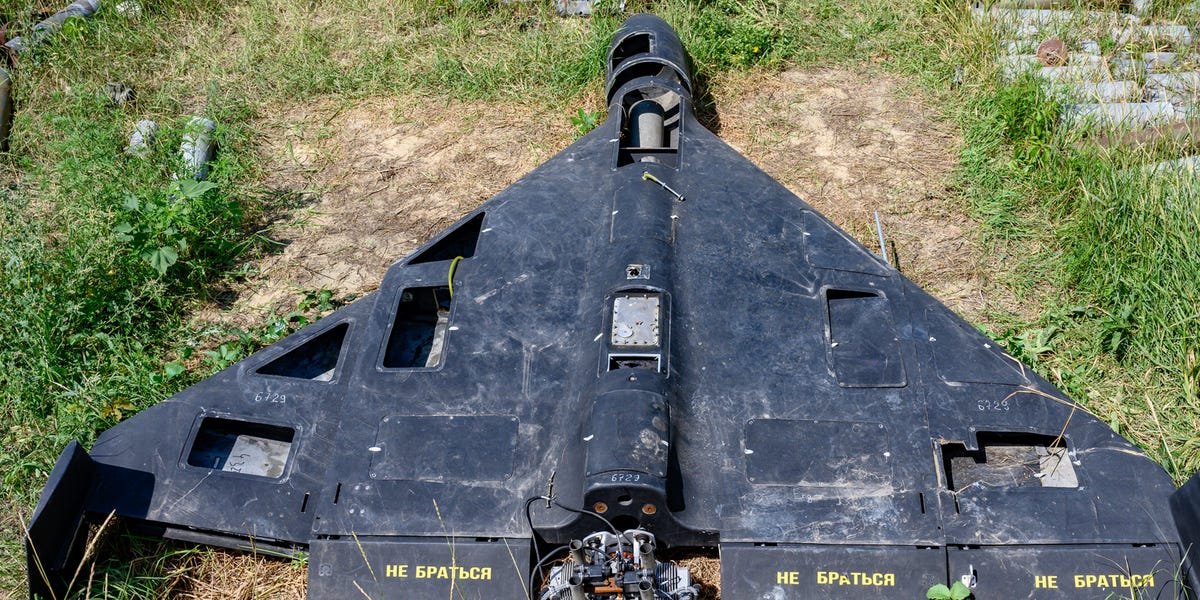
Iran attacked the Erbil region in northern Iraq over 400 times during its war with the US and Israel. WELT’s Chief Correspondent Ibrahim Naber got exclusive access to the wreckage of Iranian weapons used to strike the Kurdistan region.
The cache of damaged weapons includes the Zolfaghar ballistic missile and the Shahed drone, which has become Iran’s mainstay weapon during the war.
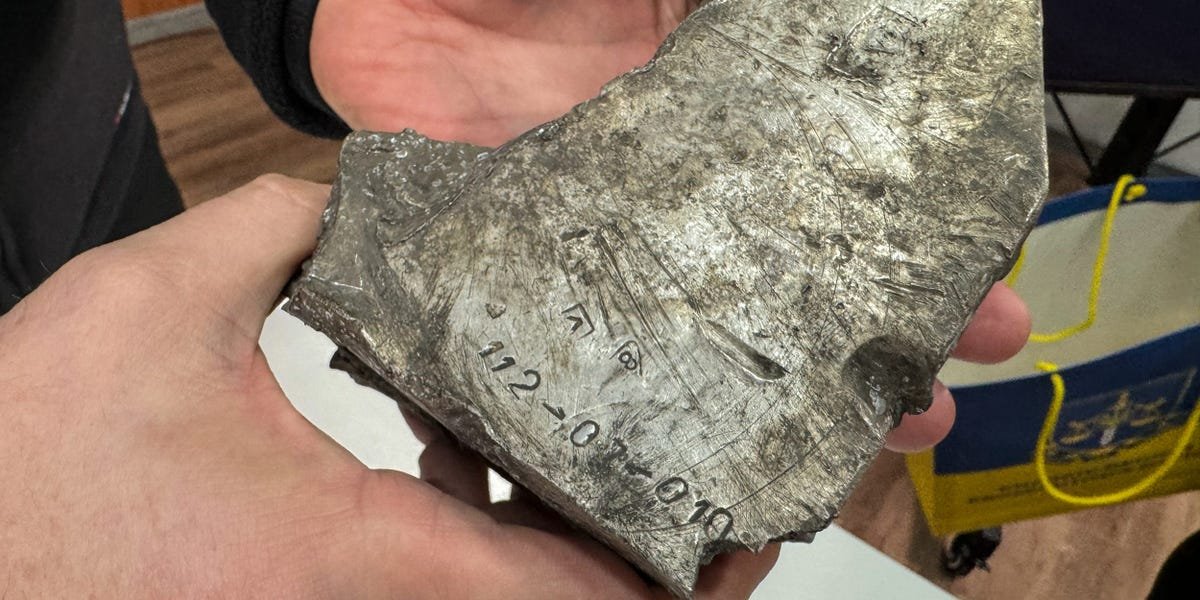
A new Ukrainian analysis of two North Korean ballistic missile types found that the weapons were built with commercial electronics, but likely made with methods that were outdated by up to 50 years.
Officials said the findings, published by Ukraine’s defense ministry on Thursday, came after military engineers and scientists conducted “laboratory studies” on debris from solid-fuel KN-23 and KN-24 missiles used on Ukrainian territory in early 2024.
The report found that while the North Korean missiles bore similarities to Russian counterparts, they used less energy-efficient fuel and required engines that were 50% larger to travel the same range.
“At the same time, outdated methods are used during production, and the quality of the soldering is about 50 years old,” the defense ministry wrote.
It added that forensics had found the missiles to be tipped with graphite, a “relatively cheap solution” to protect them from heat while in flight.
The defense ministry said its forensics team identified the KN-23 and KN-24 using South Korean schematics and photographs from North Korean factories, denoting seven key similarities. It added that the KN-23 had a specific frame diameter used only by North Korea.
The KN-23, also known as the Hwasong-11A, was first revealed by Pyongyang during a military parade in 2018, and is often compared to Russia’s Iskander-M short-range ballistic missile. The other missile, the KN-24, made its public debut as the Hwasong-11B in 2019, and bears some similarities to the US-made ATACMS tactical ballistic missile.
The Ukrainian report, however, wrote that instead of being direct analogs to the Iskander-9M723 missile, the North Korean missiles showed signs that Pyongyang had “refined some initial version of the Iskander ballistic missile development.”
Meanwhile, the missiles’ control units were found to contain “civilian components from leading brands,” the defense ministry said.
“Pyongyang is apparently purchasing these chips to circumvent sanctions,” its statement read.
Ukraine’s military intelligence agency, GUR, said in late 2024 that it had found components in the KN-23 and KN-24 manufactured by companies in China, Japan, Switzerland, the UK, and the US.
Ukraine said in 2024 that the debris it found was consistent with that of North Korean missiles.
Denys Glushko /Gwara Media/Global Images Ukraine via Getty Images
Kyiv first reported the use of the KN-23 in January of that year, saying that Russia had launched the missiles at Kharkiv. Ukrainian officials said at the time that the munitions were highly inaccurate and unreliable, with at least half exploding in the air before reaching their targets.
The next month, Ukraine also said it had shot down KN-24 missiles launched by Russia against Kyiv. It accused North Korea in early 2025 of supplying the Kremlin with at least 148 ballistic missiles.
Since the start of the war, Russia has sought to strengthen ties with North Korea, receiving troops and arms to help drive Ukraine out of Kursk and sustain its invasion. The US and South Korea have raised concerns beyond that, warning that Pyongyang has been gaining valuable combat knowledge in both troop tactics and arms-making.
New US video footage shows elements of its strikes on Iran, including the launching of missiles and fighters and the destruction of multiple targets.
The footage shared by US Central Command on Saturday shows destroyers firing missiles at sea and carriers launching combat aircraft. It also shows repeated strikes on Iranian military targets. It said its forces are “delivering an overwhelming and unrelenting blow.”
As the President stated, our objective is to defend the American people by eliminating imminent threats from the Iranian regime.
The President ordered bold action. CENTCOM forces are delivering an overwhelming and unrelenting blow. pic.twitter.com/B0k5gV4YnU
It did not specify exactly what was hit, or attribute each attack to the US or Israel, which jointly took part in the operation, dubbed Operation Epic Fury on the American side and Roaring Lion on the Israeli side.
It said the operation, which started Saturday morning, involved precision munitions launched from the air, land, and sea, and said it “involves the largest regional concentration of American military firepower in a generation.”
A US official also told Business Insider that the US launched Tomahawk cruise missiles from warships and that ground forces used the High Mobility Artillery Rocket System, or HIMARS. Other weapons were also employed.
Every time Sinéad publishes a story, you’ll get an alert straight to your inbox!
Stay connected to Sinéad and get more of their work as it publishes.
The Israel Defense Forces said that it used around 200 fighters in what it described as “the largest military flyover in the history of the Israeli Air Force,” adding that the jets dropped hundreds of munitions “targeting approximately 500 objectives, including aerial defense systems and missile launchers, in a number of locations in Iran, simultaneously.”
Israel has also released footage showing an attack on missile launchers at a remote site in Iran.
US Central Command said attacks were intended to “dismantle the Iranian regime’s security apparatus, prioritizing locations that posed an imminent threat.” President Trump vowed to destroy Iran’s missile program and other military capabilities and said that the aim was for Iran to “never” have a nuclear weapon. He called on Iranian forces to surrender or face “certain death.”
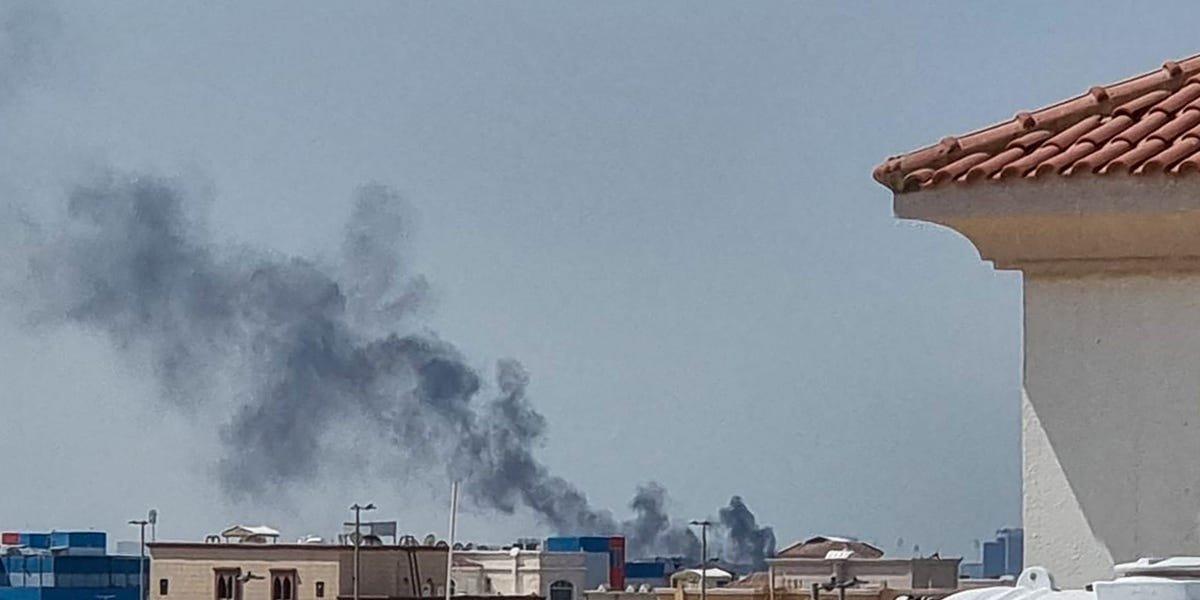
: Smoke rises after Iran launched a missile attack in Bahrain.
Stringer/Anadolu via Getty Images
CENTCOM said targets included “Islamic Revolutionary Guard Corps command and control facilities, Iranian air defense capabilities, missile and drone launch sites, and military airfields.”
Strikes have been reported across Iran, including at military sites and the residence of Iran’s supreme leader. Satellite imagery showed a burning Iranian warship in the aftermath of the initial strikes.
Iranian officials said that at least 85 people were killed at a girls’ elementary school, and the Iranian Red Crescent humanitarian group told the BBC that 201 people had been killed in the country.
After the start of the US and Israeli strikes, Iran launched counterattacks against Israel and against multiple nearby nations, many of which have bases that host US forces and are US allies. Those nations reported many successful interceptions, but also some damage. Details about Iran’s attacks are still emerging, and attacks may continue.
CENTCOM said that its forces had successfully defended against hundreds of Iranian missile and drone attacks. It said there was damage to US military facilities, but that it was minimal and did not impact operations.
Bahrain said the headquarters of the US Navy’s 5th Fleet, located in the country, was hit by an Iranian missile attack, without giving details on the extent of any damage.
Iran’s strikes also targeted Kuwait, the United Arab Emirates, Qatar, and Jordan. Some countries reported injuries from falling debris, including Kuwait, which said that three armed forces members had minor injuries from shrapnel from the interception of drones and ballistic missiles. The United Arab Emirates said one person was killed by falling debris in its capital, and four people were injured and taken to the hospital after an incident in a part of the city of Dubai that is known for luxury hotels.
Iran’s Foreign Minister Abbas Araghchi called the US and Israeli strikes “wholly unprovoked, illegal, and illegitimate.” Iran has vowed further action, and Israel has hinted that its actions so far only represent the beginning of its operation. The US has indicated the same.
Flights have been cancelled across the region, and multiple countries have closed their airspaces, resulting in major disruption for what is one of the world’s busiest flight routes.
Iran launched missile strikes into at least six countries in retaliation for the Saturday morning attack by the US and Israel.
Multiple countries across the Middle East reported Iranian bombardments, with the IRGC, the Islamic Revolutionary Guard Corps, saying that it had launched attacks on US bases.
Iran said it targeted at least four bases hosting US forces in the Middle East. Details about the scale and the impact of the strikes are still emerging, but multiple nations reported being able to intercept the attacks. Some have reported damage and at least one death from debris. At least one US base appears to have been hit.
Bahrain’s state news agency said that the US Navy’s 5th Fleet service center was the subject to a missile attack, without offering details or reporting any casualties. Iran also said it targeted the base. The agency also reported Bahrain’s defense forces saying that its air-defense systems successfully intercepted multiple missiles from Iran.
Qatar’s defense ministry said successfully intercepted three waves of attacks that had targeted multiple areas of the country, and that all missiles were intercepted before they reached the country’s territory, the state-run Qatar News Agency reported.
Qatar hosts Al Udeid, the biggest US base in the region. Iran said it targeted the base, without giving details over whether it was successful. The US has not confirmed an attack. Qatar condemned what it said were Iranian strikes on US bases in Qatar and neighboring countries.
Jordanian state media reported the country’sair defense systems successfully intercepting two ballistic missiles that targeted the country.
A smoke plume rises over Abu Dhabi from the site of an Iranian missile strike.
AFP via Getty Images
The country’sPublic Security Directorate said there have been 12 separate incidents created by falling debris across the country, causing some damage but with no reported civilian casualties.
The Muwaffaq Al-Salti Air Base in Jordan, which is key for the country’s air force and also has a US military presence, was targeted, Iranian state media reported. It did not give any details over whether the reported attack was successful, and the US has not confirmed any attack.
The United Arab Emirates’ defense ministry said it intercepted Iranian ballistic missiles across multiple attacks. It said one person was killed by falling debris in Abu Dhabi, the country’s capital.
It shared images of what appears to be downed Iranian missiles.
It said that missile debris also damaged some infrastructure. Explosions were also reported in Abu Dhabi and Dubai. Its Al Dhafra Air Base hosts US forces. The IRGC said that the base was targeted, but that has not been confirmed.
A plume of smoke rises over Tehran, Iran.
Mahsa / Middle East Images / AFP via Getty Images
Kuwait’s army said its air defenses intercepted missiles that were detected in the country’s airspace. The country hosts the US military at its Al Salem Air Base, another base the IRGC said was targeted but with no confirmation.
Israel reported multiple missile barrages from Iran, but has not reported any deaths or major damage to the country.
Successful attacks have been reported in Iran, and its people are trying to flee the capital city, Tehran. Iranianofficials said an Israeli attack on a girls elementary school in southern Iran killed least 51 people. Israel has released video footage of strikes in Western Iran against missile launchers and other targets.
US embassies in countries across the region have given advice to Americans to shelter-in-place.
Attacks and counter-attacks are still ongoing. US President Donald Trump said that he would destroy Iran’s missile program and navy and make sure that the country can “never” have a nuclear weapon.
“The lives of courageous American heroes may be lost, and we may have casualties. That often happens in war,” Trump said in a statement. “But we’re doing this not for now — we’re doing this for the future. And it’s a noble mission.”
Flights have been cancelled across the region with multiple countries closing their air spaces, creating major disrupution in one of the world’s busiest flight routes.
Ukrainian President Volodymyr Zelenskyy said on Wednesday that his country had struck a Russian military industrial plant with locally made cruise missiles that flew nearly 900 miles to reach their target.
Ukrainian officials earlier reported that the missile strike on Saturday had hit a plant in Votkinsk, an industrial town in Russia’s Udmurt Republic, some 860 miles from the Ukrainian border.
“We carried out precise strikes with Flamingo missiles at a range of 1,400 kilometers,” Zelenskyy said at a press conference in Kyiv. “I believe this is truly a success for our industry.”
Such an attack would be one of the longest-range strikes carried out so far by the Flamingo, which is touted as one of the star products in Ukraine’s local defense manufacturing scene. Kyiv has been aggressively trying to expand its weapons industry as a complement to Western supplies and as a future export sector.
The Flamingos’ target, the Votkinsk plant, manufactures some of Russia’s key munitions, such as ballistic missiles for the Iskander system and the submarine-launched Bulava missile.
Every time Matthew publishes a story, you’ll get an alert straight to your inbox!
Stay connected to Matthew and get more of their work as it publishes.
Russia has not officially confirmed that the factory was hit, but Alexander Brechalov, the governor of the Udmurt Republic, said on Saturday that an unspecified facility in the region had been attacked and three people were sent to hospital.
Brechalov did not say if the Flamingo was used, but warned against drone threats over the region.
Ukrainian open-source groups later published satellite images that appeared to show damage to one of the workshops at the Votkinsk factory, with a gaping hole in its roof and signs of fire damage.
That evening, Kyiv had unleashed a large wave of drones and missiles into Russia in one of its biggest ever long-range attacks.
Russia’s defense ministry said that it shot down 77 Ukrainian drones on Saturday, but did not mention any Ukrainian missile threats.
Zelenskyy declined to say how many missiles or drones Ukraine launched in total on Saturday.
“There were interceptions by Russian air defense, there were also missiles that were not intercepted, and there were direct hits,” Zelenskyy said. “But the most important thing is that all the missiles that were launched all reached the target.”
Kyiv has often compared the Flamingo to the US-manufactured Tomahawk, saying that the Ukrainian turbofan-powered missile is much cheaper to make per unit and has a longer range of 1,900 miles.
The ground-launched Flamingo, however, takes up to 40 minutes to prepare for launch.
Ukraine is also still trying to build up its arsenal of the missile, with reports from last October saying that its manufacturer, FirePoint, hoped to produce up to seven a day by the end of 2025.
Kyiv said earlier this month that manufacturing had been affected by a recent Russian strike, with Zelenskyy warning that Ukraine had to “work on increasing quantity” of the Flamingo.
“We had certain technical problems because one large production line was destroyed as a result of a missile strike. They have already relocated and resumed production,” Zelenskyy had said at the time.
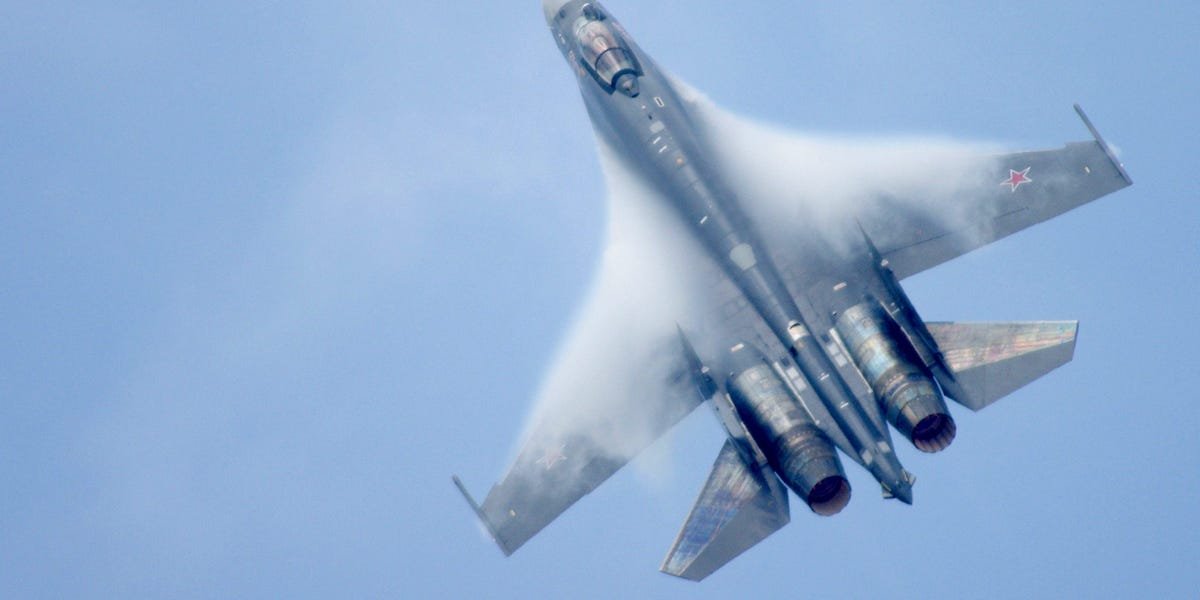
Russia’s Su-35 fighter jets are increasingly flying with longer-range air-to-air missiles that make them a potentially greater threat to NATO air operations, a leading airpower expert assessed in a recent report.
Justin Bronk, a researcher at the UK-based Royal United Services Institute, said in his assessment of Russian air power that regularly arming Su-35 and Su-30SM2 jets with R-37M missiles “has significantly contributed to increasing the threat that they can theoretically pose to NATO air operations.”
The R-37M missile, which NATO calls the RS-AA-13, is “much more capable at long range” than the R-77-1 missiles the Su-35 had previously relied on, Bronk told Business Insider in a discussion of his recent report.
R-77-1 missiles have a range of about 62 miles, while R-37M missiles are understood to have a range of around 200 miles. Real-world kills at range depend on a mix of factors, but reach still matters.
Bronk told Business Insider that the longer-range R-37M missiles had been “very much a specialist weapon” for a limited selection of Russian jets. But “now you see absolutely routine employment” of the weapon on Russia’s Su-35S.
The Su-35 fighter is “the primary air superiority aircraft for the Russians,” he added. The jet is key for Russia’s air force, with the UK Ministry of Defence in 2023 describing it as Russia’s “most advanced combat jet in widespread service.”
Bronk told Business Insider that for the NATO alliance, the regular arming of Su-35s and Su-30SM2s with the R-37M is “a problem” because it puts “more credible long-range air-to-air missiles at play from the Russian side.”
Those missiles used to be contained within a smaller part of the force, mainlyRussia’s MiG-31s. Now, Bronk said, having them on more jets “is obviously a significant growth in the potential threat that they can pose to NATO aircraft in a direct conflict.”
The R-37M was previously concentrated on Russia’s MiG-31 jets.
Mikhail Svetlov/Getty Images
Additionally, he said, Russia’s Su-35 crews are “generally more highly selected, better trained, more capable than the crews on the MiG-31s.” Russia’s better pilots tend to fly its top jets, and those will be the pilots operating these missiles.
Having them routinely carry long-range air-to-air missiles, rather than the “really pretty limited” R77-1 that they used to carry, Bronk said, “is a significant shift.”
A missile with a longer reach
The R-37M’s combat effectiveness has been spotlighted by Russia’s full-scale invasion of Ukraine, which began in February 2022.
Late that year, a RUSI report said the R-37M, combined with Russia’s MiG-31BM interceptor aircraft, was proving to be “highly effective and difficult for Ukrainian pilots to evade due to its speed, very long range, and specialized seeker for low-altitude targets.”
At that time, it said Russia was just starting to put them on Su-35S jets.
A newer report from RUSI in November highlighted how much more the R-37M missile was being used, saying that this missile “in particular, has been used to destroy several Ukrainian aircraft at long range,” including one kill recorded at more than 109 miles.
“This is significantly beyond the engagement range of most NATO air-to-air munitions,” the report said. But it also said that the missiles’ success was “heavily determined by Ukraine’s lack of effective radar warning receivers,” something NATO has fielded far more robustly across its air forces.
The Su-35 threat
Making the Su-35 more powerful is a big move for Russia. In 2022, analysts at the RAND Corporation described the Su-35 as Russia’s “signature heavy fighter.”
Ukraine has shot down multiple Su-35s in its fight against Russia’s invasion, but Bronk said that despite reported losses, the fleet has “marginally increased since the start of the full-scale war.”
He estimated that in late 2020, Russia had about 90 Su-35s. Between eight and 10 have been lost in combat or accidents, he said, but 55 to 60 new aircraft have since been delivered — leaving Russia with roughly 135 to 140 Su-35s overall, a net increase despite the attrition.
Bronk’s analysis was based on interviews with Western air forces and ministries, data from Ukraine’s armed forces, and open-source information.
He said that the Russian air force has gained so much valuable combat experience against Ukraine that its air force is now “a significantly more capable potential threat for Western air forces than it was in 2022.”
He said that in air-to-air combat, where Russian aircraft take on Western ones, the West still has a strong advantage, but longer-range air-to-air missiles complicate the picture.
And any fight would not only be in the air. The West would face not only Russia’s air force but also its vast ground-based air defense network, which the war has also made more formidable.
Bronk told Business Insider that Su-35 crews are typically “much better at working with the ground-based air defenses,” meaning the jets can operate more effectively under the umbrella of Russian surface-to-air missile systems and are therefore “more credible as an air-to-air threat.”
He said that the improvement of those ground-based defenses throughout the war — combined with the fielding of more powerful missiles on Su-35s that are increasingly integrated with them — is one reason why Russian airpower “represents a greater threat to Western air power capabilities in Europe” than it did before the full-scale invasion.