
A-strength-training-expert-who-runs-the-hardest-workout-in.jpeg

A strength training expert, who runs the ‘hardest workout in NYC,’ shares 3 moves to build muscle fast

Since childhood, James McMillian has learned the value of slowly getting stronger.

McMillian said he was diagnosed with asthma when he was born, and doctors advised his parents against letting him play sports like youth tackle football. “It made me tell myself that I need to train harder,” McMillian told Business Insider.

Before and after practice, McMillian recalled running up the stadium steps six times. He’d also run to practice or run home with his sports equipment. Even though his asthma wasn’t induced by sports, he noticed that the extra training kept him from being as winded.

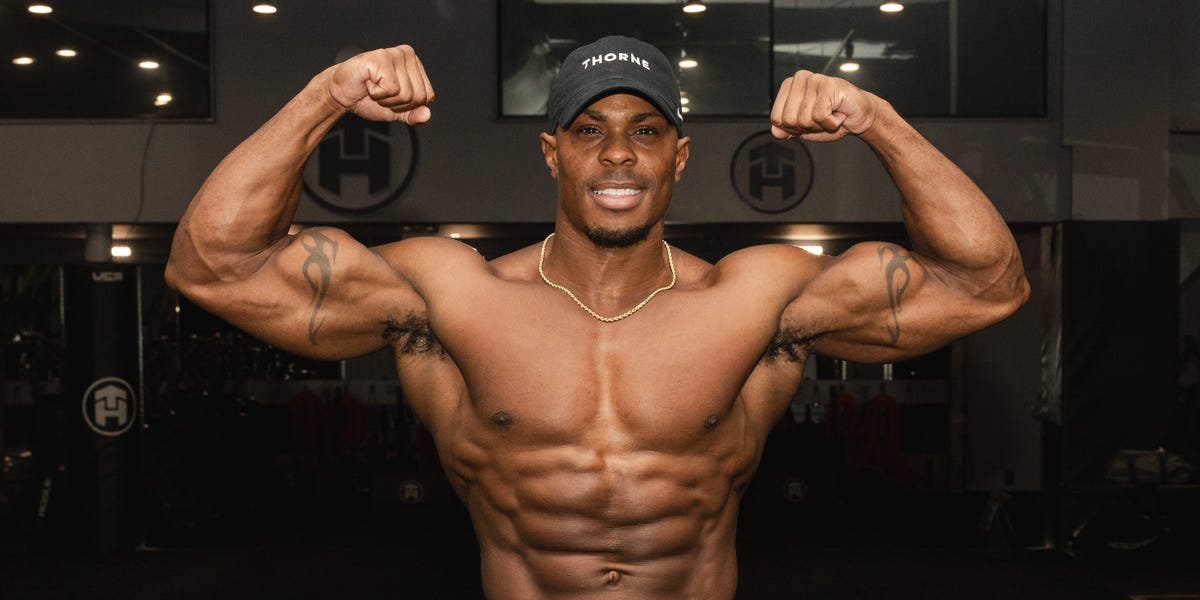
McMillian is now the president and a trainer at Tone House, a strength training and conditioning-focused training facility deemed by Business Insider as “the hardest workout in New York City.” He applies that same mentality from his upbringing to Tone House workouts that he coaches.


James McMillian

McMillian, who coaches classes at Tone House, believes in zooming in on your weaknesses. 

James McMillian


“You’re going to be exposed for your weaknesses, but then you should always turn your weaknesses into your strengths,” he said.

McMillian believes progressively overloading — slowly adding weight, reps, or intensity — is the best way to build strength.

“I always tell people, ‘If you don’t use it, you’ll lose it,” he said, particularly since we lose muscle mass as we age. “You’re going to want to pick up your kid. You’re going to want to hold those groceries. You’re going to want to hold your Louis Vuitton bag a little bit longer at an event. You have to be strong to do that.”

McMillian shared a few of his favorite quick movements to build muscle, whether you’re a complete beginner, pressed for time at the gym, or wanting to speed up your progress.

Raise a glass to goblet squats


Man doing goblet squat

Goblet squats target both the upper and lower body, and are approachable for complete beginners. 

gradyreese/Getty Images


McMillian’s favorite movement for beginners is the goblet squat, or squatting while holding a heavy kettlebell or dumbbell.

“When you’re going into that squat, as you allow those knees to go out, you’re working that lower body, your glutes, your hamstrings,” he said. At the same time, you’re also engaging your lats, triceps, forearms, and upper back from holding the weight.

To make the goblet squat more challenging, he said, you can elevate your heels to focus on building quad strength. McMillian also said it’s easy to start with a lighter weight, say 10 pounds, and gradually work your way up.

Save time with compound exercises


James McMillian working out

McMillian loves doing consecutive sets of arm movements, such as bent-over rows. 

James McMillian


Some of the best time-savers are compound exercises, which target multiple parts of the body at once and “allow you to shorten your time at the gym,” McMillian said.

A favorite of McMillian’s is transitioning from a squat to an overhead press, thus targeting both the upper and lower body.

He also likes to string together multiple consecutive movements. He opts for two rounds of 20 shoulder presses, 20 hammer curls, and 20 bent-over rows, all right after each other to activate different parts of his upper body.

“It’s intense, it burns, but it’s something that people can do with a single dumbbell,” he said, thus also saving time on swapping out equipment.

It’s also customizable, he said: You can use lighter weights and do fewer reps, but increase the number of rounds, for example.

Play with tempo


Woman back-squatting

Lowering slowly before exploding back up helps build control, McMillian said. 

MoMo Productions/Getty Images


Explosive exercises — deliberately slowing down your tempo and “exploding” at the end of the movement — are also great for improving your strength, McMillian said.

He’s a fan of slowing down his back squats: lowering slowly for five seconds, pausing for another five at the bottom, and then quickly pushing up.

“When you do things a little bit slower, controlled, it builds strength,” he said, noting there’s more than one way to challenge yourself.


Source link

To-build-muscle-you-need-a-de-load-week-Heres-how.jpeg

To build muscle, you need a ‘de-load’ week. Here’s how a powerlifting doctor strategizes rest for maximum gains.

Working hard in the gym without seeing results?

A short rest may help you break that plateau, according to a doctor who set state and national records in powerlifting.

Dr. Shernan Holtan, a hematologist and busy mom of two, has been lifting weights for over a decade. She hits the gym at 5:30 a.m. for an hour of training before heading to her day job as chief of blood and marrow transplant at Roswell Park Comprehensive Cancer Center.

Her key to avoiding physical burnout and keeping up gains: Every four to six weeks, she eases up on her training to let her body recover and build back stronger.

“You give yourself a break. Come back, lower the weight drastically for a week, and really just let your body soak up all of the stress that you just put it through to let it repair and heal,” she told Business Insider.

The strategic break is commonly referred to in the fitness world as a “de-load week.” It’s an evidence-backed way to smash through plateaus, reduce the risk of injury, and boost muscle and strength gains for everyone from elite powerlifters and bodybuilders to everyday athletes.


Dr. Shernan Holtan performing weighted lunges in the gym

Building weights is about challenging your muscles, then resting and recovering.

Roswell Park Comprehensive Cancer Center


For Holtan, deloads have enabled her to maintain steady progress for years, gradually building up the strength to squat 225 pounds (or more) for reps. In that time, she’s also started running and CrossFit, in addition to hiking, biking, and going to the gym (sometimes with her teenage daughter).

“I exercise every day, but I’m not doing crazy stuff every day,” she said.

Here’s how to know if you should take a deload, and the right way to rest for better fitness.

Why resting helps you build more muscle

Unless you’re a pro athlete, less can be more when it comes to exercise.

That’s because muscle and strength gains only happen during the rest periods between gym sessions. A good gym session can break down muscle fibers, prompting them to grow back stronger, but only if you provide them with the time and resources (energy in the form of sufficient calories and protein) to recover.

Holtan said to think of it as a slow and steady effort over time, rather than going all-out at the gym (and being too sore to come back).

“It’s little micro adjustments, tiny increases in weight, a few extra reps,” she said.

Then, over the weeks and months of training, a de-load can help your body to reset and keep making progress.

A de-load can also be a full rest from exercise, and can be a good idea during a vacation or holiday, so you can fully enjoy the time off.

When to take a de-load

The right time to take a rest can vary depending on your training and goals. Trainers typically recommend taking a break every four to 12 weeks.

The length of the rest can vary too.

If you’re consistently in the gym three times a week, you may only need a day or two to deload, and can go two or three months between breaks. Competitive athletes who train five or more days a week might benefit from longer breaks every month or two.

Holtan focuses on a specific goal for four to six weeks, then rests and repeats with a slightly different goal.


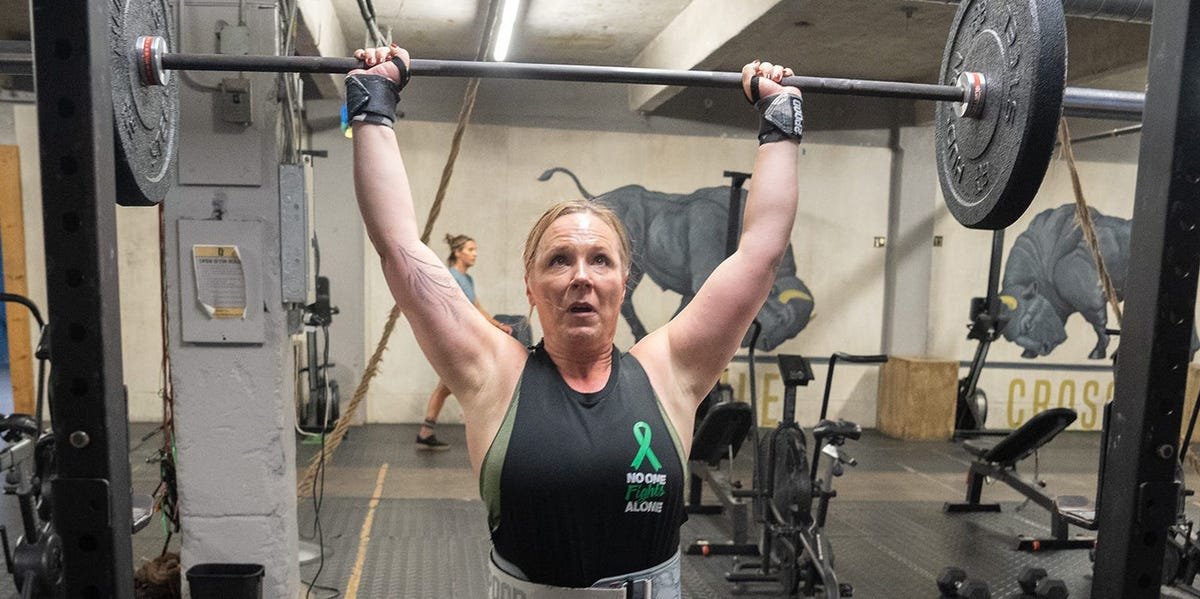
Dr Shernan Holtan lifting weights in the gym performing an overhead barbell press

Dr. Holtan said her training schedule prioritizes a specific rep range for four to six weeks, then she takes a break to recover.

Roswell Park Comprehensive Cancer Center


For instance, she might spend a month or so building up to a heavy one-rep max deadlift, bench press, and squat. After her deload week, she might focus on lifting moderate weight for more reps.

This is a type of training cycle known as periodization, which can help prevent athletes from overtraining or getting stuck in a rut.

Listening to your body can also signal that a rest might be beneficial.

If you’re just not enjoying the gym, struggle to finish a workout ,or need to foam roll the pain away, an extra rest day might be just what you need.


Source link