The last of Elon Musk’s original team of xAI cofounders has cleared out.
Ross Nordeen, one of the 11 who helped build the company alongside Elon Musk, left the company this week, according to people with knowledge of his departure. Nordeen has also lost the badge on X that identifies him as an xAI employee.
His exit comes as Musk reorganizes xAI and preps for a blockbuster initial public offering of his rocket company SpaceX, which acquired the artificial intelligence startup in February.
The 36-year-old Nordeen reported directly to Musk at xAI and served as his right-hand operator, coordinating priorities and driving execution across the company, insiders said.
Nordeen, a Michigan Tech grad, followed Musk from Tesla to cofound the AI startup in 2023. At Tesla, Nordeen was a technical program manager on the Autopilot team and worked on building out data centers to train Tesla’s Full Self-Driving system, according to a 2021 organizational chart viewed by Business Insider.
Nordeen is a longtime friend of Musk’s cousin, James Musk, according to Walter Isaacson’s biography of the billionaire. Nordeen was also one of a few dozen Tesla and SpaceX engineers who helped Musk coordinate large-scale cuts at Twitter after he took over the company in 2022.
Representatives for xAI and Nordeen did not immediately respond to a request for comment.
Elon Musk’s AI ambitions
XAI has lost eight cofounders since January, including Manuel Kroiss, Guodong Zhang, Zihang Dai, Toby Pohlen, Jimmy Ba, Tony Wu, and Greg Yang. Kroiss, who led pretraining, which helps train the company’s AI models on large datasets and reported directly to Musk, left earlier this week.
Most of the departures began shortly after SpaceX’s merger with xAI ahead of the IPO that could be the most valuable in history.
In February, Musk reorganized xAI and unveiled a new structure. Since then, many of the leaders Musk put in charge of key projects — from the company’s coding tool to image generation — have left the company.
XAI has gone through several restructurings since and has been in flux, shedding dozens of employees over the course of the last few months after the company cut portions of its teams working on its video and image generation tool, Grok Imagine, and Macrohard, its AI agent project earlier this year.
The company is one of the best-funded players in the AI race and has reached a reported valuation of around $250 billion, but it trails behind major players like OpenAI and Anthropic when it comes to scale and reach.
Musk said earlier this month that “xAI was not built right first time around, so is being rebuilt from the foundations up.”
He has also said the company is actively recruiting new talent and looking at candidates who were previously passed over. The company has brought on nearly a dozen recruits in the last few weeks, including two senior leaders from AI coding company Cursor, Andrew Milich and Jason Ginsberg.
Do you work for xAI or have a tip? Contact this reporter via email at gkay@businessinsider.com or Signal at 248-894-6012. Use a personal email address, a nonwork device, and nonwork WiFi; here’s our guide to sharing information securely.
Mayer Mizrachi, the 38-year-old mayor of Panama City, wants Elon Musk to build him a pedestrian tunnel under the Panama Canal. And Musk’s Boring Company recently announced it just might.
Panama City this week was named one of 16 finalists — the only one outside the United States — in the company’s Tunnel Vision challenge, which offers the winning municipality a free tunnel that can be used for freight, pedestrians, water, utilities or Loop — the electric, underground system that uses Tesla vehicles to transport people.
Mizrachi’s idea is a 0.6 mile pedestrian tunnel under the Panama Canal, which would give city residents a chance to “live” its history and take advantage of the vital maritime trade route that is critical to the global economy. More recently, the canal has been the subject of geopolitical tensions as President Donald Trump threatened to take control of the waterway because, he said, the US was being ripped off by high fees and that it had come under Chinese influence. In February 2025, Panama withdrew from China’s Belt and Road initiative.
The winner will be announced on March 23. Of the 16 finalists, half were in Tennessee or Texas, where the Boring Company is headquartered and where Mizrachi recently went to make his pitch. The project, if chosen, has the potential to tie together Mizrachi, the former DOGE leader, and the Panama Canal that Trump once fixated on seizing.
Mizrachi, the youngest mayor in the city’s history, founded Criptext, a secure email platform, and, like Trump, has styled himself as an outsider. Like Musk, he came to office looking to cut government in the name of efficiency and insists he has succeeded.
In an interview with POLITICO, which is, along with Business Insider, part of the Axel Springer Global Reporters Network, Mizrachi said the tunnel proposal began as a last-minute response to a Boring Company social media post and ballooned from there.
This interview has been edited for length and clarity.
How did the tunnel idea begin, and what exactly was your pitch to The Boring Company?
Mizrachi: I merely just ran into a tweet by the Boring Company in January, and they had this tunnel vision challenge, and they were offering a free tunnel up to a mile long anywhere around the world to the best idea. I did a visit in January to the existing tunnel that’s being built for a subway station in Panama City, and I said, “What if we built a pedestrian tunnel crossing the canal with parks on either side? You can tell the story of how the canal was built and the history of the country, and the biodiversity.”
City planners started working on a proposal, and they kind of really brought the plane in for a landing with a beautiful proposal, and we submitted that on the last minute of the last day.
What did you learn in Texas about how The Boring Company would approach this project?
Mizrachi: We met with Jim Fitzgerald, the VP for global, and we kind of took a 101 on how a Boring Company project works. Tunnels are freaking expensive. But it turns out that the way that they do it makes it actually feasible, and it’s quite a wonder the way that they have put this together.
And as I told Jim, I said, “Listen, I know this is very preliminary, and here are many other projects that they’re considering, but you know, it would be quite a marvel that 100 years ago, you know, the US built the canal, and then 100 years later, that they would build a tunnel that crosses the canal in a modern marvel of engineering in the way that they do it.”
They reuse their tunneling machines. Whereas typically, the tunneling machines are built specifically for a given project, and then they get buried with the project.
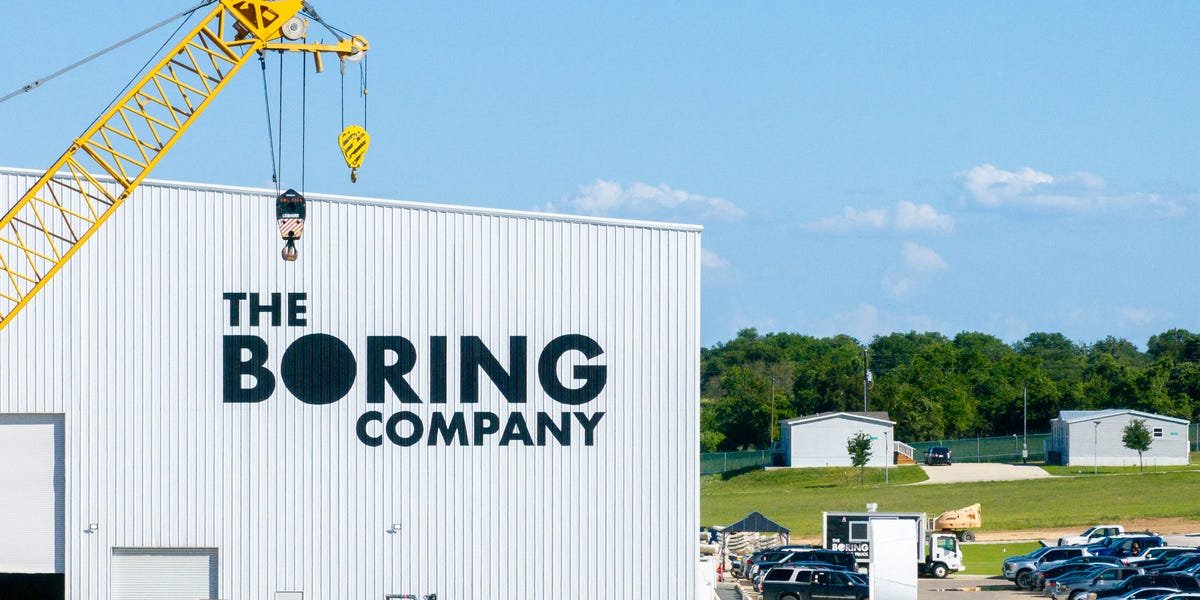
The Boring Company’s headquarters in Texas.
Brandon Bell/Getty Images
What would this tunnel mean for Panama, especially at a moment when the canal is caught up in broader geopolitical tensions?
Mizrachi: First of all, Panamanians, we’re really proud of the canal, its management, its history, but we seldom get to live it. So it’s like the rest of the world uses the canal. But you know, Panamanians, we don’t live the canal. You could go to the Miraflores Locks, and you go to the tourist center. You can maybe see a ship, but we don’t really live it.
So the vision here is you create a public space where you integrate families, tourists, and they can cross the canal themselves with an underground tunnel that’s 0.6 miles, the distance. It’s quite short, and I can only imagine it being almost an educational experience, where you can have screens, very thin screens, because the space is not that big, but thin screens that are showing the story, the history of how the canal was built, the biodiversity of Panama, and then stats on the canal, the impact that it has on world trade, etc. It started as an idea, but it’s shaping up. And I think it goes above my pay grade. I spoke to the president [of Panama] about this. This needs to be handled by a task force designated by the president in representation with the entire country.
Why do you think Panama City could beat out American cities for this project?
Mizrachi: Well, there’s one very unique thing about this. They don’t have a canal. The Boring Company has never bored underwater, much less crossing a canal. And I think it’s part of the value proposition to show themselves as engineers, how far they can go with their mindset, with their methodology and their ingenuity.
Also it’s a pedestrian tunnel. So it’s not a loop tunnel that is managed and operated by the Boring Company. So if you think of Vegas, they operate the Loop itself. So, here, it’s a lot more hands off. They build a tunnel, and they don’t have to have an active operation.
The Boring Company-built tunnel at the Las Vegas Convention Center.
AaronP/Bauer-Griffin/GC Images
You’ve drawn comparisons between your work and DOGE-style cost cutting in Washington. How do you describe your governing approach?
Mizrachi: I mean, honestly, I still consider myself an outsider. I am not subscribed to any political party, and I still very much employ the mindset of the tech entrepreneurial efficiency and try things before you scale things, which is uncommon in politics.
As soon as I came into office in July 2024, I realized people’s money was being wasted on a scale that I was just shocked to see. So we were able to reduce the size of City Hall personnel by 50% so it used to have 6,500 people. We reduced it to about 3,500 people. And by all counts, City Hall is operating faster and better with more impact, tangible, visible impact, with less people. And also, we reduced the budget by about 32%, so we did the biggest budget reduction in the history of the city as well.
This story originally ran in POLITICO’s West Wing Playbook and appears on Business Insider through the Axel Springer Global Reporters Network. The network publishes major stories from the Axel Springer network of publications, a worldwide group of news outlets that includes Business Insider.
Elon Musk’s X is promoting itself to potential advertisers with a new deck that underlines its commitment to brand safety, according to the leaked deck shared with Business Insider.
It comes after the AI chatbot shared “deepfake” sexualized images of women and children — a practice it stopped in late January after a backlash. The company said it would no longer generate AI images of real people in sexualized clothing.
The deck shows X is also promoting its use of “blocklists.” A blocklist is a list of sites or accounts that advertisers explicitly prevent their ads from appearing on. In the past, Musk’s X has taken legal action against advertisers who have used such tools to safeguard their ad placements.
X touts its use of Grok to make the platform safe for advertisers.
X
In the deck, X said it had achieved a nearly 100% perfect “brand safe” or suitable scores using Grok, as measured by tech companies IAS and DoubleVerify.
It mentions ways it uses Grok to review posts and users’ profiles for brand suitability. For instance, if a user regularly posts about sensitive topics, the system can block ads from appearing alongside that user. X said it can target up to 4,000 keywords and 2,000 author handles this way.
Every time Lucia publishes a story, you’ll get an alert straight to your inbox!
Stay connected to Lucia and get more of their work as it publishes.
The deck also promotes X as a place for brands to manage crises in real time.
X didn’t comment on the deck when reached by Business Insider.
X says its blocklists stop ads from appearing on up to 50 specific publishers per ad group.
X
The deck was shared at an event for clients and agencies on February 26. The 2026 Brand Suitability Webinar was billed as “empowering brands with new tools for safety & reach on X.”
It’s unclear if X’s newest charm offense will sway advertisers.
X is one of the smallest social media platforms by ad spending, with EMARKETER estimating it has less than 1% of worldwide digital ad revenue. It has an outsized influence because of its use by public figures and as a news channel.
Since Elon Musk bought X, formerly known as Twitter, in 2022, its relationship with advertisers has been fraught, with Musk publicly criticizing advertisers that cut or limited advertising on the platform.
The deck details what X says it’s done to be brand-safe.
X
Advertisers left en masse after Musk’s acquisition. EMARKETER estimated its revenue would reach $2.2 billion in 2026, below its pre-acquisition level of $4.5 billion.
In 2023, Musk lashed out at advertisers, using an expletive on stage at an event directed toward those who had left.
And X is suing an advertiser trade group, alleging that its members conspired to boycott the platform in contravention of antitrust laws. The group denied it violated antitrust laws. The case is pending, with the last filing occurring on February 19.
X has also been criticized for loosening moderation and account-verification rules and for reinstating some banned accounts of provocative figures.
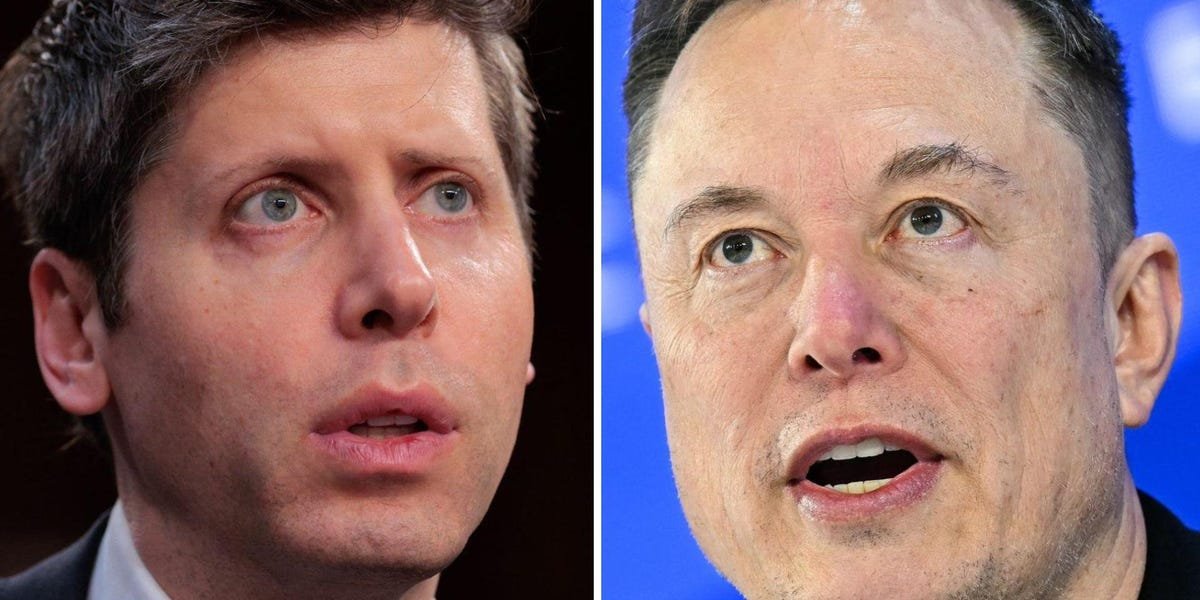
SpaceX CEO Elon Musk and OpenAI CEO Sam Altman famously don’t agree on much.
The latest point of contention: data centers in space. Musk has made it a priority. Altman thinks it’s a fantasy, at least for now.
“I honestly think the idea with the current landscape of putting data centers in space is ridiculous,” Altman said during a live interview with local media in New Delhi on Friday, causing audience members to laugh.
Altman said that orbital data centers could “make sense someday,” but factors like launch costs and the difficulty of repairing a computer chip in space remain overwhelming obstacles.
“We are not there yet,” Altman added. “There will come a time. Space is great for a lot of things. Orbital data centers are not something that’s going to matter at scale this decade.”
Musk would almost certainly disagree.
While many Big Tech and AI companies are spending billions on data center construction on Earth, Musk’s eyes are on the stars, per usual. Orbital data centers are his latest ambition, as he mentioned in an all-hands xAI meeting in December.
In February, SpaceX said its goal is to launch a “constellation of a million satellites that operate as orbital data centers.” The company has already begun hiring engineers to make that happen.
During an all-hands meeting with xAI employees this month, Musk said SpaceX’s acquisition of xAI will allow them to deploy the orbital data centers faster.
Despite Altman’s skepticism, other tech leaders are also racing to place data centers in space. Google’s Project Suncatcher, unveiled in November 2025, aims to do just that. Google CEO Sundar Pichai told Fox News Sunday the company could start placing data centers — powered by the sun — in space as early as 2027.
Tech and AI companies rely on data centers to power their products, like large language models and chatbots. Those data centers, however, can deplete water resources, strain power grids, increase pollution, and decrease the overall quality of life.
An investigation by Business Insider published last year found that over 1,200 data centers had been approved for construction across the US by the end of 2024, nearly four times the number from 2010.
Now, proposed data center campuses in Texas, Oklahoma, and elsewhere are increasingly facing stiff resistance from local communities.
XAI just had its first all-hands meeting since its merger with SpaceX.
In the recorded event on Tuesday night, CEO Elon Musk outlined a new organizational structure — the main Grok product and Grok Voice, Grok Code, Grok Imagine, and the company’s Macrohard project. The all-hands was later posted on X on Wednesday.
From a plan to build a catapult, or mass driver, on the moon to soothing nerves after the restructuring, here are the main takeaways from xAI’s latest all-hands meeting.
1. Addressing the restructure
There are now only six members left of an original founding team of 12 at xAI, following two more exits earlier this week.
Musk addressed the new restructuring.
Every time Katherine publishes a story, you’ll get an alert straight to your inbox!
Stay connected to Katherine and get more of their work as it publishes.
“Because we’ve reached a certain scale, we’re organizing the company to be more effective at this scale,” said Musk. “Now, naturally, when this happens, there are some people who are better suited for the early stages of a company and less suited for the later stages.”
On Monday, Tony Wu announced his resignation in a post on X, writing that it was “time for my next chapter.” Less than 24 hours later, fellow cofounder Jimmy Ba followed suit, posting that Tuesday was his last day and thanking Musk for “bringing us together on this incredible journey.”
2. Shooting from the moon
Musk is promising the moon, literally.
“Ultimately, we see a path to maybe launching as much as a terawatt per year of compute from earth, but what if you want to go beyond a mere terawatt per year?” said Musk. “In order to do that, you have to go to the moon.”
His goal is to launch AI sattelites from the moon, he told employees.
“I can’t imagine anything more epic than a mass driver on the moon and a self-sustaining city on the moon, and then going beyond the moon to Mars, going throughout our solar system, and ultimately being out there among the stars and visiting all these star systems,” Musk added. “Maybe we’ll meet aliens.”
Google CEO Sundar Pichai is also researching the feasability of data centers in space, citing limited resources on Earth, such as water and electricity. Data centers are already facing backlash for driving up utility costs for average households.
3. Product updates and launches
A stand-alone app for XChat and a new transaction app called X Money are coming in the next few months, according to Musk.
During the all-hands meeting, Musk said that users who only want to use the messaging function could use the standalone XChat app without visiting the X platform. He said the app will also be on desktop and can handle multi-user video calls.
“For XMoney, we actually had XMoney live in closed beta within the company, and we expect in the next month or two to go to a limited external beta and then to go worldwide to all X users,” said Musk.
“And this is really intended to be the place where all the money is, the central source of all monetary transactions,” Musk added. “So it’s really going to be a game changer.”
XAI cofounder Jimmy Ba said he left Elon Musk’s startup on Tuesday.
“It’s time to recalibrate my gradient on the big picture. 2026 is gonna be insane and likely the busiest (and most consequential) year for the future of our species,” Ba wrote on X.
Ba reported directly to Musk. He ran a large portion of the company until late last year, when several of his responsibilities were split between two other cofounders, Tony Wu and Guodong Zhang, people with knowledge of the move told Business Insider.
Ba also previously ran the team that oversaw more than a thousand AI tutors, according to an org chart from earlier last year. That role was given to Diego Pasini in September, Business Insider previously reported.
Ba is the second cofounder to depart the company in less than 48 hours. Wu announced he’d resigned from the AI startup on Monday night. Wu’s Slack account was deactivated shortly before the announcement, Business Insider previously reported.
Ahead of Wu’s departure, xAI underwent another restructuring, and several of his responsibilities were shifted under Zhang.
Musk launched the AI company in 2023 with 11 other founders. Six have now left the company — five of them within the last year.
In addition to his work at xAI, Ba is an assistant professor at the University of Toronto in the computer science department. He received his Ph.D. from the school while studying under Nobel Prize winner Geoffrey Hinton, often referred to as the “godfather of AI.”
Musk has said he built xAI as an alternative to what he’s called “woke” chatbots, like OpenAI’s ChatGPT. Over the past year, the company has become known for pushing the envelope. Last July, xAI launched a sexy digital avatar called “Ani,” and its Grok chatbot went on an antisemitic rant.
Most recently, xAI has come under fire after Grok began generating nonconsensual sexual images of real people in response to X user prompts. The backlash eventually prompted the company to restrict Grok’s image-generation features on X.
Last week, Musk announced that xAI would merge with his rocket company, SpaceX. The company is reportedly gearing up for an initial public offering this year that could value SpaceX at $1.5 trillion.
Ba and xAI did not immediately respond to a request for comment.
Do you work for xAI or have a tip? Contact this reporter via email at gkay@businessinsider.com or Signal at 248-894-6012. Use a personal email address, a nonwork device, and nonwork WiFi; here’s our guide to sharing information securely.
This story is available exclusively to Business Insider
subscribers. Become an Insider
and start reading now. Have an account? .
SpaceX ran its first Super Bowl ad on Sunday, promoting its Starlink internet service.
It’s the first time any of Elon Musk’s companies have run an ad at the Super Bowl.
Tesla and SpaceX have avoided traditional advertising in the past, but that is beginning to change.
SpaceX has made its Super Bowl debut ahead of a potential record-breaking IPO.
The rocket company ran its first Super Bowl ad for its Starlink satellite internet on Sunday, the first time any of Elon Musk’s companies have run an ad at the showpiece event.
The 30-second spot features audio from a speech by legendary science-fiction author Arthur C. Clarke, set to footage of SpaceX’s Falcon 9 and Starship rocket boosters returning to Earth.
It shows Starlink operating in a series of remote locations and touts the satellite internet service’s mission of “fast, affordable internet, available everywhere.”
The ad marks a departure for Musk’s companies, which have in the past shunned advertising in favor of using the billionaire’s outspoken public persona for publicity.
Tesla reportedly laid off its entire marketing team during widespread workforce cuts in 2024, while SpaceX has typically relied on eye-catching rocket tests, such as its Starship booster catch, to boost its public profile.
Both companies have started running advertising in recent years across a number of platforms, including Musk’s X, and Starlink has previously featured in Super Bowl ads run by partners such as T-Mobile.
Fast, affordable internet. Available all around the world!
Order in less than 2 minutes by visiting https://t.co/fUko3xSviJ or, if you live in the US, by calling 1-888-GO-STARLINK to get connected with the Starlink service plan that works best for you 🛰️🌎❤️ pic.twitter.com/D17EDQi9wL
SpaceX running its own stand-alone Super Bowl ad is a significant development, with 30-second ad slots costing between $8 million and $10 million on average this year, per broadcaster NBCUniversal.
It comes as SpaceX gears up for a public offering later this year that could value the rocket company at as much as $1.5 trillion.
Last week, Musk announced that SpaceX would merge with his AI startup xAI, in a move the world’s richest man said would help launch a network of solar-powered orbital data centers to train powerful AI models.
SpaceX’s recent success has been driven in large part by Starlink, which uses a constellation of more than 9,000 low-orbit satellites to provide wireless internet. In December, the company said Starlink has 9 million customers and is active in 155 countries.
“I’ve fallen prey to the pixie dust thing as well, where it’s like, ‘Oh, we’ll hire someone from Google or Apple, and they’ll be immediately successful,'” Musk told Stripe cofounder John Collison and tech Dwarkesh Patel during a 3-hour-long appearance on a special joint episode of their podcasts.
It’s why Tesla’s CEO doesn’t put his full faith in a candidate’s résumé.
“Generally, what I tell people—I tell myself, I guess, aspirationally—is, don’t look at the résumé. Just believe your interaction. The résumé may seem very impressive, and it’s like, ‘Wow, the résumé looks good.’ But if the conversation after 20 minutes is not “Wow,” you should believe the conversation, not the paper,” he said.
He said he’s made other mistakes, too. “My batting average is still not perfect, but it’s very high,” he said. That includes the times he’s discounted certain personality traits.
Every time Brent D. Griffiths publishes a story, you’ll get an alert straight to your inbox!
Stay connected to Brent D. Griffiths and get more of their work as it publishes.
“I think it’s a good idea to hire for talent and drive and trustworthiness,” he said. “And I think goodness of heart is important. I underweighted that at one point. So, are they a good person? Trustworthy? Smart and talented and hard working? If so, you can add domain knowledge.”
Musk said that it takes a lot to truly impress him.
“The things I ask for are bullet points for evidence of exceptional ability.”
The examples “can be pretty off the wall,” but he’s looking for evidence of something truly great.
“If somebody can cite even one thing, but let’s say three things, where you go, ‘Wow, wow, wow,’ then that’s a good sign,” he said.
Hiring is just part of the battle.
When companies like Tesla are successful, Musk said, their competitors take notice and do everything they can to poach top talent.
“Tesla had a further challenge where when Tesla had very successful periods, we would be relentlessly recruited from,” he said. “Like, relentlessly.”
Musk said when Apple had its own electric car program, recruiters for the tech giant were “carpet bombing” Tesla employees to the point that some engineers just unplugged their phones. (In 2024, Apple reportedly abandoned its secretive car program.)
“Their opening offer without any interview would be like double the compensation at Tesla. So we had a bit of the ‘Tesla pixie dust’ thing where it’s like, ‘Oh, if you hire a Tesla executive, suddenly everything’s going to be successful,'” he said.
Some former employees have complained about Musk’s management style. During the interview, the Tesla CEO joked about his reputation as a micro manager, insisting that it be called “Nano management, please.” Musk said that, in reality, he now doesn’t have enough time to oversee every aspect of his sprawling empire.
Ultimately, though, Musk said he just wants one thing.
“If somebody gets things done, I love them, and if they don’t, I hate them,” he said. “So it’s pretty straightforward. It’s not like some idiosyncratic thing.”