
Jake Epstein

A US Navy oiler ran hard aground after its captain urged a last-minute shortcut: ‘Let’s try to shoot the gap’

“Let’s try to shoot the gap there.”

Just after noon in the northern Arabian Sea, the captain of a US Navy fuel ship gave the order to take a shortcut through risky waters rather than take a longer, safer route to their destination.

Two hours later, the 677-foot replenishment oiler USNS Big Horn struck the sea floor at high speed, shaking violently as the vessel ran aground. Music was audible on the bridge as sailors missed key navigational warnings.

The Navy command investigation obtained by Business Insider said that the September 2024 incident, initially characterized as an allision, was caused by “a series of poor decisions, failure to follow procedure, application of open water navigation to restricted waters, and failure to exhibit proper risk calculation.”

The ship suffered more than $20 million in damage.

The Navy’s investigation, the details of which have not previously been made public, reveals that the captain and his watchstanders failed to prepare for the shortcut and failed to monitor navigation alerts that could have averted disaster at the last minute.

“The grounding was preventable,” investigators wrote.

The investigation recommended administrative or disciplinary action against Big Horn’s captain and several officers. Military Sealift Command said that both the captain and the ship’s navigator are still employed. It is unclear if they will be permitted to hold their positions again.

“Pursuant to the investigation, all administrative and disciplinary matters were submitted for appropriate review,” command spokesperson Jillian Morris said in response to Business Insider’s query on accountability and discipline. “However, to protect employee privacy, we do not comment on, nor share the details of, the outcome of those matters.”


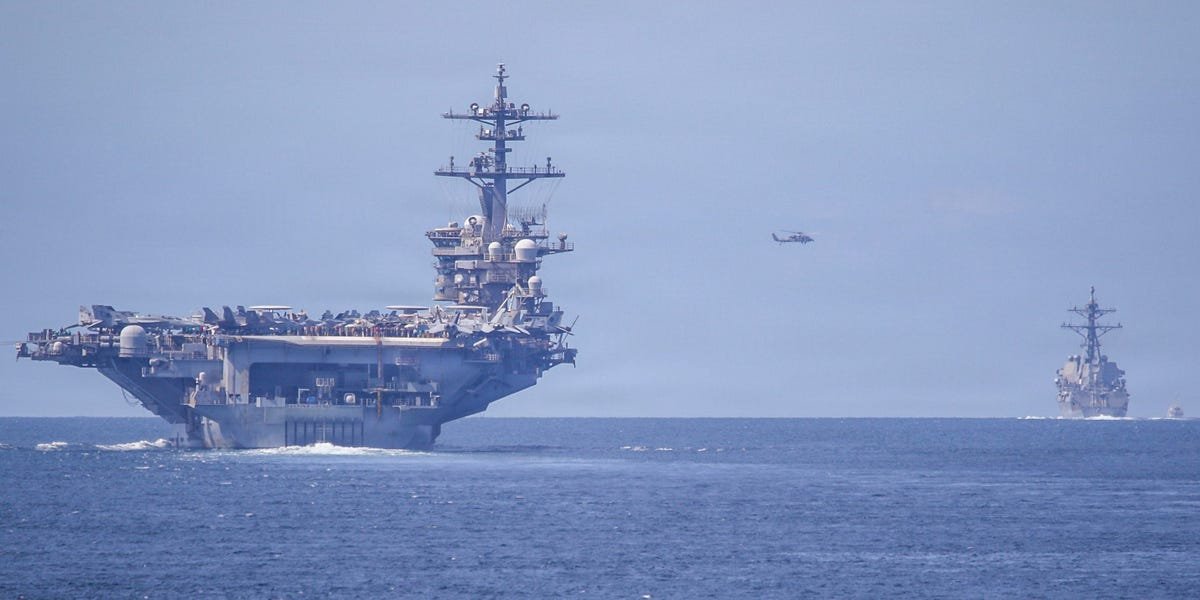
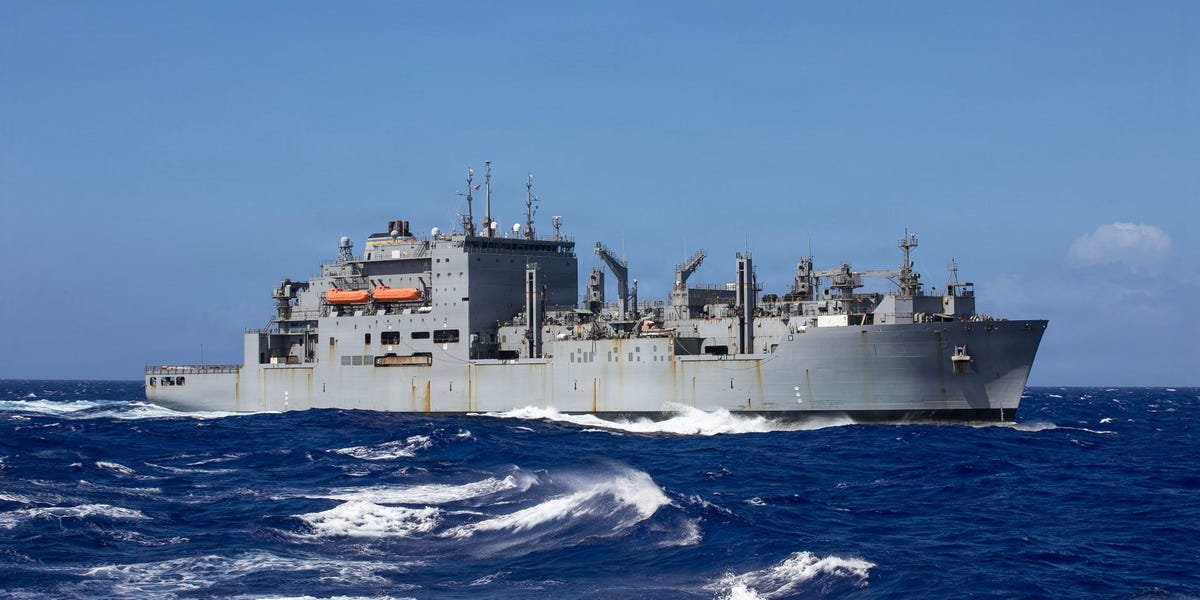
The Henry J. Kaiser-class fleet replenishment oiler USNS Big Horn (T-AO 198) sails alongside the Nimitz-class aircraft carrier USS Abraham Lincoln (CVN 72) during a replenishment-at-sea.

The Big Horn during a replenishment-at-sea with the aircraft carrier USS Abraham Lincoln.

US Navy photo


Making a risky choice

Shortly after 12 p.m. local time on September 23, the Big Horn was wrapping up its final replenishment-at-sea with ships from the Abraham Lincoln Carrier Strike Group.

The next move for the Henry J. Kaiser-class replenishment oiler, which refuels warships at sea, was to sail from the northern Arabian Sea to the Duqm port in Oman for a scheduled visit.

The new navigator was drafting route options for the captain to get the Big Horn to a pickup point, where the oiler would embark a harbor pilot to guide the ship into port.

During a conversation with another officer, the transcript of which is included in the Navy’s investigation, the navigator expressed concerns about running aground on a particular route and said they preferred an option through deeper water.

The navigator told the officer that they could take the riskier shortcut and save time. “I’m just scared of right here,” they said, “scared of these shallow points.” The officer said they should present the shortcut to the captain.

The officer said “ask the captain and say, ‘This route is about 10 miles shorter but goes through this. Do you feel comfortable?'”

One route, known as Duqm A, was shorter but ran through known shoal areas. Duqm B was a “deep water” path that added several miles to the journey to the rendezvous point.

Just before 12:30 p.m., with the last replenishment-at-sea ongoing, the navigator asked the captain which route they preferred.

“Let’s try to shoot the gap there,” the captain told the navigator, selecting the Duqm A route, even though it threaded a gap between charted shoals dangerously close to the oiler’s draft. The navigator said that they had checked on the under keel clearance, to which the captain replied: “Rad.”

The Navy investigation into the grounding that followed that decision said that there was no indication that the captain reviewed a paper chart during the decision-making process.

‘Slow down, slow down, slow down’


The Arleigh Burke-class guided-missile destroyer USS Daniel Inouye (DDG 118), right, sails alongside the Henry J. Kaiser-class replenishment oiler USNS Big Horn (T-AO 198) as it transfers fuel to the Arleigh Burke-class guided-missile destroyer USS John S. McCain (DDG 56), July 20.

The Big Horn sails between Navy destroyers in July 2024.

US Navy photo


About an hour later, at roughly 1:30 p.m., the Big Horn completed its final replenishment-at-sea and set out for the pick-up point for the harbor pilot. Pilots are standard for most harbor approaches because they have the local knowledge to help ship captains navigate through tight channels.

Duqm A took the Big Horn through a gap between two charted areas of shoal — or shallow — water known as the San Carlos Banks that were not deep enough for the oiler.

Navy investigators wrote that “attention to detail and consideration of the risks should have negated Duqm A as an option.”

The Big Horn sailed through the San Carlos Banks at 17 to 18 knots. In transit, the ship’s system triggered safety alarms. They were silenced but had visual cues; there is no indication that they were acknowledged.

Meanwhile, the ship’s fathometer — which measures water depth under the hull — showed the water growing progressively shallower.

At 2:12 p.m., the vessel began vibrating as it struck the sea floor.

“Slow down, slow down, slow down,” the captain said.

“We must have hit a shallow spot somewhere, but there is nothing on the chart,” he said moments later as the ship came to a full stop.

Crew members reported fuel leaks on both main engines.

“We must have hit a shallow spot. We must have hit a sand bank,” the captain said.


The Arleigh Burke-class guided-missile destroyer USS Chung-Hoon (DDG 93) conducts an emergency breakaway drill with the Henry J. Kaiser-class fleet replenishment oiler USNS Big Horn (T-AO 198). Chung-Hoon, part of the Nimitz Carrier Strike Group, is in U.S. 7th Fleet conducting routine operations.

The grounding cost the Navy more than $20 million.

US Navy photo


The damaged oiler was anchored and later towed into Duqm.

A ‘preventable’ blunder

Investigators found that the members of the bridge team appeared “unreasonably” focused on meeting a 3 p.m. harbor pilot pick-up time, which contributed to the decision to take the risky shortcut at high speeds.

“We gotta haul ass,” the navigator told an officer at one point. In a separate conversation with the captain, they said they believed they could make it, if only slightly behind schedule.

“If we cut corners we’ll get there,” the captain said, per the investigation.

“Yes sir!” the navigator replied. That was minutes before the ship ran aground.

Although the captain later said he did not believe he was operating in restricted waters and was unaware of any safety hazards or navigational concerns, investigators concluded that the Duqm A track met the definition of restricted waters under Navy policy, meaning a formal navigation brief should have been conducted before entering the area.

“However, no members of the bridge team, including the Captain and Navigator, seemed to realize they were steaming into restricted waters,” the investigation said. “No consideration was given for a required navigation brief, a more detailed plan, or thorough review of the proposed track prior to steaming through.”

The command investigation also found that, when the Big Horn ran aground, the ship was operating with two separate electronic navigation chart databases, and there was some confusion among the officers about which one was in use at the time. Safety contours and the shoal area were not clearly displayed.

Records indicate there was music was playing on the bridge up until the grounding. Tug boats brought the Big Horn into port the following day.

The grounding caused extensive damage to the Big Horn’s hull, internal support structures, port propeller, and port rudder. According to Navy cost breakdowns, expenses included roughly $7.5 million for towing, $8.6 million for services in Oman, $1.9 million for fuel offloading, and $2.4 million in additional costs in the US — totaling more than $20 million.



Source link

Kelsey Baker, Military and Defense Reporting Fellow

The US Navy sacked a destroyer captain after a ship collision. The incident spotlighted the risks of resupplies at sea.

The US Navy abruptly fired the commander of guided-missile destroyer USS Truxtun after his ship collided with a logistics vessel during a resupply operation at sea earlier this month.

Rear Adm. Carlos Sardiello, who leads US Naval Forces Southern Command and 4th Fleet, relieved Cmdr. James Koffi on Sunday.

The ship collision that resulted in a “loss of confidence” and cost Koffi his command occurred during a replenishment-at-sea operation involving USNS Supply, a fast combat support ship, the Navy said in a statement on the relief.

The cause of the ship collision remains under investigation but highlights the risks of at-sea logistics and the challenges of keeping naval forces on the move.

Replenishments-at-sea are resupplies in which one ship sails closely alongside another to transfer supplies such as fuel or ammunition. These missions are routine operations that support global naval activity by allowing vessels to remain at sea, rather than forcing them to return to port.

At-sea replenishments carry risks, though, that can be exacerbated by a range of factors beyond proximity, such as sea state, crew fatigue, communication breakdowns, and equipment failures.

Two personnel sustained minor injuries during the February 11 collision between the Truxton and Supply.

Koffi, who took over the Truxtun just over a year ago, has been reassigned to Commander, Naval Surface Group Middle Atlantic. The Truxton, which had been deployed for under a month when the ship collision happened, is in port in Ponce, Puerto Rico. The Navy said the ship is undergoing repairs.

Cmdr. Taylor Auclair, who most recently served at US Fleet Forces Command, has been assigned to command the Truxtun.

“The Navy maintains the highest standards for leaders and holds them accountable when those standards are not met,” the Navy said in a press release.

A near-miss during a resupply in 2024 resulted in the relief of the commander of USS John S. McCain, another destroyer. And last year, the Navy relieved the captain of an aircraft carrier after it collided with a civilian merchant vessel during a deployment that experienced a string of major accidents, including the loss of three fighter jets, including one to a friendly-fire incident.

The Truxton deployed to Caribbean waters as part of President Donald Trump’s pressure campaign against Venezuela and narcotics trafficking. The administration sent nearly a dozen warships, among other combat assets, to the region late last year. The military launched strikes on suspected drug-smuggling boats, seized oil tankers, and carried out a January raid inside Venezuela that resulted in the capture of its former president, Nicolás Maduro.

More recently, roughly a dozen Navy warships have been directed to the Middle East as the administration has shifted focus to a ballooning buildup in the region. As of last week, the Truxton is now one of just five ships remaining in the Caribbean


Source link

The-US-Navy-is-pulling-more-and-more-warships-into.jpeg

The US Navy is pulling more and more warships into its Middle East force buildup

The US military added another warship to its large Middle East buildup in recent days, and a second carrier strike group is on its way, bringing additional fighter jets and missiles toward the region.

The large-scale deployment of American forces to the Middle East has escalated significantly this month as the Trump administration pressures Iran to strike a deal that would limit its nuclear and military capabilities.

As the US Navy’s Middle East force presence has grown, its footprint in the Caribbean Sea — once the site of a substantial show of force ahead of US military action against Venezuela and its former president Nicolás Maduro — has shrunk dramatically.

There are 10 warships and an aircraft carrier positioned in the Central Command area of responsibility, the Middle East, and two more vessels situated on the outskirts of the region, according to a defense official.

Middle East

Much of the US naval force in the Middle East was operating in the Arabian Sea as of Tuesday. That includes the aircraft carrier USS Abraham Lincoln and its strike group — the guided-missile destroyers USS Spruance, USS Frank E. Petersen Jr., and USS Michael Murphy.


An F/A-18E Super Hornet, attached to Strike Fighter Squadron (VFA) 14, prepares to make an arrested landing on the flight deck of Nimitz-class aircraft carrier USS Abraham Lincoln (CVN 72) on Jan. 9, 2026.

The carrier Abraham Lincoln has dozens of embarked fighter jets.

US Navy photo by Mass Communication Specialist Seaman Samuel Evarts


The Lincoln has dozens of embarked aircraft, including fighters, electronic attack jets, and early warning planes. The destroyers escorting the carrier are equipped with Tomahawk cruise missiles. Among its air wing are F-35 stealth fighters.

Three additional destroyers — USS Mitscher, USS McFaul, and USS Pinckney — are also in the Arabian Sea. Pinckney arrived in the region in the past couple of days, the defense official said.

Another destroyer, USS Delbert D. Black, is in the Red Sea. And three littoral combat ships — USS Santa Barbara, USS Tulsa, and USS Canberra — are in the Arabian Gulf. These warships are designed for near-shore operations.

European waters

USS Roosevelt and USS Bulkeley, two destroyers capable of ballistic missile defense, are operating in the Eastern Mediterranean Sea, which is part of US Naval Forces Europe and Africa’s area of responsibility.

The defense official said the aircraft carrier USS Gerald R. Ford and its strike group — destroyers USS Mahan, USS Winston S. Churchill, and USS Bainbridge — are also operating under that command, which covers the eastern half of the Atlantic Ocean.


The world's largest aircraft carrier, Ford-class aircraft carrier USS Gerald R. Ford (CVN 78), transits the Caribbean Sea during Carrier Air Wing 8's aerial change of command ceremony, Jan. 19, 2026.

The Ford is the Navy’s largest and most advanced carrier.

US Navy photo


The Ford carrier strike group had been operating in the Caribbean for months. However, earlier this month, it was reported that the Navy’s newest and most advanced aircraft carrier was being sent to the Middle East.

As of Wednesday, the aircraft carrier was operating off the coast of Morocco near the Strait of Gibraltar, ship-tracking data shows.

Two additional destroyers — USS Thomas Hudner and USS Stockdale — that were previously in the Caribbean are now in the US Naval Forces Europe and Africa area of responsibility as well.

Caribbean

The departure of Ford and the five destroyers has diminished the Navy’s presence in the Caribbean, which falls under the Southern Command area of responsibility.

The US armed forces initially positioned a large number of warships in the waters near Venezuela last year as part of President Donald Trump’s effort to pressure Maduro. A few weeks after his capture, a dozen vessels were still present in the region.


Ticonderoga-class guided-missile cruiser USS Gettysburg prepares to steam alongside Supply-class fast combat support ship USNS Supply and San Antonio-class amphibious transport dock USS Fort Lauderdale (LPD 28), in the Caribbean Sea, January 29, 2026.

The Navy had a dozen warships deployed to the Caribbean earlier this year.

US Navy photo


Now, only five remain, the defense official said. Those include the cruiser USS Lake Erie, the destroyer USS Truxtun, the amphibious assault ship USS Iwo Jima, and the amphibious transport dock ships USS Fort Lauderdale and USS San Antonio.

Eyes on Iran

The US and Iran held indirect talks earlier in the week, and officials hinted that additional dialogue could be on the horizon.

However, US military assets — including aircraft such as fighter jets and refueling tankers — are still moving into and toward the Middle East, giving Trump plenty of options to strike Iran for a second time, which he has threatened. The US military bombed Iran’s nuclear sites last year as part of Operation Midnight Hammer.

Iran, meanwhile, conducted military exercises in the strategic Strait of Hormuz this week, and Tehran’s leadership warned the US warships deployed to the region that it is capable of sinking them in the event of a fight.


Source link

I-tried-on-coats-at-Gap-Banana-Republic-and-Old.jpeg

I tried on coats at Gap, Banana Republic, and Old Navy. The experience reminded me that a great piece is worth investing in.

  • I tried on similar black peacoats at Gap, Banana Republic, and Old Navy.
  • I compared each winter coat based on the design, fabric, price, and overall quality.
  • I wasn’t a fan of how the Gap coat felt, but really loved the option from Banana Republic.

I recently moved from Southern California to the more chilly and gloomy Bay Area. In other words, I was in dire need of a good winter coat.

So, I turned to three trusted Gap Inc. retailers — Gap, Banana Republic, and Old Navy — to find a one that’ll keep me warm throughout this season and beyond.

I compared similar styles based on the design, fabric, price, and overall quality. Here’s how it went.

I started my day with a trip to Gap.

I had no trouble finding what I was looking for at Gap.

Chloe Caldwell

I started my search for a stylish and well-constructed peacoat at Gap.

When I walked in, I appreciated that the store was easy to navigate and neatly organized. Plus, I found the coat I was looking for almost immediately.

However, I wasn’t blown away by this option.


Chloe wears a long black peacoat in a fitting room.

I thought this coat looked a bit like a bathrobe.

Chloe Caldwell

I tried on the wool-blend wrap coat and could tell right away that it offered a nice shape and structured fit that would fit easily over layers.

I liked the thick-notch lapels, and thought the material (52% recycled wool, 40% recycled polyester, 8% other) felt warm without being overly bulky. However, the wool blend felt a bit itchy, especially around the neck area where it directly touched my skin.

Plus, there were no buttons and the pockets were hidden, making it look somewhat like a bathrobe.

Although it was a good, basic option, I wanted something with a little more flair. I also had a hard time justifying the price of $248 for a coat that was 40% polyester.

Next, I went to Banana Republic.


Coats, jeans, and shirts hanging at Banana Republic.

The Banana Republic store I visited was well-organized.

Chloe Caldwell

After striking out at Gap, I decided to try Banana Republic for another option. The store was neatly organized, and I was able to locate a black peacoat easily.

This coat was pricey, but I think it would be worth the investment.


Chloe wears a long black peacoat in a fitting room.

The coat was made of a blend of wool and cashmere.

Chloe Caldwell

When I saw the $550 price tag on the Italian-wool cashmere wrap coat, I thought, “There is absolutely no way I would pay that much for a coat.” But after trying it on, I reconsidered.

I could immediately tell that the quality of the material (made with 91% wool, 6% cashmere, and 3% other materials) was thick and warm, with no polyester in sight. The inside lining was also silky and smooth, and the overall fabric felt soft and comfortable without itching.

I also loved the overall design of this coat. The pointed collar and large pockets added chic touches that were flattering yet functional.

This try-on reminded me that it’s important to invest in pieces that will actually last a long time. I know this coat is something I would wear every winter for years.

I made one last stop at Old Navy before heading home.


Racks of coats, pants, and dresses on display at Old Navy.

It took me a few minutes to find a peacoat at Old Navy.

Chloe Caldwell

I’m a big fan of Old Navy because it offers both basic and trending styles for an approachable price.

However, my local Old Navy was less organized than the other stores I visited, so it took me a bit longer to find a black peacoat. Thankfully, I was able to find one and brought it to the fitting room.

I didn’t love how the Old Navy option felt.


Chloe wears a long black peacoat in a fitting room.

I wish this coat had a waist tie to add some shape to it.

Chloe Caldwell

The first thing I noticed when trying on the oversized twill overcoat is that it didn’t have a waist tie, which, to me, feels like a must for adding shape and style to any peacoat.

The coat was also made of 100% recycled polyester, so I’m not sure how warm it would actually keep me during winter. The fabric also felt less flexible than the others I tried on, leaving less room for layers underneath.

I did like the overall style, though — it had a spread lapel and the buttons featured an eye-catching texture.

This was my least favorite coat out of the three, but for $90, I think it’s a solid option for anyone shopping on a budget.

I’d be most likely to buy the coat from Banana Republic.


A composite image of Chloe wearing three different long black peacoats.

The Banana Republic coat checked all my boxes.

Chloe Caldwell

Overall, the Banana Republic coat impressed me most, thanks to its durable fabric blend, comfortable fit, and elegant design.

This shopping day reminded me that high-quality staple pieces are worth investing in.


Source link

Another-South-Korean-shipbuilder-just-won-a-US-Navy-maintenance.jpeg

Another South Korean shipbuilder just won a US Navy maintenance job as the country’s yards scoop up more American work

South Korean shipyards are steadily becoming an integral part of US Navy maintenance work. Following in the footsteps of some of the nation’s shipbuilding giants, another local shipbuilder just secured a new contract.

HJ Shipbuilding and Construction announced on Monday that it won a deal to service a US Navy vessel — the Lewis and Clark-class dry cargo ship USNS Amelia Earhart — as Washington increasingly turns to South Korea’s impressive commercial shipbuilding sector to support strained American yards and keep the fleet afloat.

The maintenance contract is with the Navy’s Naval Supply System Command and Military Sealift Command.

The work on the Amelia Earhart — which will include an inspection of the ship’s hull and systems, follow-up repairs and replacements, and a paint job — will begin in January 2026 at the Yeongdo Shipyard in Busan. The vessel will be delivered to the Navy by the end of March.

The Amelia Earhart is one of the Navy’s supply ships that refuels and resupplies aircraft carriers and warships at sea. Its overhaul adds to a growing list of US Navy work going to South Korean companies.


A grey vessel sails in the dark blue ocean next to an aircraft carrier with a fighter jet sitting on it. The sky is blue in the background.

South Korea is investing billions in US shipbuilding initiatives, including upgrades to shipyards and equipment.

Official US Navy photo


Major South Korean shipbuilder Hanwha Ocean finished repairs on the USNS Wally Schirra, another Lewis and Clark-class vessel, in March, marking a first for a South Korean shipyard. And then HD Hyundai Heavy Industries, one of the country’s largest shipbuilders, received a maintenance contract for another ship in the class, the USNS Alan Shepard.

HJ Shipbuilding and Construction said it’s the first midsize shipbuilder in South Korea to win a maintenance contract with the US Navy.

While smaller voyage repairs to US Navy ships occur regularly at allied yards, the continued contract wins for South Korean shipyards highlight the growing shipbuilding collaboration between Washington and Seoul.

That partnership, which has included business deals for South Korean companies abroad as well as investments in American yards, is part of a broader willingness by the Trump administration to rely on its Pacific ally amid efforts to fix US shipbuilding issues.

Billions of dollars are being put into modernizing US shipyards and addressing workforce and training issues as South Korea’s government calls its investments a plan to “Make American Shipbuilding Great Again.” The US is also turning to Japan, another large shipbuilder, for assistance.

South Korea and Japan are the second and third largest shipbuilders in the world, respectively, and Navy leadership is increasingly recognizing their value in this sector. China, however, dominates the shipbuilding industry, relying heavily on its dual-use yards, workforce, and equipment to make military and commercial vessels at a rapid pace.


Source link