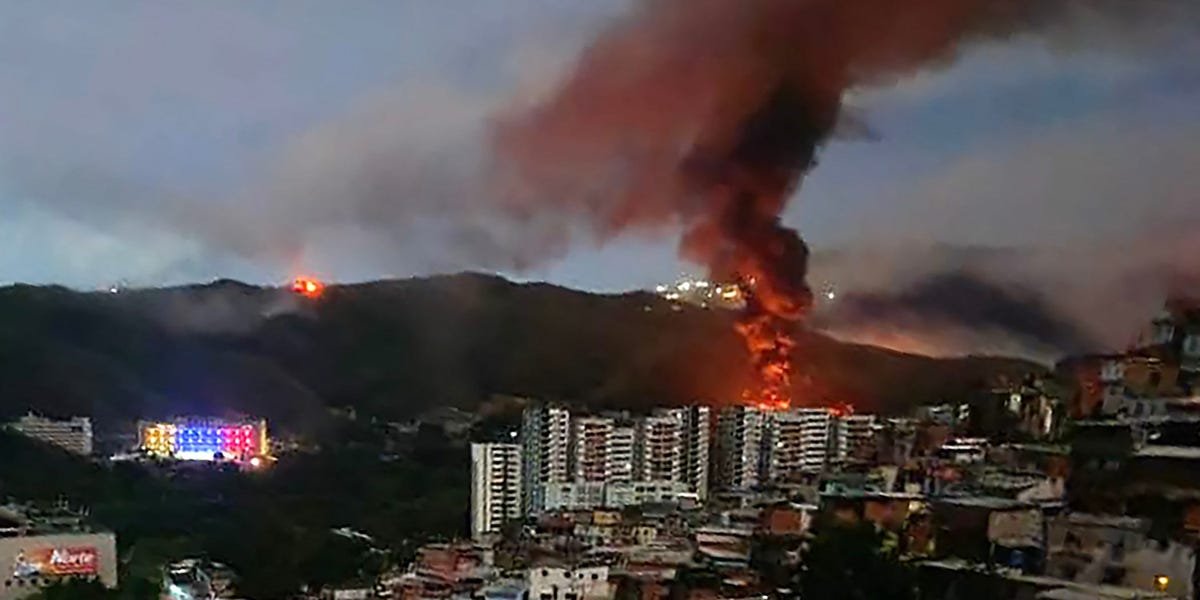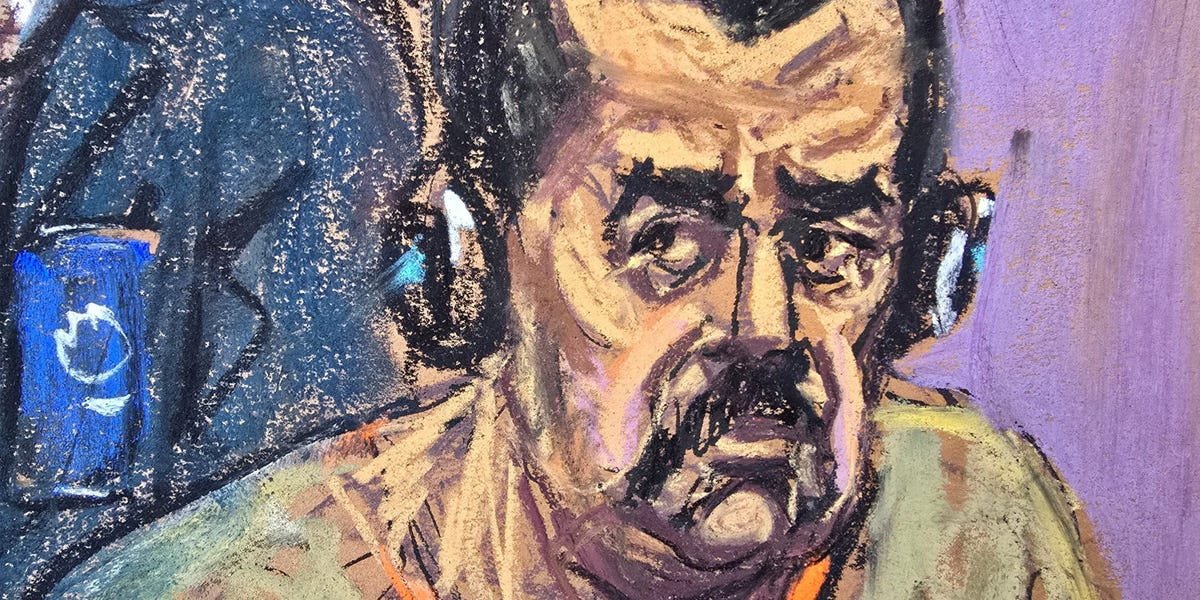
Eighty-two days after US military forces seized him and his wife from Caracas, Nicolás Maduro, the toppled president of Venezuela, walks into his 26th-floor Manhattan courtroom for the second time.
He has a long road to his trial.
The US Justice Department’s narco-terrorism and weapons charges against Maduro and his wife, Cilia Flores, still do not have a trial date. His attorney has said he expects “voluminous” motions challenging his seizure and detention.
The criminal case hasn’t gotten to those issues yet.
Thursday’s hearing focuses on how those lawyers will get paid.
The Venezuelan government has said it would pay for Maduro’s and Flores’s legal fees. But the payments are being held up by the US Treasury Department, which has not issued a waiver on the sanctions against Venezuela. Kyle Wirshba, the lead prosecutor in the case, said the payments were withheld because of “national security and foreign policy” reasons.
The issue appears to annoy US District Judge Alvin Hellerstein, the 92-year-old judge overseeing the criminal case.
Peering through his large, round glasses that magnified his cheeks, he asks Wirshba how — when the Trump administration was doing business with Venezuela — Maduro and his wife could possibly present a “national security” threat.
“The defendant is here. Flores is here,” Hellerstein says. “They present no national security threat.”
Since their arrest, Maduro and Flores have been held in the Metropolitan Detention Center, the infamous Brooklyn jail that has also been the temporary home of Sean “Diddy” Combs, Luigi Mangione, Sam Bankman-Fried, and Jeffrey Epstein’s associate Ghislaine Maxwell.
Thursday’s court hearing, across the East River, in Manhattan, begins 40 minutes late. Across the street from the courthouse, groups of pro-Maduro and anti-Maduro protesters shout at each other in front of a playground.
When Maduro walks into the courtroom, he has a bright, beaming smile on his face.
“Good morning!” he booms, wearing a jail outfit of a drab khaki smock over a bright orange shirt.
He shakes hands with his lead attorney, Barry Pollack, best known for representing Julian Assange. Then he turns to the journalists sitting on dark-wood benches in the audience and wishes them “good morning” again.
Flores, wearing the same outfit, plus a brown scrunchie holding back her blonde hair, says nothing.
When they sit at the defense table, they wear big, black headphones through which they hear the court proceedings translated into Spanish for them.
During the hearing, Flores’s attorney Mark Donnelly says “First Lady Maduro” needed an echocardiogram to evaluate an issue with her heart.
“There are no titles to be used in this court,” the judge says, before telling the lawyer to keep him informed if Flores didn’t get the treatment she needed in jail.
Venezuela’s now-former first couple ended up in New York City to face an indictment brought by the Department of Justice.
Prosecutors accuse them of participating in a decadeslong drug-trafficking conspiracy involving Colombian terrorist organizations, which enriched themselves and their family at the expense of Venezuelan citizens. The charges include narco-terrorism, cocaine importation, and machine gun possession.
In January, after US forces captured the couple from a military fort in Caracas where they were staying, President Donald Trump called Maduro an “illegitimate dictator” responsible for funneling “colossal amounts of deadly illicit drugs” into the United States.
The President said that he and his wife “now face American justice” for their “campaign of deadly narco-terrorism.”
From the White House on Thursday, Trump called Maduro a “very dangerous man who has killed a lot of people” and said the charges against him were for just “a fraction” of his conduct — with more to come.
“Other cases are going to be brought, as you probably know,” he said.
But today is not yet about the core of the matter.
Wirshba, the prosecutor, argues that it would be inappropriate for OFAC, the part of the Treasury Department that grants licenses for sanctions waivers, to allow Maduro and Flores to access the wealth of the nation they “plundered.”
According to Wirshba, Maduro should have anticipated he could not have gotten the money from Venezuela to the US due to the sanctions, leading Hellerstein to remark upon the oddness of the Venezuelan president being captured from his nation and brought to New York City.
“He didn’t think he would be in this court?” The judge asks with a sarcastic tone.
Hellerstein — who has overseen cases involving financial scammers like Charlie Javice, former Trump lawyer Michael Cohen, and the 9/11 terror attacks in his 28 years on the bench — calls Maduro’s case “unique.”
While there have been other cases that addressed whether criminal defendants could use potentially “tainted” funds to pay their lawyers, all of those cases involved money that was already held in a US bank. In any case, Hellerstein says, Venezuela had already agreed to pay for the legal defense.
When a criminal defendant can’t afford their own lawyer, a judge can appoint one for them. But Hellerstein says the “investigative responsibilities” that would be required to defend the complex narco-terrorism case would overwhelm the resources of a publicly-funded lawyer.
But it remains unclear what Hellerstein could do about it. Forcing OFAC to issue a waiver would require a separate lawsuit brought in a different court, in Washington, DC, Wirshba says.
The only remedy, Pollack says, was to “dismiss the case” and let Maduro walk free.
Hellerstein initially pours cold water on the idea.
“I’m not going to dismiss the case,” he says.
But if OFAC didn’t soon change its position, he would consider it.
“I think it is such a serious step — I’m not going to take it now,” Hellerstein said.
After one and a half hours, Hellerstein decides he would hold another hearing, at an unspecified later date, to determine what steps he should take.
When Maduro leaves the courtroom, he only glances back at the audience behind him. He shakes the hands of his attorneys and walks stiffly toward the door. Flores kisses her lawyer, Donnelly, on the cheek.
Outside, the protesters are leaving. As a man passes by the courthouse, he yells: “Viva Maduro!”