
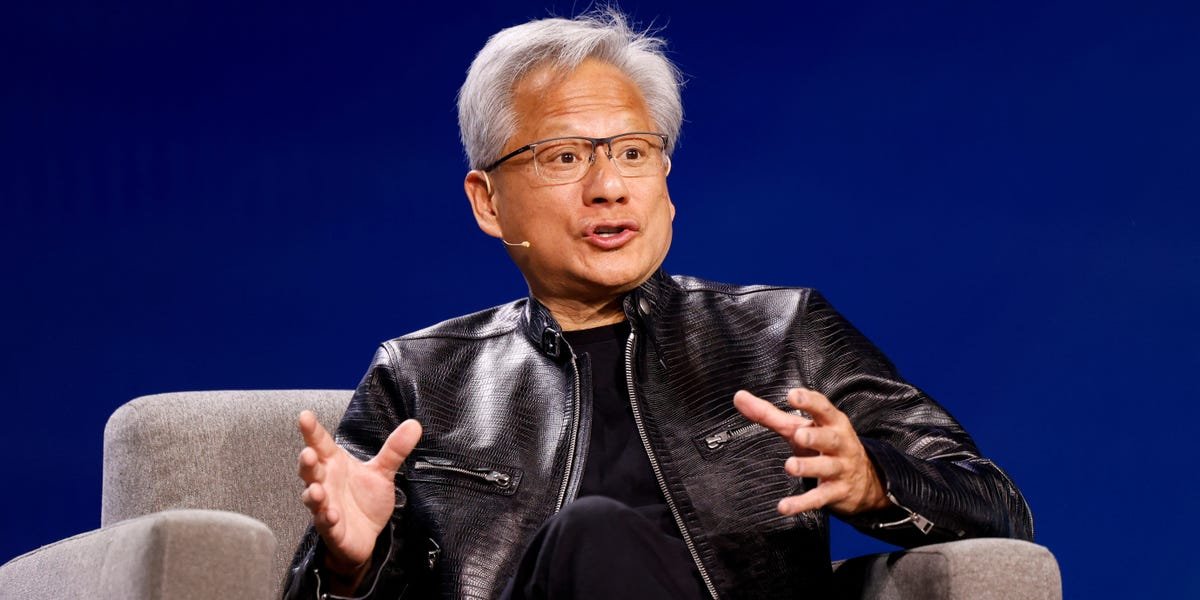
4-burning-questions-hanging-over-Nvidias-GTC-summit-next-week.jpeg

4 burning questions hanging over Nvidia’s GTC summit next week

Nvidia’s GTC conference has become its biggest stage for outlining the future of AI.

The annual event increasingly attracts a broader crowd. At past gatherings, with Denny’s pop-ups and Taiwan-inspired night markets, Nvidia CEO Jensen Huang has unveiled sweeping product roadmaps for its GPUs and other AI chips. It’s also announced major pacts with tech giants and governments alike.

This year’s event comes on the heels of a blockbuster earnings report that barely nudged the company’s stock and raises questions about how long the AI spending boom can last.

Polymarket users are even wagering how many times Huang will utter phrases like “GPU” onstage.

Here’s what analysts and investors will be watching:

1. A new inference chip

Inference, or running trained models, is AI’s next act. Expect Nvidia to make a big statement as competitors — from cloud giants to a slew of chip startups — encroach on this space.

Huang previously teased “several new chips the world has never seen before,” and The Wall Street Journal reported in February that Nvidia is readying an inference-focused product incorporating technology from AI startup Groq, with OpenAI expected to be a key customer.

The chip’s design could have big supply chain implications. Inference relies heavily on memory, and with high bandwidth memory (HBM) in tight supply, investors will see whether Nvidia leans more on SRAM — a fast, on-chip memory used in inference designs — rather than solely relying on HBM.

Sid Sheth, founder and CEO of inference chip startup d-Matrix, said that while Nvidia will stay dominant in training, “inference is a different ballgame.”

He added that CUDA, Nvidia’s software that underpins most AI training and has locked developers into its ecosystem, is less of a moat in inference. Developers can turn to competitors other than Nvidia because running finished AI models doesn’t require the same kind of programming as training them, he said.

2. Life after Rubin

Nvidia has announced its next-generation Rubin Ultra systems. Rubin is expected to require far more power than past generations, and investors will eagerly see how Nvidia manages the transition and whether cloud giants will support it, said Sebastien Naji, a research analyst at William Blair.

Naji is also listening for what comes next: the Feynman generation. The big architectural breakthrough expected here is “copackaged optics,” or the use of light — not electricity — to move data between chips. This reduces power consumption and enables larger AI infrastructure clusters.

Earlier this month, Nvidia announced it secured multibillion-dollar supply agreements with optical component companies Coherent and Lumentum, signaling how central the technology could become in future systems.

3. Can agents and robots keep the AI Gold Rush alive?

As Nvidia matures, investors increasingly focus on durability rather than breakneck growth, said Brian Mulberry, chief market strategist at Zacks Investment Management.

Huang has emphasized agentic AI as the next driver of inference demand, a trend that recently reverberated across software stocks. Sheth, the d-Matrix CEO, says that’s only the beginning, with voice, video, and multimodal agents that have yet to show their potential.

“We haven’t even started,” he said of a forthcoming inference wave.

Robotics could add yet another layer, said Daniel Newman, CEO of The Futurum Group. Sometimes seen as a longer-term bet, he noted that Nvidia reported roughly $6 billion in robotics-related revenue last quarter and is predicting an “aggressive” timetable for humanoids.

4. The geopolitics of GPUs

Huang has entered the political fray at past GTCs, and the landscape is shifting rapidly.

Nvidia halted production of H200 chips for China and shifted capacity to its next-generation Rubin platform, The Financial Times reported. At the same time, the US is weighing export restrictions on AI chips that could turn it into a gatekeeper for international sales.

With China constrained, Newman said international markets are meaningful to Nvidia, pointing to massive AI infrastructure commitments in Saudi Arabia and the UAE — though conflicts in the Middle East have raised questions about sovereign demand, supply chains, energy costs, and the pace of data center buildouts.

In a world where AI is becoming a geopolitical tool, policy could shape Nvidia’s future as much as demand.

Have a tip? Contact this reporter via email at gweiss@businessinsider.com or Signal at @geoffweiss.25. Use a personal email address, a nonwork WiFi network, and a nonwork device; here’s our guide to sharing information securely.


Source link

5-biggest-takeaways-from-Nvidias-Q4-earnings-—-from-the.jpeg

5 biggest takeaways from Nvidia’s Q4 earnings — from the new Vera Rubin chips to an emerging risk

Nvidia moved quickly to calm investor nerves during its earnings call on Wednesday.

The chipmaker delivered another blowout earnings report that underscored how little momentum the AI boom has lost. As the world’s most valuable company by market capitalization, Nvidia topped Wall Street expectations across the board in its fiscal fourth quarter and issued a forecast that sailed past analyst estimates.

The upbeat results arrive at a delicate moment for AI-linked stocks, which have recently shown signs of fatigue.

From incorporating Groq into Nvidia systems to an update on the new Vera Rubin chips, here are the biggest takeaways from Nvidia’s fourth-quarter earnings call.

1. Nvidia is becoming the backbone of Big AI

Over the course of the call, CEO Jensen Huang repeatedly positioned Nvidia at the center of the AI industry’s biggest players.

OpenAI’s latest Codex model is trained and runs on Nvidia’s Blackwell systems, and the companies are close to reaching a multibillion-dollar partnership, he said.

Meta is deploying Nvidia GPUs in its push toward superintelligence, and Nvidia also announced an up to $10 billion investment in Anthropic.

Huang said his goal is to ensure that every form of AI — from large language models to robotics — is built on its platform.

“We want to take the great opportunity that we have as we’re in the beginning of this new computing era, this new computing platform shift, to put everybody on Nvidia,” he said.

2. Huang teases Groq integration as AI shifts to inference

When asked about Nvidia’s future road map and whether it plans to build customized chips for specific workloads, Huang said the company prefers to keep as much as possible within a single design.

That said, he teased a potentially significant move involving Groq, saying more details would come at Nvidia’s GTC conference in March.

Late last year, Nvidia struck a non-exclusive licensing agreement with Groq for its low-latency AI inference technology — a deal that also brought Groq’s founder and other top engineers on board.

“What we’ll do is we’ll extend our architecture with Groq as an accelerator in very much the ways that we extended Nvidia’s architecture with Mellanox,” Huang said, referring to the networking company Nvidia acquired in 2020.

As AI workloads shift from training large models to running them, the move suggests Nvidia isn’t going to abandon its core platform but rather fold specialized inference capabilities in.

3. Samples of the Vera Rubin chips have been shipped

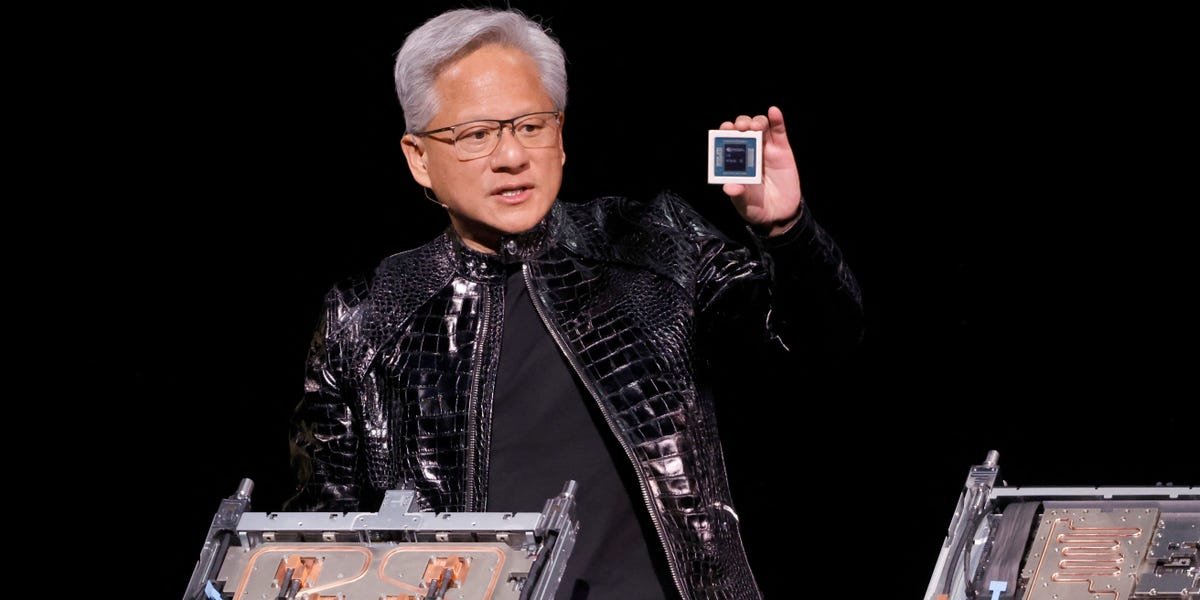
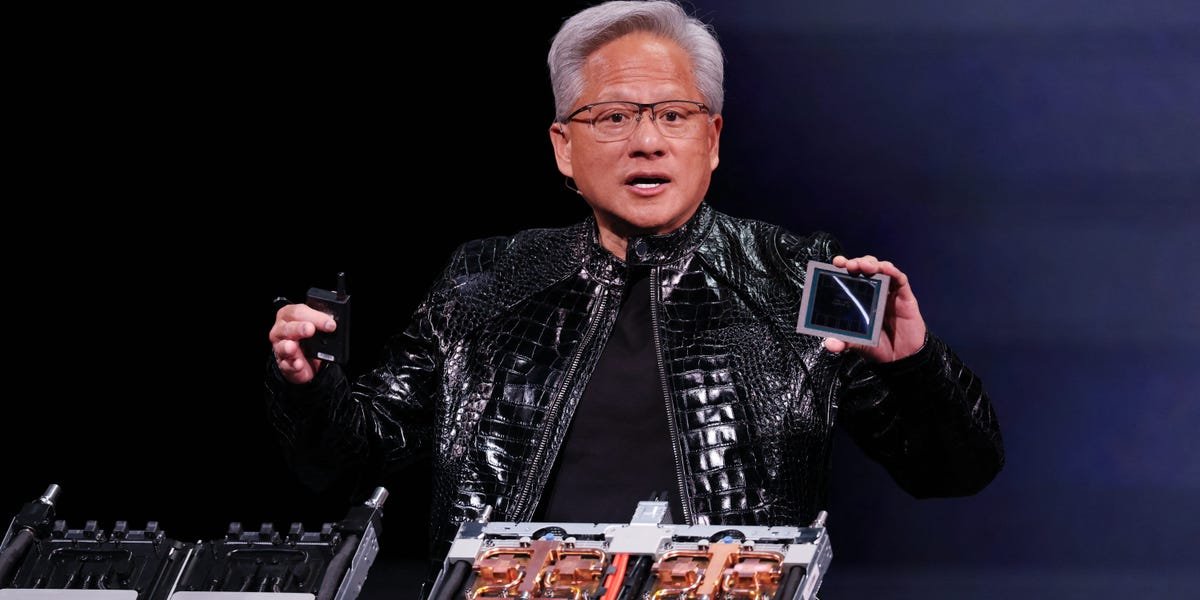
Nvidia has begun shipping early samples of its next-generation Vera Rubin chips to customers.

Chief Financial Officer Colette Kress said during the earnings call that the company delivered “our first Vera Rubin samples” earlier this week and expects broader shipments of the new chips to begin in the second half of 2026.

“We expect every cloud model builder to deploy Vera Rubin,” Kress said.

Huang previously said at the Consumer Electronics Show in January that compared to the Blackwell model, Rubin has more than triple the speed, could run inference five times faster, and can deliver significantly more inference compute per watt of energy.

4. Addressing future risks

Nvidia appears concerned about whether there will be enough resources to sustain the demand for data centers.

In its latest 10-K report filed with the Securities and Exchange Commission, Nvidia listed the availability of data centers, energy, and capital to support the data center buildout as a risk factor, writing that “any shortage of these and other necessary resources could impact our future revenue and financial performance.”

“Expanding energy capacity to meet demand is a complex, multi-year process involving significant regulatory, technical, and construction challenges,” wrote Nvidia.

“In addition, access to capital can be particularly constrained for less-capitalized companies, which may face difficulties securing financing for large-scale infrastructure projects,” Nvidia added.

5. An OpenAI deal may finally be ‘close’

Huang addressed the company’s growing slate of strategic investments, including a deal with OpenAI, as questions mount over whether Nvidia’s strategy creates circular relationships with its own customers.

Speaking about Nvidia’s investments in AI companies such as Anthropic and OpenAI, Huang said the strategy is centered on strengthening the broader AI ecosystem and ensuring the next generation of software and hardware is built on Nvidia’s platform, from large language models to robotics.

“We want to take the great opportunity that we have, as we’re in the beginning of this new computing era,” Huang said.

Huang confirmed that Nvidia is “close” to finalizing a deal with OpenAI. The partnership was first outlined in 2025 as part of a massive AI infrastructure initiative that could reach $100 billion.


Source link

Here-are-the-biggest-announcements-coming-out-of-the-2026.jpeg

Here are the biggest announcements coming out of the 2026 Consumer Electronics Show, starting with Nvidia’s Vera Rubin chips

On Monday, ahead of the Consumer Electronics Show, Huang officially introduced the Vera Rubin architecture, which is now in production and expected to ramp up in volume in the second half of the year. This move follows a blockbuster year for its Blackwell chip, as demand for AI infrastructure continued to surge.

In a press briefing ahead of Huang’s keynote, Dion Harris, Nvidia’s senior director of HPC and AI infrastructure solutions, described Vera Rubin as “six chips that make one AI supercomputer.”

“Vera Rubin is designed to address this fundamental challenge that we have: The amount of computation necessary for AI is skyrocketing,” Huang told the audience during a presentation at the CES.

Huang added that compared to the Blackwell model, Rubin marks a leap in performance, with more than triple the speed, could run inference five times faster, and can deliver significantly more inference compute per watt of energy.

Rubin was first announced in 2024 and has been slated to replace Blackwell ever since. The early debut comes months ahead of the late-2026 timeline Nvidia had previously projected.

Named after astronomer Vera Rubin, who discovered the existence of dark matter, Nvidia said in a press release that the architecture is designed to support more complex, agent-style AI workloads, as well as more networking and data movement.

The Rubin systems are already lined up for deployment across much of the cloud industry. Nvidia said partners, including Amazon Web Services, OpenAI, Anthropic, alongside the upcoming Doudna system at Lawrence Berkeley National Laboratory, all plan to use the new platform.

The accelerated launch comes shortly after Nvidia reported record data center revenue, up 66% from a year earlier, driven largely by demand for Blackwell and Blackwell Ultra GPUs. Those chips have become a benchmark for the current AI boom are widely seen as a test of whether spending on AI infrastructure is sustainable.

Huang has previously estimated that between $3 trillion and $4 trillion could be spent globally on AI infrastructure over the next five years. Nvidia said products and services built on the Rubin platform will begin rolling out from partners in the second half of 2026.


Source link