
A-strength-training-expert-who-runs-the-hardest-workout-in.jpeg

A strength training expert, who runs the ‘hardest workout in NYC,’ shares 3 moves to build muscle fast

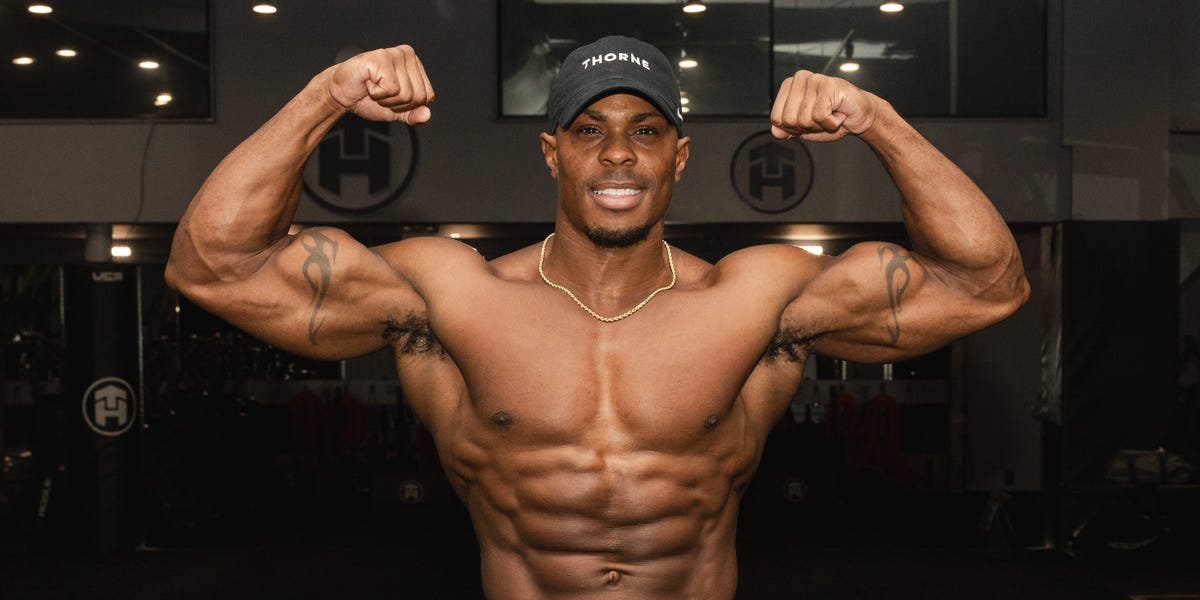
Since childhood, James McMillian has learned the value of slowly getting stronger.

McMillian said he was diagnosed with asthma when he was born, and doctors advised his parents against letting him play sports like youth tackle football. “It made me tell myself that I need to train harder,” McMillian told Business Insider.

Before and after practice, McMillian recalled running up the stadium steps six times. He’d also run to practice or run home with his sports equipment. Even though his asthma wasn’t induced by sports, he noticed that the extra training kept him from being as winded.

McMillian is now the president and a trainer at Tone House, a strength training and conditioning-focused training facility deemed by Business Insider as “the hardest workout in New York City.” He applies that same mentality from his upbringing to Tone House workouts that he coaches.


James McMillian

McMillian, who coaches classes at Tone House, believes in zooming in on your weaknesses. 

James McMillian


“You’re going to be exposed for your weaknesses, but then you should always turn your weaknesses into your strengths,” he said.

McMillian believes progressively overloading — slowly adding weight, reps, or intensity — is the best way to build strength.

“I always tell people, ‘If you don’t use it, you’ll lose it,” he said, particularly since we lose muscle mass as we age. “You’re going to want to pick up your kid. You’re going to want to hold those groceries. You’re going to want to hold your Louis Vuitton bag a little bit longer at an event. You have to be strong to do that.”

McMillian shared a few of his favorite quick movements to build muscle, whether you’re a complete beginner, pressed for time at the gym, or wanting to speed up your progress.

Raise a glass to goblet squats


Man doing goblet squat

Goblet squats target both the upper and lower body, and are approachable for complete beginners. 

gradyreese/Getty Images


McMillian’s favorite movement for beginners is the goblet squat, or squatting while holding a heavy kettlebell or dumbbell.

“When you’re going into that squat, as you allow those knees to go out, you’re working that lower body, your glutes, your hamstrings,” he said. At the same time, you’re also engaging your lats, triceps, forearms, and upper back from holding the weight.

To make the goblet squat more challenging, he said, you can elevate your heels to focus on building quad strength. McMillian also said it’s easy to start with a lighter weight, say 10 pounds, and gradually work your way up.

Save time with compound exercises


James McMillian working out

McMillian loves doing consecutive sets of arm movements, such as bent-over rows. 

James McMillian


Some of the best time-savers are compound exercises, which target multiple parts of the body at once and “allow you to shorten your time at the gym,” McMillian said.

A favorite of McMillian’s is transitioning from a squat to an overhead press, thus targeting both the upper and lower body.

He also likes to string together multiple consecutive movements. He opts for two rounds of 20 shoulder presses, 20 hammer curls, and 20 bent-over rows, all right after each other to activate different parts of his upper body.

“It’s intense, it burns, but it’s something that people can do with a single dumbbell,” he said, thus also saving time on swapping out equipment.

It’s also customizable, he said: You can use lighter weights and do fewer reps, but increase the number of rounds, for example.

Play with tempo


Woman back-squatting

Lowering slowly before exploding back up helps build control, McMillian said. 

MoMo Productions/Getty Images


Explosive exercises — deliberately slowing down your tempo and “exploding” at the end of the movement — are also great for improving your strength, McMillian said.

He’s a fan of slowing down his back squats: lowering slowly for five seconds, pausing for another five at the bottom, and then quickly pushing up.

“When you do things a little bit slower, controlled, it builds strength,” he said, noting there’s more than one way to challenge yourself.


Source link

Gilded-Age-townhouse-sells-for-345-million-in-NYC-ending.jpeg

Gilded Age townhouse sells for $34.5 million in NYC, ending 2 sisters’ heated bankruptcy battle

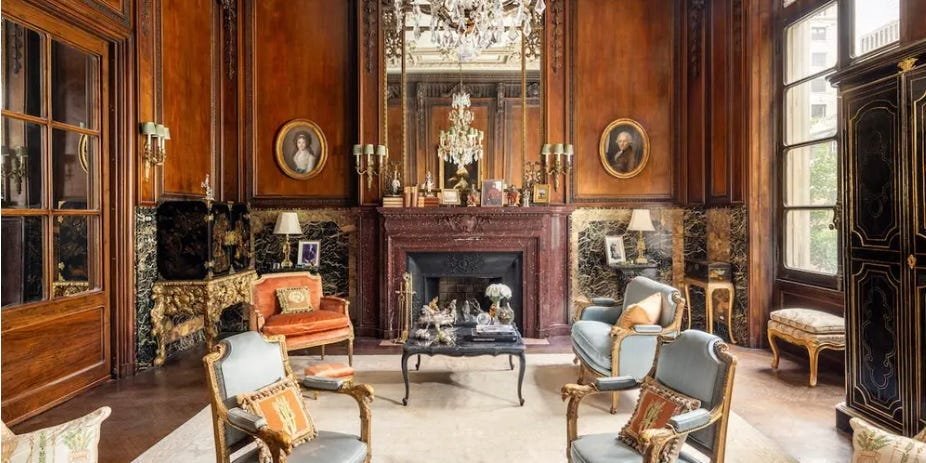
A Gilded Age Manhattan townhouse, the subject of a contentious and lengthy bankruptcy battle by two sisters in their 80s, has been sold for $34.5 million.

The sale, to an LLC whose owner has remained anonymous, closed Tuesday, according to court documents.

Fashion heiress Marianne Nestor and her sister, Peggy Nestor, both self-represented, had fought against foreclosure for six years and in at least three courthouses, most recently in federal bankruptcy court in Manhattan.

“Miserably difficult,” their main opponent, bankruptcy trustee Albert Togut, said during a hearing last week, in describing his war with the litigious siblings — including what he characterized as years of battling a “litigation cloud” filled with “frivolous appeals and objections.”

The sisters had purchased the home together in 1984.

Six years ago, creditors began litigating for its sale to collect on millions of dollars in mortgages and liens against the property.

Peggy Nestor, by then the sole owner, according to their own sworn statements, filed for federal bankruptcy nearly four years ago to keep it from being sold in New York state court. Debts collateralized by property had swollen past $30 million by the time the judge ordered it to be sold — and the occupants removed.

They were forcibly evicted two years ago after the bankruptcy judge found that they had repeatedly refused to let Togut, his lawyers, and court-appointed realtors inside to market and sell the 1901 property.

“I’m suing everybody,” Marianne Nestor told Business Insider, when told Tuesday night of the closing. “They’re crooked as hell,” she said of Togut and US Bankruptcy Judge Michael Wiles.

Marianne is the widow of fashion designer Oleg Cassini, widely credited with creating Jacqueline Kennedy’s “look” as First Lady.

Cassini had used the townhouse as a design studio and showroom until his death on March 17, 2006 — twenty years to the day before the sale closed.

“Today is the day that he died, OK?” Marianne said in a lengthy phone call, during which she called the sale “totally incorrect,” “a set up,” “deed fraud,” and “like Germany in the 1940s.”

“Leave out the F-words,” she asked Business Insider.

The sisters continue to argue that they could have purchased the property back themselves, that it is “rent-stabilized,” and that they remain its 50-50 owners, contentions repeatedly rejected by the judge.

They still have open three cases in federal and state court in Manhattan that challenge Togut’s authority and his appointment as trustee, and accuse him and a former attorney for Peggy Nestor of impropriety.

A lawyer for Togut’s firm declined to comment on the closing when contacted earlier Tuesday.

After taxes, a $1.4 million broker commission, and other closing costs, the net proceeds of the sale will be $32 million, according to court documents — a sum that still won’t cover a decade-long accumulation of debts against the property.

It is unclear where the sisters have been living since US Marshals evicted them from the townhouse; Marianne Nestor has declined to say.

The two continue to have access to a $5 million brick mansion in Norwalk, Connecticut, purchased by Peggy Nestor in 2021.

But in January, the bankruptcy judge found that Peggy had improperly tried to transfer the mansion for $1 to a third sister, Brenda, who lives in Palm Beach.

The judge ordered that the seven-bedroom, 9,800-square-foot mansion, which overlooks Long Island Sound, must also be sold to satisfy Peggy’s debts.

The Norwalk property’s sale remains pending.


Source link

I-run-alcohol-free-nightlife-events-in-NYC-Most-of-my.jpeg

I run alcohol-free nightlife events in NYC. Most of my guests aren’t sober — they just don’t want to drink.

This as-told-to essay is based on a conversation with Sam Bail, a data engineer and the founder of the alcohol-free pop-up event company, Bright Nights Social. It has been edited for length and clarity.

Three years ago, I had the idea to open an alcohol-free bar in New York City.

I don’t drink, but I still wanted nightlife — dancing, music, meeting new people, getting out of the house on a Friday or Saturday night. What I didn’t want was another alcohol-free space that was centered on wellness, meditation, or yoga. I wanted something that still felt like real nightlife, just without booze being the main event.

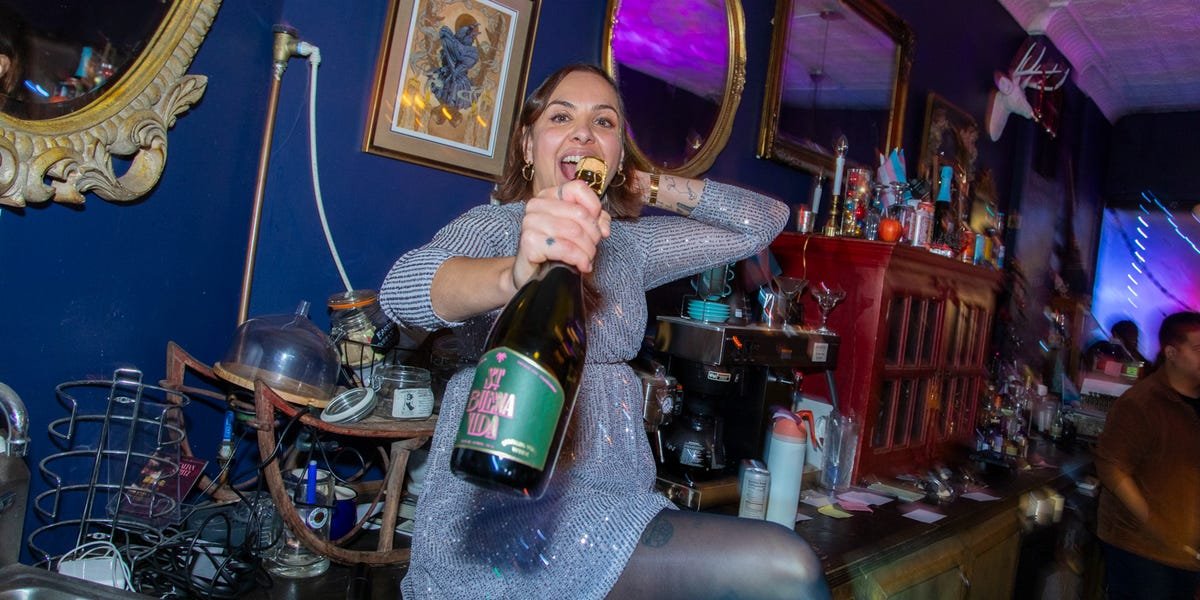
Instead of signing a lease, I started testing the idea by hosting pop-up events. I’d take over coffee shops or other venues at night and turn them into alcohol-free bars for the evening.

What started as an experiment quickly took on a life of its own.

Over the past three years, I’ve collaborated with tons of venues, experimented with a variety of new formats, and thousands of people have come through our doors. That’s been the most surprising part of all of this: the demand.

What’s even more interesting? Most of the people who attend my events aren’t even sober.

Who actually comes to alcohol-free nightlife

When people hear “alcohol-free event,” they often assume the crowd is made up entirely of sober or sober-curious people. That hasn’t been my experience at all. Based on conversations with guests, I estimate that at least 75% of the people who attend my events don’t identify as sober or even sober-curious.

They’re mostly in their mid-20s to early 30s — older Gen Z and very young millennials. Gender splits depend on the event, but many of my parties are close to 50-50 men and women. What they have in common is that they want to go out, socialize, and have fun without making drinking the center of their entire social life.

I’m 40, so I’m an elder millennial who’s already done the heavy partying phase and is over it. But many of the people who come to Bright Nights Social are younger than me and feel the same way. They’ll tell me things like, “I still drink sometimes, I just don’t want to do it every time I go out,” or “Alcohol makes me feel terrible the next day.”

They’re not abstaining out of moral opposition to alcohol or because of addiction. They’re opting out because they don’t like the cost, the hangovers, or the way drinking dominates social life in cities like New York.

Experiences > drinking

What I see aligns with a broader shift happening right now, especially among younger people. There’s a growing focus on experiences rather than just going to a bar and spending money on drinks. In New York City, you can see it everywhere: pottery classes, cooking classes, rug tufting, late-night library events, group reading clubs.

Some of my favorites have been hosting cooking classes and our crafting events, like rug-making. Coming up this month, we have a tea bar, a bagel-making (and eating!) class, and a full-on dance party, complete with DJs and a full non-alcoholic bar, to close out Dry January.

People want to do something. They want to make memories. They just don’t want to wake up feeling awful the next day.

Cost is also a big factor. When cocktails are $15 or $20 each, it doesn’t take long for a casual night out to become extremely expensive. A lot of people tell me they’d rather spend their money on an experience than on alcohol that doesn’t even make them feel good.

That doesn’t mean Gen Z isn’t drinking at all. In fact, some recent data suggests younger people are actually drinking more now than they were a year or two ago. I think part of that is a post-pandemic catch-up effect — many Gen Zers reached legal drinking age during lockdowns and simply didn’t have the chance to go out.

What I see on the ground is moderation. People might have one drink at dinner and then switch to a nonalcoholic beer. Or they’ll alternate between alcoholic and nonalcoholic drinks throughout the night — what some people call “zebra striping.” They’re being much more intentional about how and when they drink.

THC, nonalcoholic drinks, and what’s next

Another huge shift I’m seeing is the role of legal THC. I don’t serve THC products at my events, but I don’t stop anyone from having one before they come, and I hear about them constantly from guests and friends who work at nonalcoholic bottle shops. THC drinks are some of the best-selling products in those stores.

People understand what THC does. They say it helps with social anxiety, takes the edge off, and feels more manageable than alcohol when used in moderation. Compared to that, there’s still skepticism around functional or adaptogenic drinks — things with nootropics, ashwagandha, or functional mushrooms. Many people aren’t convinced that those drinks actually do anything beyond being a placebo.

That said, I think we’re still early. As people learn what works for their own bodies — whether that’s L-theanine, lion’s mane, or something else — those functional beverages may gain more traction.

At the same time, I’m also seeing conversations online about people pulling back from THC after overdoing it, so I think we’ll see a similar trend as people try to find nightlife events that best suit their needs.

I don’t think most people want to be completely sober forever, but they are actively experimenting with what moderation looks like.

Alcohol-free doesn’t mean anti-fun

The biggest misconception about alcohol-free nightlife is that it’s boring or restrictive. What I’ve learned is that people don’t want to be told what not to do — they just want more options.

Bright Nights Social isn’t about sobriety as an identity. It’s about creating a space where alcohol isn’t the default. You can still dance, flirt, meet strangers, and stay out late. The only difference is that you’re not expected to drink to participate.

The fact that so many non-sober people show up tells me this isn’t a niche idea anymore. Alcohol-free nightlife isn’t just for people who’ve quit drinking entirely. It’s for anyone who wants to go out — and wake up the next day feeling like themselves.

Do you host or attend alternative nightlife events? Contact this reporter at ktl@businessinsider.com.


Source link