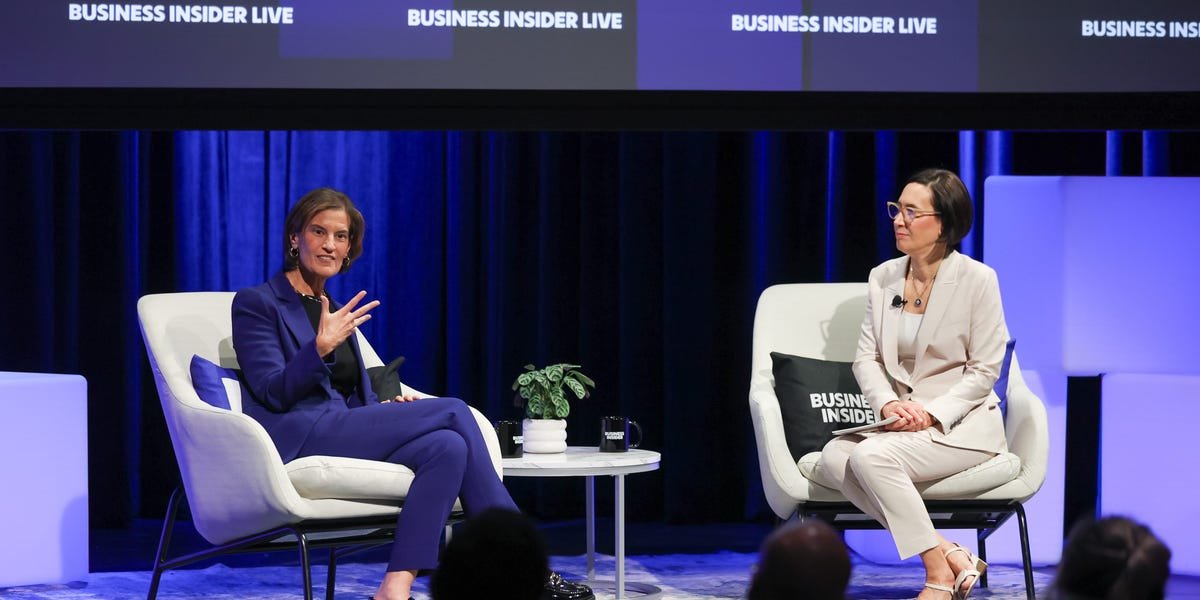
Joanna Strober, founder and CEO of Midi Health, knew there was a business opportunity in women’s health, but it took grit and patience to help investors see it too. What started as a mission to provide digital care for menopausal women has quickly scaled into a unicorn company with big growth ambitions.
Strober sat down with editor in chief Jamie Heller at Business Insider Live’s The Long Play event in San Francisco.
These days remote work is hard to come by — and at some firms, employees now risk losing equity or promotions if they don’t show up in person.
Superhuman, however, is offering extra benefits to those who show up IRL more often, rather than penalizing those who don’t.
The company — which offers a suite of AI productivity tools, including Grammarly — rolled out a system in January to reward workers who come to the office. The move followed an attempt at mandating two days in person for its engineering teams.
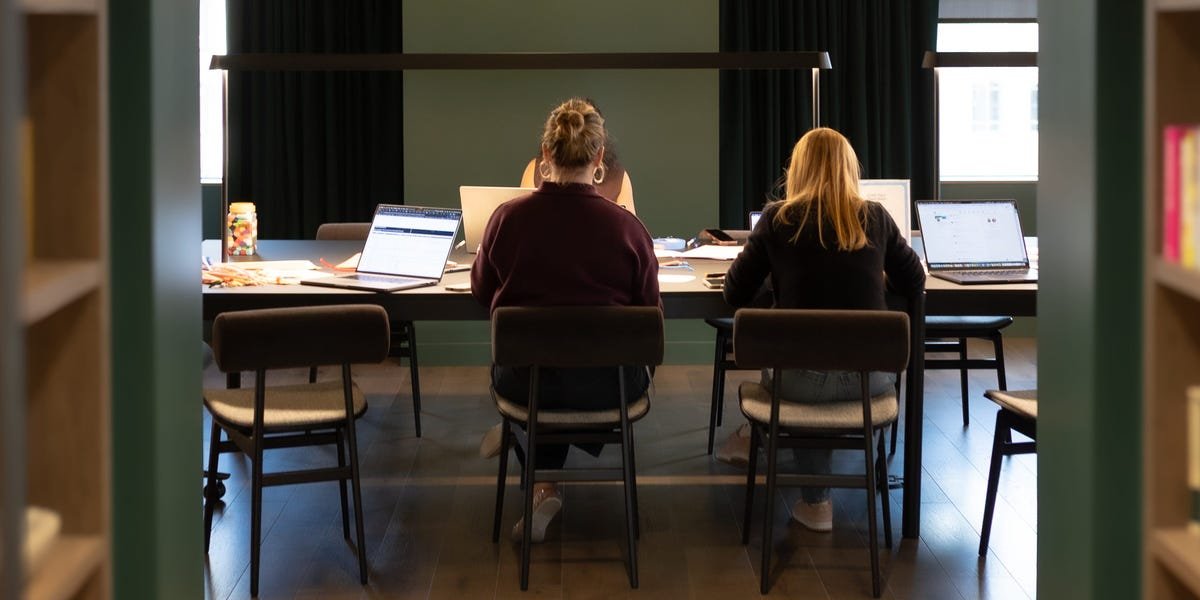
Superhuman has over 1,500 employees globally, and its chief people officer, Kenny Mendes, said the company has seen a 57% increase in daily attendance across all of its offices since rolling out its “Ways of Working Program,” a tiered opt-in model that lets team members choose from two- to five-day in-office plans.
Superhuman provides a sliding scale of perks, including commuter support, grocery stipends, childcare, meal delivery, and cleaning services.
Superhuman
Spend more time in the office, and you get more perks, including commuter benefits and wellness stipends, which can be put toward things like childcare expenses, gym memberships, grocery delivery, and cleaning services. Those in the US who opt to work two days per week in the office get $500 per quarter in wellness stipends, and those who work five days a week get up to $2,000 quarterly.
“If you look at that as a percentage of salary relative to the impact it has on that employee — being more productive, being more engaged, solving problems faster — it’s a no-brainer spend from a company standpoint,” Mendes told Business Insider.
Initially, the company targeted its engineering, product, and design teams for a return to the office. However, interest spread across departments, and now 75% of employees near a hub have opted into a plan, with a third of those choosing to come in four or five days a week. The company has eight hubs across North America and Europe, Mendes said.
A ‘failed’ RTO attempt
When Mendes joined the company after it acquired Coda in January 2025, he said there was a push to unify policies across the combined organizations — and he was, for better or worse, handed the “RTO baton.” The CPO said there was visible “negative energy and sentiment” about the company’s two-day return-to-office mandate for engineers last April.
It wasn’t particularly effective either.
“It failed,” Mendes said. “Six months later, we were seeing low compliance, empty offices, and team members telling us point blank that coming in wasn’t worth it because no one else was there.”
Superhuman’s CPO said the company’s attempt at RTO last April “failed.”
Superhuman
Mendes said the situation was frustrating to management, given that 70% of its staff lived within commuting distance to its hubs across North America and Europe. He said the RTO plan felt like filling people into an airport.
“You’re looking around and you’re like, “Yeah, I’m sitting next to this person. I really don’t want to talk to them. I just trying to get out of here as quickly as possible,'” Mendes said.
Reframing in-person work
That led Mendes to seek advice from behavioral scientist Jon Levy. Mendes said Levy led him to shift his focus to making the office so enticing that people want to come in, rather than requiring them to.
“We were pulling teeth to get people intwo days a week,” Mendes said. “But could we get them tochoose to come in five?”
Mendes said the new policy isn’t just about offering financial incentives. He said communication was key in the process for it to land effectively.
The effort began with Mendes and Levy hosting a fireside chat to discuss how the workplace has evolved and what the company needs moving forward, he said. Leadership emphasized that team effectiveness depends on trust and connection — and that in-person time plays a key role in that.
The company then asked teams why they were reluctant to come in. Many workers reported practical barriers, like parking costs and desk setups. Mendes said the idea wasn’t to pay people to come in — because then people naturally approach it as a cost analysis to determine whether their time is worth it. The goal, Mendes said, was to identify and eliminate friction points so coming into the office wouldn’t feel like a hassle.
The company also made other tweaks to cultivate a more social atmosphere, such as changing the desk tops from five to four feet to increase office density. It also offers daily lunch and social hours.
Superhuman offers daily lunch and social hours to employees.
Pixels by Mila LLC
A key question during the rollout was whether employees would stick to their chosen schedules, Mendes said. So far, the CPO said that attendance has been strong, with employees showing up 85% of the time they committed to.
“I’ve been really shocked at how well it’s working,” Mendes said.
A glimpse into Melania Trump’s often-obscured personal life has drawn at least some fans to the box office, earning over $7 million during the opening weekend.
Data from The Numbers, a movie financial analysis website, shows that “Melania: Twenty Days to History” is far and away the highest-grossing documentary of 2026 so far.
By comparison, “Holding Liat,” a documentary released in January, is the second highest earner at $28,000 as of Sunday, according to The Numbers.
One of the highest-grossing documentaries of 2025 was “Becoming Led Zeppelin,” which earned about $10.4 million at the domestic box office.
“It proves that an original idea which is executed with deliberate beauty is embraced by fans and moviegoers, regardless of political affiliation,” Marc Beckman, Melania’s senior advisor and agent, told Business Insider in a statement.
Every time Lauren publishes a story, you’ll get an alert straight to your inbox!
Stay connected to Lauren and get more of their work as it publishes.
The documentary, which premiered on January 30, offers a behind-the-scenes look at the days leading up to President Donald Trump’s 2025 inauguration from the first lady’s perspective. Amazon MGM Studios paid $40 million to license the documentary and an additional docuseries on Prime Video. Brett Ratner, known for the “Rush Hour” franchise before sexual misconduct allegations derailed his career in 2017, directed the documentary.
“With exclusive footage of critical meetings, private conversations, and never-before-seen environments, ‘Melania’ showcases Mrs. Trump’s return to one of the world’s most powerful roles,” an Amazon press release said.
Despite the early box-office sales, the film has earned less-than-stellar reviews from critics and was review-bombed on Letterboxd. Business Insider’s Peter Kafka described the documentary as “dull,” but said that it could resonate with superfans of the Trump family.
“The best way I can describe this one is something akin to a wedding video: Maybe the subjects of the video will want to watch it (Melania looks, unsurprisingly, like a woman who used to be a model; her husband seems notably more spry than he does now, a year after it was filmed),” Kafka wrote. “It’s hard to imagine anyone else will.”
JPMorgan says it’s going to do something about its desk problem.
America’s biggest bank, which called its roughly 320,000-person-strong global workforce back to the office five days a week last year, has previously experienced internal tensions over desk availability and parking at some sites, like its major tech campus in Columbus, Ohio.
Now, the firm says it will tackle its office woes head-on.
“If you think about what’s happened to the head count of the company over, say, the last five or six years, it’s grown a lot,” Jeremy Barnum, the firm’s chief financial officer, told shareholders during the bank’s Tuesday earnings call.
“There was the whole return to the office, hot desking, remote work, all the stuff,” he added. “The amount of real estate square footage over that period grew a lot more slowly than headcount.”
But the lack of ample space didn’t deter the company from pushing ahead with its full-time office mandate.
“We’ve realized that it’s obviously the case that we need to provide employees a reasonable in-office experience and that, in some cases, means a little bit of de-densification and catching up on some space renovations around the world,” Barnum continued.
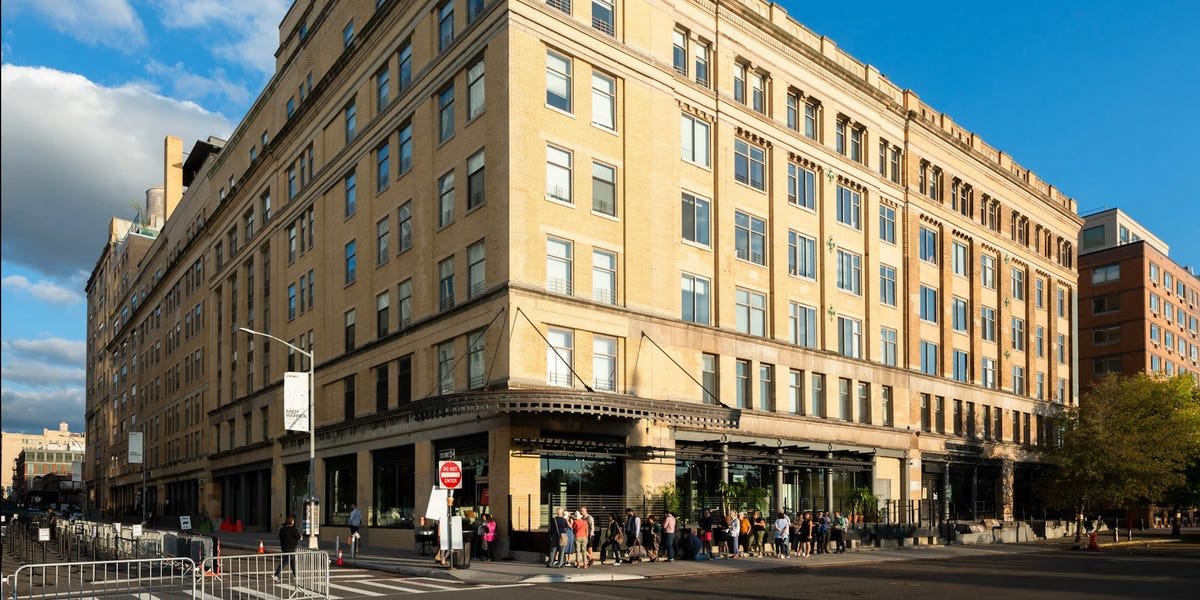
Jamie Dimon cut the ribbon to mark the opening of JPMorgan’s new global headquarters at 270 Park Avenue on Tuesday.
TIMOTHY A. CLARY/AFP via Getty Images
On the call, CEO Jamie Dimon chimed in.
“Don’t scare them,” he told Barnum, presumably about alarming analysts about rising spending. “Real estate,” Dimon said, “is very small numbers.”
The firm has already opened a new state-of-the-art headquarters at 270 Park Avenue in Manhattan — a cutting-edge skyscraper featuring a bevy of restaurants, a luxurious fitness center, and tech that even remembers how you like the temperature when you reserve a conference room.
The bank’s five-day-per-week return-to-office policy proved a heated flashpoint last year, with Dimon famously telling some of the 12,000 staffers at the Columbus site that he suspected remote workers were texting one another during meetings and not completing tasks.
Last spring, a JPMorgan spokesperson told Business Insider that the firm was “working hard to ensure our sites have the capacity and amenities employees need to return full-time.”
Amazon is equipping its managers withpowerful new metricsto monitor their reports with a dashboard that tracks not only whether employees show up to the office, but also how many hours they spend there, according to an internal document obtained by Business Insider.
The move marks an escalation in the surveillance of white-collar workers at the e-commerce and cloud computing giant. Last year, Amazon implemented one of the industry’s most stringent RTO mandates, requiring most employees to work from an office for five days a week. Now, managers have a way to spot — and potentially confront — employees who fall short of these expectations.
The updated dashboard, which began rolling out in December, allows managers and HR to view how often employees come into an office, how long they stay, and the locations where they work. It refreshes at 5 p.m. PT daily and tracks these metrics over a rolling eight-week period.
The system flags three kinds of employees: “Low-Time Badgers,” defined as employees whose weekly median time in the office is less than four hours per day, averaged over a rolling eight-week period; “Zero Badgers,” who don’t badge into any Amazon building during that span; and “Unassigned Building Badgers,” who badge into a building other than the one they’re assigned to over half the time.
“These metrics are intended to surface employees operating significantly outside documented in-office expectations,” the document says.
“For more than a year now, we’ve provided tools like this for managers to help identify who on their team may need support in working from the office each day,” an Amazon spokesperson told Business Insider. “We recently updated the dashboard to make it more consistent for all managers, but most of the data and functionality was previously available. We continue to see the benefits of having our teams working together, and we haven’t changed our expectations for employees to be in the office.”
Amazon notes in the document that managers are expected to “apply judgment” when determining whether to initiate formal disciplinary follow-ups.
In 2023, Amazon began tracking and sharing individual office attendance records, reversing a previous policy that only tracked anonymized, aggregated attendance data.
A year later, the company began cracking down on “coffee badging” by informing some teams that they needed to be in the office for a minimum of two to six hours to have their attendance count. The crackdown received criticism from some employees, including one who compared the move to being treated “like high school students,” Business Insider previously reported.
The updated dashboard standardizes these metrics across Amazon’s entire corporate workforce, excluding workers such as warehouse staff and contractors. It grants managers direct, on-demand access to data that they would have previously had to request from HR, according to an Amazon employee familiar with the company’s policies.
Amazon is positioning the dashboard as a means to encourage in-person collaboration.
“Working In-office is important to our culture and is also about more than just being physically present during the week,” the document said. “Managers are expected to promote meaningful team collaboration through direct interactions with their team rather than just remotely monitoring badge swipes each week.”
Amazon is hardly alone in using badge data to police return-to-office rules.
Samsung rolled out a manager-facing tool that shows “days and time in building” metrics, aimed at discouraging “lunch/coffee badging.” Dell informed hybrid staff that it will track on-site presence via badge swipes and could factor attendance into performance and compensation.
Bank of America issued warning notices to employees, informing some that continued noncompliance with its RTO policy could result in further disciplinary action. At JPMorgan, employees have described an internal dashboard that calculates the share of eligible days spent in the office and is visible to senior managers.
In the UK, PwC has said it would track employees’ work locations to enforce its RTO policy.
Have a tip? Contact Pranav Dixit via email at pranavdixit@protonmail.com or Signal at 1-408-905-9124. Use a personal email address, a nonwork WiFi network, and a nonwork device; here’s our guide to sharing information securely.
Wix is asking employees in three countries to come back to the office. US workers will remain hybrid, though, Business Insider has confirmed.
Nir Zohar, president of the Israeli website management company, told employees in an email Wednesday that “Wix is moving to a full office work week” and impacted workers must come back to the office five days a week starting February 1.
The return-to-office mandate applies to workers in Tel Aviv and Beersheba, Israel; Kraków, Poland; and Vilnius, Lithuania. Ukrainian employees will continue working remotely “from wherever is safest,” Zohar wrote in the email, which he posted to X and LinkedIn.
Wix is moving to a full office work week
Here’s the email I sent to the team today about why we’re bringing people back together in the office and how we’re rolling it out across locations. We’ve always done our best work side by side, learning, building, and tackling hard… pic.twitter.com/knYUnSCOba
A Wix spokesperson confirmed to Business Insider that all US employees “will remain hybrid.” The company declined to elaborate on why American workers are excluded from the RTO policy.
“Customer Care and the rest of the global teams will have direct communication with local leadership about how this change will affect them,” Zohar emailed his employees.
Zohar framed the return-to-office push as essential for collaboration and innovation, echoing arguments made by other CEOs — like AT&T’s John Stankey and Starbucks’ Brian Niccol — rolling back remote work.
“The unique energy in the office, the quick chats, the unplanned ideas, the feeling of being around each other — it all makes a real difference in how fast things move, how much easier it is to solve problems and how much more connected we feel,” he wrote. “Working together also means challenging each other, encouraging creativity and innovation.”
Wix was initially planning its in-office mandate for the Tel Aviv office in October 2023, but put those plans on hold due to the Israel-Hamas war, Zohar said in the email.
In November, the company reported having 5,344 staffers globally.
Zohar emphasized that Wix would remain flexible for personal circumstances like sick children or family emergencies, saying managers would work with employees on a case-by-case basis.
Wix, which launched in 2006, services more than 200 million users from 10 global corporate offices, according to its website.
The company’s stock jumped 1.4 percent after the RTO announcement. It’s 53 percent in the red in the past year, including a 37 percent loss in the past six months.
Read Wix president Nir Zohar’s email to employees below
Hi everyone,I want to share an update about how we’ll be working as we head into 2026.Wix has always been about working side by side, collaborating and building a culture of personal as well as team growth.The unique energy in the office, the quick chats, the unplanned ideas, the feeling of being around each other — it all makes a real difference in how fast things move, how much easier it is to solve problems and how much more connected we feel. Working together also means challenging each other, encouraging creativity and innovation.Historically, Covid and lack of office space in Israel pushed us to WFH and then to hybrid mode.We actually originally planned to move back to full WFO in Israel a few months after we made the full move to the Campus in October 2023, but for obvious reasons decided to hold off.Now we think it is finally the right time to go back to a full work week at the office.To give the Campus and different site ops teams time to prepare, we’ll start this on February 1, 2026. This change will be effective for Israel (TLV & BY), Kraków and Vilnius teams.Our teams in Ukraine will continue working from wherever is safest and works for them best.Customer Care and the rest of the global teams will have direct communication with local leadership about how this change will affect them.This will take into account each site’s specific constraints, regulations and needs, so everyone receives clear and relevant information about what working from the office will look like for them.I want to point out something very important:Long before 2020, COVID, and the WFH era, Wix has always been a very flexible work place.This will NOT change. However, this flexibility isn’t about everyone taking a day at home; rather, it’s based on personal needs and managers’ attentiveness to their people’s needs. Some people who live very far from the office may need different considerations. Others may go through specific periods that require more flexibility on where to work from, and for all of us “life happens” every now and then. Kids get sick, family may require attention, and unexpected things come up.Managers will keep working with you to ensure you have what you need. If something personal comes up, talk to your manager or HR. We’ll handle it together, the same way we always have.Wix has always been at its best when we’re around each other — learning, building, laughing, solving things, creating things.I’m really looking forward to bringing that energy back into the office every day.Nir
This story is available exclusively to Business Insider
subscribers. Become an Insider
and start reading now. Have an account? .
US presidents have redecorated the Oval Office in different ways since it was first built in 1909.
Most presidents have sat at the Resolute Desk, but others brought in their own personal furniture.
President Donald Trump has added numerous gold embellishments to the Oval Office.
It’s been nearly 100 years since the Oval Office was first built under President William Howard Taft. Throughout that time, US presidents have each made different design choices to redecorate the formal workspace.
Some presidents, like President George H.W. Bush, have brought in their own furniture to replace the Resolute Desk. Others, like President Donald Trump, have reinstated vintage Oval Office pieces while adding their own personal flair.
Take a look at how the Oval Office has changed through the years.
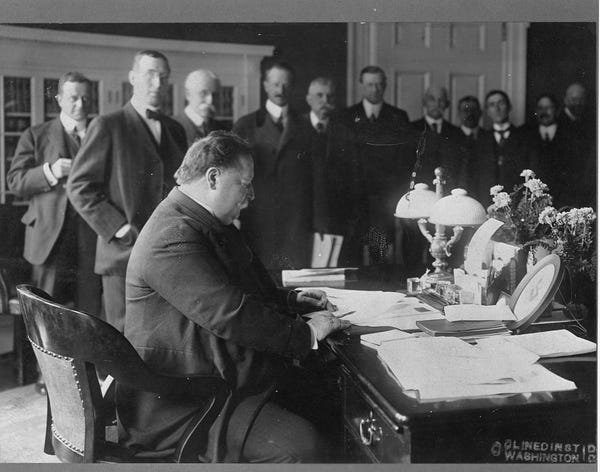
The first iteration of the Oval Office was built under President William Howard Taft in 1909 as part of an expansion of the West Wing.
President William Howard Taft in the Oval Office. B.M. Clinedinst/Library of Congress/Corbis/VCG via Getty Images
Inspired by the White House’s oval-shaped Blue Room, the president’s formal workspace was designed by architect Nathan C. Wyeth.
Taft’s Oval Office featured an olive-green color scheme.
President Franklin D. Roosevelt redesigned and moved the Oval Office as part of another West Wing expansion in 1934.
President Franklin D. Roosevelt in the Oval Office. History Archive/Universal Images Group via Getty Images
The Oval Office was moved to the southeast corner of the White House.
Roosevelt kept a variety of items on his desk, including photos of his sons, ceramic animal figurines, and an appointments easel with his daily schedule, according to the Franklin D. Roosevelt Presidential Library and Museum.
President Harry Truman’s Oval Office was the first to feature a rug with the presidential seal.
President Harry Truman with staff in the Oval Office. FPG/Archive Photos/Getty Images
Truman decorated the Oval Office with the turquoise rug and matching curtains. The walls were painted a lighter seafoam green.
President John F. Kennedy was the first president to use the Resolute Desk in the Oval Office.
The Resolute Desk in the Oval Office. Cecil W. Stoughton/White House Photo
The Resolute Desk, made of wood from the British ship H.M.S. Resolute, was gifted to President Rutherford B. Hayes by Queen Victoria in 1880. Previous presidents kept the desk in the second-floor office of the White House Residence and the Broadcast Room, according to the White House Historical Association.
President Lyndon Johnson replaced the Resolute Desk with his own desk, which he’d used as a US senator and vice president.
President Lyndon Johnson in the Oval Office. Corbis via Getty Images
He also redecorated the Oval Office with white drapes with red trim, evoking the American flag.
President Richard Nixon chose bold hues of blue and yellow to decorate the Oval Office.
President Richard Nixon’s Oval Office. Bettmann Archive/Getty Images
Nixon’s Oval Office rug, in the same blue color as the American flag, was designed by first lady Pat Nixon.
President Gerald Ford changed the color scheme of the upholstery to burnt orange and khaki.
President Gerald Ford in the Oval Office. Historical/Corbis via Getty Images
Ford’s decor included the wheel from the SS Mayaguez, an American container ship that was seized by Cambodian forces in 1975 and rescued at Ford’s direction.
Ford also added a mahogany Seymour tall case clock in 1975.
The Oval Office in 1975. Bettmann Archive/Getty Images
The clock, built between 1795 and 1805, has remained in the Oval Office under every subsequent president since 1975.
President Jimmy Carter brought the Resolute Desk back to the Oval Office.
President Jimmy Carter in the White House’s Oval Office. Corbis via Getty Images
Otherwise, he left most of Ford’s decor.
President Ronald Reagan redecorated the Oval Office during his second term with a rug designed by first lady Nancy Reagan.
Ronald Reagan in the Oval Office. HUM Images/HUM Images/Universal Images Group via Getty Images
The rug featured the presidential seal in the center with sunbeams emerging from the middle, surrounded by a border of olive branches.
President George H.W. Bush redid the Oval Office in shades of blue and gold and brought in the C&O desk that he used as vice president.
President George H.W. Bush’s Oval Office. Susan Biddle/White House via CNP/Getty Images
The Resolute Desk was moved to the Residence Office.
President Bill Clinton chose Arkansas-based interior designer Kaki Hockersmith to give the Oval Office a new look.
President Bill Clinton’s Oval Office. BILL O’LEARY/The Washington Post via Getty Images
Hockersmith designed the yellow curtains and the blue rug with the presidential seal. Clinton also chose to bring the Resolute Desk back to the Oval Office.
First lady Laura Bush designed a new rug for President George W. Bush’s Oval Office.
President George W. Bush in the Oval Office. Greg Mathieson/Mai/Getty Images
The rug featured a sunbeam design with the presidential seal at its center, reminiscent of Reagan’s rug, and a lone star in a nod to Bush’s home state of Texas.
President Barack Obama added striped wallpaper and a new rug with a quote from Martin Luther King Jr.
President Barack Obama in the Oval Office. HUM Images/Universal Images Group via Getty Images
The quote on the border of the rug read, “The arc of the moral universe is long, but it bends toward justice.”
During his first term, President Donald Trump reinstalled Reagan’s rug and added a portrait of President Andrew Jackson.
President Donald Trump in the Oval Office during his first term. Official White House Photo by Joyce N. Boghosian
He also brought back Clinton’s gold curtains and chose a new off-white wallpaper.
President Joe Biden brought back Clinton’s Oval Office rug and added new portraits.
President Joe Biden’s Oval Office. Bill O’Leary/The Washington Post via Getty Images
Biden hung portraits of Franklin D. Roosevelt, Thomas Jefferson, and Alexander Hamilton.
In his second non-consecutive term, Trump has made significant changes to the Oval Office, adding numerous gold embellishments.
President Donald Trump in the Oval Office. Demetrius Freeman/The Washington Post via Getty Images
Many of the gold decor pieces in Trump’s Oval Office came from the White House collection, but Trump also imported some statuettes from his Mar-a-Lago estate in Palm Beach, Florida.
Trump also added flags representing different branches of the US military and additional presidential portraits, with President George Washington in the prominent center spot above the fireplace mantle.