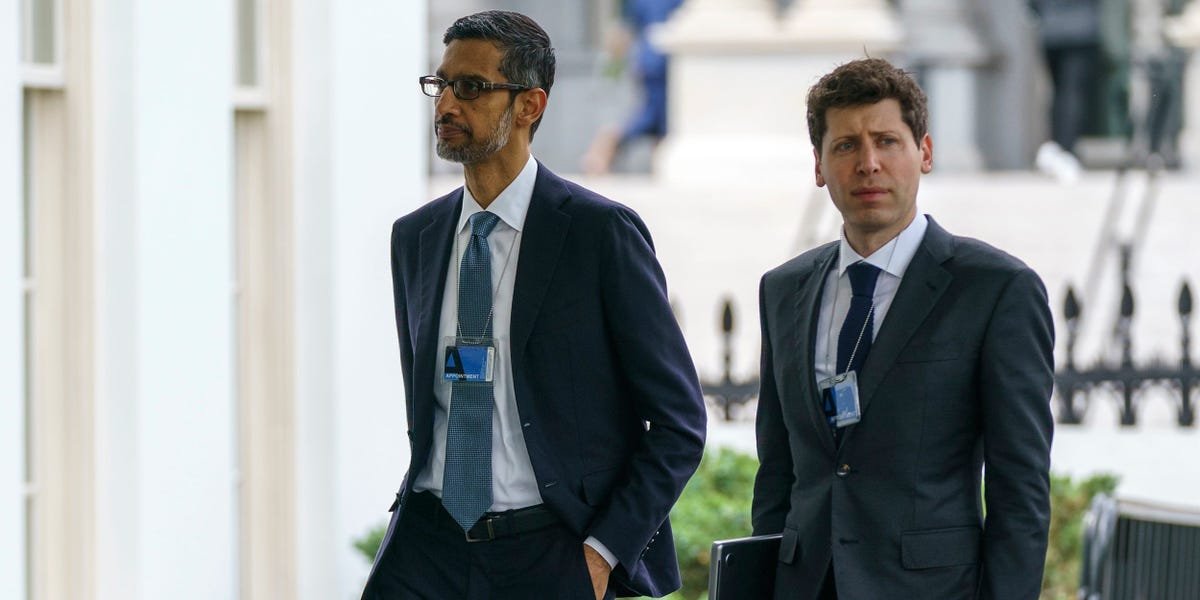
Sam-Altman-says-OpenAI-has-gone-code-red-multiple-times.jpeg

Sam Altman says OpenAI has gone ‘code red’ multiple times — and they’ll do it again

“Code red” isn’t a one-off at OpenAI.

CEO Sam Altman said on an episode of the “Big Technology Podcast” published Thursday that the company has entered emergency mode multiple times in response to competitive threats — and expects to continue doing so as rivals close in.

“It’s good to be paranoid and act quickly when a potential competitive threat emerges,” Altman said.

“My guess is we’ll be doing these once maybe twice a year for a long time, and that’s part of really just making sure that we win in our space,” he added.

Altman said that OpenAI had gone “code red” earlier this year when China’s DeepSeek emerged. DeepSeek shocked the tech industry in January when it said its AI model matches top competitors like ChatGPT’s o1 at a fraction of the cost.

OpenAI entered “code red” earlier this month, about two weeks after Google released its latest AI chatbot, Gemini 3. The model drew widespread praise after its release in November, with Google touting it as its most advanced model to date. Altman reportedly told staff in an internal Slack memo that OpenAI would prioritize ChatGPT while pushing back other product plans.

Altman said in the podcast episode that Google’s Gemini 3 did not have “the impact we were worried it might.”

“But it did — in the same way that Deepseek did — identify some weaknesses in our product offering strategy, and we’re addressing those very quickly,” he added.

Since OpenAI entered “code red,” the company has moved quickly to ship new upgrades and features.

Last week, it rolled out a more advanced AI model aimed at improving ChatGPT’s performance across professional work, coding, and scientific tasks. OpenAI also unveiled a new image-generation model earlier this week.

Altman said the company will not be in code red “that much longer.”

“Historically, these have been kind of like six- or eight-week things for us,” he added.

The state of “code red” has also been a precedent for other tech companies. In 2022, Google declared an internal “code red” after ChatGPT’s debut. The search giant was lagging in consumer AI, despite having funded much of the research that made the AI boom possible.


Source link

The-history-of-Elon-Musk-and-Sam-Altmans-relationship-and.jpeg

The history of Elon Musk and Sam Altman’s relationship and feuds, which date back to the early days of OpenAI

SpaceX is planning a secondary share sale, according to an internal message to employees seen by multiple outlets, which would value the company at $800 billion, reclaiming the top spot among the world’s most valuable private companies from OpenAI.

OpenAI executed its own secondary share sale in October, valuing the company at $500 billion.

The letter to employees also says SpaceX is exploring an initial public offering to “raise a significant amount of capital,” The Wall Street Journal and other outlets reported. It would be the largest IPO in history.

“The thinking is that if we execute brilliantly and the markets cooperate, a public offering could raise a significant amount of capital,” SpaceX Chief Financial Officer Bret Johnsen told staff in the December 12 message.

Musk also hinted at an IPO earlier this week.

After journalist Eric Berger published an op-ed arguing that SpaceX is likely to go public soon, Musk replied, “as usual, Eric is accurate.”

The company is aiming to raise more than $25 billion through an initial public offering, a move that could push its valuation above $1 trillion, Reuters reported.


Source link

What-smart-people-are-saying-about-Disneys-licensing-deal-with.jpeg

What smart people are saying about Disney’s licensing deal with OpenAI

It’s likely just a matter of time before we see the wisened duo of Rafiki and Jiminy Cricket weilding lightsabers on the icy plains of Arendelle.

That’s courtesy of artificial intelligence, of course, and a new deal between Disney and OpenAI.

OpenAI said Thursday it had struck a licensing agreement to use Disney’s characters and other intellectual property. Disney will also invest $1 billion in OpenAI and will purchase ChatGPT Enterprise for its employees.

It’s a major shift for Disney, which has historically been deeply protective of its intellectual property. And it’s a big win for OpenAI, which is on a quest for more content to feed its AI models.

For users, the deal will enable them to recreate Disney characters on Sora, OpenAI’s short-form video generation app, and to create images of Disney characters using ChatGPT.

Beyond the limitless possibilities for creative content, the deal reveals a lot about Disney’s strategy in the AI age and the impact of artificial intelligence on the future of entertainment.

Here’s what some smart people in media, tech, and business are saying about the deal.

Nick Cicero, entrepreneur and digital strategist

For Nick Cicero, the founder of Delmondo, a social media video analytics company that was acquired by Conviva in 2018, Disney’s deal with OpenAI is less about AI and more about revenue.

Cicero argued in an X post on Thursday that Disney was aiming to solve two “existential” problems: creators using unauthorized Disney content and kids watching YouTube instead of Disney+.

“Sora gives Disney its first scalable way to pull creator-made content into its own premium ecosystem — brand-safe, trackable, legal, and ready for CTV monetization,” he said, referring to the practice of delivering targeted advertising to internet-connected televisions.

“This move isn’t about tech,” he added. “It’s about revenue physics.”

Peter Csathy, media consultant

Chatbots like ChatGPT rely on data to power their outputs, and when it comes to collecting that data, AI companies are insatiable.

The drive to collect data often pits AI companies against content creators. Numerous media companies have sued OpenAI, Anthropic, Perplexity, and other leading AI outfits for using their copyrighted content without permission. Other media companies, like Business Insider’s parent company, Axel Springer, have struck deals with AI companies to license their content.

Peter Csathy, a longtime media consultant and analyst, said Disney’s deal with OpenAI is a “watershed” moment for AI and media licensing.

“Now THIS is a generative AI use that makes sense to me and I support,” Csathy wrote on LinkedIn. “Fully licensed characters, thereby respecting copyright and embracing partnership with the creative community (rather than theft of IP). New revenue streams for IP rights-holders. And overall delight by fans of those beloved characters.”

Caroline Giegerich, AI and marketing strategist

There are just so many cease-and-desist letters a media lawyer can send.

Carline Giegerich, a vice president at the Interactive Advertising Bureau who once led emerging tech at HBO, says Disney’s deal with OpenAI feels like a “can’t beat ’em, join ’em” moment.

“When I was at HBO from ’05 – ’09, I marveled at the sheer volume of cease and desists from the legal team when mobile video was up and coming,” she wrote on LinkedIn. “I thought it seemed difficult to fight against the entire internet, and it turns out it was. And AI presents a similar challenge.”

She also said the deal presents a valuable marketing opportunity for Disney.

“Important to note that a selection of these fan-created videos will be available to stream on Disney+. What that means to me is that Disney sees this also as a marketing and content opportunity, which it is,” she said.

James Miller, head of business development at Amazon

Disney’s pivot from aggressively defending its IP at every turn to giving it over to the world’s leading AI startup might be strategic for another reason.

James Miller, the head of business development at Amazon for media, entertainment, and Amazon Creators, said he suspects it’s a matter of “controlling the inevitable.”

Any IP eventually enters the public domain. In 2024, the copyright for Mickey Mouse himself — at least the sans white gloves version of the 1930s — expired, allowing anyone to use his likeness. Winnie the Pooh, Snow White, Cinderella, and a handful of other Disney characters also entered the public domain at the same time.

“By officially licensing these characters now, Disney does three things,” Miller wrote on LinkedIn. “1. Monetizes the AI trend rather than just fighting it in court. 2. Sets the quality standard for how their characters appear in AI video (likely drowning out lower-quality unauthorized versions). 3. Captures data on how fans want to use their IP before they lose exclusive rights.”

Karl Haller, partner and Consumer Center of Competency leader at IBM

One consumer expert said that Disney might have gotten the short end of the stick in this partnership.

“Looks like OpenAI used the #jedimindwarp on The Walt Disney Company, not the other way around,” Karl Haller, an IBM partner and the leader of the firm’s Consumer Center of Competency, said in a post on LinkedIn.

He said he was “more than a bit surprised” to see that Disney is letting OpenAI license its IP for Sora and other AI tools, with some of the videos being made available to stream on Disney+.

“And what does Disney receive for this? Negative $1 billion,” he wrote. “Rather than receiving a heftly license fee, Disney is instead investing $1B in OpenAI and receiving warrants to buy more in the future.”

Simon Pullman, entertainment co-chair at Pryor Cashman

One entertainment lawyer pointed out that the deal comes with a lot of unanswered questions.

“This is a fairly stunning story all round with many questions,” Simon Pullman, a partner at law firm Pryor Cashman, wrote on LinkedIn on Thursday.

“Will audiences want/accept ‘AI UGC’ on Disney Plus,” he wrote, referring to user-generated content. “Will it be possible for Disney to unring the bell after three years and not extend the license? How will they protect against misuse and brand damage?”

Mike Walsh, technological change consultant and author

Disney’s $1 billion bet on AI is the right move for the media giant, according to Mike Walsh, the CEO of consulting firm Tomorrow.

“By partnering with OpenAI while suing Midjourney and warning Google, Disney is drawing a clear line,” Walsh wrote on LinkedIn on Thursday. “Remix culture isn’t going away, but it will be licensed, governed, and designed on its terms.”

He added that Disney has always survived new media eras with this strategy.

“The future of entertainment belongs to companies that shape participation instead of fighting it,” he wrote.

Source link

Disney-is-betting-OpenAI-can-help-it-solve-a-key.jpeg

Disney is betting OpenAI can help it solve a key problem

Disney is losing the war for attention. Can its blockbuster OpenAI licensing deal change the momentum on the battlefield?

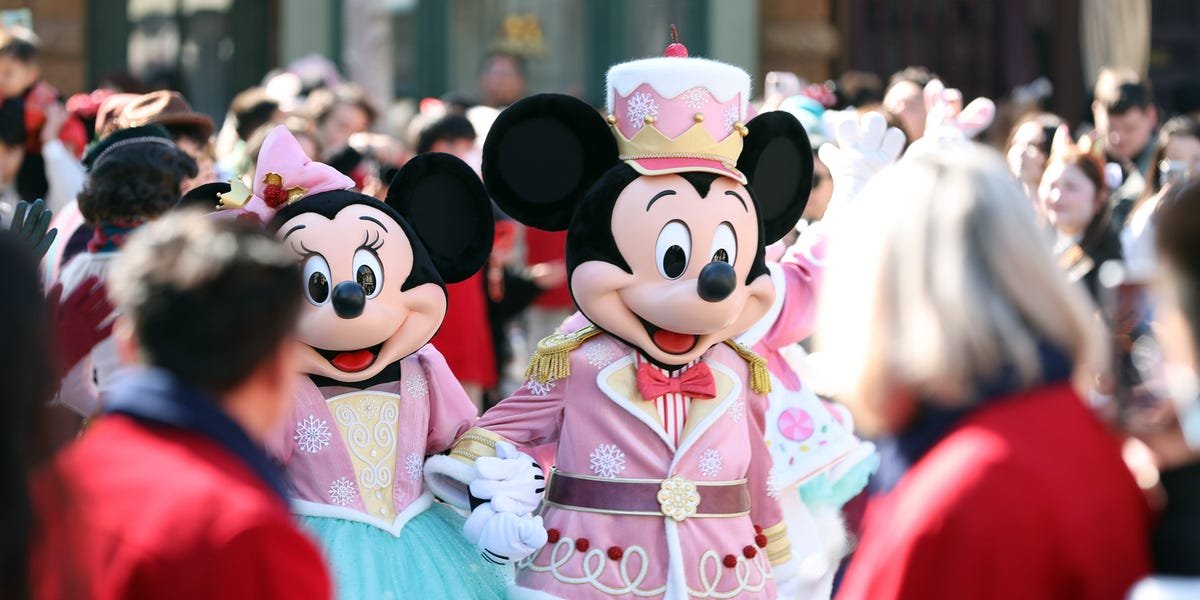
Soon, you’ll be able to use OpenAI products, such as ChatGPT and the video generator Sora, to create content featuring Disney characters like Mickey Mouse, Ariel, and Darth Vader.

CEO Bob Iger said the move would let Disney take advantage of a fast-growing area of entertainment.

Iger said initially Disney would “curate some of the videos that have been created on the Sora platform and put them onto Disney+, which we think is a great way to increase engagement with our Disney+ users, particularly the younger users.” Iger said eventually the company wants users to create AI videos within Disney+ itself.

There’s a key word in Iger’s comment that signals why Disney might be particularly motivated to make this deal: engagement.

Time people spend on Disney’s and other leading streaming services has stayed essentially flat over the past few years, while YouTube and social video have grown. Disney’s share of US TV viewership for its streaming services — including Disney+, Hulu, and ESPN+ — has been stuck at around 4.8% this year, according to Nielsen. YouTube is the top streaming platform on TVs, with a nearly 13% share in October, and its lead has been widening.

Data from analytics firm Luminate showed that engagement with Disney+’s original content fell to a 3% share of US viewing time in the third quarter of 2025. That’s down from 9% three years earlier, the largest decline among paid streamers.

Disney has been highly protective of its famous characters and favors keeping people on its own platforms. This stance has made it difficult for the company to capitalize on the rise of user-generated content. And it’s losing its monopoly on its core constituency, kids, as they increasingly watch YouTube over Disney+.

Hollywood needs new strategies to keep people engaged

Traditional media companies are struggling to grow, so they’re trying to figure out new ways to get people to engage with their content, whether it be games, live events, or fan content creation, media analyst Doug Shapiro, a senior advisor at BCG, recently told Business Insider.

“It’s a zero-sum game they’re losing, and it’s only going to get worse,” he said. “I think they’re all asking themselves, how can they have a deeper relationship with fans?”

Disney invested $1.5 billion in Fortnite maker Epic Games last year and struck a deal with Webtoon to create a new digital platform for Disney’s comics, including Marvel and Star Wars. Outside Disney, Netflix is opening Netflix Houses, mini theme parks in malls that let people enter the worlds of its popular shows. Amazon has backed Fable Studios, a startup that has an AI streaming platform that lets users make their own shows and play with existing IP.

John Attanasio, CEO of Toonstar, a tech-driven animation studio, said Disney’s IP is so popular that the Sora videos could help drive more audience. He thought Disney could potentially charge for access to AI tools on Disney+ or use the Sora videos to discover franchise extensions.

“UGC, when it’s so specific, the reach is limited,” he said. “But when you use known IP, that expands the potential audience.”

Disney fans and Hollywood insiders had mixed reactions to the OpenAI news.

Shae Noble, a Disney superfan in her late 30s, said she could see herself sending birthday messages or making fan videos of the characters interacting in interesting ways — especially if it were integrated into Disney+.

“I’ve already seen some of the negative impacts of AI and people pushing it too far to create harmful images,” she added. “So it’s smart of them to be proactive about it.”

Some in Hollywood worried about the risks to professional creators.

For one thing, the deal puts the emphasis on existing IP rather than making new content, Toonstar’s Attanasio said.

The Writers Guild of America came out swinging against the deal, and said it planned to meet with Disney to explore how much the pact would let user-generated videos use the work of its members.

Sam Tung, a storyboard artist and cochair of the Animation Guild’s AI committee, wondered if OpenAI’s guardrails would be strong enough to protect Disney’s IP, recalling a widely publicized incident earlier this year when Fortnite users used AI to make the Darth Vader character swear. He also doubted the UGC would move the needle on engagement.

“I think what audiences want is high-quality stuff to watch with your family,” Tung said.

James Faris contributed reporting.


Source link

OpenAI-is-feeling-the-heat-from-Google-right-now-—.jpeg

OpenAI is feeling the heat from Google right now — for good reason

Two “code red” alerts — the first from a veteran tech giant worried about a buzzy AI upstart, the second from the AI upstart after the tech giant gained ground.

What a difference three years can make.

News of a recent Sam Altman memo to OpenAI employees, first reported by The Information, is reverberating around the tech world and highlighting the competitive heat it’s facing as Google narrows the gap in the AI race.

On Monday, Altman reportedly told OpenAI employees in an internal Slack memo that he was issuing a “code red” and that the company would be putting more resources into ChatGPT and delaying other products as a result.

Altman’s memo illustrates just how much the AI race has changed. In 2022, Google’s management issued its own “code red” in the wake of ChatGPT’s launch, a moment that illustrated in sharp relief just how far behind the search giant was in the AI race despite financing the breakthrough research that paved the way for AI’s development.

Three years later, it’s clear that OpenAI’s throne is under threat. Here are some of the pressure points it’s facing as Google nips at its heels.

Google is catching up

The elephant in the OpenAI room is Google’s Gemini 3 AI model, which debuted to widespread praise.

The model’s capabilities demonstrated that Google is no longer far behind in the AI race. It’s not just OpenAI that’s unnerved, either. Nvidia, the world’s most valuable company by market cap, recently found itself defending its AI chips after a report about Google’s own chip progress.

The search giant said in November that Gemini had more than 650 million monthly active users, a large increase from the 450 million such users it reported in July. In comparison, OpenAI has said nearly 800 million weekly active users.

Salesforce CEO Marc Benioff recently said that he was ditching ChatGPT in favor of Gemini 3 because of Gemini’s “insane” improvement.

“Holy shit,” Benioff wrote on X last month. “I’ve used ChatGPT every day for 3 years. Just spent 2 hours on Gemini 3. I’m not going back. The leap is insane — reasoning, speed, images, video… everything is sharper and faster. It feels like the world just changed, again.”

Last month, Google launched “Nano Banana Pro,” its AI image generator, showcasing hyper-realistic images that users quickly used to imagine tech CEOs hanging out together or pretend famous Thanksgiving dinner table guests.

Altman’s “code red,” according to The Information’s report, specifically mentions Gemini 3 and teases a coming OpenAI model that it says tested “ahead” of Google’s flagship model, as well as mentions prioritizing OpenAI’s Imagegen image generation model for ChatGPT users.

Google’s advertising cash cow can fund its AI — while OpenAI faces a $1.4 trillion bill

The AI game is an expensive one, and Google has the advantage of being a cash-generating advertising juggernaut.

Sure, Google plans to spend between $91 billion and $93 billion this year on cap ex, much of which is going toward AI costs. But it also brought in $100 billion in revenue in just the last quarter alone — $74.18 billion of which came from its advertising business.

And unlike OpenAI, Google can leverage its massive size for a full-stack advantage, allowing it to control AI development from research to chip manufacturing to its in-house cloud, which hosts everything.

Meanwhile, some on Wall Street have raised concerns about OpenAI’s mounting AI spending commitments, which tally at least $1.4 trillion over the next eight years. In response, Altman has said OpenAI is on track to bring in $20 billion in revenue this year, and expects its annualized revenue to grow to hundreds of billions in the coming years.

But OpenAI is still figuring out its own ads business — the launch of which could be delayed by Altman’s “code red,” according to The Information.

OpenAI has a head start — but Google has a platform advantage

OpenAI hasn’t squandered its head start, and it’s landed some major wins this year.

In recent months, OpenAI has made significant plays into other industries, including social media with Sora, its TikTok-esque AI video generation app. In a direct shot at Google Chrome, OpenAI also launched Atlas, its own web browser.

And it sounds like OpenAI has more up its sleeve as it battles the bottleneck of lining up enough compute and energy to power its developments.

OpenAI executives have said compute constraints are holding back other initiatives, like making ChatGPT Pulse, a personalized update feature within the chatbot for Pro users, available to everyone. Last week, Bill Peebles, OpenAI’s head of Sora, announced that free users would face significant cuts in the number of videos they could generate per day.

ChatGPT also remains synonymous with AI — not unlike Google and online search. That will likely help continue to drive app downloads and usage and could also stave off Google’s attempts to convince users to switch to Gemini or Google’s other AI-infused products.

But humans are creatures of habit, and many already use a Google product or service everyday — a platform advantage that the tech giant is already utilizing to siphon away ChatGPT users.

Silicon Valley’s history is built on startup disrupting the status quo.

Now, with OpenAI (smartly) looking over its shoulder, we get to watch the AI race heat up as Google, a former startup, gets its AI legs and hits its stride.

For OpenAI, it’s a reminder that tech giants can put up quite a fight when facing the prospect of being disrupted — and sometimes, can turn the tables.

“I try not to think about competitors too much,” Altman said last May before critiquing Google’s aesthetic.

It sounds like those days are gone.


Source link