

Torq-the-Cursor-of-Security-Operations-is-in-advanced-talks.jpeg

Torq, the ‘Cursor of Security Operations,’ is in advanced talks to acquire Jit for around $50 million

Cybersecurity unicorn Torq, which refers to itself as the “Cursor of security operations,” is in advanced talks to acquire Boston-based Jit, an automatic security assistant, for roughly $50 million, according to a person familiar with the matter.

The deal would combine Torq’s massive security command center with Jit’s automated tools. By joining forces, the two companies hope to move toward “agentic security,” in which smart AI agents act like independent web-based security guards, eliminating digital threats without ever needing human interaction.

The acquisition has not yet been finalized, and terms could still change. Both companies declined to comment.

Last month, Torq announced $140 million in new funding at a $1.2 billion valuation. Its investors include Evolution Equity Partners, Bessemer Venture Partners, Insight Partners, Notable Capital, Greenfield Partners, and Merlin Ventures.

The talks come as cybersecurity companies race to incorporate AI agents into their platforms. Security teams are increasingly overwhelmed by the volume of alerts generated by modern systems, creating demand for tools that can reduce manual work and respond in real time.

Both startups were founded in 2020 by veterans of the Israeli cyber scene.

Headquartered in Boston, Jit was founded by David Melamed and Aviram Shmueli, and has raised nearly $50 million in venture funding from Boldstart Ventures, Insight Partners, and Tiger Global. Shai Horovitz, formerly chief revenue officer at Cybereason, joined as CEO in 2023.

Torq was founded in 2020 by serial entrepreneurs Ofer Smadari, Leonid Belkind, and Eldad Livni, who previously founded Luminate Security, which was acquired by Symantec in 2019.

The company has recently embraced the title “the Cursor of Security Operations” to describe its shift toward Agentic AI. Just as Cursor code uses AI to help developers write software faster, Torq uses autonomous AI agents to help security teams. Its customers include Abnormal Security, Armis, Check Point Security, Chipotle Mexican Grill, and Inditex.

The deal also follows Google’s recent $32 billion blockbuster acquisition of cybersecurity company Wiz, marking the largest deal in the company’s history and one of the biggest ever in cybersecurity.


Source link

Trump-says-US-has-started-major-combat-operations-against-Iran.jpeg

Trump says US has started ‘major combat operations’ against Iran as strikes hit Tehran

President Donald Trump announced early Saturday that the US had begun “major combat operations in Iran.”

“Our objective is to defend the American people by eliminating imminent threats from the Iranian regime, a vicious group of very hard, terrible people,” he said in a video statement posted on Truth Social.

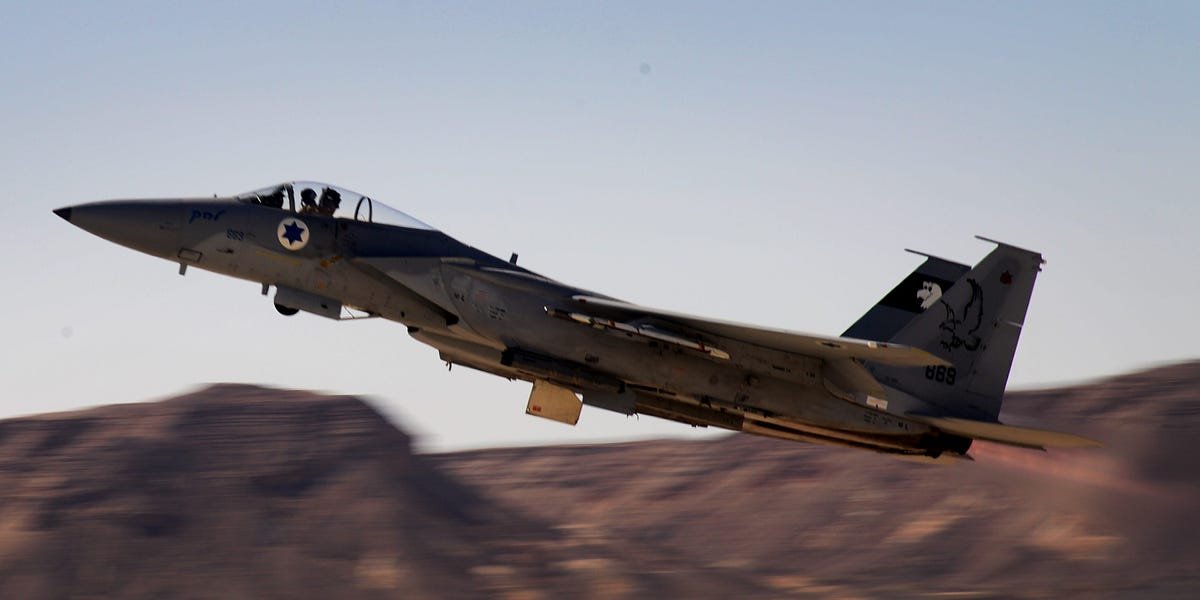
The US and Israel carried out airstrikes against Iran on Saturday, following months of tensions between Tehran and Washington.

The Israeli government first announced the airstrikes, which were carried out in broad daylight, as “preemptive.”

“The government of Israel has carried out a preemptive strike against the Islamic Republic to eliminate threats against the country of Israel,” Israeli Defense Minister Israel Katz said in a statement carried by government channels.

“As a result, a missile and drone attack against Israel and its civilian population is expected in the near future,” he added.

A US official confirmed to Business Insider that American forces were involved, adding that the strikes were ongoing.

Footage circulating on social media appeared to show explosions and plumes of smoke in Iran.

The attack marks the second time that the Trump administration has taken military action against Iran. In June 2025, the US bombed the country’s nuclear facilities as part of Operation Midnight Hammer, and Trump said at the time these had “obliterated” Iran’s nuclear sites.

This new round of strikes comes on the heels of negotiations between the US and Iran, part of the Trump administration’s efforts to pressure Tehran into a deal that would severely limit its nuclear and military capabilities. It also follows the withdrawal of Western diplomats from several Middle East countries.

In recent weeks, as Trump has issued repeated threats and warnings to Iran, pushing it to make a deal, the US has built up a large military footprint in the Middle East and nearby European waters.

The Pentagon has surged hundreds of fighter jets, aerial refueling tankers, reconnaissance planes, support aircraft, and warships into the region.

One complicating factor has been public resistance from US allies to operations against Iran. The UK barred the US from using its nearby bases, and Jordan said its bases couldn’t be used for attacks on Iran, despite imagery showing the US has shifted cargo planes and F-35 stealth fighters to one of its bases.

The significant US naval presence on station or taking up position in the area includes at least two aircraft carriers, more than a dozen guided-missile destroyers, and three littoral combat ships, which are designed for near-shore operations.

The two aircraft carriers — USS Abraham Lincoln and USS Gerald R. Ford — are each equipped with dozens of embarked fighters, electronic attack jets, early warning planes, and helicopters. The Lincoln’s air wing includes F-35 stealth fighters.

On Friday, a day after the Trump administration’s negotiations with Iranian officials in Geneva, White House official Dan Scavino posted a photograph on social media of eight B-2 Spirit stealth bombers on a runway, suggesting these aircraft could be used to strike Iran again.

This story is breaking. Please check back for updates.


Source link