
Trump-orders-federal-agencies-to-stop-using-Anthropics-technology.jpeg

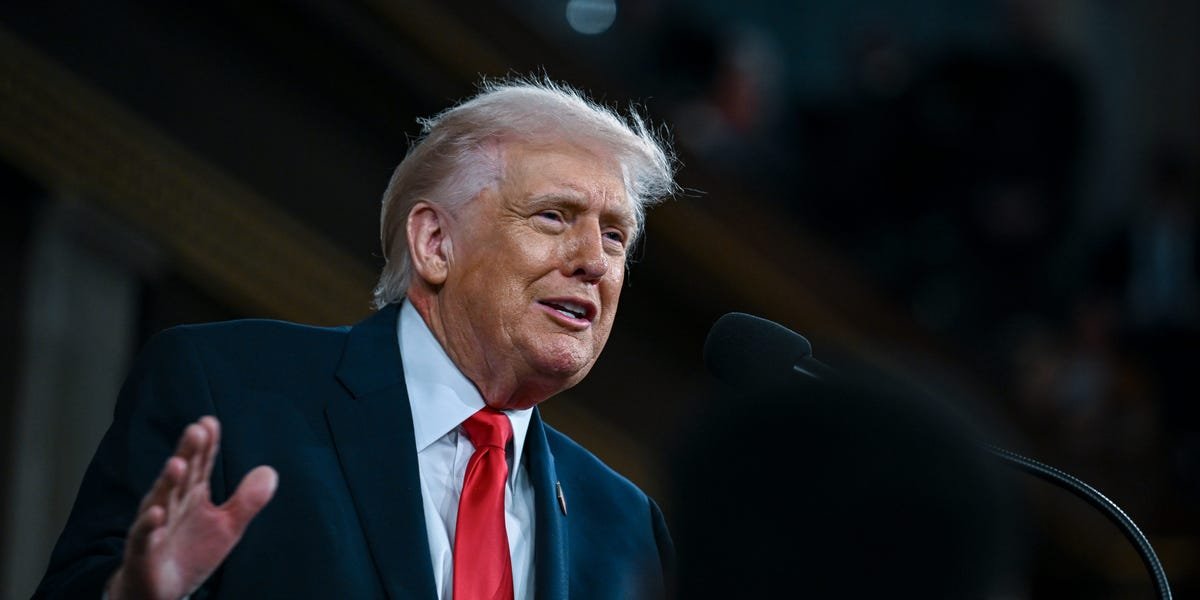
Trump orders federal agencies to stop using Anthropic’s technology

President Donald Trump says federal agencies won’t be using Anthropic’s technology anymore.

“We don’t need it, we don’t want it, and will not do business with them again,” Trump wrote on Truth Social on Friday.

It comes amid a dispute between the AI giant and the Department of Defense.

Trump said that there would be a six-month phase-out period for departments, including the Department of Defense, that are “using Anthropic’s products, at various levels.”

“WE will decide the fate of our Country — NOT some out-of-control, Radical Left AI company run by people who have no idea what the real World is all about,” Trump wrote.

Trump’s announcement comes just a few hours before the Friday evening deadline defense officials had given Anthropic to agree to the military’s terms of use for the company’s frontier model, Claude.

Earlier this week, the two parties came to an impasse over how the military can deploy Claude.

The issue appeared to revolve around two safeguards Anthropic was not willing to drop: mass surveillance of US citizens and autonomous weapons.

Defense Secretary Pete Hegseth had given Anthropic’s CEO Dario Amodei until Friday, 5:01 p.m. Eastern Time to get on board with the military. Hegseth also warned that the government could invoke the Defense Production Act — a wartime law that gives the president broad authority over a company’s resources — and designate Anthropic as a supply chain risk.

Both would be unprecedented moves by the government against an American technology company, experts previously told Business Insider.

On Thursday, Amodei published a blog post stating that the Defense Department had added language to its contract allowing for “any lawful use” of its model.

A source familiar with the negotiations told Business Insider that this language effectively gave the military discretion over how it uses Claude.

The Anthropic CEO said in his post that the company would prefer to continue serving the department but that it could not “in good conscience accede to their request.”




Source link

Judge-orders-Google-to-rebid-for-default-search-deals-every.jpeg

Judge orders Google to rebid for default search deals every year in a major antitrust blow

  • A federal judge ordered Google to limit default search and AI app contracts to one year.
  • The ruling follows a 2024 finding that Google illegally monopolized online search markets.
  • The decision aims to boost competition from rivals in search apps and generative AI.

A judge opened the door to upending Google’s dominance as the default search on your phone.

On Friday, a federal judge ordered Google to limit all default search and AI app contracts to one year, a setback for the long-term deals that have helped cement the company’s dominance on billions of devices.

The ruling, detailed in a December 2025 judgment, requires Alphabet’s Google to renegotiate every default-placement agreement annually, including lucrative deals with Apple’s iPhone and manufacturers like Samsung.

Judge Amit Mehta of the US District Court of the District of Columbia said the “hard-and-fast termination requirement after one year” is necessary to enforce antitrust relief after his landmark 2024 finding that Google illegally monopolized online search and search advertising.

The decision aims to open the door for rivals, especially fast-moving generative AI companies, to compete for default spots that have historically been held for years at a time. It builds on a separate September order requiring Google to share some of the data behind its search rankings with competitors.

While Google can still pay device makers for default placement, the annual renegotiation rule sharply restricts its ability to secure long-term control over the search market.

Google and the Justice Department did not immediately respond to requests for comment.


Source link

A-Ferrari-and-over-480-takeout-orders-FBI-details-spending.jpeg

A Ferrari and over 480 takeout orders: FBI details spending spree of Netflix director in $11 million fraud case

In March of 2020, Netflix infused $11 million into a production company to complete the first season of “White Horse,” a futuristic sci-fi series it hoped to bring to its platform.

Carl Rinsch — the director, writer, and showrunner of “White Horse” — never finished the 12 episodes he was supposed to deliver.

But a short time after he got the cash, Rinsch spent millions of dollars on furniture, cars, credit card bills —  and a whole lot of takeout.

According to testimony at his criminal trial on Thursday, Rinsch spent a total of $9.14 million through a personal bank account with funds originally earmarked to finish “White Horse,” which had the production codename “Conquest.”

The spending included more than 480 food deliveries from Postmates and Uber Eats during a six-month span in 2022, according to a spreadsheet entered into evidence. The spreadsheet showed Rinsch sometimes making a dozen separate food purchases each day.

The most expensive category, FBI agent Michael Naccarelli testified, was for furniture, for which Rinsch spent $3.36 million.

Rinsch also spent $2.4 million on cars — including a Ferrari and Rolls-Royces — and $1.8 million on American Express bills, according to Naccarelli. He also spent money on hotels, jewelry, and art, Naccarelli said.

“Rinsch described the Ferrari as “a birthday gift to myself” in a 2021 text message to his personal assistant, which was shown to jurors later Thursday.

Attorneys for Rinsch told jurors at his trial in Manhattan federal court that the “White Horse” debacle is a civil business dispute — not criminal financial fraud.

They say Rinsch, who previously directed “47 Ronin,” starring Keanu Reeves, is a “creative genius” who was overwhelmed by the demands of directing, writing, and producing “White Horse” and left to flounder by the streaming company.

Days after Netflix sent $11 million to a bank account for Rinsch’s production company, he moved $10.5 million to a personal Wells Fargo bank account, according to Naccarelli and records entered into trial evidence.

The director then moved portions of the funds to a Kraken cryptocurrency exchange account, as well as other bank accounts, before ultimately transferring $13.7 million to a personal Bank of America account.

With his Kraken account, Rinsch purchased about a dozen different cryptocurrencies, including Dogecoin, Etherium, Bitcoin Cash, and the stablecoin Tether, trial records show.

In April 2022, Rinsch’s Dogecoin holdings were worth about $755,000, and his Etherium tokens about $939,000, according to Naccarelli.

While a financial advisor previously testified in the trial that Rinsch’s stock investments went badly, Naccarelli said the director’s cryptocurrency investments were profitable.

“The trades performed very well,” Naccarelli said as Rinsch — wearing a three-piece black suit and a patterned pink tie and matching pocket square — nodded slightly.

Allen Grove, an FBI agent who testified after Naccarelli, said Rinsch considered himself a major Dogecoin trader when they met in April 2023 regarding a dispute over one of Rinsch’s furniture purchases in Paris.

“Mr. Rinsch described to me that he became wealthy during the pandemic by investing in Dogecoin,” Grove testified. “He described himself to me as ‘The Dogecoin Whale.'”

Rinsch said in an earlier deposition, which was shown to jurors on Thursday, that his purchases of four Rolls-Royces were meant for the production of “White Horse,” and not for personal use. Netflix wrote off the production as a loss in 2020.

“That would be fraud otherwise,” Rinsch said in the deposition.


Source link