

Lloyd Lee

Alphabet CEO could earn up to $692M under a new equity package that’s linked to Waymo for the first time

Alphabet’s chief executive just got a new equity pay package that, for the first time, ties a chunk of his payout to Waymo, the company’s robotaxi service.

In an SEC filing posted on Friday, the company awarded CEO Sundar Pichai a three-year equity cycle that could be worth up to $692 million if the CEO meets the board’s performance targets.

Much of the package remains unchanged from the CEO’s 2022 award, according to the filing. The new incentives revolve around the value of two of Alphabet’s “Other Bets”: Waymo and Wing Aviation, a drone delivery service.

According to the filing, Pichai could be awarded up to $260 million depending on the increase in Waymo’s per-unit value over a three-year period, as determined by the compensation committee — essentially, the board’s estimate of what a single Waymo equity unit is worth.

The company doesn’t list specific operational milestones Pichai will have to reach. A spokesperson for Alphabet declined to comment.

In addition, the company granted the CEO Wing-linked equity units that could be worth up to $90 million, contingent on the company’s per-unit value over the next three years.

Tying Pichai’s compensation to Waymo and Wing is a signal that Alphabet no longer views the two entities as moonshot experiments but rather as assets representing valuable, scalable businesses

The board said in the filing that “incentivizing Mr. Pichai to focus his efforts on developing and scaling Alphabet’s later stage Other Bets, such as Waymo and Wing,” is in the best interests of Alphabet and its stakeholders.

Waymo, which began as a project inside Google’s moonshot factory in 2009, has driven over 200 million autonomous miles to date. This year, the company expanded its commercial service to 10 markets, serving riders in Dallas, Houston, San Antonio, and Orlando.

Wing is another moonshot factory venture that began in 2012. The company, which provides last-mile drone delivery services, became an independent Alphabet subsidiary in 2018. Wing announced in January that it would expand to more than 270 Walmart stores by 2027.

Pichai maintains a base salary of $2 million, unchanged since 2020, and will be awarded performance stock units (PSUs) tied to Alphabet’s total shareholder returns relative to the S&P 100. The max value of the PSUs could be worth up to $252 million.

There’s also a time-based equity package that will award Pichai $84 million, provided he stays with the company for the next three years.


Source link

Some-Tesla-shareholders-say-diverting-Nvidia-chips-is-further-proof.jpeg

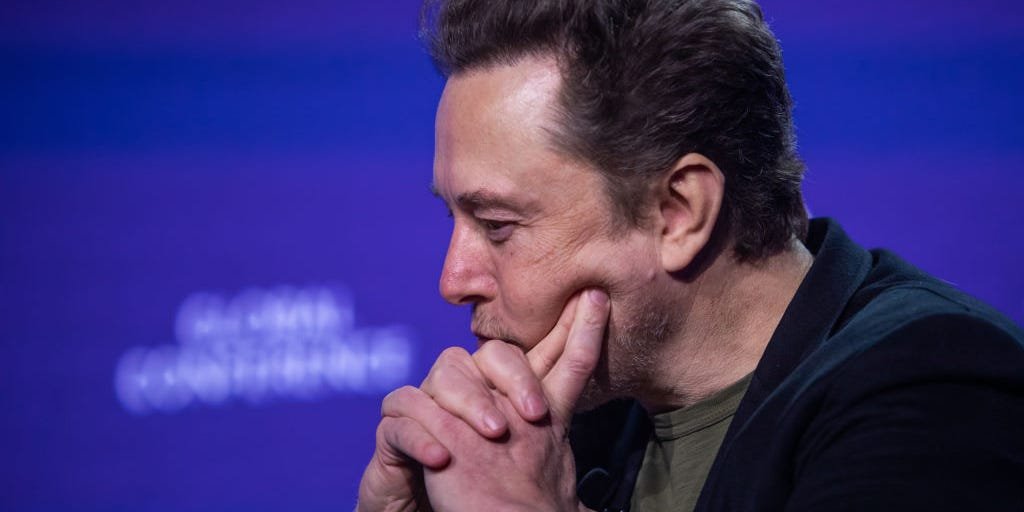
Some Tesla shareholders say diverting Nvidia chips is further proof that Elon Musk doesn’t deserve a multibillion-dollar pay package

Several institutional shareholders of Tesla told Business Insider that Elon Musk’s decision to redirect a shipment of valuable Nvidia chips away from the EV company is further proof the CEO doesn’t deserve a multibillion-dollar pay package.

In May, a group of eight Tesla shareholders wrote a letter urging other investors to vote against Musk’s compensation package. The group is just one faction of a growing number of investors who said they plan to vote against the deal.

This package, now roughly worth $46 billion, was struck down in January by Delaware Chancery Court Chancellor Kathaleen McCormick, who said that the process to reach this “unfair price” for Musk was “deeply flawed.”

Tesla shareholders will vote on June 13 on whether to reinstate Musk’s deal.

But less than two weeks ahead of the shareholder vote, CNBC reported that Musk diverted a $500 million shipment of Nvidia chips, which are essential for powering artificial intelligence technology, away from Tesla and to his social media platform X instead.

The internal memo from Nvidia indicating Musk’s delay of the Nvidia chips procurement was from December, CNBC reported — months before the April earnings call in which the Tesla CEO insisted the automaker is an AI company. He also stated in the call that he would aggressively expand the number of Nvidia chips at Tesla from 35,000 to 85,000 units by the end of 2024.

In response to the CNBC report, Musk said on X that “Tesla had no place to send the Nvidia chips to turn them on, so they would have just sat in a warehouse.”

“The south extension of Giga Texas is almost complete. This will house 50k H100s (Nvidia chips) for FSD training,” Musk added, referring to Tesla’s Full Self-Driving feature — a key component of the company’s promise to deliver autonomous taxis.

But some of the shareholders behind the effort to strike down Musk’s big payday are not convinced.

“The diversion of Nvidia’s processors to X and xAI is just another example of Tesla’s CEO reallocating Tesla’s resources in favor of his other businesses and treating Tesla as though it is his own coffer as a result of the lack of oversight by Tesla’s board,” Tejal Patel, the executive director of SOC Investment Group, wrote in an email to BI.

Patel added: “The key questions are why were these valuable processors ‘just sitting there’ in the first place, and if it was an operational issue, why was that not foreseen by management? Whatever decision-making there was for the processors to go unused by Tesla would have been up to CEO Musk.”

Musk did not respond to a request for comment from Business Insider.

SOC Investment Group is one of the eight shareholders that co-signed a letter urging investors to vote against the ratification of Musk’s stock options package and against the reelection of Musk’s brother, Kimbal, and James Murdoch for seats on Tesla’s board.

The group — made up of pension fund managers, an asset management firm, and a bank — also includes Amalgamated Bank, AkademikerPension, Nordea Asset Management, New York City Comptroller Brad Lander, SHARE, Unison, and United Church Funds.

In a statement to BI, Lander wrote that Musk’s decision to divert Nvidia chips away from Tesla “should be a “red flag to investors.”

“This sudden move adds to the growing concerns about Musk’s commitment to Tesla and highlights his glaring conflicts of interest,” he wrote. “There is a pressing need at Tesla for a genuinely independent board that will ensure Musk prioritizes company interests.”

Matthew Illian, the director of responsible investing for United Church Funds, similarly criticized Musk’s move to delay the shipment of Nvidia chips, stating that it was “further evidence” that the pay package “never achieved its purpose of maintaining the attention of Tesla’s CEO.”

“This is all about Elon building an empire for himself with investor money and we can’t let this happen,” he wrote in an email to BI.

It’s not immediately clear how much Tesla stock the eight shareholders own altogether.

Five of the eight shareholders, including Amalgamated Bank, Unison, Nordea, the New York City Retirement System, and United Church Funds, represent more than 4.9 million shares of Tesla stock.

As of Thursday, those shares are worth more than $878 million.

Spokespersons for SHARE, Nordea, and Unison could not be reached for comment or did not immediately respond for comment.

In addition to the eight shareholders, the California Public Employees’ Retirement System (CalPERS), which owns about 9.5 million shares of Tesla stock, signaled it would vote against Musk’s pay package.

“We do not believe that the compensation is commensurate with the performance of the company,” CalPERS CEO Marcie Frost told CNBC.

A CalPERS spokesperson declined to comment when asked about Musk’s decision to divert the shipment of Nvidia chips.


Source link