

I-found-a-Bottega-Veneta-bag-at-the-thrift-store.jpeg

I found a Bottega Veneta bag at the thrift store. I paid $8, and it’s worth $3,000.

This as-told-to essay is based on a conversation with Kristen Boelen, the founder of Lunch Break Vintage. It has been edited for length and clarity.

I have been thrifting since the moment I could drive. Back then, I was into higher-end things that were out of my budget, and I’d go thrift shopping to find similar items that I could afford. That habit carried on through college and beyond, including when I was most recently working as an art director for a wine and spirits company. While working there, I’d thrift on my lunch breaks.

I’d find stuff for myself, as well as one-of-a-kind items that didn’t fit. I wanted someone to take that stuff. So I began selling items on Whatnot.

I’d thrift on my lunch break from work, and then on the weekends I’d go live and sell my pieces. My business grew from there, and I named it Lunch Break Vintage, which I began full time in February 2025.

I scored a luxury designer bag during a recent shopping trip

In December 2025, I was at a thrift store in the San Francisco Bay Area. It was a normal Wednesday, which is the day this particular thrift store opens for the week, and when I always try to go. It was very empty that day.


Woman posing for photo on mirror

Kristen Boelen thrifts three times a week every week.

Courtesy of Kristen Boelen


Two woven leather bags caught my eye. You see woven leather bags all the time. There are so many Bottega Veneta dupes. I didn’t really think much about it, just that one of them looked exceptionally nice.

I first noticed the hardware, then the leather slouching and hanging. I could tell it was soft leather. When I picked it up, it was heavy — designer leather bags have a weight to them because of the hardware. I opened it up and saw the logo. You can see in the video that I posted that’s the moment my jaw drops. The leather inside was really soft and buttery too; that’s always a sign a bag is legitimate.

I know they sort through and send a lot of the higher-end pieces to an online audience. It seemed unrealistic that someone wouldn’t have set it aside. I thought, if they had put it out there, it must not be real.

I used technology to help confirm my suspicions

I took a photo of it and put it into Google Lens, and found on Vestaire Collective there was the exact same bag and color. That clued me into the style name and that it had been retired. There’s a video of me going, “Oh my God, oh my God, oh my God,” once I figured out where the serial tag was. I got out of there as quickly as possible, paying $8 for the bag.


Bottega Veneta purse

Kristen Boelen found a $3,000 purse for $8.

Courtesy of Kristen Boelen


I later had it authenticated through an app I use called Authentic Detective. It will give you a certificate of authenticity. Online research says the bag is valued at around $3,000.

I’m keeping the bag for myself. It’s something that will be passed down for generations. I had so many comments on the video saying that the bag was ugly, but I love it.

Scoring finds at the thrift store takes a little skill — and luck

I thrift all the time because I now do this for a living, but I think consistency is key. I thrift at least three times a week, every week. It’s also important not to just pick up what is trending. A good secondhand item has to check all the boxes for me, and I really care about quality, always looking for natural fibers. I focus on what makes people feel elevated and the kinds of secondhand pieces they can keep in their closets forever.

Don’t believe that middle-of-nowhere places are garbage. Some of my best, coolest, most unique pieces have come from middle-of-nowhere stores.



Source link

Kelsey Vlamis's face on gray background.

US tariffs are paid almost entirely by Americans, a German study finds

A favorite tool of President Donald Trump has been costing Americans, according to new study.

The brunt of US tariffs — 96% — have been paid by US buyers, research from the Kiel Institute for the World Economy, a German think tank, found, while about 4% of the tariff burden was paid by foreign exporters.

“American importers and consumers bear nearly all the cost,” the researchers said of the tariffs.

The study, published Monday, said that the $200 billion increase in customs revenue that the US government raised in 2025 was a “tax paid almost entirely by Americans.”

The research contradicts Trump’s messaging that tariff costs would not be paid by Americans, but by other countries and overseas exporters. The president’s aggressive tariff policy launched last year placed additional duties on dozens of trade partners, including China, India, and the European Union.

The Kiel Institute study examined more than 25 million shipment records, worth nearly $4 trillion, between January 2024 and November 2025. The researchers found that there was a “near-complete pass-through” of the tariffs.

“US import prices rise nearly one-for-one with tariffs, while trade volumes contract,” the study said.

The findings echo other research that has found Americans are paying for tariffs, including from Harvard Business School and The Budget Lab at Yale. Analysts at Deutsche Bank and Bank of America also said last year that Americans were the ones paying for the tariffs.

The Kiel study said American importers and wholesalers are first hit by the tariff cost, followed by manufacturers and retailers, all of which must choose whether to absorb the tariff or pass it on to their customers. American consumers are then hit by increased prices, both on imported goods or American-made products that use foreign inputs. There’s been more limited availability of goods in the US, the researchers found.

Trump has continued to use tariffs, saying on Saturday that he would impose additional tariffs on Denmark and other European countries unless they agree to a deal that would transfer Greenland to the US.

Many of Trump’s tariff policies could also be undone. The Supreme Court is expected to rule soon on the legality of a host of Trump’s tariffs that were instituted under an emergency national security law. Trump has said the US would be “screwed” if the tariffs are overturned.


Source link

A-Facebook-veteran-took-a-big-career-risk-that-resulted.jpeg

A Facebook veteran took a big career risk that resulted in a ‘giant failure’ — but embracing a ‘J-curve’ career path paid off

At 25 years old, Molly Graham was thriving in Facebook’s HR department when a senior executive urged her to transfer out of her stable role and help build a mobile phone instead.

She took the risk — and it could have derailed her career.

But Graham, who later became a C-suite executive at some of America’s biggest companies and philanthropies, now views that risky bet as one of the most important moves she ever made.

“It just felt like falling off a cliff,” Graham, now the founder of Glue Club, said in a recent interview on Lenny Rachitsky’s podcast. “Taking risks, accepting the terrible fall and that experience of falling has been more than worth it.”

Graham described the experience as part of what she calls the “J-curve” — a career trajectory where a risky move leads to an initial drop before eventually producing outsized gains. Visually, she describes it as standing on a ledge, stepping off, sinking briefly, and then rising far higher than where you started — just like the shape of the letter J.

The concept, which she has also written about in her Lessons Substack, challenges the idea of a steady career ladder that steadily moves up and to the right.

Instead of climbing rung by rung with promotions every two to five years, Graham argues that some of the most valuable professional growth comes from jumping into roles you aren’t ready for and surviving any setbacks.

Graham’s own J-curve began when billionaire investor and “All-in” podcast host Chamath Palihapitiya, then Facebook’s vice president of growth, recruited her to help develop a smartphone, encouraging her to make the move by sketching out the J-shaped trajectory on a whiteboard.

He brought her on despite her having no experience in product development, dropping her into rooms filled with engineers and phone specialists with deep subject matter expertise. She recalled feeling like an “idiot” for much of her first six months.


Headshot of Molly Graham, the former Facebook and Google executive, and writer of the Lessons Substack

Molly Graham, the former Facebook and Google executive and writer of the Lessons Substack.

Molly Graham


At her midyear review, Palihapitiya delivered what Graham called the worst performance evaluation she had ever received. But the new experience eventually expanded her expertise.

“Slowly, I remember I had been doing all these trips to Taiwan because we were actually working on hardware and I, at some point, came back from Taiwan and I like drew on a whiteboard for him the layout of a mobile phone, trying to explain to him kind of like why something he wanted to do was not possible,” Graham said. “And I so vividly remember walking out of that meeting being like, ‘Oh like I actually know things.’ And slowly then over the following three years I became an expert in mobile.”

Palihapitiya did not respond to Business Insider’s request for comment.

“The phone itself was a giant failure — a massive, costly failure for Facebook,” Graham told Rachitsky on the podcast. “But it was not a failure for me.”

She credits the experience with teaching her that she could operate far outside her comfort zone — a lesson that later helped her take on senior leadership roles, including serving as COO of Quip, which Salesforce acquired for $750 million, and overseeing operations at the $7.4 billion Chan Zuckerberg Initiative.

The J-curve, Graham said, is especially common at fast-moving companies like Meta, Alphabet, Nvidia, and SpaceX, where leaders value employees who are willing to take big risks early and learn quickly. In those environments, proving adaptability can matter more than checking every qualification box.

Not everyone supported Graham’s decision at the time. She said Facebook COO Sheryl Sandberg, then the number two at the tech giant, advised against the move — as did her father.

“When wiser, more experienced people questioned the job offer, it definitely made me pause,” Graham told Business Insider in a follow-up email. “But my gut felt really strongly that I needed to take the risk.”

That instinct, she said, ultimately helped her discover what kind of work she didn’t want to do, and where her strengths lay. She didn’t want to sift through mock ups of hardware design and argue about a button’s placement. Instead, she sharpened her management skills and prepared to help lead large organizations.

“The much more fun careers are like jumping off cliffs,” Graham told Rachitsky. “They can take you to places that you never could have imagined.”


Source link

My-2017-Volvo-has-more-than-100000-miles-Its-old.jpeg

My 2017 Volvo has more than 100,000 miles. It’s old, paid off, and perfect for my family.

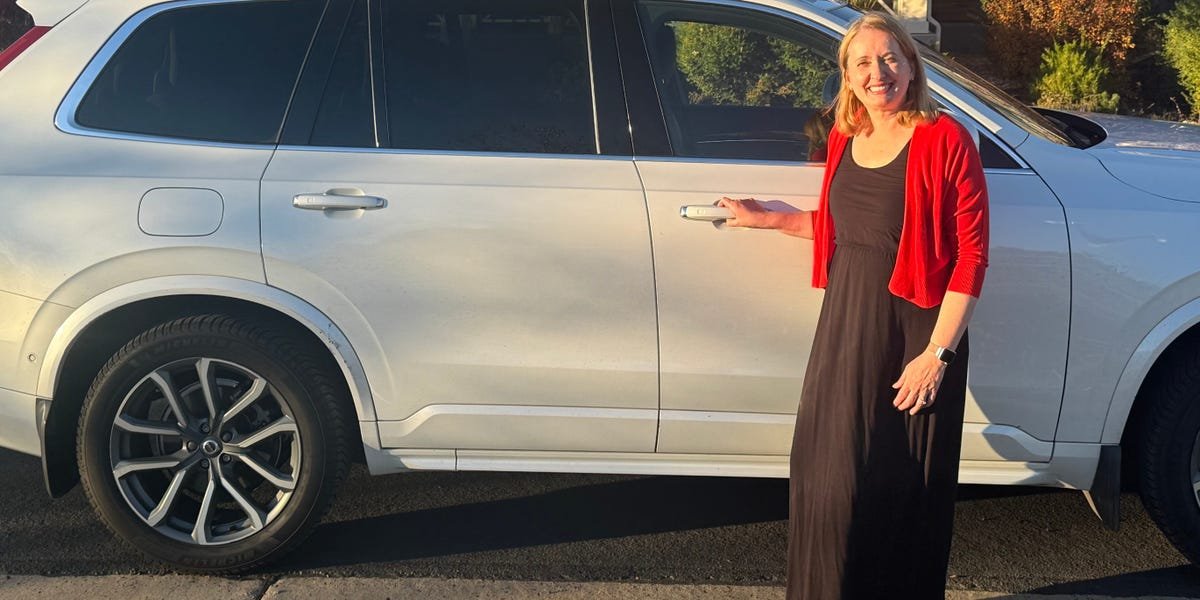
When I bought my Volvo XC90 in 2017, I was thrilled to get a safe, third-row vehicle. With three kids between the ages of 3 and 8, the extra space meant fewer fights and more room, and reassured me that the car’s safety features would help me drive through snowy roads and city traffic.

Almost a decade later, that same Volvo has over 112,000 miles on it. I still remember when my family and I sat on the front porch, excited, as we watched the car get delivered from the truck.


New car being dropped off.

The author’s family was excited to see their car be delivered.

Courtesy of the author


These days, my kids have been asking me when I’m going to get a new car, and my answer remains the same — I love my car and I’m going to keep driving it.

The car is still reliable — and I trust it

Aside from regular maintenance and tire changes, the car has been reliable. Before the warranty expired, we purchased an extended warranty on the vehicle. Now that the extended warranty has expired due to mileage, I am still in awe at how reliable the car has remained.

Years ago, we appreciated that the trunk could hold the double stroller, and that the built-in booster seat allowed us to drive car pools with small children. These days, we appreciate the third-row flexibility that allows us to fit our skis, snowboards, soccer gear, backpacks, and all the other essentials my kids need.

I spend a lot of time in the car driving people around, and I am thankful for a car I can rely on.


Woman driving car

The author spends a lot of time in her car and finds it reliable.

Courtesy of the author


My mom used to say that the best car is one that reliably gets you from point A to point B. I still agree with this statement.

I appreciate the small safety features that I now take for granted. From the computer technology to the warning lights on the mirrors and back-up cameras, the car has helped keep my family safe on numerous occasions and helped me avoid some near accidents.

The car is part of our family. We have taken it on adventures to national parks, ski resorts in the Rockies, and even to an alligator farm. The vehicle has had its share of muddy shoes, candy wrappers, and dog hair. It also has dings from when I backed the car into the garage.

The economics don’t make sense for a new car right now

When my car is in the garage, the dealer provides me with a loaner car — a brand-new version of my current vehicle. I get tempted and think about how nice it would be to get a new car. The latest vehicles have more power, fewer scratches, are cleaner, and have that new-car smell.

I’ve crunched the numbers. After years of car payments, my car is now paid off. Every month that goes by without a car payment means more money toward saving for the future. More money for food, utilities, saving for college, and the occasional splurge. Saving money now means more financial freedom for tomorrow.

Buying a new car is expensive. Borrowing money for car payments these days costs more than it did in the past. Even yearly vehicle registration costs less for an older car.

Part of me feels proud to keep driving my older car

We live in a world that tells us that newer is better, that we should want more. Although external validation of a new car is nice, I am focusing on the internal satisfaction that comes from knowing I am saving money by driving an older car.

My car may not turn heads in the school pick-up line, but I view the scratches and door dings much like wrinkles- a sign of a good life.

I will continue to drive my older car, and I am thankful for a safe and reliable vehicle that has served my family well.


Source link

We-gave-our-daughter-20000-for-a-wedding-but-she.jpeg

We gave our daughter $20,000 for a wedding, but she used it for a home down payment and paid for her own wedding. Everyone was happy.

When Mike’s daughter got engaged, he and his wife wanted to help pay for it.

Mike, who asked Business Insider to only use his first name for privacy reasons, estimated that a wedding in the Kansas City area would cost between $15,000 and $25,000 at the time, which was around 2015.

Mike and his wife decided they could put $20,000 towards the wedding, but they knew wedding spending can get out of hand and that emotions tend to run high during the planning process.

So instead of working closely with their daughter on her wedding plans and talking through each potential cost, they came up with a straightforward solution: give her and her fiancé a lump sum of $20,000 and let them do all the planning.

“I didn’t want to be telling my daughter what she could and couldn’t do,” he said. “She was an adult.”

Mike said the strategy took the pressure off him and his wife and helped avoid any wrestling over who was buying what or what his daughter could and could not have at her own wedding. He also said it helped him and his wife contribute the amount they wanted without going over budget by adding on things here and there.

In 2023, the national average cost of a wedding was $35,000, according to The Knot, while the average cost in Kansas was $25,000. Still, most couples end up going over their budget. A Real Weddings Study by The Knot found 56% of couple spent an average of $7,600 more on their wedding than they planned. Others exceeded their budget by more than $10,000.

While tradition typically has the bride’s family primarily paying for a wedding, those customs are changing, especially as Americans get married later in life and are more able to take on their own wedding costs. A 2023 study from The Knot found it’s more common for couples and their families to split the costs equally.

Mike, his wife, their daughter, and her fiancé were all happy with the lump-sum agreement.

“Then they kind of tricked me,” he said, laughing. “One day, they came home and said, ‘Hey, we bought a house.'”

The couple took the $20,000 and used it to put a down payment on their home — before they actually had their wedding, which they then planned to pay for out of their own pocket.

Initially, Mike was surprised, but ultimately, he thought it was a good thing that his daughter and her fiancé paid for their own wedding.

“If kids are not given carte blanche on wedding plans, if they’re forced to budget from their own standpoint, the whole thing just doesn’t get out of hand,” he said.

The couple held the wedding at the rose garden in Loose Park, a large public park in Kansas City, and at a popular reception hall. Mike said everything about the wedding seemed reasonable but that he never learned what they ended up spending.

“I never asked,” he said.

If the couple had used the money for a down payment and then eloped, Mike said that may have bothered him. But as long as he and his wife were still able to attend their daughter’s wedding, they were happy.

“I figured I got off for a reasonable amount of money for the wedding, and they got a down payment on a house out of the deal and a wedding,” he said.

Mike said he thinks too many people get caught up on the lavish weddings they see on TikTok, but that it can take away from the “whole point of having a wedding, which is to have a marriage.”

He also said that he thinks by helping them learn how to budget their money for a wedding, it was also a good step towards learning how to budget in a marriage.

Mike’s wife did end up giving their daughter a bit more money in the end, which he thinks was for something having to do with her dress.

“She snuck it in,” he said, laughing. “She couldn’t resist.”

Have a news tip or a story to share about the costs of throwing a wedding or being in a bridal party? Contact this reporter at kvlamis@businessinsider.com.


Source link