Meet-Molly-OShea-the-VC-turned-podcaster-who-gets-execs-like-Alex.jpeg

Meet Molly O’Shea, the VC-turned-podcaster who gets execs like Alex Karp and Palmer Luckey talking

Molly O’Shea is a name-dropper. There’s good reason for that.

I count 29 big names in tech mentioned over our hourlong call. She told me about recently moderating a panel with Kalshi cofounders Tarek Mansour and Luana Lopes Lara. Ken Griffin took the stage after her. O’Shea breezily referenced talking about the state of new media with the TBPN bros in Peter Thiel’s house.

But it’s O’Shea’s access to executives like these that keeps her audience coming back. The podcaster is deeply immersed in Silicon Valley culture, having several years of venture capital experience under her belt.

“I am institutionally trained not to get canceled,” she said. “A lot of these people really trust me. I think it’s a wonderful component that I come in from the industry.”

Her podcast’s name, Sourcery, references “sourcing deals,” but it better represents O’Shea’s talent herself. She’s clearly sourced up, sporting an ever-growing rolodex of tech’s biggest names.

After buzzy interviews with Palantir CEO Alex Karp and Anduril cofounder Palmer Luckey, O’Shea’s platform has quickly grown. So have her critics, some of whom say she should ask tougher questions.

But her core audience — investors in the world of tech and finance — seem to love that she’s in the know.

From in-house VC newsletter to ‘monk mode’

O’Shea considers herself the first of her family to chase a “capitalistic pursuit.”

“It’s funny, there’s not many business-oriented people in my family,” she said. “My dad had a marketing agency for most of my life, but again, it was a marketing agency. My mom is a home designer and she used to be a creative director.”

She went to New York University for studio art but pivoted to entrepreneurship after learning how low the average artist’s salary was. Eventually, she narrowed in on venture capital.

O’Shea got her start working for the father of a college friend, a secondaries investor for a family office. She moved to Miami to work for him before coming back to New York as an analyst at the Global Public Offering Fund.

She then went to the seed and Series A investment firm TMV — then called Trail Mix Ventures — as an associate. She started Sourcery there as an in-house newsletter, but only made it public when she started at New York Life Ventures as a senior associate. She shared it with friends, and it eventually grew a readership.

Then Upfront Ventures’ Greg Bettinelli reached out with a job offer.

“I was a reader of her email newsletter,” Bettinelli later wrote when asked about the offer. “We were looking to hire a new investor for Upfront Ventures and I reached out as I appreciated what she built as what I think was a side project at the time.”

O’Shea said she was on a boat in the Mediterranean when she got Bettinelli’s offer. She met him in the Hamptons. “It’s like the bougiest story ever,” she said.

O’Shea moved to Los Angeles for Upfront Ventures. She’s stayed in the city and prefers it to New York. “You get so much more for your money,” she said. “I have a hot tub!”


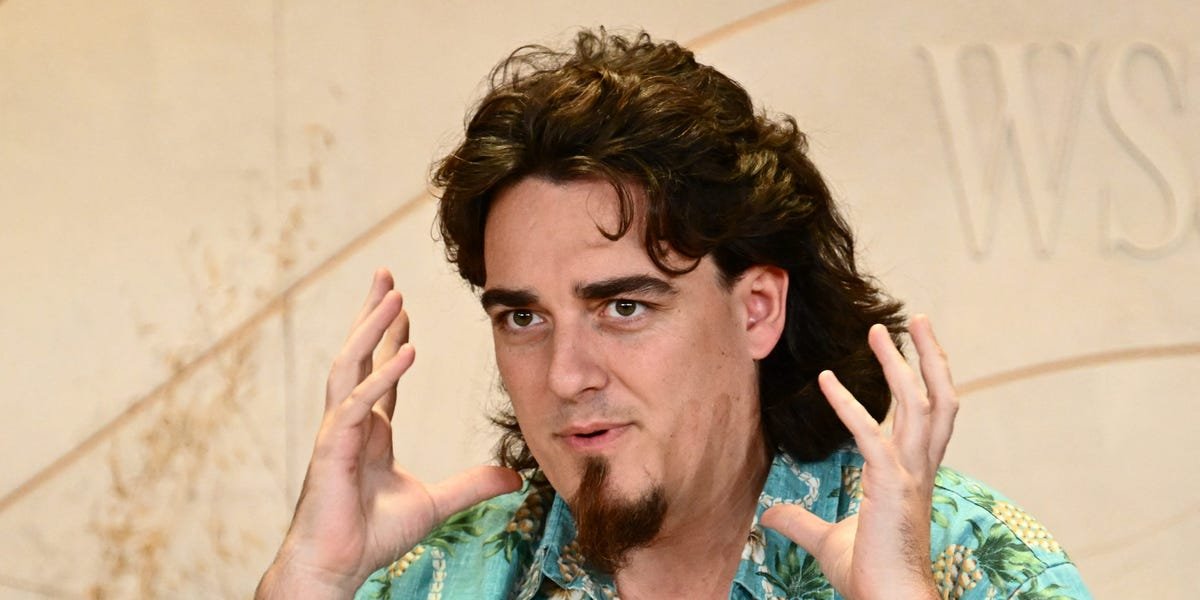
Sourcery host Molly O'Shea is pictured.

Before O’Shea was a full-time podcaster, she worked for TMV, New York Life Ventures, and Upfront Ventures.

Molly O’Shea


Then Elon Musk took over X, partially open-sourced the algorithm, and launched ad-revenue share programs. O’Shea said, “Game on.”

She started posting more, and her follower count grew. Erik Torenberg of the podcast network Turpentine asked if she wanted to start a podcast about deals, linked to her newsletter.

While O’Shea declined to disclose exactly how much she earns, she said the Sourcery newsletter began generating revenue when it added subscriptions. That includes a $600 “I can expense it” annual tier she said “plenty of people” were willing to pay for.

Sourcery is now her full-time job and a top-200 podcast in Apple Podcasts’ investing category. She employs a “lean team” to help her film, edit, and promote.

The Palantir and Anduril interviews helped generate more interview interest. (Her next guest: Jake Paul.)

After an “insane” end to 2025, O’Shea said she spent January locked-in and focused on laying the foundation for the rest of the new year.

“I’m going into monk mode.”

Getting Karp and Luckey to say yes

O’Shea’s network is big, and her show keeps making it bigger.

Andreessen Horowitz’s Alex Immerman told her he watched her Kalshi video before investing in the company, she said. “I know plenty of people — I won’t name them — that have put millions of dollars into these companies that I’ve profiled,” she said.

That seems to be how O’Shea lands many of her guests: knowing the right people. I spoke to two early interviewees. Oden Technologies cofounder Willem Sundblad was introduced to O’Shea through an investor. Contrary general partner Kyle Harrison met her in 2018 and once considered hiring her while at Coatue Management.

“A lot of these relationships start first as friendships,” Harrison said. “We’ve enjoyed talking to each other off the record, so talking on the record is just as much fun.”

The Karp interview was a right-place, right-time situation. She was at the Hill and Valley Forum in 2025, where Karp was speaking. O’Shea said Palantir’s Eliano Younes recognized her from Pirate Wires and introduced her to Shyam Sankar, the company’s CTO.

Then she published a list of her 100 dream guests. Listed No. 1 was Ivanka Trump. Palantir staff noticed Karp wasn’t on the list, O’Shea said, and she amended it, making him 1B. That set the interview in motion.


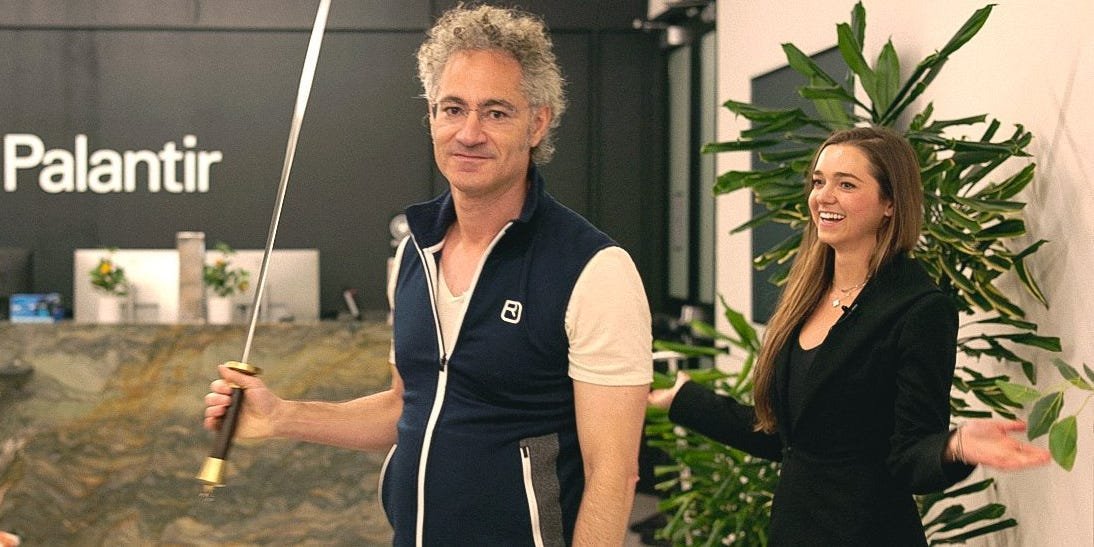
Molly O'Shea is pictured with Palantir CEO Alex Karp

A clip of Karp brandishing a sword thrust O’Shea’s podcast into the limelight — and got the trolls commenting.

Molly O’Shea


Her Anduril series also sprang from the Sourcery 100 list. She put Anduril cofounders Palmer Luckey and Trae Stephens on the list. Matt Grimm commented and helped her set up an interview.

The Karp interview was her biggest by far. The full-length podcast has 4.3 million views on X — and that’s not including the various clips she publishes separately.

It also made her confront the challenges of being on camera.

She published the video on a Tuesday in the back of a taxi in London. She went offline on Wednesday and woke up to hundreds of texts on Thursday asking if she was OK.

In the interview, O’Shea wore an Alaïa dress her friend had lent her. She said she liked being able to “show some femininity and personal style.” Some X users mocked her attire. (Others pointed out that Karp was wearing a t-shirt.)

O’Shea said she was glad to be offline at the time and not glued to her phone watching the comments, and grateful for the women who reached out.

“There were a lot of really horrible tweets, and a lot of really disgusting things that I wish I did not see,” she said. “The internet is a scary place.”

The ‘tough questions’ question

In November, The Guardian published a feature about the “friendly media bubble” that turns CEO interview subjects into stars. O’Shea was the lead anecdote. The piece closed with her asking Karp what type of cupcake he would want to be.

O’Shea knows that some people want her to ask “harder questions.” Her response: “If you want to have criticism of a company, how about do some research on it.”


Molly O'Shea

What does O’Shea say to those who think she went too easy on Karp? “How about read the biography,” she said. “That’s a good starting point.”

Sourcery/Molly O’Shea


That doesn’t mean she won’t ask the kind of in-the-weeds technical question about deal structure or strategy that you’d expect from someone with VC roots. The conversations can also veer off of investment talk.

Take a recent interview with the lightning rod venture capitalist Shaun Maguire of Sequoia — who generated widespread backlash after saying Zohran Mamdani was a secret “Islamist” who “comes from a culture of lying.” At one point, she’s asking him about the economics of telecommunications. At another, Maguire is calling Mamdani a communist and a terrorist-supporter.

O’Shea maintains that hard questions aren’t the purpose of her podcast. She’ll sprinkle one in every so often, she said, but the goal is mostly to be a resource. Sourcery is a place for investors to get information about a subject’s views — don’t expect O’Shea to dig in on a guest’s recent scandal or push back on a controversial position.

“If you want to know about lawsuits, I don’t know, go read lawsuits,” she said.

O’Shea is clearly proud of her work. She described a recent nap, dozing off to the “All-In” podcast. She woke up to a new podcast on, and thought: “Holy crap, what is this amazing interview?” It was her own.

Ending our call, I asked if she had a media analogy for herself. TBPN is often called the “SportsCenter of Silicon Valley.” What is Sourcery?

She waffled back and forth; maybe she’s “30 for 30,” maybe she’s Martha Stewart.

Later that day, she emailed me her answer: Barbara Walters, who, incidentally, was famous for her hard-hitting questions.

“Absolute legend,” O’Shea wrote.


Source link

Business-leaders-from-Palmer-Luckey-to-David-Sacks-react-to.jpeg

Business leaders from Palmer Luckey to David Sacks react to California’s proposed billionaire tax

  • Bill Ackman, Palmer Luckey, Garry Tan, and more are sharing their opinions on a California wealth tax proposal.
  • State labor groups proposed a 5% tax for California residents whose assets exceed $1 billion.
  • Ackman called for a “fairer tax system”; Tan wrote that he would consider opening Y Combinator programs in other cities.

Some of the biggest names in business are speaking up about California’s billionaire tax proposal.

The measure proposed a one-time 5% tax for California residents whose assets exceed $1 billion. If the proposal receives enough signatures, it would appear on the state ballot in November.

If the proposal passes, the tax would apply retroactively to all California residents as of January 1, 2026.

Proposed by the Service Employees International Union-United Healthcare Workers West labor union, the bill attempts to fill a projected multibillion-dollar state budget deficit.

California is home to some of the biggest companies — in both value and prestige — in the US. The state boasts Hollywood and Silicon Valley, although some of the industries’ key players have relocated.

In a letter to Gov. Gavin Newsom obtained by Business Insider, attorney Alex Spiro wrote that his clients would “permanently relocate” if the tax becomes law. Spiro has previously represented billionaires and celebrities.

Here’s how several business leaders and politicians have reacted to the tax proposal:

Bill Ackman

Bill Ackman wrote in favor of a “fairer tax system,” but not a wealth tax.

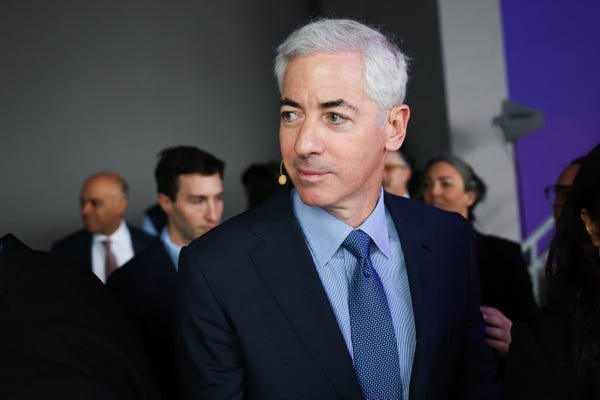
PATRICK T. FALLON/AFP via Getty Images

The billionaire CEO of Pershing Square Holdings wrote Monday on X that he was “opposed to wealth taxes because they effectively represent an expropriation of private property,” which can have “unintended and negative consequences.”

However, he said he’s in favor of a “fairer tax system.”

For example, Ackman wrote that an individual who had amassed a billion dollars or more in wealth could pay no personal income tax by living off loans secured by stock in their company. A change in the tax code could fix that problem, he wrote.

“One shouldn’t be able to live and spend like a billionaire and pay no tax,” Ackman wrote.

As for California’s “budget problems,” Ackman wrote that the issue wasn’t a lack of tax revenue — it was about “how the money is being spent.”

David Sacks


White House crypto czar David Sacks is pictured.

David Sacks analogized California’s tax increases to a frog in boiling water.

Chip Somodevilla/Getty Images

The White House AI and crypto czar took aim at California’s government in an X post on Sunday.

Red states like Texas and Florida don’t employ state income taxes, let alone wealth taxes, Sacks wrote. “Democrats steal everything, then blame job creators for their ‘greed,'” he wrote.

Sacks said in an October episode of the “All-In” podcast, which he cohosts, that a wealth tax “always backfires,” because tax benefits are outweighed by wealthy residents leaving.

Sacks threatened to leave the state, analogizing steady tax increases to boiling a frog on the podcast.

“I’m going to have to jump out of the pot with this,” he said.

Ro Khanna


Representative Ro Khanna is pictured.

Ro Khanna said Nvidia would be built all over again in California, even with the wealth tax.

Tom Williams/CQ-Roll Call, Inc via Getty Images

The Congressman for California’s 17th district, which covers much of Silicon Valley, said that the proposal was “good for American innovation.”

After receiving thousands of comments on a Friday post bidding a sarcastic goodbye to those threatening to leave the state, Khanna explained his support in a seven-paragraph X post on Saturday.

He wrote that Nvidia would be built all over again, even with the wealth tax.

“Jensen [Huang] wasn’t thinking I won’t start this company because I may have to one day pay a 1% tax on my billions,” Khanna wrote. “He built here because the talent is here.”

Khanna argued that innovation would be further stifled by the “political dysfunction and social unrest” that comes with wide wealth gaps.

In a statement to Business Insider, Sarah Drory, a spokesperson for Rep. Khanna, wrote that the representative has “always supported a modest wealth tax on billionaires to deal with staggering inequality and to make sure people have healthcare.”

“He has advocated for common sense workarounds for startup founders whose companies are not profitable and who have illiquid stock,” Drory wrote.

Palmer Luckey


Palmer Luckey is pictured.

Palmer Luckey wrote that the wealth tax would force startups to pivot to profit.

PATRICK T. FALLON/AFP via Getty Images

The Oculus founder and Anduril cofounder wrote in a Sunday X post that the tax would force founders to “sell huge chunks of our companies.”

Luckey wrote that he made money from Oculus — which he sold to Facebook in 2014 — and paid millions in taxes on it. Then he used the “remainder” to start Anduril, he wrote.

“Now me and my cofounders have to somehow come up with billions of dollars in cash,” Luckey wrote.

Luckey also wrote that the policy made no provision for companies that funnel revenue back to research and development, rather than paying cash incomes sizable enough to cover the tax.

“You are effectively forcing companies to immediately pivot into profit obsession over mission or long-term sustainability,” he wrote.

Garry Tan


Y Combinator CEO Garry Tan is pictured.

Garry Tan wrote that the wealth tax would “kill little tech in California.”

Seb Daly/Web Summit via Getty Images

The CEO of startup accelerator Y Combinator wrote in a Saturday X post that the tax would “kill little tech in California.”

Unicorn startup founders become a “paper billionaire” — as in, having cash on hand — around the $5 billion valuation point, Tan wrote.

The proposed tax is on unrealized gains, meaning founders would be put on the line even before their wealth is liquid, Tan wrote.

If the tax passed, Tan wrote that Y Combinator would consider opening Austin or Cambridge programs.

Bernie Sanders


Senator Bernie Sanders is pictured.

Bernie Sanders wrote in support of wealth taxes on X.

Heather Diehl/Getty Images

The Vermont senator has long been a proponent of taxes on the wealthy, introducing a bill in 2019 that aimed to halve the wealth of billionaires over a 15-year period.

While Sanders didn’t explicitly comment on the California proposal, he posted Monday on X broadly supporting wealth taxes.

“We can respect innovation & entrepreneurship, but we cannot respect the extraordinary greed that now exists,” Sanders wrote. “We need a wealth tax.”

Elon Musk


Elon Musk at the US-Saudi Investment Forum at the John F. Kennedy Center for the Performing Arts in Washington, DC, on November 19, 2025.

Elon Musk wrote that he was a “maker,” not a “taker.”

BRENDAN SMIALOWSKI/AFP via Getty Images

The Tesla CEO reposted another user’s X post that commented on the tax, saying that his stocks weren’t wealth.

Musk wrote in his Tuesday post that his “wealth” was mostly tied up in Tesla and SpaceX shares.

“This means my ‘wealth’ can only increase due to producing more products and services for the public,” he wrote.

While not directly commenting on the California tax, Musk wrote that he was a “maker,” unlike “taker” politicians like Sanders.

Musk said in 2020 that he had moved from California to Texas.

Gavin Newsom


California governor Gavin Newsom is pictured.

Gavin Newsom said that California had to stay competitive with other states.

David Dee Delgado/Getty Images for The New York Times

The governor of California has spoken against the wealth tax. At The New York Times’ Dealbook conference in December, Newsom said that California had to stay competitive with other states.

“People of that status, they already have two or three homes outside the state,” he said. “You’ve got to be pragmatic about it.”

If the tax passes as a ballot measure, Newsom would not have the ability to veto it.


Source link

China-is-going-after-US-defense-firms-and-execs-over.jpeg

China is going after US defense firms and execs over weapons sales to Taiwan — and Palmer Luckey’s on the list

China announced sanctions against 20 US defense companies and 10 senior executives on Friday, citing US arms sales to Taiwan as its motive.

In a statement, China’s foreign ministry said its assets within China, including movable and immovable properties, would be frozen and that domestic organizations and individuals would be prohibited from doing business with them.

Individuals named on the list would also be denied visas and entry to the country, the ministry added.

The sanctions list includes Northrop Grumman Systems Corporation, Boeing’s St. Louis branch, Epirus, and Anduril Industries founder Palmer Luckey.

In a statement, a spokesperson for the foreign ministry said: “We stress once again that the Taiwan question is at the very core of China’s core interests and the first red line that must not be crossed in China.”

“Any company or individual who engages in arms sales to Taiwan will pay the price for the wrongdoing,” they added.

When reached for comment, Anduril pointed Business Insider to an X post from Luckey in which the CEO joked that he was honored.

“I want to thank my family, my team, and my Lord Jesus Christ for this award,” Luckey wrote on X. “Anduril has been sanctioned for a while now, as have many of my peers, but it means so much to finally have my non-existent Chinese assets seized and repurposed.”

China’s sanctions follow the US announcement of a $11 billion military package for Taiwan last week.

The deal, which includes self-propelled Howitzers and HIMARS rocket launchers, still needs to be approved by Congress — but it drew a swift response from Beijing.

Lin Jian, a spokesperson for the foreign ministry, said in a statement at the time that China “strongly deplores and firmly opposes” the sales.

China regards Taiwan as a breakaway province that will one day come under Beijing’s control, and Chinese President Xi Jinping has refused to rule out an invasion of the island. Taiwan’s ruling Democratic Progressive Party views Taiwan as separate from China.

Under the Taiwan Relations Act, the US is obligated to assist Taiwan in defending itself.

Beijing has ramped up pressure around the island in recent years, holding frequent military exercises in the surrounding skies and waters.

A 2024 report by the Washington, D.C.-based think tank the Center for Strategic and International Studies suggested that China may be able to exert power over Taiwan without launching an invasion.

The report said China could impose a quarantine of the island using its coast guard.

“The purpose of a quarantine is not to completely seal Taiwan off from the world but to assert China’s control over Taiwan by setting the terms for traffic in and out of the island,” it argued.

“A key goal is to compel countries and companies to comply with China’s terms.”


Source link