
My-fiancee-and-I-live-with-my-parents-in-a.jpeg

My fiancée and I live with my parents in a New York City apartment. It’s helped us save money and open a business.

Whenever I tell someone I live with my parents, there’s an immediate moment of palpable judgment. It then gets compounded by the fact that not only do I, a 28-year-old man, live with my parents, but so does my fiancée.

Most people immediately look for a justification. It’s assumed I’m unemployed, broke, a caretaker for one of them, or generally just a bit weird. And I get it, in popular media, a grown man who lives at home is depicted as a failure and a burden on his disappointed parents.

In reality, multigenerational living in New York City is quite common and extremely financially responsible, not only for younger people like me, but also for aging adults like my parents. Beyond the money saved, I also just genuinely enjoy spending time around my family, and I cherish the relationship I have with them.

This apartment has been in the family for decades

I grew up on the Upper West Side of Manhattan, in the same two-bedroom rent-controlled apartment I live in now.

My parents, who are in their 70s, are also both born and raised New Yorkers — my mom from the Bronx and my dad from Brooklyn.

In his late 20s, my dad moved to the Upper West Side with some friends, and while his roommates eventually moved away, he stayed and ended up raising a family in that same apartment. In the 50-plus years my dad has lived there, the rent has increased marginally, and as long as I live in the apartment, it will remain rent-controlled for another generation.

In 2020, I moved back in and now share the rent with my parents.

Without the significantly reduced rent this apartment afforded my family, we likely wouldn’t have been able to remain living in New York City, despite all of us being born and raised here.

My living situation has allowed my fiancée and me to significantly save

Four years ago, we pooled our savings with my childhood best friend and opened an art gallery on the Lower East Side of Manhattan, signing a 10-year commercial lease.

My parents aren’t rich, but they were smart with their money, and their responsible decisions have now granted me the opportunity to take risks.


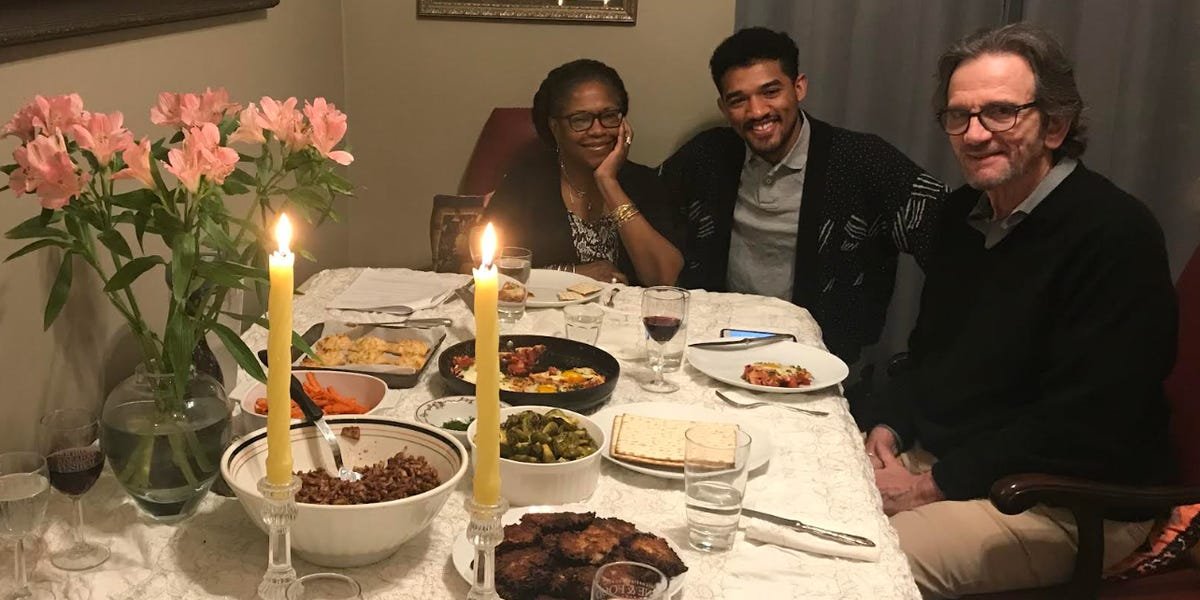
Ciaran Short and his fiancée

The author and his fiancée live with his parents. 

Courtesy of Ciaran Short


I don’t have a trust fund, nor have my parents given me a dollar to “invest” in building my business, but having a very affordable apartment has removed a major burden in a very expensive city, giving me a safety blanket.

With the money that I would have been paying for an average residential apartment, I got my business off the ground.

I try to pay my parents back in different ways

While I have benefited from living at home, I do everything in my power to make sure my parents benefit, too. A great portion of my efforts goes into troubleshooting WiFi, navigating Gmail, downloading apps, and finding the “channel” for Netflix. But beyond serving as an in-house IT specialist, I also aim to give them some time back.

They spent years pouring into my life and cultivating my growth, so it feels only fair for me to do the same for them. Although I’ll never be able to truly repay them for the time commitment, the bratty behavior they endured, and the actual financial investments they made, I can try. Moving to another borough or a couple of stops away on the 1 train would feel counterintuitive to making a significant impact on their lives.

Instead, my fiancée and I cook every day, do the grocery shopping, clean the dishes, walk the dog, and handle a list of general household chores, freeing up my parents to spend more time doing whatever they want.

While I wish I was in a position to bankroll a lifestyle for my parents that would allow them to travel to exotic destinations, dine out at the nicest restaurants, and even afford a second country home, that’s not my current reality, so the next best thing I can do is to show up for them and demonstrate my love and appreciation through my time and care.

Admittedly, I do still get embarrassed telling people I live with my parents sometimes, but I also know that one day I won’t have the privilege to come home and hear their voices greeting me, so I try to focus on what I know is most important.




Source link

My-parents-had-no-retirement-plans-after-selling-their-house.jpeg

My parents had no retirement plans after selling their house. They now live in Airbnbs, and I’m worried about them.

Last fall, my mother was diagnosed with cancer, and, seemingly minutes later, my father had some heart problems and ultimately suffered a stroke.

I knew I was inching toward simultaneously caring for my young kids and aging parents. Suddenly, I was squarely in the sandwich generation.

I now had to deal with the terrifying reality that my parents did not have a plan for how to spend their retirement years — especially where they plan to live.

My parents had no retirement plans once they sold their house

As an only child, I have been aware that I might need to be more invested in my parents’ retirement plans, but I wasn’t prepared to feel like their therapist, estate planner, realtor, and case manager all in one.

My father’s unfortunate reality was that he had to retire while in the hospital recovering from his stroke. Like many men, my father struggles to find his identity outside work.

While I was home with my parents during my father’s recovery and before my mother’s cancer treatment, I broached the subject of their retirement plan by asking them about the sale of their home. They had long lamented that they no longer wanted to maintain their home. However, I did not realize how little my parents had discussed what would happen beyond this sale.

Once my mother and father recovered, they moved forward and sold their home in Florida. Shortly after that, they stayed near my family in Texas, in a long-term Airbnb. I soon realized they had no intention of settling.

They have since stayed in 15 Airbnbs.

Their planless lifestyle has continued to create issues

My parents like stability. I know that they don’t like living out of suitcases. They often go to an Airbnb in a new city and immediately contact the host about shortening their stay or finding a different place because they don’t like the area they are in. Additionally, they would rather have a plan, a home to call their own, and a city to set up some roots.

That’s why their Airbnb living doesn’t make much sense to me. When I push them to find a long-term plan, I realize they aren’t even having the conversation with each other.

The lack of actual conversations only came to a head when my father landed in the hospital again while traveling. Ultimately, my father learned he would need extensive open-heart surgery. They ended up going to the Cleveland Clinic and staying at two different Cleveland Airbnbs during their six-week stay, which, while you are recovering from open-heart surgery, is not necessarily the best plan.

When aging is avoided, it creates more issues

Going through all of these experiences with my parents has made it clear that avoiding retirement conversations can be rooted in other issues, like not wanting to face our mortality or that we might disappoint other family members by making a clear decision for ourselves.

It’s not like my parents don’t have a will or aren’t organized, and I am certainly lucky that they have saved diligently for their retirement.

I do not feel fortunate, however, about their lack of a concrete plan. As their only child with children of my own, the uncertainty of their future adds a layer of stress for me. I often worry about their Airbnb accommodations, whether the roads nearby are well lit, and whether they have social support nearby.

I suspect their decision to wing it has been driven by a desire to sidestep the discomfort of planning for one’s golden years. By opting to stick with short-term rentals rather than anything more permanent, they avoid confronting their own individual desires —and the risk that they might not be in alignment.

While I am only in my 40s, I am already working on a retirement plan. I am well aware that my children will have things to worry about; that just comes with the territory of aging parents. But confronting the inevitability of aging and embracing a concrete plan for my retirement is a gift I am giving to my children.

Having honest conversations about making definitive plans is incredibly challenging, but it also has huge payoffs: a season of life rooted in desire and as much agency as this time can offer.


Source link

Joshua Zitser's face on a grey background

We’re a couple in our 30s who dreamed of building a tiny home. My parents had concerns, so we made a pitch deck to convince them.

This as-told-to essay is based on a conversation with Anne Leijdekkers, 32, a Dutch arts entrepreneur, and Simone Solazzo, 31, an Italian who used to work in tech. Last year, the couple moved into the house they built in the tiny-home village of Minitopia in Valkenswaard, the Netherlands. This piece has been edited for length and clarity.

Anne: At first, my parents were sceptical about our plan to build our own tiny home.

Friends will always stand behind you, but family members can be more critical. It was important for us to have them on board.

Simone used to work in the corporate world and loves PowerPoint presentations, so on Christmas Day in 2024, we used one to pitch our dream to my family.

We wanted to be financially autonomous

Simone: I liked the idea of being able to explain to them why we wanted to do this and what we were planning. The first slide said, in Dutch, “We are building our home. We’d like your support.”

In the presentation, we told them about the plan, the timeline, and where we would be living. We included our budget, which ranged from 40,000 to 80,000 euros ($47,000 to $94,000).

Mostly, the slides outlined our motivations. The first reason was to be financially autonomous.

If we were to buy a big house, we’d be committing to a big mortgage. Instead, we used our savings to pay for the construction of the tiny home, and its transportation to the Minitopia site in Valkenswaard. In total, the project cost us 75,000 euros.

We don’t have a mortgage, and our monthly costs are relatively low. We spend about 500 euros a month on ground rent, utilities, and insurance. I imagine the monthly costs of running a larger property would be considerably higher.

Living in a tiny house is like being a snail

Simone: When you have a smaller space, you have to limit your possessions to what you actually need.

Anne: It was important for us to find out whether we were capable of doing that. We wanted to show that there’s a different way to live. You don’t need an attic at the end of your life filled with so many things.

It wasn’t about being minimalist as much as decluttering. It’s almost like being a snail. We keep things compact and can move our home whenever we want.

That’s how we arrived here: putting our tiny house on a truck and moving it.

Simone: We also like that the house can evolve with us. This means it can be our forever home. For example, if we decide one day to have kids, we could easily build a second module on top.


Simone Solazzo shows photos of construction and presentation

In the presentation, the couple shared their motivations for building a tiny home, which included financial autonomy.

Joshua Nelken-Zitser


Living in a tiny home encourages you to spend time outdoors

Simone: We both felt that knowing how to build and dismantle things was an important skill to learn. We like to challenge ourselves, and building our own home felt like the ultimate challenge. It turned out to be a real learning experience.

We’ve become handier. Sometimes, when it’s raining heavily, I wake up in the middle of the night worried about a leak. But now, if something goes wrong, I know how to deal with it.

Another bonus of living in a tiny house is that it encourages you to spend more time outdoors. When you have a big house, you can do most things inside. When your home is tiny, you need to get outside and move around in nature. We haven’t lived here in the spring or summer yet, so we’re looking forward to seeing what that is like.

My parents had concerns, but they stood behind us

Anne: The final slide said, “Let’s think about it and make it together — as a family.”

Before the presentation, my parents had concerns: was it a sensible investment? What if we wanted to have children? Were we actually capable of building it ourselves? My brother even suggested we buy a pre-made tiny house on Amazon.

After the presentation, they still had concerns about the financial rationale, but they understood our dream and 100% stood behind us. That was an amazing feeling.

We spent two months planning, budgeting, and designing, and then we started building. We began the process exactly a year ago, and it took about five months. Now that it’s finished, they’re very proud of us.

Simone: Anne’s father, who is in his 70s, even helped us build it. It gave her a beautiful opportunity to spend time with him and to build new memories.

Anne: It turned out to be a really warm period in our lives.


Source link

Parents-showed-up-to-face-Mark-Zuckerberg-as-he-took.jpeg

Parents showed up to face Mark Zuckerberg as he took the stand in a social media addiction trial

Lori Schott, a mother from rural Colorado, said she stared down Meta CEO Mark Zuckerberg as he walked into court in Los Angeles on Wednesday to testify in a landmark trial regarding social media addiction.

Schott lost her 18-year-old daughter, Annalee, to suicide in 2020. She believes the content Annalee saw on social media platforms “destroyed” her mental health.

“I made eye contact with him for quite a long time,” Schott said of Zuckerberg. “I was not backing down.”

Schott is not a plaintiff in the case where Zuckerberg testified on Wednesday, but is among more than 2,000 individuals who have similar personal injury lawsuits pending regarding social media addiction and harm.

The case underway in Los Angeles centers on a 20-year-old woman, identified by the initials KGM, who says her use of social media throughout her childhood negatively affected her mental health, contributing to depression and suicidal thoughts. It is considered a bellwether trial that could indicate how other similar lawsuits related to social media harm, like Schott’s, could play out.


LOS ANGELES, CALIFORNIA - FEBRUARY 18: Lori Schott , holds a picture of her daughter Annalee who died by suicide after consuming social media content on depression, anxiety and suicide, stands outside the Los Angeles Superior Court at United States Court House on February 18, 2026 in Los Angeles, California. A 20-year-old California woman sued Meta and YouTube accusing them of building addictive platforms causing harm to children. Schmitt is not part of this case but has a separate social media case and came to advocate and raise awareness. (Photo by Jill Connelly/Getty Images)

Lori Schott, a mother from rural Colorado, lost her 18-year-old daughter, Annalee, to suicide in 2020.

Jill Connelly/Getty Images


Meta, which owns Instagram and Facebook, was named as a defendant alongside Google-owned YouTube, TikTok, and Snapchat. TikTok and Snapchat both settled the lawsuit out of court.

Last month, Meta warned investors that its mounting legal battles over youth safety could “significantly impact” its 2026 financial results. Attorneys for more than 100,000 individual arbitration claimants have “sent mass arbitration demands relating to ‘social media addiction'” since late 2024, the company said in a 2026 10-K, which warned that potential damages in certain cases could reach into the “high tens of billions of dollars.”

In a statement, Stephanie Otway, a Meta spokesperson, said: “We strongly disagree with these allegations and are confident the evidence will show our longstanding commitment to supporting young people.” Otway highlighted changes the company has made over the past decade, including Teen Accounts, which give parents tools to manage their teens’ accounts.

Google declined to comment. TikTok did not respond to a request for comment. A Snapchat spokesperson said in a statement: “The Parties are pleased to have been able to resolve this matter in an amicable manner.”

On Wednesday, parents showed up hours before the courthouse opened in hopes of getting a seat inside. Many of them had personal stories about how they believed social media use harmed their children.


Parents and family members, including some plaintiffs in the case, hold hands as they pose together before entering the Los Angeles Superior Court for the social media trial tasked to determine whether social media giants deliberately designed their platforms to be addictive to children, in Los Angeles, on February 18, 2026. Meta CEO and Chairman Mark Zuckerberg is scheduled to testify Wednesday. (Photo by Frederic J. Brown / AFP via Getty Images)

Parents gathered outside the Los Angeles Superior Court on Wednesday.

Frederic J. Brown / AFP via Getty Images


“We face a lot of stigma from people telling us we’re bad parents,” said Amy Neville, another parent who attended to show her support. She said that once the evidence comes out in the trial, she believes “the tide will turn, and the general public will be on board with us.”

“It is by design that social media is tearing their family apart,” Neville said.

On the stand, Zuckerberg said that teens represent less than 1% of Meta’s ad revenue and that most teens don’t have disposable income, so it’s not especially valuable to advertisers to reach them.

Zuckerberg said it’s in Meta’s best interest to create a platform that inspires people and makes them want to stick around for the long term.

“If people aren’t happy with a service, eventually over time they’ll stop using it and use something better,” he said.

Sarah Gardner said that regardless of the outcome of the trial, she hopes it raises awareness about how the social media companies, and specifically Zuckerberg, have been operating. Gardner is the CEO of the Heat Initiative, an advocacy group that pressures Big Tech companies to make their platforms safer for kids. She was at the courthouse with the parents who believe they have been affected.

Gardner said she’s hopeful the trial will empower more people to say, “I don’t want to be on Instagram anymore.”


Source link

Parents-are-still-worried-about-sitting-together-with-their-kids.jpeg

Parents are still worried about sitting together with their kids on planes. Here are 8 tips to make sure you do.

Traveling in a group can be a challenge, and confusing airline policies can make the experience even more of an ordeal. For adults, being separated on a flight is an inconvenience. But for families with young children or caregivers of travelers with special needs, sitting apart on the plane can be a crisis.

For many years, families have favored Southwest Airlines for its open seating policy, which allows travelers to choose their own seats in boarding order. But Southwest switched to assigned seating on January 27 after more than 50 years of flexible seating, joining virtually every other commercial airline. Moving forward, all Southwest passengers will have designated seats and board the plane accordingly.

If sitting together on the plane is important for your family, here’s how to ensure you always get seats together.

What to know about family seating policies on US airlines

Concerns about families being separated on planes have grown so common that federal regulators have taken notice. In 2024, the Department of Transportation proposed a rule prohibiting US airlines from charging parents additional fees to sit next to children under 13. While that proposal has not yet become law, it highlights how significant the issue has become for travelers.

For now, airline policies vary. The DOT maintains an airline family seating dashboard summarizing family travel policies across 10 major US carriers. Alaska, American, Frontier, Hawaiian, and JetBlue guarantee family seating for eligible children at no additional cost, while Allegiant, Delta, Southwest, Spirit, and United do not.

Select your preferred seats when booking your flights

The simplest and most reliable way to sit together is to choose your seats when you purchase your tickets.

During the booking process, most airlines display a seat map that allows travelers to select exact locations. Take the time to click through each passenger on the reservation and assign seats individually. Tools like SeatMaps.com can help you get an idea of the aircraft layout and choose seats with desirable features like extra legroom or window views.


Seat map Southwest Airlines

The author recommends choosing seats when you book your trip to ensure everyone is seated together.

Courtesy of Southwest Airlines


Some airlines automatically block adjacent seats when minors are included on a reservation, while others attempt to make adjustments closer to departure. Reviewing these policies in advance can help you choose an airline and avoid surprises after the fact.

Pro tip: If you’ve chosen an airline that charges for advanced seat assignments, you may be able to recoup some of those costs with a good travel credit card that comes with annual travel credits toward eligible expenses. You may also avoid seat selection fees if you have elite status with that airline or if you purchase higher fare-class tickets.

Book everyone on the same reservation

Whenever possible, book everyone together in one transaction. This simple step makes it much easier for customer service representatives to assist if problems arise.

Keeping all family members on a single reservation is another essential strategy for ensuring you’re seated together, unless you’re experienced travelers with very specific reasons for separating your bookings. In fact, some airlines like Alaska require you to be booked on the same reservation with your children in order to be eligible for the guaranteed seat selection policy.

Airline computer systems do not automatically recognize separate bookings as part of the same group, even when the passengers share a last name, and it’s far harder to identify seating needs or make changes across multiple reservations, especially if you need to change your flights for any reason.

Pro tip: If you’ve already purchased your flights across different reservations, a quick call to customer service can help you link them.

Don’t book basic economy fares

Low-cost basic economy tickets can be tempting, especially for larger families trying to keep travel expenses down, but these fares come with significant drawbacks that impact seating choices.

Most basic economy tickets do not allow advance seat selection, even if you’re willing to pay for the privilege. Instead, seats are assigned automatically, often at check-in, after all the higher-paying passengers have had their choice.

For parents, basic economy creates unnecessary uncertainty since you’re far more likely to end up with scattered seat assignments, especially on airlines that don’t guarantee family seating.

Pro tip: If you can’t avoid basic economy, contact your airline immediately after booking to let them know you’re traveling with minors. Some carriers will make notes on the reservation or allow you to upgrade your tickets to a fare class that offers seat selection.

Avoid layovers whenever possible

There are pros and cons for families considering connecting flights. For families with little kids, layovers can offer a chance to stretch in the airport and get some of the wiggles out.

But if it’s extremely important to you to sit together during your travels, your safest bet is to book the most direct route, especially during busy travel periods. That way, you only have one flight to worry about instead of two or even three.

Pro tip: If connecting flights are your only option, do your homework ahead of time to ensure you know which gate you’re arriving into, which gate your next flight departs from, and make sure you budget enough time to purchase food, traverse the airport, and everything else you need to do before showing up to board your flight on time.

Timing is everything: Buy early and choose off-peak travel times

Purchase your flights as early as possible to give yourself the greatest flexibility in seat selection, since the best seats get snatched up as flights fill. If you have no choice but to buy last-minute tickets, contact your airline as soon as you’ve booked your tickets to ensure they know you’re traveling with little ones.

Choosing less popular travel times can also improve your chances of finding good seats together. Flying on Christmas Day itself, for example, can often be easier than fighting the holiday travel crowds the weekend prior.

Pro tip: Many travelers avoid early-morning or red-eye flights, which tend to be less full than routes operating during peak travel hours.

Check for flight changes (even if nothing is wrong)

Even after you’ve selected your seats, it is important to monitor flight reservations periodically, even if you haven’t gotten a notification that anything is amiss. Aircraft substitutions and schedule changes are common and can disrupt previously assigned seating.

For example, if your original flight is scheduled on a larger aircraft that’s later swapped for a smaller plane, you can easily end up in different seats even though your flight number and reservations remain the same.

Checking the reservation a few times in the weeks leading up to departure lets you spot any problems early, while there’s still time to correct them. Airline mobile apps make this process easy, and often allow free adjustments if better seats become available.

Pro tip: If you start seeing inclement weather reports, you can also proactively reach out to your airline to change your flights before you are rescheduled. That way, you may be able to stay at home in comfort and peace instead of spending an exhausting day at the airport getting nowhere.

Show up early and stick to your guns (if needed)

The best-laid plans can still go awry — but having extra time on hand can make all the difference when resolving unexpected issues, such as seating changes due to last-minute equipment swaps.

Customer service agents at the airport typically have more tools at their disposal on the day of travel than phone representatives do beforehand. Calmly explaining the situation and courteously emphasizing that you are traveling with minors often prompts agents to look for workable solutions.

Make sure you read all the fine print carefully before you travel, so you know your rights. That way, you’ll know your options should a situation arise that requires immediate decision-making.

Pro tip: If a problem remains unresolved by boarding time, parents still have options. If the seats you booked aren’t available and a satisfactory solution can’t be found, you can usually request to be booked on a later flight at no additional cost or request a full refund.


Source link