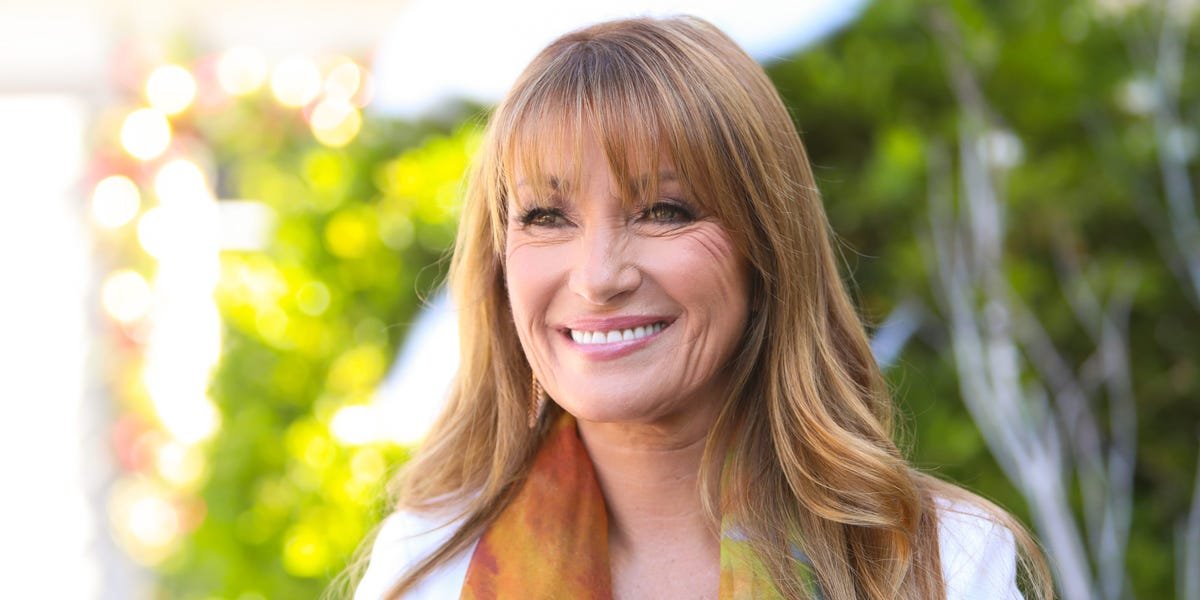
Jane Seymour says dating in her 70s has changed how often she celebrates milestones.
Speaking to Business Insider on Wednesday as part of her partnership with The Body Firm, Seymour said she believes a good relationship can have a positive impact on health.
“For me, I have absolutely found my perfect match in John Zambetti. August 4th will be our third anniversary of living together, being together,” the former Bond girl said.
Seymour has been dating Zambetti, a doctor and musician, since 2023 after they met through their children. She is a mother of six, including stepchildren, and has been married four times previously.
“It’s very sweet. He celebrates every month on the fourth because he says that we are living dog years at our age, and waiting a year to celebrate is a waste of time,” she said.
Even though both of them have busy careers, they still find time for each other.
“That’s what’s really lovely, to have someone that is so supportive,” Seymour said, adding that he often takes photos and videos for her, which end up on her Instagram.
Being at the same life stage helps them relate to each other better, she said.
“I mean, he will understand if my back tweaks out or if I am coughing or have a cold or whatever, and I’m there for him if whatever aging process he’s going through,” she said. “And we have a sense of humor about it. We’re in it together.”
For Seymour, that playfulness is a big part of what makes the relationship work.
“We have a lot of fun, and I would say having a great relationship is the icing on the cake,” Seymour said.
She has spoken about their relationship in previous interviews. In October, Seymour told Hello Magazine they decided it was “safer” to celebrate every month since they met in their 70s.
“So every month, on the fourth, he sends me roses, wherever I am, whatever’s going on. We’re just so grateful for every minute we have together,” she said.
This as-told-to essay is based on a conversation with Luana Ribeira, founder ofDauntless PR. It has been edited for length and clarity.
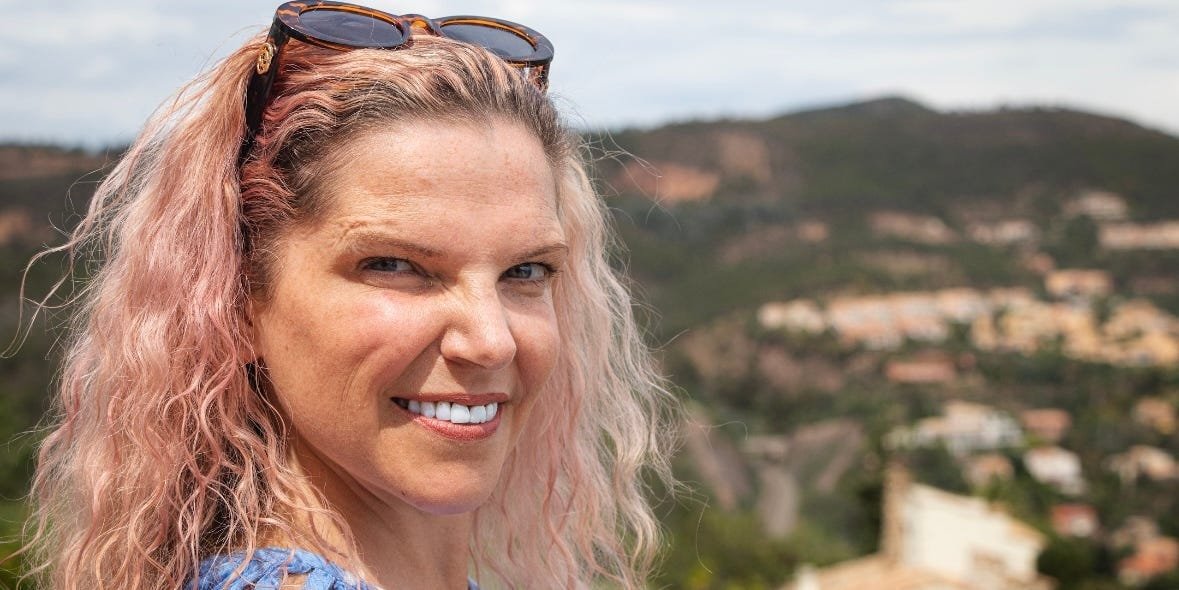
Little about my relationship with Al is traditional. For starters, Al was my former husband’s best friend. After my husband and I divorced, I moved to Portugal, where Al was living. I was planning on spending time with Al as a friend, but the second time we hung out, he called my ex to say, “There’s something here.” Luckily, my ex gave his blessing.
I started dating Al soon after, in 2017. In 2020, we moved to the UK, where I’m from. That’s when we decided to have separate bedrooms. We both were having trouble sleeping at the time, and enjoyed having our own space. We had a spare room, so Al started sleeping in there.
Eventually, we wanted even more space from each other. At the time, my two teenage daughters were living with us, and the house was loud. Al craved quiet, and that was fine with me — I wanted him to take care of himself. He converted an existing warehouse on our property into a bedsit (similar to a studio apartment). He slept there and used it when he needed quiet time to create art or watch TV.
We wanted different settings for our home
Last June, we moved back to Portugal, with our 4-year-old son, Celyn. By that point in our relationship, Al and I recognized that we live completely opposite lifestyles at home. I like creature comforts and wanted my dream lakeside home in Portugal. Al was interested in becoming even more self-sufficient, living off-grid if possible.
Al already owned about an acre of land in Portugal. He put a yurt on the land, and now lives there without running water and with only limited solar power. The one modern amenity I insisted on was wifi, so I can get a hold of him and Celyn.
I meanwhile rent a two-bedroom home with a pool. I can see a nearby lake from my windows. I’m still in a rural area, but nowhere near as rural as Al.
We follow a strict weekly schedule
We have a family schedule that might look familiar to separated parents, though Al and I are very much together. On Sunday nights, Al and Celyn go to the yurt. I work long days on Monday and Tuesday, and also have time to swim and make any appointments I need to.
On Wednesday morning, I pick Celyn up. That’s my favorite part of the week, seeing him run down the lane toward me. I have Celyn on my own until Friday night, when Al comes to spend the weekend with us. That family time always happens at my house, since it’s more comfortable.
Our weekends as a family are sacred to us. It’s also nice to have one-on-one time with our son and to have alone time built into the week.
This arrangement lets us be ourselves
Our homes are about 50 minutes apart right now. If something pops up with work, I can’t just send Celyn to his dad’s on a whim. Sometimes I feel like I’m driving all the time, so I’ll probably move closer to Al in the future.
Financially, there’s not a huge expense involved with having two homes. Al already owned his land. I’m the sole earner in our relationship, so I bought the yurt, and I finance projects on the land as they come up. Luckily, there are a few bills with an off-grid homestead.
I know this isn’t for everyone, but I’m glad that Al and I can do what’s right for us. We want to support each other, and don’t want to ask our partner to change who they are. Living apart gives us the space we need to be ourselves, while still being a family.
I hadn’t always been a believer in working from home. When remote work first became part of my life, I resisted it. I missed the structure of an office, the separation between work and everything else. Home felt like the wrong setting for serious work.
Then, slowly, it didn’t. I found a rhythm I hadn’t expected. Mornings became mine. I cooked real lunches. I thought more clearly.
More importantly, my girlfriend and I have been living together in London for a year, and we have built a life around being home together that feels chosen rather than forced. I’ve stopped seeing remote work as a compromise and started seeing it as the better version of my day.
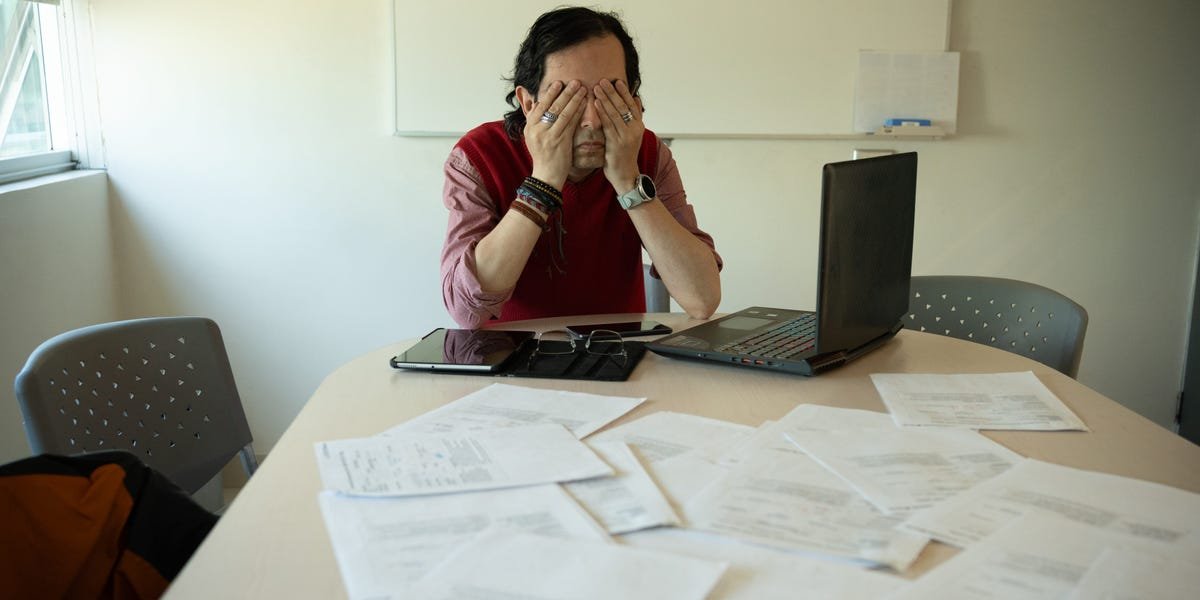
So when the email came from work that said I’d have to return to office, it wasn’t just a scheduling change. It was a disruption to something we had spent months building, a routine that had come to feel like the foundation of everything else.
It has only been a few weeks since the announcement, and already, almost nothing looks the same — especially my relationship.
My partner and I both worked from home, so we had to rethink everything
The first thing we’ve had to confront was practical. Two people who both work from home occupy a shared space in a very specific way. That balance had taken time to calibrate. We had never sat down and designed it. It had just formed, organically, around our needs. The return-to-office policy exposed how deliberate that accidental life actually was.
My girlfriend still works remotely, so the shift hasn’t been symmetrical. I now leave each morning to head into a version of London we rarely engaged with during the week — the commuter version, the structured version — while she stays inside the life we’d built together. That asymmetry requires more honest conversation than either of us expected.
We’ve had to redesign things we never explicitly designed in the first place. What do mornings look like now? Who handles what, and when? The small, invisible agreements that hold a shared life together suddenly need to be spoken out loud. That process, still ongoing after just a few weeks, has been more revealing than disruptive. But it has required real effort.
Commuting in London comes with a price, and it goes beyond the cost of a train ticket
The financial reality surfaced quickly. Commuting to London isn’t cheap, and the daily arithmetic of transport, lunches, and the small expenses that accumulate when you’re out of the house adds up faster than expected. We had saved money by being home — on food, on travel, on the general inefficiency of city life when you’re moving through it daily. That buffer has started to shrink almost immediately.
But the more significant cost has been time. The commute is carving hours out of the day that had previously been ours. Mornings that once felt spacious have become logistical, and evenings are now shortened. The long, unhurried romantic dinners that had been a quiet anchor in our week are starting to require more effort to protect. Time, it turns out, had been our most abundant resource when we were both at home. We hadn’t noticed until it started running out.
There is also an energy cost that is harder to quantify. Offices are stimulating in ways that are both useful and exhausting. I now come home differently — more depleted, less present. After just a few weeks, my girlfriend has already noticed the shift before I fully named it myself. The version of me that walks through the door at the end of the day is not quite the same one that used to simply close the laptop and call it done.
Going back to the office has asked something new of our relationship
What surprised me most wasn’t the logistics. It was how much our new relationship had quietly depended on proximity: a shared lunch, a passing conversation in the kitchen, the low-level awareness of each other that comes with being in the same space. Those things weren’t dramatic, but their absence has been.
We are now trying to be more intentional. Dinners that used to happen naturally now need to be protected. Check-ins that once occurred organically require more deliberate effort. It isn’t a strain exactly; it’s a recalibration.
The return-to-office policy hasn’t damaged anything between us. But it is revealing how much of our relationship had been built on the life we’d created around being home. Losing some of that structure forced us to be more conscious about what we actually wanted, and more honest about what we weren’t willing to give up.
We have only been doing this for a few weeks. Something tells me the real adjustments are still ahead.
Bracha Cohen has a front row seat to Wall Street’s AI revolution — and to how young people can compete in it.
“I would tell the new generation of graduates, in this world where AI is so transformational, to build judgment and not just skills,” Cohen, a partner within asset and wealth management engineering, said. “AI may automate execution, but it can’t fully replace decision-making, systems thinking, and ethical reasoning.”
Cohen joined Goldman as a programmer in 1994, long before anyone had to prove AI fluency on their applications. She said that serving in various roles across business lines helped her ascend to partner, the firm’stop leaders.
Today, her engineering team in asset management focuses on automating operations to help the business scale, including through AI. As of now, the booming business — which holds a record $3.6 trillion in assets — uses AI for routine work, like analyzing and summarizing data, Cohen said.
As white-collar hiring slows and anxiety about AI in junior roles grows, Cohen said young engineers should focus less on simply completing tasks and more on how systems function. Mastering engineering fundamentals is key, she said, since AI should serve “as leverage, but not as a crutch.”
Every time Alice publishes a story, you’ll get an alert straight to your inbox!
Stay connected to Alice and get more of their work as it publishes.
Bracha Cohen is a partner and engineer at Goldman Sachs.
Goldman Sachs
She added that computer science majors should practice evaluating risk and crafting good questions, both for other people and AI models. Two other Goldman partners also previously said that interpersonal skills and communication are becoming increasingly crucial in the AI workplace.
And engineers who want to work on AI in particular have their own set of criteria. Dan Popescu, a newly promoted managing director and Goldman’s head of AI engineering for asset management, previously told Business Insider that the most competitive hires need a suite of skills: knowledge in AI engineering, finance, and traditional software engineering.
Goldman spent $6 billion on technology last year and has rolled out internal AI tools, including an assistant and a limited banker copilot. In an October memo, the firm laid out the latest phase of its OneGS initiative, which it says will drive efficiency, slow hiring, and create a “limited reduction” in roles.
CEO David Solomon is one of several big bank leaders who have said that, in the long run, AI won’t reduce head count, and that the firm needs to focus on attracting more high-quality talent.
My partner was my first relationship and first love. I thought he would remain simply “first,” but we’re happily in love nine years later.
Yet, there’s one big milestone that we haven’t reached: our first time living together. Unlike most couples, we’ve never shared a space for more than a few weeks.
People are always shocked when they hear how long we’ve been together. The first question they usually ask is, “Why hasn’t he proposed yet?” Their eyes widen even more when they find out I’m not going home to him.
We feel great about our living dynamic, though: Living apart has helped us maintain the same spark at 27 that we had when we met at 19.
Living apart keeps our relationship exciting
Because we don’t share a space, we’re very intentional about spending time together.
Maya Kokerov
We met in our first year of college, when we both lived on campus but in different accommodations.
When we moved back home at 21, three years into the relationship, we continued living apart for practical reasons. Our goal was to live with our families until we saved up enough money to buy a more permanent home.
At first, I missed my partner a lot, and living with my parents felt a bit claustrophobic. After the initial adjustment, though, I began feeling happier than ever.
My family and I have always been close, but staying with them as adults made us cherish each other even more. The dynamic started to feel great for my romantic relationship, too: We realized that living apart helped us date with more intention.
My partner and I would — and still do — schedule regular dates, prioritizing novelty and adventure. We’d splurge on special nights out each month and meet up for weekly creative activities, like painting and cooking.
Since our time together is limited, even ordinary things like driving home feel sacred. Our independence keeps a steady drip of excitement into our partnership, and we don’t take each other’s presence for granted.
Six years into our relationship, we were almost ready to move in together. Then, my family life abruptly changed, and our circumstances shifted again.
Losing my dad reshaped my priorities
After I lost my dad, I felt grateful for the years I spent living at home.
Maya Kokerov
When my dad unexpectedly died four years after I moved back home, I had a new perspective on my choice to live with my parents after college.
I was angry at the world for cutting my time with him short, but my one salvation was all the time that we had spent together. If I had moved out after college, like I originally wanted, I never would have had these extra four years with my dad.
Now, it’s been one year since I lost him. Living with my mom and sister, and leaning on them for support, has been bittersweet but invaluable — even if it means my plans to move in with my partner are once again on the back burner.
We’ll move in together someday, but we’ve learned not to rush cohabitation
We aren’t ready to move in together just yet, but we’re excited to eventually share a home.
Maya Kokerov
Now, I’ve finally saved up enough to buy a home, but I’m still not sure if it’ll be the place I share with my partner.
I’ve developed a different dream — securing a place for my mom and sister. My partner even suggested moving in with us and living as a unit to help us navigate our newfound fear of loss.
Some may say we’re delaying the inevitable, or that we can’t know if we’ll last if we don’t live together.
To that, I always say that cohabiting just doesn’t fit our lives yet. Life is as full of uncertainties as it is short. I found this out the hard way with my father.
Not only are we grateful to have nice places to live with our families as we wait for the right time to move in together, but by letting go of expectations, we’re still in the “honeymoon stage” almost a decade into our relationship.
One day, we plan to live together, get married, and start a family. For now, though, we’re building a partnership that keeps us close to both each other and the people we love.
Dating is difficult at any age. Dating when you have a child is complicated. But, when you decide to date after the passing of your partner, there’s even more to consider. I was 48 when my husband succumbed to cancer. My daughter was almost 10.
Why would I want to date? I was heartbroken. A piece of my life and my entire vision of the future had been ripped away from me. I didn’t want love. I wasn’t interested in a replacement. I’d lost the illusion of forever.
I just wanted conversation, companionship, and a new way of looking forward and reimagining. But, any kind of reimagining requires imagination and reconciliation. I was parenting a traumatized child while also trying to care for myself.
What would my daughter think about me dating? Would she think I was betraying her dad?
I didn’t tell my daughter I was going on dates at first. I didn’t bring anyone to meet her until I’d had a few positive dates. I didn’t introduce her to anyone I didn’t think of as potential friend, a good person.
I was clear with everyone I went out with that I wasn’t looking for something permanent and that I certainly wasn’t looking for a new dad for my daughter. My daughter adored her dad, and rightfully so. She had thoughts on the few people I did introduce her to:
Every time Lisa publishes a story, you’ll get an alert straight to your inbox!
Stay connected to Lisa and get more of their work as it publishes.
“He’s too young for you.”
“He likes you too much.”
“I don’t have a good feeling about him. Even if he got me a good present.”
And, eventually, “He seems pretty chill.”
Then, when you find someone you’re interested in seeing, there’s the challenge of when and where
Solo parenting is not single parenting. My daughter didn’t split time between me and another parent. I couldn’t tell a potential date, “my daughter’s with her other parent this weekend — I’m free.”
I had to define what my boundaries were and enforce them. So, no one could be in the space I shared with my daughter. I couldn’t make him dinner, invite him in for drinks.
There’s also not a lot of free time for a solo parent with a full-time job. I needed to be there for soccer, Girl Scouts, school plays. Those were nonnegotiable. I wouldn’t date someone who wanted me to prioritize them over my daughter.
There were also internal challenges I had to settle for myself
Dating as a widowed parent means accepting a need for connection and feeling guilty for wanting it at the same time.
What did it say about me? Did it mean that my feelings about my husband hadn’t been sincere? Was it fair to the men I went out with?
I wanted conversation with people who didn’t know me in my married life, people who could see present and future me, but who also wouldn’t push too much for a future with me.
Even with so much to consider, dating has not only been possible, but it’s been positive
Despite all of the challenges, I’m not only making it work, I’m thriving. I’ve met some really good people who want connection, whatever that looks like, in this iteration of our lives.