Patreons-CEO-says-AI-will-be-a-bloodbath-for-the.jpeg

Patreon’s CEO says AI will be a ‘bloodbath for the world’s creative people’ unless tech companies pay up

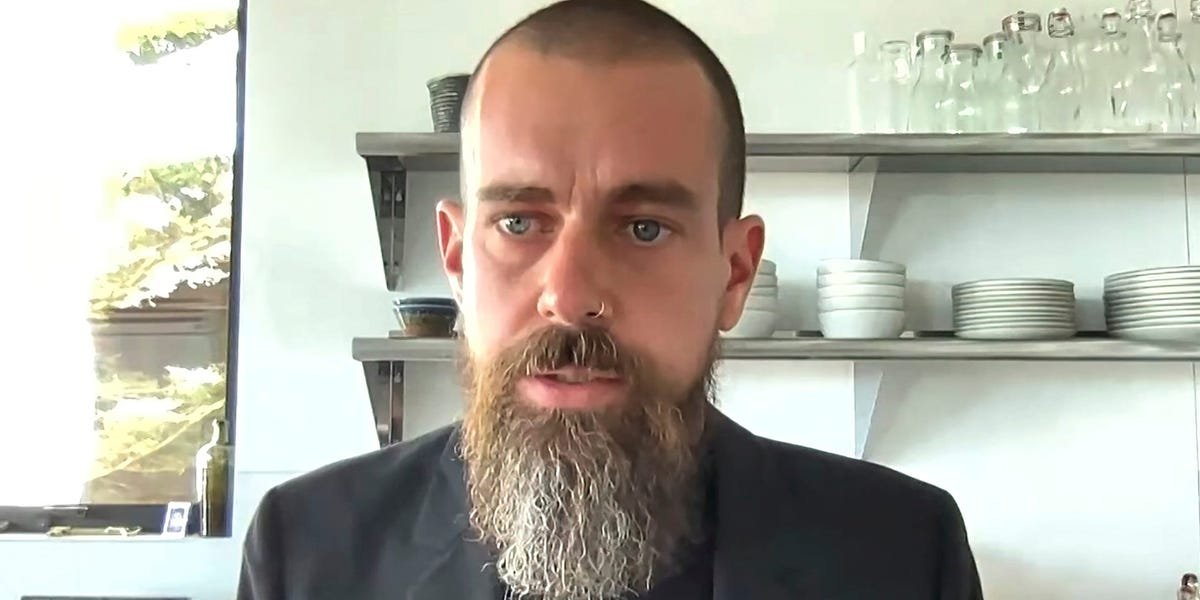
Jack Conte, the CEO of creator subscriptions platform Patreon, has a bone to pick with the Big Tech AI models.

It’s about compensation.

“The creator economy is being left out, loudly and notably,” Conte told Business Insider in an interview. “And by the creator economy, I don’t mean companies, I don’t mean Patreon. I mean creators.”

While AI companies like OpenAI and Meta are striking deals to license content from traditional media companies, “none of that infrastructure exists for independent creators,” Conte said.

In a roughly 45-minute video posted to Patreon on Tuesday, Conte further explained his personal stance on AI and the creator economy.

Conte said the key problem is that Big Tech companies don’t have much of an incentive to pay individual creators right now.

“I’m heavily in favor of some type of regulation that protects the rights holders and creators who are unable to protect themselves and go to the table with a bunch of leverage in moments like this,” he said.

AI’s standing under existing copyright law is still being assessed in real time. For example, in 2025, a federal court in California ruled that Anthropic’s training of its models on copyrighted books could be considered “fair use” if the material was lawfully obtained. Still, the AI company agreed to pay a $1.5 billion settlement to the author plaintiffs in the case after the judge ruled that copying and storing pirated books without consent did not meet the criteria for fair use. In January, a bipartisan bill was introduced in Congress to address transparency around how AI companies train on copyrighted material.

Conte wants to see AI companies start taking creators — and the rights to their content — seriously.

“I’m not anti-AI,” he said.

Patreon, a creator economy unicorn startup, has been internally using AI tools like Anthropic’s Claude and Cursor.

“I think it’s going to help humans make really beautiful things and be really self-expressive in an amazing way, just like synthesizers, just like sound and picture with movies,” Conte said. “But that doesn’t give people carte blanche to roll it out in a way that just creates a bloodbath for the world’s creative people.”

Conte doesn’t have a solution in mind yet for how creators should be compensated by companies training AI models.

“What we need to solve for is what the spirit of IP is solving for, which is how do you incentivize novelty creation?” he said.

He pointed to YouTube’s rights management system, Content ID, as a potential model. Content ID lets rights holders detect, remove, and monetize YouTube videos that feature their copyrighted work.

“Either I can remove my work from the training data, or I get paid when it’s used as training data and when it’s replicated, and I get credit for that,” Conte said. “I don’t know how to build that, but humans have done harder things.”

AI companies could start — and potentially already are — ripping a page out of social media’s playbook for paying or courting creators. Last year, Bloomberg reported that several AI companies were paying creators to license their unpublished content, including startup Moonvalley. OpenAI also recently hired Meta’s former head of partnerships, who oversaw Instagram’s relationships with celebrities and creators.

“We’re going to see some type of model emerge that compensates artists for their work,” Conte said.





Source link

What-smart-people-are-saying-about-inflation-as-the-war.jpeg

What smart people are saying about inflation as the war in Iran presses on

There’s a new force that could push up inflation in the US once again: The Iran war.

Oil prices passed $100 a barrel on Sunday after the effective closure of the Strait of Hormuz cut off crude shipments from the Persian Gulf. While prices dropped to around $85 a barrel on Tuesday after President Donald Trump signaled that he thought the war could soon end, ongoing volatility across markets indicates that fears of inflation are still high.

Wall Street strategists have raised concerns about the impact on the broader US economy if oil prices stay elevated for too long.

The Bureau of Labor Statistics will release new consumer price index data, an inflation gauge, on Wednesday. However, those February estimates won’t reflect the effects of the war-induced oil spike.

Here’s what economists and finance pros are saying about what the oil spike means for American consumers, especially at the gas pump, and how soon it’ll show up in the inflation numbers.

Michael Feroli

Michael Feroli, chief US economist at J.P. Morgan, told Business Insider he expects this to be a more straightforward story for energy prices than tariffs, where the effects took a while to show up in the inflation data.

“It’s pretty safe to say that barring some really surprising reversal here, we’re going to see a pretty decent increase in the March CPI,” Feroli said. “Then April and beyond, I think, are more open to debate.”

Feroli thinks the ongoing situation will have a limited effect on core inflation, which excludes volatile food and energy prices.

“Certainly, there are categories like airfares that you see some pass through, but most estimates suggest almost a trivial impact on non-energy goods and services,” he said. “Though it remains a little bit of a risk that it could be more than we’ve seen in recent decades.”

Matt Colyar

Matt Colyar, an economist at Moody’s Analytics, told Business Insider that the energy shock comes amid affordability concerns in the US.

“Over time in America, it’s very well understood and known that energy prices, gasoline prices, prices at the pump hold a very uniquely salient point in people’s minds,” he said. “Maybe it’s the big signs with the big luminescent numbers that everyone drives by constantly. They’re very aware of these prices.”

Colyar said the war’s effects won’t show up in the inflation report coming out this week, but likely will show a dramatic rise in the headline estimate in the March report, scheduled for April.

He said energy prices will likely have spillover effects on other items.

“Energy is an input into manufacturing. Energy is an input into the agricultural industry,” he said, adding, it also affects airlines.

Mark Hamrick

Mark Hamrick, senior economic analyst at Bankrate, told Business Insider the oil shock “creates a real problem for consumers in the broader economy at a time when affordability challenges have already been first and foremost in terms of the major issue that voters and consumers have been railing against.”

He added that it could have an uneven impact, since lower- and middle-income households will have to allocate more of their budgets to gas.

Hamrick said we don’t know how long it would take for the oil shock to be resolved. He pointed to disruptions to supply chains early on in the COVID pandemic that took time to recover from.

“We don’t know the duration or scale of the conflict, but it’s clearly evolved from a US- and Israeli-led conflict to one that has enveloped the region,” Hamrick said. “The risk is that it does persist, and therefore the inflationary shocks persist.”

Laurence Ales

Laurence Ales, a professor of economics at Carnegie Mellon University’s Tepper School of Business, sees two likely effects as oil prices surge: higher prices at the pump that could then cut into other consumer spending downstream.

“The key channel is energy cost,” he told Business Insider. “This is an important cost for firms that will, in part, pass on to consumers. The channel is well documented, but the effect is small. An additional equilibrium channel starts from the consumer. High gas prices impact consumer spending in non-essential categories. Lowering demand will put a downward pressure on those prices.”

Tad DeHaven

Tad DeHaven, an economic and fiscal policy analyst at the Cato Institute, a Washington, DC, think tank, notes that the oil shocks are coming at a time when the US economy needs stability. As such, it could be compromised in the short term. But he shares the sentiment that the overall impact on US consumers will depend on the conflict’s duration.

“While the US is not as directly dependent on Hormuz as many other countries, oil is priced in a global market,” he told Business Insider. “So even if Americans do not face outright shortages, they would still feel it through higher gasoline prices, higher diesel and jet fuel costs, and broader increases in transportation and business expenses. If the disruption is brief, the result is likely to be a temporary inflationary bump.”

Desmond Lachman

A senior fellow at the American Enterprise Institute, Desmond Lachman, provided some back-of-the-envelope estimates to Business Insider on the overall economic impact of rising oil prices.

“Mainstream estimates suggest that for every sustained $10 increase in the international price, US inflation would increase by between 0.15 and 0.3 percentage points and would subtract between 0.1 and 0.2 percentage points from economic growth,” he said. If oil prices settle around $100 a barrel, “the current level of gas prices could add over 1 percentage point to inflation and subtract between 0.5 and 0.75 percentage points from economic growth.”

Brock Weimer

“The economic impact of the conflict will likely depend largely on its duration and the extent of further disruptions to energy supplies — both of which are difficult to forecast. With oil prices now at their highest level since 2022, upward pressure on headline inflation is likely, which could act as a headwind to economic activity,” Brock Weimer, analyst of investment strategy at Edward Jones, said in written comments. “However, as noted in our Market Pulse, geopolitical events have historically produced only short‑term effects on financial markets.”


Source link

Pranav Dixit

Meta is forming a new AI engineering org for its superintelligence push, with teams as large as 50 people per manager

Meta is establishing a new applied AI engineering organization designed to accelerate the company’s push toward superintelligence, according to two employees familiar with the matter.

The new organization will be headed by Maher Saba, a vice president at Reality Labs, the division responsible for Meta’s metaverse products and AI-powered smart glasses. Saba’s new group will report directly to Chief Technology Officer Andrew Bosworth. Teams within the organization will have manager-to-employee ratios of up to 1:50, the people said.

Meta declined to comment.

The group will work in close partnership with Meta Superintelligence Labs, the organization that Meta created last summer and is led by former Scale AI chief Alexandr Wang, to oversee the development of Meta’s frontier AI models. Saba’s team will build “the data engine that helps our models get better, faster,” according to an internal memo, sources said. The Wall Street Journal first reported about the memo.

The new organization will have two distinct teams: one focused on building interfaces and internal tooling, and another dedicated to helping feed the AI with data.

Saba wrote in the memo that “building great models isn’t just about researchers and compute,” according to the employees.

Saba added that the group aims to turn capable AI models into market-leading ones. He pointed to recent AI research gains in reinforcement learning and post-training as evidence that Meta has an opening to accelerate if it invests more aggressively in this area, the people said.

The unusually flat structure reflects a broader organizational philosophy that CEO Mark Zuckerberg outlined during Meta’s most recent earnings call. Zuckerberg told investors that Meta is “elevating individual contributors and flattening teams” and said the company is already seeing “projects that used to require big teams now be accomplished by a single, very talented person.”

Another Big Tech company, Nvidia, is also known for its flat structure, with CEO Jensen Huang having over 30 direct reports.

Have a tip? Contact Pranav Dixit via email at pranavdixit@protonmail.com or Signal at 1-408-905-9124. Use a personal email address and a nonwork device; here’s our guide to sharing information securely.


Source link

Wealthy-people-are-chartering-planes-and-hiring-drivers-to-evacuate.jpeg

Wealthy people are chartering planes and hiring drivers to evacuate the Middle East

Six-figure private charter flights, chauffeured drives, hours-long waits to cross borders: Some wealthy travelers and expats in the UAE are doing whatever it takes to evacuate the Gulf region amid air strikes and the possibility of escalation.

“Demand is definitely increasing,” Glenn Phillips, a PR and advertising manager at global charter firm Air Charter Services, told Business Insider, adding that “there are an increasingly limited number of aircraft willing and able to fly to and from the area.”

On Monday, two days after the start of the US and Israel’s war against Iran, flights out of the United Arab Emirates — whose two main airports were damaged by Iranian air strikes — were still few and far between, and major hubs, including Qatar, Bahrain, and Kuwait, had to shut down due to airspace restrictions.

That left wealthy people in financial hotspots like Dubai and Abu Dhabi — hubs for monied tourists and Western expats in recent years — scrambling to reach Oman or Saudi Arabia, two countries that had open airspace through Monday. They spent hours in the car to reach the airports, as border-crossing waits increased by the day.

It may soon get harder for travelers to reach functioning private jets. Some commercial flying had resumed from the UAE on Monday evening, but that appears to have slowed amid new missile threats. Reported attacks on the US embassy in Riyadh have similarly forced several flights to turn around or divert from the Saudi city.

In what appears to be a warning of escalating tensions that could further snowball the conflict, the US State Department on Monday night urged Americans to evacuate over a dozen Middle Eastern nations — including those that still had their airspace open to commercial and private flights, like Oman and Saudi Arabia.

Flights out for $200,000+

Charter flights can cost as much as $200,000, Jay Smedley, the owner of luxury concierge firm Dubai Key, told Business Insider. The company has arranged short-haul private charter flights to Istanbul, Cairo, and the Maldives for clients since requests began to increase on Saturday.

Flights to Europe can cost even more, with Ameerh Naran, the CEO of Vimana Private Jets, saying the firm is pricing the flights between $175,000 and $235,000.

Air Charter Services has arranged “a number” of evacuation flights — and has more scheduled on Tuesday — out of Muscat, Oman, largely for people looking to leave Dubai, Phillips said.

The trip involves a five-hour drive, plus an additional three- to four-hour wait at the Hatta border crossing, which he expects will increase.

The demand to leave the region began last week, Naran told Business Insider, adding that there was “a noticeable increase in enquiries from Friday onwards.”

“Expect long waiting queues and security check delays,” Camille d’Harambure, a general manager at luxury travel firm Lightfoot Travel, told Business Insider.

Mike D’Souza, the operations coordinator for Dubai-based chauffeur service Indus Chauffeurs, told Business Insider that the “demand appears precaution-driven rather than panic-driven.”

“There has been a clear emphasis on speed and certainty of departure, with many clients prioritizing the earliest viable routing rather than specific aircraft types or traditional preferences,” Naran said. “We have also seen increased demand for coordinated ground support to facilitate access to airports where airspace remains open.”

Phillips echoed that clients just want to get out and are not all that concerned about where “out” is.

Prices have increased with demand, Phillips added — and in some cases, even those wealthy enough to pay their way out of the Middle East are looking twice at the price tag of departure.

“Many people are taking shorter flights to places out of the region and then picking up scheduled connections for the rest of their journey to reduce full journey costs,” he said.


Source link

Theron Mohamed — Profile Picture

Bill Gurley: people who don’t love their jobs are most at risk of losing them to AI

Passion could be the best defense against AI taking your job, Bill Gurley says.

“The people that are most at risk are the ones that are sitting idly in the job and don’t really have a why or a purpose for it,” the legendary venture capitalist said during the latest episode of the “On with Kara Swisher” podcast.

“I think a lot of the people that go through that college conveyor belt, that are chasing a safe job, that end up working as a widget or a cog in an industry they may not love — I think they are ripe for disruption,” he added.

Advances in AI have spurred numerous high-profile companies to slow hiring or make layoffs in anticipation of cheaper, more productive digital workers replacing human ones.

Technology giants such as Meta, Microsoft, Amazon, and Alphabet are also spending hundreds of billions of dollars to build AI infrastructure, fueling widespread concerns of future job losses.

Gurley is a general partner at Benchmark who’s known for placing early bets on businesses such as Uber, Nextdoor, OpenTable, and Zillow.

He recently published a book titled “Runnin’ Down a Dream: How to Thrive in a Career You Actually Love.”

The veteran investor said on the podcast that young people should choose careers they enjoy and care about. Warren Buffett, who famously “tap dances to work” at Berkshire Hathaway, has long offered similar advice.

“For people that are in a job they love, the honing’s free,” Gurley said. He explained that when someone is passionate about what they do, they don’t need to set aside time or convince themselves to polish their skills and knowledge; they naturally prioritize improvemen and feel energized by the process.

“It really becomes an unfair advantage in almost any industry if you’re that person because you’re learning constantly,” Gurley said.

One key thing they should learn is how to harness AI to bolster their efforts, he said.

“Be the most AI aware person in your job,” Gurley said. “And you’re going to then be the last person that they want to get rid of.”

Gurley compared AI to “jet fuel” that can expand a worker’s capabilities. Employees can now learn more quickly and thoroughly than ever before, he said, so if they’re focusing their learning on AI, they’re “going to have even better chance of winning,” he added.


Source link

Heres-what-smart-people-are-saying-about-Paramount-winning-the.jpeg

Here’s what smart people are saying about Paramount winning the Warner Bros. Discovery deal

Matt Stoller, director of research at the American Economic Liberties Project and author of the “BIG” anti-monopoly newsletter, discussed the legal situation surrounding the deal in a Substack video conversation with Richard Rushfield, a columnist at The Ankler.

He said the merger can be challenged by state enforcers, and Paramount would push to close the deal quickly to get ahead of that.

“That means they get to take over all these assets and start running them,” Stoller said. “They can fire people. They can intermingle the assets. They can choose new lines of business. They can move people around. All of the bonuses get paid out. They can do layoffs.”

Trying to unwind operations where assets are already intermingled would be like “unscrambling eggs,” Stoller said.

Stoller said he was puzzled by why other companies in Hollywood haven’t hired lawyers to compile evidence in opposition to the merger and hand it to state attorneys general to help build their case.

“It just baffles me why people are so passive when you can actually knife fight on stuff,” Stoller said, though he added that it could be happening without his knowledge.


Source link

What-smart-people-are-saying-about-Jack-Dorsey-slashing-jobs.jpeg

What smart people are saying about Jack Dorsey slashing jobs at Block: ‘The canary in the coal mine’

  • Jack Dorsey announced major layoffs at Block, cutting nearly half of its workforce.
  • Dorsey said AI was behind the cuts, and the company’s stock rose over 20% in after-hours trading.
  • Tech and VC leaders have reacted to Block’s layoffs, with some calling it a sign of what’s to come.

Jack Dorsey’s announcement on Thursday that Block was slashing its workforce nearly in half sent shockwaves through the tech world.

Dorsey, Block’s CEO and cofounder, said AI was rapidly changing work at the financial services company, which owns Square, Cash App, and Afterpay.

“A significantly smaller team using the tools we’re building can do more and do it better,” he said on Thursday’s earnings call, shortly after the reduction in force was shared on X.

“I had two options: cut gradually over months or years as this shift plays out, or be honest about where we are and act on it now,” he wrote in a memo. “I chose the latter.”

Block’s stock was up over 20% in after-hours trading following the announcement. Shares were down more than 16% in the last year as of market close on Thursday.

Leaders in tech and venture capital quickly reacted to the news, with some saying it could be the first of what’s to come as AI fundamentally transforms companies and the nature of work. Others were more skeptical of AI’s role.

Here’s what smart people are saying about the job cuts at Block.

Balaji Srinivasan

“This is the first AI cut,” tech investor Balaji Srinivasan said on X. “And it will send shockwaves.”

The Silicon Valley venture capitalist said the Block cuts were a “signal to everyone in tech: get good now. Become indispensable. Work nights and weekends. Learn the AI tools and raise your game. Or you might not make the cut, as an employee or as a company.”

Aakash Gupta

“Block is the canary in the coal mine,” Aakash Gupta, host of “The Growth Podcast,” said on X. “And they’re not alone.”

Gupta said Dorsey “said the quiet part out loud: intelligence tools paired with smaller teams have already changed what it means to run a company.”

“Block went from 10,000 to 6,000 while growing revenue and raising guidance. Every CEO running a company with more than a few thousand employees is doing this math tonight,” he added. “The canary just stopped singing.”

Ben Carlson

Ben Carlson, a financial analyst and director at Ritholtz Wealth Management, expressed skepticism that the cuts were purely driven by AI innovation, sharing a chart that shows Block’s share price is down sharply from its high point in 2021.

“Maybe Block laying off a ton of employees is a sign that AI is gonna destroy everything,” he wrote on X. “Or maybe the stock is down 80% from the highs and they overhired and AI is a convenient excuse.”

Jason Calacanis

Jason Calacanis, angel investor and co-host of the “All-In” podcast, praised Dorsey for the cuts.

“Leadership is hard, but this feels like (another) visionary move,” he said on X. “Have never sold a share, since being a private investor in square.”

Jessica Verrilli

“Feels inevitable this is about to ripple through every public company,” Jessica Verrilli, cofounder of VC firm Adverb Ventures, said on X. “We’ve gotta find a way to make everyone an owner w/ some exposure to the upside as the # of employees falls off a cliff.”

Shaun Maguire

“Respect to @jack for doing the hard thing,” Shaun Maguire, partner at Sequoia Capital, wrote on X. “While doing it intentionally and owning the decision.”

Clara Shih

“Square is just the beginning,” Clara Shih, a startup investor and senior advisor at Meta, said in an X post. “Every CEO faces the same decision today that manufacturing CEOs did in 2000: do a big layoff or your competitor will, pass on cost savings to customers and investors, and beat you.”

“In 2000, jobs were lost to Shenzhen. In 2026, jobs will be lost to AI,” she added.

Matt Shumer

Matt Shumer, an AI CEO who wrote the viral “Something Big is Happening” essay earlier this month, said this is “one of the first major examples of AI driving layoffs, but certainly not the last.”

“If you’re saying ‘this won’t happen to me’, re-evaluate your thoughts. Now,” he said on X. “It may be the most important thing you do.”


Source link

What-smart-people-in-economics-and-business-are-saying-about.jpeg

What smart people in economics and business are saying about a viral report warning of an AI-driven recession and stock crash

  • A viral research report warned of a stock market crash and double-digit unemployment by 2028.
  • The note sent software stocks sliding and rattled investors.
  • Critics said markets may be overreacting to a worst-case scenario thought experiment.

A research note warning that the AI boom could trigger a recession and a stock market crash spooked investors and sent software stocks sliding on Monday.

Citrini Research outlined a hypothetical 2028 scenario in which rapid AI adoption leads to mass white-collar layoffs and a collapse in consumer spending.

The report, which was published Sunday, went viral and amplified debate over whether AI is a productivity boom or a destabilizing shock.

Here’s what prominent economists and business leaders are saying about the note:

Claudia Sahm

Claudia Sahm, the chief economist of New Century Advisors and creator of the Sahm Rule recession indicator, raised concerns about the framing of the scenario.

“One concern with the Citrini scenario (and mirrored in the current moment) is the focus on destructive (left) rather than constructive (right),” Sahm wrote on X on Monday. “Maybe the latter takes longer, but it matters for the new equilibrium, too.”

In a follow-up post, she said that a labor market shock of the magnitude Citrini describes would likely trigger a forceful policy response.

“The labor market crisis they describe would generate a forceful fiscal/monetary response. They downplay that,” Sahm wrote. “The more likely scenario of gradual, limited job losses will be the hard one to get policymakers to focus and act.”

Michael Burry

Michael Burry.

Jim Spellman/WireImage

Michael Burry, the investor famous for predicting the 2008 housing crash and profiled in “The Big Short,” amplified the report to his millions of followers.

“And you think I’m bearish,” Burry wrote on X, linking directly to Citrini’s research.

His post included a chart from the Citrini report, titled “The AI Feedback Loop: A Non-Cyclical Disruption,” contrasting traditional recessions — which, it said, self-correct — with what Citrini describes as an AI-driven cycle with “no natural brake.”

Brendan Duke

Brendan Duke, a senior director for federal budget policy at the Center on Budget and Policy Priorities and a former senior policy advisor at the Biden-Harris White House National Economic Council, said many critics may be misreading Citrini’s premise.

“A lot of people have a hard time with the concept of a thought experiment,” he wrote on X.

However, Duke added that one underappreciated risk in the scenario is the financial market impact if “prime white collar borrowers who nobody ever thought would default… defaulting” becomes a reality — referring to the report’s suggestion that white-collar layoffs could cascade into prime mortgage and private credit stress.

Jeff Dorman

Jeff Dorman, chief investment officer at Arca, framed the response to the report as a lesson in investor psychology.

“The biggest takeaway from the virality of this Citrini doom porn is that fear sells,” Dorman wrote on X, referring to Monday’s stock market sell-off.

He said that markets and media often reward dramatic crash predictions, even if they rarely materialize.

“There are thousands of successful macro newsletters that you pay money to subscribe to, and all of them tell you to buy gold, build a bunker, and short stocks,” he wrote, adding that high-profile recession forecasters frequently get attention despite repeated false alarms.

Deepak Shenoy

Deepak Shenoy, founder of Capitalmind, compared the AI recession warning to past resource-scarcity warnings.

“This is the viral post that currently spooks everyone,” Shenoy wrote in an X post.

He pointed to 2008-era warnings that oil reserves were running out — fears that did not ultimately dismantle the energy industry.

“Doomsday porn is addictive,” Shenoy wrote. “AI based end of everything is the WWF of the world now, fun to watch but is mostly fake.”

Michael Bloch

Michael Bloch, a partner at VC firm Quiet Capital, published a rebuttal titled “The 2028 Global Intelligence Boom.”

He said that even if AI keeps improving rapidly, it doesn’t have to end in a crash — it could make the economy richer.

“What if our AI bullishness continues to be right… and what if that’s actually bullish?” he wrote on Substack this weekend.

Bloch said investors are confusing pain in parts of tech — like SaaS and middleman-style businesses — with a broader economic collapse, and that cheaper services could leave households and startups with more money to spend.


Source link

Julia Pugachevsky's face on a gray background.

More people want open relationships, but here’s why many don’t last

Open relationships have gotten a cultural glow-up among younger adults. In practice, though, they’re hard to pull off.

There’s a lot of social media chatter where people in happy non-monogamous relationships report perks such as greater sexual satisfaction, multiple deep partnerships, and less restrictive love lives.

Still, outside the tweets, threads, and curated Instagram grids, the story is a bit more nuanced. A 2023 Pew Research report found that Americans are divided on open marriages. Of about 5,000 US adults surveyed, 37% found open marriages completely unacceptable. Younger generations approved more than anyone else: roughly half of 18- to 29-year-olds were accepting of open marriages.

Dr. Justin R. Garcia, the executive director of the Kinsey Institute, has also witnessed the growing popularity of non-monogamy in his work.

“People were talking about swinging in the 60s and 70s, but the language and the amount of attention to it changed, particularly over the last decade,” Garcia told Business Insider, citing Amy C. Moors, a sexuality scientist who noticed a steady increase in people searching for terms related to polyamory between 2006 and 2015.

However, showing interest and actually engaging in the activity are two different things. In his new book, “The Intimate Animal,” Garcia said that research from his lab at the Kinsey Institute, one of the most prominent research centers for human sexuality and relationships, found that one in five single adults in the US, out of about 8,700 studied, have had some kind of consensual, non-monogamous relationship at some point in their lives.


Hands holding

Studies suggest that more people have tried non-monogamy than have maintained it long-term.

Vershinin/Getty Images


When looking at the past five years in another study of Garcia’s, however, that number dropped significantly, suggesting that “more people try it than decide that it is a lifelong relationship structure for them,” Garcia said. “In my social networks, that’s been my experience as well.”

It doesn’t mean that they never work, he added. According to multiple studies, “while consensually open relationships might not work for everyone, or even for most people, there are many people for whom they do work perfectly well,” he wrote in his book. Those in happy non-monogamous relationships, for example, don’t fare psychologically or emotionally worse than content monogamous couples.

“In terms of who’s a good candidate for it? My cheeky answer, but it’s actually true, is those people who really want to do it,” Garcia said. “It’s similar to ‘What’s the right amount of sex that we should be having?’ It’s as much as you want.”

Still, that doesn’t mean open relationships work for everyone. Based on his research, Garcia shared the most common reasons non-monogamous partnerships don’t work out.

It takes work to balance partners


Three people hugging

Devoting enough time to your partners can be challenging.

FG Trade/Getty Images


One of the most common challenges to non-monogamous partnerships might be our own biology.

“We have such a fundamental, evolved drive to form intense pair bonds,” Garcia said, ones that biologists theorize helped us thrive as a species over time. In his book, he said that “our brains don’t appear particularly well-suited to processing intimacy with more than one partner at a time,” be it another romantic partner or a sexual fling. Even fantasies of threesomes, Garcia said, more often involve an existing partner.

If romance is most often defined by sustained attention and effort, then it becomes more difficult when one or both partners have other people to focus on. Introducing a new partner into a shared home can cause friction with a spouse, as can skipping dinner with a spouse to spend it with another significant other.

Garcia said one of the “prevailing rationales” for consensual non-monogamy is having “too much love to give.” However, he wrote, the opposite is true: “Most people don’t have the biological, psychological, and social tools to love more than one person at a time.”

Extra communication can be a turn-off


Couple holding hands

Healthy non-monogamous relationships require extra communication, which some people find off-putting.

Tom Werner/Getty Images


In his research, Garcia said the happiest non-monogamous couples have the same thing in common: “They tend to engage in a lot of communication.”

One 20-person polycule, for instance, uses a software engineer strategy called “agile scrum” to resolve any relationship issues. It involves monthly reviews, discussion questions, and action points.

“Even casual polyamorous encounters take substantial effort and negotiation,” Garcia wrote, including lots of communication. “Who needs more touch? Less? Who is feeling neglected? Who needs more time with whom? What is the state of things between each member of the polycule and each of the others?”

Some people find that level of frequent, in-depth communication builds their intimacy and brings them closer. Still, for many people, it’s just too much work.

It can magnify issues instead of fixing them


Couple hugging

Non-monogamy can heighten existing issues like jealousy and mismatched libidos.

gorodenkoff/Getty Images


In any healthy relationship, Garcia said there’s a basic framework you have to follow: “There’s me, there’s you, and there’s us.” What might make one person happier, like having more romantic partners, might make the other feel neglected.

For a non-monogamous relationship to work, “you want to be able to both navigate your feelings of jealousy,” Garcia said. Furthermore, he added, it helps if you actively enjoy knowing that your partner is with others.

The last reason you should be in a polyamorous or open relationship is because you want it to “fix” your current relationship. Often, he wrote, “the same issues that plague monogamous relationships — mismatched libidos, jealousy, boredom, and more — tend to surface in consensually non-monogamous ones.” In fact, he added, they can multiply when partners aren’t communicating or devoting enough time to each other.

“As one of my friends who had attempted to form a polycule once told me, ‘It didn’t work,'” Garcia wrote. “‘I just pissed off two women instead of one.'”


Source link

Mark-Cuban-says-there-are-2-types-of-people-who.jpeg

Mark Cuban says there are 2 types of people who use AI: the learners and the lazy

  • Mark Cuban says there are two types of LLM users: learners and non-learners.
  • Cuban has previously said companies need to embrace AI, but that it’s not perfect.
  • Some proponents of AI have said that one risk of the technology is that it could make people lazy.

Mark Cuban says there are two types of people who use AI. Which one are you?

“There are generally 2 types of LLM users, those that use it to learn everything , and those that use it so they don’t have to learn anything,” Cuban said of large language models in an X post on Tuesday.

The “Shark Tank” billionaire has been bullish about AI and said that companies need to embrace it.

Cuban has said there will be “two types of companies: those who are great at AI, and everybody else,” Business Insider’s James Faris previously reported. He’s also said that AI models can’t provide all the answers and are “stupid” but like “a savant that remembers everything.”

Bill Gurley, a partner at the Silicon Valley venture capitalist firm Benchmark, agrees “100%” with Cuban that there are two types of AI users.

“If you are on a custom career path where you aim to differentiate yourself, AI is ‘jet fuel’ – you can learn and soar faster than ever before,” Gurley said on X in response to Cuban.

Or, it could have the opposite effect.

Even some of AI’s biggest proponents have warned that the technology could make people lazy.

Arthur Mensch, CEO of Mistral AI, said last year that the biggest risk to humans posed by AI was “deskilling” and employees becoming lazier as they rely too heavily on the AI tools.

“You want people to continue learning,” he said in an interview with The Times of London. “Being able to synthesize information and criticize information is a core component to learning.”

Business Insider reached out to Cuban for additional comment.


Source link