The Rev. Jesse Jackson was a leader of the Civil Rights Movement, a minister, and an activist icon who twice ran for president.
Born on October 8, 1941, in Greenville, South Carolina, Jackson experienced Jim Crow segregation on public buses and at school firsthand. It would shape the rest of his life.
His fight for civil rights began in the 1960s, when he helped organize protests and demonstrations across the US and worked closely alongside civil rights icon Dr. Martin Luther King Jr.
His decadeslong career as a leading civil rights activist included support for modern national movements, such as the push for voting rights, the fight against racism, and a higher minimum wage.
Jackson ran for president twice, both times as a democrat. He placed third for the party’s nomination in 1984 and second in 1988. This marked the most successful presidential runs of any Black candidate prior to Barack Obama.
Jackson announced in 2017 that he’d been diagnosed with Parkinson’s disease. In November 2025, Jackson was treated in a Chicago hospital after complications from progressive supranuclear palsy (PSP), a rare neurodegenerative condition.
Casey Wasserman announced on February 13 that he is selling his talent agency after his name appeared in the Epstein files, sparking a growing fallout.
Soccer player Abby Wambach and singer Chapell Roan earlier said they were parting ways with Wasserman’s agency.
Wasserman flew on Epstein’s jet with a group of people that included former President Bill Clinton. The files also show Wasserman and Ghislaine Maxwell exchanging racy and flirtatious emails in 2003, well before police began investigating Epstein, and over a decade before Maxwell’s arrest on sex-trafficking charges in 2020.
“Casey – I will be coming back to NY torn late afternoon,” Maxwell wrote in one email. “I shall be wearing a tight leather flying suit.”
Wasserman said in a statement that he regretted his messages with Maxwell, which took place “long before her horrific crimes came to light” and that he never had any personal or business relationship with Epstein.
Wasserman announced his intentions to sell his agency in a memo to staffers, which the agency shared with Business Insider.
“I’m deeply sorry that my past personal mistakes have caused you so much discomfort. It’s not fair to you, and it’s not fair to the clients and partners we represent so vigorously and care so deeply about,” Wasserman wrote. “The pain experienced by the victims of Jeffrey Epstein and Ghislaine Maxwell is unimaginable – and I’m glad, as I’m sure you all are, that those who helped them commit their crimes are rightly being held accountable.”
Wasserman wrote that he had “become a distraction.”
“That is why I have begun the process of selling the company, an effort that is already underway. During this time, Mike Watts will assume day-to-day control of the business while I devote my full attention to delivering Los Angeles an Olympic Games in 2028 that is worthy of this outstanding city,” he wrote.
This as-told-to essay is based on a conversation with Esther Perel, a renowned couples therapist, bestselling author, and podcast host. Perel lives in New York City and travels the world for speaking engagements. This story has been edited for length and clarity.
I have been interested in psychology since I was about 14. I wanted to understand myself, my family, and my surroundings. So, becoming a therapist was quite an obvious choice for me.
I started working with large groups, then moved to families, then couples. In particular, I was interested in interracial, intercultural, inter-religious couples and families — families in cultural transition. What is sexuality in the culture, and how does it enter into the family culture and the couple’s relationship?
I spent 35 years in my therapy office, alone. At one point, I started to feel that the office was getting small. Therapy is not democratic; it’s not accessible to many people who need it.
I wrote “Mating in Captivity” (2006) and “The State of Affairs” (2017). Then, I started bringing people into the sessions, and that’s the podcast. “Where Should We Begin?” was doing live anonymous couples therapy sessions at scale, all over the world, for free.
It’s not therapy, but a way to bring the insights that happen in the office into the public square. Then I decided to step out of the office myself and go onstage to recreate the experience at scale with thousands of people.
Esther Perel shares therapy insights at speaking events around the world.
Rick Kern/Getty Images for Vox Media
I created a card game during the pandemic because I wanted to give people something playful that helps them connect. I recorded courses on conflict and desire because for every book I wrote, people would then say, “And then what do I do?”
Right now, I am working on a new tour and a few other projects that I’m keeping to myself until they happen. Although I live primarily in New York and spend a few months a year in Europe, I travel in bursts, and always with either a family member or friend. I mix pleasure and purpose, work and personal. I’m going on an adventure with someone.
I still have a therapy practice, one or two days a week. I’ve never stopped because I think it’s very important to keep close to the craft, and not just to become a storyteller.
Here’s a day in my life.
Mornings start with group yoga
I get up around 7 to 7:30 a.m. As soon as I wake up, I need to move to feel calm. It’s a bit of a paradox.
I do yoga four times a week. I’m part of a group of friends who started practicing together during the pandemic. For six years, we’ve never missed a class. We do it in person and on Zoom, so wherever one is, one can join. It’s very grounding and strengthening.
A bunch of us in the group happen to be teachers. I became one by default — I’ve never been trained as one, but I know how to repeat what my teachers have said to me.
On other days, I exercise, also with a friend. It motivates me and makes me accountable. Alone, I would be a lazy bum. I’d be getting ready, then spend the day futzing around and never get there.
I check international texts while I drink my coffee
I very rarely get a coffee outside. I like to make it, sit down, and look at who texted me in the middle of the night, since people in my life are in different time zones. Who am I waking up to this morning?
Perel uses the morning to catch up with her friends, many of whom live across different time zones.
Zenith Richards
For breakfast, I eat grapefruit, yogurt, and berries, and on occasion, eggs.
My team helps me balance therapy, podcast, and meeting days
I don’t start work before 10 a.m. so that I have time to do what I like to do in the morning. I work partly at home and partly at Magnificent Noise’s podcast studio.
My work days are nicely segmented:
Mondays are for therapy patients.
Tuesdays are for recording the podcast.
Wednesdays are for internal meetings.
I try to create a focus for the day so that I don’t have to see patients and go to meetings when I’m in clinical mode. Still, I sometimes have to switch modes in such drastic ways that it’s a bit jarring.
It’s a lot to juggle. I have an amazing team of people that I work with, who are very knowledgeable about the different things that I do. I cannot do any of this alone.
When I was exclusively working as a clinician, I often would say, “I miss working with others.” Now, I’m never just doing one thing. It’s a very rich day, which I really missed back then.
I take some therapy patients on walks
Much changed after the pandemic. I don’t have a practice office anymore. I practice from my home or go to other people’s offices.
Sometimes, we meet outside, and we walk.
Perel said walking therapy sessions have their own benefits.
Zenith Richards
It’s fantastic. When you’re in motion, you experience your thoughts differently, and you respond differently to the person talking to you. You’re not face-to-face; you’re side-by-side, so the parallel position gives you a whole other interaction.
Sometimes, we stop, we sit down. We continue the session by the river. There’s water floating by. That too is very calming. There’s this intersection between beauty and calmness and motion and the depth of what you are reflecting upon at the same time.
What I like about clinical work is that every human being is a whole universe opening up to you. It’s an endless exploration. The psyche, the mind, the body, the painful and the joyful, the breaches and the connection, the people who suffered from too much attention, and the people who suffered from too little. I can’t think of a subject that would be more diverse in its interests.
I don’t prioritize lunch breaks
I don’t always take a lunch break. In general, I prefer to end the day earlier.
I have very few routines when it comes to food. Most of my meals are home-cooked. I eat lots of nuts and fruit. I’m a major bread-and-cheese person, and sometimes a slice of both is a good lunch, too.
Today, I cooked up a bunch of different vegetables. I made some chicken so it would last for two or three days. I am a big soup maker in the winter, and I like salads in the summer.
I stop work at 5 to go to the theater
I usually stop working around 5 p.m.
I love movies. I love theater. I go with friends into the world to see art — paintings and performances. Probably, I’m at a theater two or three times a week. I saw the Broadway production of “Oedipus” twice. I just thought it was pertinent, current, exquisitely well-acted, beautifully written.
I socialize, too. Meeting people for dinner, inviting them over. When I spend so much time on a screen, I like to see people in real life.
Book and movie clubs cut down on social scheduling
NEEDS A CAPTION. NEEDS A CAPTION. NEEDS A CAPTION.
Zenith Richards
I’m in a movie and book club as well.
We recently read “Train Dreams” by Denis Johnson. We’ve read Roberto Bolaño, Rachel Cusk. We’re reading Muriel Spark for next month.
For the movie club, we just discussed “The Worst Person in the World” — I had just seen “Sentimental Value” by the same director, Joachim Trier. We’ve done the movie club every three weeks for the past six years — that’s a lot of movies with a great group of people who have a lot to say.
Plus, you have your homework, and you’re not just going to read articles and social stuff. These little structured pieces of my life that actually invite real exploration and connection.
I end the night with my husband — and almost no social media
At night, I talk to my husband. I also go to look at the messages that I didn’t catch for the day. I often spend the last half hour or hour on my phone. It’s not the best. I sit on the couch, and I look at my calendar for tomorrow and who I’m meant to connect with.
I rarely scroll through social media. I’m in a few different WhatsApp groups, so I see what’s happening in my social world. That’s how I unwind.
I’m quite relational. Fundamentally, if I want to do something, I instantly think, “Who do I want to do this with?” Then, I organize the activity with that sociability. They are completely intertwined.
On July 6, 2019, federal agents arrested Jeffrey Epstein aboard his private jet, which had just landed in New Jersey from a trip to Paris.
At the same time, another set of FBI agents raided his mansion in Manhattan. They took photos of everything, from a taxidermied tiger in the library, to framed pictures of Epstein with Donald Trump, Pope John Paul II, and Saudi Crown Prince Mohammed bin Salman scattered across his desks.
The agents also seized more than 70 computers, iPads, and hard drives, as well as boxes of shredded paper and financial documents. They sawed open a metal safe and found even more hard drives, along with a binder of CDs, 48 loose diamonds, and a Saudi Arabian passport with his photo.
Six weeks later, after Epstein killed himself in jail while awaiting trial on sex-trafficking charges, agents raided his US Virgin Islands estate, where they seized even more electronic devices and documents.
On January 30, the US Department of Justice put much of that material on the internet.
It created an immediate explosion of news. The public already knew that numerous powerful people in politics, business, and academia spent time with Epstein even after he had already registered as a sex offender, in 2008. The files demonstrated a vaster scope than previously known.
Emails show Tesla CEO Elon Musk and US Commerce Secretary Howard Lutnick made plans to visit Epstein’s island. Epstein exchanged crude emails with Virgin founder Richard Branson and other businessmen. The UK’s ambassador to the US, Peter Mandelson, resigned from the Labour Party after the files revealed a photo of him in his underwear and emails showed him sharing government secrets with Epstein. Kathryn Ruemmler announced she would resign as the top lawyer at Goldman Sachs after emails showed years of warm — and at times intensely personal — emails between her and Epstein. The documents disclosed that prosecutors investigated sexual abuse allegations against Leon Black, a billionaire acquaintance of Epstein, but did not charge him. A financial document which had been kept secret since Epstein’s death showed he asked his girlfriend to marry him and planned to give her $100 million and all of his properties.
The records also include a number of unsubstantiated tips sent to the FBI, which include unproven allegations about President Donald Trump.
Before the release, the public knew there was more to the Epstein story.
A glimpse of the Epstein files was shown in the criminal trial of Ghislaine Maxwell, which I covered for Business Insider, in Manhattan federal court in 2021. Victims testified about how Epstein and Maxwell would name-drop Trump, Bill Clinton, and Prince Andrew, showing them how many friends he had in high places.
After the jury found Maxwell guilty of trafficking girls to Epstein for sex, I filed my story, and then got drinks with a few other journalists who covered the five-week trial, including Julie K. Brown, the Miami Herald journalist whose stories about Epstein’s abuses led to his arrest.
It had been a grueling trial, filled with horrific testimony from women who had recounted the darkest moments of their lives. The trial took place in December, requiring journalists to show up at 4 a.m. in the 20-degree weather to get a seat in the courtroom.
We were happy for the trial to be over and for the jury to reach its verdict. But a question hung in the air. Was what we heard at the trial really all there was to say?
Questions about Epstein and his sex-trafficking operation continued to persist in the years following the trial. How did Epstein get so rich? Was there any truth to rumored connections to the CIA or the Mossad? Did Epstein traffic girls to some of his powerful friends, as some victims alleged? Did he really kill himself in prison, as authorities concluded, or was he assassinated to cover up an elite pedophile ring, as some theorized?
Civil lawsuits generated new revelations. A judge in New York unsealed documents from a long-running case that Epstein’s most outspoken victim, Virginia Giuffre, filed against Maxwell. Groups of victims sued big banks, accusing them of ignoring red flags about Epstein’s finances. (Deutsche Bank and JP Morgan each settled class-action lawsuits with victims; similar lawsuits against Bank of America and BNY Mellon are pending.) JP Morgan and the US Virgin Islands government filed lawsuits in which each accused the other of facilitating Epstein’s sex-trafficking operation. And a compensation program identified 150 victims.
The lawsuits delivered a steady drip of details: how Epstein trafficked girls and hushed them up with money, more names of people in his orbit, and the financial red flags waved before banks. A Justice Department inspector general report analyzing the circumstances of his death concluded that poor management at the federal jail created the conditions that allowed him to kill himself. Another Justice Department report criticized Alexander Acosta, the prosecutor who gave Epstein a plea deal in 2007 on light charges, for “poor judgment,” but found nothing that substantiated a vast conspiracy. (The latest file release includes a copy of the robust indictment prosecutors had initially drafted, with 19 victims.)
As theories about Epstein continued to swirl online, the Justice Department refused requests by journalists and Epstein’s victims to make the files public.
On a credenza in his Manhattan mansion, Jeffrey Epstein kept photos of himself with some of the most powerful people in the world.
US Department of Justice
By the 2024 presidential campaign, speculation about Epstein had reached fever pitch among members of Trump’s political base, who had for years been steeped in other conspiracy theories, including QAnon. Podcasters and journalists pressed Trump to promise to release the Justice Department’s vast trove of Epstein files.
The issue was potentially awkward for Trump. Epstein was affiliated with prominent Democrats, including Clinton, former New Mexico Gov. Bill Richardson, and diplomat Bill Burns. But Trump and Epstein had been friends in the 1980s and 1990s, both spending time together in the Manhattan and Palm Beach social circuits. Epstein also forged close ties with Steve Bannon, Trump’s former White House advisor, in the months before his arrest on sex-trafficking charges.
Shortly after Trump won the presidential election, Giuffre — who was a teenager when Maxwell recruited her from Mar-a-Lago, where she worked, and brought her to Epstein for sex — urged him to release the files.
“We need someone who despises these sick people with the power to help make it easier to hold these monsters accountable, no matter how much $$ they have,” she wrote on X. “God bless you and Thank you for caring!”
When Trump took office in January 2025, the job of releasing the Epstein files fell to his attorney general, Pamela Bondi.
For months, Bondi promised but failed to provide any substantial new information about Epstein. Then, in July, the Justice Department and FBI abruptly announced they would not release any more Epstein files after all. On Truth Social, responding to backlash from his supporters, Trump praised Bondi, called the Epstein files a “hoax,” and urged his supporters to “not waste Time and Energy on Jeffrey Epstein, somebody that nobody cares about.”
Todd Blanche, the No. 2 official in the Justice Department, and Trump’s former personal lawyer, traveled to Florida to interview Ghislaine Maxwell, who is serving a 20-year prison sentence, for reasons that remain unclear. Then she was mysteriously transferred to a nicer, lower-security prison also for reasons that remain unclear.
By law, the Epstein Files Transparency Act requires the Justice Department to make public everything they have about Jeffrey Epstein and Ghislaine Maxwell — even a photo of them riding horses together in the countryside.
US Department of Justice
Trump’s and the Justice Department’s perplexing handling of Epstein brought fresh attention to the story. I spoke to four people who had access to the Justice Department’s files, and who said there was no trace of intelligence material, which would have been the case if Epstein or Maxwell’s crimes were tied to the CIA or Mossad. The New York Times produced deep investigations into Epstein’s ties to JPMorgan and how he accumulated his wealth by exploiting his network and his complicated relationships with his two main patrons, Black and fellow billionaire Les Wexner. The Wall Street Journal found a copy of a 2003 book of birthday well-wishes, prepared by Ghislaine Maxwell, which included an apparent letter from Trump.
These developments together created the perfect storm and prompted Congress to take ook action.
In August, the House Oversight Committee subpoenaed the Justice Department for its Epstein-related records. It also issued subpoenas throughout the year to Epstein’s estate, former Justice Department officials, Clinton, and banks where Epstein had accounts.
Republicans and Democrats on the committee released tranches of various “Epstein files,” most of which came from his estate. It put out a copy of the “birthday book.” prepared for his 50th birthday. A letter attributed to Trump is accompanied by a crude illustration of a female body, calls Epstein a “pal,” and says that “enigmas never age.” Trump is suing The Wall Street Journal over a story it published earlier about the letter, which his lawyers maintain is a fabrication.
The Epstein files contain many birthday celebrations for Jeffrey Epstein, including a now-infamous book of letters from acquaintances prepared for his 50th birthday.
US Department of Justice
The most potent revelations came from tens of thousands of emails, text messages, and other files from Epstein’s estate. Some of those emails included cryptic references to Trump. In one email to Maxwell, Epstein called Trump “the dog that hasn’t barked.” In another, Epstein told writer Michael Wolff that Trump “knew about the girls.”
Larry Summers, the former treasury secretary and Harvard president, was removed or resigned from various positions after it was revealed that he sought the Epstein’s advice for pursuing an extramarital affair. Prince Andrew stayed in touch with the pedophile long after he previously said they cut ties. The House Oversight Committee also released numerous photos of Epstein hanging out with Branson, Bannon, Noam Chomsky, Woody Allen, and other powerful and influential people.
The flood of revelations now pale in comparison to what we’ve learned from the files in the Justice Department’s possession. At the time, they raised the question: Why was the Justice Department resisting calls to release the files?
Public pressure — including from Epstein’s victims, who wanted more transparency from the government — led to a flood of support for the Epstein Files Transparency Act. The law required the Justice Department to do what it had initially promised: release all of its Epstein files. It allowed minimal redactions to protect the privacy of victims and gave a 30-day deadline. In November, both houses of Congress passed the bill. Trump — seeing any veto would be overridden — signed it into law.
When the December 19 deadline arrived, the Justice Department published several hundred thousand documents. There were a lot of photos of Clinton, including one of him in a pool with Maxwell, and more photos of Epstein’s home and his friends. Emails between prosecutors provided insight into how they built the cases against Epstein and Maxwell, although many of them were redacted. There was very little information about Trump.
The redactions in the Epstein files often appear to have no rhyme or reason. Melania Trump’s face is redacted from a famous photo of Epstein, Maxwell, and Donald Trump.
US Department of Justice
In court filings several days later, the Justice Department revealed that it still had to review several million Epstein-related documents. It had blown past its 30-day deadline.
On January 30, Blanche announced that the Justice Department would keep its promise and release whatever Epstein files it could — millions more pages.
He said the department would withhold another 200,000 documents, asserting legal “privilege,” even though the law doesn’t allow for that.
The redactions in the files are inconsistent and baffling. Victims’ names, which were supposed to be kept secret, have been exposed. In one photo, Melania Trump’s face is blacked out, even though the photo — of her, Epstein, Maxwell, and the president — had widely circulated for years.
There are other odd omissions. The Epstein files have surprisingly few financial records. An interview with Kristin Roman, the medical examiner who conducted the autopsy on Epstein’s body, is missing. There’s an incomplete record of prosecutors deciding which of his acquaintances they would face criminal charges.
Members of Congress who have been permitted to view the unredacted files have pushed the Justice Department to make more documents public. The House Oversight Committee is scheduling interviews with people who might know more about Epstein’s activities.
It’s never a good sign when a CEO warns something more disruptive than COVID is heading our way.
In an essay titled “Something Big Is Happening,” Hyperwrite CEO Matt Shumer said AI can now do all of his technical work — and he thinks your job could be next.
“I’m writing this for the people in my life who don’t… my family, my friends, the people I care about who keep asking me ‘so what’s the deal with AI?’ and getting an answer that doesn’t do justice to what’s actually happening,” Shumer wrote in his nearly 5,000-word post published Tuesday on X.
As of Wednesday morning, Shumer’s post had 40 million views and 18,000 retweets.
Shumer said that the reason people in tech “are sounding the alarm” is that they have already experienced what’s coming for everyone else.
Every time Brent D. Griffiths publishes a story, you’ll get an alert straight to your inbox!
Stay connected to Brent D. Griffiths and get more of their work as it publishes.
“We’re not making predictions,” he wrote. “We’re telling you what already occurred in our own jobs, and warning you that you’re next.”
Shumer said that many people outside tech wrote off AI years ago after a clunky experience with an early edition of ChatGPT.
“The models available today are unrecognizable from what existed even six months ago,” he wrote. “The debate about whether AI is ‘really getting better’ or ‘hitting a wall’ — which has been going on for over a year — is over.”
It’s not the time to panic, Shumer said. Instead, the best thing to do is to become deeply familiar with AI. “This might be the most important year of your career,” he wrote.
“I don’t say that to stress you out. I say it because right now, there is a brief window where most people at most companies are still ignoring this,” he wrote. “The person who walks into a meeting and says ‘I used AI to do this analysis in an hour instead of three days’ is going to be the most valuable person in the room.”
He’s far from alone in sounding the alarm. Despite disagreement from other tech leaders, Anthropic CEO Dario Amodei remains adamant that AI could wipe out up to half of white collar, entry-level jobs in the next one to five years.
xAI CEO Elon Musk and others have warned that if your job doesn’t involve physical labor, it’s likely to be replaced by AI much more quickly, a view that dovetails with a growing base of economic research.
Shumer’s essay struck a chord, especially with those in tech. Reddit cofounder Alexis Ohanian replied, “Great writeup. Strongly agree.”
“Great advice for how to get ahead in your job at any large company right now,” A16z general partner David Haber wrote.
Great advice for how to get ahead in your job at any large company right now.
“I used AI to do this analysis in an hour instead of three days” is going to be the most valuable person in the room. Not eventually. Right now. Learn these tools. Get proficient. Demonstrate what’s… https://t.co/cBq5s1AH4Y
While the response to the post has been overwhelmingly positive, some X userspointed out the limitations still present in many current AI products, like hallucinations and general inaccuracies.
What changed Shumer’s mind
Shumer said that this moment feels like February 2020, when in a short span of time, news of a spreading pandemic gave way to a worldwide upheaval unseen in modern times that continues to reverberate to this day.
The potential of what AI will change, he wrote, is “much bigger than Covid.”
For Shumer, this moment of realization came with the recent dueling releases of Anthropic’s Opus 4.6 and OpenAI’s GPT-5.3 Codex. Both models are primarily aimed at software engineering. OpenAI said in its release notes that GPT-5.3 Codex “is our first model that was instrumental in creating itself.”
“It wasn’t just executing my instructions,” Shumer wrote of his experience with OpenAI’s latest Codex model. “It was making intelligent decisions. It had something that felt, for the first time, like judgment. Like taste. The inexplicable sense of knowing what the right call is that people always said AI would never have.”
AI is now so intelligent, Shumer said, that he can tell the agent what he wants and “walk away from my computer for four hours, and come back to find the work done. Done well.”
In a post on LinkedIn Wednesday morning, Shumer addressed his viral X post.
“Every time someone asks me what’s going on with AI, I give them the safe answer,” he wrote on Wednesday. “Because the real one sounds insane. I’m done doing that.”
As the director of an anti-aging research nonprofit, he’s deeply aware that exercise might be the closest thing we have to a longevity cure-all.
That’s why he puts in about an hour a day on his bike or in the weight room as part of his longevity routine.
“I don’t take any supplements. I don’t even take a multivitamin, but I do spend a lot of time in the gym,” he told Business Insider
But on a recent research trip, Austad met with centenarians who stayed spry with a completely different style of exercise, and it changed how he thinks about working out.
Every time Gabby publishes a story, you’ll get an alert straight to your inbox!
Stay connected to Gabby and get more of their work as it publishes.
“I met all these hundred-year-olds and talked to them and watched them,” he said. “They get a lot of exercise, but it’s not heavy exercise.”
Here’s what we know about the healthiest kind of movement — and why being a little bit lazy may be the key to a long, healthy life.
The best exercise for longevity
Sardinia, Italy is one of the few places in the world where people regularly live to be 100 (or even older).
Known as Blue Zones, residents in these regions have traditions that scientists suspect are linked to enduring good health. Despite being spread around the globe, from Okinawa, Japan to Nicoya, Costa Rica, Blue Zones tend to share lifestyle habits like staying active, eating simple, mostly veggie-based superfoods, and building strong social communities.
Austad traveled to Sardinia last year while working on a research paper about whether longevity hotspots live up to the hype. He wanted to test the theory that the high number of centenarians in Blue Zones is more about poor record-keeping than any exceptional anti-aging habits.
Longevity researcher Steven Austad visited active centenarians in Sardinia, Italy, who get their exercise on their local hillsides instead of the gym.
Steven Austad/Getty Images — miroslav_1
What he found is that Sardinian elders are legit. Not only did he verify that residents of the island are active and vibrant into their 90s and 100s, but what he saw changed his own approach to healthy living.
Villages in Sardinia are dotted throughout the region’s rugged, mountainous terrain. As a result, people who live there are consistently hiking as part of their day-to-day activities to get around.
Combined with other household chores like gardening, Sardinians tick all the boxes of longevity exercise without ever setting foot in a gym: lots of easy cardio, a bit of high-intensity effort from walking uphill, and muscle-strengthening movements using a full range of motion.
Austad also spoke with a regenerative medicine doctor in the area, who specializes in staving off problems caused by injury or aging.
She told him that her patients are primarily young people who hurt themselves in the gym.
Austad was stunned. All the 90- and 100-year-olds he had met were vibrant and healthy, while the younger generations needed medical care for pushing themselves too hard.
“That’s just remarkable,” Austad said. “It convinced me that you don’t have to be fanatical about this stuff.”
Take it easy for a longer life
Coming back from his Italian excursion, Austad couldn’t help but rethink his own approach to exercise.
Residents of Italy’s longevity hotspot are known for relaxing habits like drinking wine and socializing, along with their active lifestyles.
Connect Images/Zero Creatives/Getty Images
Previously, he liked hit the gym hard, leaning into the addictive rush of endorphins from intense exercise, and was constantly tempted to push for an extra set or more time working out. For him, rest days felt like a distraction.
“The occasional day off, it drives me nuts,” he said. “I’ve got this one bad knee, and if I overdo it with that knee, I pay the price. So that kind of keeps me real, tells me when I’m starting to overdo it.”
Austad still hits the gym regularly, with a mix of cardio and strength training that prioritizes core stability and everyday motions like pulling and pressing.
But since his recent studies on the Blue Zones, he said he’s more likely to give himself a break without stressing about it.
“It makes me feel a little bit less guilty on the days when I decide that I shouldn’t work out,” Austad said.
This story is available exclusively to Business Insider
subscribers. Become an Insider
and start reading now. Have an account? .
Steve Martin has five Grammys for comedy and bluegrass music.
Former presidents Bill Clinton and Barack Obama have won Grammys for their audiobooks.
Martin Luther King Jr. and Jimmy Carter were awarded posthumous spoken-word Grammys.
When you think of music’s biggest night, you probably picture artists like Beyoncé and Paul McCartney, two of the top Grammy winners of all time.
But it’s not just singers and musicians who are honored by the Recording Academy. Comedians, politicians, and activists have also taken home Grammy awards.
Here are 17 people you might be surprised to learn have won big at the Grammys.
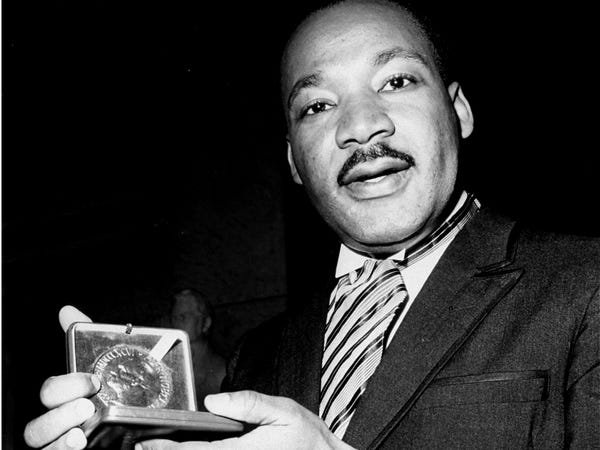
Martin Luther King Jr. was posthumously awarded a spoken-word Grammy.
Martin Luther King Jr. Associated Press
Martin Luther King Jr.’s speeches made American history, but you might not know that the minister and activist was posthumously awarded a Grammy. In 1971, King was honored with a spoken word award for his anti-war speech “Why I Oppose the War in Vietnam.”
Two of his more famous addresses, “I Have a Dream” and “We Shall Overcome,” were also nominated for Grammys.
Lily Tomlin won a Grammy for best comedy recording.
Lily Tomlin. Ron Galella/WireImage/Getty Images
Actor and former stand-up comic Lily Tomlin took home a Grammy for best comedy recording in 1972 for her album “This Is A Recording.” The album features her performance as telephone operator Ernestine, one of the most iconic characters she created.
Tomlin has been nominated a total of five times.
Steve Martin has five Grammys across multiple categories.
Songwriters Edie Brickell and Steve Martin at the Grammy Awards. Jason LaVeris/FilmMagic/Getty Images
Since 1978, actor and comedian Steve Martin has won a total of five Grammys. In addition to two awards for best comedy album, Martin, who is also a bluegrass musician, has garnered a handful of music awards for his country and roots tunes.
Most recently, Martin’s track “Love Has Come For You” won a Grammy for best American roots song at the 56th Annual Grammy Awards in 2014. He was also nominated in 2015 and 2017.
Zach Braff won a Grammy for the “Garden State” soundtrack.
Zach Braff. Steve Grayson/WireImage for The Recording Academy/Getty Images
“Garden State,” Zach Braff’s 2004 directorial debut, attracted a cult following. Part of the film’s appeal is its indie-driven soundtrack, which earned Braff, who starred in the movie with Natalie Portman, a Grammy at the 2005 awards.
Joaquin Phoenix’s performance as Johnny Cash in “Walk the Line” earned him a Grammy.
Joaquin Phoenix. Kevin Winter/Getty Images
Joaquin Phoenix starred in the 2005 musical biopic “Walk the Line” as Johnny Cash. Phoenix’s portrayal of the country singer earned him a Grammy for best compilation soundtrack for visual media.
President Bill Clinton has won two Grammy awards.
President Bill Clinton. Daniel Berehulak/Getty Images
Former President Bill Clinton won his first Grammy in 2004 in the category of best spoken-word album for children for his narration of “Peter and the Wolf: Wolf Tracks.” He won another Grammy for the audiobook narration of his memoir, “My Life,” in 2005.
He was nominated twice more for narrating his subsequent books, “Giving: How Each Of Us Can Change The World” and “Back To Work: Why We Need Smart Government For A Strong Economy.”
Hillary Rodham Clinton has also won a spoken-word Grammy.
Hillary Rodham Clinton at the Grammy Awards. Dave Allocca/DMI/The LIFE Picture Collection/Getty Images
Hillary Rodham Clinton won a spoken-word Grammy in 1997 for “It Takes a Village,” her non-fiction book about the future of children in America.
She was nominated again in the same category in 2004 for her White House memoir, “Living History.”
Orson Welles won three spoken-word Grammys.
Orson Welles. Hulton-Deutsch Collection/CORBIS/Corbis via Getty Images
Filmmaker Orson Welles won three spoken-word Grammys. The first was for “Great American Documents,” for which he read the Declaration of Independence. He also won the award for his masterpiece “Citizen Kane” and for the sci-fi radio play “Donovan’s Brain.”
“Weird Al” Yankovic’s comedic songs have won him multiple Grammys.
Weird Al Yankovic. TIMOTHY A. CLARY/AFP/Getty Images
For someone whose musical career is predicated on parody, “Weird Al” has made it big. The singer, known for hits like “Eat It” and “eBay,” has five Grammy wins and 17 nominations.
Earvin “Magic” Johnson has a spoken-word Grammy for his work in HIV/AIDS prevention advocacy.
Magic Johnson. Lisa Blumenfeld/Getty Images
Johnson won a spoken-word Grammy in 1993 for “What You Can Do to Avoid AIDS.” The basketball legend, who announced in 1991 that he had been diagnosed with HIV, has been a vocal advocate for HIV/AIDS prevention and education.
Stephen Colbert has two Grammys.
Stephen Colbert at the Grammy Awards. Michael Tran/FilmMagic/Getty Images
Late-night host Stephen Colbert has won two Grammys out of his three nominations.
At the 52nd Grammy Awards in 2010, Colbert won best comedy album for “A Colbert Christmas: The Greatest Gift of All!” Then, at the 56th Annual Grammy Awards in 2014, the recording of his book “America Again: Re-becoming the Greatness We Never Weren’t” won a spoken-word award.
President Barack Obama has won two spoken-word Grammys for his memoirs.
Barack Obama. Bill Pugliano/Getty Images
Former President Barack Obama won spoken-word Grammys for narrating the recordings of his books “Dreams From My Father” and “The Audacity of Hope: Thoughts on Reclaiming the American Dream.” He was nominated again in 2022 for narrating the audiobook of his presidential memoir, “A Promised Land.”
Michelle Obama has also won two spoken-word Grammys for her memoirs.
Michelle Obama. Jim Young/Reuters
The former first lady’s audiobook for her memoir “Becoming” won a spoken-word Grammy award in 2020. She won again in 2024 for “The Light We Carry.”
Maya Angelou won three spoken-word Grammys.
Maya Angelou. Mitchell Gerber/Corbis/VCG via Getty Images
In 1994, American poet Maya Angelou won her first spoken-word Grammy award for “On the Pulse of Morning,” which she wrote for Clinton’s inauguration. She also won the award for her poetry collection “Phenomenal Woman” and for the autobiography “A Song Flung Up to Heaven.”
Betty White also won a spoken-word Grammy.
Betty White. Frederick M. Brown/Getty Images
Betty White won a Grammy at the 54th Annual Awards in 2012. The “Golden Girls” actor received a spoken-word award for her autobiography, “If You Ask Me (And of Course You Won’t).”
Carrie Fisher won a posthumous spoken-word Grammy.
Carrie Fisher. Dimitrios Kambouris/Getty Images
At the 60th Annual Awards in 2018, Carrie Fisher was posthumously awarded a spoken-word Grammy for her memoir, “The Princess Diarist.”
President Jimmy Carter won three Grammys during his lifetime and one posthumously.
Jimmy Carter. Drew Angerer/Getty Images
The former president won Grammys for best spoken-word album for three of his books: “Faith — A Journey For All,” “A Full Life: Reflections at Ninety,” and “Our Endangered Values: America’s Moral Crisis.”
Carter, who died at the age of 100 in 2024, won again at the 2025 Grammys for the audiobook “Last Sundays in Plains: A Centennial Celebration.”
On Saturday, the Chicago Bears beat the Green Bay Packers in an NFL playoff game that had everything: a bitter rivalry, an old-school outdoors atmosphere, and a historic comeback (or choke-job, depending on your POV).
It also happened to be a (mostly) streaming-only game. Did you notice? Or care?
I didn’t. Except for about 30 seconds, when I was trying to find out what network was showing the game, and it took me a beat to realize it was on Amazon’s Prime Video. Then I booted up my app and watched the game without any issue. Just like any other NFL game.
In 2026, “Guy doesn’t have a problem watching the Bears/Packers” is a true dog-bites-man story. But that’s why I’m writing about it here: Not very long ago, the idea of streaming a super-high-profile NFL game — and requiring NFL fans to subscribe to a streaming service in order to watch it — would have been a very big deal.
Now it’s a yawner: I was one of 31.6 million people who watched the game, the vast majority of whom streamed it (fans in local markets could use broadcast TV). That’s a streaming record for an NFL game, and it’s more than some other games got last weekend on conventional TV.
Every time Peter publishes a story, you’ll get an alert straight to your inbox!
Stay connected to Peter and get more of their work as it publishes.
And that tells you just how far sports and streaming have come.
Flash back to 2013, for instance, and the idea of whether the “internet” — a catch-all term that included everything needed to get streaming video onto your screen, from web servers to fiber-optic lines to the router in your house — could support a big NFL game watched by many millions of people was an open question. “Why Web TV Skeptic Mark Cuban Thinks Google Can Make the NFL Work on the Web,” was an ungainly headline I tapped out at the time.
Back then, the NFL and other sports giants were routinely streaming big events like the Super Bowl and World Cup — but only as a sort of secondary outlet for weirdos who didn’t have traditional TV. And anyone who did stream sports had to expect to run into problems, like ESPN did when it streamed a World Cup game in 2014.
Cut to today, and streaming is just a way we watch some football games now. Amazon pays a gazillion dollars a year to show one game a week during the regular season; Netflix has paid up to show a couple games on Christmas Day. A new deal the NFL struck with Disney last year will give the league the opportunity to sell even more games to digital players.
And two years ago, the league passed another new threshold by moving one of its most valuable assets — a playoff game — to Comcast’s Peacock streamer, where it was only available to paid subscribers. That one generated a ton of complaints from people who said they didn’t want to pay another service to watch an NFL game — along with millions of sign-ups for Peacock, which showed they would.
The NFL is not ditching TV for streaming anytime soon. For many people, watching NFL games is the main reason to watch TV, and that gives the league a ton of leverage to extract ever-increasing fees from the likes of NBC and CBS. So they will almost certainly keep the majority of their games on old-time TV for the foreseeable future. But they’re going to sell them to streaming platforms too — because they’ll pay up to get them, and you’ll pay, too.
President Donald Trump on Saturday announced that the US had conducted a raid on Venezuela, resulting in the capture of Venezuelan President Nicolás Maduro and his wife, and big names in business and foreign policy have been reacting as the aftermath unfolds.
Here’s what they’ve been saying:
Charles Myers
Myers, chairman of political risk consulting firm Signum Global Advisors, told Business Insider that foreign investment in oil, tourism, and construction will be the “centerpiece” of Venezuela’s financial recovery going forward, adding that he expects the country’s economy will grow “faster over the next two years than people anticipate because of the extent or scale of foreign investment.”
Myers, also a former head of investment advisory firm Evercore, is planning a trip of 15-20 investors to visit Venezuela in March to identify investment opportunities. Signum Global Advisors has hosted similar trips for investor groups in Syria and Ukraine.
Ian Bremmer
Bremmer, founder of the political risk research and consulting firm, Eurasia Group, in a post on LinkedIn, wrote that the “US presumption is next Venezuelan leaders will now do what the Americans want because they’ve just seen the ‘or else.'”
Accompanying the post was a photo of a drawing of a horse. The hindquarters of the horse were drawn in intricate detail, and labeled “SOF operation to capture Maduro,” referencing the special operations forces mission that was executed early Saturday. The horse’s head was depicted as a rudimentary children’s drawing, captioned “plans for future of Venezuela.”
“I wouldn’t exactly call it a plan,” Bremmer added.
In a separate post, he wrote: “The law of the jungle is dangerous. What applies to your enemies one day can apply to you the next. Make no mistake where the world is heading here.”
Bill Ackman
Bill Ackman has expressed support for many of the Trump administration’s policies, foreign and domestic.
PATRICK T. FALLON/AFP via Getty Images
The billionaire hedge fund manager wrote in a post on X that “The removal of Maduro will lower oil prices, which is good for America and very bad for Russia. A weaker Russian economy will increase the probability that the war in Ukraine ends sooner and on more favorable terms for Ukraine. And Putin will be sleeping in his safe room from this point going forward.”
Henry Gao
Gao is a senior fellow at the Center for International Governance Innovation and a law professor at Singapore Management University. In a series of posts on X, he said the raid on Caracas ushered in “the brave new world of international law.”
“Maduro’s capture has triggered the biggest revival of international law since Grotius — and overnight turned everyone on X into an international law wonk, eager to compare Venezuela to Taiwan,” he wrote.
“But China has never treated the Taiwan issue as a matter of international law,” he continued. “It has always been framed as an internal affair, with Taiwan regarded as a renegade province. The reason China has not acted is not because it lacks legal justification, but because it lacks the capability. Thus, US ops in Venezuela provide China with no additional legal justification.”
Sen. Elizabeth Warren
The Democratic senator from Massachusetts is a former Harvard Law professor who holds deep expertise in bankruptcy and consumer finance. In a post on X, she wrote that Trump’s action to seize Maduro, “no matter how terrible a dictator he is — is unconstitutional and threatens to drag the US into further conflicts in the region.”
“What does it mean that the US will ‘run’ Venezuela, and what will Trump do next around the world?” Warren wrote. “The American people voted for lower costs, not for Trump’s dangerous military adventurism overseas that won’t make the American people safer.”
Elon Musk
Elon Musk and Donald Trump in the Oval Office.
Kevin Dietsch/Getty Images
The Tesla and SpaceX CEO spent most of Saturday posting praise for the Trump administration and the military operations in Venezuela, posting that it was “heartwarming to see so many Venezuelans celebrating their country freed from a brutal tyrant.”
In another post, Musk retweeted a White House image of Maduro aboard the USS Iwo Jima after being apprehended, with the caption “Congratulations, President Trump! This is a win for the world and a clear message to evil dictators everywhere.”
Musk and Trump have had a tumultuous relationship over the years, alternating between appearing to be close allies and trading sharp criticisms in the media.
It looks like you may soon be able to change that old email address you made in high school.
Google account users have long been unable to change their email addresses without creating a whole new account, but Google seems to be quietly rolling out an option to update them. That’s according to a support page published by the company, which outlines a new process to change the email or username used to identify your account.
The update on Google’s account help page says certain account holders can now change their @gmail.com address without losing access to their data or services. The feature was first reported in the Google Pixel Hub Telegram group in a message that said the update is being gradually rolled out to users. As of Friday morning, the modified instructions were available on the Hindi version of Google’s support page.
The support page suggests this option is currently only available in some regions, including Hindi-speaking areas.
According to a translated version of the Hindi support page, the new email must end in @gmail.com, and it can only be changed up to three times. Once the address has been changed, it’s irreversible.
To make the change, you would visit your Google Account page, click “Personal Info,” and go to the “Email” section, according to the Telegram message.
It’s unclear when it will roll out more widely, and Google didn’t immediately respond to a request for comment from Business Insider. As of Friday morning, the English support page said usernames ending in @gmail.com usually can’t be changed.
Once the change is made, the Hindi page said, your old Gmail address will be used as an alias to receive emails. You can reuse your old Google account email address at any time, but you can’t create a new Gmail address for the next 12 months.
You can sign in to Google services like Gmail, YouTube, Google Play, or Drive with your old or new email address.