To make Ramsay’s Sriracha mayonnaise, you’ll just need:
4 tablespoons of mayonnaise
2 teaspoons of Sriracha
Ramsay says you can add more Sriracha if you want some extra heat. Since I was also making burgers for my parents, who don’t love spicy food, I stuck to these measurements.
And if spice just isn’t your thing, don’t worry! Ramsay says you can easily swap the Sriracha for English, Dijon, or whole grain mustard.
After four years of coursework, practicums, and part-time jobs, graduating felt like a huge accomplishment. I finally had room to breathe. Then fall approached, and it was time to get a “real job”.
I earned my bachelor’s degree in social work, picked up ESL teaching certifications along the way, and assumed I would either go straight into the field or head to teacher’s college.
It felt like the responsible choice — one that made sense to my family,to my need for stability, and to the unspoken expectation that, after graduation, you pick a path and stay on it.
That summer, I came across a college instructor position I was technically qualified for, so I applied, interviewed, and overcame some serious impostor syndrome. By September, I was teaching my first college-level courses from home.
At first, I felt great. The hours were good, my students were kind, and my family was proud of me. I was even teaching future community-service workers.
On paper, it was a dream job. It felt grown-up, fit my background, and seemed like the right thing to do. Over time, though, that feeling faded.
I wasn’t ready to settle down, and I could feel it
After graduating, I got a job in my field as I felt I was supposed to.
Alessa Hickman
Between life changes, teaching burnout, and a growing disconnect from my passions, I felt stuck.
I’ve always been creatively inclined, whether that meant writing, making videos, cooking, or creating digital resources in my free time.
Instead, many of my nights were spent prepping lessons, grading assignments, and reading essays, leaving little room for the hobbies that filled me up.
Gradually, the work took a toll on me, but the expectation that a “good” job is one you stick with for years made leaving seem like breaking the rules.
In my early 20s, I felt boxed into this pipeline that didn’t suit me, and I didn’t want to follow a version of success that didn’t feel sustainable.
I’m entrepreneurial by nature, constantly chasing new ideas, certifications, and ways to apply them. So when I started exploring what else I could do with my skill set, freelance writing made the most sense.
With my husband’s support, I decided to leave teaching and pursue freelancing full-time — a move that raised quite a few eyebrows.
My craving for something radically different pushed me to leave my job and my country
I fell in love with Japan when I first visited.
Alessa Hickman
Around the time my teaching chapter closed, I learned about Japan’s Working Holiday Visa program. My husband and I first visited Japan in early 2024 and instantly fell in love with the country.
Back in Ontario, that feeling was hard to ignore. We were renting an apartment with a lease ending in October, and after spending my entire life in my hometown, staying felt more limiting than comfortable.
Between the rising cost of living and a sense that I had outgrown my routines, I wanted to explore something new.
I’ve enjoyed building a life in Tokyo.
Alessa Hickman
We applied for the visa, were approved, and sold most of our belongings as our move-out date approached. In December 2025, we flew to Tokyo and rang in the new year halfway across the world.
Living here has been incredible. Learning Japanese, navigating a new culture, and building a life in Tokyo have been exactly what I needed. And yes — the food’s been amazing, too.
Moving abroad and changing paths didn’t mean abandoning my education or values. Instead, it meant reframing them.
Read more stories about moving somewhere new
My definition of success looks different now
I’ve learned that life after college doesn’t have to be linear.
Alessa Hickman
I’m no longer in a classroom, but my background in social work and teaching continues to shape the work I do.
I create and edit content that’s rooted in helping others, and I’m lucky enough to write about my life and experiences abroad.
When I told people I was quitting teaching, and later that I was moving to Japan, it was seen as somewhat unconventional. My husband even left his stable job to come here.
However, the move opened many more doors than it closed. Living in Tokyo has brought new experiences, stories, and opportunities I would’ve never had otherwise.
I’ve learned that postgrad life doesn’t have to be linear — and maybe it shouldn’t be. For some people, stability is the right choice. But for others, taking a detour can lead to growth you’d never find by staying put.
For me, choosing uncertainty meant choosing myself.
I don’t know what my life will look like in two or five years from now, but I do know that I’m building it on my own terms. That feels like a pretty good place to start.
Landing a job at McKinsey & Company has never been easy. The firm has long been known for recruiting top talent from top schools and leading industry experts.
AI, however, is forcing the firm to rethinkthe types of applicants it considers in the hiring process, CEO Bob Sternfels said.
On Harvard Business Review’s IdeaCast podcast this week, Sternfels said the firm used AI to analyze its past 20 years of hiring data to understand where it may have overlooked talent for its coveted class of partners.
The firmfound that applicants who had setbacks and recovered were more likely to become partners. So, now, Stenfels said, the firm looks for resilience in its interview process.
“It turned out we had some bias in our system,” he said, adding that the firm was too focused on whether candidates had “perfect marks” instead of how they bounced back from difficulties.
In December, the firm promoted about 200 employees to partner — one of the smallest classes in years, The Wall Street Journal reported. In 2022, it promoted about 400 people to partner.
McKinsey partners typically earn under $500,000 in base pay, but they can expect to earn hundreds of thousands more in bonuses and profit sharing.
McKinsey receives about 1 million résumés annually. In 2024, the firm told Business Insider that it planned to hire about 1% of applicants, in line with 2023.
The firm’s spokesperson also said at the time that it looks for “distinctive students just starting their careers” and experts in industries ranging from technology to finance to law.
The company also looks for strong problem-solving skills, which it gauges through a game-based assessment called Solve.
To help candidates prepare, the company offers candidates resources ahead of time.
“This helps to ensure candidates from any background — regardless of whether they have exposure to resources like consulting clubs — can demonstrate their distinctiveness in our process,” the firm told Business Insider.
My grandmother’s terminal cancer diagnosis taught us both to let go of perfectionism.
Her lifelong pursuit of order and perfection shaped our family’s habits and expectations.
Facing illness, she embraced acceptance and inspired me to value effort over unattainable ideals.
My grandmother strove for perfection, convinced that it was an attainable goal if only you worked hard enough.
This meant eating less to lose weight. Food deprivation became a family bonding activity when my grandmother was on a diet. Diets lasted decades. We had marathon cleaning weekends while friends went to the mall. Play clothes were swapped out for school clothes for our rare trips to Burger King. Random dust checks were performed to ensure vacuuming of floors was done correctly. I’ll never forget her finger with a perfectly manicured nail grazing the cool Italian tile floor. Chore lists graced our refrigerator in the same way my friends’ quizzes and pictures graced theirs.
My grandmother wanted and demanded order, believing it led to perfection. My childhood was spent trying to please. She did not expect more from us than she did from herself, though. I hold many memories of Gram chastising herself for her too-big thighs or her less-than-stellar self-control around chocolate. It was a weakness that caused her significant guilt.
I followed her steps
Years later, as I began my own journey toward motherhood, I vowed that my children would not endure what I had. I would allow them to make messes. That dog I always wanted, but was never allowed to have because pets were dirty, would complete the large family I also always wanted. Perfection would become what it was meant to be, a foolish ideal — not a reality to strive for at all costs.
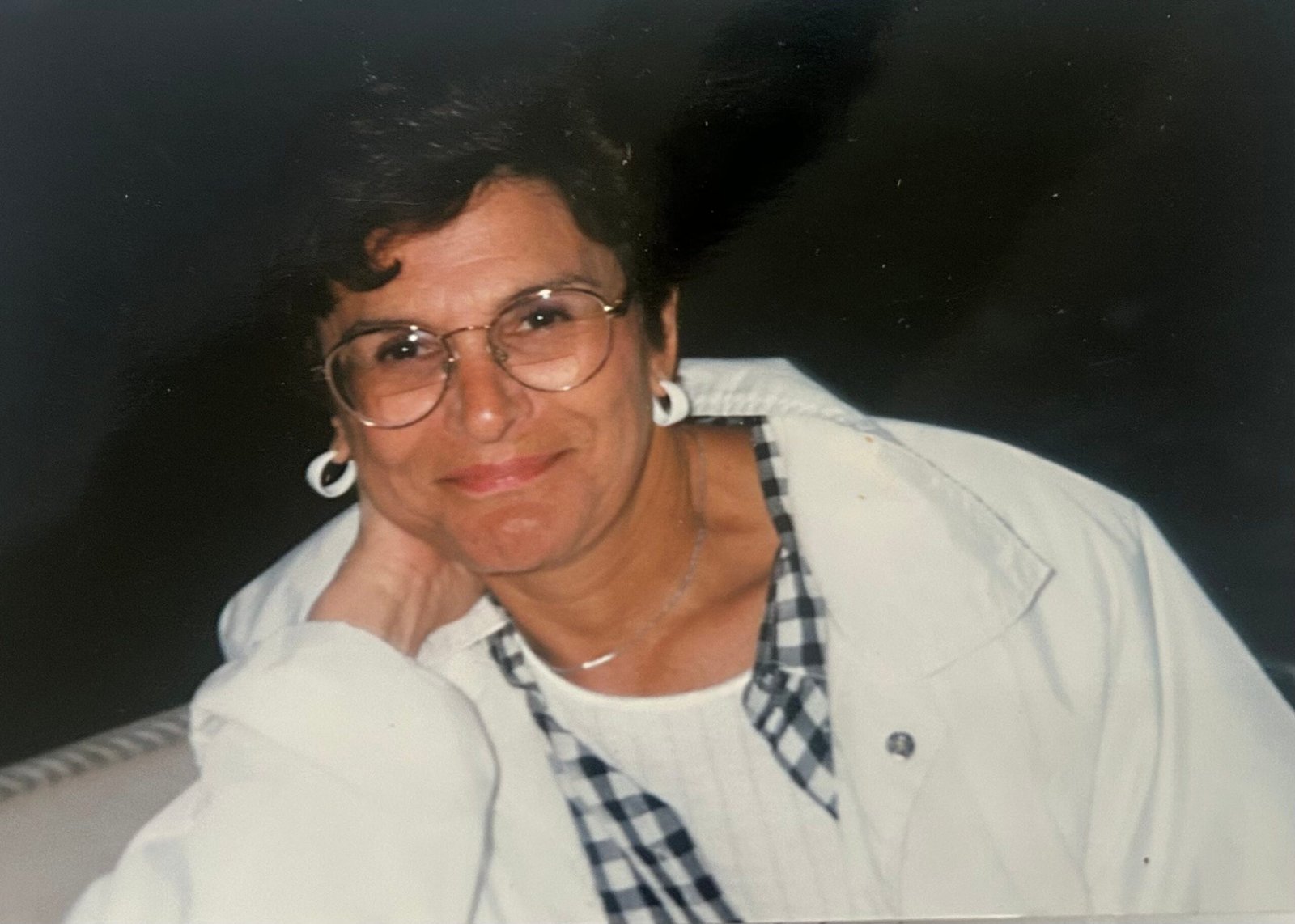
The author’s grandmother was diagnosed with terminal cancer.
Courtesy of the author
Instead, I repeated exactly what I knew. My kids had to have matching outfits, picture-perfect Christmas cards, and all the things perfection required. I would clean and exercise until I reached the point of exhaustion. I worked out through all four pregnancies and directly after.
I recall throwing a birthday party for my son. He was turning 3 or 4. Someone commented on how great I looked. “Nicole makes sure everything is always perfect,” someone else said. I reveled in the praise. Gram heard the comment and smiled. We shared a common bond. When one of us inched closer to it, the other one felt proud.
Then my grandmother was diagnosed with cancer
The exhaustion of parenting four kids and attempting to create the perfect world for them and me was intense. I was stuck in a cycle. It would not break until one sunny fall day. I was running around attempting to clean and wrangle the kids for lunch. The plan was to work out after they took their naps. The phone rang, and my grandmother greeted me on the other end. All I heard was the word sick. I assumed it was regarding my grandfather, who had had heart problems for decades. I thought perhaps it was another heart attack.
“No, baby, it’s me. I’m sick.” It was shocking. Gram had lived a life of such order and perfection. She was in her 70s and active. She took only one pill for high blood pressure. Gram had Stage 4 ovarian cancer, which meant we discovered it late. We looked up the statistical odds of survival. My grandmother had a terminal illness.
The diagnosis changed her. For the first time, her constant need for perfection seemed foolish. Weight didn’t matter, nor did matching a purse to shoes to a blouse. When Gram lost her hair, one of her most beautiful features, and found herself struggling to keep the house clean, she understood things had to change. Maybe a wig wouldn’t be so bad. Maybe hiring someone to come in and help was OK. Her new favorite saying became, “Don’t sweat it.” What mattered was time and how she spent it.
She asked 1 simple question
When she saw me working myself to death to provide a perfect life for my family, Gram realized I had become just like her. She said, “Perfection isn’t worth it. It isn’t even real.” Then, she asked a question that changed everything for me.”Did you do your best?” When I answered that I had, she said, “Well, that’s all you can do then.”
It changed the way I lived my life and significantly reduced the pressure on me.
Watching her health diminish and understanding that she had limited time helped Gram realize what was important. Perfection and holding onto unrealistic expectations and ideals no longer fit into her life. Watching her learn this lesson allowed me to learn it alongside her. She taught me so that I didn’t have to wait until I was in my 70s battling a terminal illness. When I remember her now, I am forever grateful.
When I bought my Volvo XC90 in 2017, I was thrilled to get a safe, third-row vehicle. With three kids between the ages of 3 and 8, the extra space meant fewer fights and more room, and reassured me that the car’s safety features would help me drive through snowy roads and city traffic.
Almost a decade later, that same Volvo has over 112,000 miles on it. I still remember when my family and I sat on the front porch, excited, as we watched the car get delivered from the truck.
The author’s family was excited to see their car be delivered.
Courtesy of the author
These days, my kids have been asking me when I’m going to get a new car, and my answer remains the same — I love my car and I’m going to keep driving it.
The car is still reliable — and I trust it
Aside from regular maintenance and tire changes, the car has been reliable. Before the warranty expired, we purchased an extended warranty on the vehicle. Now that the extended warranty has expired due to mileage, I am still in awe at how reliable the car has remained.
Years ago, we appreciated that the trunk could hold the double stroller, and that the built-in booster seat allowed us to drive car pools with small children. These days, we appreciate the third-row flexibility that allows us to fit our skis, snowboards, soccer gear, backpacks, and all the other essentials my kids need.
I spend a lot of time in the car driving people around, and I am thankful for a car I can rely on.
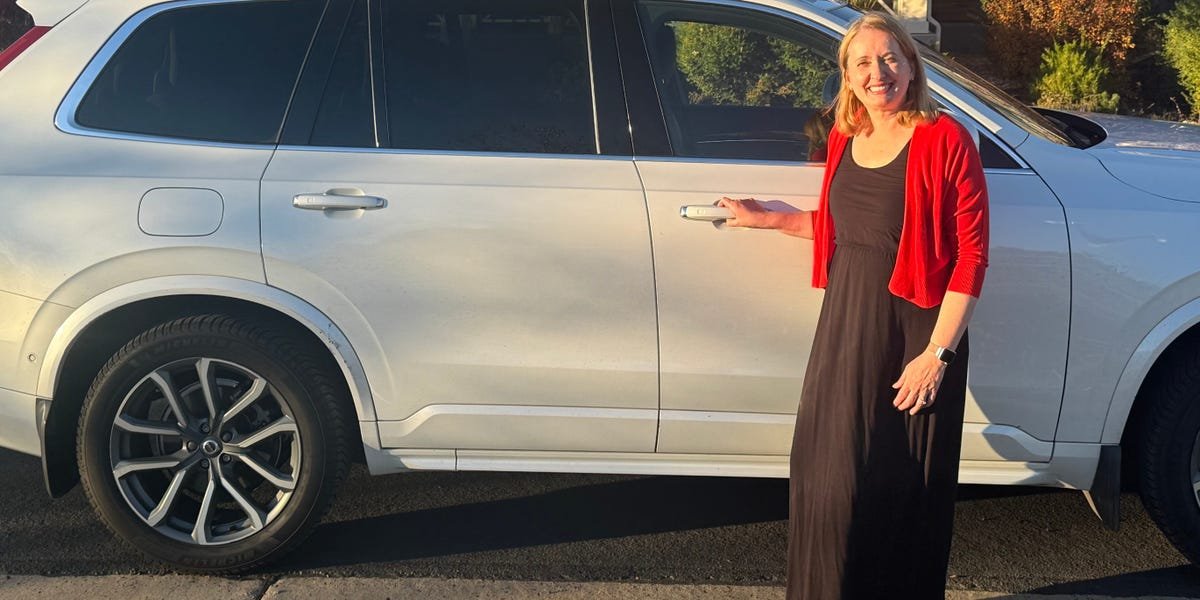
The author spends a lot of time in her car and finds it reliable.
Courtesy of the author
My mom used to say that the best car is one that reliably gets you from point A to point B. I still agree with this statement.
I appreciate the small safety features that I now take for granted. From the computer technology to the warning lights on the mirrors and back-up cameras, the car has helped keep my family safe on numerous occasions and helped me avoid some near accidents.
The car is part of our family. We have taken it on adventures to national parks, ski resorts in the Rockies, and even to an alligator farm. The vehicle has had its share of muddy shoes, candy wrappers, and dog hair. It also has dings from when I backed the car into the garage.
The economics don’t make sense for a new car right now
When my car is in the garage, the dealer provides me with a loaner car — a brand-new version of my current vehicle. I get tempted and think about how nice it would be to get a new car. The latest vehicles have more power, fewer scratches, are cleaner, and have that new-car smell.
I’ve crunched the numbers. After years of car payments, my car is now paid off. Every month that goes by without a car payment means more money toward saving for the future. More money for food, utilities, saving for college, and the occasional splurge. Saving money now means more financial freedom for tomorrow.
Buying a new car is expensive. Borrowing money for car payments these days costs more than it did in the past. Even yearly vehicle registration costs less for an older car.
Part of me feels proud to keep driving my older car
We live in a world that tells us that newer is better, that we should want more. Although external validation of a new car is nice, I am focusing on the internal satisfaction that comes from knowing I am saving money by driving an older car.
My car may not turn heads in the school pick-up line, but I view the scratches and door dings much like wrinkles- a sign of a good life.
I will continue to drive my older car, and I am thankful for a safe and reliable vehicle that has served my family well.
I grew up in a house where coordinated family photos were the norm. My mom would line up the four of us kids in matching outfits — one year, freshly pressed sailor suits; the next, velvet dresses, with my brother in a matching tie. Every stray hair would be tucked in or sprayed down.
We were bribed (or more like lightly threatened) to smile with our eyes open, something that’s more difficult than it should be when you’re a kid who just wants to be DONE.
Then came the card — glossy, cheerful, and perfectly posed — the proof that our family had it all together, at least for one photo.
I kept the tradition going with my own kids
So when I had my own kids, I continued this tradition without question. Every year, I’d book a family photo session well in advance of Thanksgiving, hoping that temperamental Chicago weather wouldn’t put a damper on our outdoor photos.
I’d scour Pinterest for outfit inspiration, aiming for a coordinated but not totally matching vibe. The goal was to capture one frame of perfection — a photo worthy of the hundreds of envelopes I’d soon address by hand.
The author continued the tradition of holiday cards with her family.
Courtesy of the author
But the reality behind those photos was far from picture-perfect. There were bribes of hot chocolate and complaints about itchy sweaters. I’d smile through gritted teeth while the photographer tried to get everyone looking in the same direction. By the end, the kids were shivering, my husband was done, and I was wondering why we put ourselves through this every year.
And that was just phase one.
Once we had a “good enough” photo, I’d spend hours designing the cards online, tweaking fonts, choosing layouts, and agonizing over whether to include a photo of the whole family or the cuter one of just the kids.
Then came the addressing, stamping, and mailing — usually squeezed in between wrapping gifts, decorating the house, and trying to keep the ambiance somewhat festive. What was meant to be a joyful holiday tradition had turned into yet another item on my never-ending to-do list.
Quitting holiday cards lifted a huge weight
Two years ago, I finally asked myself, “Why am I doing this?”
When I couldn’t come up with a satisfying answer beyond “because we’ve always done it,” I decided to stop. No family photo shoot. No card design. No envelopes or stamps.
The author feels her family photos feel more authentic now.
Courtesy of the author
That first year without holiday cards felt strange at first, like I’d forgotten to do something important. December rolled around, and my mailbox filled with cheerful greetings from family and friends, each one featuring those perfectly posed families and braggy year-end recaps. For a fleeting moment, I felt a pang of guilt, like I’d dropped out of a club I’d been part of my entire adult life.
But then the feeling passed. What replaced it was a deep sense of relief.
Without the looming card deadline, December suddenly opened up. I had more time to actually enjoy the holidays — to bake sugar cookies in the shape of stars and drive through neighborhoods adorned in holiday lights. The pressure to present our family in a certain way — smiling, coordinated, festive — simply disappeared.
Now our photos (and holidays) feel more authentic
Instead of orchestrating a posed photo, we started taking more spontaneous pictures: messy, candid, real. A selfie at a local holiday market. A blurry shot of everyone laughing in front of our silver faux Christmas tree. A snowy mountain scene after a day of skiing. These pictures weren’t perfect, but they were us. And when I looked at them later, they didn’t remind me of how stressed I felt trying to get everyone to cooperate — they reminded me of how much fun we actually had.
The author and her family.
Courtesy of the author
Something else unexpected also happened: no one seemed to miss the cards. The people who truly wanted to connect reached out in other ways. It made me realize that keeping in touch didn’t have to involve postage and cardstock.
Letting go of the holiday card tradition didn’t make the end of the year any less special — it made them more so. It gave me permission to simplify and remember that the memories that matter most aren’t ones you send in the mail. They’re the ones you make together, no matching outfits required.