
Musk-pitched-Zuckerberg-on-his-unsolicited-bid-for-OpenAIs-IP.jpeg

Musk pitched Zuckerberg on his unsolicited bid for OpenAI’s IP, newly unsealed court documents show

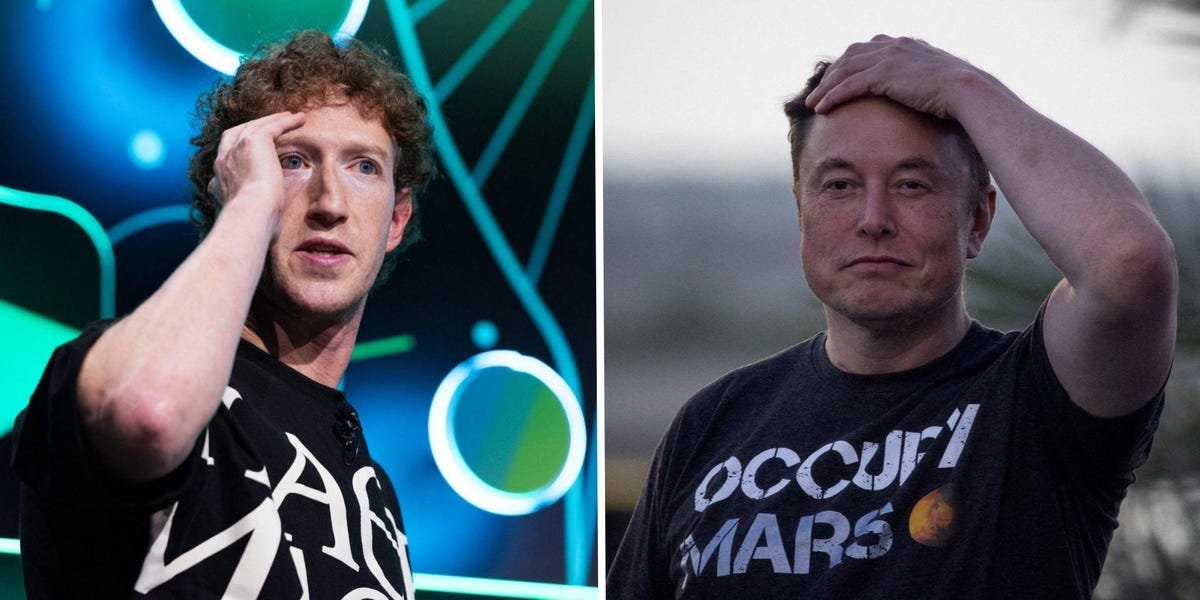
Elon Musk asked Mark Zuckerberg if he would consider joining him in bidding for OpenAI’s intellectual property before the Tesla CEO made an unsolicited offer for the ChatGPT maker in February 2025, according to newly released court documents.

The newly unredacted documents are part of Musk’s ongoing lawsuit against OpenAI and its CEO, Sam Altman.

The documents provide a glimpse into the communication between Musk and the Meta CEO, who have had a roller coaster relationship, including challenges to MMA fights.

In one unsealed exhibit, Zuckerberg texted Musk at 10:04 p.m. PT on February 3, 2025, to say that it seemed like the White House DOGE office, for which Musk was the de facto leader, was “making progress.” He also added that his “teams” would be “on alert to take down content doxxing or threatening” people who work with Musk at DOGE, according to the documents.

“Let me know if there is anything else I can do to help,” Zuckerberg added.

Less than half an hour later, Musk reacted to Zuckerberg’s message with a heart emoji and followed up with a question about OpenAI.

“Are you open to the idea of bidding on the OpenAI IP with me and some others?” Musk said, referring to the common term for intellectual property.

“Want to discuss live?” Zuckerberg responded.

Musk liked Zuckerberg’s message and texted back that he would “call in the morning,” according to the documents.

It’s unclear if the planned call actually took place. A Meta spokesperson told Business Insider that the company has no comment.

Based on a court briefing OpenAI filed on August 21, 2025, Musk “identified” Zuckerberg as a person he communicated with regarding a letter of intent about “potential financing arrangements or investments” in OpenAI.

“Neither Zuckerberg nor Meta signed the LOI,” OpenAI added in the briefing.

OpenAI, Elon Musk, and a senior legal counsel for Tesla did not immediately respond to requests for comment.

On February 10, 2025, a consortium of investors, including xAI, led by Musk, submitted an unsolicited $97.4 billion bid to acquire the then-nonprofit organization that controls OpenAI. The bid, submitted by Musk’s attorney Marc Toberoff, was aimed at blocking OpenAI’s transition into a for-profit entity.

OpenAI CEO Sam Altman promptly responded to the bid on X and said, “no thank you but we will buy twitter for $9.74 billion if you want.”

In August 2024, Musk sued Altman and others on the OpenAI board, alleging that he was deceived into investing and that the founders originally approached him to fund a nonprofit focused on developing AI to benefit humanity, but that it was now focused on generating profit. Musk contributed around $38 million to OpenAI in its initial years but is now seeking up to $134 billion in damages in the most recent version of the lawsuit.

In a separate conversation between Zuckerberg and Musk on December 13, 2024, Zuckerberg told Musk that someone had “leaked” Meta’s letter to the California Attorney General in support of Musk’s lawsuit against OpenAI.

“Wanted to make sure you heard this from me,” Zuckerberg added.

OpenAI officially completed its conversion from a nonprofit to a for-profit company in October 2025, although it still maintains a nonprofit wing.

Musk’s lawsuit against Altman and OpenAI will begin jury selection on April 27 in Oakland, California.


Source link

Netflix-co-CEO-Ted-Sarandos-reveals-how-he-personally-pitched-Trump.jpeg

Netflix co-CEO Ted Sarandos reveals how he personally pitched Trump on the Warner Bros. deal

Before Netflix made its winning bid for Warner Bros., its co-CEO pitched President Donald Trump directly on the merits of the deal.

The pair found common ground, Netflix co-CEO Ted Sarandos said.

“The president’s interests in this are the same as ours, which is to create and protect jobs,” Sarandos said of Trump at the UBS media conference on Monday afternoon.

Sarandos said he’d talked to Trump “many times since the election about the different challenges facing the entertainment industry.”

“The president cares deeply about the entertainment industry, and he loves the entertainment industry,” Sarandos continued.

Trump praised Sarandos on Sunday, calling him a “great person” who he said had done “one of the greatest jobs in the history of movies.” Still, Trump said Netflix’s “big market share” in the streaming space “could be a problem” as it tries to buy Warner Bros. Discovery’s streaming and studio assets.

The Netflix-Warner Bros. deal reached on Friday is worth $82.7 billion, including $72 billion in equity. WBD’s TV networks like CNN or HGTV, aren’t in the proposal.

Rival suitor Paramount Skydance responded on Monday with a hostile bid in the form of a $30-per-share, all-cash offer for all of WBD, including the declining TV networks. Netflix’s offer is $27.75 per share, comprising mostly cash and some stock. There’s debate among analysts about whether Netflix’s or Paramount’s renewed offer is more attractive, as it depends on the value of WBD’s TV networks.

Paramount’s move “was entirely expected,” Sarandos said.

Paramount CEO David Ellison, who Trump has publicly praised, went on CNBC on Monday morning to tout his company’s offer as “pro-consumer, pro-creative talent,” and “pro-competition.” Ellison said his company’s offer had “faster regulatory certainty to close” than Netflix’s. Ellison’s father, Oracle cofounder Larry Ellison, is a longtime Trump ally and one of the richest people on the planet.

However, Netflix also seems to be building rapport with Trump. That could help explain why Netflix’s Sarandos and fellow co-CEO Greg Peters are optimistic about their deal.

“We are very confident that regulators should, and will, approve it,” Peters said of the WBD deal.

Sarandos pitched the streaming giant’s proposed acquisition as a net positive for the labor market, despite the concerns of many in Hollywood. He also said the company is “deeply committed” to releasing movies from Warner Bros. in theaters, “exactly the way they’ve released those movies today.”

That overture could help ease Trump’s concerns. Sarandos pitched Netflix as a great job saver.

“What the president has been interested in, in this deal, has been: To what extent does it protect and create jobs in America?” Sarandos said.

Sarandos warned that Ellison would implement lots of layoffs if his bid won and said the Paramount CEO promised about $6 billion in cost savings from a WBD deal. Those so-called “synergies,” in analyst jargon, translate to a smaller workforce, Sarandos said.

“Where do you think synergies come from? Cutting jobs,” Sarandos said. “We’re not cutting jobs — we’re making jobs.”

Netflix has promised investors $2 billion to $3 billion in its own cost savings from its Warner Bros. deal, however.


Source link