Nike’s “Win Now” turnaround plan isn’t seeing immediate results.
The sports giant announced its third-quarter earnings results for fiscal year 2026 on Tuesday, and revenue remained flat at $11.3 billion. Nike shares moved lower after market close, falling more than 8% despite the company delivering better-than-expected results.
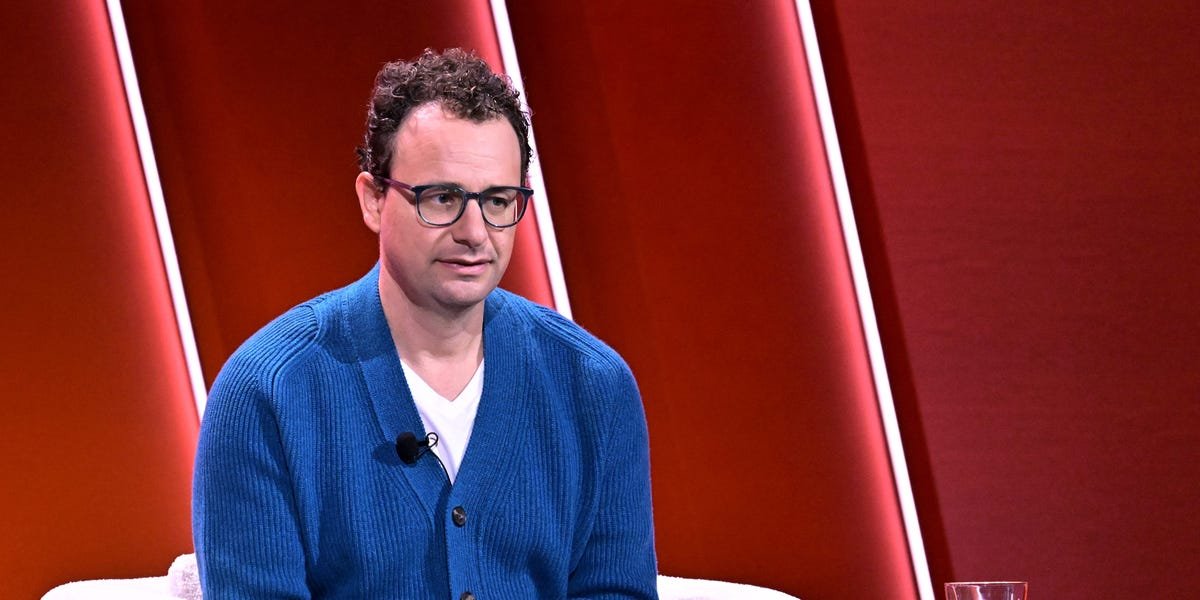
On the call, CEO Elliott Hill said the company’s comeback is taking “longer than I would like,” but he and other executives expressed confidence in the approach.
So far, running is leading the charge with growth. It was the first category to move into the “sport offense,” which puts sports back at the center of its mission, as the company leans more into performance wear.
“The pace of progress is different across the portfolio, and the areas we prioritized first continue to drive momentum,” Hill said in the earnings press release.
Meanwhile, other parts of the portfolio, including Greater China, Converse, and sportswear, are still in earlier stages of their comebacks, the company said. Nike’s digitalsales declined 9% in a drop that the company said is due in part to being too promotional with higher markdowns.
Sportswear continues to be a headwind to revenue growth for Nike as it declined by low double digits in the quarter. It’s continuing its efforts to clean up inventory, which it said has taken several quarters to execute. The Nike sportswear and Jordan streetwear teams are moving from playing defense to playing offense, the company said.
“There is both an art and a science to seeding, igniting, and scaling new sportswear styles,” Hill said.
In March 2025, Nike publicly rolled out its turnaround plan, which Hill calls its “Win Now” strategy. The effort has reoriented the company around sports from running to basketball, rather than gender or age.
CFO Matthew Friend said Nike expects revenues to be down low single-digits compared to the prior year, with gains in North America offset by declines in Greater China. Assuming no significant changes, after the first quarter of fiscal 2027, higher tariffs are expected to ease for Nike,Friend said on the call.
“Given the softness in sportswear, traffic patterns, and promotions across Europe, as well as recent disruption in the Middle East, we anticipate ending the fourth quarter with elevated inventory,” Friend said.
The company expects to finish its “Win Now” actions by the end of 2026.
On Thursday, the Pentagon designated Anthropic a supply chain risk, effectively blacklisting the AI startup from doing business with the US government.
In a recent internal memo, obtained by The Information, CEO Dario Amodei said the Trump administration opposes the company because it hasn’t donated to the president or offered the kind of “dictator-style” praise he said competitors had.
Sometimes, the solution to a problem is right in front of you. If Dario wants to get off the Pentagon’s naughty list, he can just follow the lead of more experienced tech leaders who have managed to stay in the administration’s good graces — like Apple CEO Tim Cook.
There’s a serious point to this: many Big Tech CEOs think their jobs are to make money for shareholders. This involves making compromises. It’s tough sometimes, but other tech CEOs have done it, with Cook perhaps being the GOAT Trump whisperer.
Here’s a multi-step plan based on what’s worked for other Big Tech CEOs.
Watch that documentary
Melania Trump
SAUL LOEB / AFP
Go to the White House and watch the Melania documentary. Or otherwise be seen widely to be watching the Melania documentary. In January, Amazon CEO Andy Jassy, along with founder Jeff Bezos, Tim “Apple,” AMD’s Lisa Su, and Zoom’s Eric Yuan attended a screening. It’s only about two hours of your life, Dario.
Gong time
Apple CEO Tim Cook (left) giving President Donald Trump a gift at the White House
Fortune/Reuters
Give President Trump an obviously valuable gong thing. In August, Cook went to the Oval Office and presented President Trump with an inscribed piece of Apple-produced glass made in Kentucky that sits upon a 24k gold base made in Utah to celebrate the tech giant’s “American Manufacturing Program.” Apple has gotten tariff exemptions. It’s unclear if the gift influenced any decisions, but lemme put it this way: The gong probably didn’t hurt!
Praise, praise, praise
Nvidia CEO Jensen Huang
Patrick T. Fallon / AFP via Getty Images)/Reuters
Lavish praise on the president in a public way. During a keynote speech at a major Nvidia conference in October, CEO Jensen Huang effusively praised Trump, saying the President’s energy policies deserved credit for ensuring that massive AI data centers would have enough energy to power them.
Praise while dining
Google CEO Sundar Pichai (left) with Elon Musk at President Donald Trump’s inauguration
SHAWN THEW/POOL/via REUTERS
Attend a dinner or another event with Trump, and also praise him. In September, Google CEO Sundar Pichai attended a high-profile White House dinner hosted by the president, where the Google CEO thanked the administration for “constructive dialogue” in relation to the company’s antitrust case. And check out this recent video of SpaceX CEO Gwynne Shotwell praising Trump at a recent White House meeting to launch the president’s data center energy initiative, where AI companies pledged to pay for their own power.
Ding rivals
President Joe Biden speaks during a State of the Union address in Washington, DC.
Kent Nishimura/Los Angeles Times via Getty Images
If possible, slip in a dig at President Biden or President Obama, or both. At a tech conference in Taipei last year, Nvidia’s Jensen Huang criticized the Biden administration’s export controls on AI chips to China.
Unveil a big Trump-aligned initiative
OpenAI CEO Sam Altman stands next to President Trump to announce a $500 million plan to build data centers in the US.
Fortune/Reuters
Announce an Anthropic initiative that supports one of the president’s top priorities. If this project were something Anthropic would do anyway, don’t worry. Other tech companies have done that, too. Stargate was announced as a bold new $500 billion project in early 2025 at a White House event. But bits of the plan were already in motion as parts of tech companies’ existing data center buildout strategies.
Mar-a-Lago is calling
Meta CEO Mark Zuckerberg (left) and President Donald Trump (right)
Fortune/Reuters
Visit Mar-a-Lago. The weather in Florida right now is probably great. You can fly direct from SFO, business class, and make it back to San Francisco by the next day. Meta CEO Mark Zuckerberg made the trip in late 2024, after Trump was elected president for the second time. Trump once threatened to put Zuckerberg in prison, but not anymore.
$$$$$
OpenAI President Greg Brockman
Caroline Brehman / AFP via Getty Images
You mentioned this one in your own memo, according to The Information. Give money to Trump-related causes. OpenAI President Greg Brockman has donated to Trump, and just think of it as a small investment in Anthropic’s future. It doesn’t cost much, and I’m sure you have some spare cash, with Anthropic’s valuation soaring past $300 billion recently. Google, Meta, Microsoft, and other tech companies donated to Trump’s inauguration fund, for example, mostly giving $1 million each. That was a missed opportunity for you. There will be others.
Sign up for BI’s Tech Memo newsletter here. Reach out to me via email at abarr@businessinsider.com.
Generative AI couldn’t have come along at a better time for Target.
That’s the assessment Target’s tech chief, Prat Vemana, told Business Insider after newly minted CEO Michael Fiddelke spent the morning laying out an ambitious turnaround strategy at the retailer’s Minneapolis headquarters.
The company had just reported its 13th consecutive quarter of weak sales — a stretch that saw big box competitors like Walmart and Costco gain market share — and leaders from across the organization were assembled to make the case that it was a new day at Target.
“I couldn’t have asked for a better time for AI to show up, because now we have a need. We have a bold agenda ahead of us,” Vemana said.
Target CEO Michael Fiddelke, who officially started in his new role in February, speaks at the retailer’s 2026 financial community meeting.
Dominick Reuter/Business Insider
By the numbers for the coming year alone, Target’s agenda is indeed bold: $1 billion in additional capital investments, $1 billion more in new operational commitments, 30 new stores, 130 remodels, overhauls to as much as 75% of the assortment in certain categories, and blisteringly fast product releases.
Fiddelke said the work is already paying off with an acceleration in February sales, and the company expects to report sales growth in every quarter of 2026.
Underpinning the success or failure of nearly every aspect of that strategy are a host of AI-powered tools developed by Vemana’s teams.
“Tech is a through-line in everything that we do,” Vemana said.
Target has a long tech legacy, but the competition is as fierce as ever
Target has long based marketing and operational decisions on vast troves of data, and it was an early mover in applying machine learning to its business.
The company’s predictive analytics department even became the subject of controversy in 2012 when it was revealed that buyer behavior could be used to infer something about a shopper so intimate as a pregnancy. (Whether or not it actually did is unclear.)
A decade-plus later, that almost seems quaint in the age of Meta AI glasses, Ring doorbells, and hackable robot vacuums. Indeed, an entire industry now generates astronomical revenues by anticipating users’ tiniest impulses.
Target has long used machine learning in its business, but now its rival are too.
Dominick Reuter/Business Insider
And in just the last few years, generative AI technologies started running laps around what their ML predecessors could do. Meanwhile giants like Amazon and Walmart are reaping the advantages that come with scale.
In other words, the competition caught up, and machine learning that was once such an advantage for Target is arguably less of a leg up in the hyper-paced world of AI.
But as companies around the world cite AI in trimming their tech workforces, Vemana said he needs his teams in the US and India to match the output of an even larger company.
“Generative AI actually opened up a completely other dimension of growth,” he said.
Target is investing in tools to help teams save time — and predict trends
For Target’s apparel teams, a new Trend Brain platform combines visual analysis of fashion photos with social media sentiment analysis in an effort to predict what styles will take off in the next season.
That lets designers pull a new designs together in a matter of weeks rather than months, positioning Target to rotate through collections nearly twice as fast as before, said Gena Fox, Target’s head of apparel.
It also gives the company an early alert for products that might not sell as strongly.
“We saw really early that polka dots were trending,” she added, referring to a line of swimsuits. “So we were actually able to go back and buy into that more and then move out of styles that weren’t performing as well.”
Target’s “Western Edit” series was designed using the Trend Brain platform.
Dominick Reuter/Business Insider
Trend Brain offers another advantage when it comes to handling the endless details of designing a fashion campaign.
“After a few hours of this, you’re going to skip a few things, right?” Vemana said. “AI doesn’t get tired.”
And as that product arrives in stores, managers and associates now have a new suite of Target-designed tools on their handheld Zebra scanners that simplify everything from planning displays, to prioritizing restocking tasks, to getting immediate support without having to go find a desktop computer and fill out forms.
“We really care about human touch — that’s what matters,” Vemana said. “Anything that gives time back to the team, they give back to the guest, and guest is happy.”
Meeting customers where and how they shop
Agentic shopping grabbed headlines last fall, and Target is among the first retailers to offer multi-item baskets through ChatGPT. It’s also one of Google’s partners in developing the open commerce protocol on Gemini.
But beyond those more obvious applications, Vemana said AI is helping the Target team deliver improvements to how customers shop with its app.
For starters, the executive said the way generative AI handles information required a complete overhaul of the app’s code base — a task that AI coding companions made much faster.
Target’s app is increasingly packed with AI features.
Dominick Reuter/Business Insider
“We’ve rewritten the entire app already — what would have taken years and years — in, like, 18 months,” he said.
And with a third of in-store shoppers using the app during their visits, the changes aren’t just for chatbots.
The app itself now has several customer-friendly features, like shopping list scanner tool that converts handwritten notes into a shoppable list, to a store mode that pins list items on a map of an actual location.
Target didn’t break out the full size of its AI investment, and a big question for companies implementing AI is whether the capital required to deploy it will generate a positive return on investment.
Vemana emphasized that Target views the tech as essential for its growth plan.
“It’s not just doing AI for the sake of doing AI,” he said. “We are foundationally strengthening so that we have the right kind of AI applied in the right places.”
Student-loan borrowers might not lose a key affordable repayment plan just yet.
On Friday, a court dismissed a proposed settlement announced by the Department of Education and the state of Missouri in December that would have eliminated the SAVE income-driven repayment plan ahead of schedule.
President Donald Trump’s “big beautiful” spending legislation called for phasing out SAVE by 2028. This latest update means that the department has to stick with that timeline, and it cannot eliminate the plan before 2028 without court approval or a lengthy negotiated rulemaking process.
John Ross, Missouri’s district court judge, wrote in his ruling that the settlement was not presented to the court, and that federal law allows courts to “exercise jurisdiction only over cases or controversies,” which he said does not exist in this case because both the Department of Education and Missouri have agreed on the outcome they’re seeking without debate.
“It appears that there is no longer a live case or controversy sufficient to authorize the Court to enter a judgment on the merits,” Ross wrote.
Every time Ayelet publishes a story, you’ll get an alert straight to your inbox!
Stay connected to Ayelet and get more of their work as it publishes.
The SAVE plan was created by former President Joe Biden in 2023, and it intended to give borrowers cheaper monthly payments with a shorter timeline to loan forgiveness. The plan has been halted since 2024 due to lawsuits seeking to block it, and while Trump’s “big beautiful” spending legislation included a provision to eliminate SAVE over the next few years, the settlement would have done so much sooner than anticipated.
Ross also wrote in a footnote that it’s “not lost on the Court that millions of borrowers who enrolled in the SAVE plan have patiently awaited clarity while this litigation has proceeded. However, that clarity must come from the Department of Education, and not from this Court, which is no longer empowered to weigh the merits of a case that is now moot.”
Winston Berkman-Breen, legal director at advocacy group Protect Borrowers, said in a statement that the court’s ruling means the department can now move forward with relief under the SAVE plan.
“As of today, not only is there no legal barrier to delivering those rights through the SAVE plan, but the Secretary has a legal obligation to do so,” Berkman-Breen said. “The U.S. Department of Education must immediately identify borrowers who are eligible to have their loans cancelled under SAVE and instruct their student loan servicers to cancel those loans.”
A Department of Education spokesperson told Business Insider that the department is evaluating the court’s decision.
The department said in December that, should the settlement be approved, it would not enroll any new borrowers in the SAVE plan, it would deny pending applications, and move the 7 million enrolled borrowers to other repayment plans. Those borrowers would have a limited time to prepare to make their payments.
Have a story to share? Contact this reporter at asheffey@businessinsider.com.
My grandparents, whom I call Papa and GG, have been together since they were teenagers and married for 54 years.
As I’ve grown up, I’ve realized the secret to their lasting love hasn’t been perfection or grand gestures. Instead, it’s in finding joy and meaning in life’s small, everyday moments.
Their marriage has taught me how powerful a gentle, consistent love can be, and how beautifully it can shape everything around it.
Here are three of the biggest lessons I’ve learned from them that I hope to bring into my own relationships.
To maintain the “spark,” nurture curiosity
My grandparents still discover new things about each other, more than 50 years into their marriage.
Sierra Newell
Whether it’s by going on a spontaneous camping trip or navigating retirement together, my grandparents delight in discovering new things about each other.
Both avid readers, they often will sit beneath their orange tree and share quotes from their books. After long Sunday walks through the park, they also like to continue their running card game of gin rummy, laughter, and nostalgic stories tumbling between them.
Even after decades together, they also eat dinner with each other nearly every night, eager to unravel each other’s thoughts, feelings, and experiences.
Find creative, consistent ways to express your love
My Papa has clipped many “Love Is…” comics over the years.
Sierra Newell
My grandparents have found a variety of ways to show each other they care.
Every morning, for example, my Papa clips the “Love Is…” comic strip from the newspaper and places it on the kitchen counter for GG. He also writes poems, scribbled on notepads, painted on rocks, or sent as random texts throughout the day.
Meanwhile, GG often sends photos of heart-shaped stones or leaves she finds on her walks, and they both leave handwritten notes in each other’s suitcases when they travel.
Physical affection anchors it all, though. There’s rarely ever a moment when they aren’t holding hands or resting a head on a shoulder. They often seem to do it without even realizing, as though one another is as constant and grounding as gravity.
Remember to prioritize your own happiness, too
I appreciate how each of my grandparents still pursues their own interests.
Sierra Newell
In my opinion, one of the reasons their relationship still feels so alive is because they never stopped making room for their individual interests.
GG started playing mahjong in retirement and now competes in tournaments, and Papa likes to play golf around the world.
Instead of resenting or fearing change, they celebrate each other’s passions, and watching each other reinvent themselves sustains their mutual excitement.
The common thread is joy
These days, it can be hard to sift through the barrage of conflicting advice on how to find and cultivate long-lasting love.
Still, witnessing my grandparents build a life out of tiny kindnesses — notes slipped into suitcases, breakfast cartoons, and shared laughter — has shown me the recipe is simpler than we think.
I see how extraordinary it is to share life’s simplest joys, to choose a partner who is real, steady, and kind. That level of devotion is an everyday miracle, and I try to weave those threads into my own relationships.
I send handwritten letters back and forth with my friends and family, and my boyfriend and I collect concert tickets, printed menus, and postcards from trips and dates we’ve experienced.
These items are arranged in a collage in my apartment, ink-stained and wrinkled, but tangible proof of the love my grandparents have taught me to sow.
Before you yell at me, let me first say that I am not, and have never been, on my parents’ cellphone plan. (I didn’t get a cellphone until I was already an adult.) But I’ve long been jealous of my friends who are still on their parents’ plans — it just makes good sense!
Yahoo News recently asked whether staying on your parents’ phone plan as a 40-year-old makes you “a harmless mooch or a generational failure?”
The reporter, Fortesa Latifi, admits that she and her husband were still on their parents’ plans until recently, and that many others are like her, some even with children of their own, and quite a few feel embarrassed about it.
There are significant savings to be had by joining a family plan. For example, right now, at T-Mobile, its unlimited talk, text, and data plan costs $85 for an individual plan. For a family of four, the same plan is around $42 per person.
Why are family plans so much cheaper per line? It’s not that there are a lot more costs to operate cell service if a phone number isn’t connected to a family plan. It’s all about how advantageous it is for the carrier to sell family plans.
Every time Katie publishes a story, you’ll get an alert straight to your inbox!
Stay connected to Katie and get more of their work as it publishes.
For one thing, if you’re part of a family plan, you’re less likely to shop around and switch carriers. It’s also easier on the carrier’s customer service: They only have to mail bills, process credit cards each month, and all that jazz for one person instead of several. (Verizon and T-Mobile didn’t immediately respond to a request for comment on their pricing.)
Last year, AT&T added a new feature that makes it easier to automatically split the bill for people who share a friends-and-family account. The person whose name is on the bill is still ultimately responsible for the full amount, so enter into this kind of arrangement only with people you really trust.
AT&T pointed me to a news story published last year that quoted an exec saying 85% of their customers were on a multi-line plan. Think about that — that means if you actually are one of the suckers who is paying for a single line, you’re in the vast minority.
There’s no honor in paying more to have the bill in your own name — you’re just paying more for the same services. Does your dignity and independence win out here, or does T-Mobile? Hmm?
Does having your own cellphone line make you an adult?
AT&T released its own study (so take it with a grain of salt) that said that 76% of Americans think that coming off a parent’s cellphone plan is one of the “ultimate signs” of becoming an adult.
Sure, at first glance, this seems like a rite of passage into financial independence from your parents.
Is it a smart financial choice?
Consider that the T-Mobile plan — even if you paid back your mom each month for your portion of the phone bill, you’d be saving about $42.50 a month compared to the same service on an individual plan. That’s $5,100 over a decade if you did it from age 22 to 32.
In fact, I’d say that part of becoming an adult is being smart about spending habits and money. And sticking to a family plan is the obviously wise choice.
If you choose to remove yourself from a family plan, you’re just giving the cellphone carriers twice as much — and I see little glory or pride in that.
Look, of course, this all depends on your relationship with your family. You may not want to have this financial tie to them, and you may be in a better financial situation than your parents. But bundling phone lines with other people, whether they’re your family or just some friends, makes a lot of financial sense.
Millennials, it’s time to take pride in one smart financial decision that our generation is making. Embrace it! Be proud to be on a family plan!