This story is available exclusively to Business Insider
subscribers. Become an Insider
and start reading now. Have an account? .
NBCUniversal is planning to cut dozens of employees as the African streamer it jointly operated with Canal+ shuts down.
Showmax was an “expensive failure,” said Canal+, which owns 70% of the venture.
NBCU employees were informed about the change on Wednesday.
NBCUniversal is planning to let go of dozens of staffers as an African streaming service it operated in partnership with French broadcaster Canal+ shuts down.
The layoffs affect employees who worked on the streamer Showmax, two people familiar with the cuts told Business Insider. A streaming employee briefed on Wednesday on the cuts said about a dozen US staffers on the global streaming product team were impacted, and that dozens of others could be affected internationally. A second person familiar with the layoffs said there’s a consultation process involved with the international cuts.
Showmax, which Canal+ operated jointly with Comcast subsidiaries NBCU and Sky, told customers last week that it would be shut down, though it didn’t say when.
Canal+ called the money-losing Showmax an “expensive failure” in its fourth-quarter earnings report on Wednesday. The French company owns 70% of Showmax after acquiring South African TV provider MultiChoice. Comcast holds the remaining 30% stake in all but one of the 44 African countries where Showmax operates.
The soon-to-be-gone Showmax runs on the same tech platform as US-only Peacock and the European streamer SkyShowtime.
Unlike other major streamers, Peacock isn’t trying to go worldwide.
Comcast co-CEO Mike Cavanagh said in early March that the flagship streamer isn’t planning to expand internationally, telling investors that “domestic is our path.”
After a two-week trip in 2015, my husband and I came home completely hooked on Japan.
Reliability was the baseline; trains ran with a clockwork precision that transformed the daily commute into an exercise in discovery. We fell for the profound sense of safety that allowed small children to navigate the streets alone, the atmosphere of the neighborhood shrines, and the level of public order that made everything back home feel chaotic by comparison.
What began as a simple holiday evolved into a total life reset that would take over the next eight years of our lives. We decided Japan wasn’t just a spot to visit but the place we would raise our family.
We stopped saving for the “someday” dream of homeownership in New Zealand and instead invested in the present, putting our money toward several return trips to Japan to scout our new life.
In preparation for our move abroad, we researched local customs and dedicated ourselves to intensive language study. My husband and I enrolled in university-level courses, while we arranged private tutoring for our daughter to give her the best possible start.
We convinced ourselves that if we planned carefully enough, nothing would catch us off guard. By the time the move finally happened in 2023, my husband and I, along with my daughter, felt ready for anything.
We assumed the hardest part would be the logistics of moving and that first wave of culture shock. After two and a half years of actually living here, I’ve learned we weren’t even close.
You cannot plan for a change in identity
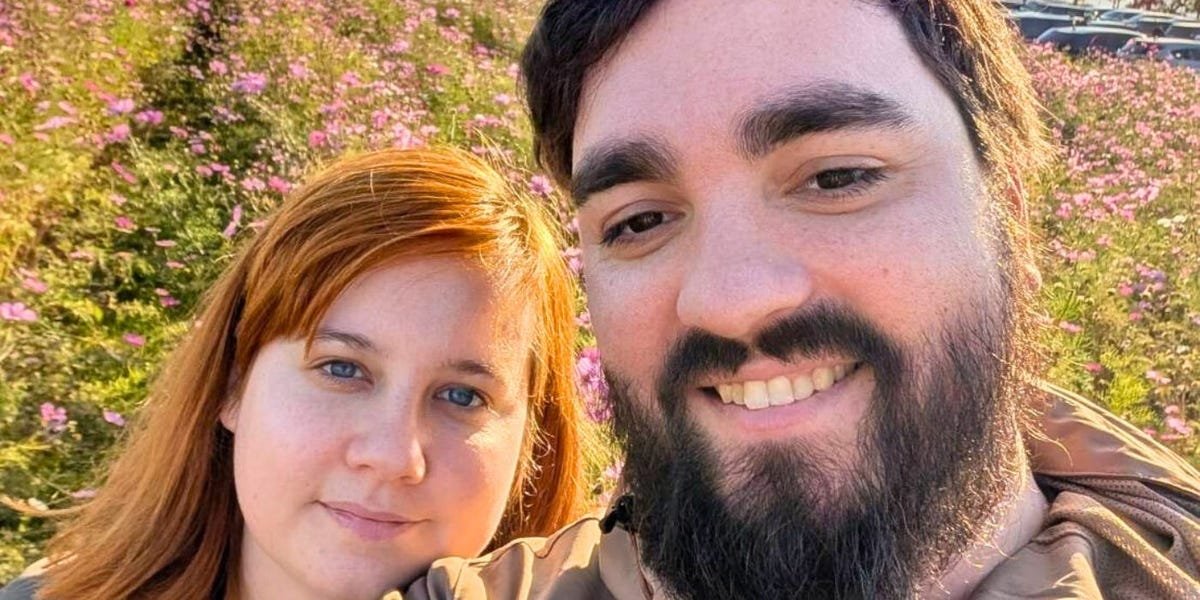
My husband and I spent almost a whole decade preparing to move to Japan.
Kerri King
I’ve always liked to feel prepared and in control, which is probably why it took me eight years to feel ready to leave New Zealand.
Before we moved, I researched everything I could think of, from how Japan’s specialized health clinics differed from our general practices in New Zealand to the specific paperwork required for city office registrations.
I watched vlogs of people sharing their grocery hauls in Tokyo, noting the prices of staples like milk and eggs, and read blog posts detailing a day in the life of expats in Japan.
Talk of culture shock and language barriers didn’t scare me, as practical problems often have practical solutions. What I couldn’t have anticipated was how living abroad would make me feel like an imposter.
On the surface, I looked confident and capable, sharing photos of our newest adventures with friends and family on social media. In reality, even small, daily interactions left me panicked and second-guessing myself.
My heart would race whenever someone asked me a question, and I couldn’t find the words to respond.
I felt embarrassed every time I had to rely on Google Translate at the supermarket or to make sense of yet another form. A parcel even sat on my bedroom floor, undelivered, for six months because I was too intimidated to figure out the local post-office process.
For someone who built her identity around independence, constantly needing help from others felt frustrating and humiliating.
Being the parent at school who needed things repeated, the customer holding up the line, or the one relying on her husband to translate slowly chipped away at my confidence.
Living without a support system is harder than I thought
As much as we love Japan, it’s tough to be far from home.
Kerri King
That same fierce independence I’d always been proud of also meant I didn’t prioritize building a support network when we arrived in Japan.
I assumed friendships would happen the way they always had — through school events, casual chats, and repeated proximity. I figured I’d naturally end up grabbing coffee with a few people, even if the coffee wasn’t quite as good as New Zealand’s.
It turns out friendships are harder to build when language and cultural barriers sit between every conversation.
So instead, I buried myself in work and told myself I was too busy to socialize. Our family travelled most weekends, which made it easy to stay occupied and harder to admit I felt lonely.
The few friends I have made, I love dearly. However, deep friendships take time, and life feels heavier when you don’t have someone nearby to lean on.
That absence felt sharpest when my grandmother passed away in 2024, and I couldn’t show up for my family. I wasn’t able to cook meals for my mum, sit with my grandfather, or say goodbye properly.
Grieving from afar isn’t something you can really plan for; you realize too late that a final goodbye is gated behind a 14-hour flight and a four-figure plane ticket.
Despite the small four-hour time difference, the geography of our new life meant I was out of reach when it mattered most.
Japan has made our lives easier in many practical ways. We save money, travel more, and have access to high-quality medical care whenever we need it.
However, all the convenience and travel in the world can’t replace community.
Even our best expectations didn’t survive real life
Japan gave us the frictionless life we dreamed of, but I’ve learned that convenience is a poor substitute for a sense of community.
Kerri King
Before we moved, we thought we’d covered the language gap: My husband completed a four-year Japanese degree, our daughter grew up exposed to the language, and I studied as much as I could.
We assumed that would be enough to get by, and from a practical point of view, it is. I can grocery shop, book appointments, and navigate daily life without much trouble.
However, existing within a community is not the same as belonging in one. At parent meetings and school events, conversations move too quickly for me to follow, and I rarely feel able to contribute anything meaningful.
Over time, I realized language wasn’t the only barrier to belonging.
Understanding the system’s gears didn’t mean I knew how to be one of them. I understood that Japan prioritizes the group over the individual, but adapting to this is a lot harder in practice.
Every time I asked school staff for an exception for my daughter — a quiet corner during assembly or permission for her to wear her noise-cancelling headphones during music classes — the smiles across the table turned thin and rigid. There was no argument, just a heavy, polite wall of silence that told me I’d stepped out of bounds.
It left me in an impossible spot: I was fighting to get her the support she needed, but by speaking up, I was highlighting the very differences I was trying to help her navigate.
Japan has still given us the life we planned for, just not in the ways we expected. Now, we have to decide if the life we worked eight years to build is worth the community we’re living without.
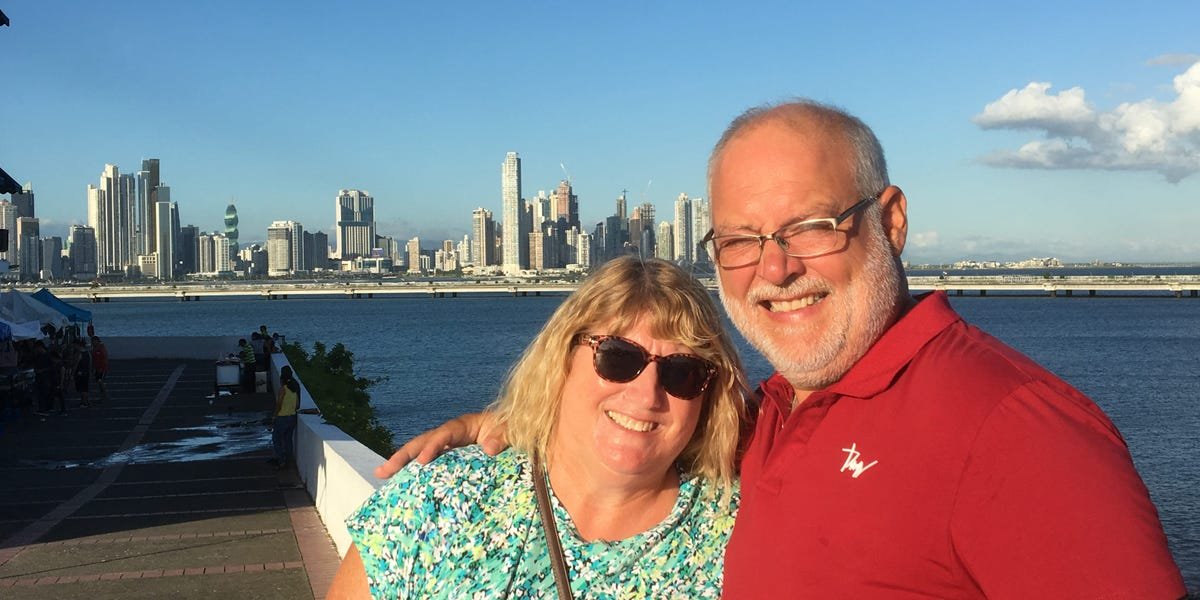
This as-told-to essay is based on a conversation with Greg Kitzmiller, a 64-year-old American retiree living in Panama. It has been edited for length and clarity.
I was born and raised in Michigan, where I met my wife, Jen, and where we built our life together.
In 2016, I retired from my job as a manufacturing supervisor. My wife retired from her law career over a year later.
The year before she retired, my main goal was to find a place where we could live the best life during our retirement. I did a lot of research on various countries, andPanama kept coming to the top of the list.
For their retirement, the couple wanted to live in a warm place where their money could go further.
We were eager to escape the snow, so my first priority was eternal summer. We also wanted to stay close to the US to make traveling back easy. The fact that Panama uses the US dollar only added to its appeal.
We hadn’t spent our whole lives planning to retire abroad, but after watching HGTV shows, we both thought that this was something we could do.
Panama also offers a special Pensionado visa for retirees, which comes with incentives such as discounts on utility bills, medication, and even transportation.
Before making the move, we took a few exploratory trips to Panama. Our first trip was a weeklong in October 2017. After my wife retired, we came back in February 2018 for a nine-week trip, touring different areas to see if it felt like the right fit.
Coming from Michigan, they were eager to get away from the snow.
During that trip, the weather was beautiful. When we went home to Michigan and saw the snow on our driveway, my wife turned and said to me, “We’re moving, right?” And I said, “Yeah, we are.”
We sold our house quickly. We held a few garage sales, donated what we didn’t need, and fit our lives into five suitcases. In June 2018, we officially moved to Panama.
Our kids were OK with the decision.
We have two daughters in Texas and one in Alabama. We’re no further from them now than we were in Michigan. Moreover, the world has gotten so small. We can get on a video call with the kids and the grandkids anytime.
With the help of a real-estate agent, we bought our two-bedroom condo for $210,000 in Coronado, which is about an hour and a half from Panama City by car.
Our condo isin a country club community, where the golf course wraps around our building, and we have 180-degree views of the ocean and the mountains.
The couple bought a two-bedroom condo in Coronado.
Even though I’ve joined several Facebook groups, it’s the people we met at church that make up the core of our social circle.
Moving to Panama sparked an unexpected passion for writing.
When we started talking about moving here, one of Jen’s friends at work said, “Well, you should write a blog.”
It wasn’t that easy, since I’m not very tech-savvy, but I did it. I still maintain the blog and publish a newsletter. And, right after we got here, I connected with a writer’s group.
Being a part of that group led me to do a lot of things in my retirement that I never thought I would do.
Kitzmiller published his first book about his experience retiring in Panama in 2020.
I published my first book in 2020 about our experience of retiring in Panama. Since then, I’ve started writing in different ways, including a detective fiction series — I’m working on the fourth installment.
Writing wasn’t something I expected to do in my retirement, but there’s a strong community of artists, authors, and musicians here. When you surround yourself with other people who are talented in those ways, it fosters your own talent.
My retirement has been very fulfilling.
Our health is better, too. It helps that there is always an abundance of fresh fruit and vegetables around.
Kitzmiller says being surrounded by a thriving community of artists has encouraged his own passion for writing.
If I had it to do over, I would’ve learned Spanish when I was young. When you’re in your 60s, it’s hard to learn a new language. I almost always understand what’s being said, but don’t verbalize very well, unlike my wife, who is fluent.
Every day’s a little different. We have a few social groups, including one where we play dominoes every week. We rotate between houses, someone makes lunch, and we spend the afternoon playing.
Initially, we figured we’d come for 10 years and then evaluate if we wanted to stay. It’s only been eight years, but we’ve already decided that this is where we want to be.
We’re not planning to move back to the US. There’s honestly not much we miss.
Do you have a story to share about relocating to a new city? Contact this reporter at agoh@businessinsider.com.
I’m 39, and my retirement plan is haphazard, chaotic, and borderline nonexistent. I feel a lot of shame around this fact because I should know better.
My first job out of college was at PBS, where I opened a TIAA retirement account at 22. Somewhere in the intervening 18 years, the retirement accounts at PBS switched from TIAA to Fidelity. I now get notifications from both, and it’s confusing.
After PBS, I worked for a public relations agency that most certainly had a 401(k) plan, and I absolutely didn’t sign up for it. After that, I worked at Redbox, where I again didn’t enroll in a retirement plan.
I’ve had a twisty-turny career path, including a pandemic-era six-year stint as a startup founder developing a new tech product for book lovers. During that time, I worried about money every day, so I wasn’t saving anything for retirement.
So that leaves me with a string of sparse, underfunded retirement accounts, regrets about the past, and worries about the future. I’m deep in the middle of what I call “retirement planning paralysis.”
Retirement wasn’t on my radar for the bulk of my career
I’ve shied away from retirement planning throughout my career for the same reason I didn’t freeze my eggs or plan for any aspect of the future: Today is the only day that is promised.
I’ve always tried to live in the present because it feels presumptuous to plan the future. And the future always felt very far away, so it was easy to put planning off — especially in my 20s and 30s.
Now, with 40 looming, I still feel uncertain about the future, but I also see my past avoidant behaviors as ones riddled with excuses and justifications. I suddenly realized: Just because I don’t know how things will turn out doesn’t mean I can’t plan for future me.
I’ve finally started saving for retirement, but still paralyzed
Today, I’m working full time at a B2B PR agency, and I’m finally maxing out my 401(k). I’ve now doubled my total retirement savings from my previous 15+ years of corporate employment.
But I still have at least two, maybe three, different retirement accounts. I know I should combine them all, but I don’t know where to start or the best way to go about that.
I know that 401(k)s can be rolled over or rolled up, so I have to figure out how to get this ball rolling, but I’m still struggling to find the motivation. It feels like total planning paralysis. This is my next big hurdle.
How do I feel about my future?
Optimistically, I would love to be in my late 60s and retired. I want to travel, hike, and volunteer. I like to imagine that I’ll relax by reading books in my little cozy nook of a cabin in the hills of a forest overlooking a lake.
But more realistically, I see myself working into my 70s, not by choice but necessity — joining the growing ranks of older Americans who can’t afford to stop. My current juncture makes me think of a famous Joni Mitchell line: “It’s got me hoping for the future and worrying about the past.”
I do regret some of my past choices, but I’m addressing them now. Writing this essay is my first step out of paralysis. I’m also scheduling a meeting with a financial advisor next week.
Lastly, I’m telling my friends about my retirement anxiety. I’m learning that admitting I’m overwhelmed doesn’t make me a failure; it makes me honest. And being honest is a good first step.
This story is available exclusively to Business Insider
subscribers. Become an Insider
and start reading now. Have an account? .
Sam Altman said that AI would “dramatically slow down” how quickly OpenAI hires.
Altman said the company will “hire more slowly but keep hiring.”
Altman’s comments came after a year when job growth stalled and hit young job seekers hard.
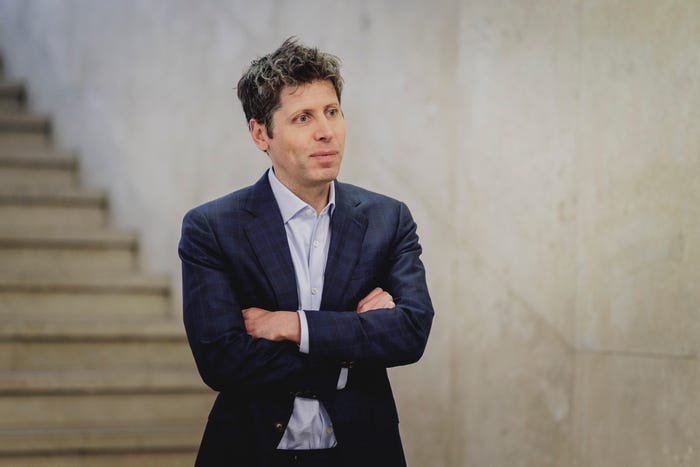
Sam Altman is addressing AI’s impact on the workforce, including on OpenAI’s hiring practices.
During a live-streamed town hall event on Monday, catered mainly toward developers, the OpenAI CEO said that AI has changed how quickly the company expands its head count, but the company is not in a hiring freeze and is nowhere close to doing away with human employees entirely.
“We are planning to dramatically slow down how quickly we grow because we think we’ll be able to do so much more with fewer people,” said Altman in response to a participant who asked if AI has changed OpenAI’s interview process of potential candidates.
“What I think we shouldn’t do, and what I hope other companies won’t do either, is hire super aggressively, then realize all of a sudden AI can do a lot of stuff, and you need fewer people, and have to have some sort of very uncomfortable conversation,” Altman added. “So I think the right approach for us will be to hire more slowly but keep hiring.”
Altman’s comments come amid the “Great Freeze” and concerns that job creation in America has lost momentum. The unemployment rate in November 2025 climbed to its highest level since 2021, while job openings have fallen 37% from their peak in 2022, according to data from the Bureau of Labor Statistics.
Every time Katherine publishes a story, you’ll get an alert straight to your inbox!
Stay connected to Katherine and get more of their work as it publishes.
Business Insider previously reported that, while in 2022 there were roughly two job openings for every unemployed worker, by September 2025 that ratio had fallen to one. Workers who have been jobless for at least 27 weeks also now make up about a quarter of all unemployed Americans.
Based on data from the US Census Bureau, young workers have been hit especially hard by the hiring slowdown. The unemployment rate for Americans ages 20 to 24 reached 9.2% in August and September, the highest level since the recovery from the pandemic recession.
US planning for the high-risk raid to apprehend Venezuela’s former president, Nicolás Maduro, centered on a time when much of the country’s military would be on holiday leave, a newly released memo reveals.
The December 23 memorandum from the Department of Justice’s Office of Legal Counsel offers fresh details about how the US planned to pull off the daring nighttime raid to capture Maduro in his fortified compound and transport him to New York to stand trial. The former leader has pleaded not guilty to the drug and weapons charges he faces.
The raid began late on January 2 and ran into the next day. President Donald Trump said on January 3 that the initial plan was for the operation to occur four days earlier, on December 30, but he decided to wait for better weather.
“The expected duration of the operation within Venezuelan territory is [redacted] hours,” wrote T. Elliot Gaiser, a US assistant attorney general, wrote in the late December DOJ memo, which looks into the legality of the raid and was made public this week. Much of the planning section is blacked out.
“In order to minimize casualties, the strike will take place at 0100 am (local time) on a date where a maximum number of Venezuelan military would be on leave for the holidays,” Gaiser wrote.
The US attacked Venezuelan military targets as part of its raid earlier this month.
Federico PARRA/AFP via Getty Images
It’s unclear how many soldiers were away when the US actually executed the operation in January. Dozens of Venezuelan and Cuban security personnel were killed, the two countries said after Operation Absolute Resolve concluded.
The DOJ memo, which cited Pentagon planning information and details how the US could effectively present the action as a law enforcement operation rather than an act of war, said that the US expected to encounter “significant resistance” from Venezuela’s air defenses.
That anticipated resistance includes several dozen anti-aircraft systems on the approach to Fuerte Tiuna, a major military installation in Caracas where Maduro and his wife were believed to be and, indeed, were at the time of the operation.
The memo outlined how US aircraft would strike air defense systems to clear a path for assault forces to reach Tiuna. It said that the Pentagon aimed to target a local power switching station to keep the power off, which could explain Trump’s post-raid remarks that a “certain expertise” was used to turn off the lights in Caracas.
The US could have also carried out a cyberattack or employed electronic warfare capabilities. “Kinetic operations will be preceded by non-kinetic action,” the memo said.
More than 150 US aircraft participated in the operation.
Eva Marie Uzcategui/REUTERS
The memo was published several days before the raid, so it’s unclear how US planning may have changed between the time it was written and the actual operation.
Dan Caine, the chairman of the Joint Chiefs of Staff, said on January 3 after the raid that more than 150 US aircraft participated in the operation, including stealth jets, electronic attack aircraft, surveillance and reconnaissance planes, airborne early warning aircraft, bombers, and drones.
Many of these aircraft targeted and engaged Venezuela’s air defenses to clear a path for low-flying helicopters carrying the forces that stormed Maduro’s compound and apprehended the former president and his wife, consistent with the planning memo.
The US didn’t lose any aircraft during the raid. A helicopter took a hit but still remained operational, and a defense official said seven American service members were wounded during the night.
“Risks to the mission are significant,” the memo said, adding that its “success will depend on surprise.” In the aftermath, Caine said the US achieved “totally the element of surprise.”
A group of about 20 US investors is already planning to travel to Venezuela in March, following Saturday’s news that the country’s president, Nicolás Maduro, had been taken into US custody.
Charles Myers, the chairman of the political risk advisory firm Signum Global Advisors and a former vice-chairman of the investment advisory firm Evercore, told Business Insider that the mood among investors he has spoken to is one of “cautious optimism” following news of Maduro’s ouster.
“I think the centerpiece of Venezuela’s success, looking out 12 months or even 24 months, is foreign investment,” Myers said. “A big part of the Venezuela story, starting today, is foreign investment, especially in oil and gas, which is pretty straightforward, but there are massive opportunities in construction, in tourism.”
Myers said it’s not the responsibility of his firm to take a “moral position” on whether it was right or wrong for the US to involve itself in Venezuela’s government, but rather to help the firm’s clients anticipate investment opportunities or mitigate risk due to geopolitical events.
However, he added, his firm “very much expected” the situation in Venezuela would unfold as it has, and has been preparing investor groups to be ready to travel to the country when the opportunity presents itself. Signum previously hosted similar trips for asset managers and hedge funds to visit Syria and Ukraine.
“People have seen this coming, especially very smart investors, and many of them have actually bought bonds in anticipation of this,” Myers said. “But there’s a very strong degree of cautious optimism, even more so than we saw with Syria, just because this is a United States-directed action.”
“The United States will play a pivotal role in everything, especially the Venezuelan economy, starting today,” Myers added, “So, I think the reaction has been more enthusiastic than perhaps other situations like this.”
YouTube TV will unveil new prices soon. But this time, it will be good news for sports fans.
YouTube is launching a set of cheaper, slimmed-down versions of its popular live TV service in 2026, which it’s calling “YouTube TV Plans,” the video giant announced on Wednesday. One of the new plans will be a sports bundle that provides access to ESPN Unlimited, FS1, and NBC Sports Network.
While YouTube TV isn’t yet revealing pricing for these 10 or so genre-specific packages, they’ll cost less than the Google-owned service’s typical rate, which is $83 a month.
“Our goal is to let you tailor your subscription with more options,” said Christian Oestlien, YouTube’s head of subscriptions, in a statement. “Whether you stick with our main YouTube TV plan with 100+ channels, focus on sports, combine sports and news, or select a plan centered on family or entertainment content, subscribers will be able to easily choose the plan that works best for them.”
YouTube TV secured the rights to form these so-called “skinny bundles” after hard-fought negotiations with Disney, Comcast’s NBC, and Fox. YouTube TV’s battle with Disney was especially intense, as it left subscribers without ESPN and ABC for 15 days.
Justin Connolly, YouTube’s global head of media and sports, said at a media event on Tuesday night that YouTube worked with its partners on “ingesting the entirety of the sports programming” in its service, so that YouTube TV can be a one-stop shop for sports fans. Besides aggregating live games, Connolly said YouTube is being fan-friendly by aiming to “meet the consumer where they are” on price.
YouTube TV’s price has steadily increased since it launched in 2017 at $35, though it’s also added more channels. Last December, YouTube TV’s monthly price rose by $10.
Other TV providers have launched sports-focused skinny bundles, with some tradeoffs.
Fubo’s $55.99 a month Sports + News bundle includes all of ESPN and Fox’s channels, plus CBS and the NFL Network, but it doesn’t have NBC or Warner Bros. Discovery’s networks like TNT or TruTV. It also doesn’t have the news networks CNN and MS Now (formerly MSNBC), though it has Fox News.
Sling TV’s Orange & Blue bundle goes for $60.99 and has ESPN, Fox with cable sidekick FS1, WBD’s channels like TNT and CNN, and the NFL Network. It also carries local channels like NBC and ABC in certain markets. But Sling doesn’t have a deal with CBS, plus its main bundle doesn’t include specialty sports networks like the SEC Network, the Big Ten Network, or NBA TV. Sling offers a Sports Extra add-on for $15 a month on its main plan, bringing the total to $76.
DirecTV’s MySports package costs $69.99 but is more comprehensive, with the full suites of ESPN, Fox, and WBD, plus all four major local broadcast networks: ABC, CBS, NBC, and Fox (with possible exceptions in certain markets). It also carries the flagship networks for four major US sports: the NFL, NBA, MLB, and NHL.
Sports fans could complement those skinny bundles by buying a digital antenna or by using streaming services like Peacock or Paramount+ that give access to NBC and CBS, respectively.
ESPN also offers a subscription to its entire suite for $29.99 a month, or a bundle with competing streamer Fox One for $39.99 a month.
YouTube said its new sports plan will have ESPN’s full suite of programming plus sports channels from Fox and NBC, with the option to add on NFL Sunday Ticket and RedZone for more money. Otherwise, it’s unclear exactly which channels this bundle will have.
As YouTube TV’s sports bundle enters the market, sports fans have more choices than ever. The challenge for them now is finding the right plan.