
My-company-announced-a-return-to-office-policy-a-few-weeks-ago.jpeg

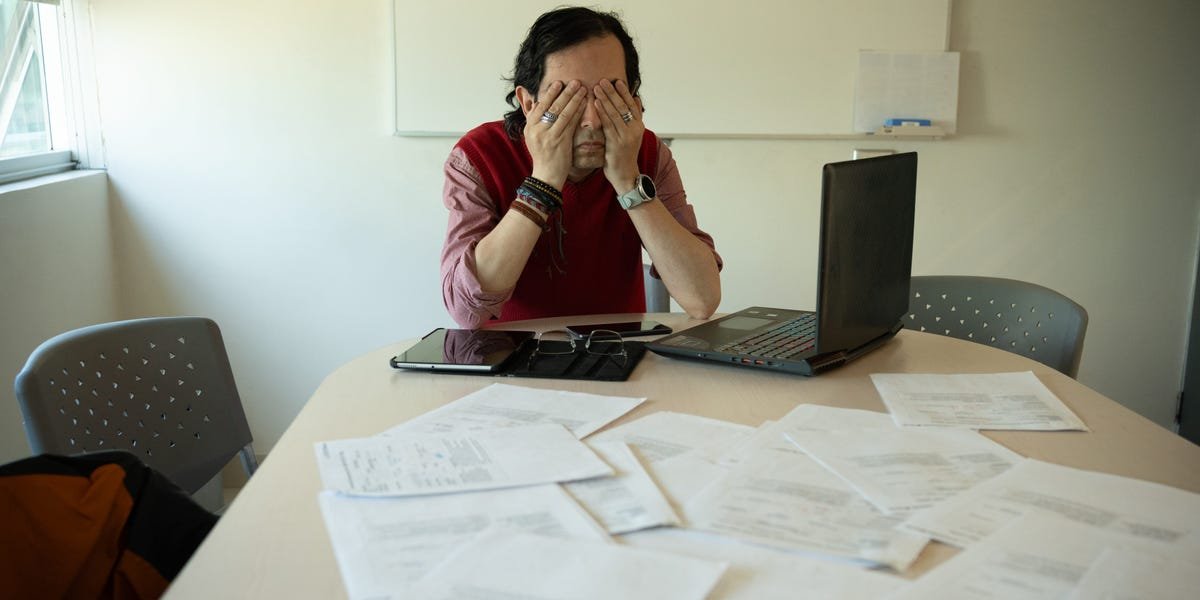
My company announced a return-to-office policy a few weeks ago. It’s already affecting my relationship with my partner.

I hadn’t always been a believer in working from home. When remote work first became part of my life, I resisted it. I missed the structure of an office, the separation between work and everything else. Home felt like the wrong setting for serious work.

Then, slowly, it didn’t. I found a rhythm I hadn’t expected. Mornings became mine. I cooked real lunches. I thought more clearly.

More importantly, my girlfriend and I have been living together in London for a year, and we have built a life around being home together that feels chosen rather than forced. I’ve stopped seeing remote work as a compromise and started seeing it as the better version of my day.

So when the email came from work that said I’d have to return to office, it wasn’t just a scheduling change. It was a disruption to something we had spent months building, a routine that had come to feel like the foundation of everything else.

It has only been a few weeks since the announcement, and already, almost nothing looks the same — especially my relationship.

My partner and I both worked from home, so we had to rethink everything

The first thing we’ve had to confront was practical. Two people who both work from home occupy a shared space in a very specific way. That balance had taken time to calibrate. We had never sat down and designed it. It had just formed, organically, around our needs. The return-to-office policy exposed how deliberate that accidental life actually was.

My girlfriend still works remotely, so the shift hasn’t been symmetrical. I now leave each morning to head into a version of London we rarely engaged with during the week — the commuter version, the structured version — while she stays inside the life we’d built together. That asymmetry requires more honest conversation than either of us expected.

We’ve had to redesign things we never explicitly designed in the first place. What do mornings look like now? Who handles what, and when? The small, invisible agreements that hold a shared life together suddenly need to be spoken out loud. That process, still ongoing after just a few weeks, has been more revealing than disruptive. But it has required real effort.

Commuting in London comes with a price, and it goes beyond the cost of a train ticket

The financial reality surfaced quickly. Commuting to London isn’t cheap, and the daily arithmetic of transport, lunches, and the small expenses that accumulate when you’re out of the house adds up faster than expected. We had saved money by being home — on food, on travel, on the general inefficiency of city life when you’re moving through it daily. That buffer has started to shrink almost immediately.

But the more significant cost has been time. The commute is carving hours out of the day that had previously been ours. Mornings that once felt spacious have become logistical, and evenings are now shortened. The long, unhurried romantic dinners that had been a quiet anchor in our week are starting to require more effort to protect. Time, it turns out, had been our most abundant resource when we were both at home. We hadn’t noticed until it started running out.

There is also an energy cost that is harder to quantify. Offices are stimulating in ways that are both useful and exhausting. I now come home differently — more depleted, less present. After just a few weeks, my girlfriend has already noticed the shift before I fully named it myself. The version of me that walks through the door at the end of the day is not quite the same one that used to simply close the laptop and call it done.

Going back to the office has asked something new of our relationship

What surprised me most wasn’t the logistics. It was how much our new relationship had quietly depended on proximity: a shared lunch, a passing conversation in the kitchen, the low-level awareness of each other that comes with being in the same space. Those things weren’t dramatic, but their absence has been.

We are now trying to be more intentional. Dinners that used to happen naturally now need to be protected. Check-ins that once occurred organically require more deliberate effort. It isn’t a strain exactly; it’s a recalibration.

The return-to-office policy hasn’t damaged anything between us. But it is revealing how much of our relationship had been built on the life we’d created around being home. Losing some of that structure forced us to be more conscious about what we actually wanted, and more honest about what we weren’t willing to give up.

We have only been doing this for a few weeks. Something tells me the real adjustments are still ahead.


Source link

Kavanaugh-in-dissent-Bad-policy-or-not-Trumps-tariffs-were.jpeg

Kavanaugh in dissent: Bad policy or not, Trump’s tariffs were ‘clearly lawful’

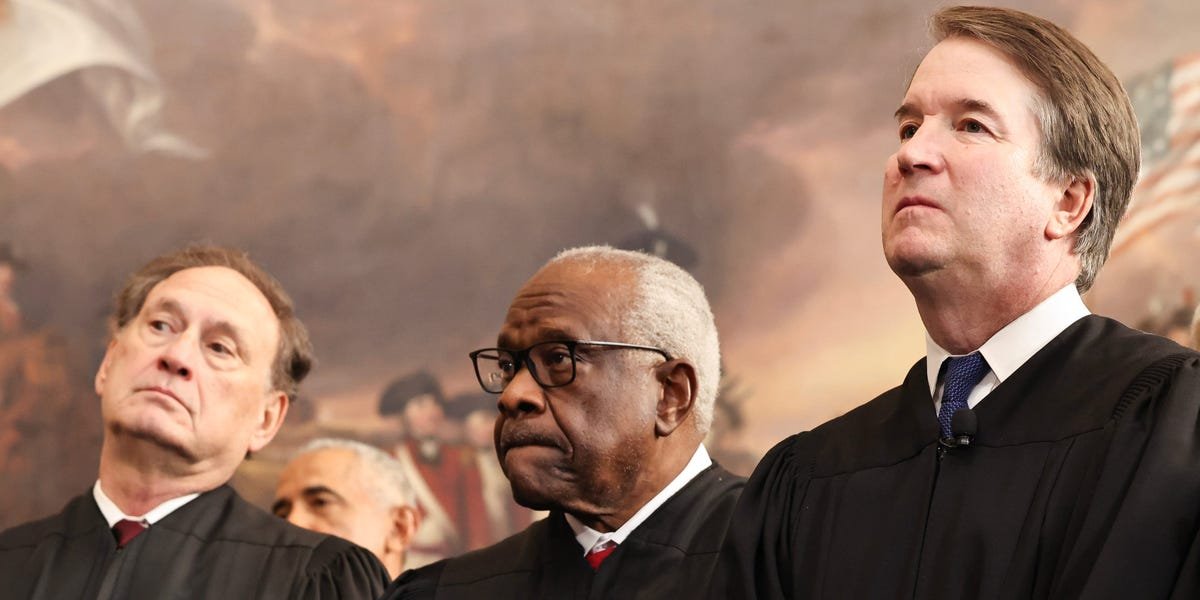
Three conservative justices of the US Supreme Court — Brett Kavanaugh, Clarence Thomas, and Samuel Alito — broke with the majority Friday, arguing that President Donald Trump had clear authority to impose his sweeping tariff policy.

The three dissenting justices said the president’s tariffs were perfectly legal under the 1970-era law Trump used that says presidents can “regulate” importation in the case of emergencies.

“The tariffs at issue here may or may not be wise policy,” Kavanaugh wrote. “But as a matter of text, history, and precedent, they are clearly lawful.”

The three justices also noted that the majority 6-3 decision is silent on how to return billions of dollars in tariffs that have already been collected.

That process “is likely to be a ‘mess,'” as was acknowledged at oral arguments, Kavanaugh wrote in a lengthy dissent that Thomas and Alito joined.

The two dissents differed with the majority on two fronts: Trump’s bypassing of Congress in imposing tariffs, and the legality of the president’s invocation of the International Emergency Economic Powers Act, or IEEPA.

In the dissent written by Kavanaugh, the justices argued that presidents have “commonly” imposed tariffs to regulate imports throughout American history.

Interpreting IEEPA to exclude tariffs “creates nonsensical textual and practical anomalies,” Kavanaugh wrote. As with quotas and embargoes, tariffs are a “traditional and common tool to regulate importation,” he said.

“It does not make much sense to think that IEEPA allows the President in a declared national emergency to, for example, shut off all or most imports from China, but not to impose even a $1 tariff on imports from China,” Kavanaugh wrote.

Reversing the tariffs may be an exercise in futility, Kavanaugh added. Even without IEPPA, “numerous other federal statutes authorize the president to impose tariffs and might justify most (if not all) of the tariffs at issue in this case,” Kavanaugh wrote.

In a separate dissent, Thomas tackled the constitutional question, arguing that the Constitution allows Congress to delegate tariff authority to the president.

“Historical practice and precedent confirm that Congress can delegate the power to impose duties on imports,” he said.


Source link

Heres-what-the-smartest-people-in-foreign-policy-business-and.jpeg

Here’s what the smartest people in foreign policy, business, and economics are saying about Trump’s raid on Venezuela

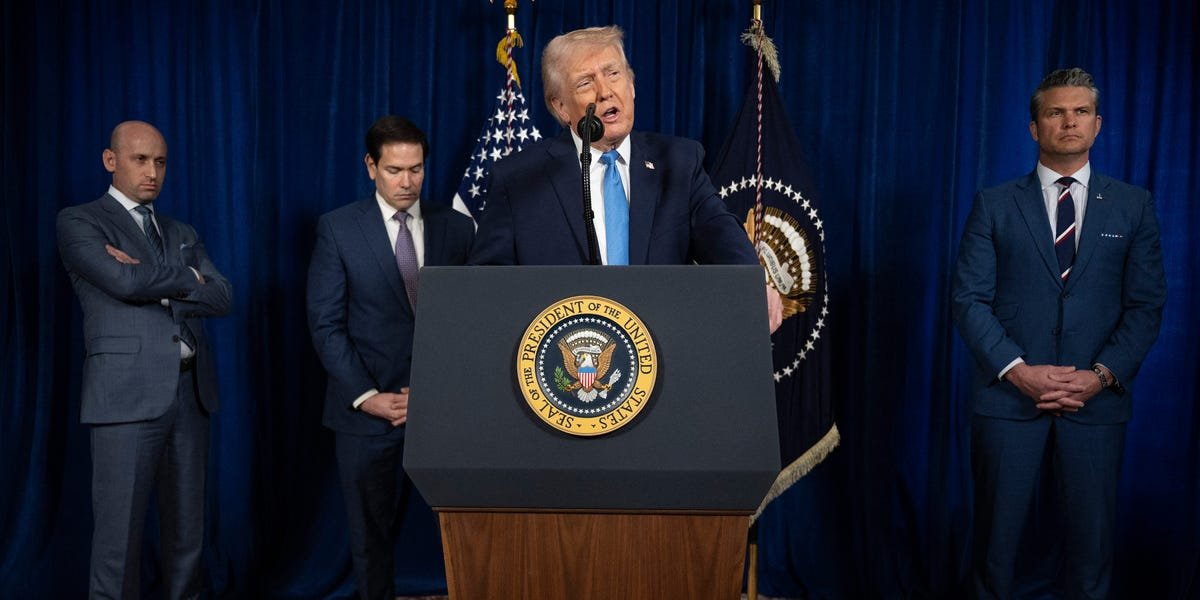
President Donald Trump on Saturday announced that the US had conducted a raid on Venezuela, resulting in the capture of Venezuelan President Nicolás Maduro and his wife, and big names in business and foreign policy have been reacting as the aftermath unfolds.

Here’s what they’ve been saying:

Charles Myers

Myers, chairman of political risk consulting firm Signum Global Advisors, told Business Insider that foreign investment in oil, tourism, and construction will be the “centerpiece” of Venezuela’s financial recovery going forward, adding that he expects the country’s economy will grow “faster over the next two years than people anticipate because of the extent or scale of foreign investment.”

Myers, also a former head of investment advisory firm Evercore, is planning a trip of 15-20 investors to visit Venezuela in March to identify investment opportunities. Signum Global Advisors has hosted similar trips for investor groups in Syria and Ukraine.

Ian Bremmer

Bremmer, founder of the political risk research and consulting firm, Eurasia Group, in a post on LinkedIn, wrote that the “US presumption is next Venezuelan leaders will now do what the Americans want because they’ve just seen the ‘or else.'”

Accompanying the post was a photo of a drawing of a horse. The hindquarters of the horse were drawn in intricate detail, and labeled “SOF operation to capture Maduro,” referencing the special operations forces mission that was executed early Saturday. The horse’s head was depicted as a rudimentary children’s drawing, captioned “plans for future of Venezuela.”

“I wouldn’t exactly call it a plan,” Bremmer added.

In a separate post, he wrote: “The law of the jungle is dangerous. What applies to your enemies one day can apply to you the next. Make no mistake where the world is heading here.”

Bill Ackman


Bill Ackman

Bill Ackman has expressed support for many of the Trump administration’s policies, foreign and domestic.

PATRICK T. FALLON/AFP via Getty Images


The billionaire hedge fund manager wrote in a post on X that “The removal of Maduro will lower oil prices, which is good for America and very bad for Russia. A weaker Russian economy will increase the probability that the war in Ukraine ends sooner and on more favorable terms for Ukraine. And Putin will be sleeping in his safe room from this point going forward.”

Henry Gao

Gao is a senior fellow at the Center for International Governance Innovation and a law professor at Singapore Management University. In a series of posts on X, he said the raid on Caracas ushered in “the brave new world of international law.”

“Maduro’s capture has triggered the biggest revival of international law since Grotius — and overnight turned everyone on X into an international law wonk, eager to compare Venezuela to Taiwan,” he wrote.

“But China has never treated the Taiwan issue as a matter of international law,” he continued. “It has always been framed as an internal affair, with Taiwan regarded as a renegade province. The reason China has not acted is not because it lacks legal justification, but because it lacks the capability. Thus, US ops in Venezuela provide China with no additional legal justification.”

Sen. Elizabeth Warren

The Democratic senator from Massachusetts is a former Harvard Law professor who holds deep expertise in bankruptcy and consumer finance. In a post on X, she wrote that Trump’s action to seize Maduro, “no matter how terrible a dictator he is — is unconstitutional and threatens to drag the US into further conflicts in the region.”

“What does it mean that the US will ‘run’ Venezuela, and what will Trump do next around the world?” Warren wrote. “The American people voted for lower costs, not for Trump’s dangerous military adventurism overseas that won’t make the American people safer.”

Elon Musk


President Trump and Elon Musk i nthe White House.

Elon Musk and Donald Trump in the Oval Office.

Kevin Dietsch/Getty Images


The Tesla and SpaceX CEO spent most of Saturday posting praise for the Trump administration and the military operations in Venezuela, posting that it was “heartwarming to see so many Venezuelans celebrating their country freed from a brutal tyrant.”

In another post, Musk retweeted a White House image of Maduro aboard the USS Iwo Jima after being apprehended, with the caption “Congratulations, President Trump! This is a win for the world and a clear message to evil dictators everywhere.”

Musk and Trump have had a tumultuous relationship over the years, alternating between appearing to be close allies and trading sharp criticisms in the media.


Source link