
Ive-traveled-beyond-Japans-popular-Tokyo-Kyoto-Osaka-route-There-are-4.jpeg

I’ve traveled beyond Japan’s popular Tokyo-Kyoto-Osaka route. There are 4 day trips I’d actually recommend.

The first time I visited Japan, I followed the so-called Golden Route and visited three major tourist spots: Tokyo, Kyoto, and Osaka.

It’s easy to see why these cities are so popular — they have delicious food, gorgeous temples, and endless things to see and do, no matter what you’re into.

Since moving here last year, though, I’ve been venturing beyond the usual stops to see another side of Japan.

These are the four day trips — all located within an hour or two of Japan’s biggest cities — that I’d genuinely recommend.

Saitama felt much calmer than Tokyo, but just as interesting to explore


A shot of Kawagoe Castle in Japan.

I loved visiting historic sites like Kawagoe Castle. 

tang90246/Getty Images


Saitama made it easy to see an everyday side of Japan, just outside Tokyo. Within Saitama, I split my time between Omiya and Kawagoe, but Kawagoe quickly became the highlight.

Known as “Little Edo,” it’s famous for its Edo-period atmosphere and historic buildings, now home to shops, sweets, and slower-paced sightseeing.

I browsed shopping malls, vintage stores (including BIG TIME), and hobby shops where anime merch was way cheaper than I’ve found in Tokyo.

In Kawagoe Old Town, many vendors sell Japanese sweet potato, a local specialty. I tried crispy sweet-potato chips with flavored butter dips, and I’ve learned that a long line usually means something’s worth trying.

I also visited Toki no Kane bell tower, Kawagoe Castle, and Kawagoe Hikawa Shrine. Behind the shrine is the Shingashi River, lined with cherry-blossom trees that flower in the spring.

Before heading home, I grabbed ramen in Omiya and browsed Book Off Super Bazaar, a massive secondhand store packed with clothes, home goods, games, and luxury items. I found that pairing Kawagoe with Omiya rounded out the day perfectly.

Kobe packed mountains, great food, and waterfront views into an easy, walkable day trip


Buildings and businesses in downtown Kobe, Japan.

There’s tons to do in Kobe, which I found to be a cool, walkable city. 

Alessa Hickman


Under an hour from Osaka by train, Kobe was one of my favorite stops in Japan so far.

Riding the ropeway up Mount Rokko to Nunobiki Herb Gardens was unforgettable: The 10-minute cable-car ride offered views of Kobe, the sea, and the surrounding mountains.

At the top, I explored different viewpoints and gardens before hiking down to the city. Along the way, I stopped in the greenhouse filled with tropical plants and relaxed in the hammocks overlooking the landscape.

Back in the city, I visited the historic Ikuta Shrine before heading to Kobe’s Chinatown. The streets were packed with people and food vendors selling everything from pork buns and Kobe beef skewers to incredible $3 ramen.

It’s a must-stop for foodies, and I’m already planning another trip just to eat there again.

I ended the night around Kobe Port Tower and Harborland, where the waterfront shopping and entertainment areas light up beautifully after dark.

Nara was my first day trip in Japan — and I’d still recommend it


The writer feeding a deer in Nara.

I loved feeding the deer in Nara. 

Alessa Hickman


I’ve happily returned to Nara multiple times. It’s around a 45-minute train ride from Osaka or Kyoto, making it a quick stop.

Stepping out of Kintetsu-Nara Station, you’ll find yourself surrounded by busy shops and restaurants. Walk along Higashimuki Shopping Street to reach Nakatanidou, a famous mochi shop known for its live mochi-pounding.

From there, the city opens into Nara Park, where deer roam freely through the streets and temple grounds. At one point, a deer even stood beside me at the crosswalk, waiting as if she knew exactly when to go.

Several vendors sell crackers for the deer, but you’ll quickly learn to stash them away — the deer always know who has snacks. Watching them bow before you feed them is a classic Japan experience, and it’s super fun to see in person.

The park has gardens, ponds, museums, walking trails, and temples, including the iconic Todai-ji Temple. Although the main areas can get busy, walking farther into the park leads to peaceful spaces tucked away from the nearby crowds.

Wakayama City was a hidden gem worth the trip


The writer buying pastries in Wakayama.

Wakayama had a quieter vibe than some of the other cities I’ve visited. 

Alessa Hickman


Wakayama was my furthest day trip; it took me about 90 minutes to get there from Osaka. The train ride was lovely, and the city has a quiet, local feel.

I found Wakayama to be more spread out than cities like Nara and Kobe, so although I managed to walk everywhere, some visitors might prefer taking a bus for longer stretches. With good planning, Wakayama is totally doable in a day.

I started at the free Fusion Museum, dedicated to knitting heritage and technology. For a small fee, visitors can design souvenirs using bike-powered knitting machines.

I learned the hard way that spots fill up quickly, so even though wandering through the exhibits was fun, plan to arrive early if you want to make something yourself.

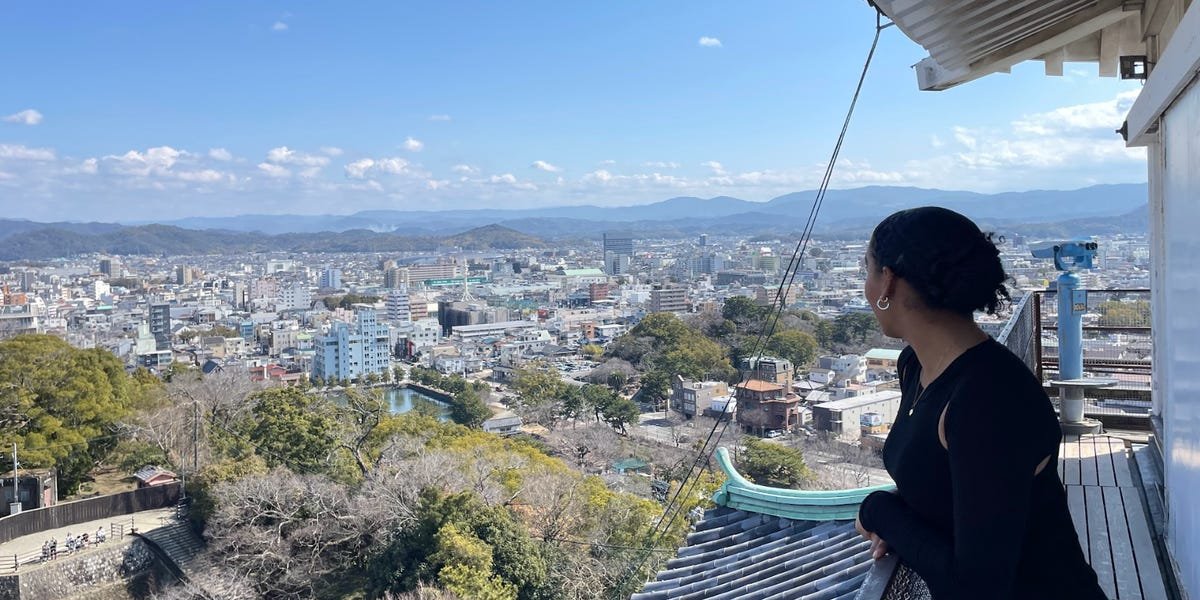
Wakayama Castle was a serious highlight. The grounds include gardens, ponds, and seasonal trees, and exhibits inside showcase historical artifacts. From the castle tower, there are 360-degree views of the city, mountains, and ocean. It was easily my favorite view in Japan so far.

After exploring, I stopped for ramen at Ramen Bakumatsu’s castle branch and enjoyed one of the best bowls I’ve had since moving here.

Later, I headed to Wakayama Marina City, a resort island in Wakaura Bay. Here, you’ll find Porto Europa, an amusement park styled after European towns, and Kuroshio Market, known for its fresh seafood and food stalls.

The long walk along the coastline, passing quiet parks and shrines on the way, was just as memorable as the destination itself.




Source link

I-visited-popular-spots-like-Tokyo-and-Kyoto-during-my.jpeg

I visited popular spots like Tokyo and Kyoto during my trip to Japan, but my favorite stop was a town I’d never heard of

Visiting Japan has been on my bucket list for a long time, and I finally booked a trip after relentless pleas from my children — and reading about how the US dollar is strong against the Japanese yen.

To simplify planning, I booked a family tour through Intrepid Travel. Unsurprisingly, the tour went to Tokyo and Kyoto, popular tourist destinations that draw many visitors (including my family) to Japan.

However, the tour also brought us to some places I may not have found on my own, including the quaint, quirky mountain town of Hakone.

Visiting the town, which is southwest of central Tokyo and about a 90-minute railway ride away, turned out to be my favorite part of the trip.

We loved the town’s famous hot springs


Author Jamie Davis Smith and son smiling next to red door with windows

Our trip was complete with incredible views.

Jamie Davis Smith


Hakone is full of onsens, or natural hot springs, heated by geothermal activity happening beneath Japan. During my visit, I got to experience several types of onsens — and I still dream of sitting in their soothing waters.

First, I tried a bucolic onsen overlooking the mountains, which were lush and green when I visited during the summer. Lounging in a naturally fed hot spring from the top of a mountain allowed me to slow down, relax, and appreciate the beauty of Japan outside of its big cities.

I also tried a traditional onsen, which was segregated by gender and required visitors to disrobe completely. As an American, I’m not used to bathing naked with strangers, but I didn’t want to miss this quintessential Japanese experience.

Although I didn’t stay long, it was eye-opening to see how this tradition, so different than my own, quickly helped me feel more comfortable in my own skin. This is something I would not have experienced if I had not gone to Hakone.

Finally, my kids and I tried a series of themed onsens at Yunessun, a hot-spring theme park, which was one of the quirkier experiences I have had while traveling.

There, I hopped into an onsen shaped like a ramen bowl, complete with blow-up toppings. My kids joked that we were experiencing what it felt like to be cooked on a stovetop.

I also got to try unique baths, including one filled with coffee and another containing wine. My skin felt smooth and soft when I left.

Our trip featured some unique activities, including a visit to a mind-blowing sculpture garden


Woman smiling in rainbow square structure

The whole family had a blast at the Hakone Open-Air Museum.

Jamie Davis Smith


Although my children don’t always share my affinity for looking at paintings and sculptures, they agreed to accompany me to the Hakone Open-Air Museum.

Beyond its gates, we found larger-than-life interactive sculptures unlike anything we’ve seen at traditional art museums.

As we walked through the museum’s gardens, we hopped through rainbows, climbed to the top of a stained-glass tower, and walked underground to peek up at the sky from below.

My children even swung on colorfully knitted balls hanging from an elaborate net, seemingly suspended from the sky.

Near the exit of the gardens, I sat and soaked my feet in a hot-spring footbath while gazing out at the surrounding forest. I wish that every large attraction had something similar at the end.


Child standing in diamond rainbow sculpture

There were some fun photo opportunities at the Hakone Open-Air Museum.

Jamie Davis Smith


Fortunately, there were many other unique and fun things for us to do in Hakone.

While there, I ate one of the town’s famous black eggs, which had been transformed from their original white after boiling in a sulfur-rich hot spring. Legend has it that eating one of these adds seven years to your life — I devoured every morsel.


Hand holding black egg

Hakone is famous for its hard-boiled black eggs.

Jamie Davis Smith


We also got a glimpse of Mt. Fuji from the Hakone Tozan Railway and rode on a pirate ship to get a fantastic view of Hakone’s bright-red Torii Gate standing in a lake.

Hakone was a wonderful stop on our trip, and I’d happily return


Child standing next to boat in water

We saw so much in Hakone.

Jamie Davis Smith


During our time in Hakone, we stayed in a ryokan, a type of traditional Japanese inn, and were able to explore a lot of the relatively small town on foot.

Along the way, we wound through mountain roads dotted with small restaurants and shops, a welcome reprieve from the heat of the bigger cities we had visited earlier in our trip. We even took some time to hike along Hakone’s lush forest paths.

Although it’s easy to see the appeal of Japan’s bigger cities like Tokyo, Kyoto, and Osaka, if I ever return to the country, I would spend more time in Hakone and seek out other small towns.


Source link

I-tested-3-popular-ways-to-batch-cook-eggs-—.jpeg

I tested 3 popular ways to batch cook eggs — there’s just one method I’ll use for all of my future meal prepping

  • I used the same few ingredients to batch prepare eggs three ways, testing each method’s results.
  • During the experiment, I baked egg muffins, cooked a large omelette, and made a sheet pan of eggs.
  • I’d skip the egg muffins and omelette next time but gladly repeat the sheet-pan method.

Every morning, at least one person in my family cooks eggs.

Whether they make them scrambled or sunny-side-up, the results tend to be inconsistent. One day, the eggs are runny; the next, they’re sticky. It’s a complete gamble.

In search of a fail-proof method for making eggs that allows me to avoid chaotic, messy morning breakfasts, I attempted to meal-prep them three different ways: baking them as muffins, frying them into an omelette, and cooking them in the oven on a sheet pan.

For each method, I used the same ingredients — six eggs, ¾ cup egg whites, 1 cup of chopped red bell peppers, a small onion, and 2 ounces of crumbled feta cheese. Each batch yielded between eight and 12 servings.

Here’s how the eggs stacked up in terms of flavor, texture, and cook time.

Oven-baked egg muffins seemed like an easy-to-prep meal.

I divided the ingredients into 12 sections using the muffin pan.

Jennifer Messineo

I combined all the ingredients in a bowl, then used a ladle to distribute them evenly into a 12-cup muffin pan.

It proved difficult to distribute the ingredients evenly between the cups without making a mess. Some ended up with extra feta, and others got more peppers.

I planned to cook the muffins for 20 minutes at 350 degrees Fahrenheit, but they were done after 15.

After this test, I’ll never make these egg muffins again.


egg muffin plated

My muffins were too puffy and had too many air pockets.

Jennifer Messineo

I used to make eggs in a muffin tin sometimes, and the results from this test reminded me why I stopped.

Although I liked that they cooked quickly and were easy to portion, the muffins puffed up more than I expected, creating a fluffy egg with a few too many air pockets.

Also, the ingredients didn’t distribute evenly (disappointingly, I had a bite with no cheese!).

The cleanup wasn’t ideal either, as most of the egg stuck to the pan. After soaking it for days, I considered throwing it out.

By the time I finally got it clean, I’d lost the time I saved cooking eggs to scrubbing the muffin pan.

Cooking the eggs into one big omelette should’ve been straightforward.


eggs from meal prep raw but cooking in pan

I kept the eggs cooking over very low heat.

Jennifer Messineo

When it came time to use the stovetop, I decided to make a large omelette in a 12-inch pan using the same five ingredients.

I poured the mixture into the hot, buttered pan and realized how tricky it would be to manage. To accelerate the cooking process and create a fluffy, layered dish, I tilted the pan to lift the edge of the omelette, letting the uncooked egg flow underneath.

I kept the heat low so the bottom wouldn’t overcook. After 10 to 15 minutes, I covered the pan so the center would cook through. Then, I cooked it for about 10 more minutes until the center looked firm.

I ended up having a hard time handling so many eggs in one pan.


eggs from meal prep test in pan

The omelette’s consistency and flavor left much to be desired.

Jennifer Messineo

Lesson learned: Omelettes aren’t meant to be batch-cooked.

I knew cooking a large volume of eggs might be an issue on the stovetop, but I was still surprised that this method took the longest, clocking in at almost 25 minutes from start to finish.

It had an overcooked, eggy smell and taste, and the texture was inconsistent, with a crispy bottom layer and soft center.

Even though I usually fry my eggs on the stovetop, this test made me reevaluate my ways. I also found it difficult to portion the omelette into equal pieces for storage.

I didn’t know what to expect when I pulled out the sheet pan.


sheetpan eggs  in oven

The ingredients spread out evenly in the pan.

Jennifer Messineo

Before this test, I’d never made eggs in a sheet pan. I poured the combined ingredients into the greased, stainless-steel pan and was pleased to see the vegetables and cheese spread evenly.

After baking it for 18 minutes at 350 degrees Fahrenheit, the mixture was cooked through.

It was by far my favorite way to meal-prep eggs.


sheetpan eggs cut into squares

I found it easy to portion and store the sheet-pan eggs.

Jennifer Messineo

The eggs cooked evenly in the sheet pan, and the results had a perfect consistency.

I liked their texture, as they were fluffy but still denser than the airy muffins and omelette. The vegetables weren’t quite as soft as they were in the other methods, but they tasted fine.

I also found it so easy to remove the egg from the pan. The stainless-steel sheet’s surface distributed heat evenly and prevented any crusty edges from sticking to the pan, so cleanup was very easy.

Moving forward, I’ll skip the muffins and omelette and stick with the sheet-pan eggs.


comparison of meal-prepped eggs

I didn’t have to clean very much after making sheet-pan eggs, which I consider a huge bonus.

Jennifer Messineo

As I expected, this test reinforced my belief that eggs are tricky to prepare.

The large omelette I made on the stovetop tasted overcooked and lacked the height I got from the oven. All factors considered, it was my least favorite (although I was nearly as disappointed by the airy, messy egg muffins).

After extensive testing, I can confidently say the sheet-pan eggs were the meal-prep winner. They stayed firm, were easy to divide into 12 even squares, and stayed in one piece when I transferred them to the freezer.


Source link