Forget-GDP-Meet-GDI-The-new-economic-scorecard-for-AI.jpeg

Forget GDP. Meet GDI: The new economic scorecard for AI power

There’s an emerging new way to measure economies in the AI era: Gross Domestic Intelligence, or GDI.

“We believe investors may begin to assess ‘Gross Domestic Intelligence’ resources at the national level, and this may well become an important investment overlay when assessing the competitiveness of entire nations and industries.” Morgan Stanley analysts wrote in a note to investors recently.

GDI measures who has the most AI resources, especially access to AI compute infrastructure including GPUs, networking gear, and data centers.

Epoch AI, a research group that tracks AI and its impact, took a stab at this last year by estimating the share of AI computational power globally. The US dominated, with roughly 75%. China was second with about 10%, followed by the EU, then Norway and Japan.

This group, backed by Dustin Moskovitz’s Coefficient Giving charity, came out with similar estimates this week. The new data, from Q4 2025, measures the AI compute capacity of various companies and countries. It’s based on AI chips that include, and are equivalent to, Nvidia’s H100 GPUs. Compute capacity is how many operations each AI chip can perform at its peak.

Google dominates in a mind-blowing way, with its own TPUs and a lot of Nvidia GPUs. Every top company is American. China only has as much AI compute as Oracle, according to Epoch AI estimates.


a chart from Epoch AI

A ranking of AI computing power 

Epoch AI


Sign up for BI’s Tech Memo newsletter here. Reach out to me via email at abarr@businessinsider.com.


Source link

Ellen Thomas Business Insider

President Donald Trump pitched a power fix that Big Tech has a head start in

The AI data center boom has triggered a dramatic spike in electricity costs, and President Donald Trump has a plan to stop it.

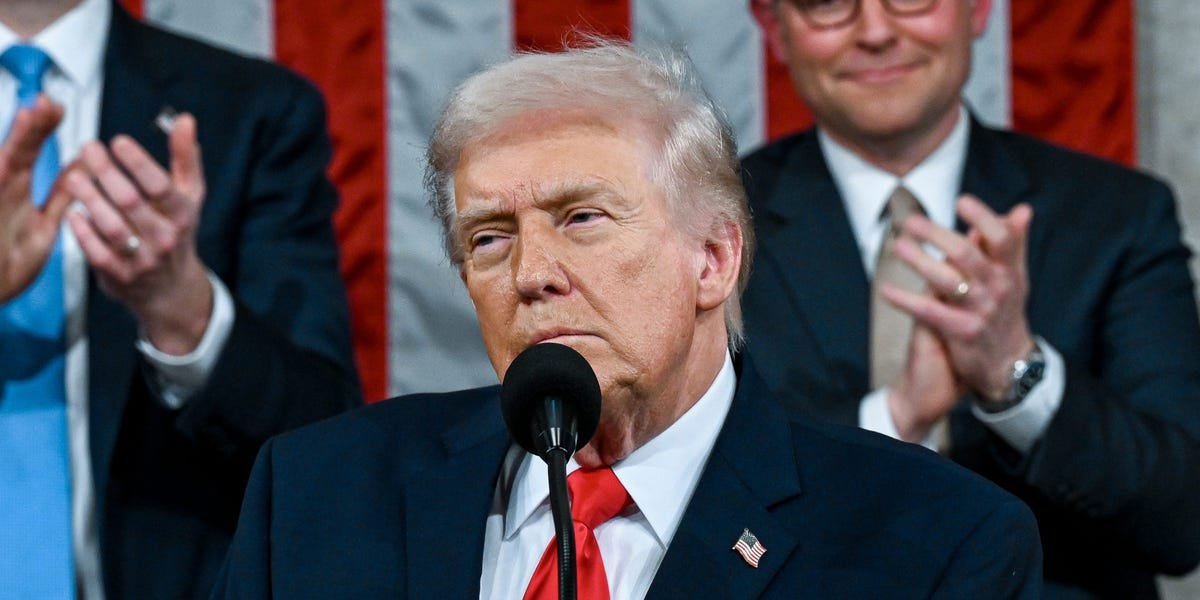
To do this, Trump said at Tuesday’s State of the Union address that he issued a mandate for data centers to build their own power plants.

Trump said he’d “negotiated” a ratepayer protection pledge with major technology companies and billed it as a unique solution to Big Tech’s mounting power demand that would also protect American consumers from higher electricity bills.

“They can build their own power plants as part of their factory,” Trump said.

Many data center sites have already started building their own power plants. The vast majority of this buildout will initially run on fossil fuels, despite tech giants’ clean energy commitments.

When reached for comment on Wednesday morning, a White House spokesperson gave the following statement: “Major Tech companies will join President Trump at the White House next week to formally sign the Rate Payer Protection Pledge that he announced during his historic State of the Union address. Under this bold initiative, these massive companies will build, bring, or buy their own power supply for new AI data centers, ensuring that Americans’ electricity bills will not increase as demand grows. President Trump is committed to ensuring American AI dominance while simultaneously lowering costs for working families.”

A spokesperson for Amazon confirmed to Business Insider that it will attend the White House next week.

“The Ratepayer Protection Pledge is an important step. We appreciate the Administration’s work to ensure that data centers don’t contribute to higher electricity prices for consumers,” Microsoft vice chair and president Brad Smith wrote in an e-mailed statement.

A spokesperson for Anthropic referred Business Insider to a post on X made last night by Sarah Heck, the company’s head of external affairs.

“American families shouldn’t pick up the tab for AI. In support of the @WhiteHouse ratepayer protection pledge, Anthropic has committed to covering 100% of electricity price increases that consumers face from data centers,” Heck wrote.

Microsoft, Anthropic, and OpenAI have previously announced commitments to covering the costs of electricity consumption at their data centers, though details on those plans remain scant.

Big Tech is building its own power plants

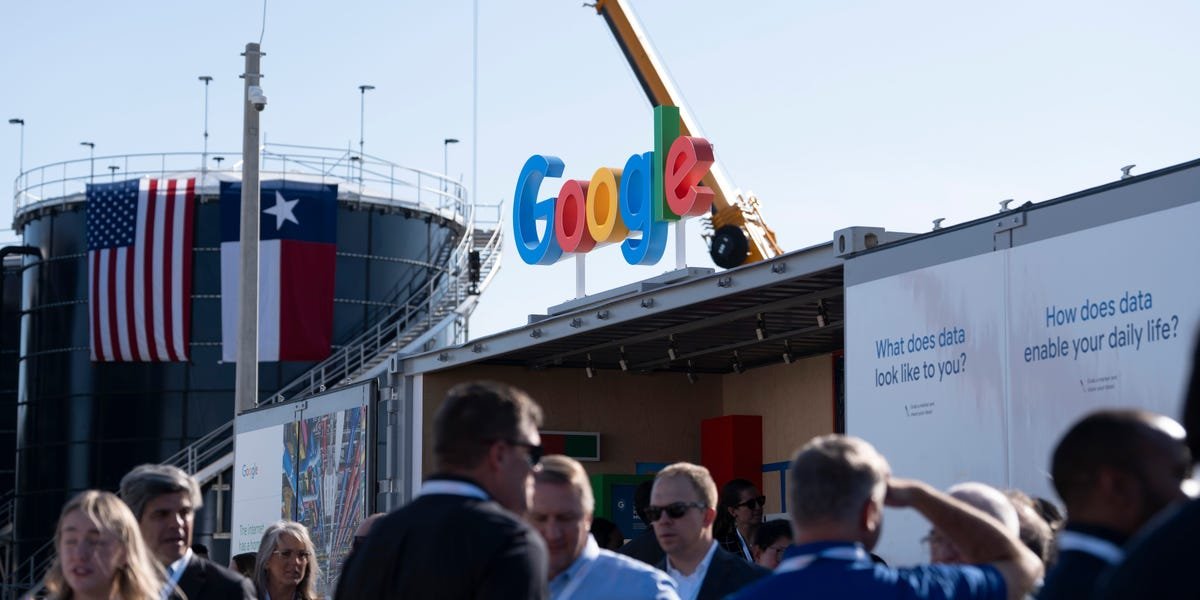
In the last year, on-site power plants fueled mostly by natural gas have emerged as a key strategy for data center developers looking to stay ahead in the AI race. Meanwhile, US power demand has reached record highs.

Utilities in the US last year asked state regulators to approve $31 billion in rate increases, more than double the amount sought in 2024, according to research from PowerLines, a nonprofit advocate for utility customers. Many of those requests occurred in places experiencing heavy data center development, such as Virginia, Texas, Utah, and North Carolina.

Trump has framed data center developers building their own power plants as part of his broader promise to ensure that Big Tech pays for the infrastructure needed to power AI ambitions. For developers, building an on-site power plant can bypass long wait times for a grid connection.

Elon Musk’s xAI is the most prominent example of this. Musk has drawn intense scrutiny in Tennessee and Mississippi, where he has deployed unpermitted mobile generators to quickly get his data centers up and running.

Musk brought his first mobile generators to Memphis in 2024. In the US, dozens of data centers — about 30% of all planned data center capacity in the nation — plan to build their own power plants, according to a report issued this month from Cleanview, a data visualization software company that tracks clean energy and data center projects. Nearly all of that planned capacity — 90% — was added in 2025, Cleanview found.

In a review of permit documents, corporate filings, press releases, and local news stories, Cleanview identified 46 data center projects, many of them already under construction, that plan to draw power “behind the meter” by building on-site, private power plants that don’t need a grid connection or service from the local utility to run.

These include Meta’s plans to build an on-site natural gas plant for its data center in New Albany, Ohio, as well as Oracle and OpenAI’s plans to power their Project Jupiter data center site in New Mexico with two massive natural gas-fired systems.

While Big Tech companies often tout their commitments to clean energy, Cleanview’s review of behind-the-meter permit documents found that natural gas powered 75% of all equipment listed.

Tech companies have said they want to power AI with clean technology, such as small modular nuclear reactors and geothermal energy. Much of it is still years away from being deployed at scale.

Texas is becoming the top state for new data centers

Cleanview found that more than one-third of the behind-the-meter buildout is happening in Texas, which could soon overtake Virginia as the data center capital of the world.

Business Insider has reported on Oracle and OpenAI’s plan to power Stargate data centers in Texas with on-site natural gas plants, as well as Fermi America’s pitch to build the world’s largest combined data center and power plant in the state’s Panhandle region.

After Texas, the top five states with the most planned behind-the-meter capacity are New Mexico, Pennsylvania, Utah, and Wyoming. West Virginia, Tennessee, Ohio, Virginia, and North Carolina also have significant behind-the-meter projects.

Have a tip for this reporter? Contact Ellen Thomas at ethomas@insider.com or on Signal at 929-524-6964.


Source link

Trump-tells-tech-giants-to-power-their-own-AI-ambitions.jpeg

Trump tells tech giants to power their own AI ambitions

  • President Donald Trump said he’s told top tech companies they must pay more for electricity near data centers.
  • Trump made the announcement during the State of the Union. He did not name the companies.
  • Big Tech’s data center push is driving up US electricity demand and costs.

President Donald Trump said Tuesday that top tech companies have to cover their own power needs when they are building data centers.

“We’re telling the major tech companies that they have the obligation to provide for their own power needs,” Trump said during his State of the Union address on Tuesday evening, adding, “They can build their own power plants as part of their factory so that no one’s prices will go up, and in many cases, prices of electricity will go down for the community.”

Trump said he negotiated a new “rate-payer protection pledge.” He did not specify what the pledge entailed or which companies had agreed to it.

“They’re going to produce their own electricity,” he said.

Tech companies have already begun building their own off-grid infrastructure.

Politico first reported on the pledge earlier on Tuesday, saying tech companies had agreed to pay more for electricity in places near data centers. A White House spokesperson confirmed the report to Business Insider but did not provide additional details.

The announcement comes as Big Tech companies spend hundreds of billions of dollars to build AI infrastructure and data centers, driving up electricity demand in the US. Utility costs are rising across the US as a result of the increased electricity demand for data centers, a report from the Center for American Progress found.

Trump has previously said Americans should not have to pay higher electricity costs due to data centers, and that the companies that build them “must pay their own way.”

Decisions about utility costs are typically made at the state and local levels. It’s unclear how the newly announced pledges would be implemented.


Source link

Trump-demand-that-Netflix-fire-Susan-Rice-is-an-extraordinary.jpeg

Trump demand that Netflix fire Susan Rice is an extraordinary use of presidential power

Netflix wants President Donald Trump’s stamp of approval as it maneuvers to buy Warner Bros. Discovery.

Now, Trump has a demand for Netflix: unseat board member Susan Rice.

In normal times, we would all be marveling at the spectacle of the US president telling a company in the midst of a merger fight (Paramount also wants to buy Warner Bros. Discovery) how to structure its board. During Trump 2.0, though, this has become standard stuff. Trump routinely tells companies to fire someone he doesn’t like or do something he does like.

That doesn’t mean Trump always gets what he wants. The demands alone, however, are an extraordinary use of power. We should make sure we don’t become inured to it.

Trump’s Truth Social post is a reminder that the future of Warner Bros. Discovery will run through the White House, no matter what Trump says at any given moment. (Refresher: In December, Trump said, “I’ll be involved” in the fight between Netflix and Paramount. Earlier this month, he announced that “I’ve decided I shouldn’t be involved.” Now he’s telling Netflix it will “pay the consequences” if it doesn’t fire Rice, which sure seems like he’s involved again.)

Trump himself doesn’t have the authority to stop Warner Bros. Discovery from selling itself to Netflix or Paramount, which is controlled by David Ellison and his father, the prominent Trump supporter, Larry Ellison. He can, however, instruct Attorney General Pam Bondi to sue to stop a deal on antitrust grounds.

Modern presidents have traditionally assumed an arm’s-length distance from federal law enforcement. And it’s entirely possible that any other president’s Department of Justice would also look into an antitrust case against Netflix, given its enormous market power.

Trump, however, has made it clear that he expects Bondi to act on his behalf. So if he doesn’t want Netflix to buy Warner Bros. Discovery, he can certainly make it more difficult for them.

Which makes it puzzling that Rice, who held senior roles in the Clinton, Obama, and Biden administrations, would sound off on a podcast, announcing that “elites” and “corporate interests” who accommodated Trump would one day “be held accountable by those who come in opposition to Trump and win at the ballot box.

This wasn’t a mere gaffe or misstatement. She went on at length. It was, regardless of how she intended it, a provocation aimed at the Trump White House — at the exact moment the company she’s supposed to help govern is seeking Trump’s approval.

I’ve asked Netflix for comment on Rice’s comments and Trump’s response.

We should also note that Trump’s most consistent trait is his inconsistency and that he frequently reverses himself. Last summer, for instance, he announced that Intel CEO Lip-Bu Tan was “highly CONFLICTED” and must resign. Days later, Trump met with Tan and described him as a “success.” Weeks after that, the US government acquired 10% of Intel.

Nor does Trump always follow through. Last fall, he demanded that Microsoft fire Lisa Monaco, an executive who had also worked for Clinton, Obama, and Biden. Monaco still works for Microsoft.

However, just because we don’t know how serious Trump is about pushing Rice out of Netflix — or how his administration will ultimately rule on the Netflix/Paramount race — doesn’t mean we should shrug this off.

We’re in a place where the president routinely tells companies how to run their businesses and threatens them if they don’t comply. If we get used to that, we shouldn’t be surprised when future presidents decide they can do it, too.

Disclosure: Mathias Döpfner, the CEO of Business Insider’s parent company, is a Netflix board member.


Source link

Sarah Saril

AC/DC 2026 tour: Full Power Up tour schedule and where to buy tickets

AC/DC — the iconic Australian hard rock band known for thunderous riffs and arena‑shaking performances — is continuing its massive 2026 Power Up Tour, a global trek celebrating the band’s enduring legacy and catalog of classics. Named after their album “Power Up,” the 2026 leg expands the tour with 21 stadium dates across South and North America, starting in São Paulo and running through September 2026 in East Rutherford, New Jersey, at MetLife Stadium.

Formed in 1973 by brothers Angus and Malcolm Young in Sydney AC/DC has become one of the most successful rock acts in history, selling over 200 million albums worldwide and influencing generations with songs like “Back in Black,” “Highway to Hell,” and “Thunderstruck.” The band’s classic lineup evolved over the decades, with standout periods featuring vocalist Brian Johnson, rhythm guitarist Stevie Young, drummer Matt Laug, and bassist Chris Chaney alongside Angus Young’s signature guitar work.

If you’re ready to see the rock legends live in 2026, I’ve broken down the group’s schedule below. Keep scrolling to learn more and head to StubHub or Vivid Seats to lock in your seats.

AC/DC’s 2026 tour schedule

The Power Up Tour will bring AC/DC’s high‑voltage live show to major venues and stadiums in cities such as Charlotte, Columbus, San Antonio, Denver, Las Vegas, Atlanta, Houston, Toronto, and Philadelphia, with tickets available now. Because this is one of the band’s most anticipated tours in years — and AC/DC rarely performs as extensively as they did in past decades — many dates are selling out fast.

  • February 24, 2026 — São Paulo, BR at Estádio MorumBIS
  • March 11, 2026 — Santiago, CL at Parque Estadio Nacional
  • March 15, 2026 — Santiago, CL at Parque Estadio Nacional
  • April 7, 2026 — Mexico City, MX at Estadio GNP Seguros
  • April 11, 2026 — Mexico City, MX at Estadio GNP Seguros
  • July 11, 2026 — Charlotte, NC at Bank of America Stadium
  • July 15, 2026 — Columbus, OH at Ohio Stadium
  • July 19, 2026 — Madison, WI at Camp Randall Stadium
  • July 24, 2026 — San Antonio, TX at Alamodome
  • July 28, 2026 — Denver, CO at Empower Field at Mile High
  • August 1, 2026 — Las Vegas, NV at Allegiant Stadium
  • August 5, 2026 — Santa Clara, CA at Levi’s Stadium
  • August 9, 2026 — Edmonton, AB at Commonwealth Stadium
  • August 13, 2026 — Vancouver, BC at BC Place
  • August 27, 2026 — Atlanta, GA at Mercedes‑Benz Stadium
  • August 31, 2026 — Houston, TX at NRG Stadium
  • September 4, 2026 — South Bend, IN at Notre Dame Stadium
  • September 8, 2026 — Saint Louis, MO at The Dome at America’s Center
  • September 12, 2026 — Montreal, QC at Parc Jean Drapeau
  • September 16, 2026 — Toronto, ON at Rogers Stadium
  • September 25, 2026 — East Rutherford, NJ at MetLife Stadium
  • September 29, 2026 — Philadelphia, PA at Lincoln Financial Field

Browse AC/DC tickets on StubHub and Vivid Seats.

How much are AC/DC tickets?

If you missed the original AC/DC ticket on the primary market, resale platforms like Vivid Seats and StubHub are likely where you’ll find seats for the Power Up Tour 2026 — but prices can vary widely based on venue, demand, and how close you want to be to the action. On Vivid Seats, the cheapest resale options for stadium shows often start at $90 to $115, giving fans on a budget a chance to catch classics like “Back in Black” and “Highway to Hell” live. These lower‑priced tickets are usually in upper levels or less sought‑after sections, ideal if you’re happy with a broader view of the stage.

At the other end of the spectrum, premium seats and closer views can push prices substantially higher as demand picks up — especially for dates in major markets like Toronto, Montreal, and Las Vegas. On StubHub, resale listings in those desirable areas can climb into the several hundreds of dollars for floor or lower‑bowl seats, and VIP options or meet‑and‑greet packages (when available) may cost even more. Throughout the cycle, both StubHub’s FanProtect Guarantee and Vivid Seats’ 100% Buyer Guarantee give shoppers confidence that their purchase is legitimate and will arrive in time for the show — a key consideration when buying resale tickets.


See also: Is StubHub legit? | Iron Maiden tickets | Bon Jovi tickets | No Doubt tickets | Eagles tickets | Lollapalooza tickets | Yungblud tickets

Follow our WhatsApp channel and Instagram for more deals and buying guides.

You can purchase logo and accolade licensing to this story here.

Disclosure: Written and researched by the Insider Reviews team. We highlight products and services you might find interesting. If you buy them, we may get a small share of the revenue from the sale from our partners. We may receive products free of charge from manufacturers to test. This does not drive our decision as to whether or not a product is featured or recommended. We operate independently from our advertising team. We welcome your feedback. Email us at reviews@businessinsider.com.


Source link

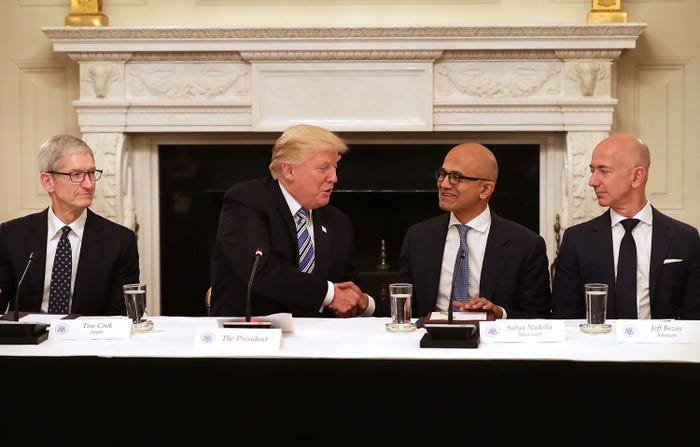
President Donald Trump speaks during an American Technology Council roundtable in the State Dinning Room at the White House in Washington, DC on Monday, June 19, 2017. From left, Tim Cook, Chief Executive Officer of Apple, Trump, Satya Nadella, Chief Executive Officer of Microsoft, and Jeff Bezos, Chief Executive Officer of Amazon. (Photo by Jabin Botsford/The Washington Post via Getty Images)

Trump says that Microsoft will ‘ensure’ Americans don’t ‘pick up the tab’ for its data center power consumption


Chip Somodevilla/Getty Images

  • President Donald Trump asks tech companies to “pay their own way” for their data centers.
  • Data centers drove up utility bills in at least 13 states, Business Insider previously reported.
  • Trump says that Microsoft will be the first to work with the White House to keep utility bills down.

President Donald Trump said on Monday that even though data centers are “key” to the AI boom, tech companies must “‘pay their own way,'” so that Americans don’t have higher utility bills.

“First up is Microsoft, who my team has been working with, and which will make major changes beginning this week to ensure that Americans don’t ‘pick up the tab’ for their POWER consumption, in the form of paying higher Utility bills,” Trump said on Truth Social, hinting at additional announcements “in the coming weeks.”

Data centers drove up utility bills in at least 13 states, Business Insider previously reported.

Over the past year, Microsoft has been planning for data centers in Wisconsin, Atlanta, Texas, and Michigan.

The White House and Microsoft did not immediately respond to a request for comment.

This is a developing story; check back for updates.


Source link

Prediction-giant-Kalshi-is-rolling-out-a-new-VIP-program.jpeg

Prediction giant Kalshi is rolling out a new VIP program for power users

Prediction platform Kalshi is looking to retain its power users with a new VIP program.

Kalshi has started emailing high-volume traders about a new loyalty program called “Kalshi Platinum,” which gives them access to merchandise and referral incentives, a company spokesperson confirmed to Business Insider.

Other program perks include tickets to in-person Kalshi events and dinners, plus access to a “dedicated account manager” who can assist with customer support questions from 7 a.m. to 1 a.m.

“For the past couple of months, our team has been brainstorming ideas on how to best serve our most loyal customers,” one Kalshi Platinum email read. “After speaking with both customers and partners, we are excited to announce the launch of Kalshi Platinum to a select group of Kalshi users.”

Financial exchanges Coinbase and Kraken, as well as sportsbooks FanDuel and DraftKings, have also implemented VIP programs. These types of programs have become particularly important to sportsbooks, which compete fiercely with each other for VIPs.

“Similar to other financial markets, brokerages, and large consumer brands, we’re piloting a program that offers priority support and other benefits to some of our most loyal customers,” a Kalshi spokesperson said in a statement.

Kalshi and its top rival, Polymarket, have become popular by allowing users to make money by trading contracts about the outcomes of events like elections, world events, and sports games. Unlike sportsbooks, Kalshi operates in all 50 states and is regulated by the US Commodity Futures Trading Commission. However, some state regulators have targeted prediction markets like Kalshi, arguing that parts of their businesses should be overseen by gaming authorities. Kalshi disputes that notion. The company has received cease-and-desist orders from several state agencies.

Kalshi has recently raised its profile through data integration deals with CNBC and CNN. These networks and their websites will display data from Kalshi that shows what its users think are the probabilities of different market and economic outcomes. For example, CNN could show Kalshi prediction data about which political party users think will control the Senate after the 2026 midterm elections.


Source link