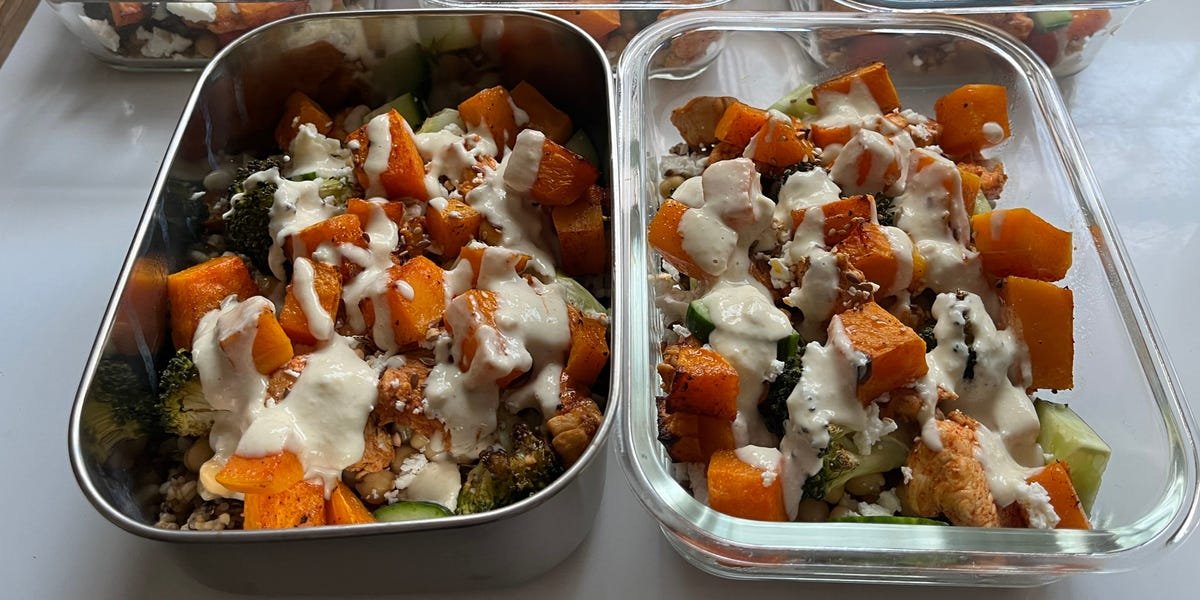
When I lived in a big city, I used to love treating myself to lunches at trendy salad spots. Tasty as these take-out meals were, they were terrible for my wallet, and I didn’t have full visibility into or control over the ingredients that went into them.
I’ve since turned into an avid meal-prepper and make my own lunch — almost always a fiber- and protein-packed grain bowl — for a fraction of the price.
It’s a recipe that aligns with the 80/20 nutrition principle I follow, meaning I eat nutrient-dense foods 80% of the time and don’t worry about nutrition for the other 20%.
The grain bowls are so nourishing that I feel relaxed about occasionally going out for a slightly less nutrient-dense lunch, since I know I’m hitting my nutrition goals most of the time.
Here’s how to make the everyday lunch that helps me stay on track.
The grain bowl is easy to prep and customize
Rachel Hosie
I play around with the ingredients I put in my grain bowls every week, but they always follow the same formula:
- Grains, such as quinoa, buckwheat, or wholegrain rice
- Beans or pulses, such as edamame, chickpeas, or lentils
- A protein source, such as tofu or chicken
- Roasted vegetables, such as butternut squash, bell peppers, cauliflower, broccoli, or zucchini
- Raw vegetables, such as chopped cucumber, tomatoes, beetroot, or scallions
- A flavorful add-in, such as crumbled feta, avocado, or hummus
- Greens, such as lettuce or spinach
- Seeds and nuts of choice
- Spices and herbs of choice
- A dressing of choice
The recipe is flexible, so there’s no need to add ingredients in a specific order. It’s truly hard to mess up.
You can also adjust the quantity based on your needs. I typically make six portions — three for me, and three for my husband — because there’s usually a day or two during the week when we eat with colleagues or friends.
Plus, after three days of eating the same meal, I’m typically ready to mix it up.
Rachel Hosie
To add variety to my days, I prep these with dressings and protein sources.
When it comes to dressings, my favorite is a creamy tahini mixture. Combine tahini, Greek yogurt, lemon juice, garlic granules, salt, pepper, olive oil, and water until you get a dressing-like consistency.
I also make a satay-style sauce with crunchy peanut butter, soy sauce, garlic, ginger, lime, and sesame oil.
Rachel Hosie
There’s also flexibility when it comes to protein source. Nichola Ludlam-Raine, a dietitian and the author of “How Not to Eat Ultra-Processed,” recommends adding oily fish, such as salmon or tinned mackerel, for omega-3s, which support heart and brain health.
When I include meat in the grain bowls, I typically use a modest portion since I always throw in plenty of plant-based protein. This approach provides a fiber boost from plant-based proteins and keeps the ingredient list affordable.
If you’re predominantly eating plant-based, make sure you’re getting enough iodine by using dairy yogurt in your dressing or swapping in the occasional white fish.
Having a balanced lunch prepped and ready to go helps me stay consistent
Rachel Hosie
My grain-bowl formula has lean proteins, produce, legumes, and whole grains — all the workings of the Mediterranean diet.
According to Ludlam-Raine, “It’s essentially a Mediterranean-style pattern of eating in bowl form, which is linked with better cardiometabolic and long-term health outcomes.”
She added that it delivers “an abundance of plant diversity,” which is beneficial for gut health.
The well-rounded meal also has fiber-filled whole grains, slow-release carbohydrates, pulses for plant protein and additional fiber, protein for satiety and muscle maintenance, vegetables for polyphenols and micronutrients, and healthy fats from seeds, nuts, and olive oil.
Rachel Hosie
Strategizing my meals in advance helps me maintain a healthy, balanced diet throughout the week, and this grain bowl is the backbone of my meal plan.
“Overall, what you’ve got is a brilliant example of a practical and sustainable approach to meal prep. It’s balanced, fiber-rich, protein-sufficient, and easy to adapt week to week, which is key for long-term adherence,” Ludlam-Raine said. “You’re making the healthy choice into the easy choice.”
The best part? I don’t get bored with eating the same thing on repeat.