Line chart

Oil prices rise again as the Iran war enters its 5th week

Oil prices rose on Sunday as some Middle East officials gathered in Islamabad to discuss de-escalation efforts to end the US and Israel’s war on Iran.

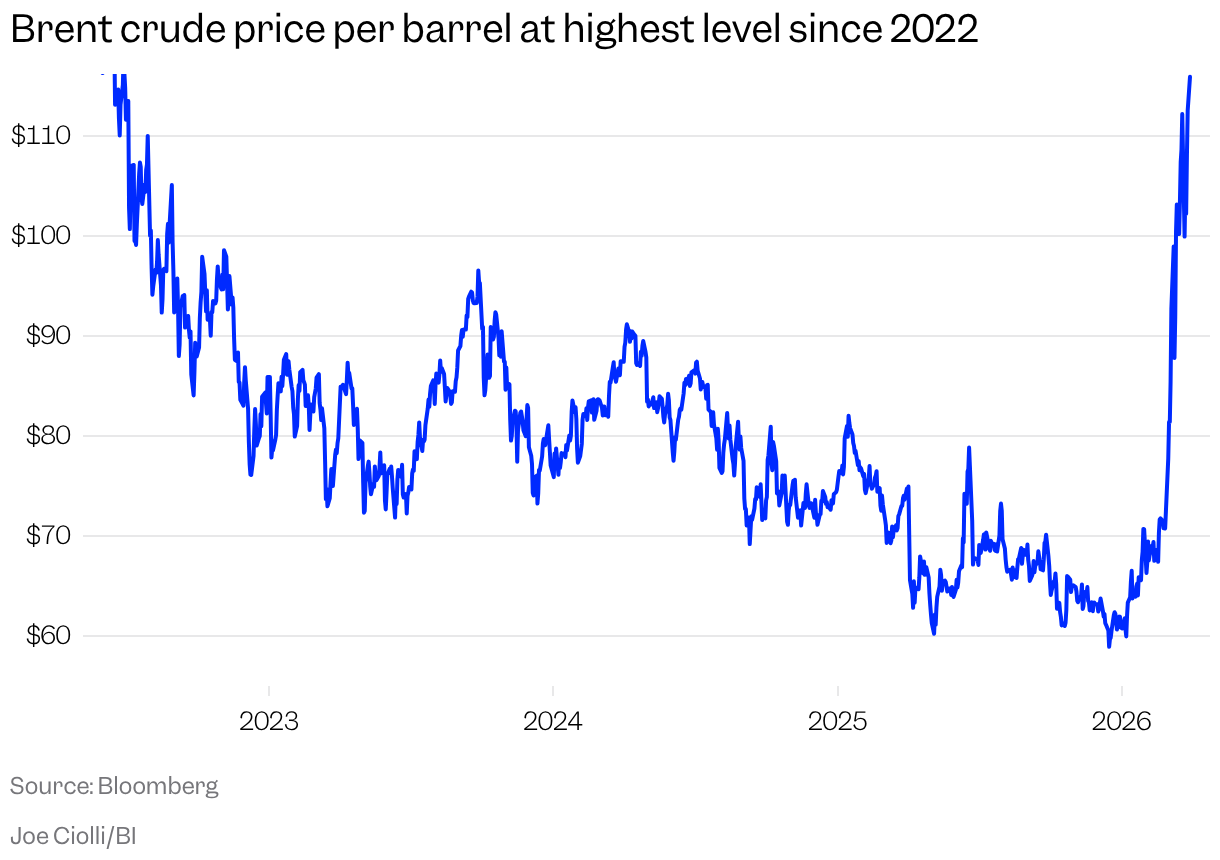
Brent oil reached $115.73 a barrel when markets reopened, a $3 increase from its Friday high of $112.57. Western Texas Intermediate hit $103.13 a barrel on Sunday.

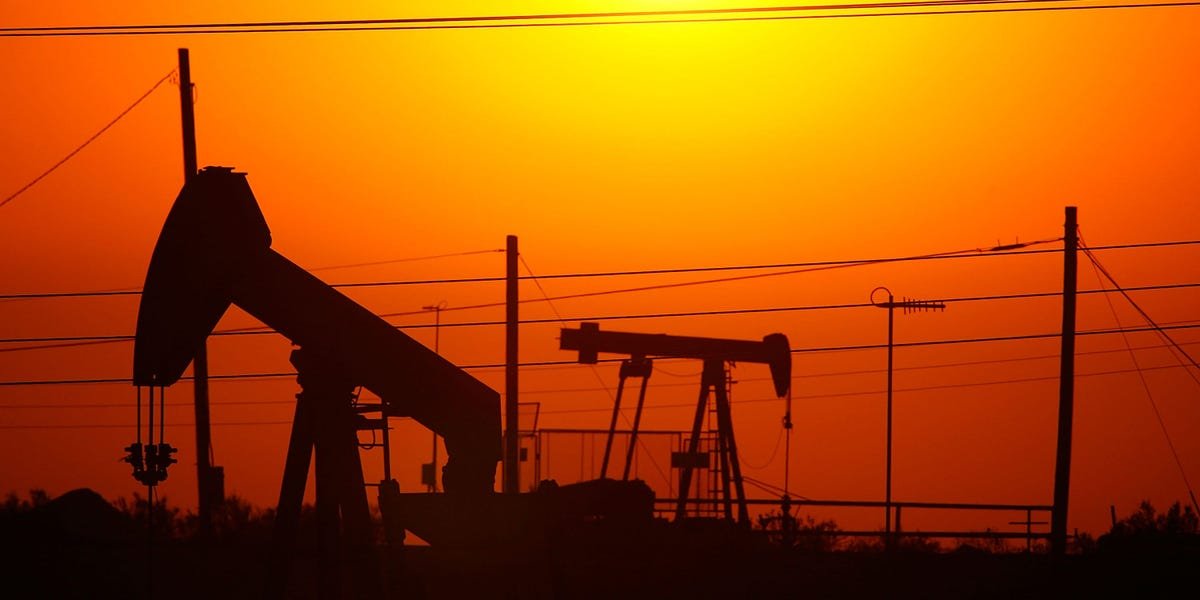
Oil prices have surged since the US and Israel began bombing Iran at the end of February, and Iran retaliated by essentially closing the Strait of Hormuz. About 20% of the world’s oil supply and liquified natural gas passes through the waterway off Iran’s coast. Major oil hubs across the Middle East have also been damaged during the conflict, further straining the global supply chain.

For Americans, that translates to higher gas prices. The national average was $3.98 on Sunday, up from $2.98 in February. The International Energy Agency has released 400 million barrels of oil from a strategic reserve to ease economic uncertainty.

Although US Energy Secretary Chris Wright said on March 8 the war wouldn’t be “long-term,” the Trump administration and Iranian officials have not yet signaled an exit plan. On Saturday, The Washington Post reported that the Pentagon is preparing for weeks of ground operations in Iran.

Many global leaders are urging de-escalation, including Pakistani Foreign Minister Mohammad Ishaq Dar, who is meeting with foreign ministers from Egypt, Saudi Arabia, and Turkey in Islamabad on Sunday and Monday.

Dar said the group had a “very detailed and in-depth discussion” about the regional situation in a statement shared to X.

“We also discussed the possible ways to bring an early and permanent end to the war in the region,” Dar said. “We agree that the war is not in favour of anyone and would only lead to death and destruction.”

Dar added that the US and Iran have “expressed their confidence in Pakistan” to assist with peace talks.

“We have remained actively engaged with the US leadership as well, as part of our efforts to de-escalate the situation and find a peaceful resolution of the conflict,” Dar said. “In this context, Pakistan is very happy that both Iran and the US have expressed their confidence in Pakistan to facilitate these talks.”

Source link

Business-leader-says-EV-chargers-are-a-popular-employee-perk.jpeg

Business leader says EV chargers are a popular employee perk, especially when gas prices spike

This as-told-to essay is based on a conversation with Hanko Kiessner, founder and vice chairman of Packsize, a Salt Lake City-based packaging company. This story has been edited for length and clarity.

We just had a spike in gas prices, and everyone is complaining. I see an affordable solution for employers — one that could also grow worker loyalty: adding EV charging stations to their parking lots.

This is something I discovered after moving in 2002 from Germany, where I grew up, to Salt Lake City and starting Packsize. I didn’t know about the air pollution problem here, and after a few years. I developed asthma.

I’d never had this problem before. I’m very active. I run marathons. So I did research to find out what was causing my asthma and concluded that air pollution was to blame. I also learned that air pollution largely comes from vehicles and can cause inflammation in the lungs, which can lead to cancer.

Around this time, electric cars were becoming popular. I learned so much about this disruptive technology that I started a nonprofit called Leaders for Clean Air with several other local entrepreneurs. Our mission is to raise money to buy EV charging stations and have them installed in as many places as possible. We see this as a business matter. We need to attract talent from other markets to grow, and air pollution hinders that.

I also wanted to motivate more people than just me to drive an electric car, so I asked my employees: What prevents you from buying one? And the answer was that charging stations are not ubiquitous. One of the biggest fears for people with EVs is driving to work and not finding a plug. That is scary because now you might not be able to make it home.

We initially set up just three charging stations at our Utah headquarters, where we have about 100 employees. Then all of a sudden, people got EVs, so we added more. Today, we have 53 stations and are close to a 30% EV adoption rate among staff, which means there are some extra plugs for visitors and employees at neighboring businesses. We learned that the infrastructure has to come first. Most employees switched after the charging stations were installed.

These stations are probably one of the cheapest benefits an employer can offer their staff. The cost of electricity at a corporate rate is low — for us, it’s about $3 a day per charging station. In today’s post-COVID world, it’s also a way to get people back to the office.

Here’s the really cool thing: I’m now attracting employees who drive EVs, and they’re very desirable. They typically care about the environment and understand that EV driving is cheaper than gasoline driving. They also tend to be tech-savvy.

Now that gas prices are so high, more people may consider buying EVs. Oil supply chains are fragile, and we have an abundance of cheap electricity. For employers, helping workers make that switch can be as simple as putting charging stations in their parking lots.


Source link

Oil-prices-climb-as-the-US-and-Israels-war-on.jpeg

Oil prices climb as the US and Israel’s war on Iran enters its 3rd week

Oil futures climbed in early trading on Sunday as the US and Israel’s war with Iran entered its third week, disrupting the global supply chain.

Brent oil reached $106.33, up nearly $3 from when the market closed on Friday. West Texas Intermediate hit $101.19 on Sunday.

For Americans, surging oil prices mean spending more at the pump. The national average price for gasoline hit $3.69 on Sunday. Gas prices have surpassed $3 in all 50 US states for the first time since 2023.

The International Energy Agency said last week the war has caused the largest oil market disruption in history, and that global oil supply will drop by 8 million barrels per day in March.

Kevin Hassett, the US director of the National Economic Council and a top aide to President Donald Trump, said Sunday on CBS News’ “Face the Nation” that the US is working to minimize the fallout for American consumers.

“The big problem right now would be energy prices, and we’re watching and monitoring closely,” Hassett said.

Much of the instability in the oil market stems from the near-closure of the Strait of Hormuz, which Iran controls and through which about 20% of the world’s petroleum passes. Trump has called on other nations to help secure the strait, but has so far received either lukewarm replies or none at all.

Attacks on major oil hubs are also likely driving up prices. Trump said late Friday that the US had “totally obliterated” military targets on Iran’s Kharg Island, where refineries process almost all of the nation’s oil exports.

The president threatened to target oil infrastructure on the island if Iran continued to prevent ships from passing through the Strait of Hormuz. An attack on the key Iranian oil center would further destabilize the global oil market.

In response, Iran said that ports, docks, and “American hideouts” in the United Arab Emirates could be targeted. Fire later broke out near the Port of Fujairah in the United Arab Emirates, the only multipurpose maritime facility on the UAE’s east coast and a major oil depot, on Saturday. The local government said an intercepted drone caused the fire.

Any end to the conflict, meanwhile, appears to be a long way off. Iran’s foreign minister, Abbas Araghchi, said on Sunday that there has been no discussion of a ceasefire.

“We are only defending our people from this act of aggression,” Araghchi said on “Face the Nation.”We don’t see any reason why we should talk with Americans, because we were talking with them when they decided to attack us, and that was for the second time.”


Source link

A headshot of Insider's Pete Syme

Charts show how the Iran war has pushed ticket prices sharply higher on 3 major US airline routes

Your next flight could be twice as expensive because the Iran war is causing volatility in oil prices.

Brent crude is up more than 50% over the past month, to around $101 a barrel. Jet fuel costs are rising faster. The Argus US Jet Fuel Index is up 72% over the same period.

That spells difficulty for airlines because jet fuel is typically their biggest expense after labor. While many airlines around the world hedge against fuel costs, most American ones do not.

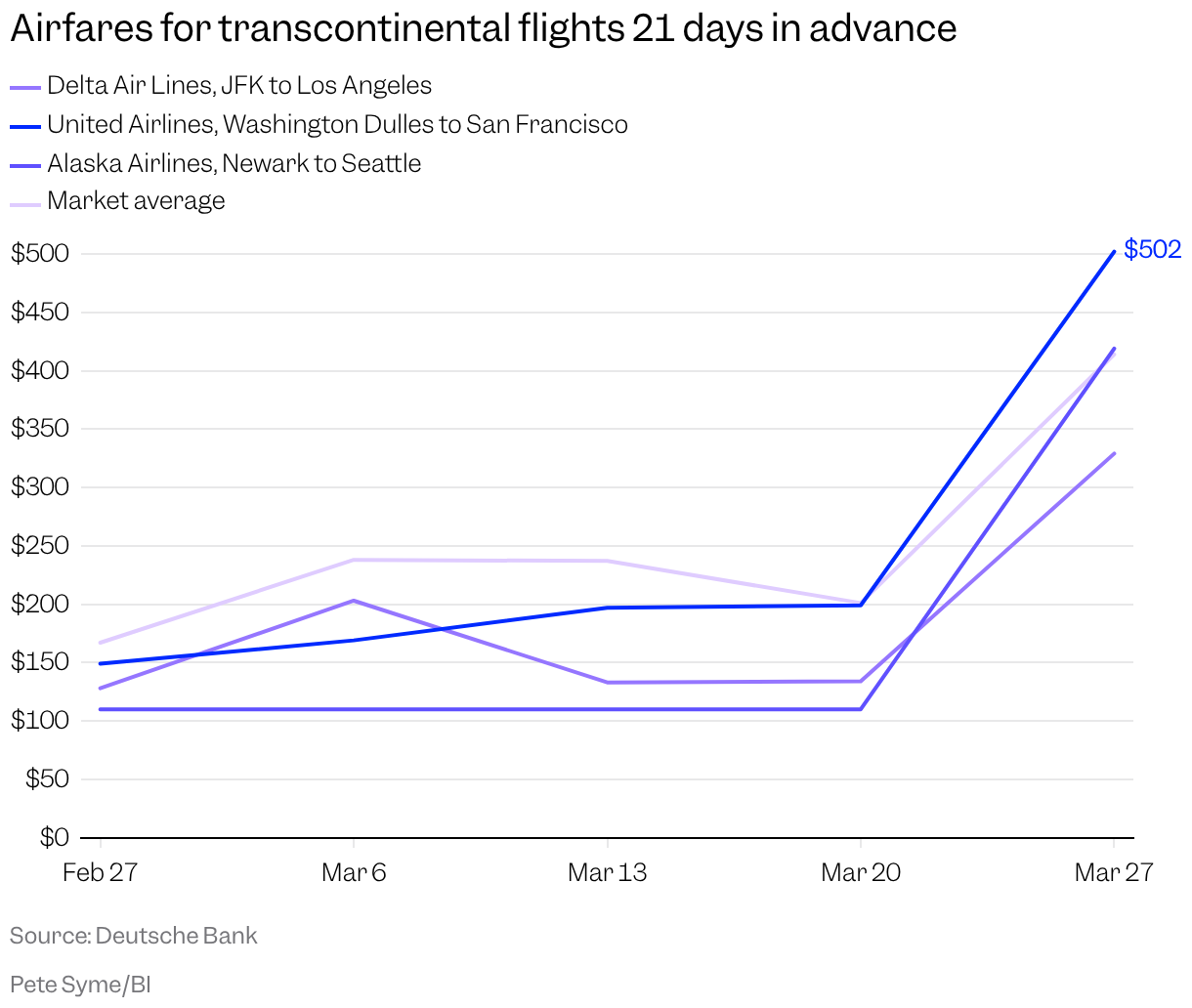
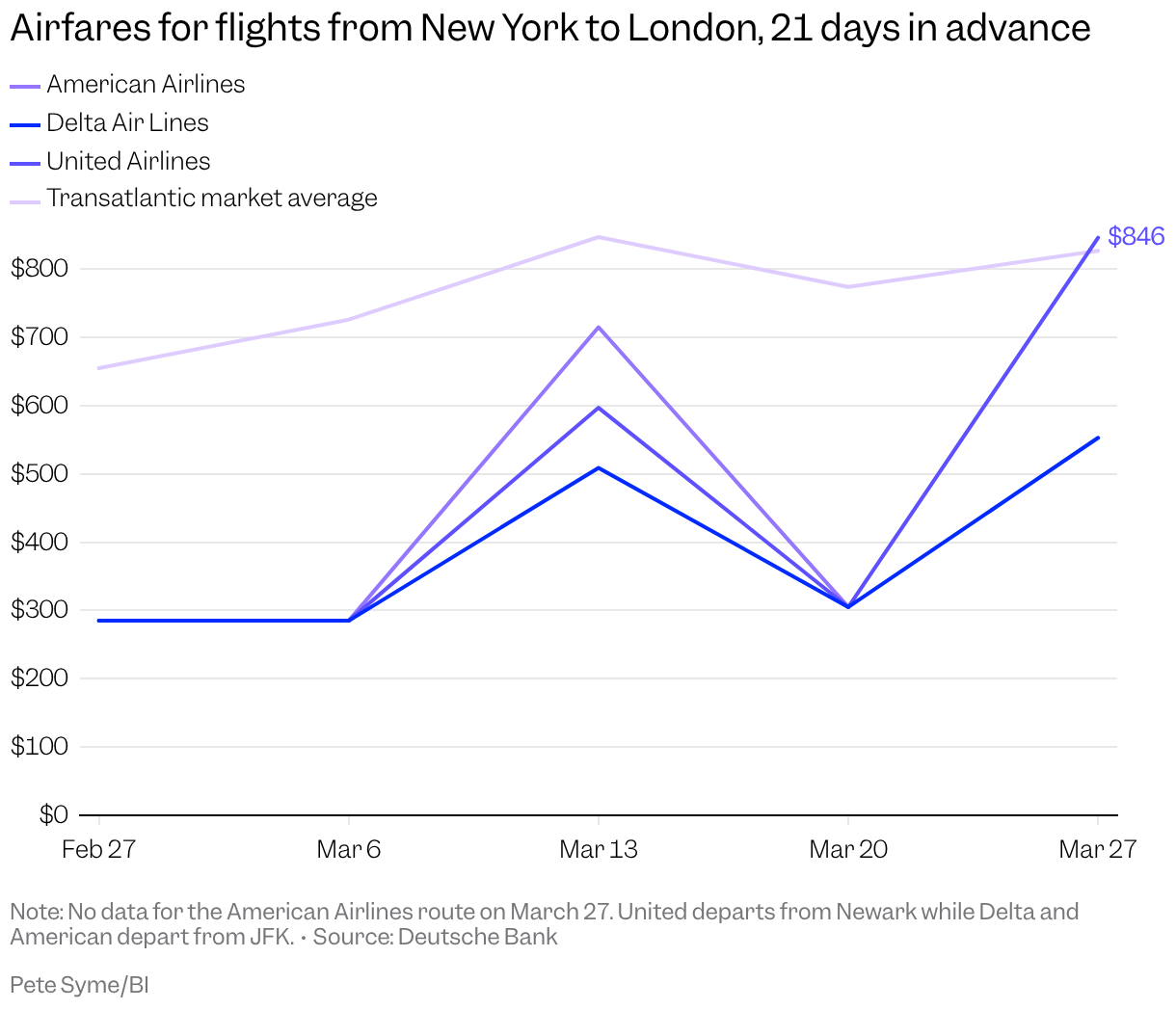
Using data from Deutsche Bank, Business Insider charted rising airfares in three major markets.

The data looks at the lowest available published fares 21 days in advance of the flights. The published fare doesn’t necessarily mean a ticket has been purchased for that amount, the Deutsche Bank research analysts said.

Cross-country flights, often known in the industry as transcontinental flights, have seen the biggest week-over-week spike — more than double, on average.

New York to Los Angeles is the country’s busiest domestic route, with a capacity of 3.4 million seats out of JFK Airport last year, according to OAG data.

The average price of a transcontinental flight has risen from $167 to $414, Deutsche Bank’s analysis showed. In the past week, the average has spiked 107%.

United Airlines is offering flights from Washington Dulles Airport to San Francisco for $502, up from $149 a month ago.

International business travellers are also seeing flight prices rise.

New York to London is the country’s most popular international route, and the 10th-busiest in the world. Nearly 4 million seats were scheduled on flights between JFK and Heathrow last year, per OAG.

While the average Transatlantic flight is some 40% more expensive than a month ago, there are bigger rises for the New York-London route. However, it also appears more volatile here with a big dip last week.

Delta Air Lines’ service is up from $285 to $553 over the past month, while United’s is up to $846. That’s a 177% rise compared to a week earlier, according to Deutsche Bank’s analysis.

There’s bad news for vacationers, too.

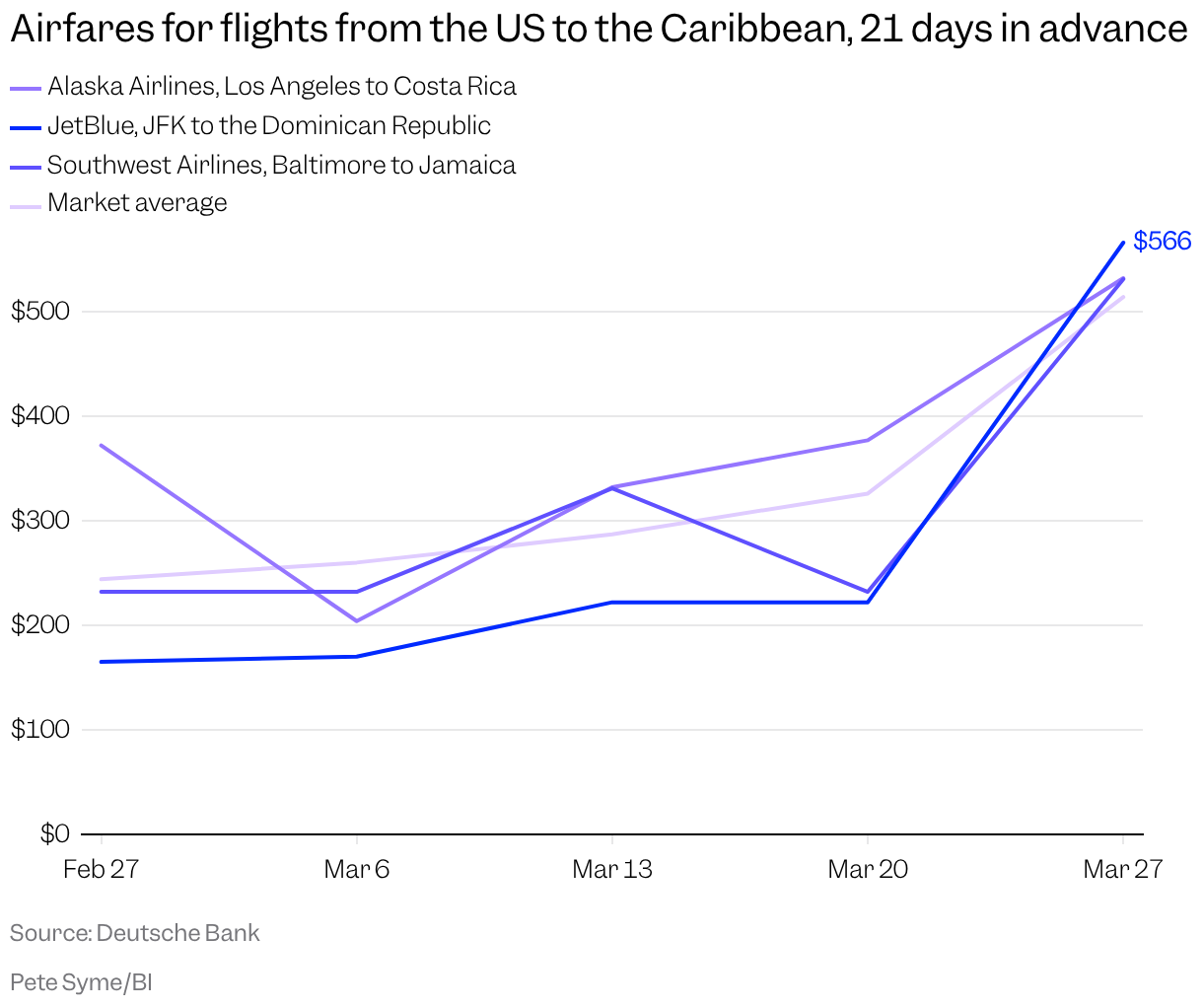
Flights to the Caribbean on March 27 are up 58% on average compared to a week before.

JetBlue’s flight from New York to Santo Domingo, Dominican Republic, has risen from $165 to $566 on March 27.

Compared to a year earlier, that’s a more than fourfold rise, Deutsche Bank found.

Southwest Airlines’ flight from Baltimore to Montego Bay, Jamaica, has more than doubled over the past week. And Alaska Airlines’ service from Los Angeles to San Jose, Costa Rica, is up 40% compared to a week earlier or 120% versus a year ago.


Source link

Dubais-luxury-hotels-are-cutting-prices-and-pushing-staycations-as.jpeg

Dubai’s luxury hotels are cutting prices and pushing staycations as Middle East travel chaos dents tourism

Dubai’s glitzy hotels are slashing prices and pushing staycations to fill rooms.

With air travel limited and governments around the world advising their citizens not to travel to the UAE, hotels are offering staycation deals to ease the impact of lower international tourism.

The Jumeirah hotel chain, which operates the 5-star Jumeirah Beach Hotel and the iconic Jumeirah Burj Al Arab, among others, has been touting staycation offers on its Instagram stories this week.

These offers, specifically for UAE residents, include up to 30% off stays and perks such as 2-for-1 spa treatments. Outside these resident discounts, the cheapest rate for two adults at the Burj Al Arab is $905 this month, rising to $1,514 in April. The hotel chain did not respond to a request for comment.

Shangri-La Abu Dhabi, another 5-star hotel, also promoted its staycation deal on Wednesday, which included 15% off dining.

Address Beach Resort, a 5-star hotel based in JBR, said it’s offering UAE residents up to 30% off to stay at its resort between March 5 and April 30. This month, the cheapest rate for two adults without residents’ discounts is $320 a night at the resort. It jumps to $571 in the middle of April.

Roda Beach Resort, a 4-star hotel located in Jumeirah, said it has received “multiple extension requests” and requests for a “staycation for a lower price” within a day of posting its staycation offer on Tuesday. The resort said it is offering deals on its rooms starting at $108 over the next three weeks.


Two people carrying surfboards walk across the beach in front of the Jumeirah Burj Al Arab and Marsa Al Arab

Dubai is known for its luxury hotels.

Christopher Pike/Getty Images


Hotels are cutting prices

The war in Iran has dealt a major blow to Dubai’s hospitality industry. The conflict is estimated to be costing the Middle East at least $600 million per day in international visitor spending, according to research by the World Travel & Tourism Council.

For a prospective tourist, being unfazed by the conflict is only half the battle. Several airlines, including British Airways, Cathay Pacific, and Air Canada, have canceled flights to major hubs in the Middle East, including Dubai.

Though staycations have long been a core offering for many hotels in the UAE, price drops are likely drawing in some residents.

A website that launched on Sunday — “Hotel Drops Dubai” — is live-tracking pricing at dozens of four and five-star hotels in the city. According to its estimates, some of these hotels are discounted by nearly 60%, including the Al Khoory Atrium Hotel and the JW Marriott Marquis Hotel Dubai.

The UAE also recently announced it would move spring break forward by a week for schools and universities, making domestic getaways even more appealing to local families right now.

Poppy Johnson, a UAE resident and UK-born creative director for brands and businesses, said she booked a two-night Friday-to-Sunday stay at the Grand Hyatt using its GCC Residents Offer, which provides up to 20% off rooms, dining, and spa treatments, and complimentary breakfast and waterpark access.

It cost $114 per night for a king-size room, she said. She described the staycation as a much-needed “reset” after a disruptive 10 days.

“We wanted a bit of a reset” and a “change of scenery,” she told Business Insider. “Breaking patterns from over the last 10 days. To feel like we’re on holiday without having to get a flight.”

Do you live in the UAE and have a story to share? Contact this reporter via email at rshahidi@insider.com or Signal at @royashahidi.36. Use a personal email address and a nonwork device; here’s our guide to sharing information securely.


Source link