
Dubais-luxury-hotels-are-cutting-prices-and-pushing-staycations-as.jpeg

Dubai’s luxury hotels are cutting prices and pushing staycations as Middle East travel chaos dents tourism

Dubai’s glitzy hotels are slashing prices and pushing staycations to fill rooms.

With air travel limited and governments around the world advising their citizens not to travel to the UAE, hotels are offering staycation deals to ease the impact of lower international tourism.

The Jumeirah hotel chain, which operates the 5-star Jumeirah Beach Hotel and the iconic Jumeirah Burj Al Arab, among others, has been touting staycation offers on its Instagram stories this week.

These offers, specifically for UAE residents, include up to 30% off stays and perks such as 2-for-1 spa treatments. Outside these resident discounts, the cheapest rate for two adults at the Burj Al Arab is $905 this month, rising to $1,514 in April. The hotel chain did not respond to a request for comment.

Shangri-La Abu Dhabi, another 5-star hotel, also promoted its staycation deal on Wednesday, which included 15% off dining.

Address Beach Resort, a 5-star hotel based in JBR, said it’s offering UAE residents up to 30% off to stay at its resort between March 5 and April 30. This month, the cheapest rate for two adults without residents’ discounts is $320 a night at the resort. It jumps to $571 in the middle of April.

Roda Beach Resort, a 4-star hotel located in Jumeirah, said it has received “multiple extension requests” and requests for a “staycation for a lower price” within a day of posting its staycation offer on Tuesday. The resort said it is offering deals on its rooms starting at $108 over the next three weeks.


Two people carrying surfboards walk across the beach in front of the Jumeirah Burj Al Arab and Marsa Al Arab

Dubai is known for its luxury hotels.

Christopher Pike/Getty Images


Hotels are cutting prices

The war in Iran has dealt a major blow to Dubai’s hospitality industry. The conflict is estimated to be costing the Middle East at least $600 million per day in international visitor spending, according to research by the World Travel & Tourism Council.

For a prospective tourist, being unfazed by the conflict is only half the battle. Several airlines, including British Airways, Cathay Pacific, and Air Canada, have canceled flights to major hubs in the Middle East, including Dubai.

Though staycations have long been a core offering for many hotels in the UAE, price drops are likely drawing in some residents.

A website that launched on Sunday — “Hotel Drops Dubai” — is live-tracking pricing at dozens of four and five-star hotels in the city. According to its estimates, some of these hotels are discounted by nearly 60%, including the Al Khoory Atrium Hotel and the JW Marriott Marquis Hotel Dubai.

The UAE also recently announced it would move spring break forward by a week for schools and universities, making domestic getaways even more appealing to local families right now.

Poppy Johnson, a UAE resident and UK-born creative director for brands and businesses, said she booked a two-night Friday-to-Sunday stay at the Grand Hyatt using its GCC Residents Offer, which provides up to 20% off rooms, dining, and spa treatments, and complimentary breakfast and waterpark access.

It cost $114 per night for a king-size room, she said. She described the staycation as a much-needed “reset” after a disruptive 10 days.

“We wanted a bit of a reset” and a “change of scenery,” she told Business Insider. “Breaking patterns from over the last 10 days. To feel like we’re on holiday without having to get a flight.”

Do you live in the UAE and have a story to share? Contact this reporter via email at rshahidi@insider.com or Signal at @royashahidi.36. Use a personal email address and a nonwork device; here’s our guide to sharing information securely.



Source link

Decline-and-recline-Uber-and-Lyft-drivers-are-rethinking-what.jpeg

‘Decline and recline’: Uber and Lyft drivers are rethinking what trips to accept to navigate soaring gas prices

War in the Middle East is fuelling a surge in US gas prices — and drivers for services like Uber and Lyft are among the first to feel the pain.

Several ride-hailing drivers told Business Insider they’re prioritizing the most profitable trips offered by the Uber and Lyft apps to protect their earnings from rising gas prices, while dozens bemoaned the “insane” price spike on Reddit.

Oil prices blew past the $100-a-barrel mark on Monday, before falling back to around $90 after President Donald Trump suggested the war with Iran could soon come to a close.

The impact is already being felt at the pumps. The average price of a gallon of gasoline in the US has jumped by about $0.40 over the past week, according to AAA data.

Justin Fisher, who works as a ride-hailing driver for Uber in Houston, told Business Insider that he has changed which rides he accepts on the app in response to gas prices. He now focuses on taking the most profitable rides, even if they involve going to areas that he doesn’t believe are safe.

“The cost of gas is an unpleasant reality,” Fisher said.

Sergio Avedian, a former Wall Street trader who now drives for Uber and Lyft in Southern California, told Business Insider that the price of a gallon of gas at his two local gas stations in suburban Los Angeles had increased by $1 over the past week.

“It’s been extremely noticeable,” Avedian said.

Avedian said he expected Uber and Lyft drivers to adapt by accepting fewer short city trips, which often consume more gas due to frequent stopping and starting in traffic, and instead target longer trips and freeway rides that offer superior gas mileage.

The primary issue for drivers, he said, is that Uber and Lyft control fare prices, meaning drivers can’t raise their prices when their operating costs soar.

“We do not call the shots. The fares are not going up, and Uber and Lyft are not paying us more to make up this difference, which is immense,” Avedian said.

Uber and Lyft did not respond to inquiries about whether they are considering introducing a surcharge, as they did in 2022 after oil prices spiked following the Russian invasion of Ukraine.

EV drivers take a victory lap

One group of drivers appears to be reaping the benefits of the gas price volatility. Jaret, an Uber and Lyft driver in North Carolina, told Business Insider that the past weekend was one of the best he had had on Lyft.

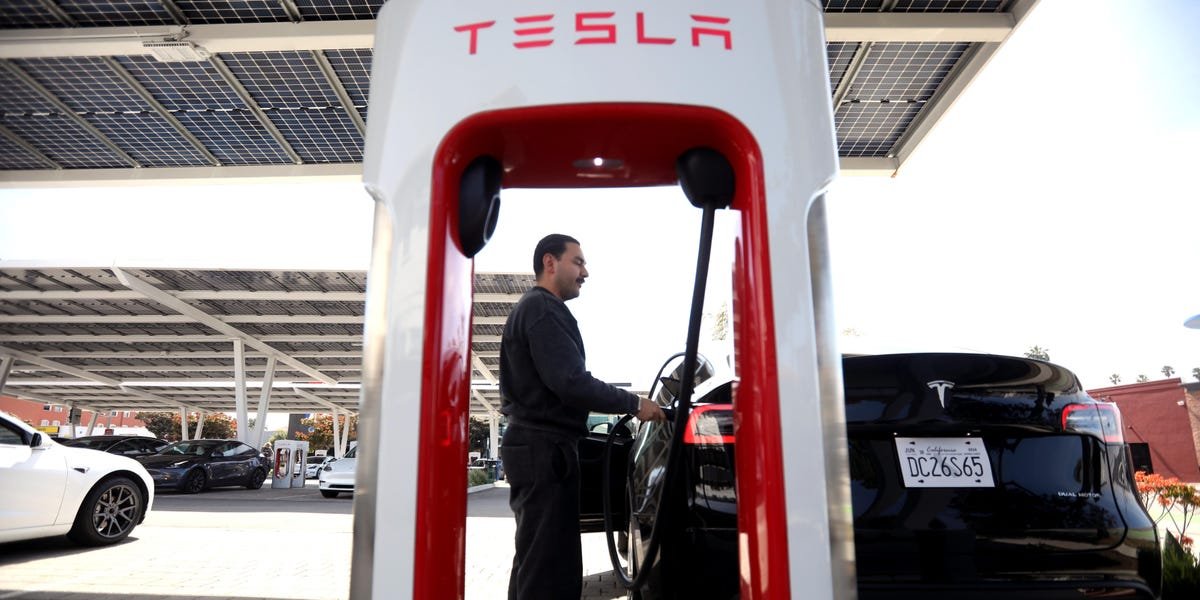
The Tesla driver said owning an EV meant he didn’t have to worry about gas price increases.

“I don’t pay attention, because I haven’t been in a gas station in forever,” he said.

Jaret estimated that charging his Tesla Model Y at home means $1 out of every $14 he earns goes toward refuelling, compared to $1 in every $3 with a gas-powered car.

“I love having an EV,” he said. “I’m not happy that gas prices are going up, but I’m happy that it’s not affecting me.”

Temporary surcharge?

Uber and Lyft both introduced a temporary surcharge of $0.45 to $0.55 per ride to help cover the soaring cost of gas following Russia’s invasion of Ukraine in 2022.

Avedian and Jaret both said that doing the same again would help, but that it would only be a partial fix amid ballooning gas prices and shrinking payouts from rides.

“It isn’t really solving the problem,” said Jaret. “It’s a Band-Aid; it’s treating a symptom more than you’re treating a cause. But will it help? Of course.”

Avedian said he would advise rideshare drivers to take extra care when deciding which trips are profitable, and to decline those that aren’t.

“If a trip that is offered to you as a driver is not profitable, I tell them to ‘decline and recline.’ You have to decline bad offers, because this is not a public service,” he said.

Do you work for Uber, Lyft, or another ride-hailing service? Contact this reporter at abitter@businessinsider.com or via encrypted messaging app Signal at 808-854-4501. Use a personal email address, a nonwork WiFi network, and a nonwork device; here’s our guide to sharing information securely.


Source link

EV-owners-are-taking-a-victory-lap-as-gas-prices.jpeg

EV owners are taking a victory lap as gas prices skyrocket: ‘I had no idea, I drive a Tesla’

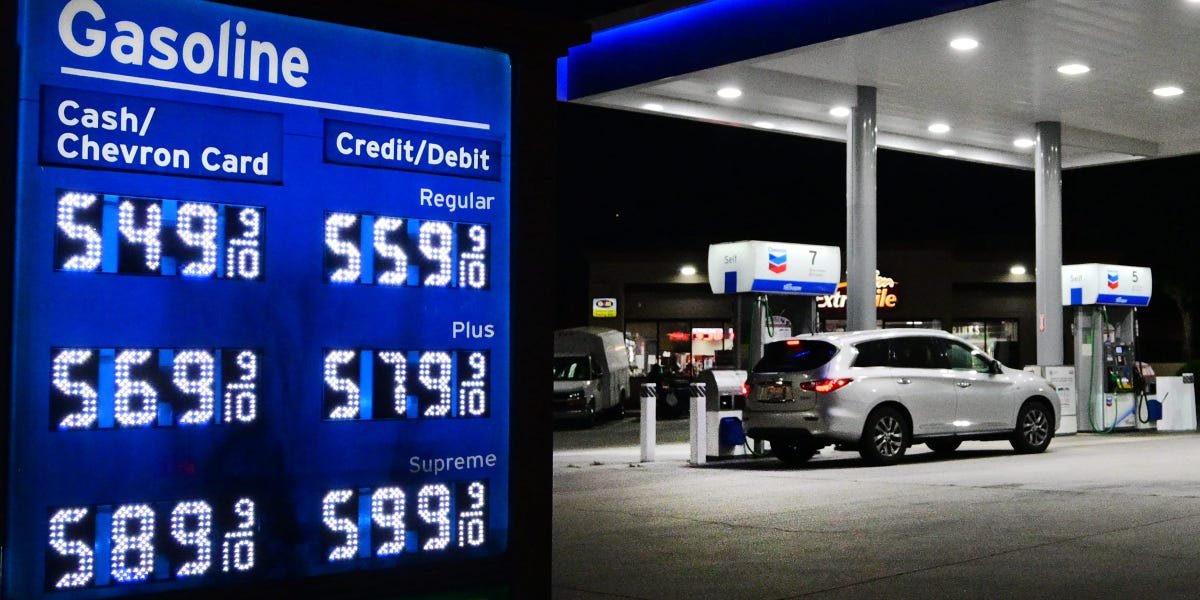
Tickers above American gas stations are flashing higher prices.

EV owners, meanwhile, are plugging in — and laughing about it online.

Across social media, electric-vehicle drivers are touting their savings as fuel costs climb during the US and Israel’s military interventions in Iran.

Many have posted meme-filled victory laps about the price of “filling up.”

One shared a compilation of a mustached Tom Selleck turning toward the camera with a smug grin in Magnum P.I.” Others are posting screenshots of their cheap charging sessions. Some are sharing gleeful TikToks while plugging their EVs into a home charger.

Juicy J — the cofounder of Three 6 Mafia and a producer of the Academy Award-winning song “It’s Hard out Here for a Pimp” — also weighed in, saying it was “time to go full electric.”

Gas prices have surged as military strikes in the Middle East disrupted oil production and heightened fears about tanker traffic through the Strait of Hormuz — a key artery for an estimated 20% of global oil and liquified natural gas shipments.

Brent crude climbed over $100 a barrel Sunday night as traders reacted to the instability. By Monday afternoon, the price had dropped back to the low $80s.

American drivers are paying more at the gas station. On February 21 — before tensions escalated — the average price of a gallon of regular gas in the US was $2.93, according to AAA.

By Monday, it had risen to $3.48, an 18.7% jump in 15 days.

In some areas, the increases have been even steeper. A Los Angeles gas station advertised prices above $8 a gallon, according to local ABC affiliate KABC.

Public EV charging rates, by contrast, have risen far less.

Over the same period, the national average price per kilowatt-hour at public charging stations increased from $0.39 to $0.42 — a 7.6% bump, according to AAA data.

And most EV owners charge at home, where electricity rates are typically lower and less directly tied to crude oil prices than gasoline.

“I had no idea,” one driver wrote on X about oil prices. “I drive a Tesla.”

Some users on X pointed out that charging costs vary widely by state and utility provider.

In regions where electricity generation relies heavily on natural gas, power prices could rise if energy markets remain volatile.

For example, in Kansas, EV charging costs about $0.30 per kilowatt-hour, according to AAA. In Louisiana — where charging stations are more sparse — the average is $0.47.

The online gloating comes at a complicated moment for the EV market. Even as gas prices heat up, sales of electric vehicles have cooled.

In January 2026, sales of EVs at American dealerships fell by 53.5% compared to the same month last year, per CarGurus’ data shared with Business Insider.

Even as EV sales shrink, Americans who have traded in the gas tank for the battery are taking this time to bask in their money-saving glory.

“Who’s glad to have an EV during this time of high gas prices?” one person wrote on Reddit. “I guess not having to deal with the ups and downs of gas prices is one of the benefits of owning an EV.”

Are gas prices affecting your daily travel? We want to hear from you. Contact Ben Shimkus at bshimkus@insider.com or Signal at bshimkus.41. Use a personal email address and a nonwork device; here’s our guide to sharing information securely.



Source link

Lauren Edmonds Profile Photo

The US secretary of energy says Iran is not a war but a ‘temporary movement’ and that gas prices will go down in weeks

US Energy Secretary Chris Wright made the morning show rounds on Sunday to downplay concerns about surging gas and oil prices, assuring Americans that the war with Iran isn’t “long-term.”

“What you are seeing is emotional reactions and fear that this is a long-term war,” Wright told “Face the Nation” on CBS News. “This is not a long-term war. This is a temporary movement.”

Wright made similar remarks in an interview with Fox News Sunday.

“The run-up on prices doesn’t have anything to do with any shortage of barrels of oil or natural gas. It’s just fear and perception, the unknown that this could be some long, drawn-out crisis, but it won’t be,” Wright said.

After the US and Israel launched airstrikes on Iran on February 28, the Islamic Republic moved quickly to shut down the Strait of Hormuz, a narrow waterway critical to the movement of oil around the world. About 20% of the globe’s petroleum liquids pass through the Strait.

Although there are storage tanks across the Gulf, they are already nearing capacity after a week of conflict and limited shipping options, forcing producers to reduce operations. Iraq’s oil output has shrunk by 60% since last week, Bloomberg reported. Other countries, like Kuwait and the United Arab Emirates, have also reduced output.

All of this means higher gas prices for Americans. The US Energy Information Administration says gas prices averaged $2.93 on February 23. By March 2, they were at $3.15. On Sunday, they were $3.40.

During his media tour on Sunday, Wright said regular ship traffic through the Strait of Hurmoz could resume in “a few weeks,” meaning gas prices could ease sooner rather than later.

“We want it back below $3 a gallon, and it will be again before too long,” Wright told CNN’s “State of the Union.” “You never know exactly the timeframe of this, but, in the worst case, this is a weeks, this is not a months, thing.”


Source link

Line chart

US gas prices climb to the highest point in Trump’s second term. He says, ‘If they rise, they rise.’

Gas prices continued their ascent on Friday as the escalating conflict with Iran sends shockwaves through global energy markets.

The national average price for a gallon of regular gasoline climbed to $3.32 on Friday, according to AAA — that’s an 11.4% increase from last week’s price and the highest level since August 2024.

The jump follows a surge in crude oil prices after the United States and Israel launched strikes on Iranian targets last Saturday, prompting retaliatory attacks from Tehran.

Brent crude, the global benchmark, traded above $91 a barrel Friday morning, its highest level since mid-2024, according to GasBuddy.

US pump prices could continue to climb. BloombergNEF estimates that about half of the eventual increase in retail gasoline prices typically shows up within 10 to 13 days, with roughly 90% reflected within about 21 days.

The firm added that if crude rises by $10 a barrel amid escalating tensions, US gas prices could climb by roughly 30 to 40 cents per gallon in the short term.

Oil supply chains have been particularly sensitive to threats around the Strait of Hormuz, a narrow waterway along Iran’s southern coast that handles roughly one-fifth of global oil consumption.

Iran said it attacked a tanker passing through the waterway on Thursday.

Any disruption there could quickly drive oil prices higher — and those moves would show up at the pump within weeks.

Iran has also targeted regional energy infrastructure, including facilities tied to Qatar’s massive liquefied natural gas exports.

President Donald Trump downplayed the retail price increase when asked by Reuters about rising fuel costs this week, saying he does not “have any concern about it.”

“They’ll drop very rapidly when this is over, and if they rise, they rise, but this is far more important than having gasoline prices go up a little bit,” he said.

He has said that the US Navy will escort tankers passing through the Strait.

Retail analysts warn that the impact of higher energy prices could extend beyond drivers. Higher fuel costs raise shipping and distribution expenses for businesses and can weigh on consumer spending.

“As oil prices rise, gas prices follow,” Carol Spieckerman, an independent retail analyst, told Business Insider. “And with the administration promising lower prices and consumers laser-focused on the pump, this metric has been given arguably more political and psychological energy than any other economic variable.”

She added that the impact will stretch far beyond the gas station. Higher fuel costs can push up travel, delivery, and retail prices — including goods made with petroleum-based materials.

“The ripple effects of fuel prices are far-reaching and underestimated,” she said. “It’s a compounding effect that touches nearly every corner of retail.”


Source link

Jordan Hart's face on a gray background.

Apple bumps up the prices of its new MacBook Air and MacBook Pro as global memory shortage continues

Amid the global memory shortage, Apple didn’t raise prices for its latest iPhone and iPad. That’s not the case for its new MacBooks.

After Monday’s reveal of the iPhone 17e and iPad Air, it’s the Mac lineup’s turn for a revamp. The tech giant announced on Tuesday a new MacBook Air, MacBook Pro, and Studio Display.

Apple introduced the M5 Pro and M5 Max chips that will power two versions of the MacBook Pro, and the MacBook Air will run on an M5 chip.

The MacBooks got a price bump along with the new chips, which offer faster performance, as well as higher storage capacity.

The MacBook Air starts at $1,099 for the 13-inch and $1,299 for the 15-inch version — a $100 price increase for each model.

The M5 Pro MacBook Pro starts at $2,199 for the 14-inch option, up from $1,999. The 16-inch will go from $2,499 to $2,699. For the M5 Max MacBook Pro, the starting price is $3,599, up from $3,199.

While Apple didn’t specify a reason for the price hikes, they arrive as the consumer electronics industry grapples with a global memory shortage as the artificial intelligence race shakes up the supply chain and market for memory chips, which are used in computers and other devices.

In its January earnings call, Apple said it expected the price of memory to continue to increase. However, CEO Tim Cook declined to speculate on whether or not it would lead to increased prices for Apple’s products.

Best Buy CEO Corie Barry addressed the memory shortage earlier on Tuesday during the retailer’s earnings call.

“As you are aware, the significantly increased demand for memory components is driving cost inflation and supply uncertainty, particularly in computing. We are partnering with our vendors to mitigate impacts on the business,” she said. “We are focused on five major themes. One, we are bringing in as much inventory as we can. We are also providing our vendors with a longer forecast horizon to better plan allocations across commercial and consumer segments and collaborate more effectively with memory partners.”

The key features that Apple highlighted in the new MacBook Air are the Liquid Retina display, up to 18 hours of battery life, and a 12 megapixel camera. It comes in four colors: sky blue, midnight, starlight, and silver. For the higher entry price, customers will also get double the amount of starting storage at 512 gigabytes.

Apple said the new MacBook Pro with the M5 Pro chip delivers faster AI image generation, LLM prompt processing, and gaming performance, with the M5 Max building on that speed even more. Apple touts the new chips as game-changers for the MacBook Pro’s AI capabilities. The M5 Pro MacBook Pro starts at one terabyte of storage, up from the previous 512 gigabytes, while the M5 Max model doubled its starting storage to two terabytes.

The Studio Display, which starts at $1,599, and the $3,299 Studio Display XDR boast 5K Retina displays designed for video editing, 3D rendering, and more workflows.

The new computers are available for pre-order starting Wednesday.


Source link

Im-a-native-Floridian-who-left-after-60-years-The.jpeg

I’m a native Floridian who left after 60 years. The high prices, traffic, and bad weather made it unlivable.

This as-told-to essay is based on a conversation with Kimberly Jones, a 60-year-old native Floridian who moved to North Carolina in 2025. The conversation has been edited for length and clarity.

I was born and raised in Miami and spent my entire life living in South Florida. But last year, my husband and I moved to North Carolina, and it wasn’t an easy decision.

Our reasons for moving were multifaceted. A major factor was affordability; the cost of living in Florida had gotten out of control. Prices increased for everything — homeowners’ and auto insurance, and even for everyday expenses like groceries and eating out. Those costs felt particularly high in South Florida compared with other parts of the state.

Another reason was that South Florida feels overly developed. If there’s a corner available, they’ll build a high-rise on it. It’s turned into a congested, expensive city. I used to spend 2.5 hours a day commuting to and from work.

Beyond affordability and congestion, my husband and I were also looking forward to a slower pace of life.

My children are still in Florida, along with the rest of my family, my friends, and the life I’d always known. For us to leave, it was a big deal.

I hardly recognize Florida anymore


A sunset over buildings in Miami, Florida, with cranes over new high-rise buildings under construction.

New high-rise buildings under construction in Miami.

Bilanol/Getty Images


South Florida is nothing like what it used to be.

When I passed another cluster of cranes and new buildings going up, I would always think: who’s living in all of these places, especially at these prices? It’s not the people who actually keep the city running. Not the teachers, the grocery store workers, or the hospitality workers.

These days, even young adults with a college degree and a decent job are having a hard time affording to live here unless they have a partner to help pay half the bills.

My kids are single and already out of college. My daughter works two jobs to keep up with expenses, and my son also has a secondary income.

My daughter managed to buy a condo a few years ago, when prices were lower, and interest rates were still low. But my son has little chance of buying anytime soon; he’ll be renting for the near future, like most of his friends — most of my friends talk about the same thing with their kids.


Construction workers building a mansion on Miami Beach.

Construction workers building a mansion on Miami Beach.

Miami Herald/TNS


I grew up in Florida, so seeing what’s happened is surreal. It’s just sad to watch that kind of change. Buildings just keep going up and up; they’re even trying to push farther into the Everglades. It feels like they’re displacing wildlife and disrupting the ecosystem.

And then there’s the question of infrastructure — what are they doing to support all of this growth?

My quality of life has improved since moving to North Carolina

In January and February, there’s no better place to be than South Florida. But the other months of the year, the heat and the humidity were just brutal. You couldn’t leave your house, and your AC never shut off.

We wanted better weather, but my husband and I didn’t want to go somewhere far, like the Northeast. Many Floridian transplants are moving to Southern states like North Carolina, South Carolina, Georgia, and Tennessee.

We chose to move to North Carolina.


A woman holds a dog as she sits on a boat.

Jones and her dogs in the family boat on their lake, next to their house.

Courtesy of Kimberly Jones


My husband retired a few years ago, and I was able to transition to remote work. We live in a small rural town about an hour from Charlotte. We love its slower pace of life and the fact that people are very nice up here.

My husband and I custom-built a lakefront home on 1.5 acres of land we bought in the town 20 years ago. There’s no way we could have afforded this quality of a home in Florida.


A woman and a man pose in front of a backdrop at a concert.

Jones and her husband at a concert in North Carolina.

Courtest of Kimebrly Jones


Living in North Carolina does have its give-and-takes. For one, there’s a state income tax, which Florida doesn’t have. Still, sales tax is pretty much the same in both states, and overall, the cost of everything else here is much lower than in Florida. We’ve been saving money on home insurance. Even grocery stores and restaurants are more affordable.

My quality of life — my stress level, everything — has improved tremendously just from being out of what felt like a rat race.

A lot of my friends have already left Florida, and the ones who haven’t want to, but they’re stuck for different reasons, like owning a business. I think my husband and I are really lucky our timing worked out.


Source link

Used-Tesla-prices-have-soared-since-the-end-of-the.jpeg

Used Tesla prices have soared since the end of the $7,500 tax credit, even as other EVs get cheaper

  • Used Tesla prices are rising as the secondhand EV market booms following the end of the $7,500 tax credit.
  • That’s a relief for Tesla owners, who have seen resale prices plunge in the past few years.
  • The Model S and X saw the largest price hikes. Elon Musk said Tesla would discontinue them to build its Optimus robots.

The market for used Teslas is heating up.

A booming secondhand EV market is pushing used Tesla prices up even as other electric vehicles get cheaper.

The average price of a used Tesla has climbed 4.3% since the end of the $7,500 tax credit for new electric vehicles in September, according to data from used car seller iSeeCars.

The two used EVs with the largest rise in prices were Tesla’s luxury Model S and X vehicles. Musk announced in January that both models would be discontinued in the coming months to make room for the company’s Optimus robot.

The spike comes as other used EVs get cheaper. The average price of used non-Tesla EVs fell 3.6% between September and January, per iSeeCars data. The exception was the Porsche Taycan, which was the only non-Tesla model to see used prices rise.

With the auto industry in the grip of an EV winter as prices soar and automakers cancel new models after the end of the tax credit, electric vehicle buyers are turning to the used-car market.

Sales of used battery-powered vehicles surged 21% in January from the previous year, per data from Cox Automotive, even as sales of new EVs fell nearly 30%.

That’s good news for Tesla. The brand dominates the used EV market in the US, with used Teslas outselling Audis, the second-largest retailer, by more than 10,000 vehicles in January, per Cox figures.

It’s also a relief for Tesla owners, who have seen their resale values collapse in recent years.

Used Tesla prices have been in freefall since 2022 and hit new lows last year amid backlash over CEO Elon Musk gutting government spending through his role at DOGE, which he has since left.

Tesla fans disappointed that the company never made its long-promised $25,000 EV do have a consolation prize — a secondhand Model 3 now sells for an average price of $25,700.


Source link

Americans-arent-flocking-to-Florida-like-they-used-to-Higher.jpeg

Americans aren’t flocking to Florida like they used to. Higher prices are a big reason.

Kimberly Jones was born and raised in Miami, and planned to live her whole life there. It’s where she met her husband, raised her children, and built a four-decade career in logistics.

But in 2025, Jones did something she never expected: She and her husband left Plantation, Florida — nearly 20 minutes west of Fort Lauderdale — for a small rural town about an hour outside Charlotte, North Carolina.

“It was not an easy decision,” Jones, 60, told Business Insider. “Affordability was part of it, but we were also looking forward to having a slower pace of life. I lived in South Florida my entire life — and it’s not anything like what it used to be.”

Jones said Southern Florida’s population growth has made the area increasingly unrecognizable — and, for her, unlivable — pointing to hyper-development in residential construction and the gridlocked traffic she calls “ridiculous.”

“If there’s a corner available, they will build a high-rise on it,” she said. “It’s turning into an overly congested, expensive city. I used to spend two and a half hours a day in the car just going to and from work.”

People are still moving to Florida, but they’re not flocking to it like they used to. Net domestic migration — or the number of people moving into the state from elsewhere in the country minus those moving out to other parts of the US — has been steadily cooling in recent years.

There are a few likely reasons behind the cooler estimates in the Sunshine State. For some, the tax benefits of living in the state don’t outweigh the increase in cost of living. It’s more expensive to buy a home than a few years ago, and property insurance has been higher than in other states.

High housing costs have made Florida less attractive

In recent years, Florida has drawn an influx of newcomers chasing its affordability, driven in large part by its wide range of relatively lower-cost housing and lack of state income tax. Others are lured by its business-friendly tax environment and strong job market.

But the surge of newcomers has created a host of challenges for native and longtime residents who have watched home prices and rents climb, especially in popular cities like Miami and Orlando. It’s prompted some to move to less expensive cities and suburbs elsewhere in the state, or to leave Florida entirely.

“Affordability often drives a lot of domestic moves,” Jed Kolko, senior fellow at the Peterson Institute for International Economics, told Business Insider. “People tend to move toward less expensive places. In recent years, Florida’s gotten a lot more expensive, so Florida doesn’t look as affordable compared to other places as it did even just a few years ago.”

In December 2020, Florida’s median home-sale price was $298,100; by December 2025, the most recent month with available data, it had climbed to $412,100, Redfin data showed. In addition to higher home prices and rents squeezing residents, home and flood insurance costs have increased, as more frequent and severe natural disasters push homeowners’ premiums higher.


Homes flooded in Florida

Homes flooded in Florida.

Bilanol/Getty Images


Take Debra Pamplin, who moved from Florida back to the Midwest after 11 years. In 2013, Pamplin moved from her hometown of Missouri to Jacksonville, Florida. During her time there, though, she soured on the area’s traffic, high insurance costs, uncomfortable heat and humidity, and mosquitoes. Pamplin has valued living in the Midwest much more.

“I’d often have to cut spending in other parts of my life just to cover my high monthly insurance costs,” she said in a 2024 Business Insider story. “Now that I’m out of Florida, my monthly insurance expenses are lower, giving me breathing room to spend my money on more fun stuff.”

Florida hasn’t completely lost its appeal

Mariya Letdin, an associate professor of real estate at Florida State University, told Business Insider that even as net migration slows, Florida is “still a popular destination,” but she expects its population will continue to grow slowly.

Aside from slower growth, the profile of who’s moving to Florida is shifting, too.

Michael Martirena, a real estate agent with Compass in South Florida, told Business Insider he’s seen a change in the clients he works with, which he attributes in part to higher housing costs.

“Let’s go back three years ago, pre-pandemic, everyone was coming down here. It didn’t matter what socioeconomic class people were from; they just wanted to come to Florida.” Now, he said, he’s working with more buyers from abroad, as well as wealthy American buyers.

Hamilton Lombard, a demographic researcher based in Virginia, said immigrants moving elsewhere within the US could also be a factor as to why Florida’s domestic migration has weakened. Census data showed that non-citizens who moved between states in the past year from Florida increased from about 30,000 in 2022 to 53,500 in 2024, the latest year available.

Florida’s net international migration has also been cooling, but remains positive, meaning more people are immigrating to Florida from other countries than leaving for destinations outside the US.

“International and affluent buyers still continue to come down to Florida, whether it’s for tax purposes or geopolitical reasons or what’s going on in their states,” Martirena said, adding that a lot of his clientele comes from countries like Dubai, Madrid, and London.


Source link

Author Lillian Brown

Super Bowl Tickets 2026: Seahawks vs. Patriots prices

The NFL conference championships have concluded, which means that Super Bowl LX is almost here. Keep reading to learn how to get Super Bowl tickets in 2026. Tickets can be hard to find, but there are still a few ways to snag seats.

In a repeat of the 2015 Super Bowl, the New England Patriots will square off with the Seattle Seahawks. In their last match-up, the Patriots beat the Seahawks 28-24 after a snappy fourth quarter from New England. The Patriots have won six Super Bowls, the most recent of which was in 2019, while the Seahawks have one SB title to their name. The East vs. West Coast showdown will take place at Levi’s Stadium in Santa Clara, California. It’s the home of the San Francisco 49ers, but it will become neutral territory for the big game. The halftime show will be headlined by Bad Bunny, who previously made a guest appearance in the 2020 Super Bowl halftime show, which was headlined by Jennifer Lopez and Shakira.

Below, we’ll break down everything you need to know about getting tickets to Super Bowl LX, including the cheapest starting prices we’ve spotted across notable resale ticket websites. You can also peruse StubHub, Vivid Seats, and the Ticketmaster resale marketplace at your own leisure. If you’re planning to watch from home, don’t forget to bookmark our guide on where to watch the Super Bowl.

How to get Super Bowl tickets

Super Bowl tickets are a bit of a tricky beast. Original tickets are no longer available outside of pricey location packages, so people must look to resale ticket listings on sites like StubHub, Vivid Seats, or Ticketmaster. Ticketmaster is the NFL’s official ticketing partner, although only resale tickets are available right now.

How much are Super Bowl tickets?

The Super Bowl is perhaps the biggest American sporting event of the year, so it should be no surprise that ticket prices are steep. At the time of writing, the absolute cheapest ticket listings we’re seeing across top resale vendors are over $4,500 each. Prices surge the closer the seat is to the field, with many prime listings reaching upwards of $20,000.

At the time of writing, the cheapest tickets start at $4,592 on Ticketmaster, $4,994 on StubHub, and $4,730 on Vivid Seats. Starting prices have dropped by over $1,500 on all three sites since last week. On January 27, the cheapest tickets started at $6,499 on Ticketmaster, $6,532 on StubHub, and $6,377 on Vivid Seats. Prices often fluctuate throughout the day as tickets are purchased and additional listings are added.

Last year, prices dropped significantly in the week leading up to the Super Bowl. The cheapest tickets available in the last few days before Super Bowl LIX dropped below $3,000 a piece, so if you’re already near Santa Clara or don’t mind making last-minute travel accommodations, it might be worth holding out until later in the week.


Note: Certain services and regions prohibit the resale of tickets. Business Insider does not endorse or condone the illegal reselling of tickets, and entry into an event is at the venue’s discretion.

You can purchase logo and accolade licensing to this story here.

Disclosure: Written and researched by the Insider Reviews team. We highlight products and services you might find interesting. If you buy them, we may get a small share of the revenue from the sale from our partners. We may receive products free of charge from manufacturers to test. This does not drive our decision as to whether or not a product is featured or recommended. We operate independently from our advertising team. We welcome your feedback. Email us at reviews@businessinsider.com.


Source link