

Life-as-a-private-jet-flight-attendant-and-earning-over.jpeg

Life as a private jet flight attendant and earning over $100K

By the time 33-year-old private jet flight attendant Kelley Lokensgard greets her VIP passengers on the tarmac, she has been working for hours.

“I grocery shop the night before, then arrive two hours before the flight; I load my flower arrangements, prep my boarding appetizers, and touch up the cabin,” Lokensgard, the chief cabin attendant at Silver Air Private Jets, told Business Insider. “People don’t realize how many fingerprints they leave behind.”

That behind-the-scenes work is part of serving wealthy vacationers, business executives, and celebrities who expect flawless service and discretion.

Lokensgard, what started in 2021, said the job can be nonstop: she’s on duty for up to 21 days a month, sometimes at a moment’s notice, and is responsible for catering meals and tailoring each flight to client preferences.

This is a level of invisible labor that few people outside private aviation ever see; it’s not the glitz and glamour that social media often portrays. But Lokensgard — whose background is in music, youth education, and fine dining — said she loves the grind.


Private flight attendant Kelley Lokensgard at the golden temple in Kyoto.

Lokensgard visited the Golden Temple in Kyoto.

Courtesy of Kelley Lokensgard


“It’s a lot of schlepping and problem-solving and delicate communication with a lot of moving parts and people; you have to be a laborer to want to do this job,” she said. “I can’t imagine something that better suits my random scope of skills.”

Private flight attendants are a small but growing niche within aviation. Jobs, which are largely non-union, span from small and medium-sized private companies like Silver Air to mega operators like NetJets and VistaJet.

While many roles offer full-time benefits, as in Lokensgard’s case, others resemble gig work, which can allow for a flexible lifestyle but often comes with less predictability and fewer labor protections than at most US airlines.

The work often involves long, irregular hours, extended travel, and the demands of high-profile clients. And private flight attendants usually don’t have access to the free standby flights that commercial crew typically enjoy — meaning they only fly if a seat is available.

Still, there’s a significant payoff. Lokensgard gets to see the world through the destinations of her clients — essentially for free — while earning much more than most of her airline counterparts.

Lokensgard, who lives in Los Angeles, earns in the low six figures, though she said some veteran, freelance, and specially skilled VIP cabin attendants can make as much as $350,000 annually. Glassdoor puts the nationwide median annual salary at about $94,000.

By comparison, commercial flight attendants at American, Delta, and United typically earn a base salary between $30,000 and $80,000, depending on seniority, along with a per diem and additional pay opportunities like overtime, holidays, and international flying. Many senior crew members reach six figures after years of service.


Inside one of Silver Air's G550s.

An example of one of Silver Air’s G550s.

Silver Air Private Jets


To prepare for her role, Lokensgard completed five days of training and an online course: “There was so much to learn, it’s professionalism, luxury, service, and safety,” she said. Silver Air also sponsored culinary classes.

Her training is far shorter than the weekslong courses commercial flight attendants must complete, though that’s because the Federal Aviation Administration does not regulate corporate cabin attendant positions — its “flight attendant” rules apply to airlines and public charters, not private jets.

This means cabin training varies widely across private operators, though Lokensgard, as chief attendant, said she is incorporating more shadow flying and collaborative learning at her company.

Private aviation is not your normal 9-to-5

Lokensgard spends most of her days on the Gulfstream G550, a giant multimillion-dollar private jet with a bedroom and enough range to travel across oceans and continents. The plane has an owner but is also managed by Silver Air as a rental; Lokensgard serves whoever is on board.

She said these often long flights mean she is away from home for days at a time and must work early and late hours. A flight from the Los Angeles-area Van Nuys Airport to Tokyo, for example, would take about 11 hours and involve at least two meal services, she said.

Lokensgard must organize catering for the passengers, but is regularly asked to cook. She’ll meal-prep meats and vegetables the night before and has access to an approved skillet, oven, microwave, and chiller to work with on the plane.

“Sometimes our clients don’t want catering, and I will be told, ‘Hey, arrange steak, sushi, chicken tenders, french fries, salads, fruit platter, snacks, and desserts for the flight,'” she said. “I’ll shop at Erewhon, or I’ll ask a local steakhouse to sear a steak that I’ll finish off on the plane. Your head just explodes with ideas.”

Erewhon is the US’ most expensive grocery store and a hotspot for the LA elite.


Examples of meals the flight attendant has made.

Some meal examples include a green goddess salad sourced from an Italian farmers market and a Yucatan-style ceviche.

Courtesy of Kelley Lokensgard


Besides food service, Lokensgard said she must also perform safety checks, prepare meals for the pilots, and make the bed, among other duties. She added that there is surprisingly little time to rest, even on ultra-long-haul flights.

On the ground, Lokensgard is responsible for tasks like dishes, dry cleaning, and arranging catering for the next trip. After international flights, everyone clears customs, and Lokensgard must follow agricultural rules when disposing of food and trash.

Rest policies vary by operator. Lokensgard said her crew gets at least a day of rest after long-haul international flights; previously, Silver Air cabin attendants often finished such trips only to almost immediately hop on a commercial flight home. She receives a minimum of 10 hours of rest after shorter flights.

Lokensgard added that it sometimes makes more logistical sense for the crew to stay with the plane for a few days in its destination, giving her extra time to explore places ranging from major cities like London, New York City, and Nice to quaint ski towns in Austria.

“I make the most of it since we’re sacrificing time away from our families and communities,” she said. “We explore, see museums, and eat amazing food.” She also dedicates time to cultivating relationships with local chefs in the cities she visits for catering needs.


Lokensgard with her husband after being proposed to on the French Riviera.

Lokensgard said her husband flew to the French Riviera to propose to her during one of her layovers. She said he’s supportive of her travel-heavy career.

Courtesy of Kelley Lokensgard


Once home, Lokensgard said the first thing she does is wash her clothes and repack her suitcase, adding that she keeps a spare uniform in her car: “I have my road wardrobe and toiletries and my home ones.”

That constant readiness is essential in private aviation.

For example, on one reserve day — when she’s on standby for last-minute flights — Lokensgard was called at 6 a.m. for a flight that had to take off by 8:30 a.m. But the plane was departing from Teterboro Airport in New Jersey, at least 30 minutes from the crew’s Manhattan hotel.

“We’re ripping back the covers and packing our bags,” she said. “We’re calling to get the fuel trucks ready; I’m DoorDashing food to the airport and studying the client’s eight-page portfolio, but we were in the air by 8:26 a.m. That really built trust with the client.”



Source link

Bessent-Private-equity-firms-wont-have-to-sell-single-family-home.jpeg

Bessent: Private equity firms won’t have to sell single-family home rentals

Treasury Secretary Scott Bessent said that President Donald Trump’s proposal to keep Wall Street players from buying single-family homes would not force them to sell their current holdings.

“These big institutions buy housing, then rent them out, and they’re able to depreciate it. They hide their earnings, pay lower taxes,” he said on Thursday at the Economic Club of Minnesota.

“The idea here is bygones are bygones,” Bessent added. “We’re not going to have a forced sale here.”

On Wednesday, Trump said he would ban institutional investors from purchasing single-family homes in an effort to make housing more affordable for Americans. Single-family homes refer to standalone residential buildings with their own entrance designed for one household.

“For a very long time, buying and owning a home was considered the pinnacle of the American Dream,” Trump wrote on a Truth Social post. “That American dream is increasingly out of reach for far too many people, especially younger Americans.”

Shares of asset manager Blackstone fell 5.6% on Wednesday after Trump’s post. Blackstone, which manages $1 trillion in assets, oversees one of the largest rental housing portfolios in the US, with several hundred thousand single-family homes and apartments. Other stocks similarly fell.

Critics say firms like New York-based Blackstone put pressure on the housing market, reducing the availability of homes and driving prices up. Blackstone closed 1.1% higher at the end of the trading day on Thursday.

The institutional players, meanwhile, say lack of housing supply — not big-business ownership — is pushing prices up.

In Minnesota on Thursday, Bessent said that the administration has not decided on the “exact contours” of this new proposal.

“We want to keep the traditional mom and pop owners in. We want to keep families who rent out to their other family members,” he said.

Bessent said that this practice of large firms buying up single-family homes started during the 2008 financial crisis, when private equity companies were among the few parties with the money to buy these homes.

“They hoovered up the single-family housing stock,” he said.

The US Government Accountability Office found that in 2022, the five largest institutional investors owned nearly 2% of single-family rental homes.


Source link

How-a-lesser-known-Swedish-private-equity-giant-plans-to-win.jpeg

How a lesser-known Swedish private equity giant plans to win over US retail investors

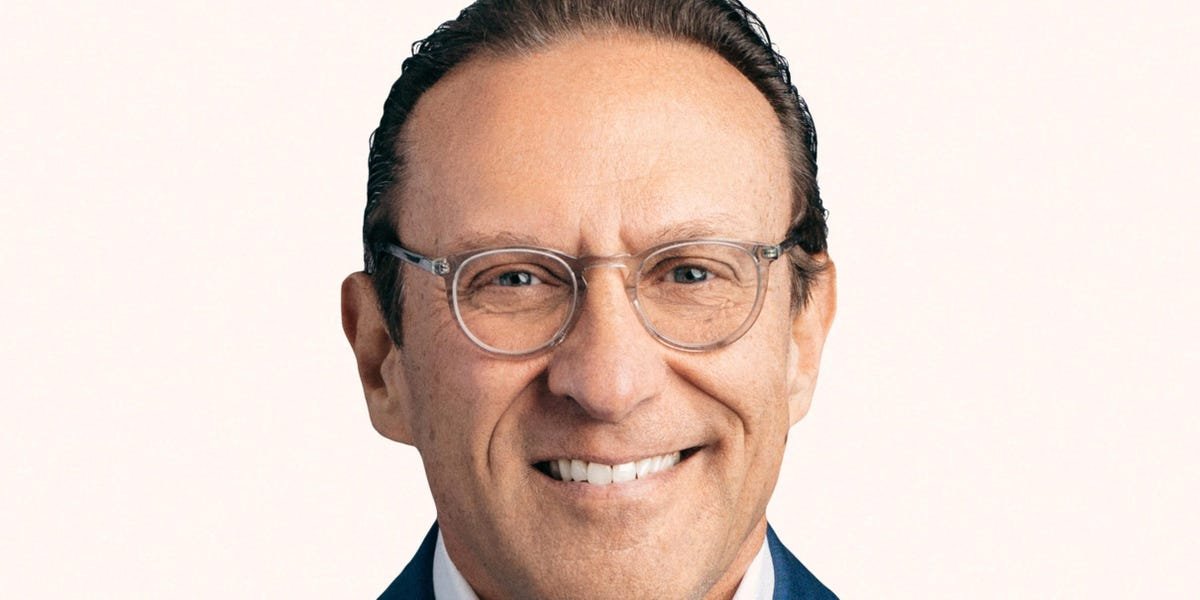
EQT is one of the largest private equity investors in the world — yet most wealthy Americans have barely heard of it. That’s the uphill battle facing Peter Aliprantis, the Swedish firm’s head of private wealth in the Americas, as EQT tries to pitch in a market dominated by Wall Street brands with plenty of CNBC airtime.

“Most people in the United States are not familiar with us, and the way we say it, we’re the best-kept secret,” Aliprantis told Business Insider.

Private Equity International ranked the firm as the second-largest private equity firm, with $312 billion of assets under management. It raised more than $113 billion in third-party private equity capital from 2020 to the end of 2024, putting it ahead of Blackstone, and just behind KKR so far this decade.

Like many of its competitors, it’s turning to private wealth as the newest source of growth. The industry’s change of fundraising focus comes as private equity firms are slow to return cash to investors, and over-allocation among institutional investors means that institutional funding is slowing.

But the same reasons that the firm isn’t as well-known in America are actually an advantage, Aliprantis said.

In a world where debt-heavy buyouts are proving more difficult and an increasingly concentrated American private market is pushing some to invest internationally, a global industrialist approach can be attractive.

EQT has returned capital at a normal pace, with $23 billion in distributions for the year ending June 2025. The firm has also been building a private wealth business for the past four years, which accounts for 10% of its current assets. The firm has a goal to reach between 15-20% during its current $100 billion fundraising cycle, according to its second-quarter report.

Aliprantis walked Business Insider through the firm’s pitch to financial advisors and private wealth distribution networks, explaining why its global reach is a significant advantage in 2025.

The key for EQT, Aliprantis said, is for the firm to offer individual investors the “exact same deals” it gives institutional investors.

EQT’s industrialist, international advantage

EQT was founded in 1994 as a spin-off from industrial holding company Investor AB, but the firm’s history stretches back to Sweden’s Wallenberg family. The Wallenbergs, called the “Rockefellers of Europe,” have created an empire of business holdings including massive stakes in Sweden’s biggest firms, like ABB, AstraZeneca, or Saab.

“The Wallenberg family has a 160-year heritage of owning and developing companies,” Aliprantis said. “We’re not financial engineers. We don’t add a lot of leverage to what we do, and we’re very, very different from what a lot of our peers on Wall Street are doing.”

Aliprantis’s comments echo a larger change in the industry, which is running out of easy money-making deals and cheap financing and now has to extract returns by actually building stronger companies.

But the firm’s biggest advantage, Aliprantis said, is its global nature.

Only 35% of its assets are based in North America, and the firm has 26 global offices where its deal teams invest in local private equity, infrastructure, and real estate deals.

“A lot of our colleagues based in New York will fly deal team partners over to different places around the world to do the deal and then get on a plan and fly home,” Aliprantis said. “Our deal teams are pretty much based in the locations where they do deals.”

This means the firm “gets the call” when local companies are looking to sell, and keeps them from larger “bake-offs” where the price might be bid-up.

This has also meant the firm can continue to provide distributions to its clients even if the market is slow in one locale.

“If you’re a US-based domicile private markets firm that has 70 to 80% of your assets in the US, guess what? If the US IPO market is slowing, you’re going to have a problem exiting,” Aliprantis said.

“Here in the US, it’s always been too much money chasing too few deals. You know what? That’s a US thing,” Aliprantis said.” If you go to Europe and you go to Asia, it’s the opposite.”

For example, Bain estimates there’s about $480 billion in dry powder for European private funds, including venture capital, compared to Pitchbook’s $914.5 billion for US-focused private equity firms, not including VC. Apollo’s Marc Rowan also recently told the Wall Street Journal that as an industry, they find themselves short ideas rather than capital.

Aliprantis said investors’ biggest reason to diversify away from the US market is its concentrated bet on AI.

“Their concern is that the Mag Seven is roughly 37% of the S&P right now, and valuations are stretched,” Aliprantis said. “Is AI really going to work? Is it not? How additive is it going to be to the bottom line? We don’t know.”

How to keep retail investors happy

Across the spectrum, Aliprantis said, the “biggest concern” is that retail investors are getting a set of less attractive deals, while institutional investors are getting a “separate set of deals.”

Aliprantis said that the firm’s six evergreen vehicles are composed of the “exact same deals” that its institutional clients invest in.

The key to doing that, and to being a responsible investor or retail capital, is “size and scale,” Aliprantis said.

Size also helps with the balance sheet necessary to launch a private wealth business. It can cost millions of dollars to hire the necessary staff to start selling to financial advisors and other wealth management channels before any revenue is returned to investors.

EQT was able to use its balance sheet, as a public company in Sweden, to build its private wealth team and now has 70 private wealth professionals globally, with 20 based in the US.

That’s not to say that smaller funds won’t succeed, but it will be much harder, Aliprantis said. With so many investors competing for retail capital, consolidation is inevitable.

“The race is on in the industry right now,” Aliprantis said.


Source link