Tech-investor-Ron-Conway-says-Californias-proposed-wealth-tax-must.jpeg

Tech investor Ron Conway says California’s proposed wealth tax must be kept ‘off the ballot’

Famed Silicon Valley investor Ron Conway says he wants to kill California’s proposed wealth tax now.

“Our job is to get Gavin to negotiate this so that it doesn’t get to the ballot. So, maybe they don’t get the signatures,” Conway told Jack Altman during an episode of Altman’s “Untapped” podcast that was posted on Wednesday.

Conway, the founder of SV Angel and known as “The Godfather of Silicon Valley,” said that if the proposed wealth tax reaches the ballot, it “could” pass.

A recent UC Berkeley Citrin Center for Public Opinion Research-Politico poll found that support was hovering around 50%, within the margin of error of potential failure, though it is still very early in the process.

Major names like Google cofounders Sergey Brin and Larry Page have already rushed to move assets out of California, the state home to the most billionaires. If passed, California residents with a net worth of over $1.1 billion would face a one-time tax totalling 5% of their assets. Supporters of the initiative are still gathering signatures ahead of a June deadline.

Conway said Gov. Gavin Newsom, who is publicly opposed to the wealth tax initiative, is aligned with the efforts. Conway said one way to give Newsom bargaining power is by supporting the three competing ballot initiatives, which would effectively neuter the proposed wealth tax.

Brin, Stripe cofounder Patrick Collison, former Google CEO Eric Schmidt, and others have poured over $44 million into “Building a Better California,” a political action committee that is pushing the three competing anti-wealth tax ballot measures. In November, Conway donated $100,000 to “Stop the Squeeze,” another group that is opposed to the proposed tax.

Venture capitalist Marc Andreessen once called Conway “the human router,” a nickname he told Altman that he considers a compliment. Conway has been a fixture in tech for decades, making early bets on Google, Facebook, and other companies. OpenAI CEO Sam Altman, Jack’s brother, credited Conway with helping him hold OpenAI together during his brief ouster in 2023.

Conway also told Jack Altman that their interview could not run late, because that night he had courtside seats at the Golden State Warriors game next to House Speaker Emerita Nancy Pelosi and her husband Paul.

“We must keep this off the ballot,” Conway said. “So a whole bunch of work has to happen for that.”


Source link

Katherine Tangalakis-Lippert's face on a white background

Starbucks union lowers proposed wage floor to $17 in bid to restart contract talks

After more than a year at a standstill, Starbucks’ union contract talks are percolating once more.

Starbucks Workers United, the coffee giant’s union, has lowered its proposed starting wage to $17 an hour, down from the $20 minimum it previously demanded. The company has also proposed that in-person bargaining resume on March 30, in what would be the first contract negotiation session since talks stalled in December 2024.

The union’s revised economic proposal, which was provided to Starbucks management 30 days ago, was made public by the union after SBUW baristas on Friday joined a call with a group of shareholders advocating for workers’ rights, urging management to finalize a contract.

The move marks one of the clearest signs yet that the union is willing to shift its position to break the impasse. Starbucks management has declined to comment on its counter-proposals.

“Baristas recently met, deliberated, and found consensus around fair and reasonable measures to support baristas,” Jasmine Leli, a three-year Starbucks barista and bargaining delegate, said in a statement. She added that workers are “in conversation with the company about the road back to the bargaining table,” and that those discussions are ongoing.

Starbucks management has consistently pushed back on the union’s characterization of events, saying it respects workers’ right to organize and wants to reach a contract, and disputing allegations of widespread union busting.

“At Starbucks, we are committed to all our partners, and where they have chosen union representation, we have been engaging in good faith bargaining,” Jaci Anderson, a spokesperson for Starbucks, told Business Insider, adding that Starbucks was “disappointed” when SBUW “walked away from negotiations” in December 2024.

“Progress occurs in collective bargaining when both sides get into the same room,” Anderson said.

Starbucks management will remain available for “continued negotiations throughout April,” Anderson added.

As Business Insider previously reported, the company has said that it already offers industry-leading pay and benefits, and has said it’s prepared to move quickly toward a “reasonable” and “fair” agreement.

Negotiations have dragged on for months, with both sides accusing the other of failing to bargain in good faith. The stalemate has increasingly drawn scrutiny from politicians, including now-New York Mayor Zohran Mamdani and Sen. Bernie Sanders, as well as investors concerned about reputational and operational risks.

By trimming its wage-floor demand by nearly $3, the union is hoping to signal flexibility and put pressure on executives to match that move as scrutiny from shareholders intensifies.

Under the updated framework, unionized baristas would push for a $17 an hour starting wage, 4% annual raises — down from 5% — and a slate of workplace protections, including “just cause” standards for discipline, antidiscrimination language, enforceable health and safety measures, and guarantees of at least three workers on the floor at all times.

Starting pay in many states ranges from $15.25 to $16 an hour. The union says that raising the floor would lift wages for the lowest-paid workers without creating wage compression at organized stores.

SBWU, which first unionized in Buffalo in 2021, represents about 650 stores, or roughly 4% of Starbucks’ in-store staff in the US.

The union’s broader demands also include offering existing employees additional hours before hiring new staff, formal grievance procedures, protections during store closures, and resolution of outstanding unfair labor practice charges — including alleged backpay tied to firings and withheld raises.

The union’s demand lands at a delicate moment for Starbucks.

As Business Insider previously reported, an investor group has been preparing for a potential board fight, centered in part on the company’s labor relations, as the company continues to navigate its turnaround effort.

Anderson told Business Insider the Starbucks board “has the necessary skills and experience to effectively oversee our strategy, including human capital management, which is vital to our ability to drive growth and deliver for our customers.”

Tensions have also flared on the shop floor: union baristas in November launched their fourth strike since 2023 amid mounting frustration, drawing fresh investor attention to the protracted negotiations.

Most unionized baristas are now back to work, but “work stoppages continue at stores on a rotating basis,” a spokesperson for the union said.

Starbucks executives, including CEO Brian Niccol, have publicly said they want to reach a deal. Union leaders said the path forward is clear.

“It’s time to get a fair contract done so we can all move forward,” Leli said in the statement. “We believe that’s not only possible, but within reach as long as executives are committed to good-faith bargaining.”





Source link

Police-arrested-a-man-at-a-meeting-to-discuss-a.jpeg

Police arrested a man at a meeting to discuss a proposed Oklahoma data center after exceeding his time limit by 30 seconds

Applause broke out during an Oklahoma man’s speech at a city council meeting on Tuesday to discuss a proposed data center. A minute later, shouts of disbelief rang out across the room.

“Disgusting!” one woman shouted as Claremore Police Department officers handcuffed and escorted Daniel Blanchard out of the room.

Authorities said they arrested Blanchard, whose speech exceeded the three-minute time limit, for trespassing.

Over 100 people, including Blanchard, had gathered in a ballroom at Rogers State University in Claremore to voice their opinions about the large data center project. The developer, Beale Infrastructure, is proposing a campus in the Claremore Industrial Park that includes data centers, supporting infrastructure, and office space.

Blanchard was among the residents who opted to speak during the public comment portion, which limits each person to three minutes. In his speech, Blanchard spoke about what he considered compliance issues related to the potential data centers.

“The Claremore Industrial Economic Development Authority has a fiduciary responsibility to the public, not to build infrastructure. And this act of overreach is putting the health and safety of members of this community at risk,” he said.

AI is driving a data center construction boom across the United States. While companies like OpenAI argue that building new data centers will reindustrialize the US economy and create jobs, residents of towns where developers are proposing new data centers worry about their impact on power grids, water resources, pollution, and overall quality of life.

In an investigation published in September, Business Insider reported that over 1,200 data centers had already been built or were approved for construction across the country.

The proposed data center in Claremore, a suburban hub of Tulsa home to about 20,000 people, has divided the town. During the three-hour meeting on Tuesday evening, dozens of residents spoke both in favor and against the project.

Blanchard exceeded his three minutes by about 30 seconds before police officers approached him. He gathered his notes and calmly followed the officers to the front of the hall, where town officials were sitting.

In a video of the meeting posted by the town on its YouTube channel, Blanchard appears to hand his notes to a council member. At that point, police arrested Blanchard, placing him in handcuffs. The crowd hollered in shock.

In a statement, the Claremore Police Department said officers aren’t responsible for enforcing city council rules and only become involved in city council meetings when an official orders them to remove an individual.

“The man’s position on the issues, what he said, or his unwillingness to follow rules of the meeting played no part in the officer’s decision to arrest him,” the statement said. “He was arrested for trespassing in compliance with the law and with the hope of restoring order to an important meeting.”

A local politician fighting the data center project posted to X on Wednesday that Blanchard has been released from jail. The next council meeting is scheduled for March 2.


Source link

I-proposed-to-my-fiancee-twice-The-second-yes-felt.jpeg

I proposed to my fiancée twice. The second yes felt even better than the first.

I love my fiancée so much that I proposed to her twice.

It wasn’t because I didn’t believe my lover — who is admittedly far out of my league — the first time she said yes, nor was it my pesky perfectionism rearing its demanding head because not every detail went according to plan.

Rather, certain aspects of our engagement didn’t quite meet our expectations.

There are a lot of things my fiancée and I fondly reflect on when we talk about the day we got engaged — the location in her hometown, New York City; the perfect fit of her rose-gold ring from a nearby jeweler; the violinist who flawlessly played her favorite songs.

However, at the same time, it felt sabotaged by some people in our lives who were emotionally standing in our way instead of celebrating us. I was also at the pinnacle of my unhealthiest self, both mentally and physically.

Seeing the pain behind my eyes while looking at the photographs from that otherwise special day eventually became too much to bear.

As the weeks passed, I kept feeling that we deserved another special day, one completely focused on our love, without a damper from self-consciousness or unsupportive connections.

So, I planned a second proposal about two years after the first.

This time around, the proposal day was even more magical


Author and his fiance smiling at Disney

Our second engagement was at Disneyland.

Jamie Evan Bichelman


I felt inspired as I planned another proposal to my fiancée.

In the two or so years since the first engagement, we’d eliminated a lot of the stressors that had been holding us back. For one, I’d lost a significant amount of weight and was mentally in a much better place.

Now, I had a chance to profess my undying love for the woman of my dreams again, this time unbothered by others’ opinions and with the renewed confidence that comes with drastically improved health.

Instead of heading back to NYC, I set my sights on proposing during the Disneyland trip we’d been planning.

She had no idea what was to come as we drove to Anaheim, California, with a bubbly Disney playlist serving as the soundtrack to our adventure.


Ring with disney jewelery on image of disney castle

We had a wonderful time at Disneyland.

Jamie Evan Bichelman


Within the magical confines of Main Street, USA, I got down on one knee and renewed my commitment to the same loving promises I shared the first time around.

I expressed my excitement for our coming marriage, and once more promised her forever. Again, she said yes.

Instead of buying another engagement ring for the occasion, I surprised her with a piece of jewelry that matched the ring she already had.

Then, we headed to the Plaza Inn for a vegan meal surrounded by many of my fiancée’s favorite Disney characters. It felt magical.

A proposal doesn’t need to be a disaster to get a do-over


Man and woman kissing on bridge

Our first proposal was special, but I don’t regret doing another.

Jamie Evan Bichelman


A second proposal wasn’t necessary, but it was worth it in every way to see the bliss on my fiancée’s face as we created another beautiful moment together.

Now, we have even more wonderful memories to reflect on, and the best part is, the day was entirely about us and our love.

Truthfully, I recommend a second proposal to anyone who felt their first attempt wasn’t as magical as they deserved.

Whether you lost the ring, forgot to say the best parts of your speech, or just had an even better idea, a second proposal could show your lover that you’re recommitting to them in a romantic and innovative way.

Maybe it’s unconventional, but we live in a time when breaking free from tradition is becoming the norm, whether it’s as simple as living together before marriage or as milquetoast as having food trucks at a wedding.

So why not propose to the love of your life a second time? It’s a way to remind them how much you want to marry them — and it could be the start of another great chapter.


Source link

See-the-list-of-Californias-200-plus-billionaires-who-could-be.jpeg

See the list of California’s 200-plus billionaires who could be hit by the proposed wealth tax

California has a lot of billionaires, more than any other state and more than most countries. So a proposed wealth tax on its billionaires could be a windfall, if they stick around.

Under the Billionaire Tax Act, California residents worth over $1 billion would face a one-time tax totaling 5% of their assets.

If the tax plan receives enough signatures, it will appear on the ballot in November and, if passed, would apply retroactively to billionaires living in the state as of January 1. The tax would be due in 2027, with the option to spread the payment out over five years, with interest.

The idea has drawn sharp reactions from lawmakers and business leaders.

Google cofounders Larry Page and Sergey Brin moved entities tied to them out of the state last month just ahead of the deadline, Business Insider first reported.

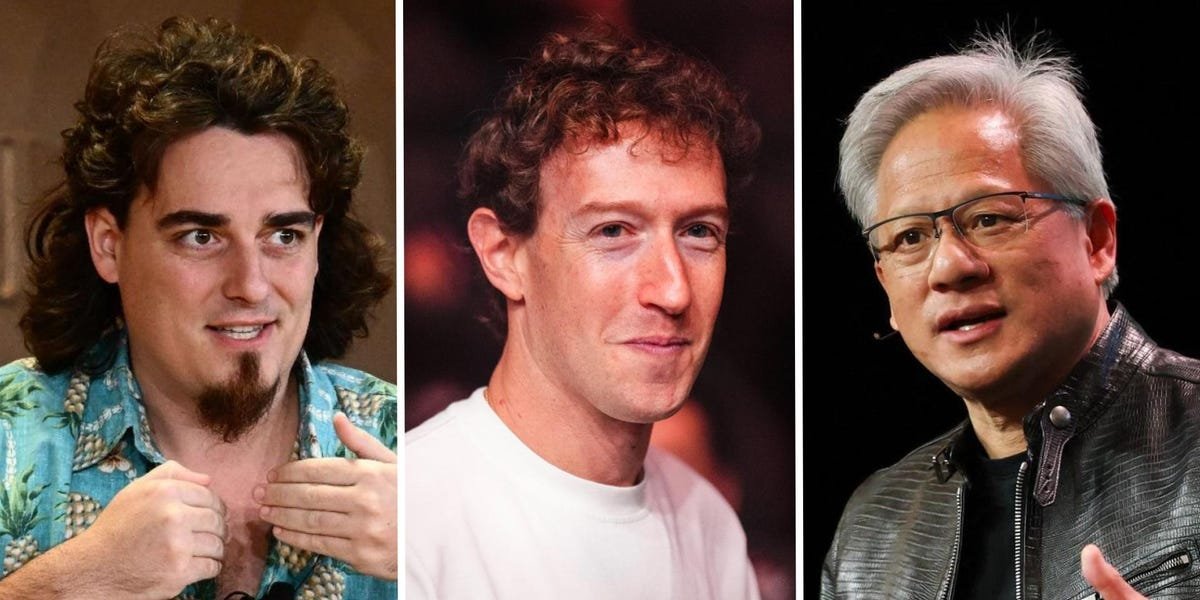
Nvidia CEO and billionaire Jensen Huang said he was “perfectly fine” with the tax. Palmer Luckey, the billionaire founder of defense tech startup Anduril, said it would force companies to “immediately pivot into profit obsession over mission or long-term sustainability.”

Critics of the tax have warned it will encourage ultrawealthy residents to flee the state and hurt California’s economy.

As of January 1, there were 214 billionaires in California, according to Forbes data compiled by Americans for Tax Fairness, a group that advocates for higher taxes.

Below is the full list of billionaires in California. Names with asterisks have recently moved at least some of their business entities out of the state.

Loading
Loading
Loading
Loading
Loading
Loading
Loading
Loading
Loading
Loading
Loading


Source link

Larry-Page-is-officially-moving-business-out-of-California-ahead.jpeg

Larry Page is officially moving business out of California ahead of a proposed billionaire’s tax

Billionaire Larry Page is peacing out of California.

The Google cofounder has cut ties between California and many of his assets that risked exposing him to a proposed new wealth tax in the state, meeting an end-of-2025 deadline, according to filings reviewed by Business Insider.

Page’s family office, Koop, was converted out of California in late December and incorporated in Delaware, per filings with both states. Page converted several other entities to Delaware, including Flu Lab LLC — a vehicle he has used to fund research on tackling influenza and lists its principal office address in Nevada — and another entity named One Aero, which has funded his flying car ventures and lists its principal office address in Florida.

A filing was also made to convert Dynatomics, LLC from California to Delaware with a new principal address in Keller, Texas. Page launched Dynatomics, a new startup focused on applying AI to aircraft manufacturing, in 2023, Business Insider previously reported. A source close to Page said that the team, run by Chris Anderson, continues to work out of California.

Anderson and representatives for Page’s family office did not respond to requests for comment.

The New York Times reported in December that Page had told people he was considering moving to Florida because of a proposed ballot measure that would tax the state’s wealthiest residents. The proposal, if passed successfully, would mean that any California resident worth more than $1 billion would be taxed 5% of their assets.

Under California law, residency is determined by the nature of a person’s ties to the state, with factors such as the time spent in the state and the maintenance of substantial business ties taken into account. If the ballot measure is approved in November, it would take effect retroactively for residents living in California as of January 1, 2026.

A source close to Page said the Google cofounder had already left the state. Whether Page’s move is temporary could not be learned.

Page is ranked the second-richest person in the world, according to the Bloomberg Billionaires Index.

Page’s family converts other entities to Delaware

Besides his family office and funding vehicles, Page converted out an LLC that Business Insider previously identified as being used to purchase islands in Puerto Rico and the Virgin Islands, from California to Delaware, with a new address listed in Florida.

A separate LLC Page used to purchase an Island in Fiji was also converted out to Delaware.

Page’s wife, the scientist Lucinda Southworth, founded a marine-conservation charity named Oceankind. Filings show that Oceankind converted out of California to Delaware in December.

Delaware has become a popular state for businesses to incorporate due to its favorable tax structure, privacy, and its home to a court system specifically designed to handle corporate disputes. The state does not require LLCs to disclose the names and addresses of directors when incorporating, providing them with an extra layer of privacy.

Privacy is especially important to Page, whose family office is shrouded in a level of secrecy unparalleled by most and carefully managed by its CEO, Wayne Osborne.

Cristina Rosado, an attorney who handles many of Page and Southworth’s assets, signed several of the California filings.

Page incorporated three entities in Florida last year, as previously reported by The New York Times. A Koop LLC was incorporated in Florida in January 2025, per filings reviewed by Business Insider. It could not be confirmed if it belongs to Page.

California’s billionaire tax proposal

The California billionaire tax proposal faced some opposition from leaders in venture capital and politics. In a post on X in December, venture capitalist Vinod Khosla said the proposed measure would mean California would lose its most important taxpayers and “net off much worse.”

“Long term damage unless legislature bans wealth taxes,” he added. “Easier to equalize taxes on work income and capital gains at the national level.

Matt Mahan, Democratic mayor of San Jose, California, on Monday described the tax as “a political plan that will sink California’s innovation economy.”

White House AI czar David Sacks has criticized the proposal and said it will backfire. He has also said he believes Miami and Austin will overtake New York and San Francisco for finance and tech, respectively. He announced this month that his venture capital firm, Craft Ventures, had opened an office in Austin.

Last month, celebrity lawyer Alex Spiro wrote a letter to California Gov. Gavin Newsom, warning that the proposed billionaire tax would “trigger an exodus of capital and innovation from California,” Business Insider previously reported.

Have something to share? Contact this reporter via email at hlangley@businessinsider.com or Signal at hughlangley.01. Use a personal email address and a non-work device; here’s our guide to sharing information securely.


Source link

Business-leaders-from-Palmer-Luckey-to-David-Sacks-react-to.jpeg

Business leaders from Palmer Luckey to David Sacks react to California’s proposed billionaire tax

  • Bill Ackman, Palmer Luckey, Garry Tan, and more are sharing their opinions on a California wealth tax proposal.
  • State labor groups proposed a 5% tax for California residents whose assets exceed $1 billion.
  • Ackman called for a “fairer tax system”; Tan wrote that he would consider opening Y Combinator programs in other cities.

Some of the biggest names in business are speaking up about California’s billionaire tax proposal.

The measure proposed a one-time 5% tax for California residents whose assets exceed $1 billion. If the proposal receives enough signatures, it would appear on the state ballot in November.

If the proposal passes, the tax would apply retroactively to all California residents as of January 1, 2026.

Proposed by the Service Employees International Union-United Healthcare Workers West labor union, the bill attempts to fill a projected multibillion-dollar state budget deficit.

California is home to some of the biggest companies — in both value and prestige — in the US. The state boasts Hollywood and Silicon Valley, although some of the industries’ key players have relocated.

In a letter to Gov. Gavin Newsom obtained by Business Insider, attorney Alex Spiro wrote that his clients would “permanently relocate” if the tax becomes law. Spiro has previously represented billionaires and celebrities.

Here’s how several business leaders and politicians have reacted to the tax proposal:

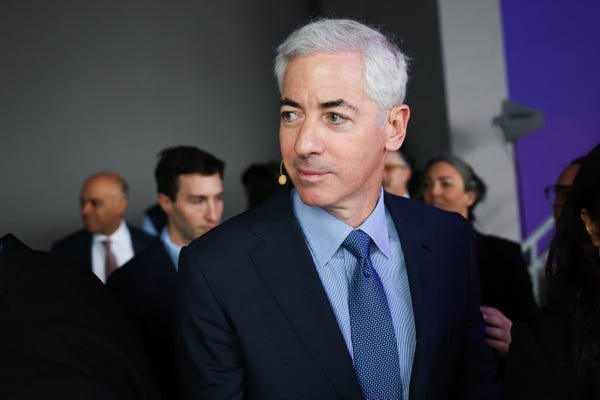
Bill Ackman

Bill Ackman wrote in favor of a “fairer tax system,” but not a wealth tax.

PATRICK T. FALLON/AFP via Getty Images

The billionaire CEO of Pershing Square Holdings wrote Monday on X that he was “opposed to wealth taxes because they effectively represent an expropriation of private property,” which can have “unintended and negative consequences.”

However, he said he’s in favor of a “fairer tax system.”

For example, Ackman wrote that an individual who had amassed a billion dollars or more in wealth could pay no personal income tax by living off loans secured by stock in their company. A change in the tax code could fix that problem, he wrote.

“One shouldn’t be able to live and spend like a billionaire and pay no tax,” Ackman wrote.

As for California’s “budget problems,” Ackman wrote that the issue wasn’t a lack of tax revenue — it was about “how the money is being spent.”

David Sacks


White House crypto czar David Sacks is pictured.

David Sacks analogized California’s tax increases to a frog in boiling water.

Chip Somodevilla/Getty Images

The White House AI and crypto czar took aim at California’s government in an X post on Sunday.

Red states like Texas and Florida don’t employ state income taxes, let alone wealth taxes, Sacks wrote. “Democrats steal everything, then blame job creators for their ‘greed,'” he wrote.

Sacks said in an October episode of the “All-In” podcast, which he cohosts, that a wealth tax “always backfires,” because tax benefits are outweighed by wealthy residents leaving.

Sacks threatened to leave the state, analogizing steady tax increases to boiling a frog on the podcast.

“I’m going to have to jump out of the pot with this,” he said.

Ro Khanna


Representative Ro Khanna is pictured.

Ro Khanna said Nvidia would be built all over again in California, even with the wealth tax.

Tom Williams/CQ-Roll Call, Inc via Getty Images

The Congressman for California’s 17th district, which covers much of Silicon Valley, said that the proposal was “good for American innovation.”

After receiving thousands of comments on a Friday post bidding a sarcastic goodbye to those threatening to leave the state, Khanna explained his support in a seven-paragraph X post on Saturday.

He wrote that Nvidia would be built all over again, even with the wealth tax.

“Jensen [Huang] wasn’t thinking I won’t start this company because I may have to one day pay a 1% tax on my billions,” Khanna wrote. “He built here because the talent is here.”

Khanna argued that innovation would be further stifled by the “political dysfunction and social unrest” that comes with wide wealth gaps.

In a statement to Business Insider, Sarah Drory, a spokesperson for Rep. Khanna, wrote that the representative has “always supported a modest wealth tax on billionaires to deal with staggering inequality and to make sure people have healthcare.”

“He has advocated for common sense workarounds for startup founders whose companies are not profitable and who have illiquid stock,” Drory wrote.

Palmer Luckey


Palmer Luckey is pictured.

Palmer Luckey wrote that the wealth tax would force startups to pivot to profit.

PATRICK T. FALLON/AFP via Getty Images

The Oculus founder and Anduril cofounder wrote in a Sunday X post that the tax would force founders to “sell huge chunks of our companies.”

Luckey wrote that he made money from Oculus — which he sold to Facebook in 2014 — and paid millions in taxes on it. Then he used the “remainder” to start Anduril, he wrote.

“Now me and my cofounders have to somehow come up with billions of dollars in cash,” Luckey wrote.

Luckey also wrote that the policy made no provision for companies that funnel revenue back to research and development, rather than paying cash incomes sizable enough to cover the tax.

“You are effectively forcing companies to immediately pivot into profit obsession over mission or long-term sustainability,” he wrote.

Garry Tan


Y Combinator CEO Garry Tan is pictured.

Garry Tan wrote that the wealth tax would “kill little tech in California.”

Seb Daly/Web Summit via Getty Images

The CEO of startup accelerator Y Combinator wrote in a Saturday X post that the tax would “kill little tech in California.”

Unicorn startup founders become a “paper billionaire” — as in, having cash on hand — around the $5 billion valuation point, Tan wrote.

The proposed tax is on unrealized gains, meaning founders would be put on the line even before their wealth is liquid, Tan wrote.

If the tax passed, Tan wrote that Y Combinator would consider opening Austin or Cambridge programs.

Bernie Sanders


Senator Bernie Sanders is pictured.

Bernie Sanders wrote in support of wealth taxes on X.

Heather Diehl/Getty Images

The Vermont senator has long been a proponent of taxes on the wealthy, introducing a bill in 2019 that aimed to halve the wealth of billionaires over a 15-year period.

While Sanders didn’t explicitly comment on the California proposal, he posted Monday on X broadly supporting wealth taxes.

“We can respect innovation & entrepreneurship, but we cannot respect the extraordinary greed that now exists,” Sanders wrote. “We need a wealth tax.”

Elon Musk


Elon Musk at the US-Saudi Investment Forum at the John F. Kennedy Center for the Performing Arts in Washington, DC, on November 19, 2025.

Elon Musk wrote that he was a “maker,” not a “taker.”

BRENDAN SMIALOWSKI/AFP via Getty Images

The Tesla CEO reposted another user’s X post that commented on the tax, saying that his stocks weren’t wealth.

Musk wrote in his Tuesday post that his “wealth” was mostly tied up in Tesla and SpaceX shares.

“This means my ‘wealth’ can only increase due to producing more products and services for the public,” he wrote.

While not directly commenting on the California tax, Musk wrote that he was a “maker,” unlike “taker” politicians like Sanders.

Musk said in 2020 that he had moved from California to Texas.

Gavin Newsom


California governor Gavin Newsom is pictured.

Gavin Newsom said that California had to stay competitive with other states.

David Dee Delgado/Getty Images for The New York Times

The governor of California has spoken against the wealth tax. At The New York Times’ Dealbook conference in December, Newsom said that California had to stay competitive with other states.

“People of that status, they already have two or three homes outside the state,” he said. “You’ve got to be pragmatic about it.”

If the tax passes as a ballot measure, Newsom would not have the ability to veto it.


Source link