

Chong Ming Lee, Junior News Reporter at Business Insider's Singapore bureau.

I’m a 78-year-old retiree who’s vibe coding. Being out of the workforce doesn’t mean we can’t use AI like tech pros.

This as-told-to essay is based on a conversation with Lewis Dickson, a 78-year-old retiree and technology consultant. It’s been edited for length and clarity.

I’ve been in technology for a long time. I worked for IBM in the late 1970s. I did technology consulting for a Fortune 500 company in Atlanta from 2015 to 2024. I’ve taught many engineers and customers over the years.

I’m in semi-retirement mode now. Technology isn’t work to me — it’s fun.

When ChatGPT came out, I jumped on it. About six or eight months ago, when vibe coding became hot, I said, “Well, I need to try this out.”

I researched and found Emergent. What I liked is that they had the full stack. I didn’t have to connect anything or get my developers on the line to handle the back-end. I could just get on there and start.

I began with a couple of simple things. Now I’ve probably done a dozen or more vibe-coded apps.

The last two were for this AED company. They wanted the ability to access their existing camera provider’s website and extract their data. So I vibe-coded an app that would do that — pull that data in.

I also vibe-coded an AI voice app for them. It’s a web app, so you go to it on your phone, hit a button, and ask, “What’s our AED status?” It checks the database, then returns the information.

When I first showed the CEO a demo, he lit up. He thought it was the coolest thing he’d ever seen.

Older people can move fast

Most people think an old guy like me would have a flip phone.

When I started as a ham radio operator at 13, I was using Morse code on tubes, transmitters, and receivers. To go from that to what we’ve gone through with phones and cellphones, and then to watch that transition over the years into AI and be closely involved, I just love the technology — both the hardware and the software.

A lot of young kids today are into software but don’t know much about the hardware piece. Having a wide background comes in handy.

There’s often an assumption that gray hair means outdated technology skills. I understand where that perception comes from, but it’s not always accurate.

Many of us have moved just as quickly with the rise of AI as younger professionals. The advantage we bring is perspective: decades of experience that allow us to apply AI strategically, not just technically.

Some people would say older people retire and lose purpose. I’ve never had that problem because I’ve always had a passion for doing technical things.

I’m constantly on my laptop and phone, doing something related to AI and learning. You’ve got to watch a lot of YouTube and social media, learn what’s coming and what’s new.

How seniors can use AI for everyday life

I’m teaching AI to seniors now. In my class back in November, we were talking about data centers, what’s behind AI.

There’s a lady named Sue who’s 100 years old. Near the end of the class, Sue came up and asked, “What’s a semiconductor?”

I have a hardware background, so I answered her question at a very high level. She listened intently and wrote down a few notes.

After that class, I thought, “I need to do more for her.” So I used AI to create a video that went through the evolution of tubes in the 20s and 30s — things they could relate to — and old radios and TVs. Then we went to transistors in the late 40s and 50s, and what that meant.

The seniors I taught have now learned enough to take over their internal resident newsletter and use AI to help write it. They also created images for the newsletter with AI.

They are using AI to shop, check for bargains, and research their items.

I’ve shown them how to recognize different plants and birds with AI. They’ll walk through their garden area, take a picture, and ask ChatGPT or Gemini.

Do you have a story to share about vibe coding? Contact this reporter at cmlee@businessinsider.com.



Source link

Im-the-oldest-of-8-kids-including-5-foster-siblings.jpeg

I’m the oldest of 8 kids, including 5 foster siblings. There are pros and cons to my big family.

I remember the stares most of all.

In the grocery store, people tried to make sense of my family — how these Black, Hispanic, and white children all belonged to the same woman.

The insatiably curious strangers would stop my mother to comment on her “beautiful family,” hoping she’d explain us. She never did.

I love that she never felt she owed anyone an explanation for her children.

It started with just three of us — my biological brother, sister, and me — your average American, blue-collar family. But when my parents decided to foster kids, our world expanded.

From then on, our sibling count fluctuated. Usually, we had between four and six kids in our home. Over the years, my parents adopted five of my foster siblings, bringing our total to eight.

Growing up as the oldest in a family built through foster care and adoption shaped me in ways I didn’t understand, but I feel them everywhere now.

Not fitting in taught me empathy

We didn’t fit the box of a “nice little American family.” My younger siblings might’ve been too young to notice people’s stares, but I wasn’t. I saw the disapproving looks when my 2-year-old foster sister dumped a carton of eggs onto the grocery store floor or melted down in the cereal aisle.

It was humbling to feel different. To feel like you were “that family.” The one that stood out for the wrong reasons.

In hindsight, it taught me empathy at an early age. To this day, I try to be aware when others feel they aren’t fitting in or measuring up to some impossible standard. I want people to feel like they can be their imperfect selves around me.

I learned that just because something hurts doesn’t mean it’s not worth doing

People often told my mother, “Oh, I could never foster. I’d get too attached. My heart would break if they went home. “

My mother hated these comments. Her heart shattered every time we got a call that one of our siblings was leaving. She loved those children like her own — and then they were gone, often returning to situations that didn’t feel stable. She was powerless to stop it and grieved hard.

People don’t want to foster because it’ll be painful when the children leave, but my mother taught me that you let your heart hurt if it means you can help the hurting.

In a big family, we learned to pull our weight

I vaguely remember doing chores before my foster siblings arrived — but I vividly remember chores after. Suddenly, my mom was overwhelmed, and helping became non-negotiable. At 11, I was in charge of my 1- and 2-year-old sisters’ bedtime routine. By 12, I was the family dishwasher, and by 17, the laundress. And, of course, I babysat.

Every day was a lesson in teamwork and helping out. Not just for me, but for my siblings, too. Many of us who grew up in that house went on to pursue entrepreneurship. I don’t think that’s a coincidence.

If there’s something good, better get it before it’s gone

Scarcity mindset is real when you grow up with so many siblings. Act fast, or there won’t be anything left. Even now as an adult, I have to remind myself not to overfill my plate or worry about something running out. It took me a long time to learn to savor things and not worry about the sense of “not enough.”

Still, that mindset made me scrappy, which has come in handy over the years. When I was young and first married, we needed extra money. I began buying and selling furniture on Craigslist and renting out our home on Airbnb. My book club once voted me “most likely to survive the Hunger Games.”

The demands of parenting didn’t surprise me

My friends used to talk dreamily about their future families. I didn’t. I knew what snot-nosed temper tantrums looked like. For a long time, I wasn’t even sure I wanted kids.

Eventually, I changed my mind and became a mother. Sometimes, helicopter parents ask me how I’m so chill with my kids. Coming from a big family, I’m not worried about a little chaos. Balls and tricycles in the house? Sure. Stomp around in the mud and puddles? Go right ahead. Running around in a diaper? You do you.

In a big family, there’s always room for one more at the table

I love our loud, boisterous family gatherings — my seven siblings, their spouses, nieces, nephews, aunts, uncles, grandparents, and cousins. It’s wonderful chaos.

Whenever I ask to bring a lonely neighbor or another family along, my mom always says the same thing: “Of course! I’ll make sure we have enough chairs.”

That’s my favorite part of belonging to a big family — when you have so many, what’s a few more?


Source link

Im-a-14-year-old-founder-whose-YC-application-went-viral-There.jpeg

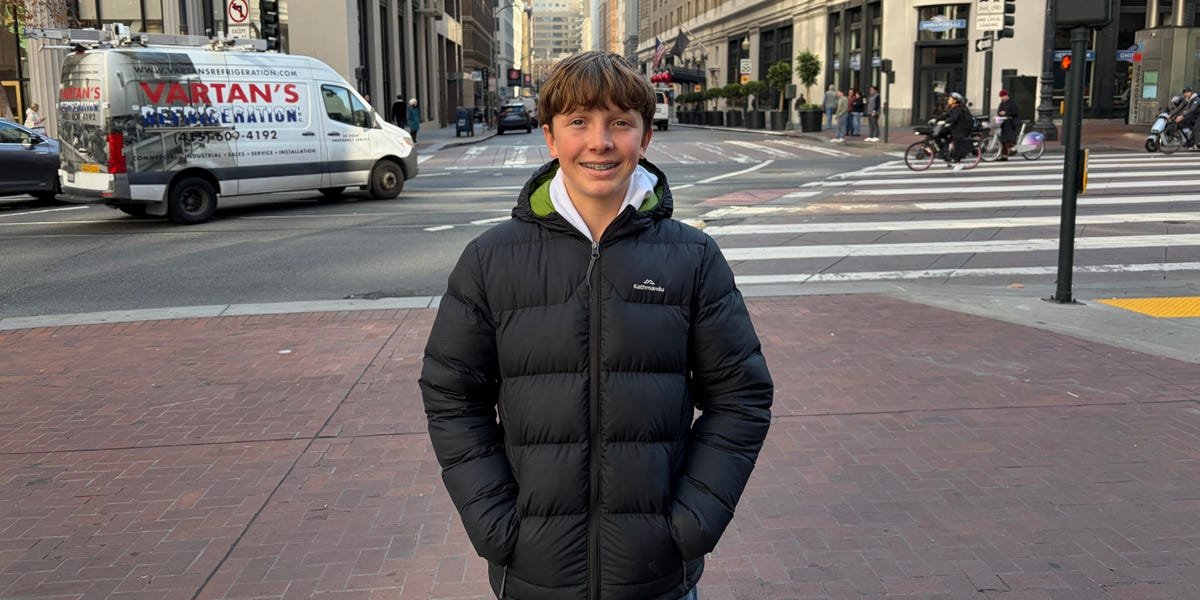
I’m a 14-year-old founder whose YC application went viral. There are pros and cons to starting a company young.

This as-told-to essay is based on a conversation with Alby Churven, the 14-year-old founder of Clovr, who lives in Wollongong, Australia. It’s been edited for length and clarity.

When I was younger, I started an e-commerce grip socks brand called Alpha Grips. It failed, but that’s what got me interested in business. I was 12.

A lot of kids’ first businesses is always something to do with e-commerce, like drop-shipping or clothing brands. Social media does saturate you with that “get rich quick” idea with drop-shipping or crypto. Although 90% of the time it’s a scam, it still ignites an interest.

Then I came up with the idea of Finkel, the startup I applied to Y Combinator with. I sent a cold email to Frank Greeff who’s a pretty big founder here. He recommended I started building in public on social media, so I started doing that. X is full of startups.

Social media played a big role, seeing other people building brands and businesses. That’s what got me into it. I used to do code camps when I was younger, so I’ve always been interested in tech and entrepreneurship.

I applied to YC. Apparently I wasn’t supposed to do this big video with all the editing. It’s supposed to be, you sit down and turn on the webcam and talk. I didn’t actually read the instructions when I did it, but I guess that’s what made it pretty viral.

There’s a new social media ban in Australia for people under 16. All these great things have happened for me with it, but the social media ban is taking that away. I don’t agree with it, but it is what it is.

I’m young. I think my advantage being a teenage entrepreneur is I’ve got time. My goal right now is to build as many things as possible, learn as much as possible, and see where it goes.

You decide you want to do maybe when you’re 18 or 16. But I know what I want to do. I want to be in startups and tech.

The benefits of starting young is that you don’t have as much pressure on you financially, so you can just build things.

In the future, I’ll have had experience. It’s about learning. I have time on my hands, and I enjoy it.

The younger generation thinks a bit differently. Some older people may not even know how to use AI.

I’m in the US right now, and I’ve been meeting with a lot of really cool people. When you’re young, you can utilize your age to make a lot of connections. It’s more rare. It’s crazy you’re doing it this young.

My age is a wow factor, but it also limits legitimacy.

It also can be a negative. People might not take you seriously if you’re really trying to pursue something. All the things I’m building are bootstrapped, because it’s impossible to raise funding when you’re young.

I’m getting to stages in my projects where I do need some money. I’ve applied to these accelerators. I had a very low expectation for Y Combinator. I got an interview about my other startup, Clovr, but then I got rejected.

I’ve heard you have to get in the system early, so when I’m older and I apply, I’ll already be in the system and have experience with how the process works.

I do think grants are a really good opportunity. You won’t raise nearly as much, but you’re not giving away any equity. I think giving away equity young is not a good decision. It gives pressure to perform and deliver, and when you’re young, you want to build stuff.


Source link